

The Human Experience · Episode
Episode 88 – Jamie Wheal – Flow States, Creativity, Consciousness (Co-Author: Stealing Fire)
A conversation with Jamie Wheal
Jamie Wheal is co-founder and executive director of the Flow Genome Project (FGP), and a leading expert on the neuro-somatics of ultimate human performances. He, along with Steven Kotler, featured in HXP podcast episode 58, discussing his book The Rise of Superman.
Stay with the full conversation.
Episode field notes
Show notes
“To forget oneself — to lose oneself in the music, in the moment — that kind of absorption seems to be at the heart of every creative endeavor.” ~ Dani Shapiro, author

Jamie Wheal is co-founder and executive director of the Flow Genome Project (FGP), and a leading expert on the neuro-somatics of ultimate human performances. He, along with Steven Kotler, featured in HXP podcast episode 58, discussing his book The Rise of Superman.
The FGP picks up where renowned Hungarian Flow Psychologist, Mihaly Csikszentmihalyi, left off, after decades of studies on flow that began in the 1960s. Flow is that state of nirvana where time goes into slow motion, the nagging “self” vanishes, and action and awareness merge. At FGP, Wheal leads a team of the world’s top scientists, athletes, and artists dedicated to reverse-engineering the genome of peak performance. Clients and research partners include the military, Fortune 500 companies, business schools, Young President’s Organization (YPO), and world class athletes from the Red Bull teams, among others. The FGP has been featured in the Harvard Business Review, the New York Times, TEDtalks, Wall Street Journal, Fortune, Forbes and Time, to name a few.
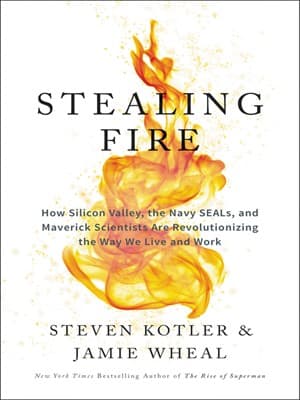
Wheal’s (& Kotler’s) book Stealing Fire: How Silicon Valley, the Navy SEALs, and Maverick Scientists Are Revolutionizing The Way We Live, is due to be released on February 21, 2017.

Flow Me The Way
Wheal always sought to go deeper in life, no matter what his pursuit. In a 2013 TEDtalk in Venice Beach, California, he spoke candidly about what brought him to where he is today. He said he felt that something was always missing from his own human experience and said that he “wasn’t feeling alive.” This threw him into an inner battle with his family’s demons: Depression, Addiction and Suicide. He experimented with things, drugs, that could “blow up or numb out that sense of separation,” he said.
During one of his funks, a friend came to his place and told him to get up, get some fresh air, and go windsurfing. After some coaxing, Wheal agreed, only if his friend would carry him to the car. He recalls his frustrating attempts at windsurfing and thought the day was a waste and sending him into a deeper funk. Then, a miracle occurred. A whoosh of wind woke up his sail and righted his board. As he picked up speed, the board rose onto its props. He had the most amazing fluke of a ride that put him in a place where he felt completely alive. He came to know it as the flow — that place where time slows, the self vanishes, and action and awareness merge.
Since Wheal’s wild ride and brief encounter with blissful suspended animation, he’s sought to reverse-engineer the process to make it consciously available to those who seek it. Science and research has taught Wheal and Kotler that flow is a beneficial thing. It releases five of the most potent neuro-chemicals for motivation, learning, and well-being — norepinephrine, dopamine, endorphins, anandamide, and oxytocin.
The three big ideas of flow that are proven through research:
1). Flow silences our inner critic (selfless). Why? Because of a neuroscience phenomenon called “transient hypo frontalitly”, which, Wheal explains, translates to “for a little while”, not a lot of neocortex anxiety.
2). Flow accelerates the path of mastery (effortless). The Navy SEALs knocked out the neocortex and cut their lean time in half.
3). Flow is hackable. (timeless).

Stealing Fire
Wheal’s cohort, Kotler, told Mind Power News, that “flow was the most desirable state on Earth, but it’s also the most elusive.”
Wheal and Kotler want to change that and make accessing flow less of a mystery. “Driven by four accelerating forces — psychology, neurobiology, technology, and pharmacology,” Wheal explains, “we are gaining access to and insights about some of the most contested and misunderstood terrain in history.”
Wheal’s upcoming book, Stealing Fire, is a “provocative examination of what’s actually possible,” he said.
So, why have we not found this sooner? Why do people rarely find themselves in the flow? Wheal explains in FGP’s Flow Fundamentals: “Unfortunately, life wrings the flow right out of us. There are constant distractions dragging us away from the effortless focus and deep satisfaction of being lost in the moment.”
The concept is deeply important to Wheal and Kotler, as they set out on their mission long ago to help people escape their self-imposed prisons — if only for a few fleeting moments. But they also want us to learn how to access it so that we are all better off in the grand scheme of things. It’s about transcendence — “being in those moments where everything clicks, our critic shuts off and life is joyful and effortless and inspired,” Wheal said.
He wants to learn to reach those peak states and turn them into “abiding stages of growth and development,” he said. “Because, that, to me, felt like the rocket fuel and everything else felt like a slug.”
A quote from civil rights activist Howard Thurman sticks in his mind as a battle cry:
“Don’t ask yourself what the world needs. Ask yourself what makes you come alive and then go do that! Because what the world needs is more of us — all of us — to come alive.”

You will LOVE this book: Click to purchase!
THE 411:
Steven Kotler’s official website
Going With The Flow — Of Interest …:
How To Use Mindfulness and Flow To Trigger To Learn Faster”
Hack Flow from MindPowerNews
We rely on listener support!!
Get exclusive access to the members-only content area of what we do at HXP. If you value even one of our shows, this members area will give you the juicy secrets of our guests it also helps us sustain and scale the show up! Become a member by clicking HERE or Donate.
Read the conversation
Transcript
Welcome to the human experience podcast the only podcast designed to fuse your left and right brain hemispheres and feed it the most entertaining and mentally engaging topics on the planet as we approach our ascent please make sure your frontal-temporal and occipital lobe are in their full employment position as you take your cleanest consciousness relax your senses and allow us to take you on a journey we are the internet strangers thank you for
listening [Music] why do I look like a human experience podcast podcast the most easy and perhaps cop-out answer I can give a right off the bat is that my life is my own human experience so already the title is relatable so then you start listening or I start listening and I’m hearing about things that aren’t really talked about and subjects that don’t quite come up because they’re considered now what sort abou perhaps especially from where I’m
from I’m from Texas and nothing not the halo effect but I am surrounded by a lot of people who are how do I say not everyone is as open-minded any podcast that encourages you to be open-minded and my opinion is a positive spin on this thing the other thing I really enjoy is that no matter what the subject matter is the conversation is always captivating to listen to I try to find podcasts that are very easy to understand and easy to listen to but not
so easy that it’s like they’re dumbing it down for me and I think this process is a very fine balance of that the the interviews in subject matter are stimulating and there’s things I didn’t really know about so I find myself learning an immense amount but it’s not straining it’s not draining it doesn’t make me exhaust it and be honest you know when I am working on a and I have to spend you know what two hours a day in traffic maybe three I
don’t want to be drained even more by something that I’m choosing to listen to I can be passive and just listen to these two people connecting and maybe disconnecting sometimes but at the end of it all it’s a positive experience it’s stimulating and my ears enjoy it so really what I’m trying to say is that there’s no reason not to listen to this podcast so why not just listen and if you’re a human and you have experiences
and you want to have more transcendent experiences I think the human experience is giving the tools that people could need if you’re at the given experience I just wanted to know you guys are awesome you rock and keep doing what you’re doing you know this is just a testament to our commitment to bring you guys life-changing stuff that will affect your life in a positive way and my my deepest most grateful heart melted
thanks to Hannelore who submitted this for us and wow what a huge huge testament to everything we’re doing here so hope you guys enjoyed this little blurb her telling us why she listens to a trophy and it motivates you to become a member of what we’re doing thanks guys what’s up guys Xavier katana here and this is our episode with Jamie deal of the flow Genome Project the book is called stealing fire how Silicon Valley’s Navy SEALs and maverick
scientists are revolutionizing the way we live and work and we get into so many different aspects of just human biology and how to get into flow State so so much just information you’re probably going to want to listen to this more than once just because Jamie when you put him on the track you just just runs with it which I loved I was just steering the wheel you know and Jamie did really well and we crossed this interview so definitely take up a
copy of this book get to human XP slash members for the members content part we get into some personal stuff between Jamie and Steven how how they work together you’re going to want to hear that thank you guys so much for listening the human experiences in session my guest today is mr. Jamie wheel Jamie it’s an honor so welcome to hxp oh thanks for having me so Jamie the book is called stealing fire and we’ve had your partner in crime Steven Kotler
on tell us about your background and how you got into this book and you know more about you sure well I mean the the book itself is really about this the kind of this underground revolution in hacking states of consciousness and performance that’s sort of happening all around the world right now in some of the most elite and well-known organizations we’ve all heard of and no one’s really telling that story and the way that Steven and I
should have stumbled on to this to this this revolution really was because of our work as co-founders a flow Genome Project which is an organization dedicated to the recession training of optimum human performance those moments of flow or being in the zone where you know sort of self-awareness drops away we get dropped into the present moment and typically our performance and our satisfaction with head performance just goes off the
charts and we had found ourselves working with some you know true in a blood blasted e with some sort of the 1% of the 1% that was everyone from Special Operations community military to the US Naval War College to professional extreme athletes to folks working 1,400 companies at the executive level engineering teams have solving hard problems big five consulting firms system basically anybody who was looking to go from A to A plus plus in doing
that we had really taken a fairly deep dive there had been a lot of work in the seventies and eighties and even 90s on the psychology of being in close States and that was largely pioneered by dr. Mihai csikszentmihalyi and others but it was how did he stay to make us feel what does it feel like when were in them what does it feel like when we’re not and in the last decade or so there’s been this sort of concomitant rise in neurobiology
able to measure what’s happening not just report how it feels and so really I would suggest that probably our biggest contribution to the field has been integrating those students a neurobiology under the hood and the psychology of peak performance and that sort of leaves us with more tools but what we didn’t realize we had assembled was a sort of accidental rosetta stone that let us translate a whole host of additional non ordinary experiences and
what what I mean by that is is that when we will be working with these organizations and saying hey here’s flow and here’s peak performance and here’s how you presumably get more other folks for coming up to us after those conversations they reversing upcoming following up with phone calls or after dinner or a few beers and say hey by the way I’m trying this other thing I’m going on an extended nine-day the possible retreat or I’m doing you know
wim HOF breathing Mack and luckily there’s an ice box or I’m zapping my brain with electrodes or unstacking off prescription pharmaceuticals or my engineering team is micro dosing psychedelics or I have just come back from this meditation sexuality retreat is that flow and so we were sort of torn is we’re like what we totally get what you’re saying you are creating a non-ordinary state by these things you’re doing it appears to
be valuable and useful but we were sort of in this quandary where like either we were going to stretch the depth of working definition of flow so far but none of the academics you helped develop the field would ever recognize it or we had to come up with a big attempt to get a little bit like Roy Scheider and Joel like we’re going to need a bigger boat so the bigger boat we thought if we’re like okay now what should we call this
because you know bless their hearts the kind of baby boomer hippie generation really did kind of run some of this terminology in these concepts into the ground so most most of their languaging would kind of loaded with baggage so we’re like all right we had a rewind the clock all the way back to word origins let’s go back the ancient Greeks and the best term that we found to kind of encompass this stuff neutrally with text
assets and and the literal translation of that is to move out of oneself and we thought all right since the antecedent of the word ecstasy and a lot of you know terms were familiar with and so the idea of like just kind of getting it back to that kind of mute value neutral term those states or experiences that take us outside of ourselves now we had a big enough tent now we could look at all these non-ordinary states of
consciousness and that rosetta stone piece which was hey here’s the neurobiology underneath the psychology let us say wow a lot of these things I mean think about everything is strange as a soccer mom who’s got a kundalini yoga practice and is reading Fifty Shades of Grey on her lunch break on her Kindle okay are you looking to hack through these acts and there’s tons of research from you know from the Netherlands and
from elsewhere on the flow state experiences and the neuro chemical shift of those practices is right the way to biohacking CrossFitters you know drinking bulletproof coffee and and diving themselves all the way to hedge fund traders right using magnetic stimulation to military operations guys using float tanks right to the engineers micro dosing obviously we’re like oh you guys are actually shed your shared conspirators in an underground rebel
in consciousness and you wouldn’t even recognize each other walking down the street in fact so many of you are in these subcultures that are committed never the twain shall meet that you guys would swear blind but you would never engage in off of the practices or base or customs of these other sub tribes but you roll them all together with that rosetta stone kind of decoder ring with this is everywhere ya know talking about
it that’s really truly fascinating and there’s you know there’s there’s so much of my life where I’m talking about this with my friends and the people that I encounter about slow state so you know let’s define this for the people who are listening how do we define being in a flow state well you know I mean it’s almost like a lot of the kind of ancient wisdom traditions it can almost be as helpful to define it by negation by what
it’s not and what and what flow States and all of these non-ordinary states that we talked about in the book on is 21st century Western normal and 21st century Western normal tired wired stressed right has a really consistent signature for all of us and it’s generally speaking our brain is cranking along in fairly fast-moving beta waves which are you know generally congruent with activity in our prefrontal cortex and our executive functioning self
meaning who I think I am so my biography who I am behind my eyes that storytelling meaning making machine along with my ability to think about my thinking delay gratification engage in abstract reasoning long term you know long term planning all those kind of things that make us the clever monkeys we are so that’s going on now the challenge is that as we’ve evolved that capacity over the last thousand years but you know on turbocharged really
since the French enlightenment you’ve got Rene de cartes and cogito ergo sum I think therefore I am the era of the rational individual we’ve really amped that up to the point of almost to the breaking point and in fact as you know there’s some arguments that that self-awareness has done all sorts of great things for us I just gave us given us the Scientific Revolution it’s given us democratic revolution it’s going to
be of evolution of civil rights and free market democracy and capitalism also all sorts of may using breakthroughs but the one glitch was that we forgot to build an off switch and so we’ve become trapped in this hyper aware self referential self-consciousness and that experience is actually incredibly stressful so to be a monkey right dodging the saber-toothed tiger right if I’m away from a threat I’m back to being a monkey
I’m living large but to be a human aware then on that monkey and then I’m here for a brief moment and then I die and the let the universe is vast and devours my significance in a gulp you know that’s some bitch you can cooperate and so typically you know the kinds of fight-or-flight responses that are baked into us they’re evolutionarily imprinted we get norepinephrine we get a shot of adrenaline we get cortisol which you
know all these things do great stuff for us in momentary threats right they shunt blood from the extremities that increase our heart rate they dilate our pupils they do us better peripheral vision they heighten that reaction time they leave us ready to live in you know survive for another day but in 21st century Western normal that’s the conversation I’m having well stuck in traffic for an hour and a half rehashing a conversation with my
pathological boss that’s the conversation I’m having at 3:00 a.m. when I can’t sleep and I’m Rena and I’m going over a fight it was unresolved with my spouse from the day before right and that steady drip drip drip of that fight-or-flight arousal with no place to put it and no way to turn it off that’s what’s killing us and so you know anxiety I mean one in four of us at least in the United States are on psychiatric medication that’s 25 percent
of us that are basically saying I am so out of whack I am going to take a pharmaceutical that’s expensive as abundant side effects only works marginally just to try just as a shot a roll in the days to change this channel yeah so so that’s that’s what it isn’t right is is 21st century normal and most of us are stuck there we’ve only got one channel to choose from but these non-ordinary states of which flow is one of the most you know easy and ubiquitous
to access all that changes and so instead of an overactive prefrontal Gortex with a hyperactive inner critic you know second-guessing and commenting on everything our brain tends to quieten down that part of our brain shuts off and ceases to be as active our brain waves that executive function firing along solving problems slows down into a more relaxed alpha kind of alert perceiving but not necessarily thinking specifically about any one thing all the
way down to theta which is almost more kind of dreamy quasi hypnotic that kind of state we get just as we’re drifting off and asleep our stress chemicals like nitric oxide is in our bloodstream it’s a neurotransmitter it flushes away the stress chemicals our heart rate slows down we replace stress and fight-or-flight chemicals with feeling you feel good and learning and reward chemicals like like dopamine saying yes you know this is this is important
attention and orphans which ease pain and create mild to moderate euphoria those are the you know basically the internal equivalent of opioids or morphine Ananda my bridge the equivalent of a cannabinoid which again easiest pain people used to think that runner’s high was all about endorphins researchers now think it has as much to do if not more with Ananda mine so it’s a pain or bliss producer and prompts more lateral connections between unusual
subjects and then if you’re doing it in conjunction with others there’s often an additional release of oxytocin pair-bonding trust intimacy as well as serotonin and the serotonin system is infinitely complex but in a minimum can you know can relate to increased feelings of well-being and and and sort of satisfaction so that is what happens remarkably consistently in a whole suite of these non-ordinary states what we’ve
been calling ex ptosis flow states are one of them meditation and mystical States and then finally psychedelic states those that are pharmacologically primed and you know there’s obviously you know if people have been sort of reading that you can’t really get away from the recent research on the psychedelic Renaissance or Johns Hopkins NYU College in London everywhere else and so all those bundled together I think the tons of press coverage about
each of these verticals but the piece that’s been missing piece that we really hope to communicate in this book as oh there’s actually a bigger thing going on it matters less which of these doors you step through than it does the actual state the space the experience and the benefits of once you step through that door into this shed train yeah yeah I loved it when I was in LA and just kind of just interviewing various people there it
there was this sort of subculture of people who were paying attention to this work that you guys were doing at the flow Genome Project and I mean what would you what would you say is the noticeable kind of similarity between these people who are high-performance I don’t know engineers people who are looking for this kind of thrill and these Navy SEALs and then these sort of soccer moms that are reading Fifty Shades as you said earlier like where do
you see it the similarity between these people are we inherently looking for this sort of flow state in ourselves yeah I mean you know interestingly enough we were teaching at the Esalen Institute up in Big Sur a couple of years ago and there was a woman she was I mean a sort of soccer mom on steroids from down in San Diego as she came up and she was describing how she’d come to our work and flow in general and she was
also like a CrossFit nut and she stood have confessed and that was actually one of the data point that kind of became the seeds of this book she was describing like I do CrossFit because yes I’m you know I was an athlete in college blah blah blah but she did it to get her fix she did it because it was the only way she was able to basically work herself into exercise-induced flow and be the absent the pains and discomforts of an unhappy marriage and I
was like oh wow and she could she was she was a little concerned bikes like I feel this is a little addictive I feel great this is this is baby not the most balanced way but it’s the best thing I’ve got right now so bronze eagle a professor at UCLA has made a case that you know birds do it bees do it educated fleas do it right I mean the idea that the drive to shift consciousness is pervasive throughout the animal kingdom
and that’s everything from you know elephants raiding breweries or drinking from for fermented mudholes – reindeer eating – reindeer eating you know I’m Aneta muscaria mushrooms – baboon’s gut guzzling I Boger a psychedelic grew from Africa like basically everything all animals do it include up to and including primates and humans and so he makes the case that the because you would think that like getting twisted as far as being an
animal is probably not the best evolutionary strategy now you’re going to get picked off legs like a sitting duck right so the question is is why wasn’t this behavior aberrant and just edited out of the gene pool really quickly and so he and psychologist Edward de Bono and others have advanced the notion that hey what it says it gets us out of ruts the ability to shift our consciousness from waking state again fight-or-flight routine into something
novel into those Eureka moments those aha moments that your chocolate or my peanut butter moments that here’s the silly putty or the slinky or the post-it note idea right those lateral leaps of B patterning introduced novelty into first our brains and minds and then into our culture and our artifacts and that that is a positive thing so Siegel makes the case hey this desire to shift states of consciousness is actually arguably our
fourth evolutionary drive you know sort of behind only food water and sex and so once you realize that you ask well who you know what unites all of these folks these crazy little sub tribes me right I mean flow has been the domain of artists and athletes and meditation has been the domain of kind of Saints and mystics and psychedelics have been the domain of hippies and ravers and never never was never the three shall meet you but what
is what it does unites them is our shared humanity and that fourth evolutionary drive that yearning for something more than twenty first century normal and and you can you know I mean fifty Shades of Grey we were kind of joking about it but it’s actually an incredibly good test case because you know and anybody we even read us a paragraph of that book could realize it was doggerel verse it was not it was not within a country mile of a work of
literature and you got that book sold more copies than the entire seven-volume series of Harry Potter combined Wow so that’s a true what the moment you’re like seriously like how that support there’s no correlation between quality there’s no character development as a profound message right this is about this is a poorly written bit of Halle Quinn romance about II do media clearly told BDSM from a woman who’s clearly never experienced any of it and
it was off the charts that’s right so you think okay so what is it right so you can make a case that all that all of that repressed suburban femininity and women have right women who were clearly under satisfied in their full erotic expression we’re reading that looking going ah yes here just intuitively here is the past or something more and if you compare that like that electronic dance music is another great example where
we’re a DM music these days in fact Tomorrowland which is a festival in the Netherlands just went on sale this week it sold out in I think 50 minutes and it plays two weekends and it’s hundreds of thousands of tickets and it sold out in minutes six months of being offered and you’re like okay well that’s interesting because why do most folks go to concerts well they really have a you know they have a crush on one of the band members
or they love the story like the Beatles or Bruce Springsteen they love the songs and the lyric they all love to be there with their friends you know on and on there’s some communal bonding moment well in EDM there’s some dude in a hoodie with a laptop you know and he presses play and then pumps his hand in the air at the drops that’s kind of it right I think and you’ve got and so there’s no music there’s no Lee I mean
there’s no lyrics there’s no band and personalities there’s you know strip out 70% of everything that people used to go to see em utilize music for you like well what is their instead and not unlike Fifty Shades of Grey what there is is highly concentrated state shifting technology you have these high end high fidelity sound stacks often function1 sound systems that separate highs lows and middles in a way that like ceases to
be just listening to music it’s basically like going to a Sonic carwash and standing in front of it you know standing in front of acoustic Waterpik you’re just getting your body rearranged by sound waves and there’s lasers or the typical lot’s of mind-bending substances and there’s this great crowd entrainment of a quarter of a million people at a time losing their mind and dropping into something else together and that is now
worth 48 percent of the entire ticket sales on the planet right now you’ve got private equity guys you go Wall Street guys they’re all piling money into these things because they’re realizing oh wow state changing technologies is what’s up right now everybody is moving beyond from experience economy stuff like Starbucks or Cheesecake Factory Cabela’s outdoor stores you know into transformation economy stuff if you can
help me become someone I wasn’t at the beginning of this experience the margin I’m willing to pay you is off the charts yeah it’s it’s so profound I mean I you know when you’re studying these sort of spiritual Renaissance a–‘s of you know these awakening ideas of electronic dance music and these women who were kind of obsessed with this book because this desire that it creates in them or more you know have you noticed that
because we live in such a connected age that it made your research easier or more accessible well I mean one of the things we noticed is we kept running into the same people around the world and and that was kind of another one of the big sort of like pause and really just like just gut-check always seeing what we think we’re seeing so you know there is and I’ll say this with all self-awareness this sounds hyperbolic
you know but there is fundamentally an underground initiate Brotherhood of techno Matic literati alpha hippies and they and they go from everything from Davos and Ted to Coachella and South Bay and burning men they hang there hanging out at these high-end gatherings they are mostly globally mobile you know in either running companies founding companies post liquidity events they’re living they’re living a large life and
and plug into these repeated initiatory experiences with each other and then go back and seed culture with it I mean that was you know I had we were invited to speak at the TEDx event burning then a couple of years ago and then got to participate in kind of this salon with some of the founders at the time they were wondering if and how they were going to purchase a permanent chunk of land to host Burning Man culture and
events and Larry Page and Sergey Brin and you know I’m asking lots of on Tony Hsieh and lots of other people involved but at this gathering were you know partners from Goldman Sachs heads of the World Economic Forum the CEO the largest ad agency on the planet you know people you’re like wait a second this is long this is way past just Silicon Valley freaks and misfits trucking out you know for a weekend in the desert this is a globally connected
bunch of us folks from the Pentagon you know like major players and they are literally coming together to share what you could make a case is a sort of modern day right of the lusus right a modern-day initiatory mystery cult and people are having these experiences they are impacting their personal lives deeply but also impacting their professional lives and and and creating this kind of just below the water line network of initiates to sort of know
each other with a nod and a wink in a secret handshake and they’re moving money condemned moving capital they’re moving they’re moving talent than moving IP they’re creating new companies that are creating new partnerships and this is kind of the new way that businesses gets done I mean it’s like the Masons and the Elks lodges are done and over with are pretty much dead on arrival and what’s emerging now is we’re just seeing
this as I said just this sort of techno Matic glitterati these folks that are sharing this experience it creates high trust high intimacy and a shared degree of inspiration coming from similar sources and that arguably is one of the most driving forces seeding culture these days and no one’s really talking about yeah I mean you guys are now right and yeah I mean it’s it’s really great because you’re researching inner
creativity consciousness and this is what I love is talk about I love to just explore this idea of you know being more connected to ourselves getting into this sort of flow state you know it just it blows me away the research that you guys have come up with and I’m just I’m paging through your book and you know something that you bring up what is Alexander or sure Glenn I’m not sure how many of our listeners know who
he is can you can you give us an idea of how impactful Sasha’s work was for me not Leica dellux and and our awareness sure so Sasha just died I suppose a year ago maybe a year and a half ago so I just maybe one of the first sort of monograph treatments slash hat tips to him and his legacy and certainly you know with full appreciation and respect from from errant on that Sasha was a boy genius he was admitted to Harvard on a
full scholarship I think at the age of 15 he then dropped out to join the Navy right after World War two end up being a young sort of fund akin chemist for Dow chem within a few years invented one of the first biodegradable pesticides which made them good Gillian’s of dollars and effectively gave him a blank slate to do whatever the hell he wanted afterwards and he basically got became fascinated with the compound masculine which is a
psychoactive it’s prevalent in San Pedro cactuses which can get it Landscaping stores or Home Depot’s if you want but I mean he key it extracted it he’s like wow this one little tiny molecule completely change my life this was also what I was subtly wrote about in the doors of perception and Sasha was like hey if that’s possible and obviously had mad skills in the camera and he’s like well what if I just tweaked a little
hydrogen bond what if I just tree could tweak a little carbon chain and he began modifying these compounds and so just to give you perspective in the nineteen by the nineteen fifties I think there were twenty to thirty known psychedelic psychoactive kind of compounds ones that truly had a mind impacting effect and by the time he had completed his research there was something something like 250 and and the one that he’s most
well-known for it’s not the discovery of MDMA or what is commonly known as ecstasy or Molly but he revived it was originally developed by Merck and Germany back in the teens or 20s and he just he just you know resurfaced it began experimenting with Andres eyes oh wow and this is before his called ecstasy that was at the time was called empathy and it was available during the 60s because the hippies just weren’t interested in it which is I think
another kind of interesting thing is like cultural I mean that kinda stuff as was dnt which is another psyckadeli received all sorts of attention lately but the hippies had access to all this stuff and they didn’t pick up which I think again if you overlay anthropology and culture on to pharmacology you realize oh there’s a lot of this that’s been rattling around but Sasha found it was like hey this really does increase feeling could
interact with the serotonin system it tends to increase feelings of safety security well-being belonging and it can act as a profound sort of open for Secretariat process and being a you know highly credential professional that he was he turned on some of his psyche psychiatrist and psychotherapist friends and said hey you may want to consider conducting therapy with this compound as an adjunct which they did and there
became this kind of underground movement that was you know communica series I’m considerably not well not unlike the 1950s 60s use of LSD in psychotherapy where Kari grant and Jack Nicholson and a lot of folks if anybody saw Mad Men and saw those those episode that was how it was right it wasn’t freaks and misfits you know it would stop they got the stuff this was high end intelligence yeah you know sharing the keys to the
kingdom it so Sasha popularized it and then it kind of leaked out and by the time everyone else knows the rest of story by the time the early 80s and Dallas and elsewhere it became kind of a club drug and all those kind of things and then got shut down but Sasha was one of the ones to to really popularize it but interestingly he was working for the DEA the whole time and so he was actually he won awards for publishing
the best law enforcement chemical resource book a you know to date to the DEA was he was constantly serving an expert witness and testifying and doing all kinds of stuff he was the subject matter expert and you know in in the neighborhood and they’re like hey wait a second man you know you’re kind of getting a little out of hand he’s like okay I need to get this information out and so he published two books which were
sort of 5050 these chemical love stories between him and his wife and like their adventures and exploration discovery that was really what cemented his place in counterculture law because he took a stand for open sourcing ecstasy she said look these compounds are human birth rights they shouldn’t be locked down or patented or owned or or sanctioned humans have a right for them all the way to today what we now has 3d printers
with as little as vegetable and paraffin wax you can punch in the coating for any compound you want and spit out on the other side right whatever molecule you’re interested in fabricating so we’ve gone from Sasha doing these you know what bio acid which is a fancy way of saying do it yourself and take notes to open-source in the cookbook to now totally democratize means of production where anybody anywhere with a Wi-Fi and a 110 volt
outlet can fabricate whatever molecules they’re interested in exploring that’s amazing that’s so profound I find that that’s I mean we’re in the age of this new enlightenment era that I don’t think humanity has ever seen before and you know it just it blows me away and the reason you know the reason that I brought up Alexander Strickland was because I wanted to get into these Silicon Valley architects taking low doses of LSD to
solve complex problems can you can talk about that a bit please yeah sure and then I also want to make sure we kind of get to like the stakes of the game as well so if we can kind of pin and not sure I feel like that’s critical versus just sort of like feel-good booster is important just in a sense right and this started with James Fadiman way back in the 60s if anybody’s been following the cult the current kind of micro dosing trend in fact islet
Waldman’s just come out with her book about her micro dosing and Alice B for a month so that kind of everywhere in the New York Times and The New Yorker and elsewhere but fundamentally there’s been this idea that there’s sort of the macro dose again that’s what the stereotypically the hippies did like just hook down as much as you possibly can blast out to the back of beyond see what happens cross your fingers hope for the best okay and the opposite of
micro dosing micro dosing has also got potentially arguably even a more interesting history which is what happens when you take some perceptual threshold amounts of these things the sub perceptual means the walls don’t mouth I don’t have any visual distortions I may not even have any subjective emotional noticeable differences but other than just pretty no greater cognitive acuity and so way back in the 60s he took a bunch of
engineer’s from HP and Stanford and elsewhere and said okay that the sole criteria to enter this experiment is six months you’ve been working on a hard engineering a technical problem you haven’t been able to solve come we’re going to give you mic reduces of LSD or muscle in depending the control group and then see how you do still going back and trying to solve those problems and you know they ended up with something like nine patentable or
fundable breakthroughs and devices including complex stuff linear get accelerated since proton that need a photon measurements of you really high-end high-tech stuff and most people reported you know somewhere around a hundred and eighty to two hundred and twenty percent increases in your performance acuity and lateral problem-solving these since he based that all went underground it got completely shut down for four decades he
has been since lately he’s been doing a crowdsource kind of clandestine approach where he’s basically saying here’s the protocol do them if you want right back in anonymously and we’ll share the result and I got over four hundred people having done it today and again similar result but over you know the majority of people saying I have better access to lateral pattern recognition problem solving you know and the ability
to generate in sets bmu ideas and if you combine what Fadiman has been doing which is largely just hey this is a crowdsource experiment let me just aggregate the information the feedback if you know if you take a look at what robin kaha harris is doing over the Imperial College in London then you really see something interesting new Sutton’s and the mechanism of action behind it all because what he was doing is he started his graduate we’re
interested in studying the subconscious a kind of Union analysis what the hell’s going on under there that kind of thing and he was really limited to basically blunt instrument tools self-reporting dream analysis slips of the tongue all the things that would suggest there’s something else to me than what I’m trying to manage up front right and he was really underwhelmed by things like man’s some clunky as tools to try and
plot the deepest depths of our minds so that’s when he first got turned on to hey what if we start using pharmacological primary specifically MDMA and LSD and psilocybin so that we can then put someone in a measured a complex medical measurement device like an fMRI which measures blood flow and magnetic magnetic activity to the brain and can then and we see what’s going on in our subconscious a little bit more a little bit more reliably so
what he found was a that our self is not simply doesn’t just live in one place including the prefrontal cortex that we talk about it it’s not a soul location how is meat right rather ourself is this loosely strung together network of nodes throughout our greens and that just like in kind of Star Wars right if you shoot if you knock down even one or two of those nodes the whole grid collapses so that ego disintegration that is often
talked about in meditative experiences psychedelic experiences flow state is it kind of it’s a pretty apt metaphor that our sense of self can literally disintegrate when a couple of the nodes are knocked out via whatever mechanism could be you know hyperventilation and breathing practices could be psychedelic etc and he also discovered something else which is under the influence of these psychedelics what is happening is
that you are getting disparate and fast one connections not just oh I’ve connected you no idea a two idea B but rather Zone A of my brain is connected Zone C D and E of my brain and they’re now talking to each other in ways that they don’t under normal waking States so to go to loop this all back together you’ve got Fadiman way back in the 60s starting with this micro dosing coming to now and then being in conjunction
with some of them you know neurobiological measurements like Harris is doing in London and really one of the most interesting things is like a lawful lot of this has to do with our serotonin systems and our serotonin receptors so psilocybin LSD and serotonin we’re all getting deeply studied in the 50s and 60s right then came the federal lockdown on all psychedelic research and in 60s and then it really and truly in the early
seventies and basically all research on the serotonin system got crunched down to SSRIs like the serotonin reuptake inhibitors prozac Zoloft etc so we got these weak-ass drugs with tons of side effects that only work in a handful of people and pound you with complications for months and years after and they only work as long as you’re actively taken ER and they cost the bundle by the way they’re patented right so that’s what we
got out of the serotonin system for the last four decades we got prozac nation yeah and instead what we’re seeing now is a resurgence in access to and information on a bunch of other substances that interact with our serotonin system in arguably far higher impact far lower side effect you know lower consequence kind of ways which is the antithesis of the social story the antithesis of the PTA mom’s talking about you know you
know stamps getting cost up to kids or you know some kids somebody thought it was a banana and ends up in an insane asylum we’re like oh no notice serotonin system and it’s super interesting beneficial and just in time because there’s a bunch of really depressed anxious unhappy folks these days yeah you know and and you mentioned this earlier you said something about a psychedelic Renaissance there does seem to be this this sort of trend happening
with you look at maps and the work they’re doing and the way they’re moving into like I think they’re in Phase three or four trials of MDMA and they’re aiming to have MDMA legal to where you can get it prescribed by your doctor and you’re suffering from PTSD or depression and you know you go to your doctor and you ask for this and finally these doors are kind of opening for us I feel like our consciousness collectively
has been and held back is that the right word would you would you use a similar word yeah I mean I would you know we talked about in the book the idea of just there are state sanctioned states of consciousness and they persist you know there are certain states and there’s certain access points to those states that are reinforced and endorsed despite the evidence and there are others that are actively repressed and suppressed despite the evidence and we
are entering a place of you know an open social revolution where we have access not only to the key the keys to our cage you know but the keys to the kingdom to the king you have been listening to the human experience and Mackel is our guest mr. Janie will you definitely want to hear the rest of the interview along with your other content that we have on the member side get to human xpcom slash members it’s under construction
but it will be available eventually reorder your spot now at this discounted price and you can hear all the content for a degree this is is the way that we’re able to keep the show running and keep the show alive for you guys in and make the content special enough and now we really go out of our way to do that so hopefully you believed in us enough to support our work and what we’re doing here thank you guys so much for
listening and see you guys in next week [Music]
Ideas worth returning to
Quotes
Five substantial excerpts from the published transcript, lightly edited for clarity without changing their meaning.
“Human beings developed self-awareness without an off switch. We can become trapped in hyperaware, self-referential consciousness, which is extraordinarily stressful. An animal escapes a threat and returns to ordinary life; a human can continue contemplating mortality, insignificance, and a vast universe long after the immediate danger has passed.”
From the conversation“Shifting consciousness can move us out of habitual fight-or-flight patterns and into novelty. Eureka moments create lateral connections—the unexpected combinations behind inventions and cultural breakthroughs. Novelty first reorganizes patterns in brains and minds, then appears in the tools, ideas, and artifacts a culture produces.”
From the conversation“Shared altered-state experiences can create unusual trust, intimacy, and inspiration among influential people. When those people draw from similar experiences, the resulting relationships can seed culture in ways that remain largely invisible to the public. Understanding creativity therefore means studying not only individuals but the states and communities that connect them.”
From the conversation“A tiny molecule can radically alter a person’s experience, as Aldous Huxley described in The Doors of Perception. Alexander Shulgin pursued the chemical implication of that fact: if one compound can do this, what happens when a hydrogen bond or carbon chain is modified? That question led him to synthesize and investigate many new compounds.”
From the conversation“Some researchers found ordinary psychological tools too clumsy for mapping the deepest parts of the mind. They asked whether substances such as MDMA, LSD, or psilocybin could place a person in a revealing state while sophisticated medical instruments measured what happened. The aim was to connect subjective depth with observable physiology.”
From the conversation
About the guest
Jamie Wheal
“To forget oneself — to lose oneself in the music, in the moment — that kind of absorption seems to be at the heart of every creative endeavor.” ~ Dani Shapiro, author
Episode 171 – Surfing Monster Waves, Mastering Fear & Flow State w/ Laird Hamilton
July 6, 2020 · 46:18
Episode 170 – Unlock your Superhuman Memory & Learning w/ Mattias Ribbing
June 9, 2020 · 1:08:44
Episode 169 – Near Death Experiences, Is there an afterlife? What happens when we die? w/ Lynn Russell
April 27, 2020 · 58:20
Episode 166 – Becoming the Architect of your Life, Building Atomic Habits w/ James Clear
April 3, 2020 · 1:05:55
Episode 160 – Plant Medicine, Ayahuasca, Healing Trauma/PTSD From Shock to Awe w/ Matt Kahl
February 13, 2020 · 1:03:33
Episode 159 – Expanding Consciousness, Embracing Divinity, The way of the Yogi w/ Nandhiji
February 7, 2020 · 1:28:39
Independent conversations
Help make the next one possible.
Membership sustains ambitious, unhurried interviews and keeps the complete archive open to curious listeners everywhere.
Become a member