

The Human Experience · Episode
Episode 170 – Unlock your Superhuman Memory & Learning w/ Mattias Ribbing
A conversation with Mattias Ribbing
Mattias Ribbing is a world famous super learning and memory grand master. He has spent the better part of his adult life training his memory to do remarkable things. In this episode we cover how you can also be a memory and learning supergenius.

Stay with the full conversation.
Episode field notes
Show notes
Mattias Ribbing is a world famous super learning and memory grand master. He has spent the better part of his adult life training his memory to do remarkable things. In this episode we cover how you can also be a memory grandmaster.
HOW TO QUICKLY BECOME AN EXPERT AT ANYTHING
The Swedish Grand Master of Memory – with a Top 100 ranked memory – didn’t begin his mental training until age 29! He’s NOT a natural…if he can do it, anyone can.
Here’s what you need to know:
- Start with the whole – not the details. Get the skeleton or big picture.
- Create recognizable, 3D images. They don’t have to be wild, crazy, or violent.
- Use visualization, not language skills for better memory.
- Do it consistently, and make it automatic.
Check out this podcast for the specifics on how to you can start using these techniques right now so you can learn faster and become an expert at anything.

Find Mattias here: www.grandmasterofmemory.com
Huge thanks to Mattias for making the time to be on the show!
Has our show helped change your life? DONATE :
Find our full network: www.allmylinks.com/thehumanxp
Read the complete recording
Transcript
Existing transcript, with its original wording and timestamps. Automated transcripts may contain errors.
Find the moment
Search this conversation
Search 841 passages and 10,627 spoken words.
Welcome to the Human Experience Podcast. The only podcast designed to fuse your left and right brain hemispheres and feed it the most entertaining and mentally engaging topics on the planet.
As we approach our ascent, please make sure your frontal, temporal and occipital lobes are in their full upright position.
As you take your seat of consciousness, relax your senses and allow us to take you on a journey.
We are the intimate strangers. Thank you for listening.
Ladies and gentlemen, welcome to the show.
The Human Experience is live.
We've planned an incredible episode for you guys this evening.
Thank you so much for being here.
If you have not joined our mailing list yet,
if you want to find everywhere we are across social media,
allmylinks.com slash thehumanxp.
If you'd like to make a contribution
and support this show,
we sincerely appreciate
any support that you have to offer.
A huge thanks to
all the people that
have shown their support so far.
Without you,
there is no show.
Tonight,
we're going to be looking at the ways
we can increase our ability
to learn and remember
our memory.
It's going to be a really special broadcast.
Please sit back, grab a drink, and enjoy this conversation.
patients uh matthias is an educator speaker author who wants to help people master the power
of their minds learning and memory matthias welcome to the show am i saying your name correctly
thank you so much xavier uh i'm matthias it's fine anyway i'm just so excited to be here tonight
thank you for having me oh yeah okay matthias okay i got it yes i'm so happy that you remembered to
be on the show tonight. Well, yes. Yeah, I know you're in Sweden. And so the time change, I mean,
I think it's like 1 or 2am there where you are. But I mean, let's let's get into it. I mean,
I'm fascinated by your work. You're such an animated character. You have so much to so much
information to offer about the brain and the way it learns and the way memory works. How did you
how did you get into this work? How did you start to think about, you know, how can we learn about
this? How did you get into it? Well, you know, I was pretty much a normal 28 year old working as a
teacher because I really love pedagogic. I love learning and how to do it, working with groups
and classes. And I thought there must be a better way, some way to sort of train this
learning muscles so you can use it for any information. So I just sort of got down to it,
investigating stuff on my own and realized that, wait a minute, that there is a way that you can
master learning to sort of get control over the process of taking in information. So I started to
discover this and saw that after a while I could start to choose what I wanted to store in my brain,
then being able to relax and then later be certain to find the right stuff.
Sort of like finding the save us button of the brain,
which sort of started my journey into, yeah, an exciting adventure,
which I hope we're going to be having together here tonight.
Yes, for sure.
So, I mean, you've achieved this Swedish Memory Championship three times.
And, I mean, you're ranked as an international.
you have the international title of Grand Master of Memory.
I mean, I find the process of memory to be a little bit of a psychotic activity.
I mean, how do you keep it all in?
I mean, what is it that – tell us about this championship and what that means, please.
Yeah.
Well, the basic thing is that, as just said, everyone who knows me from before I was 28 knows that I am just like anyone else.
I don't have any special grades from school.
special skills. But then I started to train my brain. And that's the whole thing. And that it's
possible to learn and to master these abilities. That's the cool adventure. And I didn't even know
that there were memory competitions back then. I just, that's something I stumbled on later,
because I just wanted to take in normal information and learn lots of new stuff.
But then when I saw that you could compete in this, I was really excited, because I love to
measure. That's the sound. I don't really trust, you know, brain training. I want to see measurable
results. And getting into these competitions is a real treat because, you know, when we compete
in memory sports, we're challenged in a decathlon. So it's always 10 different events where you have
to take in different kinds of information. So there's basically, you know, there are numbers,
words, but also images, sounds, names, faces, you know, we have to be able to use our brain for
basically any situation which is simulated in these competitions. So for example, to become
the grandmaster title, one of the criteria is in the discipline of one hour numbers.
where, yeah, you can hear it sounds super exciting, right?
We do get, in this event, we get a bunch of papers
with just random digits,
lined up more than we could ever learn,
but we get to stare at these for an hour.
After that, time's up,
and we get a clean sheet of paper and a pen,
and we have to write down the exact order
of as many digits as we can remember,
My best after this hour was to write down the exact order of 1,060 digits without a single mistake.
Oh, my.
So that's about the 1,000 limit to become a grandmaster.
I mean, that's tremendous.
I mean, to be able to retain that information, to me, it's such a foreign idea.
I mean, I've looked at different memory courses and I've sort of skirted the possibility of training my mind in this way a little bit.
But I mean, I haven't really dove in the way that you have it.
But you mentioned, I mean, you didn't have any specific skill set before you started this.
You just kind of started learning the techniques.
I mean, how do you do this?
yeah the thing is to master to understand the mechanism and learn those because the one problem
with normal memory courses and so on that i mean it's one thing to memorize ones and zeros
and there are many books about that but what i learned there's very little information how to
use this in real life because the really cool stuff that i do when i'm out when i'm reading
stuff or so on. But I do stuff, more normal stuff when on stage and talking and teaching people
just to show the application of this. I normally bring today's newspaper. I was in the US in Los
Angeles a while ago where I had gone down that same day as I was going to give a talk. I went
stores. I saw the Los Angeles Times and the Wall Street Journal there. So I thought I should pick
one newspaper and try to learn it. I couldn't choose which, so I got both. And what the hell?
I started reading them both a few hours before the talk. And then I learned them both. I normally
just do one newspaper, but then I handed it out during the talk to two different people in the
audience who were the control group, so to speak. Then they just shouted out pages in them. And then
I went out and started to tell them exactly what the articles were there, line up the informations,
including the exact information with the numbers and facts and so on. So that is something that
is super possible to do. And then that shows people how applicable this is for real life
learning. That's the important thing. I mean, you certainly displayed that your ability to do this
is there. And it's really amazing what you say. I saw your TEDx talk and you talk about
memory versus learning. I think you said memory is not so much as important. It's more the learning
aspect of that, if I'm not misquoting you. Yes, and it's understanding. It's about understanding.
So the thing is, you know, everyone knows that once you understand something, you also remember it.
It's sort of like a consequence.
So just memory is just a bonus of understanding.
And when we can start to engineer understanding in the brain, then just memory comes as a free thing.
So that's the thing.
We will now start to do this together because there are
some principles to this. You know, everything in the brain is about connections. We know it's connections between neurons and so on. But what people don't realize, it's in learning. It's always about connecting different phenomena together.
and we can learn to create and master those connections you know learning is always about
two different things connecting together in the brain and what how to connect these different
things that you need to learn it's through experience so that's the cool thing experience
and that happens by chance many times you know have you ever i bet you have when you've been
out somewhere and simultaneously listened in your headphones, maybe on a podcast.
And, you know, when you were out listening to something, then maybe weeks later, someone
mentioned something about the same information pops up again.
And you know exactly where you were the last time you heard it.
You ever had that?
Sure, sure.
So, I mean, is that indicative of there being a subconscious learning that we're picking up?
No, it's easy.
There was an experience there at that place because what the brain does during experience, it connects everything that we are experiencing together.
So when you were listening to that podcast, what you were seeing at the same time where you were at the traffic lights or wherever, it gets connected to the information.
And by that, you find your way back.
first really simple exercise that people can start right away to boost their learning so much.
It's called place reading. And it's so easy. You know, when you have something that you need to
learn, maybe you have a report at work or you have you're studying something, you shouldn't sit at
your desk and read the whole thing. That's a waste of brainpower. So what you should do,
You should sit there with the information at your disk and you only read the first segment of it, the first little paragraph, let's say, of it.
Then after reading that paragraph, you pick up your stuff, you go into the kitchen.
You lean against the kitchen window, for example, and then you read the second paragraph.
Then you take your stuff into the living room, lie down on the couch, read the third paragraph.
Then you go into the toilet, sit on the toilet lid, read the fourth.
Maybe it's nice weather, you go out and so on.
So you read one paragraph.
You don't need to do anything more.
After you read the whole thing, maybe you have 30 paragraphs or so,
just reading it through like this, place reading,
you will be able to retell the most important thing for each paragraph
exterior help automatically.
Okay.
Yeah, I love that.
The power to have it because you find your way back.
You know where you were.
It's just like being outside with this podcast.
So this is a first step that will show you something of the power of our brain, which
we are sort of, we haven't gotten to any strategies yet, but that's what we're doing tonight.
So, I mean, it's almost like you're tapping into this aspect of that connection that your brain makes between two different things, like perhaps two different sensory inputs, right?
Right. So I think I heard you say something about how if you want to learn or remember something better, give your brain an introduction of it first.
Right. So read the introduction paragraph and then take a step back and then start to learn about it.
Right. The most important thing.
I mean, this is we now sort of started to hack the memory aspect of it.
But when you really are getting down into a new area of knowledge, you always have to start with summaries.
I mean, you should become a master of summaries.
That's always what to start to go to.
So always check, study the table of contents, Google short summaries and start with that.
So you should always, when learning, go from the whole to the details, not the other way around.
Because this is always also something, you know, we'll get into here the faulty aspect of learning styles.
That's something, learning style is something that has to go out with the trash.
And later science has shown that that's just wrong.
I mean, this aspect that everyone learns in different ways and every way is just as good.
That's basically bullshit.
Because the cool thing, you know, we are all different.
We have different likes and dislikes, different experiences.
But we are more similar than we might think.
You know, we have the same organ.
We share the same organ up there.
And it has its feature and we can learn these.
And that's the first thing to always go from the whole to the details.
Because, you know, the cool thing with starting with if I quickly read a few different summaries of a topic, I can already from the beginning, I can start to connect this knowledge to completely different areas of life.
I can do that by myself. But if I just start with reading the full detailed book on the whole thing immediately, the only thing which happens with those details is that I can more mechanically more or less recite what I've learned, what I've read.
there's no understanding we start in that so that's you know that's so that this summaries
makes you an actual expert you know that's the way to deep learning which is not strange you know
journalists they you know they usually become they're good at this so they usually become
experts at their field and normally they also write books about stuff because they they know
how to quickly become expert. So that's one super important thing.
Matthias, I'm very curious. Is absorption of the information that you're reading important?
So for example, if I wanted to speed read a book and I just kind of traced the words
and I made sure that I saw and read the words very quickly, is it important that I absorb
and make that connection in my mind through visualization to remember it? Or does it matter?
brain automatically sort of create that connection for me later? No, it won't. So now, now let's take
the next step because we have to create those connections consciously. We tried a little bit
now with the place reading. Now we'll get into deeper into it. The thing that, you know, sensory
connections, we have our five typical senses with smell, taste, sight, hearing, and so on.
So when touch, the thing is that these connections all have their different characteristics.
For example, sound connections, they have the characteristic of needing lots of repetition.
You know, that's something, you know, that's basically the only technique that I was taught in school, you know, read the same thing over and over and over and over and hope something will stuck.
And that's usually just learning by route, sound connection, very inefficient.
You know, that's why, you know, when they have commercial ads on the radio, they have to play them many, many, many, many times to really get them stuck.
If they don't sort of trick sounding similar to something else, then they can get in quickly on previous connections they have there.
But some connections is very, very, it's not enough.
And, you know, these other kinds of connections, for example, smell that can invoke super vivid memories.
You know, you smell something and a whole vivid recollections come back.
And that's great.
But we cannot make that create them controllably.
but we don't have any real usage for it.
So what we really end up with is sight connections.
When we see things together,
the amazing thing with sight connections
is that the brain can create lots of them immediately, quickly,
and we can do it controlled.
And this is what happens when we visualize.
Because what happens then is we make a simulated experience
for the brain.
Visualization, that is the key.
And, you know, they have proven, you know,
they've done incredible measures of this, you know.
In science, they've used advanced tech stuff
to measure eye movements.
And what they've seen is that, you know,
when I'm talking to someone in front of me,
my eyes are looking not at you who are opposite me,
The eyes are looking at what I'm talking about.
They've seen this when measuring the eyes.
So the scientists said, wait a minute, we're looking at something else here.
The inner images obviously exist.
And the cool thing is that everyone is thinking in images, but we're not realizing.
So they
saw this, that everyone, including the ones who said that, no, I have never seen an inner images, they are looking at them.
But the cool thing, inner images, they are so vague. So we rarely notice them, but they are there.
So I can just do – let's do a quick little experiment.
You know, if you hold, imagine there is a shovel in front of you just to take something.
The listeners can try this as well.
Try to hold your hands out in the room in front of you as if you were holding a shovel there.
Okay.
What happens in our brain when we try this is that suddenly something pops up, maybe a small detail or so, and then it's gone.
super vague, but maybe a little part, there was a glimpse of a handle of a shovel or another part of the shovel.
Someone might have a glimpse there and then it's gone.
And then you don't have anything in front of you.
But the cool thing is that fragment of a second where you're not even sure that there was anything there,
that's just enough for the brain to have created a unique experience.
You've simulated an experience and that inner image sort of works like a magnet.
It pulled things to it simultaneously, the thoughts you were having, the other things in the room.
So now you've actively created an experience and that's the way to start.
And this is something that you can learn step by step, which has not been taught before.
That's the thing also that people just say visualize.
And one of her that, OK, sports people, they visualize.
But there are step by step instructions to learn this, that everyone can.
So we are already doing it unconsciously, but now we're stepping into the process of making it consciously as well.
I love it. I love it.
I mean, yeah, I mean, there's research that I've read that shows, you know, out of all the senses, I mean, this is why when you smell something, it's actually the sense of smell is actually hitting the most neurons in the brain.
This is why the memories that you receive are so vivid, right?
Like something that you smelled as a kid can induce, you know, almost like a flashback event where you are back at that place, right?
But that flashback also comes with imagery.
the next thing that you're seeing is imagery so you know it's i understand how you're you're
hacking the brain there's there's a strategy or a technique that you use called the one image per
page strategy you're trying to learn something can we what what is that yeah that that is when
we really started to have controlled recall but i can just take one step before that you know
how people can train the visualizations.
And a tip that I usually give is start to increase your visualization skills.
Start when reading newspaper articles.
I mean, always have newspaper articles sort of as a remembering thing that,
OK, when reading news articles, I will see what's the contents in front of me.
Like I was watching through a camera lens, not really caring about the words,
You know, if I'm reading about sort of a break-in or something like that, a news article, I see in front of me, I mean, there might be sort of out from a house, a nervous person who's made a break-in, comes out, looks around, no police around.
Then he just runs down through the yard.
And a little bit later, you know, the police comes down trying to chase him.
And when you see this guy running around, you can see that he's wearing a blue hat.
And he has a green jacket.
He has brown trousers and maybe he has jello sneakers on.
Okay.
So you try to sort of pull the image is the important thing.
And when I describe it like this, it sounds like sort of an action movie segment.
But visualization in the brain doesn't work like that.
We cannot visualize a full setting, a detailed larger image.
That's totally impossible.
So what this little segment is to our brain, you know, it's just flashes of details, you know, something, a part of a lawn or part of a cloth or so.
Small just parts comes up, but our brains can put it together as a whole.
And, you know, even later, if I would ask you, I mean, what was this break-in person?
What were the color of his trousers, for example?
You can think about that.
Sorry, I'm not trying to put you on the spot.
Oh, you're asking me, were they green?
Yeah, yeah, yeah.
So he had these brown trousers on, right?
Okay.
Were you seeing anything here?
But, you know, the listeners can try it for themselves.
Try to see what the hat was.
If you can come back to that.
He was wearing a blue hat.
And then you go to the sneakers.
What was he having?
It was a yellow sneakers, right?
Yeah, yeah, exactly.
Okay.
And then his jacket was?
I didn't remember that he was wearing a jacket.
It was a green jacket.
Okay.
Never mind.
But as the listeners can see that this comes back really quickly.
And, you know, I only said that color once and it was a complete different order.
So there was no mechanical route learning where you just say what I'm saying, but you created this experience.
So that is the first step to just invoke that.
And there is one important thing that we need to learn to become a better intentional visualizer is by visualizing in three criteria.
That's super important.
You know, we can just take a normal and a simple image.
Let's say you have an apple.
Try to see an apple in front of you.
Yeah.
The first criteria is to enlargen your images.
Okay.
So try to enlargen the apple in front of you in the size of a yoga ball.
You know, the full size yoga ball.
There's the apple right now.
Like a yogurt ball.
No, yoga ball.
this ball a ball okay okay ball yeah yeah yeah exactly okay my swedish pronunciation here but
you see enlarge it up to that size okay that that's the first criteria so you're having a real
yeah you know these heavy balls that you big balls that you can use for training uh yoga positions
and sure all that stuff so that's the first to increase the size and i mean even right now when
you try to do this, you're flexing your visualization muscles. I mean, this is the exact
thing that makes you a better visualizer. The second criteria is not to visualize any flat
photography, but visualize 3D. So see this 3D as if it has depth and as if it's taking up space
in the room in front of you.
That's the second key.
So now we're starting to simulate
a proper experience here.
By the way,
you know when you start to see things
in the room in front of you
and there's nothing there?
It's hallucinating.
Yeah, exactly.
So we're doing this at our own risk here,
but this is just how the brain works.
The third criteria
is that we shouldn't
visualize sketches of things, but they should have a real material.
I mean, this is real Apple material here.
And these three things taken together,
then we now see the Apple large 3D as if it was a proper material.
What we've done now is sort of with laser precision,
We have created an exact experience which the brain can differentiate among hundreds and thousands of other experiences.
I mean, that's a unique experience there.
And the unique thing with sight connections in the brain is that we can already separate between hundreds and thousands and millions without mixing them up.
I mean, I'm certain that you could maybe already see the difference between sort of – you can separate between 10 different brands of shampoo just by sort of seeing the three-dimensional bottle in front of you.
Maybe you don't – so there's no problem when you go in the store to the shelves.
You can always find the right – the break.
And we are not even shampoo experts.
Let me pause you for a second.
So, okay.
So, you know, I'm doing what you said.
I have an apple in front of me and, you know, I'm visualizing it sort of increase in size in front of me.
My apple is red and, you know, I'm just seeing this apple turn, you know, as large as I can.
And, you know, I start to move into, you know, wanting to taste the apple and, you know, wanting to touch it.
Is that part of it?
Should you include the other senses like touch?
There is absolutely
no need. The cool thing is with large, with still 3D images. That's the key for a shark. I mean, in the beginning, you're not used to it. We can take another example. If you try to visualize a cat, try to see a cat in front of you in the room, and now enlarge that to the sort of larger yoga ball size again.
I mean, this is actually a standard size, by the way, that you should always visualize in.
Even if you visualize sort of an aeroplane, it should be the size of yoga ball.
Because if we always do something in the same way, size-wise like this, it starts to become more and more automatized in the brain.
So the brain learns quickly these big images.
But the difficulty, if you have a cat in front of you, sort of it starts to run away and it gets up on its hind leg.
It starts to do all sorts of business there.
Just with the apple, you want to taste it and it turns around and so on.
That always happens when we are not used to visualization.
But the more you train it, the more control you get over them.
So you can tame the kitten there.
So you can have it sit nicely and remain still and do whatever you like.
And when they are still, the cool thing is that you can do them super quickly.
Because there's another sort of mistake in when people have heard about memorization techniques that you should do intricate stories with taste, with touch.
You should sort of make violent stuff or really crazy stuff.
There is a big problem with this.
Making stories takes up too much energy and focus.
If I'm watching a physics lecture or something that I need to learn, I don't have the capacity to make up stories.
I need to full focus on what's actually being said.
But the cool thing is when I'm used to just visualize still 3D objects, I can visualize that and simultaneously listen to what's being said with full focus.
You know, I can take in here information and just simultaneously see a 3D image.
makes the 3D image into a magnet that draws what's being said, the physics lecture.
And now we're getting into this, what you said, the one image per page,
because that's the cool thing.
When you visualize just, if you have an apple, for example,
and you read a page that you want to learn,
simultaneously you can focus on what's being said and just see the image simultaneously.
It gets attached to this. And, you know, this is nothing new for our brain. Have you ever have you read a novel or so and then later seen that as a movie? Ever happened?
Yeah, of course. So a book.
Yeah, exactly. If you do that, you're always disappointed, right, when you see the imagery on the screen later.
because when reading, we've already seen these image fragments.
We've had short fragments of the main characters, the places, the events, and so on.
And these small fragments creates these magnets in our brains that sort of attaches,
like the magnets that draws the whole story to them.
It's the image fragments.
If we think back, what happened in chapter three, we get back into our brain, oh, they were at the beach there in the sun.
Okay, oh, that image fragment.
Oh, and then that person with, oh, this is what, and you recreate it from the image fragments.
This is how we navigate in the brain, even when we don't think about it.
But now, starting thinking consciously in images, it's like we're creating folders in our brain, just like on a computer.
You know, our normal way of learning, just reading the same thing over and over, hoping for the best, that would be like if we sort of threw documents into our computer without names, without locations, that sure, they would be there on the hard drive, but you would never find the right document just when you needed it.
Because we can't navigate our way back there.
It's the same thing with our brain.
But when we read and visualize and we create consciously the visual connections, we can find our way back.
Okay.
So let's say that I'm reading a book and I want to learn this for my class or just for my own benefit.
So all you're saying, it's this simple.
You're just saying that after you read a page, you visualize an apple in your brain and –
Not after.
Simultaneously.
Simultaneously.
Let's think up a topic.
are you reading just make we make something up what kind of book is it well well i mean i was
reading your book on math so okay okay yeah let's go we'll get into that as well you can because you
can learn use these techniques for any topic to create understanding but let's say that we are
reading a book on history for example okay and you know we're reading about the middle ages but
we just take a simple image you can normally you can just take basically random images
If we start to read about the Middle Ages, let's say the first page we see in sort of a medieval armor in front of a self.
Can you see the image of a medieval armor?
As if it was the size of a yoga ball in front of you in the room.
So you start to choose an image first, and then you start to read the text.
And during the reading, you come back to this armory a few times during reading the page.
So you bounce back a few times.
And then you go to the next page.
And, you know, the text just continues with its stuff.
But we choose a new image.
So we can choose the next one.
Might be of a sword just to take something.
We have a sword there.
And we read the second page and we come back to the 3D image of a sword a couple of times during the reading.
The next page might be a sort of just a plume, the things that are on the people's heads.
I imagine you just take something, a large feather.
You just take randomly something.
It doesn't have to be correct.
It doesn't have to do with anything.
the you know the cool thing is you should never sort of think up the smart images oh i would have
the exact summary of this and that no no no no to just put take the instant thing
it just has to be 3d and you're an object and you enlarge it so for me it's a big feather it's for
page three and i read that page and i come back to that inner image a couple of times
Sometimes the next page might be a sort of an old medieval Bible, this super huge old book, for example.
And I read the fourth page and I come back to that inner image.
And what happens then is that after one, I've read 30, let's say I've read 30 pages.
So what I've done in this, that I've actually created 30 different experiences for the brain.
The brain can differentiate what is reading with these 30.
Well, for us, it's inner images.
And then you can very quickly, you can go back and do this mental repetition.
It's very easy, you know, when we do mental repetition with this kind of learning.
Just get back in your book and you start to read the first few lines on the first page until you remember what image you had chosen.
So you go back to the first page and there we had the armory.
And then you quickly just go to the next page.
You see, oh, yeah, yeah, okay, this was the sword and so on.
So you quickly go through them again.
So you don't need to memorize the images.
I mean, they are there in the brain.
They have sort of, they are the experience.
But afterwards, if someone at a much later stage would come up to you and start to talk about history
and they mentioned something which was on page three,
automatically you've come to think of the large feather,
which we choose for that.
And by that, you find lots of the other information in your brain,
which was on that page.
And then you retell that information with your own words.
So that's the cool thing.
And you start to sound like an expert immediately
because there's no route learning, but you find your way back.
You find the right folder.
Okay, okay, okay.
It makes sense. It makes sense in theory, but maybe I'm making it more complicated.
Maybe I'm making it more complicated than it seems because I feel like if I get to a point where I've memorized 30 different images, 30 different objects, how do I start coming up with new objects?
And what if I'm reading a 300-page book, right?
So, I mean, what do you suggest?
There is a simple way. I'm glad you mentioned it.
There is a simple trick that changes this.
So you never have to run out of images because the simple trick you can do, you can always choose a variation of a previous image.
So, you know, we had a sword.
Let's now we can see another sword that is tilted, that's twisted in a 90 degree angle.
and it's made out of cheese.
Okay.
Can you see that in front of you in the room made out of cheese there?
Well, we might have a second sword that is sort of shaped, twisted around like an eight, the number eight sort of, or maybe like a circle.
Or you can see something twisted in a special way made out of green plastic, for example.
You know, I could easily immediately produce like 200 variations of a sword or something like that.
So, you know, I have students who use this kind of technique with one image per page for all their university studies literature.
And there's thousands of pages.
But the cool thing, you never run out of images.
I mean, 200 versions of a sword, I can produce 200 versions of an elephant or whatever.
An elephant that stands on one leg made out of chocolate.
That's just one quick.
So what you do, if you're not trying to create consciously the smartest images, but after a while, if you just always pick the first thing that comes to mind,
brain to basically brainstorm automatically in images. So after a while, you just have to sort
of sit back and just you take whatever the brain gives you the first thing always. That's the
easiest one to find your way back to. But have you ever relating to this one image per page?
Did you ever maybe when you were studying in school or so sometimes you remembered what one
page looks like. I mean, a certain page maybe had an odd image on there or there was something
special with the text. And that single page, you could always find your way more or less mentally
back to. The cool thing is that this technique, one image per page, it works in the same way,
but for all pages and with a much greater quality as well, because now it's not just an image that
saw passively on a page, but you created the experience actively.
So it's even more powerful than that.
So it does take, of course, this takes a little bit of training.
So the key thing is to start to just get used to visualization more and more.
And, you know, when I use this, you know, I can be in my life, let's say I'm studying some kind of diagrams.
I'm really getting into some deep statistics, for example.
If I see a line in a diagram, you can see it in front of you.
What I always do in this line, it might go up and then it goes down a little bit like a hill.
What I do is that I draw it out three dimensionally and I give it a material.
Okay.
So this line that I see it as like, okay, it's purple and I draw it out 3D and see it made out of purple plastic, for a second.
Just take that.
So you see this, you see the hill shape, like sort of from a diagram.
It goes up and then it's, but now it's three dimensional in the room.
And then I can see and I continue with these statistics.
I study another line which goes much more quickly up and down.
I draw that out 3D and make it seem out of wood planks, for example, planks of wood.
So it's 3D in the room.
And, you know, when I do it like this, I can study 20 different diagrams.
and since I see them 3D
and made out of these different materials,
I can retell them all
without mixing them up.
That's the cool, because I differentiate.
I create different experiences
so I always can find my way back to the right one.
And sort of then I'm,
all of a sudden I'm an expert at statistics
in whatever field,
because I just, I can find my way back to it.
the computer i find the right folder and and this is super quick you know if i if i ask you
xavier right now what were the color of the shoes of the robber they were yellow right yeah how much
yeah how much did you need to browse through in your brain i went right to it i went right to it
exactly so you go immediately into the right folder that's the cool thing with visual learning
So it's not like if you started doing route learning of sort of medieval kings or so, okay, wait a minute, I just have to go through this 20 or 30 persons in my head, then I maybe find the information or not.
But this is instant learning.
Okay, okay.
So let me pause you.
Let me pause you.
So you're saying that by creating these connections, it's almost as if we're amplifying a neural pathway in the brain.
And what it's doing is this connection between the information that you're taking and the object that you're creating, it allows you through that pathway more quickly, more easily.
You go right to it.
The thing is that what we're doing, we are engineering understanding.
You're engineering understanding.
Yeah, because the thing is, when I talk about this robbery or what, the thing is that you, the reason that you can find your way, you find back, found your way to all this, you could by your own words, retell what the color of the shoes were and so on.
The thing is, what you've done is that you've created your understanding of this little newspaper article, for example.
You've engineered the understanding in this super simplistic example.
But the inner images are our understanding.
That's the thing.
That's our understanding.
Even when we're not realizing, because, you know, if I were sitting here, if I was going to speak to you in Chinese, I would invoke zero inner images.
You would just hear noise, basically.
But as soon as I'm invoking the things I'm talking, I'm invoking images.
Those images are our understanding and we can find our way back to it.
We can see them in different situations and so on.
So we're engineering that part of the brain and the memorization.
so to speak, just happens by itself. So we don't need to remember images. We just need to focus to
see them in the moment. They're there. It seems, I mean, once you explain it, and at first I was
struggling with getting it, I think I was just overcomplicating it in my mind, but it's actually
really easy. It actually becomes really simple once you start to get the hang of it, right?
The key is realizing that it's always going to be vague.
I mean, there is no sword in front of us.
It's super vague.
Maybe just a part of it flashes by for a small part of a second, but that's enough.
So the key thing is it will never be vivid.
Like you see Sherlock Holmes going into different room, opening certain doors.
It's never going to be vivid like that.
It will always be super vague, but it works anyway.
That's the key.
So what I've done in my training is that I've gotten used to vague things because they work anyway.
So just get over all these ideas that you have to be the perfect visualizer and you have to make it 100% correct.
Just sort of just do it, see it, 3D, big, bam.
And then you go on to the next.
And so that's how you train being certain of it and sort of being able to do this more and more controlled.
So, Matias, if my connection to the information is different, let's say maybe I don't care about the information as much.
Does that change something or anything at all?
Yeah, you know, one of the disciplines in memory sports, it's binary digits.
we get half an hour to stare at random binary digits just once and zeros for half an hour and
then again we have to that half an hour we have to write down the exact order of them
like after half an hour i can do uh 1305 random ones and zeros without single mistake but i mean
that has to be sort of scientifically the most boring thing that you could ever learn sure it's
completely useless, but it doesn't matter. The thing, when we have now mastering, and I do it
all in images, by the way, clue right there, of course. The thing is that when we can engineer
understanding in the brain, it doesn't have to be, the information doesn't have to be fun or anything
like that the thing that what we think of as fun is just more easy for us to visualize basically
that's the reason we think it's easy to learn when it's fun because we have a large sort of already
we have a body of knowledge in that area and we quickly come up we see things different way oh
it's interesting for us now we have the engineered way to make things uninteresting things interesting
by creating an experience.
So that's the cool thing.
You're free from having to like what you learn
because the learning experience will be interesting in and by itself.
But you have to see it as going in these two simultaneous roads.
And the one thing is visualizing.
The other part is, as we said, the starting from the whole reading
summaries. If you want to get into medieval histories, you also have to always start with summaries. And then when you get into the whole book, you visualize the reading. Then you're fully covered, so to speak.
because so then that's how you do it the most quick way and then you sort of what you've done
is you've learned to collaborate with your brain that's the cool thing so you you've gone from
never had any strategies to now have the best strategies and that makes a big you take a big
leap immediately from that so it's not like you know training the muscles on our body it sort of
grow a millimeter of muscle, it takes a lot of work. But here, just going from not having a
strategy to having a strategy would immediately take a big leap forward.
Yeah, it's amazing. I think once you start to apply this, I can't wait to try it.
You know, I'm curious to know...
I mean, you know, the oldest persons that I worked the most with, it was a 75-year-old woman
came to me and she sort of, she had some extra time.
So, well, I want to train my brain, Marie.
It's supposed to be important now when I'm old.
She went through, started through step by step,
thinking in images more and more,
being able to learn more and more.
And, you know, her name was Mario.
The rumor of Mario started spreading to her friends
and saw that she could make this incredible feature.
So this ended up, the rumor spread all the way into Swedish
biggest senior magazine.
They heard about her,
so they had to come and check her out.
And they made a big newspaper article
about me and Mario and so on.
Age doesn't matter.
The thing is that you have,
Mario never had a strategy before.
We just do what we do in school,
read the same thing over and over
and hope for the best,
which is a nightmare for many students.
You know, some people,
the people who have it easy in school,
code spontaneously. Those are the people who never have problems in school, because they start to see
things visually sort of spontaneously that all this works. And they maybe don't even have a name
for it. And they don't even know what they're doing. But it's more visual. And that will always
work better. And if you figure that out spontaneously, and you you go through year after
year in school, you become better and better yet, and it won't have any problem. But the other poor
children, because no one has said that this is how to do it. And this is what my work has been
a lot is to, I'm writing my fifth book. Now it's coming out. I write in Swedish. So the book first
comes out in Swedish. So it's much later. But I've had one book recently out in English as well. And
that's a specific book I did on math, how to use this strategy to quickly understand math. And
And there is very, you know, math is one of these topics where you never need route memorization, basically.
You don't need to remember any numbers almost in math, not as in history.
There you really need.
But, you know, math is really only about understanding.
Okay.
So there hasn't been a previous book.
So there's been just for mental calculation.
But I wanted to understand the basics of maths.
But my idea was always that visual images creates our understanding, not memories and route learning.
So, of course, you should be able to use visual images for learning math.
So what I did, I wrote it together with a mathematician.
what we did, we built up an inner world of fun images that automatically teaches you everything from sort of basic arithmetics up to sort of advanced, I don't know what the English, maybe college level, I don't know, upper college level math.
So you immediately have the full ground. You can immediately trust everything in your brain that you find your way back to it.
I can quickly tell you about one exercise, how it works when you get into more advanced math.
Okay, we're running out of time.
So, yes, please.
Oh, sorry.
Just super quickly.
If you imagine a cow lying on the floor in front of you, basically, try to see it with its head to the left and the tail to the right.
And then you visualize a person coming there, starting to lift the head of the cow.
And, you know, this is sort of a visual guide, a guided visualization that takes about 15 minutes to do.
But, you know, I could explain exactly how the head is lifted up by this person.
And I tell and everyone can follow it and I tell how it's going.
But after one, everyone has done this simple exercise that everyone can follow.
All of a sudden, everyone can estimate a sinus value and a cosinus value for all possible angles.
And everyone is like, no, no, no, math is too difficult for me.
But wait a minute.
If he lifts the cowl like that, cosinus should be right under one.
And scientists should be somewhere over here.
You know, you start to reason like a mathematician.
Not a single route learned number or mechanical, but real understanding, the essence of understanding.
Wow. I mean, it's so integral.
And I mean, I'm really impressed by, you know, the method is it seems so simple to me.
I want to know about, I mean, there's a three level of repetition that you use.
What are those three levels and how do we use those levels to help us?
Well, the key thing is to look back at what you've learned.
Look back.
And I mean, this is the same.
I mean, the base to quickly increase as much of your memory as possible is if you each night before going to sleep, if you devote, take a timer, set it for five minutes and you devote that time to look through your day.
You look through it.
You don't need words, but you look through the important things.
What did you do?
What did you learn?
What were the important?
Just look, visualize them in front of you.
You can finish the whole day in five minutes without a problem.
that will very quickly go do it and then you know there's the spaced repetition thing when you're
really studying for an exam or at work and so on that you should do it sort of when you visualize
you should always before uh before five hours you have to do you have you have to do an instant of
course looking through the image but then after five hours then the second day you have to so
So there are some parts of it. It's not important the exact date, the exact numbers of hours.
But the key thing is to regularly look through and then you sort of you secure those.
That's the thing, you know, that every time we look back at a connection, we strength we strengthen it and we update it with new information.
That's the cool thing. So the more you learn when you study summaries and so on,
at the first chapter and revise that, you fill those connections with even more information.
So that's how it works.
You know, that's the cool thing with memories, you know, each in a way they've proven scientifically,
even the chemistry of the brain, they've seen that each time we look back at a memory, we
create it anew.
That's the cool thing.
So memories is nothing like a sort of a, we bring something out from our backpack and
look at it and put it back.
So each time we look back at it, we create new things there.
That's why stories changed.
The old story that's being brought up at a family dinner each year and year and everyone retelling, it starts to change.
Some things are being magically removed from it.
Other things are being increased until you can't even tell what the original thing was.
I love it.
It's so fascinating to go through all this.
to apply this into just my everyday life um you know i think something that i hear from a lot of
people is that they have a lot of trouble just visualizing but i mean something that you said
made it so simple it doesn't have to be detailed that it's going to be vague but i mean in in a way
to sort of i mean there's a lot of information we didn't cover but um for anyone that may be
listening to this and you know perhaps has trouble with visualization i hear that a lot i hear
People who just have trouble with just visualizing.
Even though we do it all the time and maybe we don't realize that we're doing it,
it seems like that intentional aspect of pushing the focus to visualize something, it messes everything up.
There's one easy trick for it.
Hold out your hands as if you were holding these three dimensions and move your hands around the outer edges of that object and so on.
And yes, it's always vague.
That's the thing.
I mean, two people might tell me that I'm a lousy visualist.
I've never seen an image in my whole life.
Another person might say that, oh, my life is in images.
I see everything so clearly.
They might be referring to the exact
same experience. Because there's nothing there. We're not using our eyes in that way. So the thing is that if you start to measure it, there's never been a single person coming to me.
You know, you can quickly, memory sports is one thing, but you can easily test that the inner images work because you will have much better recall.
You can test that in your own books, what you're studying or whatever.
This is so concrete and the results are measurable and everyone can learn it.
Once you realize that go for large 3D images with proper material, then your brain has a way to get started to become more used to the idea of conscious visualization.
Yes, yes, yes. I love it.
So, Matthias, this might seem like a strange question, but that's just me.
I like to look – okay, so if you wanted to forget something, if there was a memory that you didn't want in your brain, could you use the same methodology in reverse?
Yes, in a way.
We always do that in memory sports.
When learning a bunch of randoms, ones, and zeros, we don't want to store that for the rest of our lives.
What we do is overwriting.
The only way to raise a memory is to write something over that place in your brain.
I mean, it's the same thing.
I mean, if you have someone, I can't forget the phone number of my ex-girlfriend.
The problem is every time we think back on it, we strengthen those connections and add new things, of course.
Right.
So, you know, going back to it, it will only increase.
to do is to find maybe another girl's number to overwrite that part of our brain and then we will
forget it so it's always that rewriting but we do it very consciously you know if i update i might
memorize the bus timetables of the bus so and that change oh and then i just rewrite it i put
something over the old images and i go through that a couple of times then the latest rewrite
will be the easiest thing for the brain to come back to.
Okay, it makes a lot of sense.
I mean, one more question, Mateus, if you don't mind.
Sure.
Okay, so what about unconscious memories?
And what about like traumatic events?
And what about people who have memories of things,
but they can't connect where that information is?
They're just maybe seeing the images.
Does that make sense, the question?
Yeah, absolutely.
And it's all about the cool thing when starting to work intentionally on these images.
You know, what happened to me in the beginning when I started to visualize in 3D, I thought of old toys popped up in my mind that I was not sure.
I had to ask my parents, did I have a toy that looked like this?
And they said, yeah, it was exactly that.
because though my brain has started,
and I knew I had not thought about that
for so incredibly many years,
but it came back when I started to visualize more and more.
And that's how the best way to fish down for old memories,
if you want them, you know,
sometimes you need to fish out things like,
where the hell did I put my car keys, for example?
That's a traditional thing.
Yeah.
The best, it's not possible.
I mean, you might have been somewhere else in your mind when you placed them down.
So there might not be a conscious memory at all there.
But what you can try is to visualize your car keys as large 3D in the room in front of you as clearly as possible.
Then maybe a background will pop up and you will actually find them.
So this is a way you go through in the best focused way as you can.
Large 3D in front of you.
up there and things become more clear. And, you know, this is what, you know, all traumas,
that's what people trying to get back to. Because what we do when we recall, we can't
have the possibility to alter and add new information. And this is overriding in a way
you can transform all trauma. That's what we hope to achieve in therapy, you know, to
transform, not to just
brush them under the math, they will always
pop up and haunt us, but to bring
them up, to see them for what they
are and then transform them with your new
knowledge and seeing what
some positive aspects and so on.
That's the whole thing, but
there's a lot to it.
Also, it's all kinds of visualization
just like athletes.
When they visualize, it's an important part
of an athlete's work.
When they visualize themselves
as the first person there.
I mean, they are creating an experience.
They are creating a memory, basically,
which is not there,
but they put everything together in that memory.
So when they are on the branch
of getting close to that,
that memory works like a magnet,
which gets everything together.
Their sort of, their state,
which they want to have there and so on.
And then, bam, they use that too.
So that's visual.
All kinds of visualization when you're visualizing parts of what you want to achieve, how to gain new ideas, for example.
So learning how to brainstorm in images, it's so you get closer to the depth of our experience to find, get things out of there, to get it out, making concrete, making them a reality in a way and getting control over this process.
messages for it's in a very fun spontaneous way we learn to collaborate with the brain in this way
i love it i mean it does actually seem fun it does seem like a process that you know i will
use in in the future uh matthias where can i mean i know there's so much information we did not
cover and there's so much of your work that is so intriguing where can people go where's the website
Is there a new book that you're working on now?
Yeah, I'm working on a book.
You know, what we talked about here is basically long-term memory and understanding.
Then there's the whole business of short-term memory, which is just as important today.
That's also a big focus area of me, how to train our focus in the best way.
And then we can have both the short-term and the long-term memory optimized with the best strategies and so on.
And you can go to, just Google my name, you'll find my website.
My book, Maths Unwrapped, it's out in English.
If you give it a great review on Amazon, you can email me and I'll give you a little present that you can use to increase your memory immediately.
Someone gave me a one star because it wasn't the most advanced math they could imagine.
So yeah, if you want to help me out with that, thanks.
Sorry about that plug, Xavier.
No problem.
No problem.
I'm easy to find online and stuff.
There are lots of, I have stuff on YouTube and so, and more and more coming out in English
slowly.
I have so much material in Swedish, but now more books will come out in English here as
things go along.
Perfect.
Yeah.
I'd love to see more of your work come out in English.
I mean, guys, you heard it here.
I mean, what an amazing conversation.
need to start to use in our everyday lives when we're trying to remember something.
I'm sure you guys are going to try it.
My guest, Matthias Ribbing, just go ahead and Google his name and his information should
pop up.
The website should pop up.
Thank you guys so much for listening.
We will be back next week for sure.
We're going to get out of here.
Good night.
Thank you.
About the guest
Mattias Ribbing
Mattias Ribbing is a world famous super learning and memory grand master. He has spent the better part of his adult life training his memory to do remarkable things. In this episode we cover how you can also be a memory grandmaster.

Episode 157 – Conquering Fear, Addiction & Alcoholism, w/ Karla Juvonen
January 24, 2020 · 1:11:16
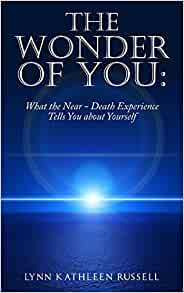
Episode 169 – Near Death Experiences, Is there an afterlife? What happens when we die? w/ Lynn Russell
April 27, 2020 · 58:20
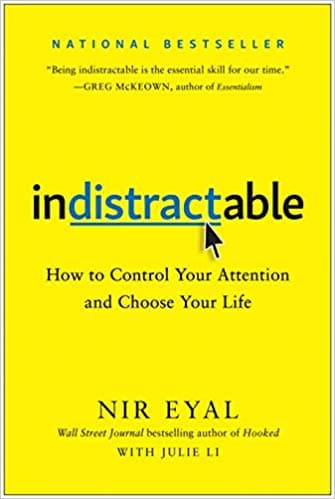
Ep#162 – Willpower, Focus, Attention, Optimizing Your Life & Becoming Indistractable w/ Nir Eyal
February 28, 2020 · 1:06:39
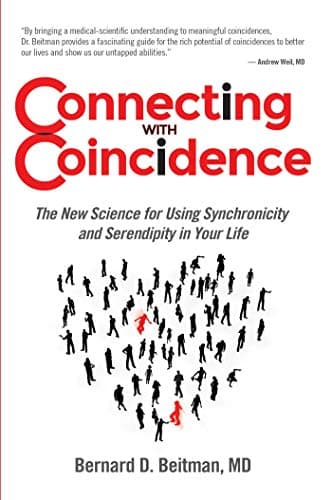
Episode 158 – Synchronicity, Serendipity, Meaningful Coincidence w/ Dr. Bernard Beitman
January 30, 2020 · 1:11:40

Episode 196: Waqas Ahmed — Polymathy, AI & the Future of Human Creativity
September 28, 2026 · 1:04:41
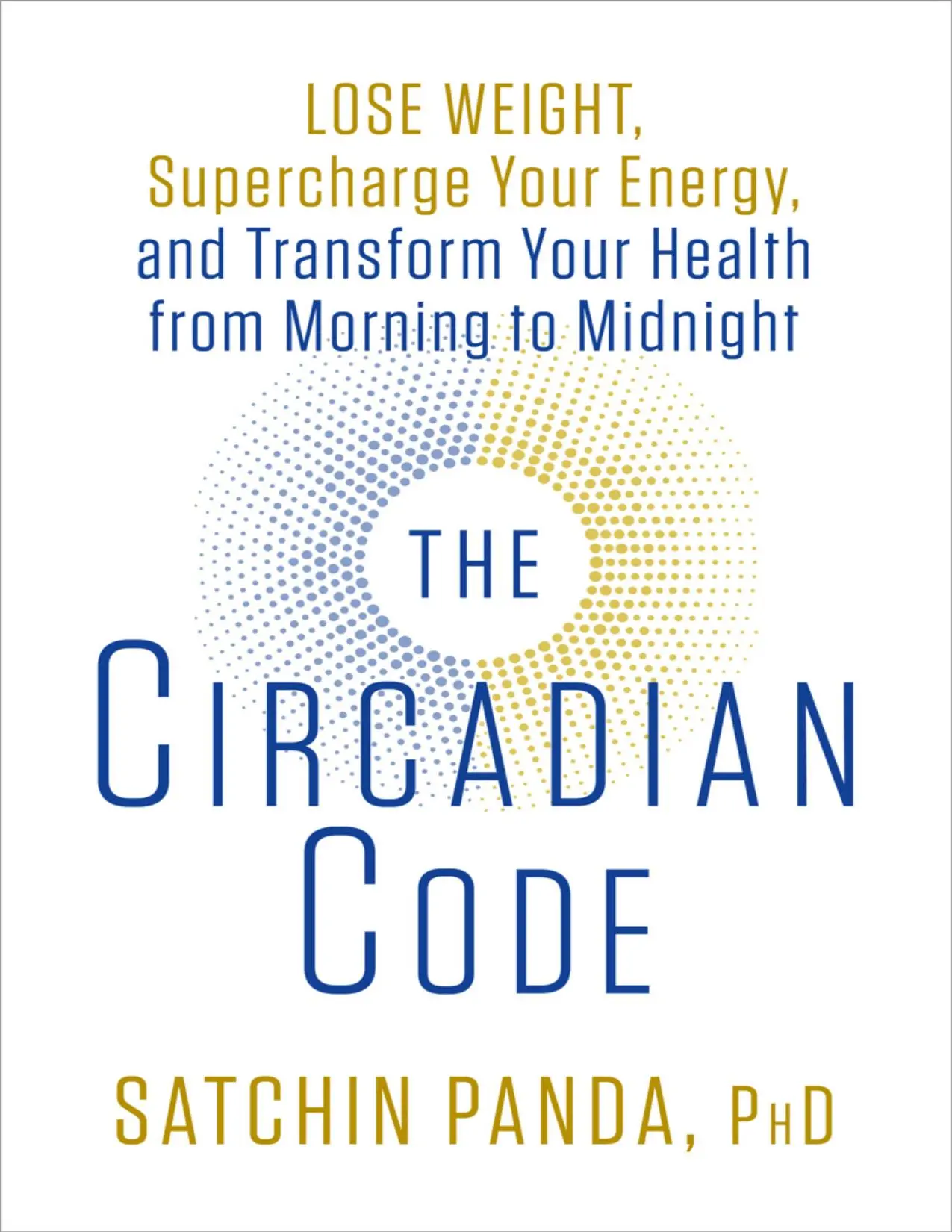
Episode 195: Dr. Satchin Panda — Circadian Rhythm, Sleep & Meal Timing
September 21, 2026 · 1:09:04
Independent conversations
Help make the next one possible.
Membership sustains ambitious, unhurried interviews and keeps the complete archive open to curious listeners everywhere.
Become a member