
The Human Experience · Episode
Episode 195: Dr. Satchin Panda — Circadian Rhythm, Sleep & Meal Timing
A conversation with Dr. Satchin Panda
https://media.blubrry.com/the_human_experience/fev.laz.mybluehost.me/podcasts/195-panda.mp3Podcast: Download (Duration: 1:09:04 — 63.2MB)Subscribe: Apple Podcasts | Spotify | Amazon Music | Android | Pandora | iHeartRadio | Podchaser | TuneIn | Deezer | Youtube Music | RSS | MoreDr.

Stay with the full conversation.
Episode field notes
Show notes
What if better health is not only about what we eat, how much we move, or how long we sleep—but when those things happen? Dr. Satchin Panda joins Xavier Katana for a practical, wide-ranging conversation about the biological clocks that organize daily life: sleep, light exposure, meal timing, metabolism, exercise, energy, and recovery.

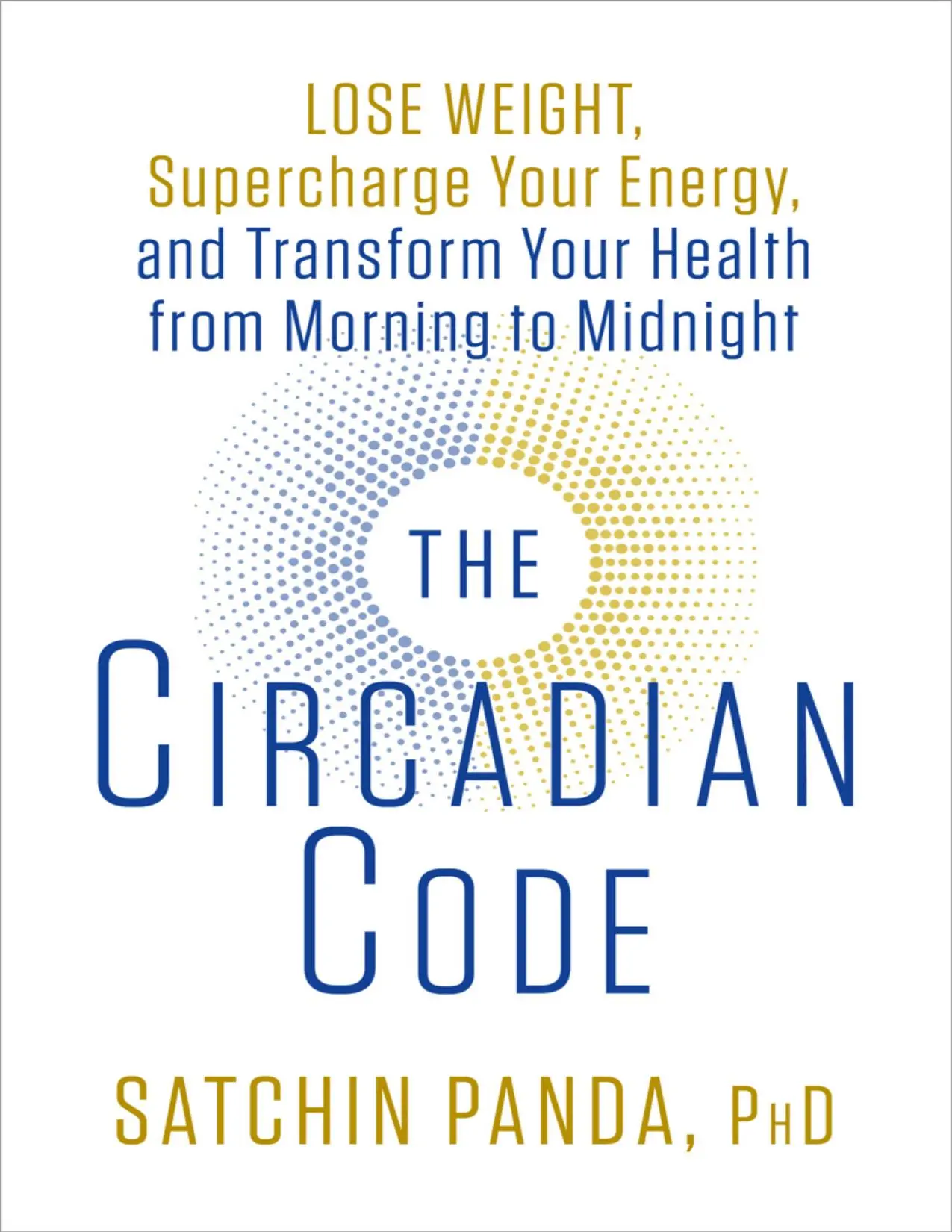
Dr. Panda is a leading circadian-rhythm researcher and the author of The Circadian Code. In this conversation, he explains why every cell in the body keeps time, why modern life can pull those clocks out of sync, and how small, repeatable changes can support a healthier daily rhythm.
From daylight in the morning and screens at night to late dinners, shift work, alcohol, travel, exercise, and time-restricted eating, this episode explores the practical levers that can help people work with their biology rather than against it.
About Dr. Satchin Panda
Dr. Satchin Panda is a professor at the Salk Institute and a researcher in circadian biology. His work investigates how daily cycles of light, sleep, activity, and food shape metabolic health and the timing systems found throughout the body. He is the author of The Circadian Code.
What We Talk About
- Why the body has many clocks—not only the one associated with sleep
- How morning light, evening light, and screens influence circadian timing
- Sleep cycles, consistent wake times, and why recovery is a whole-day process
- Meal timing, time-restricted eating, and metabolic health
- How late meals, alcohol, travel, shift work, and irregular schedules can disrupt daily rhythms
- The connection between activity, food, light, and the way the body uses energy
- Simple ways to design a more sustainable daily routine
Key Ideas from The Circadian Code
Circadian health is not a one-variable problem. The signals we give the body across a day—when we see light, eat, move, rest, and sleep—help synchronize systems that affect alertness, hunger, digestion, and metabolism. Dr. Panda emphasizes that progress does not require perfection: the aim is to create a rhythm that is realistic enough to repeat.
This conversation is educational and is not personal medical advice. For individualized questions about sleep, diet, medication, or a health condition, consult a qualified clinician.
Episode Chapters
- 00:00 — The Human Experience is in session
- 01:13 — The biological clock in every cell
- 02:48 — Sleep, light, and the modern day
- 04:22 — The Circadian Code and practical daily signals
- 08:09 — Meal timing, energy, and metabolic function
- 11:59 — Time-restricted eating and consistency
- 16:01 — Screens, alcohol, travel, and disrupted rhythms
- 19:41 — Exercise, recovery, and sustainable change
- 26:05 — Building a daily routine that works
- 30:15 — Closing reflections
Transcript
The episode transcript is aligned to begin at 00:00 with “The Human Experience is in session.”
About the guest
Dr. Satchin Panda
What if better health is not only about what we eat, how much we move, or how long we sleep—but when those things happen? Dr. Satchin Panda joins Xavier Katana for a practical, wide-ranging conversation about the biological clocks that organize daily life: sleep, light exposure, meal timing, metabolism, exercise, energy, and recovery.
The complete conversation
Transcript
171 timestamped passages · 10,021 spoken words · Speaker-labelled from the supplied Episode 195 recording
Transcript time begins when Xavier says, “The Human Experience is in session.” The produced introduction before that line is intentionally excluded. This is a lightly formatted source transcript and may contain occasional transcription errors.
[00:00] Xavier Katana: The Human Experience is in session. My guest for today is Dr. Satchin Panda. He is one of the world's leading researchers in circadian biology. Dr. Panda is a professor in the Regulatory Biology Laboratory at the Salk Institute for Biological Studies, where he holds the Rita and Richard Atkinson Chair.
[00:21] Xavier Katana: His research examines the biological clocks that govern our sleep, metabolism, immune function, brain health, and other aspects of physiology. His work has helped establish the importance of light exposure and meal timing, and helped pioneer the study of time-restricted eating. He's the author of The Circadian Code and The Circadian Diabetes Code, and his research asks a deceptively simple question: What if improving our health isn't only about what we do, but when we do it?
[00:53] Xavier Katana: Satchin, welcome to The Human Experience podcast.
[00:57] Dr. Satchin Panda: Thank you for the nice introduction, and I'm happy to be here.
[01:01] Xavier Katana: It's a pleasure to have you here. I have to say, the book was really easy to read. I got through it really quickly, and, you know, I really respect an author that can put a book together in a good way.
[01:13] Xavier Katana: I have it in my hand right now, and, you know, it was just, what inspired you to write this book? What led you down this path?
[01:24] Dr. Satchin Panda: Well, as a scientist, I do a lot of research on circadian rhythm, and I realize that there is so much wisdom in this field of circadian rhythm. And when I write a research paper that may be read by only 100 or 200 people, but I realize that billions of people will benefit by reading about circadian rhythm.
[01:48] Dr. Satchin Panda: So that's why I wrote the book, to empower everyone to learn about their own clock, because we have been given this wisdom in our own DNA, and we just have to follow very simple lifestyle tricks to get the wisdom of circadian rhythm, and we can live a long, healthier life. So that was the inspiration.
[02:17] Xavier Katana: Mm-hmm. Yeah. So it was more of a societal... You wanted to understand the societal functions of circadian biology and how that affected us as human beings.
[02:31] Dr. Satchin Panda: Yes.
[02:32] Xavier Katana: So, okay, so I want to start with a person, an example of a person just trying to get through an ordinary day. They're tired, they're busy, they're being told to optimize everything through everything they get on social media.
[02:48] Xavier Katana: What do you say to someone who has started to believe that their being tired all the time is simply part of their personality?
[02:58] Dr. Satchin Panda: I would push back gently on that. And first of all, I'll acknowledge that, yes, we understand that you are tired and you have fatigue. And one reason that might happen, and it's a very widespread, common reason, is usually your internal clock and your actual schedules have drifted apart.
[03:22] Dr. Satchin Panda: What I mean by it is we may be living like a shift worker, or we may be living like somebody who is already jet lagged, always jet lagged. Because when that person needs sleep, exercises, or sees any daylight during the day, all these are so out of sync that this disrupts our circadian rhythm.
[03:48] Dr. Satchin Panda: And every cell in our body has circadian rhythm, and we have to make sure that those are in sync. And when these circadian rhythms in our brain and body drift apart because our sleep is irregular, our meal timing is inconsistent, then our body doesn't work pretty well and we feel fatigue. So fatigue is not your personality, it's a wake-up call that your clocks are out of sync with your schedule.
[04:22] Xavier Katana: So what part of that mechanism is most important would you say? Would it be meal timing, or would it be when you sleep, or all of the above?
[04:34] Dr. Satchin Panda: Well, so when we think about timing, of course we can go on and on about meal timing, when one should get light and when one should sleep. But almost everybody can start with one time anchor.
[04:50] Dr. Satchin Panda: So for example, one can start with meal timing and say my last meal should be, say, at 7:00 in the evening, no matter what time I'm going to bed. Maybe the person is going to bed at 9:00, 10:00, 11:00, or 1:00. And the person may say, "Okay, so my one time anchor that I can stick to is, say, three hours before I go to bed."
[05:20] Dr. Satchin Panda: "That should be my last meal." And then once you start that, what typically happens is sleep improves. And once sleep improves, then in the morning the person feels more alert, full of energy, and then the day gets much better. And since the person hasn't eaten since previous night's evening, then there is a good appetite in the morning for a good breakfast.
[05:53] Dr. Satchin Panda: And when you start the day with a good breakfast, then you are less likely to eat sugary snacks in between and go through less sugar up and down. And that also builds up a good appetite for a small, modest size lunch. And then you come back home, have your dinner around the same time because that's your one time anchor that you have started.
[06:23] Dr. Satchin Panda: So I would say that you start with one time anchor, and if there's only one thing that you have to pick, then I would go for this: what time is your last call for meal? And typically what we suggest, based on the biology and hormonal control in our body, your last meal should be three hours before your habitual bedtime.
[06:49] Dr. Satchin Panda: So that means if your habitual bedtime is midnight, then your last meal should be actually 9:00. But no, you can make it 8:00 o'clock. And after that there is nothing other than maybe water and maybe calming tea. And that actually is a very powerful time anchor.
[07:11] Xavier Katana: Okay, so you're saying establish an anchor of time that we eat maybe three hours before we go to bed, and that will set a system in place where you're more hungry in the morning when you wake up.
[07:26] Dr. Satchin Panda: Yeah. And also what we have seen is when people stop eating three to four hours before bedtime, their sleep improves. And there are many people, including me, sometimes I wake up in the middle of the night and my mind races, or I used to wake up with acid reflux or something else. And many of them stop so that you get a full good night of sleep, at least six to seven, eight hours of sleep.
[07:58] Dr. Satchin Panda: So stopping to eat three hours before bedtime not only improves your metabolism, it also improves sleep in many cases.
[08:09] Xavier Katana: So, if we could back up a little bit, let's talk about something a little bit more fundamental. What does time mean to the human body or a human cell? Does each cell in our body have a measure of time, or is there one big biological clock?
[08:30] Dr. Satchin Panda: Yes, every cell, almost every cell in our body has its own clock. And initially for a very long time, scientists thought that there is a central clock in the brain that tells all the cells in our body when to do certain things. And later on, research in the last 30 years have established that no, every single cell has its own clock.
[08:59] Dr. Satchin Panda: What does it mean? So that means just like our brain has a clock, and it has to go to sleep, and during sleep it reset, rejuvenate, and repairs itself so that it can start performing well the next day. Similarly, every cell, for example, in our gut, in our liver, in our heart, in our lungs, even in our skin, there is a clock.
[09:25] Dr. Satchin Panda: And then these clocks essentially tell these organs when is a good time to perform well, and also more importantly, when is a time to slow down, repair, reset, and rejuvenate. And for example, people always ask me, "What is the simple test you can do to figure out that there is actually a clock everywhere?" And this is a simple test we had done many, many years ago.
[09:53] Dr. Satchin Panda: It was published well, and it is the idea that even your hair follicles, the base of the hair also has a clock. So that means your hair actually doesn't grow continuously. It grows mostly during daytime and doesn't grow much at nighttime. So one can do a simple experiment: you shave yourself in the morning and see how much your hair grows at 5:00 PM shadow, and then another day you shave yourself in the evening, 7:00 PM.
[10:27] Dr. Satchin Panda: At 5:00 AM, you check how much your hair has grown. It's a very simple experiment anybody can do to see that there are clocks everywhere, even at the base of your hair.
[10:39] Xavier Katana: Hmm. That's intriguing. I had never thought of it that way, that my hair also has a clock adjusted to my biology and circadian rhythms.
[10:51] Dr. Satchin Panda: Yeah, there is a reason for that because, you know, during the daytime, we're exposed to a lot of damage from UV, ultraviolet light, and there are also toxins we're exposed to, bacteria we're exposed to.
[11:07] Dr. Satchin Panda: And then at nighttime, the hair follicles have to slow down and repair themselves because at the base of the hair are our stem cells that divide and grow to give us hair. Similarly, the skin also repairs itself, and that's why we have a clock. And the skin clock is very important because when we get exposed to excess UV light at the wrong time, for example, you travel to an exotic place, you are jet lagged, and you go to the beach, get that nice warm sunshine, but if you don't have enough sunscreen, your skin is not repairing at the right time, and that can be damaging to the skin.
[11:52] Dr. Satchin Panda: So that's another example of why we have clocks everywhere.
[11:59] Xavier Katana: And what's an example of something that actually resets these clocks every day? Is it the exposure to light?
[12:09] Dr. Satchin Panda: Yeah, so that's a very intriguing question that we scientists were faced with for almost a century because, yes, light is the most dominant, most powerful cue, and it makes sense because, you know, throughout the year, many things can change.
[12:29] Dr. Satchin Panda: Humidity can change, temperature can change, and some days it's cloudy, some days it's not. But there is one constant that's always there. The sun will come up. Even if the sun is not there, a cloudy day has a lot of light, and then there is darkness. And then from season to season, there is a change in day length, so that means our body has to readjust every single day to this light.
[12:55] Dr. Satchin Panda: So light is the major resetting cue because every morning when we get up, open our eyes, and go outdoor or get some daylight, that bright light goes through specialized cells in our retina, our eyes, and particularly the blue spectrum of light, bright blue spectrum light that goes through the retina and tells our master circadian clock, which is at the base of our brain.
[13:27] Dr. Satchin Panda: It's a mouthful. It's called suprachiasmatic nucleus, and it resets that clock. And that clock controls when we're active and when we are asleep. It also controls melatonin level, many other hormone levels. So light is the major resetting cue. But around 2000, between 2005 and 2010, scientists also started to wonder that if there is a clock, say, in the liver, and it's always listening to the clock in our brain, what happens if the person eats at the wrong time?
[14:08] Dr. Satchin Panda: Because one function of the clock is to prepare the body for the right event. And for the liver clock, the biggest event that happens in a day is when we eat. And our gut also does the same thing. So the gut has to prepare itself to digest that food, so that means the liver and gut that produce, and pancreas, all of these organs that produce the digestive juice and the acids, before even we start eating, so that when we eat, the food is digested and all the nutrients are absorbed, and they're sent to the right organs in the right amount so that we feel energetic.
[14:51] Dr. Satchin Panda: So the question is, if we did the experiment first in mice — mice typically eat during nighttime — we fed the mice during daytime, and we asked what happens to the liver clock? And we realized that the mouse liver, gut, and all these organs didn't listen to the brain clock anymore. They followed when the mouse was eating.
[15:15] Dr. Satchin Panda: So that means if the mice was fed during daytime, then the liver clock adjusted itself, and during the daytime it was getting ready to absorb that nutrition and distribute it to the right organ. I think that was a landmark discovery because that essentially said that you not only have to figure out when you see light or when to avoid light for your brain clock, we also have to be mindful about when we eat and when we don't eat for the rest of our body.
[15:51] Dr. Satchin Panda: So light and food timing become very important in mastering our circadian rhythms.
[16:01] Xavier Katana: Would you say that the modern human is living in an environment that's the most destructive for our circadian biology because we're always exposed to blue screens? I mean, we have a screen in front of us almost all the time.
[16:17] Xavier Katana: I think most people have technology in their bedrooms. What do you recommend to people that live that way?
[16:29] Dr. Satchin Panda: Yeah, so let's go back to, it's more of a philosophical and a larger discussion. That is, what really distinguishes humans from all other species is we can control fire, and we can be active at a time when we are not designed to be active, and that's one single thing that distinguishes us from the rest.
[16:56] Dr. Satchin Panda: So almost 150,000 years ago when we controlled fire, then we extended the day, and we got the advantage of staying awake into the night. And if you look broadly at the societies and individuals who disrupt their circadian rhythm by staying awake late into the night or pulling an all-nighter, they are the ones who will accumulate wealth.
[17:26] Dr. Satchin Panda: So in a weird way, circadian rhythm disruption is the key to gaining knowledge. For example, high school and college students, they have to pull an all-nighter once in a while, and international trade, and commerce, and industrial output, 24/7 factories, all of these break circadian rhythm. So in a way, without circadian rhythm disruption, we cannot create wealth, but at the same time, the same circadian rhythm disruption also damages health.
[18:01] Xavier Katana: Mm-hmm.
[18:02] Dr. Satchin Panda: So now the challenge for scientists, society, and public policy is this: that we have been living with this inbuilt circadian rhythm for thousands of years, but we just woke up to its importance, and we are just realizing that just like 50, 60 years ago, people used to think that smoking is okay, and once we realized that smoking is bad, or another example is lead and asbestos in our home building, was considered okay, but once we figured out that it's bad, it's taking almost 50, 60 years to change course.
[18:48] Dr. Satchin Panda: So similarly, now is the kind of a wake-up time to figure out how to optimize our modern society, modern living, in a way that we can still continue to create wealth, but at the same time, we maintain our health so that we can actually live up to 100 years or longer with healthy longevity. And this is where scientific research is important, translational research is important, public policy is important, and also empowering individuals to understand the strength, the power of circadian rhythm, and that every person has the agency to control it, this power to live a long, healthy life.
[19:37] Dr. Satchin Panda: All of these are very relevant and important in these days.
[19:41] Xavier Katana: Mm-hmm. So what does a perfectly synchronized human day look like to you? What would it look like? You know, you're up for 12 hours, you sleep for 8, and then you've got, what, 4 hours left?
[19:57] Dr. Satchin Panda: Yeah, so this is a constant question, how should we organize our day?
[20:03] Dr. Satchin Panda: And in most of our studies, we ask people to... Everybody's schedule is different, so we ask people to, again, start with one time anchor. So, for example, going to bed can be a time anchor. So if you're going to bed around, say, at 11:00 every night, then try to go to bed around 11 plus or minus, say, 30 minutes.
[20:31] Dr. Satchin Panda: And be in bed, try to be in bed for eight hours. We're not saying that you should be sleeping for eight hours because large studies are now showing that six and a half to seven and a half hours of good sleep is associated with the most long, healthy lifespan. And during this sleep, your brain is not just stopping to work, it's actually getting into high gear for clearing its toxins and then strengthening synapses so that our memory is improved and restored.
[21:08] Dr. Satchin Panda: And there are many hormones that are secreted from our brain, for example, growth hormones and a few other hormones. They are very important for repairing not only the brain, but rest of the body. So after this eight hours in bed, after waking up, try to not eat for one to two hours because this is when, what I said, this is the changing of the guards.
[21:35] Dr. Satchin Panda: The night hormones are going down and then the day hormones are cranking up. And what I mean by that is melatonin, who is the night hormone or sleep hormone, it's halfway down. The stress hormone cortisol is almost at its peak. And both of these are not good for our metabolism, so that's why it's better to avoid food for one to two hours. And you can use that one to two hours in many different ways.
[22:03] Dr. Satchin Panda: For example, if you are not pressed for time and if you can go outdoor for a morning walk or if you can exercise next to a large window with daylight, there's a good time to get that light and some light exercise. And the next time anchor is your breakfast, breaking the fast. Since by this time you have already gone through 12 to 14 hours of fasting, you've built up your appetite and also your digestive juice, your kidney, your gut and liver are actually ready to have that food.
[22:45] Dr. Satchin Panda: It's better to have a good big breakfast, and this is the time also your body is much better in handling sugar. And then this is your second time anchor, the breakfast time, starting your food timing. And then after that you can count eight, nine, 10, or maximum 12 hours during which you can eat all your food.
[23:09] Dr. Satchin Panda: Because if you go beyond 12 hours, you are getting close to your bedtime. You're getting close to that three hours before your bedtime. And then in the late afternoon, if you haven't gotten your exercise in the morning, late afternoon is a good time to get your exercise. Particularly for older adults who have glucose or blood pressure issues or simply they have some joint issues, joint pain or arthritis, then late afternoon is when your joints are much warmer.
[23:44] Dr. Satchin Panda: They're more flexible, they have less risk for injury or fall. And afternoon exercise also improves blood sugar control and blood pressure control much better than the same exercise in the morning. So some modest exercise, up to even high intensity exercise in late afternoon, seems to be better than the same exercise in the morning.
[24:11] Dr. Satchin Panda: And then in the evening, three hours before bedtime should be your last meal, at least three hours. And then one also has to dim down light. And when I say dim down light, these days it's very challenging because people go and they want to have the biggest bang for their buck, so they buy this bright LED light that makes your home look like, you know, a drugstore or a grocery store in the evening.
[24:39] Dr. Satchin Panda: It's very bright. It slams your melatonin pretty low, and it becomes very difficult to fall asleep.
[24:46] Xavier Katana: Mm-hmm.
[24:46] Dr. Satchin Panda: So that's why if you have to invest in one thing, then it's switching, replacing your switches with dimmers. So in that way you can dim down the light in the evening. So these are some of the time anchors.
[25:03] Dr. Satchin Panda: It's going to bed at the right time. After waking up, give yourself one or two hours before your first bite. And then just get some daylight, either in the morning or during the day, at whatever time you can get at least one hour of daylight. Because daylight not only resets your clock, it reduces the risk for depression, it increases alertness.
[25:28] Dr. Satchin Panda: So this is really the best antidepressant out there. You just have to step outside. And then in the evening, you've got to dim down the light and stop eating three hours before bedtime. So these are some of the simple things that can be done to sustain a healthy circadian rhythm.
[25:45] Xavier Katana: Hmm. Yeah, yeah, that sounds very reasonable to me, just adjusting the light sensors in your house, maybe to dim the lights down, or stepping outside when you wake up in the morning to reset the suprachiasmatic nucleus that you—
[26:05] Xavier Katana: were talking about. But if you were to pick one thing that a listener could change after hearing us speak, what would you tell them to change about their lifestyle? Would it be eating at your time anchor three hours before you sleep, or getting more sleep, or dimming light, or getting more light?
[26:29] Dr. Satchin Panda: Yeah, for most people, stopping to eat three to four hours before bedtime is one very strong time anchor because it not only optimizes your circadian rhythm and rest of your body, it also improves sleep. So you get two for one. You try one, get one free. It's almost like that. And if you stop, again, three hours before sleep, then you also get a good appetite in the morning so that you have a good breakfast.
[27:00] Dr. Satchin Panda: And why breaking your fast at the right time or why breakfast is important — other people will say breakfast is the most important meal of your day for many different reasons. But my best reason is many people have their breakfast at home, and a home breakfast is always better than eating something outside because you have much better healthy breakfast at home than outside.
[27:25] Dr. Satchin Panda: So now by stopping eating three hours before your bedtime, you're not only getting two for one, you are actually getting three for one because you have a good appetite in the morning to have a good breakfast. So that's why I would pick stopping to eat three to four hours before bedtime as one of your strongest time anchors.
[27:47] Dr. Satchin Panda: And then coming back to other people who might have risk for depression, particularly people who have retired and they're not having a day job, so they don't have an incentive to go outdoor, no commuting or anything, or college students who are always stuck in their man cave, or students who are always stuck to their computer, they don't get enough light.
[28:13] Dr. Satchin Panda: So for them, if they're healthy enough and they feel otherwise healthy, getting light becomes very important because that takes care of their mental health. And once your mental health improves, then you get back your agency, and then you can think, "Okay, I have my agency. Now I can control what I eat, and now I'll go and stop eating three hours before bedtime."
[28:42] Xavier Katana: Mm-hmm. Yeah. It makes sense to me. You know, light seems to be the function — like you said, the sun goes up, goes down, and we have darkness, and then we have light, and certainly internally, our biology has a clock that's set to that, at least, you know, before... Well, when we were hunter-gatherers, we weren't living in this system of screens in front of us all the time as we see now, right?
[29:14] Dr. Satchin Panda: Yeah. So that's why we have to learn about circadian rhythm so that we can take care of ourselves. It's almost like, you know, if you go back to germ theory of disease, that there are bugs that cause disease, and once we learned about it, then we know that we have to wash our hands, we have to eat from a clean plate, and we cannot leave food outside and let it rot.
[29:43] Dr. Satchin Panda: So just like that — and we know that germ theory of disease essentially extended our lifespan by just preventing us from falling sick or having antibiotics and other stuff to save the young. So similarly, I think to live a longer, healthier life, we have to learn a few things about circadian rhythm, because that's really the...
[30:10] Dr. Satchin Panda: If germ theory was for disease, then I would say circadian rhythm theory is for health.
[30:15] Xavier Katana: Mm-hmm. Yeah. Makes sense. I'm a consummate night owl. I love to be awake at night. I find it some of the time that I do my clearest thinking. So what would you tell someone like me? Something that I could do in the morning when I get up, I usually get up around 11:00 AM—
[30:36] Xavier Katana: and, is to go outside maybe and get sun exposure?
[30:41] Dr. Satchin Panda: So what it sounds like is although you are living in Florida, right?
[30:48] Xavier Katana: Yes.
Dr. Satchin Panda: Although you are physically living in Florida, you are actually, your biological clock runs on California or Hawaii time.
Xavier Katana: Yeah. That might be it.
Dr. Satchin Panda: And that's perfectly fine as long as you're consistent with that.
Dr. Satchin Panda: Um, so for example, if you are, most days you're going to bed, say, at 3:00 in the, or 2:00 in the morning, and then waking up between 10:00 and 11:00, um, you essentially have picked up a different time zone, and you are living that time zone. Mm-hmm. And if you stick to that, if you can stick to that, then that's perfectly fine, and that's exactly what happens to many shift workers.
Dr. Satchin Panda: So you're essentially doing a swing shift or night shift, and the swing shift and night shift workers, if they can stick to that same shift, even on their off days, then usually they're, they are much more healthier than people who go back and forth between two shifts or two different time zones. Um, so the point is- We, you s- can still be productive and can still be healthy, um, as long as you stick to those time anchors.
Dr. Satchin Panda: And you're getting restful night of sleep, and during daytime after, say, 11:00, when you are awake during the daytime, because your day is now, say, between 11:30, 12:00 to 5:00 or 6:00, that's when you can get daylight, uh, or 7:00. So if you can plan to get some bright light, daylight, then, then you are doing pretty fine.
Dr. Satchin Panda: And your last call for meal can be even at 11:00, 10:00 or 11:00, or even 12:00 if you're going to bed at 3:00, and that should also be okay. You are just living in a different time zone.
Xavier Katana: Yeah. It seems to me one of the most fascinating ideas, uh, from your work is that food isn't merely nutrition, it's information about time.
Xavier Katana: Can you explain that- Yes ... a little bit more?
Dr. Satchin Panda: Yeah, so what happens is, um, just imagine that you have your best friend who, whom you like. The best friend shows up in the late afternoon, and that's when you have a tea, cup of tea or coffee, and you have a lot of discussion. If the best friend shows up at your place in the middle of your sleep, then that person is not your best friend anymore.
Dr. Satchin Panda: So similarly, uh, what happens is, as I said, um, a peripheral organ, so pancreas, our digestive system, our liver, all of them, they have clock. So that means these clocks do few things. Um, three different principles of clock is one is anticipating time. So suppose, say, you go to-- suppose, say, you have your breakfast at 9:00 every morning.
Dr. Satchin Panda: That means starting from 8:00, all your organs are anticipating that you'll have your breakfast at 9:00, so they are preparing your body. So the digestive juice gets secreted, and then, uh, your liver is ready, your intestine is ready to absorb all this food, and you have your food at 9:00, and everything goes perfectly fine But suppose, say, instead of 9:00 breakfast time, you have to catch a plane or something, so you are waking up at, uh, say, 5:00 or 6:00, and then you decided to eat at, um, 7:00 or 8:00 in the morning.
Dr. Satchin Panda: At that time, your organs are not ready. The circadian rhythm hasn't told the organ that this person is going to eat earlier because there is no way you can, uh, tell that. So then what happens is you, your body is not ready. You eat that food, the food may stay there undigested for an hour or so, and then only it'll start digesting, and the body gets confused, and it thinks, "Well, tomorrow is this person going to eat at 8:00 or 9:00?"
Dr. Satchin Panda: Because the clock is trying to reset, but at the same time it's not fully resetting, so it'll change slightly. So the next day, if you're going back to your 9:00 breakfast, then the body is actually anticipating you might have your breakfast at 8:30 instead of 9:00, so it-- you miss that peak digestion time.
Dr. Satchin Panda: So that's why food becomes, uh, encoder of time because you're telling your body or your di- digestive system, your entire body almost, even our skin actually takes timing cue from food as well, that this is the time when you're supposed to eat, and this is the time when your body should be ready to digest food and to assimilate that nutrient and send that nutrient to every place, including your skin, your, um, endocrine organs or hormone-producing glands.
Dr. Satchin Panda: Um, so that's why food becomes an encoder of time.
Xavier Katana: Yeah. I, I mean, it, when I read TRE, time-restricted eating, I didn't realize how important it was to the overall picture of a healthy working body. And I didn't realize that when I was eating was as important as what I was eating, right? So-
Dr. Satchin Panda: Yeah ...
Xavier Katana: y- you would say, I think according to your work, it, it's just as important as when you eat as to what you eat.
Dr. Satchin Panda: Yes, and also how much you eat. So, um, you know, the nutrition research has, um, taught us how much we eat is also important. The quality of food is also important. And I guess our work added one more pillar to nutrition science, that when you eat that food is also important. And, and that way what happens is if we can, for example, in the mouse experiment that we did, we gave mice even unhealthy food.
Dr. Satchin Panda: But then if we, if the mice ate time-restricted manner, then, uh, this timing could reduce the bad effect of the unhealthy food, and the mice remained healthy. And even if we took, uh, obese diabetic mice and put them under time-restricted eating when they're eating everything within eight to nine hours, then they also become healthier.
Dr. Satchin Panda: So those are some of the strongest example that timing can improve health, and that's what we are also seeing in many human studies, not all, that irrespective of health conditions and what kind of food they were eating because, you know, everybody, I would say that everybody has their unique combination of food that they like.
Dr. Satchin Panda: Um, but one thing everybody, when they do, they reduce the window of time and be consistent within 8, 9, 10, or 11 hours, then their health improves. And it's not only one thing that improves because, you know, different people have different health conditions. They have different challenges, and we see different aspects of health improves.
Dr. Satchin Panda: So it's not only mice, not only fruit flies in the lab. We're beginning to see more and more evidences that, uh, this also helps people, um, across their lifespan or across their health conditions. So whatever medications they're taking, they can potentially combine it with, uh, time-restricted eating or, um, intermittent fasting with the right window, uh, and they can still see health benefits.
Xavier Katana: What's your take on alcohol, alcohol consumption, and, and sleep?
Dr. Satchin Panda: Well, those, uh, who are wearing, uh, wearables where they can monitor heart rate and heart rate variability, it's very clear that if you have a glass of wine or some alcohol in the evening, then, uh, your heart continues to rest. Um, the heartbeat is much higher late into the night. And that means although you are sleeping, and during sleep all these organs should actually slow down and repair and reset themselves, um, your heart doesn't slow down.
Dr. Satchin Panda: So that means your heart is not getting enough time to repair and reset itself or rejuvenate itself. And, uh, that's just if you're having a wearable, you can see that. It's very obvious. You can also see a lot of people, um, might fall asleep under alcohol, but then they don't have good quality sleep for the rest of the night.
Dr. Satchin Panda: Um, so these are some of the, some of the effects of alcohol, and the good thing is with all these wearables, we can, we can see it ourselves. So wearables are like mirrors. Just like mirrors if we watch-- we stand in front of mirrors to see whether our hair is okay or how we look. Similarly, the wearables actually tell us how is your body doing.
Dr. Satchin Panda: And, um, I guess everybody should be a little scientist on themselves to, to pay attention to what they're eating, when they're eating, how much they're eating, or how they're sleeping, and how it is having an impact on their health. And once you become a scientist on yourself, uh, you'll discover a lot of things about, uh, your own habit and how they affect your health.
Dr. Satchin Panda: And one thing that everybody discovers is how the timing of food, timing of exercise, timing of sleep, and how much they sleep has a huge impact on their health. And then the next layer they will see is how the quality of food, whether it's alcohol, whether it's very heavy, greasy, spicy food late in the night, how it affects their digestion, how it affects their sleep.
Dr. Satchin Panda: So, um, I guess this is a very fascinating time where we're actually given all these tools to monitor ourselves and then see how our habits affect our sleep and health.
Xavier Katana: Yeah, it is a fascinating time where we do have these biofeedback devices that we can wear and get information on what our health is doing and, and tracking how well our body's performing based on our activities.
Xavier Katana: It, it leads me into my next question. Um, how would you determine when a person is either short on sleep, whether they're eating at the wrong time, or whether they're dealing with a problem that needs a more serious clinical assessment?
Dr. Satchin Panda: Yeah. So these are very tricky questions because sometimes, um, when people cannot sleep well, that can be the tip of the iceberg.
Dr. Satchin Panda: Um, you know, for example, people who have a lot of anxiety and, uh, some brain health issues, they may not have-- they may not sleep well. And so they initially, when you are not sleeping well and you are waking up three, four times, and you figure out that it's not because of your anxiety then, um, or because of something else, then maybe one should see a doctor.
Dr. Satchin Panda: Uh, but you can also ask-- So one thing that you are not sleeping enough, the biggest sign is you are tired throughout the day. And particularly people who have sleep apnea or who snore, one of the telltale sign is they feel very sleepy throughout the day. They even can fall asleep behind the wheel. And, uh, but if you feel that you are in bed for eight hours and you're still very tired, then one reason may be, uh, you're not breathing enough, and that can be sleep apnea.
Dr. Satchin Panda: Or maybe you have a deviated septum or you may be allergic, so your nose is clogged and you are not s- breathing enough, so you can, uh, check those things. Uh, if you're waking up too many times or at least the three AM wake up when you, you're going to bed between nine and eleven or twelve, and then you're waking up between three and four, and you are wide awake, and your bed is warm, your body is warm, then in many cases it may be due to you ate too close to your bedtime or your core body temperature did not go down enough so that you are not getting enough sleep And those things are addressable because you can eat a little bit earlier or you can, uh, take a evening shower before bedtime, and you can also reduce or dial down the temperature in your bedroom.
Dr. Satchin Panda: Or if it is someone else in the bed snoring or turning too many times that's waking you up, then you also know what to do. And when it continues, you have tried all of these, and then it still continues, then maybe you should see a, a doctor to describe why, and then, and maybe you'll figure out why you are waking up.
Dr. Satchin Panda: Uh, so that's, uh, I think if you're too tired throughout the day, that may be -- and if you s-know that you are in bed for eight hours, that's one reason. The other reason is everybody has different sleep need. Eight hours in bed is not, um, a magic number for everybody. Um, in the same household, one can get away with six hours, one needs even nine hours.
Dr. Satchin Panda: For example, teenagers who are engaged in sports, they may actually need more than eight hours, uh, but they often don't get eight hours. And this is where One thing one can do is in the weekend give them complete free and then see how long they are sleeping. And if they have lot of sleep debt, then they can sleep even 10, 11, 12 hours.
Dr. Satchin Panda: Then you know that this person is not getting enough sleep, and eight may not be enough. Nine may be the number that this person should shoot for.
Xavier Katana: Mm-hmm.
Dr. Satchin Panda: So that's one. And then the other question is, uh, how do you know that you are not eating at the right time? Uh, I mean, it's very, uh, simple in the sense that, of course, you can see how close to bedtime you are sleep- you are eating.
Dr. Satchin Panda: And for some people, when they eat very close to bedtime, then they go- they do get acid reflux because our stomach is more sensitive to food to produce extra acid for digestion when the food is very close to bedtime. And if you all of a sudden started mild acid reflux, particularly at bedtime, not in the morning, then that may be a telltale sign that you are eating at the wrong time, and maybe changing your diet and/or changing the timing of eating can help you.
Dr. Satchin Panda: Uh, the other thing that happens is people who eat regularly three hours before bedtime, and then one night they have some social event and they're eating very late into the night, the next morning their digestion may be off. They may feel like the food is still there, it's not digested, and they get what is called food hangover.
Dr. Satchin Panda: And that's also another sign that you, uh, that late-night eating was not good for you because what happens is just like our brain goes to sleep, our digestive system also goes to sleep at night. Uh, so for several hours in during our sleep, our, um, intestine doesn't move. So that means, uh, food slowly goes through the intestine to get digested and then nutrient get absorbed.
Dr. Satchin Panda: That doesn't happen, so it just, the food just sits there and it gets fermented or something else. So that's why you feel really crappy the next day. So these are some of the signs that, um, your timing may be off, and all of these will make you just tired, lack of energy, sluggish throughout the day. Um, and you can just look back and see when you ate, when you slept, how long you slept.
Xavier Katana: Mm-hmm. Yeah. Yeah. It makes a lot of sense. I mean, it, it fits into the picture of my, my life, that I've applied your book to my life, and it, it's made a lot of sense for me personally. Uh, my next question for you is, why can someone be exhausted all day and then suddenly become alert at the middle of the night?
Dr. Satchin Panda: Yeah, so those are, uh, some of the questions we still struggle with because, um, in science, it's kind of interesting that we have so much trouble at nighttime, but we haven't figured out why. The reason is most of the clinical research is actually done when you are awake, and there are very few things that are, um, historically it's very-- It was difficult to do experiments on humans at night.
Dr. Satchin Panda: Even now also, it's very difficult to do experiments on humans at nighttime, um, for obvious logistics issues. And one reason may be, um, for example, our hormones are off. Um, so almost every hormone in our body has a circadian rhythm or daily rhythm. So for example, as I mentioned, our melatonin peaks in the middle of our sleep.
Dr. Satchin Panda: Cortisol, the stress hormone, peaks in the morning. But again, if we do a lot of exercise close to our bedtime, then that stress hormone cortisol can go up, and it may be very difficult for us to fall asleep. So that's one more reason our brain tends to sleep, so we may wake up completely alert. The other thing that can happen, uh, is, um, sleeping with the lights on.
Dr. Satchin Panda: And, uh, it, it may not be a bright light, but sometimes people are very sensitive to light. They may not understand it well. Um, if you want to do an experiment on how sensitive you are to light, you can put a sleeping mask and see whether your sleep actually improves with a sleeping mask. And if it improves, then you know that you are so sensitive to light that even the tiny light indicators that are now everywhere, um, the small LEDs that are on even your fans and your, um, you know, nit- nitric oxide or the, uh, carbon monoxide sensors, and everywhere there are these lights Mm-hmm And personally, I am sensitive to those, so I actually wear, in most days I have a sleeping mask because those things can wake me up in the middle of the night.
Dr. Satchin Panda: Um, the other thing is noise. And you might think that you are not woken up by noise, but again, this is another experiment that you can do is, uh, wear some comfortable earplugs and try to sleep. And sometimes you get much better sleep with earplugs because even the small noises can wake you up. And this becomes more important as we get older because our arousal threshold goes down.
Dr. Satchin Panda: So that means little movement in the bed, little noise, little light, all these disturbances can wake us up from our deep sleep or our light sleep. So these are some of the reasons, but we truly don't know on an individual basis why somebody wakes up in the middle of the night and is wide awake. And, uh, hopefully some of the newer wearables where we can not only monitor just, um, blood flow, heart rate, and oxygen level, but other things like, um, for example, our brainwaves, uh, our core body temperature, a few other things, then we'll get a better handle on why a person may be waking up and staying awake, wide awake at, in the middle of the night.
Xavier Katana: Yeah. Yeah. Makes sense. So, uh, you know, for, for the nurses, physicians, police officers, factory workers, or first responders that have no choice but to work at night, what can they realistically do to reduce the damage of, of working at night?
Dr. Satchin Panda: This is a very hard question because, uh, there are many... There's only n- there's no uniform shift work, right?
Dr. Satchin Panda: So there are night shifts, there are swing shifts, there are morning shifts. Then there are 24-hour shifts. And 24-hour shift can start at 8:00 AM or they can start at 8:00 PM. So and then the shift workers, uh, they may stay in the same shift for months, uh, sometimes they actually change their shifts even in the middle of the week.
Dr. Satchin Panda: So that's why it becomes very difficult to give a one lifestyle that fits all shift workers.
Xavier Katana: Mm-hmm.
Dr. Satchin Panda: Um, and let's take the easiest, not, I won't say easiest one, but one that is more consistent, like 24-hour shift. Because 24-hour shift doesn't change. It's the same 8:00 AM to 8:00 AM, for example, for San Diego firefighters, uh, they report to work at 8:00 AM, they get off work at 8:00 AM.
Dr. Satchin Panda: And in this kind of shift work, uh, every day is the same schedule. So now what we did in San Diego firefighter study was to ask them whether they can eat everything within, say, a given 10-hour window, because we also don't want them to eat less because what we have seen is when people eat within a shorter window, four, six, or eight, they can inadvertently reduce their calorie intake and, uh, that can have a adverse effect if you're already healthy.
Dr. Satchin Panda: So for this San Diego shift workers, the firefighters, they actually, uh, selected a 10-hour window and they, um, remained healthy. Those who were at a high risk for diabetes or who had pre-diabetes, diabetes, high cholesterol or high blood pressure, they all improved their condition. And what was surprising was on the off days, they slept much better.
Dr. Satchin Panda: And there was a big, uh, boost for their health because, um, even on off days, they would struggle to sleep well, and that happened. Another thing is when you stop eating, and most of the shift work- most of these, uh, 24-hour shift workers, they stopped eating, say, between 6:00 and 8:00 PM, in the evening.
Xavier Katana: Mm-hmm.
Dr. Satchin Panda: Uh, some stopped at 6:00, some stopped at 7:00 or some at 8:00. And what was interesting was if you think about these active workers, um, even regular workers who are not doing shift work, when do we socialize? When do we drink that late night alcohol? It's always after 6:00 PM, always after 7:00 or 8:00 PM.
Dr. Satchin Panda: So what we found was in this study, when people stop eating at 6:00, 7:00 or 8:00, um, then they also reduce their alcohol intake. So we think that some of the benefits of time-restricted eating in some of the studies may be coming from reduction in alcohol intake, and also reduction in ice cream and all these desserts that are typically consumed late at night.
Dr. Satchin Panda: So this, this was kind of interesting with the 24-hour shift workers. There are other studies, uh, my colleague Emily Manoogian here is doing where she is working with night shift nurses who do 7:00 PM to 7:00 AM shift. Um, this is a bit challenging because they still want to be, uh, fully active even at 6:00 AM in the morning because a small mistake from a nurse can have a huge consequence for the patient.
Dr. Satchin Panda: Um, so in this case, uh, she's working with nurses to see whether they can stop eating, say, at midnight or 1:00 AM. That should be their last, um, good sized meal. And then between 12:00 or 1:00 till they leave work, say, 7:00 AM, they might have a low glycemic, uh, snack, which can be boiled egg or, you know, hummus and something else which is low glycemic.
Dr. Satchin Panda: And that, uh, work is still going on because it's a large 150, 180 person studies. But what we have seen so far, nurses actually like it, uh, because when they get home, they can still get their, uh, sleep after they have done their morning routine at home, and they're still fully energetic until their shift change stops.
Dr. Satchin Panda: So these are only two cases that we have dealt with. We haven't dealt with rotating shift where people actually go back and forth between day and night shift. And this is where I think-- this is where the policy comes into play. I don't think there should be any shift work where people have to change their shift within a month.
Dr. Satchin Panda: They should be in the same shift for at least a month. And we see that, for example, in San Diego Police Department, they stay in the same shift for two to three months, so then the body gets enough time to adjust to the n- to the shift. And they can still be very healthy if they follow certain very simple principles of circadian rhythm.
Dr. Satchin Panda: So my long answer to your very simple question is, in some cases, shift workers can adopt some of the circadian principles to manage their health. And in some other cases where the shift is changing every week or every few days, this is where policies should come into play so that no shift workers should have to change their shift within the same week
Xavier Katana: Yeah.
Xavier Katana: It makes sense to me. You know, I want to move into mental health, uh- Yeah ... next. And I mean, we're, we're approaching the end of the first hour, then we have a bonus episode that's about 30 minutes or so. Okay. But, um, eh, let's talk about mental health for a little bit. Let's, let's talk about how, how much is mood connected into biological timing and anxiety, uh, seasonal affective disorder, stuff like that?
Dr. Satchin Panda: Yeah, so there are many ways mood is related to, linked to circadian rhythm, and one is, as you pointed out, seasonal affective disorder, um, SAD. And this is when, this is also winter blue when people don't get enough light in wintertime because they're not going outdoor. And light has an alerting effect on human brain, so that makes sense that when we don't get enough light, we, uh, feel depressed.
Dr. Satchin Panda: And what is interesting is it's not only, uh, uh, the seasonal affective disorder or the depression due to lack of light does not only happen in places like Canada and Switzerland or Sweden, it can happen in Florida and California. The reason is, um, in our studies we have seen more than 50% of adults who live in sunny San Diego, even in summertime, they actually don't get even a, even one hour of daylight because we spend more than 90% of our time indoor.
Dr. Satchin Panda: So light is one reason. The lack of light is, bright light during daytime is one reason, um, our mental health suffers. Then the second reason is When we sleep less or when you have irregular sleep timing, and that's prevalent among young adults in high school and college students, then that also imbalances our hormones and our brain health in a way that they're more prone to anxiety, uh, bipolar, and depression.
Dr. Satchin Panda: Then the third thing that happens, particularly for people who are hospitalized for serious illnesses, um, in most hospitals, hospital rooms, people don't get more than 300 lux of light, whereas one should get at least 1,000 lux of light for an hour. And at nighttime, there's a lot of disturbances, so that leads to, um, lot of mental health issues.
Dr. Satchin Panda: And one important one is delirium, where people lose the sense of time and place. And one in three adults who is in a adult ICU gets delirium. And once people get delirium, it's not only a mental health issue, it also deteriorates their general health, and they're more likely to take longer time to recover.
Dr. Satchin Panda: So these are many different ways that, uh, circadian rhythm, light, or the lack of sense of time disturbs our brain in a way that we are more prone to mental health issues. And why we know that these are causal? Because, for example, in hospitals, um, ICU patients who have access to a window that brings in daylight, uh, the risk for delirium is low.
Dr. Satchin Panda: And many depressed patients, they do respond to light therapy. And, uh, many depression patients also, if they have irregular or insufficient sleep, managing sleep also improves their mood. So these are causal, these are not associated or correlated.
Xavier Katana: Mm-hmm. Uh, what's something, Dr. Panda, that after all of your research and writing this book, something that you've learned that's changed your way of thinking about health and circadian rhythm that you've changed personally?
Dr. Satchin Panda: Yeah, there are two things that I have changed, and one is light and one is food timing. Because, you know, throughout my student days, PhD, and postdoc, all of this time, I never paid attention to when I ate. And, you know, I was, uh, at least 20 pounds heavier than what I am now, and I was almost on the verge of prediabetes.
Dr. Satchin Panda: I was not sleeping well. I used to wake up too many times. And then when I saw those mice and how they improved their health, it was a no-brainer to stop eating, um, three to four hours before bedtime. And the first thing that I saw was my sleep improved tremendously. I was not waking up at 3:00 and worrying about my next grant or next manuscript.
Dr. Satchin Panda: And I used to have acid reflux, and I used to on, be on acid reflux medication three, four times a week, and that completely stopped. Like, almost there was a abs- there is a sudden break, and I haven't had acid reflux, uh, for years now. The second thing that I realized was, um, I used to wear a light sensor, light monitor on my wrist to see how much light I was getting, and I was shocked to see that I was getting less than one hour of daylight.
[1:03:41] Dr. Satchin Panda: And that, too, I was getting that light when I was driving to work or driving back from work. And, uh, my office used to be in the basement, so I never got enough light. So then I stopped wearing sunglasses because inside the car, you are not actually getting UV light, which is damaging, and you get enough light to improve your mental health.
[1:04:06] Dr. Satchin Panda: And unless the sun is on the horizon, like sunrise time or sunset time, um, most of us actually may not need, or at least I don't need sunglasses, because sunglasses really cut down that bright light. So these are two things that, um, I adopted after reading about or researching on light and food timing.
Independent conversations
Help make the next one possible.
Membership sustains ambitious, unhurried interviews and keeps the complete archive open to curious listeners everywhere.
Become a member