

The Human Experience · Episode
Episode 33 – Dr. Gabor Maté
A conversation with Dr. Gabor Maté
Dr. Gabor Mate is a world renowned speaker, best selling author and lecturer who specializes in the study and treatment of addiction. In this episode we spoke to Dr.
Stay with the full conversation.
Episode field notes
Show notes
Dr. Gabor Mate is a world renowned speaker, best selling author and lecturer who specializes in the study and treatment of addiction.
In this episode we spoke to Dr. Mate regarding various aspects of this condition as viewed by western society, how we can change some of the misconceptions regarding addiction and use compassion when dealing with people suffering from this disease.
A renowned speaker, and bestselling author, Dr. Gabor Maté is highly sought after for his expertise on a range of topics including addiction, stress and childhood development. Rather than offering quick-fix solutions to these complex issues, Dr. Maté weaves together scientific research, case histories, and his own insights and experience to present a broad perspective that enlightens and empowers people to promote their own healing and that of those around them. For twelve years Dr. Maté worked in Vancouver’s Downtown Eastside with patients challenged by hard-core drug addiction, mental illness and HIV, including at Vancouver’s Supervised Injection Site. With over 20 years of family practice and palliative care experience and extensive knowledge of the latest findings of leading-edge research, Dr. Maté is a sought-after speaker and teacher, regularly addressing health professionals, educators, and lay audiences throughout North America.

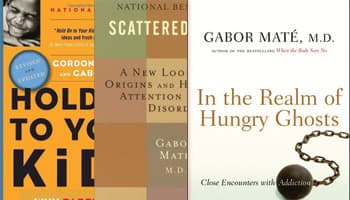
As an author, Dr. Maté has written several bestselling books including the award-winning In the Realm of Hungry Ghosts: Close Encounters with Addiction; When the Body Says No: The Cost of Hidden Stress; and Scattered Minds: A New Look at the Origins and Healing of Attention Deficit Disorder, and co-authored Hold on to Your Kids. His works have beenpublished internationally in twenty languages.
Dr. Maté is the co-founder of Compassion for Addiction, a new non-profit that focusses on addiction. He is also an advisor of Drugs over Dinner.
Dr. Maté has received the Hubert Evans Prize for Literary Non-Fiction; an Honorary Degree (Law) from the University of Northern British Columbia; an Outstanding Alumnus Award from Simon Fraser University; the 2012 Martin Luther King Humanitarian Award from Mothers Against Teen Violence; and the 2012 AccolAIDS award for Health Promotion and Harm Reduction, Positive Living Society of B.C.. He is an adjunct professor in the Faculty of Criminology, Simon Fraser University.
A recurring theme in Maté’s books is the impact of a person’s childhood on their mental and physical health through neurological and psychological mechanisms, which he connects with the need for social change. In the book In the Realm of the Hungry Ghosts, he proposes new approaches to treating addiction (e.g. safe injection sites) based on an understanding of the biological and socio-economic roots of addiction.
He describes the significant role of “early adversity” i.e. stress, mistreatment and particularly childhood abuse, in increasing susceptibility to addiction. This happens through the impairment of neurobiological development, impairing the brain circuitry involved in addiction, motivation and incentive.
Dr. Mate argues the “war on drugs” actually punishes people for having been abused and entrenches addiction more deeply as studies show that stress is the biggest driver of addictive relapse and behavior.


He says a system that marginalizes, ostracizes and institutionalizes people in facilities with no care and easy access to drugs, only worsens the problem. He also argues the environmental causes of addiction point to the need to improve child welfare policies (e.g. U.S. welfare laws that force many single women to find low-paying jobs far away from home and their children) and the need for better support for families overall, as most children in North America are now away from their parents from an early age due to economic conditions. He feels that society needs to change policies that disadvantage certain minority groups, causing them more stress and therefore increased risks for addictions.
The impact of childhood adversity is also noted in When the Body Says No: Understanding the Stress-Disease Connection. He notes that early experiences have a key role in shaping a person’s perceptions of the world and others, and in stress physiology, factors that affect the person’s health later on. He says that emotional patterns ingrained in childhood live in the memory of cells and the brain and appear in interpersonal interactions. He describes the impact of ‘adverse childhood experiences’ or ACEs (e.g. a child being abused, violence in the family, a jailed parent, extreme stress of poverty, a rancorous divorce, an addict parent, etc.) on how people live their lives and their risk of addiction and mental and physical illnesses, as seen in a number of U.S.-based Adverse Childhood Experiences (ACE) studies. Having a number of ACEs exponentially increases a person’s chances of becoming an addict later on e.g. a male child with six ACEs has a 4,600% or 46-fold increase in risk. ACEs also exponentially increase the risk of diseases e.g. cancer, high blood pressure, heart disease, etc. and also suicide and early death.
Dr. Mate argues that patients should therefore be encouraged to explore their childhoods and the impact on their adult behaviors. Overall, he argues people benefit by taking a holistic approach to their own health. For instance, he has seen people survive supposedly terminal diagnoses by seriously considering their “mind-body unity” and “spiritual unity”; going beyond “the medical model of treatment.”
He has also spoken about how the rise in bullying, ADHD and other mental disorders in American children are the result of current societal conditions e.g. a disconnected society and “the loss of nurturing, non-stressed parenting.” That is, we live in a society where for the first time in history, children are spending most of their time away from nurturing adults. He asserts that nurturing adults are necessary for healthy brain development.
Find Dr. Maté and his work here: www.drgabormate.com
A big thanks to Dr. Mate for being on the show Music: The Glitch Mob – Drive it like you stole it.
Read the conversation
Transcript
welcome to the human experience podcast the only podcast designed to fuse your left and right brain hemispheres and feed it the most entertaining and mentally engaging topics on the planet as we approach our scent please make sure your frontal temporal and occipital lobes are in their full upright position as you take your seat of consciousness relax your senses and allow us to take you on a chip we are the intimate strangers thank you for listening what’s
up guys such an interesting episode here with dr. Gabor mattei I was palpably nervous for this episode I mean I’m nervous before all of our interviews but I was especially nervous for this one so excuse my nervousness otherwise really interesting episode here be sure to check out dr. Montes work also please subscribe to us on YouTube follow us on twitter at the human XP and like our facebook page thank you guys so much for
listening the human experience is moving through the reward pathways in your brain as we speak to my guest bestselling author world renowned speaker and lecturer dr. Gabor mattei dr. matthias welcome to hxp it’s a pleasure to have you with us thank you dr. Monta if you could just open this
conversation with the brief introduction to who you are for the people that don’t know I think that would help lay the foundation sure so I’m medical doctor retired at you for medical or three years ago after 32 years I wrote consani practice I worked in cali door care looking after terminally ill people I was interested in child development how the impact of really experienced affects people throughout the lifetime and then for 12 years I’ve worked in
what is North America’s most concentrated area of drug use Vancouver’s Downtown Eastside where I worked with people who live with HIV drug addictions hepatitis C and all the complications of armed drug addiction and and social authorization I’ve written four books including in the realm upon your ghost and addiction and when the body says no on a mind-body unity and help an illness and what I found over the years that is that you
can’t separate human emotion from physiology of human beings you can’t separate individuals from the environment in other words disease in a person is not a unitary solitary discrete event but reflects their relationship to the environment including the social and psychological mind I thought I found that that stupid of cancer or roto botrytis i found that trauma is our fundamental influence and the unserved later disease and of mental
illness specifically addictions and other problems in other words the unity of a human life and that how the environment were born into conceived in riordan has decisive influence on our health later on and the beliefs that we develop or under selves based on those early experiences also a huge impact on our health later on can we just start with and I’d like to get into a few things that you mentioned but let’s start with how do we define addiction
addiction as any characterizes any behavior that a person finds pleasure or relief in the short term or craves but is negative consequences in the long term and is unable to give it up despite those negative consequences so craving pleasure relief in the short term negative long-term consequence inability to give up that’s when our addiction is and that’s whether it’s substances or sex or gambling or shopping alcohol
whatever it is that’s what defines an addiction why do you think this is such a wide problem have you have you noticed that addictions are the same all over the world or are they different based on societal groups oh they’re very cultural it depends on where it’s happening and why and the common basis for addiction on the individual level is trauma in other words if you ask yourself i mean if if you get pics Xavier you listen to
my definition of addiction by that definition can you tell me if you’ve ever done addictive behavior in your life yeah sure okay what if you didn’t say what was wrong with it was right about her what did it do for you being me feel good my way it removed the stress from my life okay in other words the addiction wasn’t the problem the eviction was your attempt to solve a problem of stress so the purpose of a question is why do you so much stress in
your life and and how is it that you didn’t learn how to handle stress in a more autonomous and and liberated away and so in other words something happened to you and so that when saying about addiction is that it’s always every spawns to something that happened it’s not just a disease that comes on for no reason it’s actually an attempt on the part individual to solve a problem that their life is presented them with and so
the more trauma there is the more stress there is the more childhood emotional loss there is the more people then run to addictions to relieve the stress of all back or to leave the pain of it and so that you see a dictionary in societies where there’s a lot of trauma and you the addiction initiate issues and cultures where there’s a loss of the holding environment is the loss of the connection and the community in the
contact that would help you deal with stress in more helpful ways yeah I mean I think one of the most important things that you mention is that people just want to be normal and people are just trying to be normal can you get into that a bit more please well they asked me when I ask people is it just you what the addiction do for you they’ll say well it it really stress it to help me soothe my pain it made me feel more connected it gave me a sense
of control these are normal human qualities this is we all want to feel in control we all want to feel connected to I want to feel relief from pain we all want to be able to deal with our stresses these are normal human aspirations and there’s nothing wrong with them but the real issue is why are people so bereft that they need to turn to an addictive behavior to give them these normal qualities that life should give them so it is nothing remarkable
about people’s desire to experience normal see the what’s remarkable is why don’t they and for that yet to look at the culture you have to look at their environment strong a strong thread in your work is the relationship between childhood trauma and how it affects their mental and physical health as an adult I mean how how would you say how important is this to understanding addiction love addiction it’s crucial I as I mentioned in the Downton is set of
Vancouver which is north america’s most dense area of drug use in 12 years of work every single woman I’ve ever worked with that thing sexually abused every single one as a child many of the men have been abused traumatized neglected abandoned if you look at statistics and addiction not just my own observations huge correlation should be in shock trauma and addiction and each other trauma predisposes to addiction in a
number of ways number one the very development of the brain depends on the environment and so when children don’t have the supporting loving nurturing environments the brain circuits will drive the chemicals that make them feel good so then they want to do a bit to behaviors to give in Muslim chemicals so it affects brain development chadha trauma also of course is emotionally very painful it’s very hurtful you have this lifelong pain that you want to run
away from the fictions all over running away from pain then people at Rana Ty’s future held it who’s traumatized does not recognize that the stone along with the world they naturally assume that the sign along with them so there’s a tremendous sense of shame that many people are over if they were traumatized it’s all their fault it’s all because they’re flawed they’re not worthy they’re deficient sister died at the light addiction so in
and all been a child was traumatized is it too many sense of isolation the very essence of trauma is to isolate you from your environment so if you alone so you get cut off from your own contact you felt tremendous loneliness you felt this tremendous being cut off from the universe from from any sense of spiritual connection so all the things that people need are undermined and and and eroded by trauma no wonder then
trauma is the major factor in presupposing addiction which is unfortunately most addiction physicians don’t even realize but every single person they deal with is a traumatized human being what would you say is the difference between ceremonial usage usages to expand consciousness versus a person sitting in their room kind of drinking themselves into oblivion yummy said use substances for thousands of years even alcohol I’m an alcoholic they
call it xperia called spirits so there’s a connection of spirituality and you can use almost any substance almost any substance surely the natural occurring substances let’s save let’s put it that way you can use them ceremonial it takes on elec peyote which we met in Native American church it’s being used for tons of years maybe thousands for reaching a higher level of consciousness to be in community to receive the teachings of
the others it’s to elevate your level of consciousness or we can use it to escape you can use it to obtain yourself to to cure your pain 22 not the journey but to go on a trip you know away from reality so these substances the natural ones anyway traditionally they are often you Simone Ely and the same people that traditionally have used its Emily once you traumatize them and culturally destroy them we use the same substances
in a database defining question in substance uses not what substance are using or what is the context and what is the intention and what is the guidance that drives the use of the substance so I mean what are we what do we need to do as a society I mean the war drug seems like an abject failure well you should be the one rose is a failure only if you believe its premises I mean if the one drugs is really intended to stop the use
of drugs or stop the trafficking of drugs then you can say well it’s a complete failure but what if it isn’t what if the war on drugs is designed to keep people under control what if the one rose is designed to keep illegal and police system well flush with funds what if the purpose is the subjection of minority populations then then it’s a major success so let’s not be too careful let’s not be too a quick to assume it’s a failure but but yes in
terms of its stated purposes of stopping addiction of interdicting the trafficking or the transfer of drugs it’s a complete failure and it’s always doomed to be because this warmer the one American law make it judge said he said you can no longer you can no more stock be you can no more repeal the law of supply and demand and a lot of gravity so that if people are going to want to use is they’re going to use and the question is why do they want to use with
the installation pain so if you wanna stop use of drugs begin with helping children not be traumatized create a society which be parents are supported I create a society in which pregnant women are are supported right from the first panel visit and in dealing with their stresses in others create a situation in which young people are not young children are not being hurt then you then you can protect them from addiction
otherwise you can’t so what needs to happen on a social level is that we have to understand that actually in a toxic culture that hurts people which incidentally happens to be the title of the book i’m not working on i’m writing now it’s called toxic culture and and this society has so many ways of hurting people i’m going to speak for a whole hour about back but if we really want to stop the use of addictive substances we have to stop people from
being hurt on a massive societal level you you talk a lot about harm reduction how how can we use harm reduction to benefit this understanding we have in regards to addiction well in the context of drug treatment harm reduction is a particular approach now the ideal of course anybody was addicted to a substance and is destroying themselves and people around them to their drug use whether it’s alcohol or crystal meth or
whatever it is ideally they would quit ideally they become abstinent you know so that it would be free of the drug use and that’s a useful goal but it’s not a realistic one for everybody some people they’re still too much in pain the lights are in chaos they need the drugs to feel any sense of relief soham reduction means giving somebody a clean needle that means they’re not going to inject themselves of HIV or pass it on
to somebody else harm reduction means even helping and find a vein in their arms so they don’t inject in their next and give themselves a vein access so harm reduction civilians reducing harmful drug use harm reduction also means reducing a harm from the social lobster cessation and rejection of the drug addict so I used to be the physician at a facility called the supervised injection site which is the only site in North America it’s like
Hoover where people can bring their drugs illegal drugs but they bring them in and they actually get to injected under medical supervision that reduces the harm they’re less likely to get HIV there’s like less likely a great brain abscess the legislature to pass on infectious disease or another that’s what harm reduction is there in your opinion a tipping point when something moves from a so-called normal level of behavior and then becomes an addiction
again if you look at my definition addiction if your veins you short-term relief or pleasure but long-term negative consequences if you were an addiction it’s a very simple test are they long to make it a consequence now some people we know some people may have difficulty recognizing that the behaviors of long-term negative consequences take a workaholic it is you choose a category that I’ve certainly fit into so you get all these great
achievements and people love you because you do know it’s a great work and all that you might not even realize you’ve an addiction except if you look at what’s happening to your family your children are being ignored then your marriage is suffering you know so so the question always is are the negative consequences despite the short term relief and the short term craving hypothetically speaking in in regards to drug addiction do you do you think that
if all legal drugs were legalized tomorrow there would be an increase or decrease in drug addiction well I don’t think anybody’s ever getting legalization in a sense of should they be sold on the streets on the corner stores nobody’s advocating that but we know that in jurisdictions such as for example in Portugal where they have decriminalized these two drugs where if you possess drugs for your personal use you’re not going to be labeled a
criminal in those situations and anywhere drugs are provided like heroin for example is provided to confront heroin addicts under similar conditions we know that there’s a decrease in drug use and there’s certainly a huge decrease in criminality and an increase in people seeking treatment so from a perspective of the evidence it’s not even controversial you know as as a society do you think we are quick to treat mental and physical illness with
medications well again the the medical view of the illness whether it’s physical announced like cancer or mental illness like depression order say ADHD is that we’re simply dealing with biological entities that needs to be fixed at biologically so whether through surgery or through biological manipulation of the brain as with medications and so on so a limited view we don’t recognize that both the physical illness and the mental illness
reflect a person’s lifelong relationship with their environment and that and that the mind in the body can’t be separated so when things happen emotionally things will happen physiologically and that means that the treatment of all the illness whether it’s cancer or depression or anxiety or any other mental illness has to be more than just addressing the physiology we have to recognize that the physiology reflects lifelong experience the physiology
doesn’t cause the experience it reflects the experience it’s a product of the experience and then it causes more experience so if for example if I was traumatized as a child as a result my brain circuits of serotonin another brain chemicals aren’t functioning so well and I become depressed then now behave in ways that are depressed I’ll create more suffering for myself in a but is a lifelong interaction between the physiology and the emotions and my
situation and society and my relationships so that just to address the biological side of it which is what we do with our drugs is to miss the both the cause and the solution so I speak as a physician of prescribed medications to people and as a person of taking them I benefited from them I’m not against them but they’re not the answer they’re just a part of the answer and it should be a small part of the answer I’m kind of
jumping around here through topics but is it in your opinion is it possible to become a 22 anything there’s hardly any human behavior that’s not conducive to addictive misuse takes something like meditation people being addicted to meditation meditation sounds like a great thing and it is but what if they’re using it to escape from their lives what if they’re trying to get to nice states of feeling or remoting or or mental states because they can deal with
life the way it is out there then it can be get addicted and they’re not actually I’m not actually using the medication meditation is a practice for life they’re using it to escape from life same with Anna Buddha recognize that 24 years ago we said anything can be addictive whatever it is so naturally substances alcohol group which can be used in a convivial communal way and often has been can obviously be a deep source of suffering and addiction
tobacco which in native condition this be used as the healing plant and is the teaching plant and is a focus of ceremony can actually be as we all know the focus of our life threatening addiction so is there’s nothing there’s nothing in this world that can become addicted virtually nothing it’s not the it’s not the behaviors one’s internal relationship to it that defines whether it’s addictive or not d you see that in
your you’ve suffered from your your own addiction to shopping how did that affect your life well when I was spinning eight thousand those a week on shopping for things i didn’t need and and I ignoring my family and he got my work and and and causing shameful myself you can see that that would affect my life was there was there a single point that you chose to recognize that or to stop you know there’s no single point
and I would continue for four years after right for years I would recognize that it was damaging but i was still continue with it which is typical of addicts I mean addicts know that their behavior to victory just that knowledge doesn’t stop them so for me was a process and and it has to be for everybody and it’s never over like you can hardly ever say that okay I’m so pure now and I’m so cured and I’m so balanced that the risk is never there
anymore because when even after you dealt with it successfully whatever the election is unless you’ve really fully transformed themselves what stresses arise and pressures arise or emotional pain arises there’s still that temptation to go for the addictive escape in a lot of your work you present compassion as an important element that is needed for the treatment of addicts how does society measure that compassionate and do you think that
we’re getting better at measuring this or worse well compassion is simply recognizing that people don’t behave in self-destructive or negative ways because they’re bad people but because they suffered and they’re trying to do with their suffering not in a very optimal way but I like addiction is there is a response to suffering so once you recognize that people are trying to suit their pain how can you how can you ostracize and punish them for for being
in pain and for not knowing how to go with their pain so compassion is just a recognition that underneath every dysfunctional human behavior and every negative impact of those dysfunctional behaviors there’s actually deep human suffering that’s causing it in the first place is there I mean how do you define the hungry ghosts phenomena the honey roast is a Buddhist free I phrase the in a Buddhist cosmology sometimes they talk
about the the six realms that we all travel through that we all cycle through so there’s the human realm which is ordinary cells then is the animal realm which is our appetites and our drives and our passions your hungers you might say then there is the hell realm which is terror and fear and rage you know are almost scary and difficult emotions em anyway I’m mmm you go through these realms like it sometimes you’re mananan
sometimes in another Don you host realm is the realm in which the creatures are depicted as ones with large empty bellies small scrawny necks tiny mouths in other words there’s a huge emptiness inside them that the neck they can never fill well that’s the addictive realm predictions are all about trying to fill this emptiness on the outside and you never can and it’s not that somebody’s always in one room on the other I mean I
might go through all the six rounds in one day or you might you know and the addictive realm is when were in that space of emptiness or we try and fill ourselves on the outside usually to escape from the hell realm or too much suffering and so on so the only ghost is a Buddhist symbol for that desperation to fill the emptiness from the outside which addiction manifests what do you what do you think distinguishes us from
other animals i mean i don’t i don’t usually see like lions or giraffes snorting cocaine and why what makes us different well but you can make animals addicted if you put them in a laboratory on you make them suffer so that in environments where very rare creature can be their true selves you will not see suffering yeah you will not see addiction you might see suffering but you won’t see addiction but when you deprive creatures of the capacity to be
themselves and to an end to deal with their issues according to their full capacities you’re going to see addiction so what are your own personal beliefs are giving spiritual police the reality is that people are spiritual creatures I mean by that is that we have a need not just a need but it’s in our nature to be connected to something low Jordan our egos now we live in a society that basically says you’re individualistic aggressive evos that’s
who you are and that the pursuit of happiness which means the pursuit of pleasure and wealth is the highest goal areas which is a denial of who we actually are so this society by nature korean suffering by three basic ethnic great suffering so people do have these spiritual needs because it’s part of their nature and it’s an end aren’t basically our needs all have to do with our true nature so so our true nature is that we need love and connection and
compassion we need to give these amid to receive these and we also need a connection something larger than we are because we are connected so enlarged than we are and so that the denial of those needs is the denial of our nature and so screw allottee which is against pathology there is a very vague word it could could mean specific religious beliefs for some people but it could be a very open-ended search for meaning for
the people we all have to fight for ourselves what our political spiritual pursuit or path is for special they still be part of who you are and I used to deny that i’m meghan used to realize that growing up friend and and being a very militant atheist you know and in my younger years and it’s something that as i grow policy older but i really i could be more mature i’m recognizing that spirituality is actually nothing wanders
about it is simply who you are you co-founded a compassion for addiction can tell us about that organization it’s a nonprofit that just getting off the ground and its intention is to and you know you can look it up compassion for addiction gorg I think and I think compassion is compassion and in the number for addiction it’s simply what we’re talking about before that the prevailing view of addiction right now in the Western world is either it’s a
choice a bad evil morally flawed a choice that people make for which they need to be punished and pasta sighs or it’s a brain disease based on genetic factors well I’m saying it’s neither a choice nor is it a brain disease but actually what it is it’s a response to suffering that demands compassion if you’re going to treat it with any kind of success do you think that there are some addictions that kind of go under the radar or undiagnosed
well as many addiction our society and and as I said any behavior that you crave find pleasure or relief in negative consequences so addiction to power politicians suffer from addiction to fire look at them they can’t give it up you know that I mean how many politicians are able to give it up how they fight to hold on to it despite the negative uses to which they put that power and we offer negative for themselves in terms of their family
lights the addiction to wealth look at the addiction to well that leads to the destruction of the environment and it’s so I run it you know we say to the individual addict how can you inject this harmful substance into your club that’s going to kill you and then we directing all these harmful substances into the earth into the environment into the oceans that’s going to kill us but which addiction is more billet arias in
its consequences the Lee visual person’s heroin or cocaine or crystal meth habit or the addiction to wealth that causes us to kill the very environment or mature life depends but this is one of the radars addictions we don’t see the net addictions Laurie goes to treatment for wealth addiction why do you think stress plays such a major role in this what stress is not not not an emotional state of being upsets that’s actually a
physiological response of the body to any kind of threat so far if i were to threaten you right now or somehow mistreat you if I’d the power to do that then your body will go into a stress mode you’d have high levels of stress hormones i dwell on a cortisol which will help you escape or to fight back so stress is a necessary response to short-term threat but in a long term the same substances that in the short term help you escape in a long time they
make you sick so do Ellen and that’s just where I’m going from your adrenal gland help you escape in a short term the long term gives you heart disease strokes anxiety and so on a high blood pressure in the short term cortisol suppress inflammation helps you gain more sugar so they give more energy for the flight or flight response by a long term suppressor union system makes you depressed interferes with your memory
gives you Alzheimer’s as your bones give you us to process ulcers heart disease on and on and on and on so when you live in a society when you look at what stresses people but stresses people is threat or such as people is uncertainty lack of information loss of control conflict now if you if you understand that you see what a stressful society we live in that means that people’s physiology is day-to-day being challenged by chronic stress no wonder
then you have a population in North America or over fifty percent of adults of some kind of chronic illness and and our mental illness and you know physical illness the diabetes supplied by Buttershaw heart disease cancer ruined oh that’s right so whatever it is these are all stress ters in the different diseases there are the impacts of long-term stress that’s very often traceable back to childhood experience again but again which the medical
profession treats as isolated biological entities and we don’t see the connection between people stressful lives and the harmful effect on their bodies but stress is a huge impact on it comes to addiction of course I didn’t ask you what you addictive behavior who are so I’m not gonna ask you now but if you look at yourself you probably go with me that when will you most like the relapse into addictive behaviors when you were stressed so that
were they trying to understand the illness physical or mental or addiction stress is a huge factor so then I mean how do we how do we reduce stress in our lives and how do we address the physiological impacts of our everyday jobs in what we’re doing well I mean that’s that’s what I’m addressing in this book toxic culture it’s very difficult very difficult and let’s face it it’s not an individual question it’s very much a cultural whole goal and
racial and gender and ethnic question because my capacity as a Caucasian middle class physician to address the stress in my life is far more privileged then if I would say a poor black single mother and during an alabama under conditions of racism and deprivation so so partly we’re looking at broad social political questions that can only be answered on the social political economic level and then and when we do address that is through people’s
movements that arise to in response to unfairness and oppression and suffering so you can you can’t you can’t separate this from social movements and social factors on individual level we have to be aware of stress in other words that it takes a lot of mindful awareness to be aware of how we actually stretch ourselves what beliefs do I have that stretch me so if I believe that my value depends on impressing other people then
I’ll spend my whole life trying to get other people to value me and I will dwell conscious things that stress me but I’ll do it because I believe that my value depends on what these others think of me well I’m gonna deal with that I have to understand and be aware of what my fundamental beliefs are oh I get it I believe that nav value depends on what somebody else thinks of me or whether they get that idea from oh I know I got
that idea because that’s how I stayed in leisure with my parents by trying to impress them all the time do I still need to be controlled by belief that i developed as a two-year-old well that takes some psychological wariness that takes a lot of internal work that takes a lot of mindfulness work in the present so that we can be aware of when these thoughts and beliefs arise and so that they don’t control our behavior so in
answer to your question it takes a lot of work to be aware of stress and to recognize its social and economic sources and also to recognize the sources in the beliefs that I have developed about myself that I continue to harbor unconsciously and which continue to run my life yeah I like that answer do you have any single piece of advice that for someone who may be suffering from addiction that is listening to this show that you can give
it may sound self-serving but what they need to do is first of all really understand what’s happening with them so they need to be compassionate about themselves they need to understand that they’re not bad people that they they’re not stupid that this wasn’t a mistake in their part but actually the addiction whatever the form it took or takes is a response to suffering that they may not even have recognized and the best way to
understand dad is to read my book and addiction in the road from your ghost or to look at my upon my many many talks YouTube talks an addiction like to be the TEDx talk i gave called the power of addiction and the addiction to power which is a 20 minute talk in other words or check out the website compassion for addiction I don’t mean to bring him back to myself for puri self-serving this is just that this view of addiction
is a response to suffering I think articulated more clearly than anybody else that I know and the fact that I do so is just a reflex the failure of our system to understand what it’s all about now I’m not the source of all this information there’s many many studies that show this but I think I bring them together in a way that speaks to people so I I’m not gonna be shy about it and say to people I look check out the work
and find that it is true for you but begin with the compassionate recognition that it’s not your fault and it’s not a mistake but that actually was a response to suffering that you may not even have recognized in yourself then must and I need to say something here about trauma which is that there’s the obvious trauma of sexual abuse or abandonment or parent dying or can’t beating another parent or parent being jailed or or a rancorous
divorce that you may have experienced when you’re very small and you went through all that stress there’s that obvious trauma but there’s another kind of trauma which you call developmental trauma which doesn’t have to do with terrible things happening but with good things not happening remember I talked about the human need for being understood and compassion and love and all that well you apparently have tried to do their best but what if they were
stretched what if they would’ve or distressed what if they were distracted what if they were too troubled by life and they couldn’t give you that pattern and they couldn’t give you that acceptance they couldn’t give you that holy environment that you as a sensitive the length unneeded then you also were traumatized but you may not perceive yourself as being traumatized because you may say rightly well my parents love
me yes your pants love you but they didn’t give you what you need it and that itself is traumatic and that affects the brain that affects how you see yourself and I gives you a lot of pain which you trying suit through addictive behavior so it takes compassion for the self and that’s if you want one piece of advice it’s have some compassion curiosity for yourself instead of judging yourself be curious or why did I do that why did I do that what’s the
reason what happened and allow that computer city to be infused with compassion instead of cell judgment so it’s not why did I do that why was that just an idiot so why did I do that but huh given that I’m not an idiot given that I’m a good human being what I decide why did i do all that stuff what’s the explanation so it’s compassionate curiosity yeah I think that’s a very powerful message sir where can people find your work the website is
www on dr g a b or a mighty duck on a lot of my you two lectures you can want your there’s no cost they just go watch these lectures talks a lot of my articles chapters from my books are there so that’s probably a good place to begin well dr. Matta I really do appreciate your time thank you so much for being here
Ideas worth returning to
Quotes
Five substantial excerpts from the published transcript, lightly edited for clarity without changing their meaning.
“People want relief from stress, connection, pleasure, and a sense of being normal. Those are ordinary human aspirations. The important question is why so many people feel deprived enough to depend on addictive behavior for experiences life should provide. Answering it requires looking beyond the individual to culture, relationships, and environment.”
From the conversation“Illness reflects a lifelong relationship with the environment, and mind and body cannot be separated. Emotional events have physiological consequences. Treating cancer, depression, anxiety, or another condition therefore requires more than addressing isolated physiology; it also means understanding the experiences that shaped the body and continue to influence it.”
From the conversation“Any activity can become addictive when it is used primarily to escape life. Meditation can be a practice for meeting reality, or it can become another way to avoid it. Alcohol can support convivial community or become a source of profound suffering. The object alone does not define addiction; the relationship and function do.”
From the conversation“A society that treats pleasure and wealth as the highest goals denies essential human needs and creates suffering. Our nature includes the need to give and receive love, connection, and compassion, as well as the need for meaning beyond consumption. Spiritual hunger is not an ornament; it reflects capacities required for a fully human life.”
From the conversation“Stress is shaped partly by beliefs we barely notice. If I believe my value depends on impressing other people, I will repeatedly enter situations that exhaust me while calling the behavior necessary. Healing begins with mindful awareness of the belief, because the pattern cannot change while approval still feels identical to survival.”
From the conversation
About the guest
Dr. Gabor Maté
Dr. Gabor Mate is a world renowned speaker, best selling author and lecturer who specializes in the study and treatment of addiction.

HXP SHORTS: #001 – Deconstructing Death: What Happens When We Die?
September 14, 2026 · 11:37

Episode 157 – Conquering Fear, Addiction & Alcoholism, w/ Karla Juvonen
January 24, 2020 · 1:11:16
EPISODE 199: Dr. David Nichols — Psychedelics, Consciousness & the Chemistry of the Mind
October 20, 2026 · 1:12:11
EPISODE 198: Cindy Gallop — Make Love Not Porn: Rethinking Sex, Consent & Connection
October 13, 2026 · 58:43

Episode 196: Waqas Ahmed — Polymathy, AI & the Future of Human Creativity
September 28, 2026 · 1:04:41
Independent conversations
Help make the next one possible.
Membership sustains ambitious, unhurried interviews and keeps the complete archive open to curious listeners everywhere.
Become a member