

The Human Experience · Episode
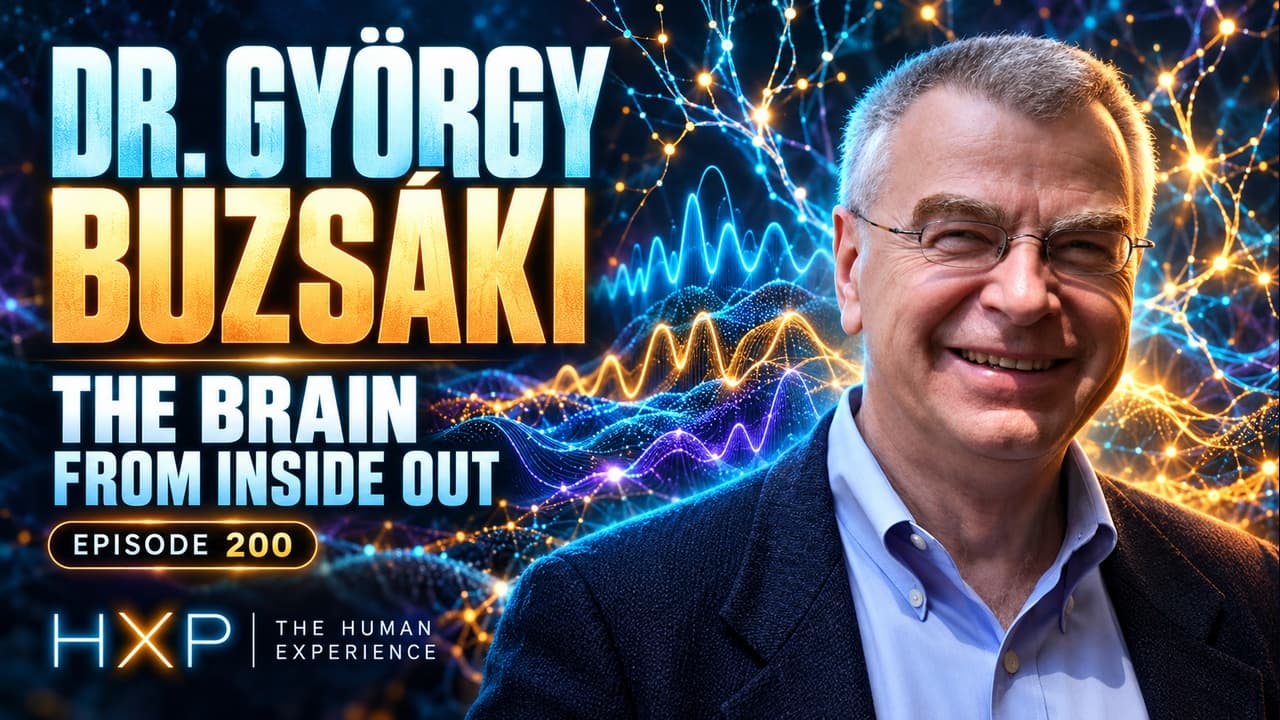
EPISODE 200: Dr. György Buzsáki — Brain Rhythms, Memory & the Making of Meaning
A conversation with Dr. György Buzsáki
How does the brain turn electrical activity into a world that means something? Dr. György Buzsáki joins Xavier Katana for Episode 200 to explore brain rhythms, perception, memory, and the relationship between knowing and acting.
Stay with the full conversation.
Episode field notes
Show notes
How does the brain turn electrical activity into a world that means something? Dr. György Buzsáki joins Xavier Katana to explore the relationship between brain rhythms, action, perception, and memory. Drawing on decades of experimental neuroscience, he introduces his inside-out perspective: an account of a self-organizing brain that explores, predicts, and learns through its interactions with the world. The conversation moves from Morse code and moving eyes to sleeping brains, laboratory experiments, and the everyday experience of making a plan.
Episode 200: The rhythms that organize neural activity, the actions that ground meaning, and the memories that help us imagine what comes next.
About Dr. György Buzsáki
Dr. György Buzsáki is the Biggs Professor of Neuroscience at NYU Grossman School of Medicine and a member of its Department of Neurology. His research investigates the organization of neuronal activity and the relationships between brain oscillations, memory, and behavior, with a particular focus on the hippocampus. A co-recipient of the 2011 Brain Prize and a member of the US National Academy of Sciences, he is the author of Rhythms of the Brain and The Brain from Inside Out. Explore his research through the Buzsáki Lab and his official NYU faculty profile.
Episode Summary
Buzsáki begins with an unexpected route into neuroscience: amateur radio. Building radios and learning Morse code introduced him to oscillators, communication, and the possibility that a limited set of signals could carry meaning across languages. A physiology class in medical school connected those interests with the brain. That early fascination with how messages are organized still shapes the questions he asks about neurons, timing, and coordinated activity.
The central discussion concerns his inside-out account of the brain. Buzsáki describes an inherited, internally organized dynamic that helps determine what an organism can discover. He contrasts this framework with an account that begins with sensory input and ends with a response. In his view, action supplies an essential point of comparison: the brain can register what changes in the world while also receiving information about the movements it generated. He explains this through corollary discharge, moving eyes, and the difference between observing an object and testing it through action.
Meaning becomes the bridge between this broad framework and familiar experiences. Buzsáki asks how something becomes a signal for an organism, why new knowledge needs an anchor in previous experience, and how children move from broad categories toward more specific distinctions. A stick that appears bent in water illustrates his emphasis on verification through movement. An imagined brain organoid equipped with sensors becomes a thought experiment about the limits of sensory input without an effective action system.
The conversation then turns to circuits. Buzsáki uses traffic lights to describe the organizing role of inhibitory neurons and language to explain how short events can be combined into longer sequences. He discusses faster and slower oscillations, including gamma and hippocampal theta, and the interactions that allow activity to be packaged across different timescales. His proposed neural grammar sits alongside two other recurring themes: synchrony and the energetic advantages of coordinated rhythmic activity. He explicitly distinguishes the speculative framework from the experimental observations that motivate it.
Memory brings these ideas into the laboratory. Buzsáki describes hippocampal sharp-wave ripples, compressed replay, and experiments in which researchers manipulate activity patterns in animals and measure changes in performance. He separates acquiring an experience, selecting what may be worth retaining, and the slower process of consolidation. The discussion also considers altered rhythms in models of neurological and psychiatric conditions, possible ways to intervene, and the difficulty of targeting the right activity at the right place and time.
In the final exchange, a practical problem makes the inside-out account more concrete: Xavier needs to take his car to a mechanic. Buzsáki connects navigating a route with internally generated sequences, previous experience, and the ability to simulate an action before carrying it out. He presents thought as an extension of this action-and-planning system. The public recording closes with an invitation to the separate members’ bonus conversation and a reminder to explore his website and books.
What We Talk About
- From amateur radio to the neuroscience of communication. Morse code, oscillators, and a medical-school physiology class help explain why Buzsáki became interested in the ways nervous systems organize messages. His starting point connects engineering questions about transmission with biological questions about meaning.
- The brain’s ongoing activity. Buzsáki describes a self-organizing system that devotes substantial resources to maintaining its own dynamics. He considers what this perspective changes about experimental design, the interpretation of sensory responses, and questions researchers might ask about artificial systems.
- What the inside-out perspective proposes. An inherited repertoire of activity can constrain and guide the organism’s exploration. Buzsáki explains why beginning with this internal organization leads him to frame perception and learning around actions and their consequences.
- Corollary discharge and the brain’s second source of information. When an organism acts, its sensory systems can receive information about that self-generated action. Moving the eyes or head helps illustrate why this comparison matters when interpreting a changing stream of sensory input.
- Why objects acquire meaning through a relationship. A tree, the moon, and a stick in water become examples of how movement and manipulation can help test an interpretation. The discussion asks what a picture alone can establish and what an organism learns by acting.
- Generalization, childhood learning, and semantic knowledge. Buzsáki draws on developmental examples to discuss the movement from broad categories toward specific distinctions. He also considers how individual experiences can contribute to knowledge that is no longer tied to a single encounter.
- The organoid thought experiment and active sensing. He imagines neurons connected to sensors, then asks what changes when an actuator or body is added. He uses this thought experiment to explain his account of embodied interaction and the relationship between action and cognition.
- Inhibitory neurons as traffic lights. Periodic inhibition can help organize the firing of other neurons into coordinated packets. The analogy offers a concrete way to picture timing, pauses, and the boundaries between one message and the next.
- Fast rhythms nested within slower rhythms. Gamma, theta, and phase-amplitude relationships enter a discussion of how smaller units of activity might form longer sequences. Buzsáki connects these nested timescales with communication across different extents of the brain.
- Neural grammar, synchrony, and energy. He outlines three reasons rhythms interest him: a proposed organizing grammar, the coordination of neuronal groups, and the cost of producing that coordination. The clapping of a theater audience becomes an analogy for rhythmic synchrony.
- Sharp-wave ripples, replay, and experimental manipulation. Buzsáki describes compressed activity sequences and animal studies that disrupt or extend particular patterns. He explains how such interventions can help researchers move beyond observing a correlation to testing a pattern’s contribution to memory performance.
- Memory selection and consolidation. Experience does not become a permanent record all at once. The interview considers candidate selection mechanisms, the possible role of significance and dopamine, repeated activity during sleep, and the larger problem of connecting neural dynamics with molecular and synaptic changes.
- Clinical possibilities and their practical limits. Altered timing, stimulation approaches, theta-burst patterns, and experimental seizure interventions illustrate why rhythms may matter clinically. Buzsáki also emphasizes the difficulty of knowing precisely which circuits an intervention reaches and what it changes.
- Prediction, navigation, and thought as simulated action. A sound-guided animal task and Xavier’s trip to the mechanic bring the discussion back to internally organized plans. Buzsáki explains how action sequences can be evaluated, modified by consequences, and considered mentally before being carried out.
Key Ideas
- Action is central to Buzsáki’s account of meaning. He argues that comparing incoming sensory changes with information about self-generated behavior gives an organism a way to test its expectations. The discussion treats knowing as something developed through an ongoing relationship with the world.
- Timing and content need to be understood together. Brain rhythms provide a way to discuss when neuronal activity is coordinated, while the firing patterns within those rhythms carry particular sequences. Buzsáki repeatedly moves between the organizing pattern and the activity it helps structure.
- Remembering involves several processes. Acquisition, selection, and consolidation address different questions. The interview connects waking experience with later replay while keeping the physiological description distinct from the additional work needed to understand molecular storage and lasting synaptic change.
- Experiments and broad explanatory frameworks play different roles. Manipulating a neural pattern in a particular animal task can provide evidence about that pattern’s function. Buzsáki’s larger proposals about neural grammar, perception, and thought offer an interpretation that extends beyond any one experiment.
- A theory becomes clearer when it can explain an ordinary action. Planning a route, checking whether a stick is bent, or learning what a new object resembles gives the conversation concrete anchors. These examples make the connections between perception, memory, and anticipation easier to follow.
Chapters
Click a timestamp to open the public episode audio at that point. Timecodes follow the complete supplied recording, including the produced opening and closing membership invitation. Chapter positions are based on automated transcription and are approximate.
- 00:00 — Produced introduction
- 00:37 — Meet Dr. György Buzsáki
- 01:33 — Amateur radio, Morse code, and a path into neuroscience
- 02:47 — What neuroscience may misunderstand about the brain
- 03:59 — The inside-out and outside-in perspectives
- 06:58 — What the brain is doing before sensory input
- 09:02 — Corollary discharge and self-generated action
- 09:48 — How signals acquire meaning for an organism
- 11:56 — Perception and the brain’s existing organization
- 13:08 — Organoids, movement, and the grounding of meaning
- 15:09 — Trees, representations, and the binding problem
- 18:08 — Generalization, childhood learning, and semantic knowledge
- 21:39 — Embodiment and active sensing
- 24:08 — What is a brain rhythm?
- 25:46 — Inhibitory neurons as traffic lights
- 27:44 — Messages, chunks, and a proposed neural grammar
- 29:41 — Fast and slow rhythms in a nested hierarchy
- 32:49 — Conserved timing patterns and neural syntax
- 36:10 — Synchrony and the energetic advantages of rhythms
- 38:36 — How cell assemblies help messages move through the brain
- 40:44 — Altered rhythms in disease models
- 41:12 — Sharp-wave ripples and compressed replay
- 43:40 — Manipulating rhythms in animal memory experiments
- 46:17 — Clinical possibilities and the challenge of precise intervention
- 48:26 — Memory acquisition, selection, and consolidation
- 54:29 — An experiment connecting action, sound, and prediction
- 57:54 — Thought as simulated or deferred action
- 59:41 — The mechanic, navigation, and internally generated plans
- 1:02:47 — The bonus conversation, guest resources, and closing
Explore Dr. György Buzsáki’s Work
- Buzsáki Lab — official biography and research
- NYU Grossman School of Medicine — faculty profile
- The Brain from Inside Out — Oxford University Press
- Rhythms of the Brain — Oxford University Press
- How the Brain Constructs the Outside World — Scientific American
- How does your brain perceive the world around you? — KERA’s Think
Continue the Conversation
The public episode closes with an invitation to a separate bonus conversation. Explore HXP membership for the members’ area and more conversations from The Human Experience.
Also check us out on YouTube:
https://www.youtube.com/@thehumanxp
Visit our podcast: www.thehumanxp.com
About the Transcript
The transcript follows the complete supplied public recording, including the produced introduction and closing membership invitation. It was automatically generated and lightly formatted, with limited corrections to identifiable names and technical terms. It is not speaker-labeled and may contain recognition errors. Timestamps are approximate. Buzsáki’s explanatory proposals and interpretations are presented as his discussion, alongside the experiments and observations he describes.
Read the conversation
Transcript
[00:05] Welcome to the Human Experience Podcast. The only podcast designed to fuse your left and right brain hemispheres and feed it the most entertaining and mentally engaging topics on the planet. As we approach our ascent, please make sure your frontal, temporal and occipital lobes are in their full upright position. As you take your seat of consciousness, relax your senses and allow us to take you on a journey. We are the intimate strangers. Thank you for listening.
[00:37] Ladies and gentlemen, welcome to the show. My name is Xavier Katana and you are listening to the Human Experience Podcast. We’ve got a tremendous show planned for you guys today. Today, I’m joined by Dr. György Buzsáki. He is the Biggs Professor of Neuroscience at NYU Grossman School of Medicine. His research explores how the brain’s rhythms help organize memory learning and our experience of the world. He’s the author of Rhythms of the Brain and The Brain from Inside Out and a recipient of the Brain Prize.
[01:13] Today, he joins us. Georgie, welcome to HXP. Thank you. Thank you, Xavier. Am I saying your name correctly? Is it Jorgi? Everybody calls me Yuri. You can call me Yuri. Okay, Yuri. Okay, Yuri. So tell us, how did you get into this field? I used to be a ham radio, if you know what it is.
[01:44] Yeah. These are things of the past when people communicated to radio frequency, and they learned the Morse code and that’s what I did when I was in high school and I was captivated by the idea of information transmission, how you can code stuff for a Hungarian speaker and that’s something that could be understood by a Maori in New Zealand. And then, of course, when you build radios, [02:15] they are full with oscillations and oscillators that’s what I had. And I ended up going to medical school. And then it was not so exciting for the first year or so. But when I took a class in physiology, and the professor was talking about brain activity, I realized that this is an area that is very close to my heart, which is all about how information is packaged, and how oscillations could be at its service.
[02:46] Mm-hmm. And so after spending more than five decades studying the brain, what’s the biggest thing that you believe neuroscience has misunderstood about the human mind? Maybe the most important thing as I look at it today is that it’s not a mirror. It is a self-organized system. And miraculously or paradoxically, it depends how you look at it,
[03:16] spends enormous amount of its energy budget to maintain itself, to maintain its own dynamic. And we had recently a paper that we quantified this, and indeed it turns out that more than half of the brain budget goes just to maintain its own dynamic. So this is a very important message about how you can make future AIs and things like that. So it comes with a, of course, everybody believes
[03:46] important, but it comes with a pre-configured dynamic, and that has a tremendous impact on how we perceive the world. Okay, tell us more. How does it impact the way that we see the world? So you can think about two different ways. One of them is that, say, the brain perceives and generates an input, or generates an output. But that’s the Descartesian idea that is still
[04:16] areas of neuroscience, even if people consciously denied, but subconsciously they still work in this perception action loop or idea or framework. But between the input and the output, there is a spooky territory that people name it by various names, such as decision-making, the free will in the older days, or plans and many of these things that are vaguely defined. And that is one way of thinking about it.
[04:49] But the whole world would be just reflexology, and then it would be required that the world is there the way it is. And then we have to learn its beauty and its layout. And the world, according to what we believe, has a three-dimensional organization. and then we map the world and then from the three-dimensional organization we make rules, we learn about time and space
[05:19] and that’s one idea. So the idea is that there is a reflection of what’s going on in the outside world. The other idea that I call inside out is going in the opposite direction. It has an inherited dynamic. It is capable of doing certain things, not everything. It has quite a bit of constraint and uses these algorithms to discover the world. And the world is, it looks like the way how the brain allows to see the world rather than
[05:57] how the world is in its reality. It looks like a philosophical distinction, but I can describe you later why this is very important. So it is a very important distinction because then when you interpret your results or when you design your experiments, it matters whether you believe in the fundamentals. You know, you can look at what’s happening outside in London.
[06:29] in London and it looks that the world is flat and everybody agrees with you. But then you come up with a different framework and said, no, the world is not flat or the sun is not going around the earth, but the other way around. It doesn’t make any difference for a regular person or a regular experiment. But when it comes to really understanding the absolute basics of neuroscience, it will become a very important matter. Okay, so if the brain is not simply waiting for input,
[07:02] what is it doing before anything happens? The brain is constantly exploring the world. It generates hypotheses. The most important thing, as I mentioned briefly, that for the brain, if you would like to approach it from the physics or energy point of view is to maintain its own dynamics. The second most important thing is that you generate an output, you generate action. things such as your muscle movements, your endocrine state that is release of hormones, controlling the autonomic nervous system, and so on. So these are the outputs.
[07:34] But the important thing is that you register or the brain registers the consequences of these actions. So no matter how small a brain is or nervous system is, no matter how complicated it It is the fundamentals are the same. The brain generates outputs and registers the consequences of its outputs. Now, the difference between the Descartes or the outside in and inside out is subtle. And what is the difference? So one difference is that there is an input.
[08:07] Let’s say we have sensors. The sensors are sending information somewhere. There is an output. We kind of understand it’s probably from the motor areas. And there is something in between. transformation from what’s coming in and what goes out. In the inside out, there is this subtle but absolutely critical difference. Namely, when you generate an output, there is a return envelope from the action system of the brain back to everywhere.
[08:41] That is, the brain informs the rest of the brain that the actions that you see and the consequences that your sensors are changing. So the information that comes to your eyes when you are moving your eyes is changing. But the reason why this change is because you changed it. And this is called the corollary discharge that was discovered independently in simple organisms in the United States and in Germany for very simple explanations such as
[09:15] how do we, why don’t we see a saccadic, movement. So in this case, the brain has two types of information. One is that what’s outside in the world. And the second thing is what action is connected to it, if any. So the brain, okay, I’m talking about big chapters of neuroscience. The second big chapter is that
[09:48] that when you would like to understand what is the meaning of a particular thing outside there, we call them signals or we call them stimuli, wrongly, of course, because there is nothing as a stimulus inherently in the physical world. There is nothing that is a signal inherently in the physical world. They become signals to an organism because they acquire meaning. Now, how the meaning is generated is a fundamental question in neuroscience, and it is very difficult, if not impossible, to understand by just assuming that sensory information comes in and a synthesis called thinking comes up automatically out of this.
[10:35] But meaning has to be anchored. It has to be compared to something. The other fundamental thing of every brain is that it always compares. The new knowledge is anchored to the old. This is how it becomes familiar. There is always some similarity. Now, this anchoring can be done by a second opinion. And this second opinion is the action system. Let me repeat it.
[11:05] In the outside in world, there is only the patterns of the world, the sensory information, which is mapped onto the brain. In the inside out brain, it is two types of information that can converge, let’s say, in the visual system. In the visual system, you can get a sensory information, but you also get information about the self-generated actions, such as the things that are moving your eyes, the things that are moving your head, and so on.
[11:42] And this is a second opinion. It is possible to compare two things. And that comparison is what is the fundamental difference between the outside in and the inside out organization. Okay, so when we look at an object, how much of that experience comes from the object itself, and how much comes from the brain’s existing organization? So the complication here, of course, is that we always think about the adult human brain.
[12:17] And it seems that it appears that we see the cube and we already know what the cube is. Or we already know that some creature comes into your apartment and it’s ET. And the brain never says it doesn’t exist. it always anchors it to something knowledge they said oh it is like okay so in in one case there is just information coming not information information is information becomes information it is perceived
[12:54] by by something information becomes information only when there is a reader you know that we can talk about it later. But now going back to your question is that if you have a brain, and let’s say the artificial brain, which is a tissue culture, it has full with human neurons. And this issue comes up now a very interesting way because there are organoids, including brain organoids, and you can attach sensors to this brain organoid. And you can attach five million
[13:28] and different types of organoids that are looking at a cube outside, and it will never generate a meaning that, oh, this is a cube. Because it doesn’t have the opportunity, the option of manipulating that cube. That is verifying that, for example, when you see the moon and there is a tree before that, you don’t know whether the moon is larger or smaller than the tree. But once you start moving,
[13:59] realize that the size of the, the perceived size of the tree changes radically whereas the moon doesn’t. So then you have an idea about things out there because you ground the incoming visual information with action. Or even a more trivial thing that is very illustrative is that when you put a stick in water then it looks broken.
[14:30] Now, you and I can have a debate about whether it’s broken or not, and then I use the outside-in framework where you say, okay, I need a better camera, I need two cameras, five cameras, and you can have any amount of sensory devices, and we will never get the truth. But you have another idea than I do, you said, oh, let’s try to move it. and the moment you move it you realize that it’s not broken and then you convince me [15:01] so that’s a again a tiny little and subtle difference but it’s fundamental does the brain ever have direct access to the world as it is have i ever seen a tree or is it just the light bouncing off of a tree and my preconceived idea of what a tree is Okay, so this is a very interesting fundamental question. It said, oh, I see a tree, and then the outside-in framework says,
[15:32] I see a tree because there is a representation in the brain about the tree. And you can say there’s a symbol of the tree in my head. But now I can ask you back, it said, just do you see a tree now? or try to look at try to remember try to recall your mother and i have the next question is that how old is she now when you are recalling her
[16:07] does she have black shoes or yellow shoes and and then you know once i give you more prompts then it becomes more and more concrete. But you can recall your mother which is probably closer to you than a tree and this is the kind of things that the debate is going on. What is symbolism? What is representation? What is exactly being represented when I see a cube or when I see a tree? It is a…
[16:39] The way how the brain does it is opposite, I would say. distinction is that if you go with the outside in, then the idea is that there are many attributes of the tree. There is color, size, smell, anything that come into the sensors. And then the question for many years was, and is, still persists, that how do you bind together these different
[17:10] and modalities are different attributes of the tree so that it becomes a tree. And this, in this approach, it means that you go from the specifics to the general, right? This is called the binding problem. Now the problem with this philosophy or hypothesis is that the attributes of the objects are not in the object. the attributes of the object are in my brain and my relationship with the objects so the tree can
[17:44] become a tree because i see i care only about the bushiness or because i care about the color or because i care about the size or any of these as so-called attributes can be because this is how i classified the three. So we go from the, the brain typically goes from the like. It is like, it goes from the general to the specifics. And it is, you know, if you go back to Piaget, Piaget would say for a child’s brain is that,
[18:15] and he was one of the first persons who would say, the baby always generalizes. So if it sees a dog and the supervisor, is a dog. Next time he sees a dog, many times he sees a dog, the first vision or the first interaction was a personal experience. But the personal experiences, the episodes, or this, we call it episodic memory, these episodic memories strip off the spatio-temporal conditions
[18:48] how the meaning of the dog is extracted. So this is an abstraction. You abstract out the conditions how you got this, and it’s called the dog. That will become a semantic information. And next time the baby sees a sheep, it will say dog, because the brain generalizes. Or even more fundamental that has been looked at in development is that, yes, the baby can recognize a face, but not the mother. It takes a long time. Well, depends how you look at it, days and weeks,
[19:21] before the baby can distinguish between any human face or the mother. So it goes from the general to the specific. Whereas in the outside in, it’s always the sensors, these are the fundamentals, and then they have to be combined and so on. So this is a fundamental difference. And in my world, you can say that the brain generates hypotheses, and with action, it tries to verify those hypotheses,
[19:51] I’m saying. I’m trying to understand it. So it’s our relationship to what’s occurring and we’re assembling meaning through that relationship that’s already in our head? So, in a sense, yes. There are many things that are so-called evolutionarily prepared. such as it seems that we believe in this, that the humans, at least monkeys probably also,
[20:22] can have this inherited recognition that it classifies a shape that it could be a human shape. But then it is a general thing and you learn about the specific information with experience. And that experience is, it cannot be done. To me, it means you have to act upon something that comes in and you have to verify that, in fact, it exists. If you just see a cube that, in our example, you see a tree, you know, as an example, you don’t know whether it’s two-dimensional or three-dimensional.
[21:02] And we don’t even know, the brain doesn’t even know about dimensions too much. You just know that it may be, it can have a volume and it can have a size. things cannot be verified other than walking towards it, touching it, and so on. And this is all part of this actual system. So knowing about the world is the key thing. And I can see your eyes, even though I don’t, that we are diverting because this is such
[21:36] a strange way of thinking about the world, perhaps. but there is no other way. There is no other pattern. So we can go back to our Gedank experiment when the sensors are connected to the human organoid brain. That human organoid brain will never get smart. It will never feel. It will never generate a thought because it doesn’t have the ability
[22:09] any verification. But now we can go one step further and maybe we can add an agent, we can add a body, or we can give an actuator. It could be a robot or it could be something even more simple. That can modify and verify what happens with the inputs.
[22:39] Now we have got almost we have a system. And a mosquito brain is something like that. It doesn’t have so many human neurons, but it has, is embedded into a loop that it starts with action. So through the action, if your eyes would be just sitting, if your ear would be just there and you wouldn’t be able to move the middle ear muscles and so on
[23:15] or if you couldn’t stick out your tongue or you couldn’t touch anything then those that information is it’s not felt you can try it you know if you put your finger on your in your partner’s hand after a while that feeling disappears you don’t feel it anymore finger it will be right there. Today it’s called active sensing. Sensing is not passive, it’s active. This is an interesting thing of course because now there’s a whole barrage of discoveries,
[23:49] several papers that people are surprised that they stick an electrode in the visual system and they find that movement of the animal or muscle patterns in the face, they are driving the neurons in the visual cortex more than vision itself. Okay, so what is a brain rhythm in terms of someone, in a way that someone can actually picture? What is a brain rhythm? Okay, so we are going to a different chapter
[24:23] of neuroscience because now we are talking about circuits. So far we were talking about a big picture where what is the input-output organization of the brain. Now, a written is the same thing as in the song. It has a repetition to some extent that is predictable. Now, in the brain, there are many ingredients, neurons, garbage interneurons, synapses, and so on.
[24:56] almost everything has a time constant. Once you have a time constant, which means that there is some level of adaptability, something that is very strong becomes weak, or something is weak becomes strong, then automatically the system doesn’t behave chaotically anymore or doesn’t behave in a sustained manner, but it works in waves. so things build up and things disappear. Now making it more concrete in a brain circuit
[25:30] there are inhibitory neurons and excitatory neurons and in many if not all brain rhythms the key players are always the inhibitory neurons. The inhibitory neurons are like traffic lights that they guide the activity of the pyramidal cell spikes, which themselves carry the important information, just like the way how cars carry information, which is their passengers. So if a system is coordinated well, such as downtown New York through the traffic lights, [26:08] that’s a coordination because then you can send messages across the different traffic lights in an organized manner. Now, these interneurons silence the activity of the pyramidal cells every now and then. They said, oh, now it’s full stop. This is the end of a message. And then another end, then another packet, and another packet, and another packet. Sometimes it’s pretty rhythmic. It is, that’s why it’s called brain rhythm. Many times it’s not so rhythm.
[26:40] It can be affected by various means, such as the way I speak now. So my breathing is controlled by a rhythm generator in my brainstem. It’s super rhythmic. If you isolate it in a dish, it just fires silence, fire silence, fire silence, it goes forever. However, these oscillators or these firing patterns are controlled by my speech.
[27:10] So I can shift the time a little bit forward, then the cycle length will be shorter, or I can prolong it, and I can modify it. But by and large, my rhythm of speech, it doesn’t matter whether I speak Hungarian or I speak Swahili or I speak English, it’s pretty much the same. two to four hertz in every language. And it’s because there is a pattern organizer in my brain that is allowing my muscles to move at this particular rhythm. So why is it good?
[27:44] Now we go back to the Morse code, or we can go back to information processing. So now when even in the Shannonian world, you can generate messages effectively if they are broken They are called chunks. In every single communication system, this is exploited. Now, you can make chunks which are small or short and longer ones. And in human language, we use a syntax where you can have letters.
[28:20] And letters can be concatenated together to a longer thing that is phoneme, phoneme into words. And then there is a full stop. There is a gap. And then there is another word, another word. So you could go from letters to sentences. And with 32, 33, 35, depending on what language you speak, with a limited number of symbols or limited number of fundamentals,
[28:52] we can generate the knowledge of humankind. This is an extraordinary thing. but it has to be the same extraordinary thing in the brain. So it seems that this requirement has to be generated by some brain grammar. And this is when oscillations or rhythms become very handy because, as we found many years ago, there are many of these patterns, and they are very fast and they are very slow,
[29:24] and there is no gap. of chemistry that nobody is missing. That is every frequency, that is every time, is represented, if I may use this word, by one or two type of oscillation. Now the trick here is that there’s many oscillators. They go from, let’s say, five millisecond to ten seconds, and then the body rhythms come in,
[29:54] and then we go many, many other rhythms through the body, and it comes 24 hours, they can be aligned very nicely on the on a natural logarithm scale. So it’s not like the clock time. It is a log time. Now, the interesting part of it is that the way how these are interacting with each other is that the slower oscillator phase modulates the power of the faster oscillator.
[30:29] And the phase of the faster oscillator phase modulates the power of the even faster oscillator. and the system is called hierarchy. So the slow oscillations can concatenate several faster rhythms and the faster rhythms can concatenate even faster rhythms. Now, maybe I’m too fast, but slow me down if you don’t follow me.
[31:02] And then the other trick here is that the brain is a slow system. So if you have a short period of time, because of the slow conduction velocity of the axons, the activity that involves in this fast oscillation occupies a very small brain volume. But if the oscillation is slow, if you have a second to think about something, then the entire brain can be involved.
[31:33] So what it means back in translation that time in the brain is neuronal space because when time is longer then the activity can spread over distance inside the brain. So now we have a interesting hierarchical system where these inhibited interneurons can generate shorter messages, longer messages and through this hierarchy of the rhythms way, but that’s exactly how it works, that you can package this faster into a slower [32:08] pattern. You can generate a neuronal letter that is usually one gamma cycle, which is about 10 milliseconds, or 10 to 20 milliseconds. Then in a slower pattern called hippocampal theta oscillation, which is about 100 milliseconds, Now you can insert 7 plus minus 2 of these slots, of these gamma waves. And then the theta in turn can be modulated by yet another frequency,
[32:40] and that is occupying a larger neural space. Did you follow me? I’m doing my best to follow. So why does the brain organize itself in this way? The main thing is that it wants to, I don’t know, nobody knows, but the idea is that the brain comes with a grammar, a pre-existing grammar.
[33:11] And it’s not acquired. Even if you never learned anything, let’s suppose that, you know, we go back to a Gedanken experiment that your brain is in a dish, but it can be in your body. And you can have your eyes, you can have your skin, everything. The only thing I take away from you is the ability to act. Then we look at your brain and the fundamentals, the patterns, the oscillatory patterns and
[33:45] their phase amplitude coupling rules will remain the same. So they have a predisposition. inherited ability to organize how neural patterns or neural activity can go from one place to another. And this is not only the human brain. Every mammalian brain and even below the other brains organized also this way, that these fundamental patterns, at least in all mammals,
[34:22] they are pretty much the same from the smallest animal, smallest mammal, to the largest mammal. So that’s why it is a, even if you don’t think about other things, you have to ask yourself, how comes that the brain can increase in size 17,000 fold, which happens during evolution, but these timing patterns remain the same. and everything is enslaved how thick the axons are [34:55] how quick the communication is and so on to keep the timing and this grammar or neural syntax as I call it be intact without such a preconceived or pre-configured fundamental it would be very difficult to package information. You can imagine
[35:26] a car that wouldn’t generate rhythmic activity. The piston is going up and up and up. That’s a rhythmic activity. The wheels are turning, turning, turning. These are cycles, cycles, cycles. In theory, you can imagine that these are not really repetitious. but they can be fast, slow, fast, slow, and completely chaotic. And as long as the different components are coordinated somehow, that it would still work, but it would be jumping forward,
[36:00] and it would move in a rugged way. Energetically, it would be extraordinarily expensive. oscillations or rhythms are good not only because of my speculating idea about the grammar or the neural syntax but also this is the cheapest possible way in nature to generate synchrony and this is another fundamental thing [36:32] that comes with the oscillations is that it costs you the same neurons fire together, then firing randomly relative to each other. An analogy would be that, at least in Europe, when you go to the theater and you like the performance, you know, then at the end the people are clapping their hands and then when it was an enormously nice performance, they clap their hands rhythmically. And when you, but the reason why we do that, of course, is because we want to make noise.
[37:04] but when many people clap their hands together, the surge of noise is much more effective. But for individuals, in fact, it costs less to clap your hands rhythmically because you slow down than arhythmically. And this is true for many, many things in nature and that includes also neural oscillations so you can synchronize with no cost. that’s an enormous energy
[37:34] saving in the brain and if you would like to send messages then you have to have at least a group of neurons everybody agrees with the idea these days that single neurons don’t make a hell of a difference they do from one perspective but not from another perspective neurons form coalitions these are called cell assemblies which is nothing else but neurons fire in a particular time frame and we call this synchrony. And that synchrony is beautifully and effectively generated by brain rhythms.
[38:07] So at least I gave you three lists or three items. One is the speculative brain grammar. The other one is synchrony. And the third one is energy cost. And these three things keep me awake during my nights because they seem to be so fundamental they have to do something very useful. And I try to put some usefulness into this framework. So when millions of neurons become synchronized, what changes about the way information can
[38:43] be processed by the brain? So the most important thing in the brain for information transmission is to discharge a postsynaptic neuron. So we can simplify it and say there is a sender and there And a single neuron typically cannot discharge a postsynaptic neuron. And if it doesn’t, then that neuron doesn’t send messages further on.
[39:14] So the goal is to come together in time for many neurons effectively so you discharge a postsynaptic neuron. And then if the postsynaptic neuron is discharged and it has other partners who can fire in a particular time window with many other partners, then the message can move forward. If you want to have an analogy, there’s this whispering game that if I’m loud, and the [39:47] loudness could be represented by many neurons. Then you hear what I say, and then you send a message to another one, another one, another one. But if the whisper is sub-threshold, the words are comprehended, then the message is blocked somewhere. So this is the reason why synchrony is needed and is effective, especially if you would like to spread activity to faraway places in the brain. Again, that’s another fundamental thing in the brain that the way how it is organized
[40:19] is that the local computation is broadcasted to many, many places globally. But at the same time, the global computation, the global state of the brain, we call it brain state, also confines what happens with local computation. And a good part of it, this happens to control how oscillatory patterns occur. So how do you connect this into conditions such as memory loss and psychiatric symptoms and altered cognition?
[40:55] Okay, let’s start with the observations. The observations are such that every single psychiatric disease that we are aware of is a problem of rhythms, a problem of timing. So the one pattern, which is one of my favorite patterns, is called hippocampal sharp wave ripples. These are packages that compress learned information during the day into short 100 millisecond packages,
[41:29] and they are super synchronous. At this moment, only about half or 1% of your hippocampal neurons fire together in a 100 millisecond time window. But when the brain is so-called offline, such as when you are asleep, then instead of 0.5, now 15% of the neurons, so many, many neurons, super synchronous, super powerful, can invade very large areas of the neocortex.
[42:00] The interesting thing is that, of course, it’s not the waves that generate the information, but it’s the content of these waves. The contents are the spikes. And the spikes are, interestingly, organized in a very ruleful matter or lawful matter that the beginning and the end of our conversation is connected by a long sequence of our discussion. Parts of it will be replayed tonight in 100 millisecond chunks in a compressed manner,
[42:34] but in the same, typically the same order, and that can be transformed to somewhere else. Now, this message, this dynamic message that is called sharp wave ripple pattern is altered in schizophrenia models, Alzheimer models, depression models, and everything that has been investigated, epilepsy has been investigated so far. So in the drugs, you know, you can measure [43:05] the effect of drugs on how they affect brain rhythms. And that could be a very good way of understanding the potential effectiveness of a drug. Of course, there are many other issues. You don’t want to do it globally everywhere. But this would be one way of restoring patterns in the brain that are altered by the disease. So the short answer to your question is that, yes, it is fundamentally important because the healthy brain is very different from the pathological brain.
[43:40] okay so if if we possess the ability to precisely regulate the brain’s rhythmic patterns to what extent could we influence over the processes of of learning memory and and conscious experience okay let’s start with the simple one that i can tell you about our experiments and experiments from other laboratories this pattern that i mentioned sharp-wave ripple pattern they you have about 2 to 4,000 sharp waves every single night during your sleep.
[44:15] Now, experimentally, in animals, we can erase them. And if we erase them, the animal will remember virtually nothing the next day. Okay? So that shows that that’s critical. Conversely, you can manipulate this the sharp-wave ripple content and you can make it longer. And we found that in this case, the memory performance of the animal increases.
[44:46] Now, if we go back to the waking state, there are these theta oscillations. The theta oscillations have sequences of activity that reflect where the animal is, where the animal plans are. we can read out from this sequential activity which direction the animal, in this case a rat, will turn in a maze 20 seconds later, including errors with high accuracy.
[45:19] So I just look at a short pattern of the activity which is packaged in this data cycles, and then I can predict what happens. many seconds later. This is miraculous itself. Now, we can manipulate the length of this oscillation by various means. Temperature would be one. Brain temperature change somewhere, which we have done. Or you can generate optogenetically, for which the Nobel Prize was just given.
[45:50] And we have done that also. And you just change it by 10%, 20%, the length of it. And there will be many behavioral errors there will be many memory errors. So the next part, of course, is the most exciting part, is that can we use the other way around, that if it’s altered by some disease, can we use some manipulations to revert it back to normal? And that’s where the big competition is.
[46:20] And the reason why it is not simple, because if you don’t open the skull, have too many ways to affect the brain you can have drugs you can have transcranial electrical stimulation you can have transcranial electrical magnetic stimulation uh you can have ultrasound but that’s about it and that affects unknown parts of the brain and in unknown way but nevertheless Transcranial magnetic stimulation is an accepted therapy now for depression.
[46:58] And what you do is you do exactly exploit what has been known about oscillations. You start at a frequency that is trying to affect the left frontal lobe. And you use a so-called theta burst stimulation, which is the same pattern that I said, theta coupled with gamma. So you’ve got pulses that are repeating at the theta frequency. And large studies show at least reliable therapeutic effects.
[47:31] So what I was telling you about brain oscillation is just not a curiosity. This has very important clinical implications. that we have done many years ago, we can stop seizures. If the intervention comes at the right phase of the oscillator, which is an epileptic pattern. Epileptic pattern is one of the most synchronous and rhythmic patterns that the brain can generate. And if you hit the system that generates
[48:04] or the so-called seizure focus at the right time, then you can block seizures. So that’s another example of what can be done. And I can list a whole other set of experiments done by others that are trying to manipulate brain rhythms. So what physiological processes are occurring in the hippocampus when we’re consolidating
[48:35] an experience into memory? there are multiple steps of this one is called acquisition this is when we are awake and and we learn something and that it online it becomes interesting or we can say it it acquires potential meaning but then we need a mechanism that selects what should be retained this is called memory selection. It’s an old, very complicated process, but there are some [49:06] candidates, and one of them happens to be this sharp-wave ripple during waking that I mentioned, together with, probably together with dopamine, because dopamine gives significance, and the sharp-wave ripple says, oh, this is the pattern that is important for my brain, even though I’m not necessarily conscious about it, but it is combined with all my previous knowledge, and the brain somehow decides that this could be potentially important for the future and generates a couple of sharp waves and that it generates a sequential activity of the neurons.
[49:39] These are called cell assembly sequences. And then later, during sleep, when the brain is disconnecting, disengaged from the world, then they are replayed over and over and over many, many, many times. So this is called consolidation. So it’s the brain doesn’t accept information instantly. It has to go through a slow selection process and a much slower consolidation process. It is a bit like in the old days. So even today, I think it’s very fashionable to have Polaroid pictures. You know, if you take a digital picture, it’s instant. If you take a Polaroid, it takes a long time to develop it. And in the meantime, you can
[50:28] In principle, you can manipulate it. You can give a little acid to the surface or you can change the temperature or you can give some ultraviolet light and you can alter it. And this is what happens during consolidation, that the subconscious information that is much more than the conscious information is shaping the way how the waking information is going into long-term storage. So this is one end of the physiology.
[51:00] From here on, there is another big chapter of neuroscience, how these patterns are translated into molecules and how they change the synapses and many other things that are being investigated by a very smart molecular biologist. Okay, so Yuri, we’ve got about nine minutes left of the main episode. So, I mean, what is fundamentally different from the inside-out perspective versus the outside-in perspective?
[51:34] What is the main difference that your research has found? Okay, let me try again. In the outside-in, the brain is a passive observer. It absorbs the world, and according to the simplistic view, it synthesizes what’s out there. It binds the information, and then evaluates the values that are outside.
[52:11] And that evaluation, as a third step, generates an output, which is a response. The inside out changes this fundamentally. It says that the brain is an information seeking device. The knowledge about the world starts with action, but the action allows the organism, including the organism sensors,
[52:43] to interact with the world. and therefore it can register the consequences of the change and the consequences of the action and can discriminate which information or which photons or which sound waves are changing because the world is changing or because I, the actor, the agent, generated that change.
[53:18] It has the additional advantage that in this case, the sensory part of the brain receives two types of information. One comes from the outside. The second one comes from the inside. This is what I mentioned, the corollary discharge. So it has two sets of information to compare. And this is the only way I can think of how meaning is generated.
[53:49] So that’s the fundamental difference. Now, in one case, the formal one, you say we represent the world. And the brain is modified or generates patterns that are reflected the truth of the outside world. whereas in the inside-out version the way how we see the world is determined by the internal brain dynamic part of which can be modified a large part which cannot be
[54:19] so in one case you represent the world in the other case you discover the world I mean what experiments have you done to test this? Many so many things that appeared that they are driven in sensory which i tell you the last experiment the last experiment so this is a relatively telling experiment that people have done before us [54:51] say if the animal is given a sound that is changing in frequency let’s say from one kilohertz to 22 kilohertz and when the sweep reaches at 20 kilohertz, you will get a reward. So the animal learns that it’s actually a closed loop system. The animal can move around and as the animal moves around, it can change the frequency. So it explores, it’s an active agent without the animal actively doing something, it will
[55:24] never get a reward. but now it changes the frequency and then whenever it’s 20 kilohertz it says oh I’m here make a right turn, a left turn there will be water and then you can say that the animal learns about responding to the sound now the trick of the experiment is that and you look at the neural activity how they evolve and then you can say the neurons respond to the sound Now you can do the control experiment when you have the sweep, the sound sweep, [55:58] but you stop at 5 kilohertz or 10 kilohertz. So the animal will never hear, will never hear the 20 kilohertz, but it can calculate from its own action and speed how far it has to walk to be at a position where the 20 kilohertz would have been reached.
[56:30] And then it will be rewarded. In other words, there is no sound anymore, but the animal can predict and calculate and translate this internally changing cell assembly sequences into action. So if I perform an action twice, let’s say if I’m picking up a pen, but the second time I do it, I do it more quickly. I do it twice as fast.
[57:01] What’s the difference happening in my brain when I’m performing that? So millions of things happen, but this is not so exciting because this can be done by your cerebellum. And the cerebellar learning system is very different. You have to do it 500 times, and indeed, reaction time changes. What I’m talking about is that the more complex predictions, that is, how far I should go.
[57:32] And I can do it once, I can do it twice, and the experiment that I mentioned has to be done a couple of times Without going there, you would never know how far you have to go. In one case, you generate a plan, and the plan is in your head. Now, one thing we didn’t talk about, and I know we don’t have any more time, but the beauty of this system is that this corollary discharge, [58:03] that is the information, with the action system, informs the brain all the time. even without your action, because you can do it now in your head. This is a simulation of action, and this is called the thought. So the repetition of what you just said, pick up the pencil, pick up the pencil, pick up the pencil, you can do it without the hippocampus, without the prefrontal cortex. All those complex computations are not needed. But when you say, I’m picking up the pen, and all of a sudden,
[58:36] there is a loud sound somewhere. or a beer will appear on my left. Then it has an important consequence on your action. Likelihood is good that you will do it again, and again, and again, because it is rewarded. The other way around is that if it is punished, you are not doing it. So that consequence is what changes the plan next time when you are doing the same action.
[59:12] it’s very fascinating i mean it’s it’s hard for me to get my head around what you’re telling me but you know i’m doing my best to understand it okay tell me a simple thing that is uh bothering you that i can try to explain with I know these things are not totally simple. I can trivialize it even further if you help me. Okay, I had a coolant leak on my car [59:44] and I had to call my mechanic to have the coolant leak fixed. That’s something that’s bothering me. Okay. So now in your head, you have to generate a plan. Right? And you have to drive your car to the machine shop. How do you do that? The way you do that is you have a plan and then you act out. But in order to have a plan, you have to act it out at some time in your life. This is what I call calibration.
[1:00:21] because you had to go actually to the place. That’s called navigation. And that navigation mechanism is internal. The translation of it that you are moving around is the external part. But that connectedness to your action system can be disengaged. And that disengagement is thinking. So thought is an action, delayed action. Now, it sounds very strange, I know, but I don’t know how else thinking can be
[1:00:58] thought about. And if you think about something that cannot be acted out in the future, or it cannot be useful, has no utility, that’s not a thought. That’s a bizarre thought. So the way how you will find your mechanic is that you have a system that allows you to generate a long sequence of activity in your brain. And this is not fundamentally different than we plan an experiment and we tell the animal that turn to the right in a maze and then we record long sequence of activity
[1:01:36] over tens of seconds. And next time, if you made the right turn, now if you would like to have a to the opposite side. So the animal generated a plan, acted it out. It verified it by the reward that my plan was good. Now it has to generate another plan, which is going to the opposite side. And then from this moment on, it has to generate a very long sequence of neural activity in the brain, which are all organized from the short chunks
[1:02:07] to the longer chunks and the even longer chunks, because it’s not a long corridor, So these things are segmented. They are chunked. They are chunked by the brain oscillations. And this is how very complicated long-term patterns can be generated by the brain. But without this ability to the brain to generate this internally, and you can switch off the light and you can switch it out, there is no external need. You don’t have to provide any information that the brain can do these sequences.
[1:02:38] without the sequences there will be no plan and there will be no muscle action yuri that’s that’s the first hour of the show man i i felt like i could have asked so many more questions i mean i think the bonus episode is going to be very interesting to hear your answers to the bonus questions that we have guys uh we are going to move over to the bonus side of the show you can get there by going to the human xp.com membership [1:03:11] yuri where can people find your work if they want to get to your work at my website what’s the website buzaki buzaki.com yeah okay we’ll make sure that that link is available in the show notes with a link to your book inside out. Guys, we’re going to head over to the bonus episode. Like I said, the bonus side is where we,
[1:03:45] you by signing up to the membership side, it’s what allows us to make conversations like this possible. So get over to the human XP.com slash membership and sign up today. Otherwise we will see you guys next week. Thank you so much for listening. Thank you.
About the guest
Dr. György Buzsáki
How does the brain turn electrical activity into a world that means something? Dr. György Buzsáki joins Xavier Katana to explore the relationship between brain rhythms, action, perception, and memory. Drawing on decades of experimental neuroscience, he introduces his inside-out perspective: an account of a self-organizing brain that explores, predicts, and learns through its interactions with the world. The conversation moves from Morse code and moving eyes to sleeping brains, laboratory experiments, and the everyday experience of making a plan.

HXP SHORTS: #001 – Deconstructing Death: What Happens When We Die?
September 14, 2026 · 11:37
EPISODE 199: Dr. David Nichols — Psychedelics, Consciousness & the Chemistry of the Mind
October 20, 2026 · 1:12:11

Episode 196: Waqas Ahmed — Polymathy, AI & the Future of Human Creativity
September 28, 2026 · 1:04:41
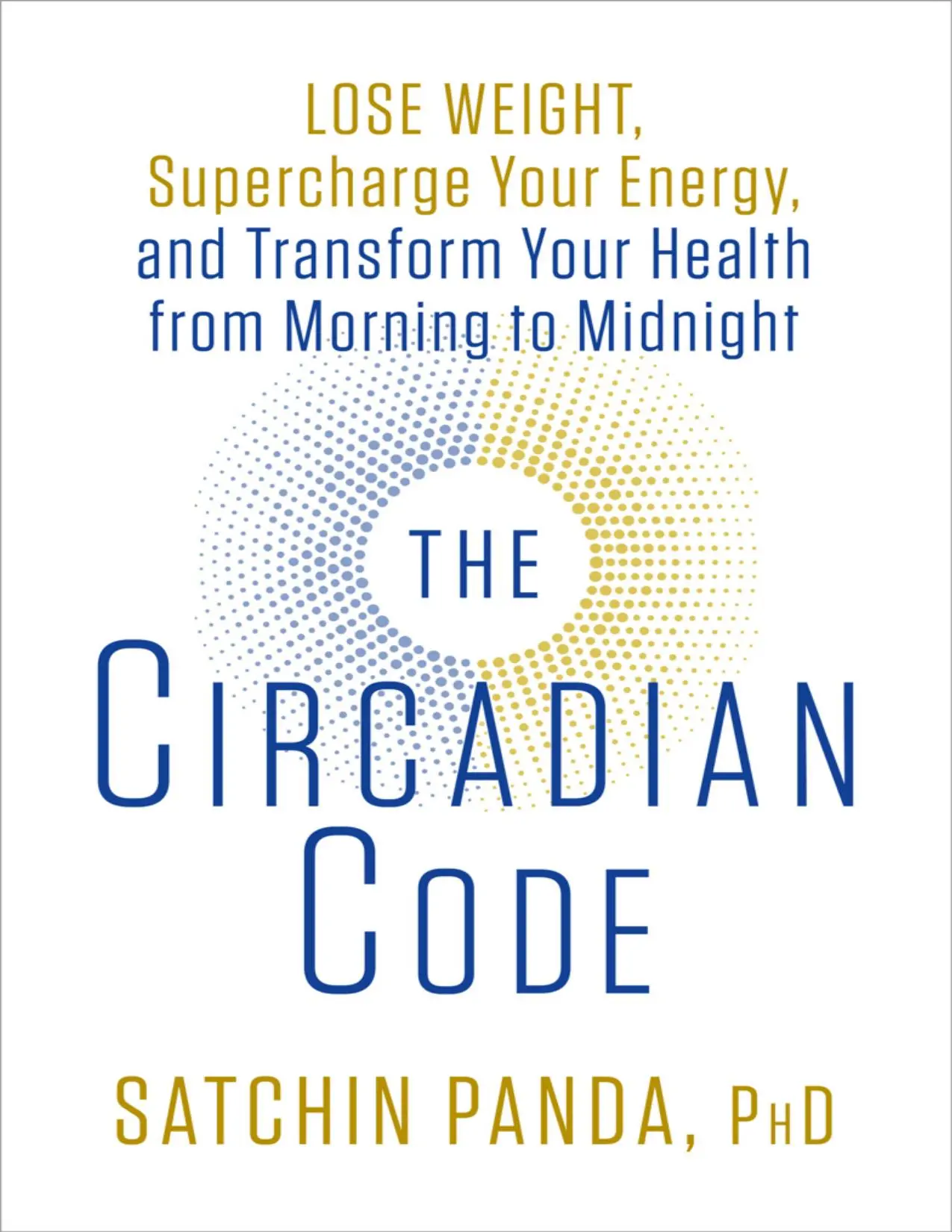
Episode 195: Dr. Satchin Panda — Circadian Rhythm, Sleep & Meal Timing
September 21, 2026 · 1:09:04
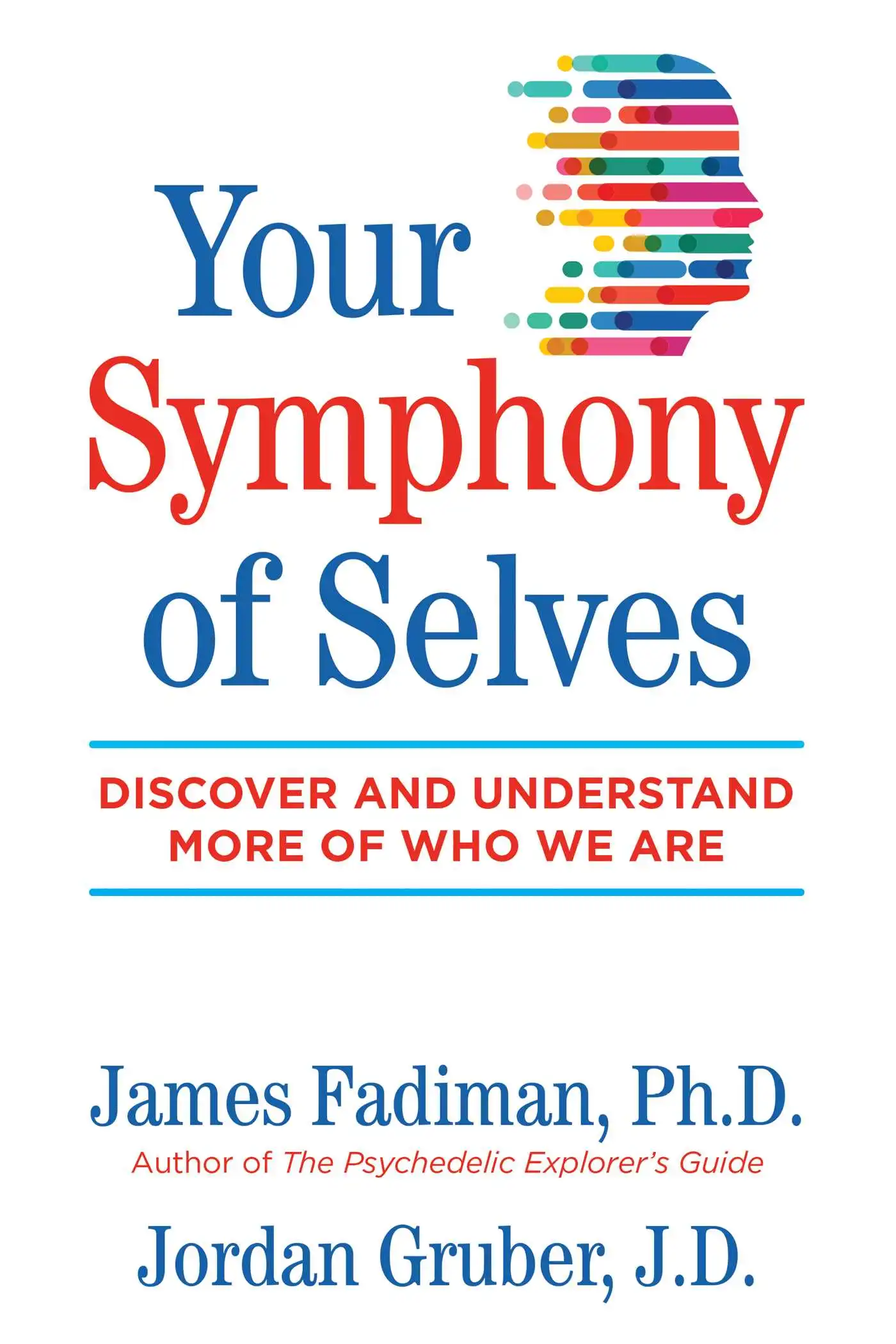
Episode 194 Dr. James Fadiman – You Are Not One Self: Microdosing, Multiplicity and the Mind
September 4, 2026 · 1:14:38

EPISODE 198: Cindy Gallop — Make Love Not Porn: Rethinking Sex, Consent & Connection
October 13, 2026 · 58:43
Independent conversations
Help make the next one possible.
Membership sustains ambitious, unhurried interviews and keeps the complete archive open to curious listeners everywhere.
Become a member