

The Human Experience · Episode
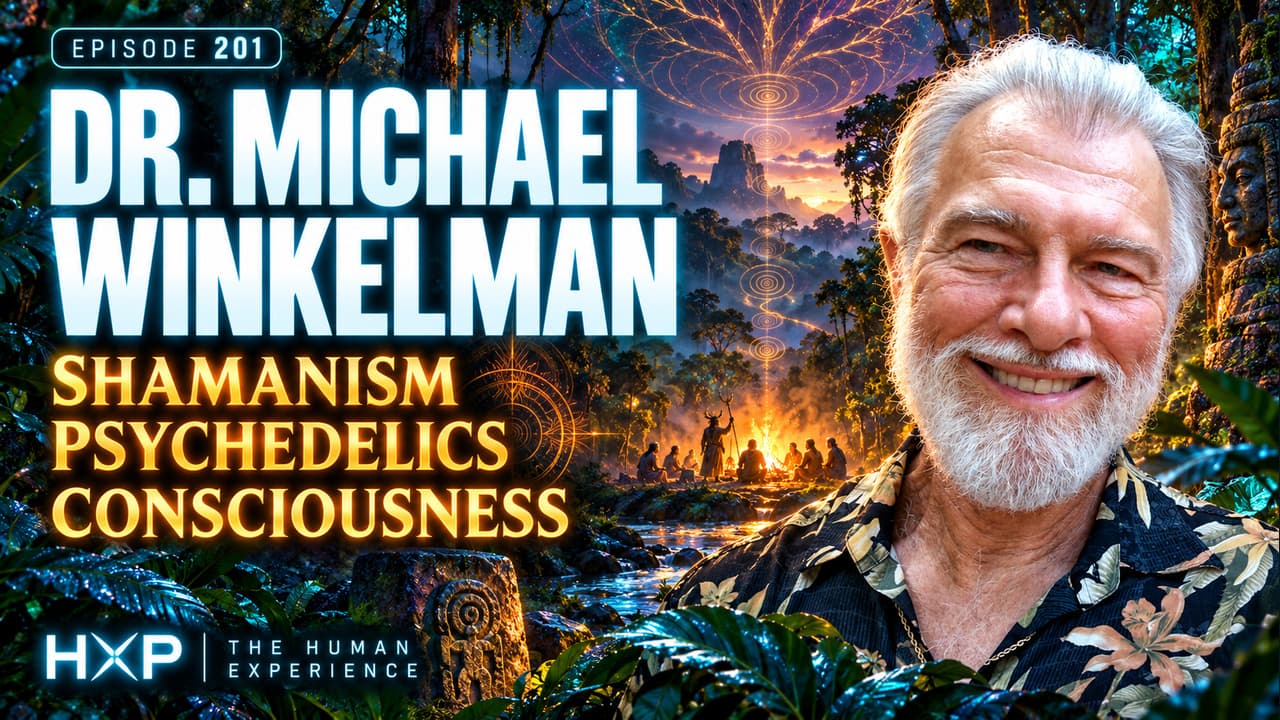
EPISODE 201 – Dr. Michael Winkelman: Shamanism, Psychedelics & the Evolution of Consciousness
A conversation with Dr. Michael Winkelman
What can shamanic ritual reveal about the origins of consciousness? Dr. Michael Winkelman joins Xavier Katana for Episode 201 to explore shamanism, psychedelic experiences, and the relationships between culture, biology, and healing.
Stay with the full conversation.
Episode field notes
Show notes
What can shamanic ritual reveal about the origins of consciousness? Dr. Michael Winkelman joins Xavier Katana to explore shamanism, altered states, psychedelic experiences, and the relationships between culture, biology, and healing. Drawing on decades of cross-cultural research, he describes the patterns that led him to distinguish shamans from other religious practitioners, then follows those patterns into questions about rhythm, social connection, visionary encounters, and human evolution. The conversation moves from the details of ritual to the possibility that extraordinary experiences can change how we understand ourselves.
Episode 201: Shamanism, the social foundations of healing, and Michael Winkelman’s account of how altered consciousness connects with human evolution.
About Dr. Michael Winkelman
Dr. Michael James Winkelman is a medical anthropologist and retired associate professor in Arizona State University’s School of Human Evolution and Social Change. He earned his Ph.D. at the University of California, Irvine, and his M.P.H. at the University of Arizona. His research explores shamanism, altered consciousness, psychedelic medicines, and the biological and cultural dimensions of religion and healing. He is the author of Shamanism: A Biopsychosocial Paradigm of Consciousness and Healing, co-editor of Advances in Psychedelic Medicine, and editor of the 2025 Handbook of Entheogenic Healing. Explore his work through his official website and ASU faculty profile.
Episode Summary
Winkelman begins with a question that shaped his dissertation: do practices called shamanism form a recognizable pattern across societies? He describes comparing religious practitioners in 40 societies and using statistical analysis to identify groups of shared characteristics. His account follows unusual experiences, demanding initiations, encounters with animal powers, soul journeys, healing, divination, and the morally ambivalent authority associated with shamans. For him, the category emerges from a pattern of relationships among these features. That approach becomes the basis for his concern that the word shaman has been stretched to cover almost any unconventional spiritual practitioner.
The discussion then turns to how an anthropologist makes comparisons without losing the texture of a ritual. Timing, preparation, bodily movement, collective participation, explanations, and intended purposes become variables that can be examined together. Xavier asks what defines an altered state and what Winkelman means by an integrative mode of consciousness. Winkelman explains his account of ascending slow-wave activity and the relationship between lower and higher brain systems. Alongside those descriptions, he reflects on meaningful coincidences, scientific intuition, systematic observation, and the need to remain open to a picture that is always incomplete.
Medical anthropology brings the conversation into everyday experiences of feeling unwell. Winkelman distinguishes physiological disease from the lived experience of illness, exploring how grief, cultural explanations, social circumstances, and expectations can shape what a person feels. He argues for understanding the person’s life alongside their biological measurements. The question of whether someone feels better, functions better, or shows a measurable change in disease leads to a broader discussion of outcomes and quality of life. Family support and the social environment become central examples of what he believes a narrowly biochemical account can overlook.
Drumming, music, and collective movement provide a bridge between the social setting and embodied experience. Winkelman describes an evolutionary account of rhythm and mimesis: people coordinating their movements, emotions, and attention through song, dance, imitation, and enactment. He connects this capacity with social bonding and endogenous physiological processes, drawing on a hypothesis that collective music extended functions previously served by grooming. His account of visionary experience similarly looks for connections between altered states, embodied imagery, imitation, and mirror-neuron systems. The conversation asks how a description of a richly detailed vision relates to a description of brain activity.
Dreams, meditation, psychedelic visions, entity encounters, and out-of-body experiences open different perspectives on the self. Winkelman compares their shared features while describing differences in bodily identification and reported experience. Humanlike presences become a way to explore agency, social cognition, intention, and the capacities people use to understand other minds. He also leaves room for questions about the relationship between consciousness and the brain. His discussion of the affective core self brings these themes back to feeling, internal bodily awareness, and the continuity he sees between human consciousness and more ancient animal systems.
In the final part, Winkelman presents his hypothesis that psychedelics played an important selective role in human evolution. He connects that proposal with visual capacities, flexibility, sociality, and the possibility of reorganizing established patterns of experience. Xavier asks how his account relates to Terence McKenna’s stoned ape theory, and Winkelman considers what later research has added to those earlier ideas. He closes by reflecting on future human evolution and the significance he sees in psychedelic research. The complete public recording ends with his website and an invitation to the separate members’ bonus conversation.
What We Talk About
- Finding shamanism through cross-cultural comparison. Winkelman describes how his dissertation grouped religious practitioners by shared characteristics. The conversation considers why a recurring combination of recruitment, training, ritual practice, and social role matters more to his classification than any single feature considered in isolation.
- Initiation, spirit journeys, and a practitioner’s authority. Unusual experiences, ordeals, animal encounters, and death-and-rebirth narratives appear in his description of shamanic training. He explains how these experiences relate to healing, divination, leadership, and beliefs about a practitioner’s capacity to help or harm.
- What the term shaman gains and loses as it travels. Xavier asks about applying a Siberian term elsewhere. Winkelman discusses comparative categories and the problem of a word becoming so broad that it loses the distinctions his research is trying to describe.
- Altered states and the integrative mode of consciousness. Winkelman outlines his model of slow-wave activity and ascending influences across brain systems. He distinguishes a broad mode of consciousness from individual states and explains how this framework guides his interpretation of ritual and extraordinary experience.
- Turning a rich ritual account into comparable observations. Whether an event happens at night, how participants prepare, what their bodies do, and what they believe the ritual accomplishes can all become questions for analysis. His emphasis is on the pattern that emerges when observations are considered together.
- Scientific intuition, coincidence, and interpretation. A personal question about spiritual experience leads to Winkelman’s view of science as a combination of intuition and systematic inquiry. He discusses meaningful connections, partial explanations, and the assumptions people bring to unfamiliar experiences.
- Disease, illness, and the experience of feeling unwell. Medical anthropology offers a vocabulary for separating physiological conditions from a person’s felt experience. Grief, cultural models, and the meanings attached to distress illustrate why the same broad complaint can involve several kinds of explanation.
- Social circumstances and different measures of improvement. The discussion considers quality of life, self-reported well-being, physiological indicators, and how people function. Winkelman asks what can be missed when health is described without attending to relationships, support, environment, and the circumstances of a person’s life.
- Why rhythm and collective movement matter to his account. Drumming, music, dancing, and synchronized action become examples of mimesis and social coordination. Winkelman connects them with bonding and physiological responses, discussing an evolutionary hypothesis about the expansion of grooming’s social functions through collective ritual.
- Visionary experience, imitation, and embodied imagery. He proposes connections between altered states, the mimetic system, and mirror neurons. Xavier asks what a vivid report can tell a neuroscientist, bringing the conversation to the gap between describing an experience and explaining why it has its particular richness.
- Dreaming, meditation, and encounters with other presences. Winkelman compares internally experienced imagery across different states. Reports of spirits, guides, divinities, and other entities lead into his interpretation of agency, humanlike qualities, social relationships, and the mental capacities involved in understanding another being.
- Out-of-body experience and the affective core self. Soul flight and possession become contrasting accounts of bodily identity. Winkelman then discusses a framework centered on feeling and internal bodily awareness, which he sees as an extension of his earlier work on altered consciousness.
- Psychedelics as a proposed influence on human evolution. Winkelman explains his hypothesis that ancestral psychedelic encounters could have interacted with selection, visual capacities, emotional transformation, and sociality. The conversation follows his reasoning and his call to investigate the connections between psychedelic effects and human capacities.
- Terence McKenna, the stoned ape theory, and what comes next. Xavier asks how Winkelman’s account relates to McKenna’s ideas. Winkelman considers later neuroscience, cooperation, concern for others, and his broader argument that questions about psychedelics and evolution extend into humanity’s future.
Key Ideas
- The pattern is the starting point. Winkelman’s account of shamanism begins with recurring relationships among practices, experiences, and social roles. His comparative approach asks what holds together across societies and what separates those patterns from other kinds of religious specialization.
- Ritual brings bodies and social relationships into the same event. Singing, movement, attention, shared expectations, and collective participation connect the individual with a wider group. This relationship is central to the way Winkelman explains ritual’s emotional and physiological significance.
- Feeling better and measuring improvement are different questions. A person’s experience, daily functioning, physiological indicators, and quality of life each describe an aspect of well-being. The conversation considers why a fuller account needs room for several kinds of observation.
- Extraordinary experiences raise questions about ordinary capacities. Entity encounters and shifts in bodily identity lead back to agency, social understanding, feeling, imagery, and the sense of self. Winkelman uses those connections to develop his interpretation of altered consciousness.
- The evolutionary argument is a central thread of Winkelman’s work. His hypothesis connects psychedelics with the development of human capacities and asks how those connections might be investigated. It gives the final discussion its larger question: how could the experiences of our ancestors relate to who we are becoming?
Chapters
Click a timestamp to open the public episode audio at that point. Timecodes follow the complete supplied recording, including the produced opening and closing membership invitation. Chapter positions are based on automated transcription and are approximate.
- 00:00 — Produced introduction
- 00:40 — Meet Dr. Michael Winkelman
- 01:45 — What is shamanism? Cross-cultural patterns and initiation
- 05:34 — How Winkelman describes altered states of consciousness
- 07:25 — The question that kept drawing him back to shamanism
- 08:25 — Distinguishing shamans from other religious practitioners
- 09:44 — Using a Siberian term across cultures
- 11:40 — Cultural understanding, unusual experiences, and scientific inquiry
- 14:04 — When the term shaman becomes too broad
- 15:05 — Classifying practitioners through patterns of evidence
- 18:18 — Comparing rituals, preparations, and bodily behavior
- 19:44 — The integrative mode of consciousness
- 21:13 — Disease, illness, and the experience of feeling unwell
- 24:30 — What a medical account can miss about a person’s life
- 27:03 — Feeling better, functioning better, and measuring improvement
- 30:49 — Drumming, music, collective movement, and social bonding
- 34:29 — Winkelman’s hypothesis about visionary experience and mimesis
- 37:23 — What vivid visions ask of a theory of consciousness
- 39:32 — Comparing dreaming, meditation, and psychedelic visions
- 41:16 — Entity encounters, agency, and humanlike presences
- 43:23 — Social cognition and the experience of other beings
- 44:20 — Out-of-body experiences, soul flight, and possession
- 46:22 — The affective core self and the foundations of consciousness
- 49:00 — Psychedelics and human evolution: Winkelman’s central hypothesis
- 54:34 — Terence McKenna and the stoned ape theory
- 55:52 — Future human evolution and the significance of psychedelic research
- 57:45 — Where to find Michael Winkelman’s work
- 58:28 — The members’ bonus conversation and closing
Explore Dr. Michael Winkelman’s Work
- Michael Winkelman — official website, biography, and research
- Arizona State University — faculty profile
- Handbook of Entheogenic Healing — Brill
- Shamanism: A Biopsychosocial Paradigm of Consciousness and Healing — Bloomsbury / Praeger
- Advances in Psychedelic Medicine: State-of-the-Art Therapeutic Applications — Bloomsbury / Praeger
- Supernatural as Natural: A Biocultural Approach to Religion — Routledge
Continue the Conversation
The public episode closes with an invitation to a separate bonus conversation. Explore HXP membership for the members’ area and more conversations from The Human Experience.
Also check us out on YouTube:
https://www.youtube.com/@thehumanxp
Visit our podcast: www.thehumanxp.com
About the Transcript
The transcript follows the complete supplied public recording, including the produced introduction and closing membership invitation. It was automatically generated and lightly formatted, with limited corrections to identifiable names and technical terms. It is not speaker-labeled and may contain recognition errors. Timestamps are approximate. Winkelman’s interpretations of ritual, visionary experience, and psychedelic influences on human evolution are presented as his discussion.
Read the conversation
Transcript
[00:06] Welcome to the Human Experience Podcast. The only podcast designed to fuse your left and right brain hemispheres and feed it the most entertaining and mentally engaging topics on the planet. As we approach our ascent, please make sure your frontal, temporal and occipital lobes are in their full upright position. As you take your seat of consciousness, relax your senses and allow us to take you on a journey. We are the intimate strangers. Thank you for listening.
[00:40] Ladies and gentlemen, welcome to the show. My name is Xavier Katana. You are listening to the Human Experience Podcast. My guest for today is Dr. Michael Winkelman. He is an anthropologist with public health training who has spent decades studying shamanism, altered consciousness, and healing. He retired from Arizona State University. He's the author of Shamanism, a biopsychosocial paradigm of consciousness and healing, and editor of the 2025 Handbook of
[01:15] entheogenic healing. Today, we'll explore what ritual reveals about the human mind and how culture shapes extraordinary experiences. Michael, it's a pleasure. Welcome to the show. Thanks, Javier. Excuse me, but I'll say your name right. Xavier. Xavier. Okay. I do know Xavier. I just know a lot more Javier's here in Brazil. So if I screw up, you'll understand. Xavier, let's do it. Yeah, no problem. So, you know, let's get right into it. I mean, what is shamanism? If you could describe your work with what shamanism is and how you got
[01:53] into it, that would be a good start. Okay. Well, I certainly got exposed to a lot of different concepts of shamanism, but the one that I've developed has been based upon a cross-cultural research project that I did for my dissertation research. And it was basically concerned with the question of whether or not there was a cross-cultural pattern, similar behaviors, beliefs, that's called shamanism. And it was approached within a broader context of magical religious practitioners in general. So based on this cross-cultural study of 40
[02:28] societies, more than 100 practitioners, I did an empirical derivation of groups. And so one of these groups ended up having a set of features that corresponded closely to what many people have called shamanism. But keep in mind that these characteristics, based upon formal data analysis, variables, et cetera, was not a set of groupings that I made arbitrarily. Statistical analyses were used to put together the practitioners that shared characteristics
[03:02] in common. So one of these groups had a set of characteristics that involved where the person is sort of selected through having unusual experiences, spirit encounters, and undergoes a period of disorientation, maybe illness, and eventually training in which they learn how to enter into contact and communication with spirits more effectively, and they do so normally through an arduous ritual. And the formative period is extensive isolation and fasting [03:33] tropic substances, and having these experiences in which they're killed by animals, consumed, and then put back together by the animals that incorporate into the neophyte in order to become a set of powers for this shaman to use for all kinds of tasks. So the major task of the shaman then was using the contact with the spirits to help humans do things ranging from healing to divination, where to move, where to go hunting, what the cause of illnesses were.
[04:03] ideology that was focused around this notion of the soul leaving the body and traveling to other places. Eliade popularized this in his notion of ecstasy, which originally meant going out of the body. And they use these experiences as a basis for interacting with these other worlds. And they use these interactions with spirits to recover people's lost souls, to remove the effects of sorcery, and to do other tasks such as finding animals to eat and when the group should move.
[04:34] But the shaman had this set of features, a death and rebirth experience, being killed by animals, becoming reborn with these power animals that they could use to travel to other worlds, to interact with spirit powers, to heal, to get information. And as a consequence of their ability to do this, they became the preeminent members of their group. They were the leaders of their society. And they not only did these nice things like try to heal you, but they are also believed to be able to kill you, to use sorcery to steal your soul or to eat your soul
[05:05] or to otherwise do you harm. So they were sort of these morally ambivalent features that were at the center of what turns out to be largely hunter-gatherer societies and simple horticultural, simple agricultural societies. They were eventually supplanted by other kinds of rich religious practitioners. But this was what we found in foraging societies around the world that were documented by anthropologists in the 20th, 19th, 18th centuries and the beginnings of anthropology. I mean, yeah, that's a lot. So how would you define an altered state of consciousness?
[05:43] What is that? Well, I mean, there's been lots of definitions that have often begun with something ordinary state of consciousness. I mean, comparing to baseline consciousness is useful, but I would say that there's a wide variety of different forms of altered states of consciousness, and they sort of enter into a latter phase through diverse mechanisms. But the latter phase, when you get there, is what I think is most important. And it's characterized by, I would
[06:17] They first normally, you know, sort of like collapse of the body, a shift from the sympathetic to the parasympathetic system relaxation, slowing down of the brain waves, a shifting of the brain wave patterns from, you know, beta, alpha down towards the delta, theta ranges, maybe some theta, gamma, but basically theta and slower wave brain patterns. And these brain wave patterns are basically produced by discharges from the lower nerves [06:47] axis of the brain, this ascending afferent system of discharges that basically operates over the serotonergic system and induces these low wave impulses, you know, three to six cycles per second would be theta. They may be, you know, a little faster than the lower alpha, but basically this powerful brain wave state that comes out of the lower brain and dominates the upper and frontal
[07:17] impulses that are coming out of the anxious centers of the brain. To me, that's what the core of most altered states of consciousness are about. And was there a puzzle that kept drawing you back to shamanism when you began this work? Well, I mean, you know, I had this intuition that there were remarkably similar types of practices, beliefs, characteristics of practitioners found around the world. And so from the beginning, the question was, you know, is this really true? And once my dissertation research showed this
[07:50] cross-cultural pattern, since then it's been, why? Why do you have a remarkably similar pattern of ritual behavior, supernatural belief and practice around the world, if religion and supernatural stuff is basically supposed to be arbitrary cultural beliefs? So to me, it's always been, what is the neurobiological basis of shamanic practice, its features, its characteristics, It's recruitment and training and ultimately its functions. What has been the neurobiology? And this still is kind of an ongoing, maybe closing question for me, but that's been what's driven me all these years.
[08:25] So what defines someone as a shaman in your research rather than simply a healer or a religious specialist? well I mean I would first say well in my research I don't define a shaman although people have often asked me to I have discovered a phenomena and I'm trying to not only on one hand characterize the phenomena but then explain its basis so I mean my definition would basically be what I just you know responded to in the first question you know selection and training through unusual experiences [08:57] altered states of consciousness fasting you know hallucinogens you know going under these out-of-body experiences, interacting with the spirit world, acquiring powers through these traumatic interactions with animal and animal spirits that become incorporated or being used in order to take you to other places, to heal, to recover souls, et cetera. You become this sort of dopaminergic dynamic for your society, this hyper-excited person that can engage in this ritual interaction with the social and spiritual world in order
[09:28] to bring the supernatural into people's lived experience and using these interactions to transform emotions and consciousness. So, I mean, you know, I might ask you to give that back to me and I'll use it as a definition someday, but that's, you know, the core of what it is. And you, in 2024, you wrote a paper, Social Evolution and History. In the paper, you developed an ethnological model
[10:00] for comparing Siberian shamans with wider patterns of religious practitioners. What do we gain and lose by applying a Siberian term to practitioners elsewhere? Okay, well, I think that the simple answer would be is that there was a basic phenomena that was discovered and described in Western intellectual world that was linked to these Siberian practices. This was a phenomena that was not part of the Western world.
[10:33] It wasn't part of its intellectual history, of its cultural presence. It was a foreign concept. And so this, you know, foreign other, this type, needed to be recognized with a term. And the term, as is often the case, borrowed with an indigenous term. Now, I think that there's lots of problems that have come from how that term has been used and particularly extended. But I think the idea that, you know, there is a phenomena that needs a term, you know, should allow us to appropriate one term or another.
[11:04] We could have called it, you know, the, you know, primordial ritualist, but we didn't know what that was then. But just as we use the term priest, we apply the term priest for other societies, you know. We apply the term marriage to other societies, even though they call it something else, you know. I mean, it's the same concept, you know. We have notions of, you know, things such as taboos and ideas such as, you know, slavery that doesn't exist in our society anymore. But there's all these ideas that have a cross-cultural relevance.
[11:34] in some natural category, and we need to use some kind of term to refer to them. Okay. So, I mean, when have you felt the least competent inside of a culture that you were trying to understand? Well, maybe growing up in South Louisiana as the children child of a carpetbagger. I don't know what to say. I grew up in South Louisiana. My parents were northerners. I mean, you know, probably the culture I have the greatest difficulty understanding is, you know, middle lower class American culture, and we can just leave it at that.
[12:11] Has there been a spiritual experience that has been hard to take seriously while remaining scientifically skeptical? Well, I mean, you know, I've had a lot of what I might call unusual coincidences in my life that, you know, they're just like, you know, this is absolutely a meaningful concatation of events that there's no way that you can say that it was just like totally unrelated.
[12:45] But, you know, what the mechanism of relationship is, I'm not sure we can always explicate. But I think that being scientific is not being skeptical. I think being scientific is being intuitive and coming up with good ideas and then being systematic and collecting data to help sort of unfold what those ideas mean. And certainly scientists need to have rigorous methods to evaluate their data.
[13:15] But to me, the idea of the skeptic is somebody who's wed to a materialist, monotheistic, physical epistemology and everything else that doesn't fit with that, what they're skeptical about, but they're not skeptical about their own beliefs about the fundamental nature of reality. So it's kind of hard for me to really address this whole skeptical issue because I think that a good scientist has to use a lot of different kinds of information to put together [13:45] And that picture always is going to be partial. And, you know, we need to find good evidence and we need to be open to counter evidence. But, you know, even counter evidence doesn't discount your fundamental thesis. I mean, reality is not a set of logical syllogisms. It's much more complex than that. So what kind of practice might look shamanic to an outsider? Well, you know, today, anybody that acts crazy and makes some noise and, you know, says they talk with the spirits is a shaman, you know.
[14:19] And so, you know, you're concerned about the use of the term shaman is appropriate in that, I mean, the term has become totally overextended. It has no real meaning at all when some psychotic wearing bullhorns and carrying a spear and painted and shirtless storms through the Capitol building declaring that he's a shaman. Everybody's, oh yeah, it's the Maga shaman. I mean, a QAnon shaman. The word has become, in a sense, useless. And so my real concern about this term with you, how do we become able to use it in a
[14:53] rigorous, scholastic way? I don't think it's going to be used in a rigorous way. If people can apply it to anything they want to, it needs to be tied to empirical data. And that's what I bring to the table. So which observations have you made that carry the most weight in your classification and why? What observations carry the most weight in the classification? Well, I would say that the classification is based upon a lot of different kinds of observations.
[15:25] And some of these observations are asking people about their beliefs. I don't think that there's any one particular variable that I would say is the most important observation, but certainly the notion of ritual behavior gives us a baseline. Are they engaged in drumming and dancing and singing? Do they spend periods of time in which they appear to be unconscious? Or do they spend periods of time in which they're running around convulsing and speaking as if
[15:57] they're some other person? Or are they being quiet and sedate and sitting there in some kind of formal pose? I mean, there's all kinds of behaviors there. But to me, what's important is not the individual observations. It's the patterns that emerge from the systematic compilation of individual observations to determine sort of the patterns that exist transculturally. And so if I would say it's the most important observation is the observation that comes from synthesizing data and reveals
[16:30] cross-cultural patterns. And it's those observations of cross-cultural patterns via analytic methods that are the most important observations. They're sort of supra-level information, not just the behaviors, but the patterns of the behaviors. And you don't see the patterns of the behaviors in observing something, you see it in the analysis of the patterns that emerge from the different kinds of observations. So what's the most common misconception that you would remove before a listener hears another story about shamans?
[17:05] Well, I guess, you know, what makes, I guess I would just say, and this is kind of switching your question, what makes this person a shaman? Why are they a shaman? And they go, oh, well, you know, a priest talks to the spirits too, you know. So a priest is a shaman? Well, no, you know, well, you know, they heal. Well, you know, doctors heal. Oh, well, they heal spiritually. Oh, well, you know, people who are engaged in possession cults also heal spiritually. Are these shamans too? What is and what isn't a shaman is something that people generally have not
[17:39] considered critically. And I think that's sort of the core. What makes something a shaman? I mean, that's what I'm asking you. How do you define the word shaman in that sense? Well, we've already gone through this two or three times already in the conversation. I mean, I can repeat what I've said already, but I've given you my definition, although I would say it's not a definition as much as it is a description of patterns of behavior found through cross-cultural analysis of ritualists,
[18:10] who we would generally call magical religious practitioners. And there's a subset that are called shamans, and I'm giving you a description of them. Want me to repeat it? No. So how would you turn a rich account of a ritual into something that you can compare across societies? Okay. Well, I mean, I would say through a set of variables. So, you know, when is the ritual held? Is it held at daytime or is it held at nighttime? You know, what does the ritualist do beforehand? Does the ritualist fast?
[18:40] Do they engage in sexual abstinence? Do they have an orgy? Do they drink alcohol? Do they go pray by themselves? Do they engage in clapping and singing and chanting? What are the explanations they have for the ritual? Are they trying to heal someone? Are they trying to appease the ancestors? Are they trying to make the crops grow? And just simple questions like that that have to do with people's beliefs about their rituals and their interactions with the supernatural. So what's the body doing during a ritual that these descriptions provide?
[19:15] What is the body doing? Well, I mean, the body could be dancing. The body could be drumming. The body could be manipulating ritual objects. The body could be flailing wildly. The body could be reclined. mind, the body could be going around and touching people, the body could be forming a circle with other human beings. I mean, there's all kinds of ritual behaviors. Okay. So, I mean, what does your theory mean by an integrative state of consciousness?
[19:51] Okay. Well, I guess I would first say that anything that's integrated is integrated because it It dissociates from something else and picks a specific pattern around which to organize its tendencies. But my notion of the integrative state of consciousness, or I would say integrative mode of consciousness, distinguishing modes and states, is that the integrative mode of consciousness has to do with this systemic slow-wave discharge pattern that I sort of offered as a definition of altered states of consciousness.
[20:21] It had to do with these ascending slow wave discharge patterns, principally in these slow wave theta or slow wave states, even slower than theta, that produces ascending impulses into the frontal cortex. So to me, that's what's the integrative aspects. A dynamic that's characteristic of the lower brain is now being placed across the entire brain. Normally, if you look at the brain during waking states, the brain is not integrated. It's highly segregated, compartmentalized, you know, dealing with different kinds of activity in different regions and not so much connected, not so much coordinated.
[20:59] It's, in a sense, sort of differentiated, dissociated. And what the altered states of consciousness do is integrate all the brain along these ascending, low-frequency brainwave patterns. Okay. So, I mean, how do you distinguish feeling better, functioning better, and a disease, actually? improving? Well, there's a classic distinction in medical anthropology. I use it as one of the organizing frameworks for my book, Applying Medical Anthropology, or Culture and Health,
[21:32] Applying Medical Anthropology. But the idea is that in addition to disease, a biological category that physicians create, there's other forms of maladies. And first, the disease will say, These are somewhat physiological, somewhat clusters, somewhat loose concepts that doctors put together. I mean, some things like tuberculosis. Okay, well, we've got a couple kinds of that. Not just one. Measles, okay. Pretty simple what that is. But other things like cardiovascular disease.
[22:04] Well, there's different things that define what cardiovascular disease is. There's different types. Then you got dementia. What's dementia? Well, dementia really means we don't know what it really is, so we're just going to call it dementia. Is it Alzheimer's? it's Alzheimer's that got these, you know, there's these loose fuzzy categories that come out of the study of physiological patterns and the relationship to behavioral symptoms. And a lot of disease is about how it affects people's behavior as well as their feelings. But then there's this other dimension that we can call sort of the illness part.
[22:36] It's a technical term, sort of like illness versus disease. Disease is the biological thing that the doctor has. What's illness? Illness is when you don't feel that good, which you go to with the doctor. You know, doc, I'm feeling bad. I got this. I got that. I got that. The doctor says, oh, well, you know, you just got the seasonal flu. And you go, well, you know, I had the flu before. It doesn't feel like the flu. You go, no, trust me, it's the flu. You know, go home, take fluids, rest. But the doctor has this notion that you've got this biological category that's related
[23:07] to a viral disease. And you're like, well, I don't know what's really wrong with me. You're feeling bad. And you can feel bad for lots of different reasons that don't have to do with clear physiological symptoms, you know. I mean, you know, if the doctor said, well, what's going on in your life? And you said, you know, well, you know, my mom died last week. Well, you're grieving, you know, you don't have the flu, you know. And if he was a sophisticated doctor, he said, well, you know, your immune system is suffering and you've got lots of, you know, probably physiological stress and you haven't been, you know. So all of a sudden, there'd be this sort of accommodation of medical understandings to
[23:40] the realization this person's in a grief phase. But they're feeling bad. The person may not actually realize why it is that they're feeling bad. So we got this illness dimension that is often attributed to a variety of what we could call culture-bound syndromes. I'm possessed. I've lost my spirit. I feel like something is grating on my, dragging me down. and then things such as soul loss or a variety of different kinds of exotic conditions where people like erectile dysfunction conditions
[24:11] is something they call it, but they say the spirit stole my penis. So there's all these things that people experience as being sort of cultural explanations of what's going wrong in their life or just not feeling good. And there's no clear biological reason for it. So then we got, okay, I have sickness too, but if you want to ask a question, go. No, I was just going to say, might a modern hospital miss if it's treating a person but it ignores the social event around their illness? Well I mean you know to sort of put it
[24:45] really bluntly there's this you know pharmacological paradigm of mental illness that goes back to the 50s that ironically was sort of set in place by discovery of things such as LSD that led to neurotransmitters but the idea from the medical point of view your neurotransmitters are out of balance you need to give you some more of this or less of that or allow for serotonin re-uptake inhibitor to enhance your serotonin or maybe you just need to have your dopamine levels a little higher or maybe it's a lithium. You've got this biochemical imbalance and the only thing that's wrong is your [25:21] biochemistry is not working right. But why does people's biochemistry not work right? Well, it's because of a lot of things including what's going on in their life and there's just like not paid within the biomedical model to what has been called supervenience and top-down causation. Not just that your biochemicals make you feel bad or good. It could also be the case that how you feel can have this effect upon your biochemical substrate that basically the mental except
[25:53] affects the physiological. And so what can be missing in the so-called modern medical view? expasse, out of consideration. But the idea is basically a set of biological problems that we face. And I think at a very simple level, if you just look at primary causes of mortality in the United States, I mean, people die from lifestyle, not because their biology was inherently
[26:24] out of whack. Their lifestyle is what makes their biology get out of whack. You know, diabetes is something largely caused by dietary influences upon a variety of physiological adaptations. Cardiovascular disease is a consequence of the way that you eat, you know. Most cancers have to do with lifestyle and diet and environmental contaminants and, you know, things like this. So, in essence, the biomedical model is trying to act as if a bunch of little, you know, cells need to be manipulated here. and they're missing the broader picture that the environment of the cells, our lives, is what's
[26:58] create our maladies, including diseases. So how do you distinguish feeling better, functioning better, and a disease actually improving? Well, I mean, I guess the first thing would be, well, you need a variety of different measurements. If you want to know if people feel better, ask them. In fact, a lot of research now really ask people, how do you feel about the way that your life is going now compared to when the study started six months ago? And in some cases, they find that people's physiological measurements,
[27:31] insulin levels, triglycerides, et cetera, well, they haven't changed much, or other biological, pharmacological parameters haven't shifted that much, but the person is more at ease with the situation. They're more accepting of it. They have an optimistic view about how they're going to be able to manage things. And so, I mean, asking people these questions is part of getting at the difference between how people, you know, feel and their physiological condition. What was the other one you asked about? Disease actually improving.
[28:04] Well, I mean, disease actually improving, you know, can be taken by some measurements, but doesn't necessarily mean that your condition has improved. So for instance, They have cholesterol drugs, statins, okay? And they can give you these statins, and they reduce your cholesterol levels. And since there's a correlation between cholesterol levels and cardiovascular events, the doctor says, hey, we're curing you. You're better. Your cholesterol is down.
[28:34] But if you start looking at the data, well, it turns out the people that were taking the statins end up having higher incidence of cardiovascular events and dying. So your symptoms got better, but you died anyway, you know? I mean, it just goes to show some of the absurdity of some of the medical thinking about symptoms versus causes. So, I mean, in essence, there's lots of different measures of well-being, of physiological functioning, and ultimately, you know, morbidity. There's measures such as quality of life and quality years of life.
[29:07] These are all other considerations when we get a more differentiated understanding of people's overall well-being is being addressed. And so if you look at the World Health Organization concept about what is health, it's not just the absence of physiological disease. It's the sense of well-being. It's social connectedness. It's spirituality. It's all these other aspects of life that we find important. And these are overall perhaps as much issue as our physiological parameters when it comes
[29:39] in the sense not only of how people feel, but also what their physiological health is. So for instance, just to give you a classic example, in general, traditionally, Mexican-American women had very poor prenatal care. And so, uh-oh, high risk sign, they're going to have lots of health problems in them and their children. Well, it turns out that their overall health and well-being postpartum is much better than you would expect based upon their lack of care. Why? Well, there's a culture within the Mexican-American culture that supports the pregnant woman.
[30:14] And so even if she doesn't get a lot of things like doctor visits and multivitamins and practicing whatever else for a healthy lifestyle, she's living a lifestyle that gives her a support system. And so that kind of dynamic can totally make unimportant some physical measures. How many times did she go to see the doctor? What's her vitamin D levels? Those may become irrelevant in the broader context of a supportive life within a family system that helps her through the pregnancy.
[30:49] Okay, so, I mean, how does drumming, music, and collective movement affect all of this together? there? Well, I guess I would first say that we have to understand this collective drumming and music as an ancient human adaptation. It's based in what has been called mimesis, a mimetic controller. It's the ability to entrain the body to rhythms. And once the
[31:23] body is entrained into rhythms, it has a variety of different effects, particularly in the context of collective rhythmic behavior. And so one major hypothesis about the emergence of this mimetic, you know, controller and expressor, which involves dance and music and song and pantomime and enactment and emotional expression, this capacity emerged as a tool for enhancing human [31:54] social bonding, human connectivity. One specific hypothesis is that music evolved to help extend and ultimately replace the sociophysiological functions of grooming behavior. So if you look at monkeys, chimpanzees. They spend an enormous amount of time every day grooming one another, looking for ticks, checking out scabs and abscesses and wounds, and just touching each other and
[32:24] checking their hair. And why do they do this? Well, this is their bonding process. And it's not only just, you know, downtime in a sense, but it's also time in which the physical contact elicits the endogenous opioid system, the endorphins. These endorphins are hormones that play a variety of significant roles in human well-being, beginning with just the way we feel. They make us feel better. They make us like people, others more.
[32:54] They make us feel more connected with others. They have feed forward into the immune system, a variety of different things. So the grooming is not just about hanging out for a while, but it's also about a stimulation of the body that enhances its overall physiological and, we can say, psychosocial, socio-emotional functioning. Well, it gets to a point where you don't have time to groom more and more people, more and more members of your group. So what happens? Well, Dunbar, evolutionary psychologist, says we evolve music and dancing and ritual
[33:28] or expanded ritual in order to meet these needs. Because with a song, you can group everybody in the group at once. And so music stimulates endorphins, and it stimulates adrenaline, and a variety of neurotransmitters. It modulates there. All these different neurotransmitter systems are being stimulated by music and synchronous behavior. When you behave in synchronous behavior, like when a group marches together, everybody waves together, this elicits the endogenous opioid system. So this is really, I would say, is the core of where healing begins and how healing happens
[34:03] through ritual. This is basically modulating our hormonal systems and our neurotransmitter systems in a way that enhance our overall sense of physiological well-being, especially through the ability of social connection within the context of mimetic behavior to stimulate and elicit these endogenous processes that also have direct impacts upon healing processes, emotional dynamics, our overall sense of well-being. Okay. In 2017, Frontiers in Neuroscience,
[34:36] there was a paper that you wrote that developed the hypotheses about the mechanisms of psychedelic visionary experiences. You compared psychedelic visions and experiences reported in other altered states like meditation and hypnosis, what recurring features of visions were you trying to explain? Well, it wasn't so much the features of the visions, but rather what's the common, we could say, you know, neurophysiological signature of these kinds of experiences and ritual practices.
[35:13] So I was trying to develop a more general hypothesis about the nature of altered states was hoping was going to inform research into psychedelic mechanisms. And so there's basically a lot of evidence to suggest that what a variety of altered states of consciousness do is induce this slow wave brain state in which our normal hierarchical control centers, the prefrontal cortex, the default mode network, are temporarily disorganized so that another organizational dynamic takes place.
[35:46] And so what is this other organizational dynamic? the basic theta wave, slow wave dynamic, ascending, you know, integrative brainwave patterns. But my hypothesis is that these feed directly into what is the neurological basis for the mimetic system. It's an active system that my hypothesis is provides the basis for the visionary experiences. And what's the evidence? Well, basically the evidence comes from understanding the neuron systems that are at the basis of mimesis and imitation.
[36:24] And they're called mirror neurons. A mirror is looking in the mirror in the bathroom. And they have this very peculiar function in that these mirror neurons fire both for engaging in a behavior, engaging in a deliberate behavior, reaching for a piece of fruit, for instance, reaching to grab something. They also fire when you watch a number member of your species do the same thing. So the same neurons are firing for doing something and watching another animal do the same thing.
[36:58] And so to me, this with a lot of other converging evidence related to his evolutionary antiquity of the mimetic system led me to propose that the fundamental basis of the dynamic of alter states, the visionary aspects of alter states have to be placed in a context of the stimulation of the mirror neuron system and the mimetic system. Okay, so what can a vivid description of a vision tell a neuroscientist, [37:29] and what can it never establish by itself? Well, I mean, I'm not sure that we can tell neuroscientists much of anything with descriptions of visions. They're more interested in looking at fMRI patterns than EEG patterns. But I think if the neuroscientist wants to take the neuroscience explanation seriously, what they have to do is
[37:59] come up with reasonable hypotheses about how something in the brain can produce the rich descriptions that people provide of their psychedelic experiences. People say, it would take me a couple of hours to describe everything I saw in the course of a few minutes. I mean, where in the brain is this stuff happening? This is what's in part referred to as the hard problem of consciousness. It's kind of easy to explain what happens in the brain when you go to sleep and when you wake up, well, we can talk about this part of the brain,
[38:31] increases activity, this part drops. But why when you look at something, do you see it the way you and particularly when you have a visionary experience that you say is more incredible and richly detailed than anything I've ever seen in my life, more real and detailed and, you know, defined and, you know, very precise, you know, terms, all these little images. I mean, where does this come from in the brain? In particular, when the person says, I never saw anything like that before. So I think neuroscientists have to take seriously that, you know, maybe the brain is not producing
[39:07] Maybe the brain is just the transmitter for the experience. The brain is the television set. Consciousness is the signal that the television set picks up on. But I'm not sure that neuroscientists are going to get to there quite yet. But that's to me what a neuroscientist needs to learn from the very extensive, rich, visionary experiences that people have. There's no mechanical explanation for these. So would you place a difference between dreaming, meditation and psychedelic visions?
[39:40] Well, I mean, obviously they're different in some respects, you know, in other ways, they share some remarkably similar overall features. I mean, you know, the brainwave is, you know, slowed down in meditation, slowed down in shamanic, you know, altered states of consciousness for what we know. And dreaming, well, the brain has speeded up a little bit. Okay, well, it's not exactly the same. But, I mean, visual experiences that are unrelated to the physical environment. Internally generated visions, they all share that in common.
[40:16] And I think that we will probably eventually be able to say a lot more, for instance, that it's probably going to be characteristic of a predominance of activities from the emotional levels of the brain or the emotional regulation levels of the brain. And other aspects such as the activation of what have been called a particular kind of mental operators, mental modules. Some people talk about the agent module. This will be able to talk about hyperactive, agency detective detection, imagery modules, social modules, social self modules, the idea that there's a person that you can relate to.
[40:56] I mean, these are all parts of what we see in dreams, relating to other people, shamans relating to spirits. And in meditation, either relating to spirits in some traditions or in others, finding some higher self, some teacher, whatever, that sort of is the other self entity that organizes aspects of your life. Okay, piggybacking on that, in 2018 for the Journal of Psychedelic Studies paper that you wrote, you examined the entity encounters through evolutionary psychology and it compares reports associated with ayahuasca and DMT and accounts with spirit guides, divinities, angels, and other perceived presences.
[41:40] is what exactly are people reporting when they say they encountered an entity? Well, first I would say, you know, there's probably no limit to the kinds of entities and descriptions of entities that people have encountered. And then on the other hand, they all are remarkably humanoid. They tend to have a variety of human-like features. I mean, they often even have, you know, so we could say subtle physical bodies,
[42:10] teachers that are sort of anthropomorphic. They have thoughts, they have emotions, they have desires, they have messages, and they may have powers over us. But what I would say is the basic prototype of the spirit world encounter is something that is like a human, but lacking some of the limitations that humans do typically have, and also having other kinds of qualities, [42:40] that are beyond what humans typically are able to exercise. So this whole idea of the spirit world to me is a reflection of the most important complex of acquired sort of mental capacities in human evolution, which is to create these social worlds, these experienced realities in which others have a variety of features that we can relate to. And these may be both immediately physically present humans,
[43:11] and human-like entities that are not strictly limited by human capacities, but somehow appear to have this capacity and need to interact with humans. Why do you think that they have this capacity to interact with humans? Well, I think because humans have the capacity to interact with ourselves, to interact with others, and to interact with them. It's not in a more, you know, you might say a skeptical scientific sense. It doesn't have anything to do with their qualities.
[43:43] It has to do with our own qualities and the projections that we make upon the world. Now, that is not to say that I do not think that there are some, you know, at least semi-autonomous human-like entities that we can experience. But it is to insist that if we want to understand, you know, what the spirit world is about, we have to understand that what the spirit world is basically involves a projection of a variety of human mind reading and social engagement capacities that were central to our abilities to live in large collective groups and to infer and understand the intentions and [44:20] behaviors of others. Okay, there was an overview that you wrote in Shamanism as the original neurotheology. You presented spiritual experiences as phenomena with biological as well as cultural dimensions. What changes when someone feels that their point of view has left their body? Well, there's a number of different ways in which one's point of view can sort of leave the body.
[44:53] I mean, in the classic, you know, shamanic altered state of consciousness, the out-of-body experience, the soul flight, you know, what Eliade referred to as ecstasy, to stand outside of one's body. The experience is that, you know, you have more than one body form. You have a physical body form that you identify with, but you are no longer, you know, incorporated within. You are separated from your physical body form. and yet you also have some other kind of etheric body form, some kind of subtle body form that you feel that you are identified with
[45:27] and can travel through spirit worlds in connection with. So one aspect of this spiritual experience is that it's your spiritual essence that sort of temporarily dislocates from your physical body. Now, other kinds of spiritual experiences can be where you feel like some other spiritual entity has entered into your body, that your own sense of identity and self has sort of stepped aside, moved to the side, maybe even slightly displaced from the body, [45:58] while some other entity that you really don't have any identity with is now in your body, talking through your mouth, moving your body, doing things, presenting a personality of being that's totally different from who you are normally considered to be socially. The idea that the this external thing that has come in and take over your body vehicle. Okay. There was a paper in Zygon that you wrote on the affective core self perspective
[46:32] on spirituality and its forms of self-representation. Has this newer work made you revise anything about your earlier account of consciousness? Well, I always say rather than any fundamental revision, it's just an expansion, an articulation of the paradigm. It's an expansion of what's going on. So for many years, I've talked about how specific dynamics of altered states of consciousness
[47:05] are related to what we could call the unconscious, these lower brain systems, the limbic system Well, with the affective core self, now we have a more specific anatomically delineated structure that we can use as a sort of a psychobiological reference for discussing how it is that altered states of consciousness not only change how we experience the world as an altered state, but also change how we exist in the world, how we feel, who we are.
[47:38] So this whole new paradigm that I'm now articulating, I have another article coming out soon, hopefully, sort of see the affective core self as being the foundation of where shamanic work happens, where altered states of consciousness have their awareness, experiential focus. And ultimately, it incorporates an emerging paradigm within the biological sciences that see affect and interior reception as being the foundations of consciousness.
[48:09] Consciousness is not what you get when a philosopher can contemplate the number of angels Consciousness is what you get when you first go, what is going on around me and in me? Consciousness is something far more primordial, far more minimal, and something that we share broadly with the animal kingdom via our homologous neural structures at this brainstem level that is exemplified in the affective core self, which is shared across all mammalian species, [48:41] which is a basic way in which humans and all animals come to both regulate their internal environment in relationship to fundamental perception of the external world. Okay, wow. I mean, so we've got about 12 minutes left in the main part of this episode. If you could wrap this all together, what is your central claim about psychedelics and human evolution in its most careful form?
[49:11] Well, you say my most careful form? Yeah. Well, I would say that if anybody really looks carefully at the evidence, you can't find any way to discount the role of psychedelics as a significant, if not central feature in human evolution. Nobody wants to touch this. I mean, there's all kinds of evolutionary anthropologists that want to talk about our adaptations to using stimulants and depressants.
[49:45] But nobody wants to talk about why not talk about psychedelics. I think there's probably already out there all the evidence necessary to illustrate that psychedelic mushrooms, psilocybin, played a fundamental role as an environmental selective factor in acquiring a sort of a progressive divergence of our human line to create humans that were better capable of profiting from the use of these exogenous neurotransmitters.
[50:23] We're not talking about drugs that damage your brain. We're talking about drugs that increase neuroplasticity and neurogeneration and a variety of different kinds of synaptic regrowth effects and remodulating the brain. I mean, psychedelics do all these incredible things. So how do they affect our evolution? Well, I think I can put it this way. You know, those of our ancestors that were able to use psychedelics for their benefit that survived and reproduced, and those that couldn't handle psychedelics didn't have the
[50:57] same chances. That a whole variety of features of the human brain directly reflect parts of the brain that are stimulated by psychedelics. And, you know, if you look at it, beginning with the visual system, we have a far more extensively interconnected visual system than do chimpanzees. And the evidence for the, you know, expanded human visual system over chimps is, you know, millions of years? Why did we need to have a brain that was more visually capable than a chimp?
[51:31] What was in fact we were looking at that we needed to have these interconnected visual systems and chimpanzees didn't need them? Well, to me, it's the internal visual fields that we could exploit through the psychedelic states. And I would bet that if you could make a list of all the areas of the human brain that are significantly different from chimpanzees and make a list of all the areas of the human brain that are preferentially stimulated by psychedelics, you're going to find a tremendous match.
[52:03] Somebody's going to beat me to this. I'm trying to get there one of these days. I got files and folders of this kind of information. But, you know, the evidence is out there. We don't need to be cautious about the evidence. We need to be bold. We need to go look at it and falsify the hypothesis. If there's no relationship between psychedelics and human evolution, then there should be no relationship between psychedelics and the parts of the brain. They're differentiated from chimpanzees. But, you know, people are all the time talking about, you know, specific areas of the brain that are affected by psychedelics are the most advanced areas of the brain.
[52:35] I mean, it's curious that in some cases they're taken offline, but that's also a very important indicator. Maybe one of the things that psychedelics were really useful for in early human cultural evolution was that they were profoundly powerful substances for sort of temporarily wiping the slate clean, temporarily disengaging the priors, disengaging the long-term ways of thinking about things, and giving us the opportunity to put the picture together again [53:06] through this deep, visual embodied capacity of the affective core self, rather than trying to keep on living inside of our little monkey brains that are wrapped up in a little cultural model. So ultimately, I think we don't need to be cautious about the psychedelics and human evolution question. I think we're missing the big picture by not taking it head on. If it's wrong, show it's wrong. But I think if you're going to take the evidence on directly, you're going to find piece after piece after piece falls in together to show that
[53:38] psilocybin was an environmental factor that exerted a selective influence on the ancient human genotype to select the phenotype that was better capable of using psychedelics for all the things that we know psychedelics are good for, including enhanced sociality, enhanced extroversion, the ability to recover from trauma, the ability to expand the capacity to the 5-HT2A system, the ability to engage in emotional transformation, to overcome trauma, to heal, et cetera. We eventually, I think, are going to come to the conclusion that we've overlooked the [54:11] obvious answer for decades. Psychedelics have to be understood in terms of their relationship to human evolution. They're doing that for stimulants and depressants and alcohol. Why don't they want to ask the question about psychedelics? It's a cultural taboo, and it has to do with an ancient religious system that we're still not ready to embrace that that gave rise to shamanism. I mean, certainly you've explored the stoned ape theory, right? I mean, what's your take on that? Well, you know, if Terence McKenna had the data, you know, in 1990 that I have now, he would be saying the same thing.
[54:51] And I'm saying, heck, we might have even written the book together now. The slave theory was based mostly upon some intuitions, some cultural behavioral patterns, and a little bit of physiological data. We had hardly no idea at all back in the 1990s what psychedelics did to the brain. So Terence was right on. There may be some things that he hypothesized about that weren't exactly correct, that there probably were things that he hypothesized about that people aren't even thinking about yet.
[55:22] So, for instance, things such as taking care of other people's kids, this ability to sort of drop our own egocentrism and become more, let's say, allocentric, concerned about others. Well, it turns out that psychedelics affect areas of the brain that reduce egocentrism and enhance allocentrism. It makes us more sociable and more concerned about others. I mean, that certainly would have been a very important adaptive advantage in human evolution, particularly when it came to orphans.
[55:52] I mean, there's so many of your studies, Michael, that I could have mentioned in this interview that we didn't have time for. How would you wrap all this together? We've got about four minutes left. I mean, if you could bow tie this for a listener learning about psychedelics or just exploring their own use of psychedelics, what would you say to that person? Well, I think I would say, you know, start with my article in the Journal of Psychedelic Studies.
[56:22] I think it's called Psychedelics and Future Human Evolution. When we ask the question, how do humans evolve? It turns out we evolve by doing the same things over and over again, becoming more sociable, acquiring more information, being able to better bond to others, and perhaps being able to go back to the drawing board. You know, if we're right about the so-called stoned ape theory that we evolved through the use of psychedelics, well, guess what? We're not done. Okay? We have more evolution to do.
[56:52] given the kind of world we live in today with the kind of politicians we have, with the kind of wars and unequal systems we have, you know, we all as humanity, you know, have to figure out how to change the big picture. And I think if psychedelics are part of our early evolution, you know, then by implication, it's going to continue to be an important factor that can shape our human evolution. For better or for worse, depends on how we manage these powerful influences. But, you know, to look at the psychiatric care model of today. I mean, it's getting potentially revolutionized. We're
[57:25] going to change how we deal with depression. We're going to change how we deal with post-traumatic stress disorder. We're going to change how we deal with obsessive compulsive disorder. We're going to change how we deal with alcoholism and other drug dependencies. The major illnesses afflicting humans today can all be directly addressed by the effects of 5-HT2A psychedelics and others. We need to do it. Guys, what an episode with Michael J. Winkelman. I mean, tremendous amount of research that he's done in this work. Michael, where can people find your
[57:59] work? Where can they get to your website or how can they find it? Yeah, it's michaelwinkelman.com. A lot of my articles are there. You can link to ResearchGate from there. And most of my books are there. You can, you know, some of them, I have parts of the books or even the whole books are there. Others, you know, it has links to go to the publisher site, but michaelwinkelman.com. And, uh, that's where it is for now. Guys, we will make that all available down below in the show notes. Uh, we are going to move to the bonus episode of the series.
[58:36] You can go to the human XP.com slash membership. If you enjoyed this episode, rest of this episode by going there. Michael has gracefully agreed to do the bonus side of the show. So thank you so much for listening. We will catch you guys next week.
About the guest
Dr. Michael Winkelman
What can shamanic ritual reveal about the origins of consciousness? Dr. Michael Winkelman joins Xavier Katana to explore shamanism, altered states, psychedelic experiences, and the relationships between culture, biology, and healing. Drawing on decades of cross-cultural research, he describes the patterns that led him to distinguish shamans from other religious practitioners, then follows those patterns into questions about rhythm, social connection, visionary encounters, and human evolution. The conversation moves from the details of ritual to the possibility that extraordinary experiences can change how we understand ourselves.
EPISODE 199: Dr. David Nichols — Psychedelics, Consciousness & the Chemistry of the Mind
October 20, 2026 · 1:12:11
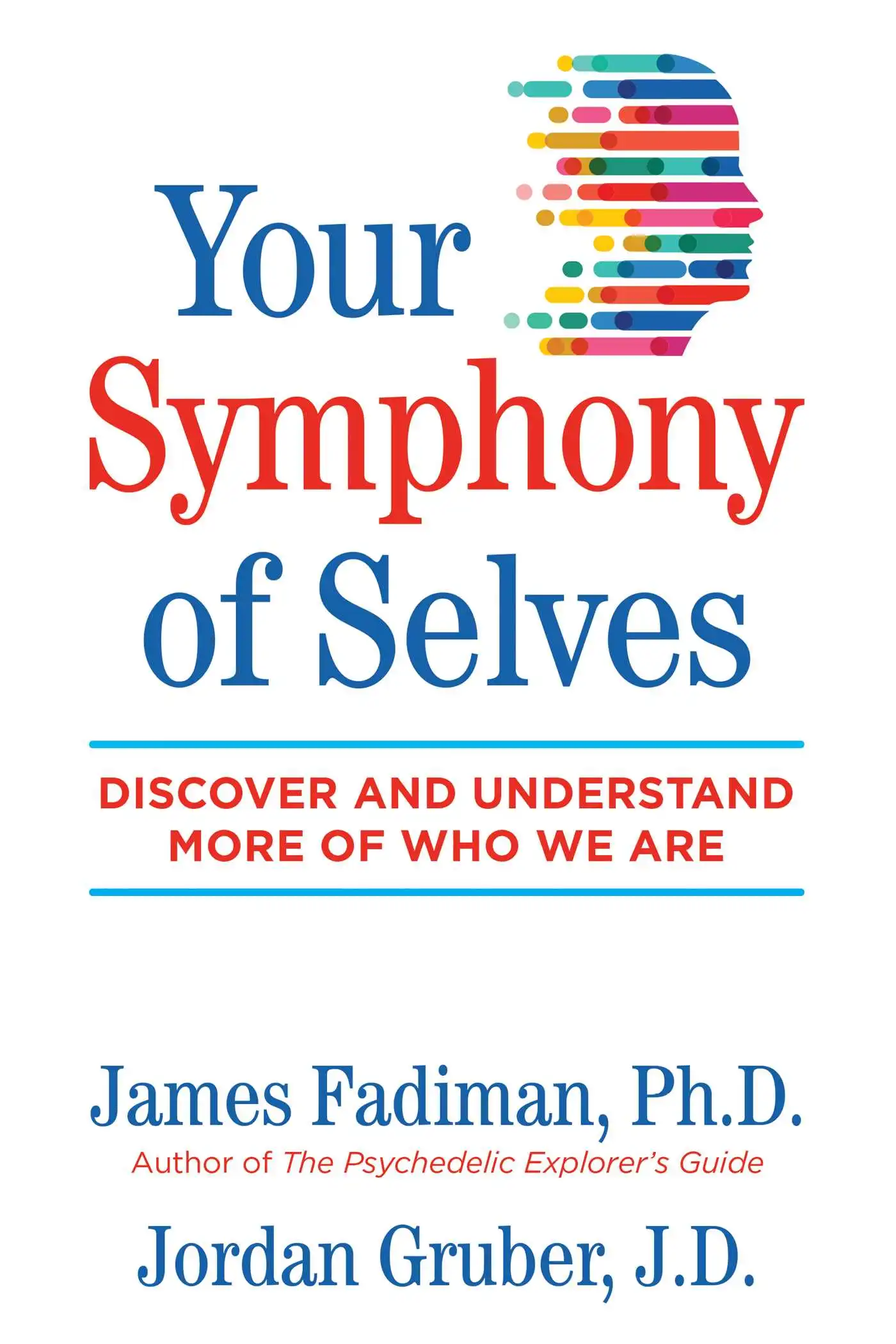
Episode 194 Dr. James Fadiman – You Are Not One Self: Microdosing, Multiplicity and the Mind
September 4, 2026 · 1:14:38

HXP SHORTS: #001 – Deconstructing Death: What Happens When We Die?
September 14, 2026 · 11:37
EPISODE 200: Dr. György Buzsáki — Brain Rhythms, Memory & the Making of Meaning
October 27, 2026 · 1:04:05

Episode 196: Waqas Ahmed — Polymathy, AI & the Future of Human Creativity
September 28, 2026 · 1:04:41
Episode 195: Dr. Satchin Panda — Circadian Rhythm, Sleep & Meal Timing
September 21, 2026 · 1:09:04
Independent conversations
Help make the next one possible.
Membership sustains ambitious, unhurried interviews and keeps the complete archive open to curious listeners everywhere.
Become a member