

The Human Experience · Episode
Episode 139 – A Drink With Dr. Dennis Mckenna – Part 2
A conversation with Dr. Dennis Mckenna
Dr. Dennis McKenna is an ethnopharmacologist who has studied plant hallucinogens for over forty years. He is the author of many scientific papers, and co-author, with his brother Terence McKenna, He holds a doctorate from the University of British Columbia, He received post-doctoral research fellowships in the…
Stay with the full conversation.
Episode field notes
Show notes

“Psychedelics are not suppressed because they are dangerous to users; they’re suppressed because they provoke unconventional thought, which threatens any number of elites and institutions that would rather do our thinking for us.” ~ Dennis McKenna, The Brotherhood of the Screaming Abyss.
Dennis McKenna, 67, is a noted ethnopharmacologist, focusing on pharmacognosy, especially with psilocybin and ayahuasca. After travels to the Amazon, in search of the Sixties experience with his older brother, Terence, Dennis’ curiosity was piqued in a scientific way. He wanted to know how these plants worked.
In 1979, McKenna earned his Masters in Botanical Sciences at the University of Hawaii. With his continued studies in the Botanical Sciences, he earned his Ph.D. in 1984 at the University of British Columbia. He studied the botany, chemistry, and pharmacology of ayahuasca and oo-koo-he, two orally-active tryptamine-based hallucinogens used by the indigenous peoples in Northwest Amazon.
McKenna received post-doctorate fellowships in the Lab of Clinical Pharmacology at the National Institute of Mental Health (NIMH), and in the Department of Neurology at the Stanford University School of Medicine. He recently completed a project, funded by the Stanley Medical Research Institute, to study the Amazonian ethnomedicine for the treatment of schizophrenia and cognitive deficits.
In 1990, McKenna became director of ethnopharmacology at Shaman Pharmaceuticals. In 1993, he became senior research pharmacognisist for the Aveda Corporation. In 1993, he also founded and continues to serve as VP and board member of Heffter Research Institute, where they are researching use of psilocybin with cancer patients.
In 2001, he joined the faculty of the University of Minnesota’s Center for Spirituality and Healing and has since become a popular professor. He serves on the advisory board of The American Botanical Council and on the editorial board of Phytopharmacology.
McKenna’s authored four books and countless research papers. In 1976, he wrote the still popular, cult classic Psilocybin: Magic Mushroom Grower’s Guide.He can be seen in documentaries on the esoteric. He continues to lead expeditions to the Amazon to study the culture, shamanism and ayahuasca.
Far Out, Man
For anyone who’s been to Paonia, CO, it’s no surprise that the small mountain hippie town produced two of the most learned ethnopharmacology luminaries — the dynamic duo, brothers Dennis and his senior, Terence, now deceased. What began as a popular recreational experimentation in the Sixties counterculture opened the door to new realms of legitimate soul-searching, growth and healing. Dennis wrote about his accounts with his brother in his 2012 book, The Brotherhood of the Screaming Abyss. They discovered there was some power in the medicine! Thus began the McKenna’s pursuit in the mysteries of ethnopharmacology — Terence, artistically, and Dennis, scientifically. And the science and the beauty was out there, for both to report back on.
McKenna and his Heffter Institute studies are there for your perusal, by category — cancer distress, addiction, spirituality, neuroscience and the Heffter Review — on Heffter’s Visit heffter.org. But it may seem as though the medical community is oblivious to the healing properties of the truly magical mushrooms. Many of us on the outside whose bodies are too sensitive for big pharma poisons, await the day that we can break the ties that bind and discuss these truths and make them mainstream. Some under-grounders are paying attention.

Never Trust “The Man”
There is a revival, an underground movement to legitimize the use of these phytomedicines. The focus these days is more on self-discovery, self-actualization, and self-healing. We are sick and need real healing. We need to take over the reigns, clean ourselves and this mess, and put the “kind” back into the word “humankind.”
McKenna, in a 2014 Vice interview, McKenna discusses the dynamics of the cool brother duo, saying that they were “Big Picture People.”
“This inclination partly explains our early interest in metaphysics and philosophy. We were dissatisfied with the pat and shallow answers proffered by our Catholic faith, and with the priests who, with a few exceptions, responded angrily, or disingenuously, to our persistent questions.”
A recent New Yorker Magazine article featured the growing trend of ayahuasca in the US, attributing some of the rise to the work of the McKenna brothers. The reporter describes the new movement that is “characterized by wellness cravings, when many Americans are eager for things like mindfulness, detoxification, and organic produce, and are willing to suffer for our soulfulness.”
This is a good thing. The Age of Aquarius! Bring it on!
Perhaps even more poignant is that McKenna is trying to convey an important message about how necessary an Age of Aquarius is today. In a July 2016 interview with The Guardian newspaper, he says, “ … we have forgotten our connection to nature. We’ve come to the conclusion that we own nature, it exists for us to exploit, and we’re destroying it in the process. We’re destabilising (sic) all of these global mechanisms that keep the biosphere habitable by life.
“I think ayahuasca is waking up a lot of people and reminding them that, ‘No, that’s not the way it is. The plants are running the show, by sustaining life on Earth, if nothing else.’ There needs to be a global shift of consciousness …”
Let us just hope “The Man” does not make it illegal to save ourselves and our planet.
~The 411 & Source Links To Fascinating Other Stuff~:
University Of Minnesota page
The Brotherhood of the Screaming Abyss
The Scientific Investigation of Ayahuasca: A Review of Past & Current Research Study PDF
Ayahuasca & Human Destiny by Dennis, 2008, profound today more than ever!
The New Yorker article
The Guardian article
Top 8 quotes by Dennis McKenna
Between Humans & Psychoactives
Journey of the Spirit (JotS) Ayahuasca Trip
We rely on listener support!!
If you value even one of our shows, become a member get exclusive early access to our recordings, extra bonus content for each of our episodes a chance to request guests you want us to bring on and so much more.
Read the conversation
Transcript
welcome to the human experience podcast the only podcast designed to fuse your left and right brain hemispheres and feed it the most entertaining and mentally engaging topics on the planet as we approach our ascent please make sure your frontal temporal and occipital lobes are in their full upright position as you take your seats consciousness relax your senses and allow us to take you on a chip we are the intimate strangers thank you for listening ladies
and gentleman welcome we’ve got a phenomenal program planned for you tonight we’re gonna be continuing our series called a drink with dr. Dennis McKenna dennis is a good friend of the show he’s been on the show many times I’ve known Dennis for many years so sit back grab a drink maybe a smoke enjoy this conversation the human experiences in session my name is Xavier katana my guest for this evening is dr. Dennis McKenna
dr. Dennis McKenna is an ethnic ecologist who has studied plant hallucinogens for over 40 years he is the author of many scientific papers and co-author with his brother Terence Mckenna he holds a doctorate from the University of British Columbia he received postdoctoral research fellowships in the laboratory of clinical pharmacology National Institute of Mental Health and in the department of neurology Stanford University School
of Medicine he’s the founding board member of the after research institute a nonprofit organization focused on the investigation of the potential therapy therapy utak uses of psychedelic medicines Dennis it’s a pleasure my friend welcome back to a Jaques it’s so good to have you back here it’s a pleasure to be back same here how are you I’m doing well so we’re do we’re doing this we’re doing this drink with dr. Dennis McCann on a thing again
what do you what are you drinking over there I grab some white wine available okay I’m drinking some red wine so we’re set with diets you’ve been you’ve been pretty busy these days I mean I talk to you I talk to you about a week ago and you were down in in Peru I think right that’s right yes we just finished up two retreats down there that’ll be the third retreat of this year that we’ve done and yeah so it’s keeping me busy and and
then we have another one coming up in November which I think will be a very interesting retreat not like anything we’ve done before we’re going to have my friend Alexandra Thomas joining us he is a specialist in sound sound therapy sound residents the use of sound and ceremonial space and probably the world’s expert on just about every aspect of sound that you can imagine I’ve had experience all sessions with him many occasions and he really knows
how to use Sonics and residents in conjunction with altered states to produce rather amazing experience programs I guess you can say that many people resonate with I couldn’t resist the pun but anyway if you look at my Twitter feed or my Facebook page you can find information about it or you can send an inquiry to events at McKenna dot Academy okay getting that out right away I mean since you mentioned it tell us about a little bit more
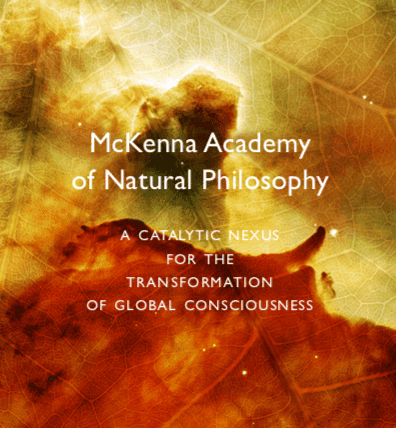
the Academy because this is something that something new that you’re doing it you’re calling it the the cattle a catalytic Nexus for the transformation of global consciousness Wow close we’re calling it we’re calling it’s the McKenna Academy of natural philosophy right and it’s going to have its operations mostly focused in South America but not confined to that and I call it a catalytic Nexus for the transformation of global consciousness
in the sense that the programs of the Academy and our our goal beyond just psychedelic retreats or ayahuasca retreat although we certainly do that but we do we’re offering a variety of educational programs even courses other types of of programs to help people educate themselves or re-educate themselves about their relationship to nature which is something that we really need to be thinking about because we’re all aware of the crisis that we face so
my idea with the Academy is I guess I’m basically a back into mission at heart you know and I love teaching and I love sharing information I love bringing brilliant minds to a place where they can share their wisdom and ideas and that’s what you do with an academy right so I this will be our first official event sponsored by the Academy this one in November and I’m excited about it Alexander is an amazing character a
teacher of mine for many years and he has so much wisdom and so much knowledge to impart I think it’s gonna be a really stimulating 10 days and you’re designing it as a sort of modern-day mystery school and I mean you’ve been doing this yourself for you know what like 40 years or more so and you’ve been you know now it seems like you’re to take the charge on and take the lead on this by witness in this institution yeah exactly
many I mean I have been doing retreats in the Sacred Valley since basically about 2012 and as we’ve done those the concept has evolved so you know and and I as you know I’ve been involved with ayahuasca and other psychedelics for as you say more than 40 years but it’s only in the last sense since 2012 a little bit before that but I’ve been doing regular retreats in the Sacred Valley and this time we decided to take a
slightly different direction and did not only include you know the the medicine experiences but also provide a context where people can appreciate the pre incan culture and their understanding of sound of altered states we have one of our faculty members of their sub coming retreat is a guide who we work with in our in our ayahuasca retreats who has made this quite an in-depth study of all this and kind of the esoteric energies
and technologies that were available to the Incas and the predecessors of the Incas and a lot of that had to do with the use of sonic energy you know sound energy I mean sound basically but turns out there’s a lot more to sound than you might think no I agree with that I mean me yeah we’ve had a bunch of authors recently on that and we’ve been exploring the history of psychedelic usage through ancient times it turns out
you know Plato was on the stuff Socrates like a lot of the modern philosophy that we you know kind of operate on today and are learning from today was influenced by psychedelics and if you look at someone like Graham Hancock he talks about how you know or DMT was the reason that these cultures were sort of you know collecting and moving around to different parts of the earth so and this has been imbibed into ingrained into our
culture for thousands and thousands of years yes yes yeah good that you mentioned Graham I have just finished his latest book I mean I am a total fan of Graham’s work yeah and his latest book America before have you read it yeah I got through it yeah I mean okay so long read it’s like a 500 page book but it’s worth it because he really study it’s definitely worth it he brings more documentation in together in this book than he has with any of the
previous ones so he builds a very solid case and the case you know the picture that it gives us of the ancient past is nothing like conventional the conventional view of history or archeology I mean for one thing it goes back and now you know these are not crazy numbers these are well-documented numbers in the new world humans arrived in the new world at least a hundred and thirty thousand years ago probably much earlier and so that just completely
overturns you know the conventional view of when hominids they weren’t even you know when hominids when humans made it to the New World and and indicates that you know they probably didn’t come over the Land Bridge initial they actually probably crossed the ocean which is you know I mean it just vastly exceeds anything we thought that such such an ancient racist would be able to do so so it’s very interesting to his theory that there was
a more or less advanced like not not computers and lays but more like an 18th century level of civilization these people had you know ocean-going ships basically and they had you know writing they were cartographers than they actually generated maps of parts of the world that for years were not even known you know to the Western world not admitted at that time so em you’ve read the book so you don’t I mean why Dennis do you think then you know
for us publicly why’s the history of this been hidden why are psychedelics namely you know plant medicines so demonized in in mainstream culture or mainstream media I mean the 1990s you got that just say no campaign were Nancy Reagan doing her whole speech mean at the war on drugs why why suppress this technology that’s been around for so long well I think it’s I think it’s numerous numerous factors being for one thing you know psychedelics are
dangerous because they not because they’re dangerous substances but because they make you have dangerous ideas you know unorthodox ideas and the powers the be are never receptive to that you know they don’t really want people to make their own discoveries don’t think for themselves because they have they have an agenda you’re supposed to aspect except a certain societal or religious or other you know sets of dogma and if you insist
on thinking for yourself and push back against the conventional wisdom and something like Graham’s work does you know and it’s very well done it’s very well documented so you can’t you know you can’t really fault it in terms of being sloppy scholarship or anything like that why are people so threatened by it I’m not sure it’s because there’s a certain narrative you know that we’ve accepted for a long time for instance the idea
that you know humans originated in Africa they moved out of Africa thence into Europe and Asia the possibility that they might have reached the the so-called new world much earlier than anyone imagined I don’t know why people are threatened by it I mean I I think that science you know if it purports to call itself a science should be looking for the truth you know but I think something that that you know Graham’s work and the fact that he has been so
denounced by the so-called archeological community of it as he makes very clear it’s because it’s not a science anymore you know it’s a cult it’s become a set of accepted doctrines and views of ancient history that you know that are not to be challenged and so he comes along and challenges it and he he makes a lot of people mad but I think I think anyone who’s curious you know and who was really honest can’t review what
Graham has written can’t look at that in an objective way of say wait a minute you know the picture that we thought we had of the ancient past it just does not fit right these new facts that have come to light yeah you know and to me that’s exciting but I mean I’m not a dog but just you know I’m not invested it in some set of dogma and and you know academics is you know unfortunately I mean it’s a notoriously sort of hidebound
institution it’s not it’s not generally open to new ideas because of threats threatens the status quo have you ever have you ever had your tenure threatened with any of your work well threatened good what sales I mean I don’t know has has anyone has it have you ever received pushback from you know exploring psychedelics and plants in the way that you do not really that’s a good yeah it’s been surprising I mean I I’ve not gotten you
know death threats or anything like them a lot of people disagree with me sure you know they’re they’re free to do that that’s what you know what free and fair dialogue is about I in fact you know my whole shtick is don’t believe me you know I mean and not being asked to be I’m not asking to be believed I’m asking or suggesting people should think for themselves you know and they should use these god-given parades that
we have to you know figure it out come to your own conclusions that’s the one thing that’s quite you know that’s quite attractive and beautiful about psychedelics because you know you you don’t have to accept any set of dogma you don’t have to have faith you can just have the experience you know it does not take faith or belief to benefit from psychedelics what it takes is courage you know and if you have the courage to to smoke the pipe or drink
the cup or whatever it is you do and actually trust yourself enough to have that experience then you can decide for yourself what it means hmm you know and that’s important thing and any spout powerful spiritual technology there are legions of people who are ready to tell you what it’s supposed to mean you know and how you’re supposed to think about it what I like about psychedelics is it gives you the opportunity I mean you can listen to
those people there are lots of people ready to tell you how to interpret this and so on but in the end of the day it’s the encounter between you and the medicine and whatever the medicine renders accessible to you and so you know it throws you back on itself on it on yourself and it basically throws down a challenge like here’s something that’s going to completely blow your life that’s going to completely you know disrupt your what your reference frame
right and what you thought you know and it’s your job to make of it what you will you know interpret it according to what they don’t trust yourself enough to to interpret it for yourself you know you can benefit from reading about other people’s experiences you can benefit from people’s you know thoughts about you know what it what it’s really about and so on but at the end of the day you have to you know you just have to draw
your own conclusions absolutely that’s yeah that’s it let’s talk a little bit about what occurs in the brain when a substance like DMT or psilocybin or those you know for compounds LSD I boga what’s happening in the brain as far as neural receptors and neurogenesis because I think in the 90s there was this idea that the brain was a sort of you know like closed system like once you once you’ve burned off this gray matter once you burned off brain cells
they never regroup back and that was it you know lowered your IQ you were just dumb for doing this you know and then in I’m not sure what year was the early 2000 maybe 2004 neurogenesis the idea neuroplasticity came out where this understanding of the brain and and its flexibility and I mean we really don’t know much about the brain at all so you know why are these compounds you know namely DMT psilocybin right what impacts are they having on the brain why
are they so crucial to you know mystical experiences and and learning and and evolution we’re gonna be here all night you know what you’re talking about basically the calm house that you named EMTs saipin mescaline LSD ayahuasca these things are that what we think it was the classical psychedelics right there were there plenty of psychoactive substances plants and so on that are psychoactive and some will induce profoundly altered states of
consciousness but they are strictly speaking in the pharmacological sense they’re not psychedelics and I kind of adhere to a almost a reductionist definition of psychedelics because just as an arbitrary thing under my definition the definition of a lot of people and the definition that I like but simply because it kind of defines it is the true psychedelics the classic psychedelics are what they call 5ht to a agonist right hmm
so what’s v HT v HT is my hydroxy trip to me that’s serotonin right one of the neurotransmitters so one important neurotransmitter in mediated states of consciousness so you could call them the serotonin 2a receptor zuv not 2a receptors are the target for these classic psychedelics there are about 14 or 15 different kinds of serotonin receptors they have numerous functions all over the body there’s more serotonin receptors in the gut than in the brain
but the 2a receptors appear to be those receptors that are critical to the action of psychedelics of having these mystical experiences and all that goes with that you know this neurogenesis phenomenon this sort of you know the the altered state itself the psychedelic experience itself rearranges connections in the brain that neural plasticity thing that you’re talking about and it creates new connections and probably does in fact
induce neurogenesis the growth of new neurons right now oh as you say a few years ago we thought that was deficit forbidden right like it just didn’t happen once you had given complement of neurons at Birth you only lost neurons after that it was a long slow you know from birth to death a long slow state of neural degeneration that’s not the current picture at all the brain is enormous ly adaptive it’s plastic and it responds to stimuli from
what’s and from its environment and it can actually change its structure can change its wiring can change a lot of things about how it operates and that’s in relation to environmental clears you know and and and if you if you reflect a moment you know you think you know it’s like it’s obvious right how could it be otherwise you know and and these these models that we created just overlooked something very important which is that
you know especially in primates especially in hominids with our you know big brains I mean it is a lot it is because of our enormous brains of the adaptability that that brings about that we are such a successful species mm-hmm so okay so you know when we’re defining intelligence I mean how how are we looking at you know what is Intel do we mean when we talk about intelligence or weed because I mean because no pre hominids I mean were they capable of you
know learning and reasoning and you know are we as well our plants intelligent I mean there’s I mean there’s something happening there and I’m trying to understand better what that means what that relationship is like why drinking a cup of pasta tea is opening you know this this mystical experience for me and helping me on my journey through you know through life well because it happens to activate those receptors the that network of
serotonin 2a receptor z’ of other receptors it’s you know nothing in the brain happens in isolation but it happens to activate that that network that mediates this kind of experience you know I mean that’s really all it is and never you know a more more maybe important question is why what is the value of mystical experience to our existence to our consciousness to our adaptation to the environment you know and that’s a deeper question and I don’t
know that anyone knows the answer but what we can say is that you know that the notion that essentially that the that the universe is full of mystery and meaning I mean that that’s that’s the you know that that’s the consequence of these mystical experiences you know if you look at the data if you look at people in the psilocybin studies who have with terminal cancer for example they take psilocybin and it completely
reframes their reference frame you know many of these people are terrified of dying because in fact they are dying and you know that’s all they can think about but then they with the psilocybin as an aid to sort of step outside their reference frame and examine their existential situation they come away with a tremendously beneficial sort of re understanding of their situation which can easily be put in many of them say well I was terrified of dying but
guess what I’m alive now you know and I’m I’m gonna focus on that going forward the fact that I am Alive now in the moment everybody dies sooner or later we all have to face that what use does it do to just focus on that and get all depressed about it better to focus on the fact that you’re alive now you know and you’re with your loved ones and you’re more or less functional but definitely you know on the on the way out but we it
helps to come to terms with that so I think that I think and what keeps coming up again and again in these studies to kind of get back to what you were saying is the term meaningful people say this was the most meaningful experience of my life or the fifth among the top five most meaningful experience of my life what is so valuable what’s so important about having meaningful experiences right I mean why should we even care
like you know who cares why should we care well but obviously we do I mean our whole lives you know most of our lives are you know routine I mean it’s not that they’re not enjoyable and that sort of thing but they’re not these profound spiritual revelations most of the time they’re more or less routine people long for something beyond that I think they long for reassurance that you know we are not the limited beings that we
appear to be and the psychedelic experience or spontaneous mystical experience for that matter you know brings it to people and it brings people of experience of something beyond themselves and so it’s meaningful it’s because I think it’s reassuring doesn’t even matter if it’s true you know it I mean it doesn’t it doesn’t but you know I mean it’s true in the you experience you know and I think you I think it’s safe I think it’s not
inaccurate to say that anything you experience is true because you experience it to the extent that it’s an experience whether it has an objective reality well then we don’t know you know but you know people have these experience and they are personally meaningful for them and somehow we really value that you know we in fact you know many people with the mystical inclination they spend years trying to you know achieve that
kind of a reward so it’s interesting that you know pretty much any schmuck can have this kind of experience you know 25 milligrams of psilocybin and the right sentence setting and you’re pretty much there you know if and and so people say well that’s not that’s not a real mystical experience you know because you took drugs right you took a drug and so it can’t be genuine I’m here to tell you that every state of consciousness is
reflected by a neurochemical set of a neurochemical brain state sure we’re on drugs were made out of drugs and we’re on drugs all the time any kind of experience that we have is a drug-induced experience you know because our brains are engines that run on neurotransmitters neurotransmitters or drugs you know so this idea that well it’s not a real experience because you took a drug III don’t buy it if you experienced it it’s real if it’s
meaningful who’s gonna tell you that it’s not meaningful that’s for you to decide that’s your judgment it’s not for anybody to tell you what that it wasn’t meaningful you can say well gee you felt pretty meaningful to me that’s all that matters but there’s there’s something that Graham said when he was on the show that that really struck me is you know when you’re when you’re in the Amazon there’s you know what a hundred thousand
plus species of plants and to realize that there are these two plants that when combined together you know create this brew that it creates this experience it indicates that there was a science that was active you know in this ancient period a long time ago so awareness or cognition of how this could affect you know us what do you make of that I mean how how does that fit into the larger perspective of where we are now well I think I think it’s easy to
look at this in a simplistic way you know and it’s it’s not quite the way you described it in the first place you know in in the 80,000 or so species that that we think are in the Amazon okay you know out of a total of about 250 260 thousand species of plants worldwide I think in the 80 in the Amazon has about a third of them maybe eighty eighty-five thousand species the fact is that most of these plants are full of biodynamic
compounds and DMT right is is the one that gives ayahuasca a psychedelic kick there are certain admixture plants that are prepared with ayahuasca and the other the the vine as you know isn’t monoamine oxidase inhibitor that prevents the the breakdown of DMT and the gut makes it orally active right hmm many many plants contain DMT it is not a rare compound you know I mean it’s not rare in the Amazon it’s not rare anywhere it’s again indigenous in the
human body right if said doggedness in the human body that’s right that’s right it’s it is in fact a neurotransmitter in the human body you know we don’t understand its function as well as something like serotonin but it appears that it is a neurotransmitter and because DMT is only two steps away from tryptophan or eye tryptophan is an amino acid universally of all organisms it’s one of the twenty that go into proteins two trivial
enzymatic steps will convert tryptophan to DMT so it’s very very common in plants you know and animals and fungi probably and you know I mean it’s certainly fungi have their own tryptamine derivatives like like the psilocybin so it’s common and there are many plants that conceivably could have been used to make ayahuasca and in fact people do they make they make analogs of ayahuasca because the other component of the brew
is the vine which contains the beta-carbolines that do the MA elimination but again beta-carboline z’ they’re not as abundant in nature as DMT but they’re certainly not that rare either so potentially I ayahuasca or ayahuasca ad logs could have been made from completely different plants and you in fact do that you can do that and with a little knowledge of botany and what we know now a little bit of knowledge of chemistry and what’s been published you
know you can expect to be quite successful you can make an ayahuasca analogue that will be every bit as active as ayahuasca but how did this comeback how did this come about back in the day well most likely it just came about through trial and error experimentation you know but not random not necessarily random experimentation when we did this conference this ESP d50 conference a couple of years ago there was an archaeologist ethno botanist there mint
manuel torres who gave an excellent talk about the probable origins of ayahuasca and he was talking about a particular area in the in where Colombia Venezuela and Peru come together the northern walkways region and there was a very active chicha technology making beers of various kinds of beers or fermented beverages that you make roots or usually from roots like manioc you can make him fruit sometimes these are just basically
a fermentation technology right but the the people that made the these teaches they were curious and they were in a you know in an environment where you know there were these other plants some of them have medicinal uses including ayahuasca I almost get the vine was used by itself you know not as part of a hallucinogenic brew but probably as treatment for for parasites or something like that but you know human beings have
gotten to where we have with with respect to plants on the way that we exploit plants because we’re curious you know and you know you can see much the same kind of curiosity and operate in operation that in a modern-day craft brewer you know a craft brewer is always looking for new stuff new ingredients to put it is his beers right to make them taste different or to make something that the other guy doesn’t have and there’s innovation that goes on maybe if
I put some of this in it’ll make it taste different give it a different effect Manolo makes the point that there was a lot of that going on in this area at that time and he thinks that you know it it that ayahuasca really sort of appeared out of that you know that atmosphere of experimentation just trying out different combinations and seeing how it was and then at some point they tried the right combination and you know they got they got their minds blown
you know so so that was a successful experiment and yeah hmm so I think maybe that’s how it how it how it might have take it off is is there a specific role that has been identified for the existence of DMT in humans and nature it seems kind of like it’s a bit elusive as to why you know it even exists man is there I mean I’m gonna get a little goo here about this but I mean it does it is it a molecule that connects us into some hyper
dimension some you next level of reality perhaps you know we don’t see every sorry I was pulling up the the text to Manolos talked here which which is worth looking at and I’m going to I’m gonna paste it into our text box here people couldn’t look at this link okay that’s some think about if we all like you can watch Manolos talk at the ESP D conference oh well we’re 40 there okay okay sorry no problem distracted so so the question is what is
what does it mean the no the it seems like the role of DMT in humans in the role of DMT in humans in nature can you hear me Dennis hello Dennis okay hang on guys it sounds like Dennis can’t hear me I’m gonna I’m gonna call him right back [Music] sorry it’s a live show just hang tight [Music] mm-hmm still trying hang on guys that’s strange not answering all right I think he might have lost his internet connection let’s try again
that’s one more time hang on Denis what’s going on there hi hey how many drinks have you had then it’s can you hear me you tried to paste that link and then it just went sideways u-turn okay we’re back okay we’re back so no worries okay so let’s let’s go to let’s just go back to the question you know it and it seems like the role of DMT and humans and nature seems elusive to me it’s like this access to this mystical realm or
compound mystical space this hyper dimension that were accessing when we ingest this compound do you have any theories about that is there something specific about the molecule that could result in you know discovering more about why it’s so important or why it has this effect that it has well it’s a you know it’s a it’s a difficult question to answer I mean you so you take DMT you have this experience you seem to be in this
parallel reality in a certain sense you could call it you appear to encounter entities other intelligences in that space that that don’t appear to be you or anything like you but you have to remember you’re bringing your interpretive frameworks to this you know just because that’s what it appears to be doesn’t mean that’s what it is you know and and you know it’s difficult to resist the temptation to say well I you know it opened a portal into another
dimension certainly you know that may be our subjective impression and maybe it does but how do you how do you test that you know I mean you know I I can be a wet blanket or I can say well you know certain like dopamine is a neurotransmitter it will have these effects you know serotonin is a neurotransmitter will have other effects DMT is a neurotransmitter maybe it’s just that when you smoked DMT this is what happens you know and it’s a
reflection of brain architecture brain chemistry maybe rather than any other dimension so you saying that the spiritual context that some cultures add to the experience of DMT could be just you know just that their interpretation of something and an event like I was watching a lecture that you gave today and you were talking about this this this culture in the Amazon that you know that the value the purge that happens
when you drink ayahuasca and they thought that it was like some sort of energetic release you know like an energy leaving your body so you know these cultures identify with some sort of spiritual aspect to this compound and you know so I mean that’s that’s why I mean you’re the scientist so of course you would say you know it’s it’s just in the brain but I’m wondering if it you know if it has a spiritual something else context well yes of course but it’s
not the drug that has the spiritual aspect it’s the experience you think all the newer drug noses trigger that your experience has spiritual aspects to it the drug seems to facilitate that experience but you know this goes back to you know I think a mistake that a lot of people made back in the day I certainly made it this idea that somehow the trip is in the drug you know the it’s it’s not it doesn’t work that way you know the drug is simply a molecule
it has the effects of the as when you mix it with a human nervous system you know the nervous system the the you can think of the drug in some way is like a musical score you know I mean when you and the instrument that plays the plays it is the brain actually the brain body you know when you put it into that biochemical soup but it goes through its pharmacokinetics it goes through its metabolism the symphony plays out and the symphony is what you
experience as the psychedelic experience the drug on the shelf is simply a crystal on a shelf it doesn’t have any of these properties you know it’s a trigger it’s a catalyst that lets the nervous system express itself in this way now you know so then you can take this totally you know sort of subjective experience they will it’s all it’s all in my head you know there is no extra dimension there is no portal two parallel universes or anything like that
it’s just a subjective experience you know it’s like a dream you know but then so you say okay well there’s nothing to it beyond that but you know you’re getting into some difficult epistemological territory because really what what else is there but the hallucination the experience that our brains synthesize and present to us as reality you know I mean is there anything beyond that but it maybe maybe not but it’s very hard to you know it’s
very hard to objectively know about it because we’re caged we’re trapped or I mean trapped as a bad term because it implies that you know we’re constrained but in some ways we are inside of this neural falou nation that we create for ourselves and that we inhabit it’s a model of reality I very I very often said this you know our brains construct a model of reality essentially a hallucination that we proceed to inhabit you know so we’re
living out our own movies all the time we’re not really direct directly experiencing reality we know enough to be pretty sure than there’s something out there that’s not the self but we never experience that direction hmm I mean I I really connect with your idea of you know like when you look at a musical sheet on a piece of paper that’s all it is is to justice like you know writing on on these notes on a piece of paper but then when you apply the
instrument and you play the music then you’re adding it to this this extra dimension of you know time and space so perhaps perhaps the psychedelic experiences the same way you know the the molecule DMT is just that it’s just a molecule but when ingested and the brain being the instrument that’s when it allows us to play inside this reality that that we’re creating you know for ourselves that’s exactly it so it plays out through time to put it
to play the musical score with an instrument brings it to life it expresses it as a fourth dimensional object or a fourth dimensional not object but process same thing I mean I mean the drug in the end the absence of the of the instrument to play it which is our brains is pretty abort inert and frankly fairly boring you know but once you put it in the right context and then you know then it plays it plays in fourth dimension and of course we are we
are fourth dimensional entities you know because we’re you know you could a person and they appear to be solid and they are but they’re a process you know the fact that they are alive means they’re metabolizing and metabolism is something that expresses through time you know so that’s the fourth dimensional aspect of personhood when metabolism ceases then there’s not much to talk about because the person is dead right so so we you know we normally
don’t think of these things we operate within this set of these assumptions not really thinking to too much about what you know about these interpretive structures that we put on to it but when you when you actually sort of focus in on those then you have just you know you have to admit to yourself there’s all sorts of assumptions about the nature of reality the nature of your own experience you know and and this comes
up again and again with the notion that you know for example encountering apparently non-human intelligences in a psychedelic state you know do are these entities real or are they fabrications of your own imagination or are they in that sense are they a part of yourself you know that is presenting as something that isn’t the self so these are tricky tricky questions and we don’t normally think about them we use all these terms
you know without really thinking about it’s a mystery I mean that’s that’s a are the mystery list of it and the question is too big for us to really understand and answer definitively right can we accept that well so far so far yeah right yeah right and what about what about at the moment of you know cardiac arrest the moment of death and I mean is there any relevance or truth to this idea that there’s this sir dmt that’s being generated at the moment
of cardiac arrest it’s very possible that there is you know and would not be surprising that you’re probably thinking of Edie freqs cos work on this and it’s just a neuro protective function is it just true well that that that’s enough right if I mean it is in fact neuro protective it’s a very good antioxidant and if if you’re having a ischemic attack a stroke essentially you know if the body can mobilize those stores of
DMT in the lungs and they’re actively transported into the brain then they they would have this this neural protective effect they would prevent the degeneration of the neurons through hypoxia through lack of oxygen they would they would buy some time you know and it’s perfectly reasonable and in fact you know that the body would have these these protective reactions to that kind of event I mean a stroke probably mobilizes all kinds of responses but
that might be one of the conference one of the you know one of the responses is the mobilisation of massive amounts of DMT now the fact this might also induce a profound psychedelic state may have nothing to do with the fact that it’s neuro protective and I’m saving your life but it might be it’s kind of a benefit it’s kind of a convenient side effect because you’re you know you know how you go to the mat you go to the
dentist and they put the television on so you mean it it won’t pay attention to what they’re doing in there well something like that you know the body maybe say well you know you can watch the movies well you know where we’re trying to you know save the save your brain and then it may not have any me mean beat on hmm interesting I want Ennis I really want to get into like the the ecological nightmare that were in I was reading
reading this article do you remember remember this this movie that that came out several years ago it was by M night Shyamalan I think it was called the the happening where these plants start releasing this compound that makes humans commit suicides or something like that it was really about their movies interesting and I mean it’s it was like the earth was protecting itself because humans were killing it and I read this
or this article out of route Reuters and it’s I guess these this us-led team of scientists were drilling into the Arctic and they found that now they found a bunch of plastic in the they drilled down into you know the core of the earth and they in the remotest waters on the planet found pieces of plastic there so you know this is an ecological nightmare that were that were in the middle of and it seems like it seems like people
people don’t care I mean do they I mean until it until it’s at their front door do people really I mean there’s some of us that care but for the masses do they care about what’s happening with earth I don’t think so I don’t think they care and I think until if it affects their lives directly maybe it affects the the price of gas then they start to complain that’s right well I think a lot of them don’t know about it and you know and you
know there is a very active disinformation campaign to keep people distracted and to keep their attention away from you know these ecological processes which are actually threatening the existence of our species certainly and maybe all of life on Earth I don’t get it Savior it’s some kind of cognitive dissonance you know we’re you know in the the real consequences of what we’re doing to the planet are so horrible they’re too much to to
contemplate in in some ways and so people you know naturally they retreat into denial but denial is not going to fix the problem and you know and I as you know I’ve often said these plants and experiences that they can catalyze our wake-up call in that sense I mean I do think that the plant that the community of species in the biosphere is intelligent and I think that these plants are like ambassadors of the community of species they just happen to
make these neurotransmitter like messenger molecules that impact our nervous system in in these particular ways and help us to wake up to the you know to the crisis that we faced the question is what happens when you wake up what’s the next step well it’s not so clear you know I mean I mean you the in part the mission becomes we have to get everybody woken up and then maybe we can come to a consensus about what to do
about it if anything you know it may be that it’s too late that we’re there were so far beyond any remediation that we could take for this kind of thing that you know we I mean I’m not sure that the solution is a human originated solution at this point you know we can stop to some degree we could try to stop what we’re doing to you know not compound that the damage you know they say when you’re digging a hole the first thing
you do is stop digging right if we could do that literally then we might be able to turn it around but you know every time a new report comes out on the climate how rapidly is changing and so on the timeframe becomes becomes shorter and and you know a few years ago was that we have 30 years you know now maybe 20 years maybe only 10 years you know the window is becoming shorter and shorter are we going to wake up I think that’s
the question Wow a record checkup and if we wake up will it be too late what what can we do to mitigate this and you know I don’t really know I mean Terrence was talking a lot about this before he died and he was really big on this and it didn’t connect back then and I I think I agree with you I think it might be too late I mean I’ve read the studies on this I’ve really dug into this and I’m not sure there’s a practical solution
that we supposedly hit peak oil like I think in the 90s and we’re still dependent on fossil fuels there’s just not enough happening there’s not enough awareness there’s not enough taking place that’s that’s is you know counter indicating that something is going to shift in our favor and so so if it’s if it’s too late for you know humanity so be it the you know humans they seem to do this you know like wherever they go
is is they they take from their environment and and take and take and so you know it’s it’s a process of destroying you know their the ecology that’s around them and I find that fascinating I find it you know fascinating that we can’t find an equilibrium or a harmony within ourselves the way we live and the earth the home the planet that we exist on right we we can’t we don’t and it’s dismaying I think a lot of this as I’ve
often said there’s a reflection of the the the sort of poison the the poison that has seeped into Western consciousness you know particularly West the West but really it’s it’s a human disease but this under this this perception that we’re not part of nature and that we own it you know it exists to serve us and that sort of top-down hierarchical perspective is what’s gotten us into this mess that were in because we think
that nature exists only to be depleted that I exploited nature probably disagrees with that you know I mean it has its own program and we you know I don’t worry so much about the survival of life on the planet I think that life is very resilient but and we’ll adapt there have been massive extinction events at various points in in evolutionary history different costs you know we’re 95% of all terrestrial life has gone extinct and so on sure we
shouldn’t imagine that that can’t happen again we will likely be among the first to go life will persist you know but it won’t be as interesting as we are it won’t be as complex or problematic after some millions of years it may read Aversa phi and who knows what will replace it but you know we are the problematic species we’re the ones that are putting all this pressure on the equilibrium states that maintain the smooth functioning of the
biosphere we are pushing all those envelopes at a certain point it won’t be possible for it to snap back and then we’re up the creek without a paddle as it were you know is it going to happen I don’t know they’re like in there yeah it seems like a when question to me it’s it’s like when is it going to occur not not if it’s going to occur well and I mean who knows who knows maybe there’s a millennial out there that comes up with
this really great idea and and it’s it’s mainstream adopted and maybe right maybe corporations back off of this at any cost you know profit paradigm that we are in the middle of and it’s not like we have a backup place to go to there’s no there’s no God yeah no I mean there there is no other and and you know yeah there really isn’t any place to escape to in fact these all this talk about putting a colony on the moon a colony on
Mars in the first place the time frame for those things is much longer I mean we’re likely to be confronting this crisis long before we could have any kind of colony on another planet and I’m I’m sort of irritated by the idea why does it have to be on a planet why don’t we try to get ourselves a permanent presence in space that’s where all the energy and material are that’s where more or less infinite resources are we
need to you know become build space colonies or whatever if we’re gonna look at a technological solution I can’t see that that building another you know a settlement on Mars so that we then have another planet to pollute and destroy you know what’s to be gained in that in space you can have all of these fairly dirty process that’s going on because space is already full of radiation and dust clouds and all of this stuff you
know so so it’s a great if you’re a polluting species space is a good place to do it well maybe within limits you know I mean we’re already terming near-earth near-earth space into a junkyard much to our detriment so I don’t know I mean I really don’t know I I don’t I talked about this a little bit and you know they described it as like we are in you know this age of Kali Yuga the Dark Age and as and these ages last you know
so long like a hundred and fifty thousand years but it turns out someone on Graham Hancock’s website actually posted this article that I read recently and it was talking about how this this Dark Age I mean that’s what it translates to the Kali Yuga is supposed to end and shift into this new age around you know 2025 or so so you got about six years until we see this this shift and an awareness change in people and and if you look at if you look at
what’s happening politically you know it’s just in America specifically but just not not just America but all around the world people are protesting and I mean everything is so charged up it seems like we’re on the precipice of something huge something big yeah that could change the course of where we’re going and how we’re getting there yeah exactly everything seems to be getting destabilized I mean that’s not going to
be business as usual you know and then the question is you know there may well be solutions to some of these some of these climate you know climate crises I mean there are technologies that could be solution people are talking about geoengineering and all that you know and on the one hand this is a radical solution it’s not something that you know a few years ago people would consider but right now things are going to hell so fast we might need to
implement some some radical measures you know and I but but the problem is it’s it’s not that there are not solutions there are solutions but the problem is on the policy level you know the the people who make the policy who should be stepping up to the plate and saying look we have a problem here we need to have all hands on deck to solve this problem all you know this is this is something that threatens not just the United States or
any country it threatens us as a species so Earthlings Earthlings need to be responding to this I don’t see that happening I mean I think you know the the program of governments particularly the US government but as you say a lot of others seem to be very invested in denial and even making it worse you know we reversing what pathetic policy initiatives they have made because you know now we don’t believe in it or you know Trump says get global
warming is a hoax and everyone buys that well it’s not saying you know it’s not a hoax and you know we live in this in this environment created by the media where it actually distorts reality it seems like you know because we the reality that we inhabit is created out of memes you know and the power of social media and all this can propagate these memes you know throughout the global consciousness so quickly is there
anything we can rely on in terms of good information how do you separate good information from from lies and propaganda that’s no any point very hard to know yeah I mean have you noticed have you noticed Dennis that I mean people have changed the world has distinctly changed since this advent of like the smartphone like I mean in my encounters with people when I’m out I mean I don’t notice people ever looking up from their phone they’re so
completely addicted it’s like they’re did they’ve devolved into these like lower species monkeys there’s actually this question that segues into this perfectly Bandar loop as he says what does Dennis think about Tony writes theory on fruit symbiosis being involved in our neural evolution and how humanity is now degenerating back into a typical mammalian brain well I think there may be something to it I like Tony writes theory in fact I wrote they wrote
the foreword to his the first edition of this book which was which one it came out was called left in the dark and it just makes sense to me Tony’s theory just makes sense that we we grow up we evolved in this bio diverse environment biodiversity as reflected by chemical diversity we were pretty much omnivores we consumed lots of different plants and animals we consumed a chemically diverse diet we existed we lived in a complex chemical
ecology right so it just makes sense that these plant compounds are going to have an effect on you know our neural evolution on many aspects of our revolution either either directly effecting mutation rates or even through epigenetics and that sort of thing so I think it’s a perfectly reasonable hypothesis and the idea that Tony that brings forward is that you know we’re we’ve we’ve sort of you know we’ve evolved into a place where we’re
actually in a neurodegenerative state now with the with the deterioration of the human diet and all that many many fewer fruits more meat more synthetic processed food all of that kind of stuff you know has has an GMOs all of these things have an influence on the quality of our diet and the quality of you know you are you eat right I mean that’s a common cliche but it really is true you know what you take into your body for
plants or animals is what your body is made of and you know so processes that Tony is talking about again are you know there co-evolutionary processes they take place over large amounts of time but you know I think that there’s some some validity to what to what he is talking about I mean it’s it’s interesting to look at the just a larger perspective of you know where things are headed how people seem to be behaving and you know just looking I
mean in the Information Age I mean that’s that’s where we are now and where we’re you know I can transmit at close to light speed you know across the world a tweet or something like that and instantly make aware you know so many people about a certain topic but you know what’s in what seems to be important is just the most trivial you know it doesn’t really matter to your everyday life like what the Kardashians are wearing or you know it’s it’s
something like that it’s nauseating right well this this is yeah I mean I mean I think this is this is you point out this is the two-edged nature of these kinds of technologies you know I mean I like the name of a hold in my hand on the instrument that will you know let me tap into probably 90% of human knowledge you know if I am if I’m persistent enough you can get a lot of useful information out of these things unfortunately that’s mostly not what
people use them for you know people IV it’s not clear i I don’t you know people value their tribe you know they value their group and these these communication devices like social media and so on they potentially they sit to reinforce our tribalism rather than facilitating communicating outside our tribe our tribal comfort zone I’m not sure is it the instrument or is it the human just human nature you know I tend to think it’s human nature I think that you
know McGann I’m again you know technologies don’t have moral qualities humans have moral qualities you know and it’s all about the decisions that we make about how to behave toward each other how to utilize these technologies you know they can all be utilized for beneficial purposes they can also be utilized for for destructive purposes you know and what we lack you know I mean we’re we’re very clever in in what we can invent these these
devices what they can do we’re not very clever in how we use them you know so there’s a there’s a disjunct that has arisen between our innate wisdom which I don’t think you can get from you know an external source necessarily and our cleverness we’re very very clever we are not very wise that’s the problem you know we we have too much of the technology of the mindset that you know well we can do these things therefore we
will do these things we should do these things and we don’t have the wisdom to step back and say is this really a good idea you know and and that applies to things like you know AI genetic engineering and you know all of these tremendously powerful technologies that we can manipulate you know which which have the potential to be extremely beneficial but also completely destructive if we misuse them where where is the wisdom in you know where is
the wisdom that we can bring to bear on that and either how they use it in beneficial ways or how to make it how to make a conscious decision let’s don’t do that you know let’s not use it even though we could do it let’s don’t do it you know and that takes a lot of courage that it takes it takes moral insight to come to that conclusion I mean the time is now you know it’s it’s not like we can wait around and and figure this out later it’s time to
create awareness now and it’s not just talking about it it’s actually going out and doing it you first you you you create the awareness you you demonstrate that you understand what the problem is which is that the planet is dying if we don’t do something about this now like now I mean 10 years ago then I mean I think it was Terrence that said that you know we would we would hand our children’s children the bones of a dying
world yeah and that’s pretty much what’s happening yeah unfortunately so I mean that’s that’s why this this Academy that you’re creating is is so important you know and and things like this and you know I feel like our our mission collectively is the same we’re aligned in this idea of you know I don’t know collectively helping the planet each other you know escaping this sort of result of you know extinction I guess yeah yeah yeah the Academy like I
said it’s a catalytic Nexus for the transformational global consciousness so it is a place that is you know in the spirit of Lewis and Lewis was the longest-lived and and really one of the last of the mystery religions and you know the Academy is founded in that spirit you know to be a place where you can bring the best minds on the planet together with the help of plant medicines help people understand reframe their relationship to nature and to each
other and hopefully come out come away with some solutions so it’s a kind of a a think tank I guess it’s an academy but think tank is you know to me the term implies that well you know you have you have all these educational activities you put out reports you do these things but you’re kind of scratching your own bellybutton you know you’re not really having any any impact I want the Academy to be different in the sense that it can be at Nexus it can
be a place where brilliant minds can come together and try to come up with solutions and and not only brilliant but also influential you know bring people together bring people there to have these transformational experience as much in the much for the same reason so that people went to aloose you know this was a lifetime experience that you had you were expected to have and it it you know it was an influence for your worldview for the rest of your
life that’s what I want the Academy to be a place where people of influence power and brilliance can come and you know think of confront our existential situation look at it from a different perspective with the help of Platt medicines and try to come up with with some creative answers you know so so it’s important that people share this but then then the next step is what do you lose what you do when you leave the retreat what do you do when you go home
yeah and some people are in a position to make some big changes I really hope so you know that and I mean as it says and it’s for sure that there are illnesses of the spirit and the soul and you know the plant teachers that’s that’s it’s what’s teaching us you know it’s it’s showing us ourselves and uncovering that I’d like to think of it as you know like in your mind there being a closet and you know like you haven’t
opened this door for years and you know when you drink I you Oscar have one of these compounds you it it kind of forces you or makes you encourages you to open that door and turn on that light in this dark space and and then pulls out you know one by one all these traumas and things that you’ve pushed away you know like you let manifest into disease and you know PTSD or anxiety or you know panic disorders are so many mental
things that are going on in the body but I think primarily it’s it’s it’s a connection to the spirit world where where they are the roots of you know where these problems occur and that’s what we need to need to look at and that’s what plants give us the technology to do yeah that’s right that’s right I mean it’s interesting psychedelics you know I I do say they’re medicines for the Soul in a certain way they are you know that they they they
speak to us at the collective level they speak to us at the species level at the cultural level and at the individual level right that’s kind of interesting they are medicines for all of these things you know as a species we are wounded you know and as a culture we are looted and you can’t live in this culture without being wounded psychedelics can address all of that you know from the individual level to the collective level you know to the species
level they’ve always been there they’ve always been capable of that and this has long been recognized by you know in the indigenous people who’ve been kind of the stewards of this knowledge now the rest of us have to acknowledge it and and get on board with it you know if we can if you could persuade people but you know its dismay you know it is this mean that that things like reason you know and truth and this sort of thing are not
necessarily respected anymore I mean we live in a world of you know memes and many of the memes or faults and deliberately made to to be that way so I’m not sure how you will look from that it was er today we’re gonna wrap here soon Dennis but was there a reason that you picked the sacred Valley of Peru for the location I mean it’s a beautiful place well that’s a good reason you know right there yeah it’s one of the most
spectacular places that I’ve ever been to just in terms of the energy that’s there it’s in the heart of the plant medicine tradition that’s that’s also a big reason that not only is there ayahuasca but there of these other shamanic medicines that are used so there’s a tradition around it it’s also in some ways it’s a microcosm of what is happening on the planet I mean even though the sacred valley is a beautiful place you know all of these things are
going on it also has its own environmental issues you know due to climate change shrinkage of the glaciers on this sort of thing so partly you know it’s a good it’s a good it’s what’s not exactly isolated but many people may be thinking of this isolated it’s a kind of a shangri-la in a certain way it is a you know mountain retreat I mean the the factors that led me to you know focus on the sacred Valley here are as much
personal as anything else you know because I’ve been going there for quite a while now I’d love it and I’ve been working at this guesthouse there with my retreats a place called will katika which is ideal location if we ever are able to afford to buy a physical campus or acquire a physical location for the Academy hopefully this would be the place but just just for a combination of personal preference and and also the
fact that in some ways it’s you know it’s a microcosm of the rest of the world so it’s a place where people can come and share these experiences and also get the cultural experience you know of the Incas who you know and and the Priya cos I mean this was a society that worked pretty well you know until the degree that any society works there’s a lot to admire about think and create good cultures so you know there was not any one thing that made me focus
on the sacred Fowler Denis I I appreciate your time so much your presence I always enjoy you know having these conversations it’s been a while since we kind of caught up I’m so glad that we had you here and I’m so thankful that you’re you’re creating this this organization to you know further spread this it seems like this will be you know a huge part of your legacy and really wish it the most success in the world where can people
find more information about the Academy out what is their website yes our website is under construction we’re we’re building it as rapidly as we can we’ve received some donations a little bit of seed money that’s gonna let us go ahead with that so they can always look at you know www.mckaymagic.com II and my and Christina who handles registrations and so on we’ll we’ll get back to you right away with an email and tell you
for example about this retreat we’ve got happening in November and anything else that happens to be on the agenda so numerous ways and eventually within I would say within a couple of weeks we should have we should have at least a basic website up and open so perfect I mean so so this is all you know happening as we speak and it should have more concrete as time develops and it sits there as a resource for people very
soon and and I’m glad that you were able to put this together I think that amazed is there got some great people it’s not just me you know it’s got my name on it but we’re a collective effort and I’ve got some really creative beautiful people working on this with me so cool yeah so so stay tuned for sure Dennis hang tight for me I’m just gonna do the clothes here really quick just hang tight guys that’s gonna do us for hxp
the show today I hope you guys enjoyed this it’s really fun to talk to Dennis and get his perspective it’s quite sobering but I mean this is the reality that we’re in and that we’re facing so it’s important that we acknowledge it and recognize it and do some take action do something about it if you’re listening to this on the podcast version get to youtube subscribe to us on YouTube click the notification bell so that you get notified when we go live
and if if you’re feeling generous get to iTunes and subscribe to us on iTunes and I hear the most is that most people have no idea that we exist and they find our show and they see all the guests that we’ve interviewed and they’re they’re stunned that they hadn’t found us before so the biggest compliment that you can give us is by recommending us to your friends and your family and the people that you care about thank you so much for listening
and your presence without that the show would not be possible we will see you next week
Ideas worth returning to
Quotes
Five substantial excerpts from the published transcript, lightly edited for clarity without changing their meaning.
“The brain is enormously adaptive and plastic. It responds to environmental stimuli by changing its structure, wiring, and patterns of operation. When you reflect on that responsiveness, it seems almost obvious: how could an organ shaped through continuous interaction with its surroundings remain fixed? Earlier models often overlooked that capacity for change.”
From the conversation“A psychedelic or spontaneous mystical experience can give someone a sense of something beyond the self, and that can be deeply meaningful and reassuring. The experience is real as an experience because the person lived it. Whether it corresponds to an objective reality is a separate question that the experience alone cannot settle.”
From the conversation“Many plants contain DMT; it is not rare in the Amazon or elsewhere. It is also endogenous to the human body and appears to function as a neurotransmitter, although its role is less understood than serotonin’s. Chemically, DMT is only a small number of steps removed from tryptophan in metabolic pathways.”
From the conversation“The spiritual dimension does not reside in the drug itself; it belongs to the experience. The substance appears to facilitate an experience that may have spiritual qualities. Treating the molecule as though it contains spirituality is a category mistake that many of us made in the past.”
From the conversation“The belief that human beings stand outside nature and own it is not merely a Western problem; it is a human one. A top-down view in which nature exists only to serve and be depleted by us helped create our present crisis. Nature has its own processes and is not obligated to follow the program we impose on it.”
From the conversation
About the guest
Dr. Dennis Mckenna
“Psychedelics are not suppressed because they are dangerous to users; they’re suppressed because they provoke unconventional thought, which threatens any number of elites and institutions that would rather do our thinking for us.” ~ Dennis McKenna, The Brotherhood of the Screaming Abyss.
Episode 123 – A Drink With Dr. Dennis Mckenna: Plants, Ecology, Ayahusca
October 23, 2018 · 34:59

Episode 91 – “A Drink With Dr. Dennis Mckenna” (Plant dynamics, Macro-Ecology)
April 3, 2017 · 34:59
Episode 153 – Carlos Tanner – Healing Trauma/PTSD – Plant Medicine, Ayahuasca
December 26, 2019 · 1:08:44
Episode 98 – Hamilton Morris on Chemistry, obscure compounds and working with VICELAND
June 26, 2017 · 31:32
Episode 79 – Jeffrey Bronfman – União do Vegetal (Union of the Vine: Ayahuasca)
November 20, 2016 · 50:29
Independent conversations
Help make the next one possible.
Membership sustains ambitious, unhurried interviews and keeps the complete archive open to curious listeners everywhere.
Become a member