

The Human Experience · Episode
Episode 123 – A Drink With Dr. Dennis Mckenna: Plants, Ecology, Ayahusca
A conversation with Dr. Dennis Mckenna
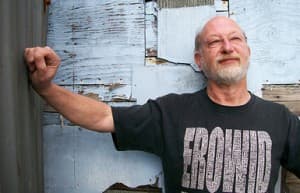
Dr. Dennis Mckenna is one of the most warm hearted human beings on this planet and his work is pioneering the field of Plant Medicine. McKenna received his post-doctorate fellowships in the Lab of Clinical Pharmacology at the National Institute of Mental Health (NIMH), and in the Department of Neurology at the…
Stay with the full conversation.
Episode field notes
Show notes

“Psychedelics are not suppressed because they are dangerous to users; they’re suppressed because they provoke unconventional thought, which threatens any number of elites and institutions that would rather do our thinking for us.” ~ Dennis McKenna, The Brotherhood of the Screaming Abyss.
Dennis McKenna, 67, is a noted ethnopharmacologist, focusing on pharmacognosy, especially with psilocybin and ayahuasca. After travels to the Amazon, in search of the Sixties experience with his older brother, Terence, Dennis’ curiosity was piqued in a scientific way. He wanted to know how these plants worked.
In 1979, McKenna earned his Masters in Botanical Sciences at the University of Hawaii. With his continued studies in the Botanical Sciences, he earned his Ph.D. in 1984 at the University of British Columbia. He studied the botany, chemistry, and pharmacology of ayahuasca and oo-koo-he, two orally-active tryptamine-based hallucinogens used by the indigenous peoples in Northwest Amazon.
McKenna received post-doctorate fellowships in the Lab of Clinical Pharmacology at the National Institute of Mental Health (NIMH), and in the Department of Neurology at the Stanford University School of Medicine. He recently completed a project, funded by the Stanley Medical Research Institute, to study the Amazonian ethnomedicine for the treatment of schizophrenia and cognitive deficits.
In 1990, McKenna became director of ethnopharmacology at Shaman Pharmaceuticals. In 1993, he became senior research pharmacognisist for the Aveda Corporation. In 1993, he also founded and continues to serve as VP and board member of Heffter Research Institute, where they are researching use of psilocybin with cancer patients.
In 2001, he joined the faculty of the University of Minnesota’s Center for Spirituality and Healing and has since become a popular professor. He serves on the advisory board of The American Botanical Council and on the editorial board of Phytopharmacology.
McKenna’s authored four books and countless research papers. In 1976, he wrote the still popular, cult classic Psilocybin: Magic Mushroom Grower’s Guide.He can be seen in documentaries on the esoteric. He continues to lead expeditions to the Amazon to study the culture, shamanism and ayahuasca.

Far Out, Man
For anyone who’s been to Paonia, CO, it’s no surprise that the small mountain hippie town produced two of the most learned ethnopharmacology luminaries — the dynamic duo, brothers Dennis and his senior, Terence, now deceased. What began as a popular recreational experimentation in the Sixties counterculture opened the door to new realms of legitimate soul-searching, growth and healing. Dennis wrote about his accounts with his brother in his 2012 book, The Brotherhood of the Screaming Abyss. They discovered there was some power in the medicine! Thus began the McKenna’s pursuit in the mysteries of ethnopharmacology — Terence, artistically, and Dennis, scientifically. And the science and the beauty was out there, for both to report back on.
McKenna and his Heffter Institute studies are there for your perusal, by category — cancer distress, addiction, spirituality, neuroscience and the Heffter Review — on Heffter’s Visit heffter.org. But it may seem as though the medical community is oblivious to the healing properties of the truly magical mushrooms. Many of us on the outside whose bodies are too sensitive for big pharma poisons, await the day that we can break the ties that bind and discuss these truths and make them mainstream. Some under-grounders are paying attention.

Never Trust “The Man”
There is a revival, an underground movement to legitimize the use of these phytomedicines. The focus these days is more on self-discovery, self-actualization, and self-healing. We are sick and need real healing. We need to take over the reigns, clean ourselves and this mess, and put the “kind” back into the word “humankind.”
McKenna, in a 2014 Vice interview, McKenna discusses the dynamics of the cool brother duo, saying that they were “Big Picture People.”
“This inclination partly explains our early interest in metaphysics and philosophy. We were dissatisfied with the pat and shallow answers proffered by our Catholic faith, and with the priests who, with a few exceptions, responded angrily, or disingenuously, to our persistent questions.”
A recent New Yorker Magazine article featured the growing trend of ayahuasca in the US, attributing some of the rise to the work of the McKenna brothers. The reporter describes the new movement that is “characterized by wellness cravings, when many Americans are eager for things like mindfulness, detoxification, and organic produce, and are willing to suffer for our soulfulness.”
This is a good thing. The Age of Aquarius! Bring it on!
Perhaps even more poignant is that McKenna is trying to convey an important message about how necessary an Age of Aquarius is today. In a July 2016 interview with The Guardian newspaper, he says, “ … we have forgotten our connection to nature. We’ve come to the conclusion that we own nature, it exists for us to exploit, and we’re destroying it in the process. We’re destabilising (sic) all of these global mechanisms that keep the biosphere habitable by life.
“I think ayahuasca is waking up a lot of people and reminding them that, ‘No, that’s not the way it is. The plants are running the show, by sustaining life on Earth, if nothing else.’ There needs to be a global shift of consciousness …”
Let us just hope “The Man” does not make it illegal to save ourselves and our planet.
~The 411 & Source Links To Fascinating Other Stuff~:
University Of Minnesota page
The Brotherhood of the Screaming Abyss
Screaming Abyss Kickstarter
The Scientific Investigation of Ayahuasca: A Review of Past & Current Research Study PDF
Ayahuasca & Human Destiny by Dennis, 2008, profound today more than ever!
The New Yorker article
The Guardian article
Top 8 quotes by Dennis McKenna
Between Humans & Psychoactives
Journey of the Spirit (JotS) Ayahuasca Trip
We rely on listener support!!
If you value even one of our shows, become a member get exclusive early access to our recordings, extra bonus content for each of our episodes a chance to request guests you want us to bring on and so much more.
Read the conversation
Transcript
welcome to the human experience podcast the only podcast designed to fuse your left and right brain hemispheres and feed it the most entertaining and mentally engaging topics on the planet as we approach our ascent please make sure your frontal temporal and occipital lobes are in their full upright position as you take your seats consciousness relax your senses and allow us to take you on a journey we are the intimate
strangers thank you for listening [Music] say this word but just leave me alone that’s the messy to grow plants it’s great to talk to your plants yeah it gets a little weird when your plants start talking back to you more often the message is come closer let’s form a symbiosis let’s form a collaboration for mutual benefit what’s up folks wow what an amazing interview with the legend dr. Denis McKenna you know we get into some
really amazing topics and some necessary things in this conversation from the global ecosystem and how we’re affecting it and down to the base level of how psilocybin interacts with the brain we talked about the FDA studies that are occurring with psilocybin research so you guys are going to really enjoy this conversation thank you guys so much for listening don’t forget to get to our members area human xpcom slash members
sign up today so that you can hear all of our members only content thank you guys so much for listening [Music] you are listening to the human experience and are very honoured guests for today’s dr. Dennis McKenna Dennis my good sir thank you so much for being here it’s it’s so great to have you back on the show good well thank you for inviting me it’s a pleasure happy to be here so Dennis we’re doing this thing together which is completely new to the
show where I’m calling it a</
Ideas worth returning to
Quotes
Five substantial excerpts from the published transcript, lightly edited for clarity without changing their meaning.
“The brain is enormously adaptive and plastic. It responds to environmental stimuli by changing its structure, wiring, and patterns of operation. When you reflect on that responsiveness, it seems almost obvious: how could an organ shaped through continuous interaction with its surroundings remain fixed? Earlier models often overlooked that capacity for change.”
From the conversation“A psychedelic or spontaneous mystical experience can give someone a sense of something beyond the self, and that can be deeply meaningful and reassuring. The experience is real as an experience because the person lived it. Whether it corresponds to an objective reality is a separate question that the experience alone cannot settle.”
From the conversation“Many plants contain DMT; it is not rare in the Amazon or elsewhere. It is also endogenous to the human body and appears to function as a neurotransmitter, although its role is less understood than serotonin’s. Chemically, DMT is only a small number of steps removed from tryptophan in metabolic pathways.”
From the conversation“The spiritual dimension does not reside in the drug itself; it belongs to the experience. The substance appears to facilitate an experience that may have spiritual qualities. Treating the molecule as though it contains spirituality is a category mistake that many of us made in the past.”
From the conversation“The belief that human beings stand outside nature and own it is not merely a Western problem; it is a human one. A top-down view in which nature exists only to serve and be depleted by us helped create our present crisis. Nature has its own processes and is not obligated to follow the program we impose on it.”
From the conversation
About the guest
Dr. Dennis Mckenna
“Psychedelics are not suppressed because they are dangerous to users; they’re suppressed because they provoke unconventional thought, which threatens any number of elites and institutions that would rather do our thinking for us.” ~ Dennis McKenna, The Brotherhood of the Screaming Abyss.
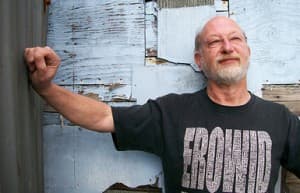
Episode 91 – “A Drink With Dr. Dennis Mckenna” (Plant dynamics, Macro-Ecology)
April 3, 2017 · 34:59
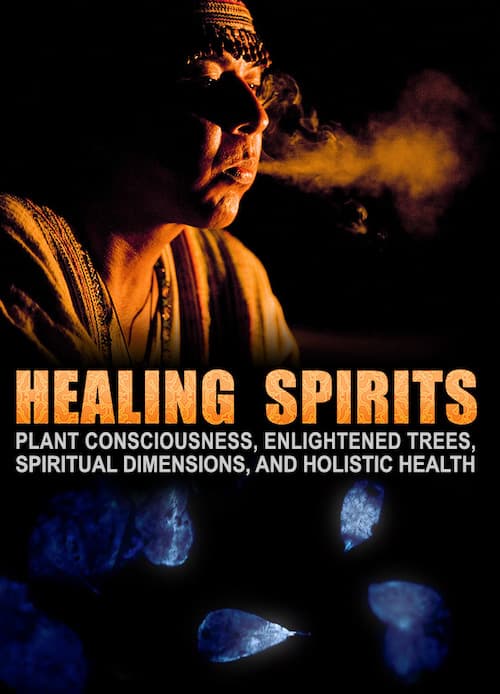
Episode 153 – Carlos Tanner – Healing Trauma/PTSD – Plant Medicine, Ayahuasca
December 26, 2019 · 1:08:44
Episode 98 – Hamilton Morris on Chemistry, obscure compounds and working with VICELAND
June 26, 2017 · 31:32
Episode 89 – James W. Jesso – Psilocybin, Plant Medicine, Deconstructing the Ego & Surrender
March 13, 2017 · 38:36
Independent conversations
Help make the next one possible.
Membership sustains ambitious, unhurried interviews and keeps the complete archive open to curious listeners everywhere.
Become a member