

The Human Experience · Episode
Episode 98 – Hamilton Morris on Chemistry, obscure compounds and working with VICELAND
A conversation with Hamilton Morris
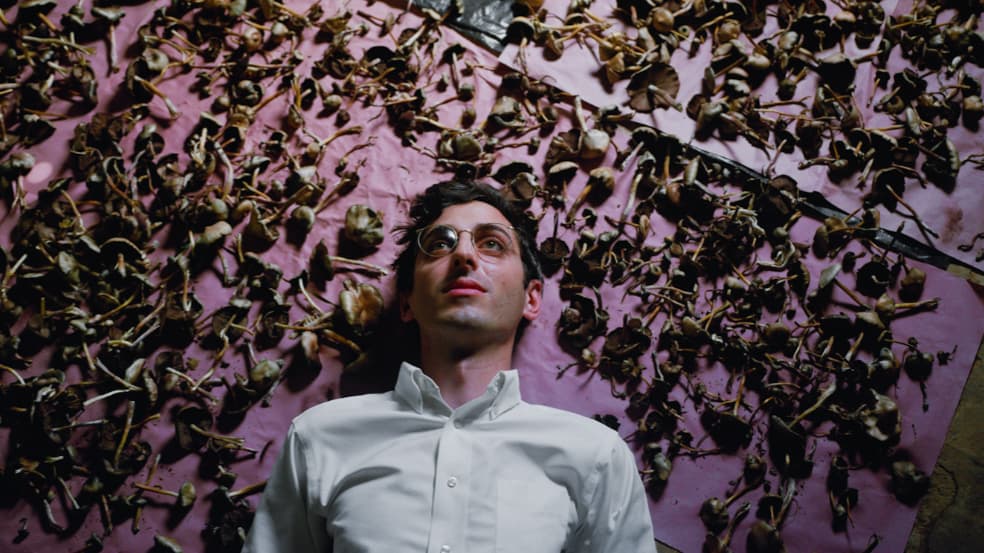
Hamilton Morris is a chemist, explorer, documentary filmmaker and scientist. He studied anthropology and science at the University of Chicago, and at The New School, a private research university in Lower Manhattan. As a sophomore, he began writing Hamilton’s Pharmacopeia, a monthly column for Vice Magazine.
Stay with the full conversation.
Episode field notes
Show notes

At first glance, one may easily dismiss Hamilton Morris, 30, as on of those millennials who needs to get a “real job.” Ah, but looks can be deceiving. This millennial journalist, writer, researcher, editor, and documentary filmmaker is well-read, well-spoken, well-traveled, and well-versed in ways that put most of us old hippies to shame.
Hamilton Morris was born April 14, 1987, to parents Julia Sheehan and renowned documentary filmmaker Errol Morris, and raised in Cambridge, Massachusetts. He studied anthropology and science at the University of Chicago, and at The New School, a private research university in Lower Manhattan. As a sophomore, he began writing Hamilton’s Pharmacopeia, a monthly column for Vice Magazine. That evolved into a series of articles and documentaries for VBS.tv, an online network founded by filmmaker Spike Jonze, and is now owned by Vice dot com. Vice brought the series to HBO and Viceland TV. He is also the science editor for Vice Magazine, and a Vice correspondent.
Morris’ unconventional research into psychoactive drugs is not just Dude, Where’s My Car?-type fodder. He’s the media’s go-to consultant for psychoactive drugs, and still conducts pharmacological research at the University of the Sciences in Philadelphia, with an emphasis on the synthesis and history of “dissociative anesthetics” — a class of hallucinogens which distorts perceptions of sight and sound, and produce the feeling of detachment — dissociation — from the environment and self, according to his Wikipedia page. His research has been published in technical, clinical, and pharmacology periodicals, like the Journal of Analytical Toxicology. He is also a regular contributor to the esteemed Harper’s Magazine.
Being comfortable in front of the camera, Morris’ first TV appearance was in a 2002 1st-generation iPod commercial. He has gone on to produce at least a dozen video documentaries on his own, including, Nzambi: Wade Davis’ Theory of TTX-Mediated Zombification in Haiti, and Swaziland: Gold Mine of Marijuana. His Hamilton’s Pharmacopeia has aired at least six episodes on Viceland, including The Story of the South African Quaalude, and Magic Mushroom’s in Mexico. He’s a contributor to the What’s In My Baggie? documentary He’s currently writing a book about clandestine chemistry and the murder of 1970s iconic mycologist, Steven H. Pollock, who published many articles on the potential of mushrooms to treat illness and improve quality of life. Pollock also penned Magic Mushroom Cultivation.

Where In the Cosmos Is Hamilton Morris?
His may sound like a psychonaut’s dream job, but Morris’ interest goes beyond getting high and zoning out. “His reporting is focused on the role psychoactive drugs play in different cultures and the international drug trade,” says his HBO bio page. Indeed, there’s work involved. No rest for the wired.
Morris was 13 when he had his first drug experience. It was with a friend, smoking Salvia Divinorum in that friend’s Volvo, he said in a June 2, 2012, Guardian interview. He recalled feeling “Just astonishment that those states are even possible, that anyone can reach them so effortlessly.”
Morris is cautious about what he ingests. He saw a friend at the university go “permanently insane” — he became schizophrenic, he told the Guardian. And, as he’s posted on a Reddit thread earlier in the year, there are a few drugs he will never try: 4-chloroamphetamine, 6-hydroxydopamine, domoic, and ciguatoxin. Still, he is frequently asked how he landed such a lucrative gig, which some think is all about dudes going wild. He explained on that same Reddit thread:
” … Creative work isn’t something you do because you took a special class or have a certain degree. It’s work you do because you want to communicate something, so if there are stories you want to tell, you should go tell them however you can.”
One Urban Dictionary user, Mark Twilight, offered a wonderful, detailed definition of a psychonaut in a November 25, 2001, entry that should dispel any negative connotations outsiders have about the word. Yet the stigma remains.
” … the goal of the psychonaut is to learn about self and reality by transcending normal consciousness. Psychonauts are distinguished from purely recreational users of psychoactive substances in their desire to learn and grow from these experiences.”
In a September 18, 2013, Longform podcast, Morris explains the passion for and the importance of his work.
“It’s a shame that there isn’t more of an interdisciplinary approach to a lot of scientific investigations, because often the result is that misinformation is produced. Again, there’s misinformation in journalism and there’s misinformation in science. And if you combine the best elements of both of those disciplines you can come a little closer to the truth.
“If you want to understand a drug phenomenon, you’re going to need to talk to people, you need to interview people, you need to look at the drug policy, the chemistry, the history — there’s a lot of different factors that need to be examined in order to understand even the most simple minute drug phenomenon. And if you’re approaching something purely as a scientist, as an academic, there are huge limitations as to what you can do.”

The Government Says Drugs Are Bad, mmmmmkay?
Morris has come across some strange and spooky stuff in his ongoing research. There was the weaponized use of methaqualone [Quaaludes] in South Agrica. There were the TTX zombified Haitians. There was Burandanga [scopolamine], AKA “The Devil’s Breath” — a potent and easily delivered (blowing powder on unsuspecting victim will suffice) South American drug, said to totally numb peoples’ free wills and render them suggestible to any command an ill intentioned person may give them. What is truly frightening is the US government’s interest in this type of drugs that turn people into zombie slaves. And then there’s murder and intrigue.
In July 2011, Morris became privy to some tantalizing information on an old cassette tape about the February 1, 1981, murder of 33-year-old mycologist Steven H. Pollock in San Antonio, Texas. Reminiscent of a scandal like Watergate, where witnesses were afraid to speak, and the pursuit of the truth was an occupational hazard. Morris’ July 2013 Harper’s Magazine article, Blood Spores: Of Murder and Mushrooms, is a long read, but one so compelling you can’t set it down until you reach the end. And we are left with questions. So many questions.
Since receiving that cassette tape, a nagging desire to solve Pollock’s murder and honor the man’s diligence in working to create psychoactive medicines one day from his own superlab drove Morris. But in reading Blood Spores, one sees the hurdles of digging into a major cover-up, making the pursuit of truth rather dicey. At one point, he posted a call for “research assistant wanted” in an August 2014 blog entry. What became of that, or what the book’s status is are unknowns. Did it get too dangerous? Or did he hit too many walls? Or is he simply too busy to pursue the project?
In Blood Spores, Hamilton opens with the receiving of the “fragile-looking” cassette tape, labeled “Police Crook 6/17/81,” from one Gary Davis, a retired psychology professor. Davis told him the cassette had been stored in his mother’s home for the past 30 years because he was too afraid to let anyone know he had it. Davis told Morris on the tape was a recording of “two police officers discussing their involvement in Pollock’s robbery and murder.”
Eager to share the information with a fellow mycologist — someone who knew Pollock and would appreciate it, Morris attended Paul Stamets lecture, How Mushrooms Will Save the World.
“I am hesitant to bring up the subject of Pollock in public …” Morris writes in Blood Spores. “I tell Stamets I have obtained the Pollock tape and I think I can solve the murder, in response to which his face changes. ‘You know, Steve was assassinated by the police,’ he says, suddenly unaware of his surroundings. …”
Stamets offered further advice: “this information should be treated with due caution. Some of these cops, if still living, could be very dangerous.”
Big pharma and the government are formidable enemies with their intolerance for any desires outside of their oppressive ones. The “war” on drugs is really more about a war on our own free wills — all for the all mighty dollar and ruling power. The futile war on drugs forces the oppressed to find ways around the restrictions, that incidentally pop up like mushrooms when another is cut down.
In an April 2013, New York Magazine interview, Morris explains the pitfalls of the war that cannot be won. The reporter begins:
“Some psychonauts fear the government, in desperation, might take a pharmacodynamic backward approach, looking at the receptor activated by the drug and scheduling backward from there, claiming that any organic molecule that binds to the CB1 receptor and makes you stoned is a Schedule 1 drug. But then they’d have to schedule other drugs with CB1 affinity, including Tylenol. And they’d be ‘banning specific states of consciousness,’ says Morris. ‘If the plan weren’t so futile, it would be utterly terrifying.'”
But the psychonauts persist, despite the risks to their freedoms or health. Casualties are inevitable. Some, like Morris’ schizophrenic friend, may never “make it back.” It’s part of trial and error.
“‘All of this [experimentation] is producing valuable toxicological information that would never exist otherwise,’ says Morris, who also notes that if the government hadn’t made so many drugs illegal, probably no one would be taking synthetics and risking their lives at all.”

~The 411~:
Viceland: Hamilton’s Pharmacopeia
The Secret Government Program Behind the S. African Quaalude
Where’s My Baggie? Documentary
On Being Stoned, by Charles Tart
We rely on listener support!!
If you value even one of our shows, become a member get exclusive early access to our recordings, extra bonus content for each of our episodes a chance to request guests you want us to bring on and so much more.
Read the conversation
Transcript
welcome to the human experience podcast the only podcast designed to fuse your left and right brain hemispheres and feed it the most entertaining and mentally engaging topics on the planet as we approach our ascent please make sure your frontal temporal and occipital loads are in their full upright position as you take your seat of consciousness relax your senses and allow us to take you on a journey we are the intimate
strangers thank you for listening people that aren’t necessarily self-destructive or want to have this type of response it’s an accident based on the fact that these markets are completely unregulated and it’s really easy to hurt yourself when there’s so much uncertainty so much basic uncertainty various situations you’re in Africa you’re looking for quaaludes and you’re kind of hanging out with this guy that is on them and he
offers them to you and you’re just like no you know the fact that Native Americans are allowed to use peyote in that religious context is a very important legal triumph I believe in experimentation I believe in exploring the possibilities and I think as soon as people enter into this very prescriptivists dogmatic attitude not only does it limit the potential therapeutic scope of these compounds it makes people more vulnerable
[Music] what’s up guys you are listening to the human experience and wow what an interesting episode with mr. Hamilton Morris Kelton is a chemist he appears on a vice documentary series called Hamilton’s pharmacopoeia this interview was incredibly last-minute impromptu it’s an it’s actually a really really interesting the conversation on the different compounds and his chemistry background his relationship with Alexander Strickland you guys will love
love this conversation if you’re into any of that stuff I highly recommend checking out Hamilton’s show Hamilton’s pharmacopoeia it’s a highly entertaining watch thank you guys so much for listening [Music] the human experiences in session my guest for today is mr. Hamilton Morris Hamilton my good sir welcome to hxp thanks for having me so Hamilton uh I found out about your work through your vice program Hamilton’s pharmacopoeia
but our listeners might not know what that is yet so what sparked the interest in chemistry why is that so fascinating for you um I would say the first person in the psychedelic scene that really interested me was a chemist named Alexander Shulgin yes and he wrote two books B Collins he called it I think are absolute masterpieces and are kind of unrivaled in terms of psychedelic literature they are really illuminating
his scientific texts but they also say an enormous amount about the history of psychoactive drugs the botany the qualitative effects psychopharmacology it’s really has almost everything yes that you could possibly want in these two books so Alexander shelygin was first and foremost a synthetic organic chemist I think that his technique in his way of thinking about it a psychoactive drugs is very chemically oriented and it seemed to me to be the
best framework for researching and kind of investigating what was out there I think that his worked exploring completely unknown compounds was incredibly brave and important for current understanding hmm so that’s what really got me and and the category is not all that difficult for a lot of these and ethylamine and tryptamine compounds it’s it’s sort of accessible to people that aren’t necessarily chemists you don’t need to have like a
multi-million dollar lab you do need to have some training in chemistry and an understanding of the subject but it’s accessible chemistry and and there’s a lot left to be done so that was what I found interesting is when you read these books throughout the books they’re full of these little hints these little clues like maybe there’s some unknown compound that could have really interesting qualitative effects are really interesting are mycological
characteristics go forth and investigate it yeah and that’s that’s what I love about you you have this sort of highly explorative mind you go into a subject and you explore it thoroughly and just jumping into your vise program when I was watching it I found it kind of hilarious that you’re in these various situations you’re in Africa you’re looking for quaaludes and you’re kind of hanging out with this guy that is on
them and he offers them to you and you’re just like no but jumping back to Alexander struggling you got a chance to meet him as well right yeah many times and you know what was what was he like when I was going down to the Shogun farm it was sort of the end of his life in the end of his career and he wasn’t in his prime anymore but even then he was kind of a remarkably unpretentious funny weird character who at least when I first met him was still
doing a little bit of synthesis that was kind of at the end of his career he was dedicated to exploring these derivatives of the compound five methoxy d alt so he was making the methyl a lil all the propyl a lo all these different kind of adult compounds and and that in and of itself was inspiring to me that this person could be you know almost blind but still dictating the synthesis to an assistant in the lab and still so
dedicated to his life’s work you know the great thing about shelygin is that he wrote these books and the books really – incredible job documenting his work so even though not everyone has the opportunity to meet him I truly believe that you can get the impact of that from reading his books and he’s his lab notebooks were so rigorously capped that you can even further explore his life’s work through all of that as well if you
want even more there’s no shortage of material to explore for anyone that’s interested in Alexander Shulgin got a copy of both to Collin pickle but they are kind of just library tokens they just sit there right now I haven’t had a chance to crack them open yet what about what about you sure okay why why do you think I should you know like there’s been a lot of emphasis on the therapeutic qualities of psychedelics and I think that’s great
increasing the social acceptance and understanding of these compounds but I’m really interested in just knowing what’s out there hmm whether it’s good or bad therapeutic or toxic it doesn’t really matter I’m just curious what like what is this and when you look through those books you see all these compounds that have really remarkable and sort of unexpected qualitative effect that fall outside of this general umbrella of psychedelic you
have compounds like two methyl five amiyo DMT that seems to maybe have like a aphrodisiac effect or two methyl DMT that seems to have a semi selective tactile hallucinogenic effect or a DI PP which has a semi selective auditory distortion effect and and even if you think might not have the same therapeutic applications that’s something like MDMA or psilocybin has they could be very important and useful tools for studying consciousness and
how we perceive the world where have you been that was the most remarkable for you is there a location that sticks out in your mind the most I mean you I know you’ve been around to all around the world to different places to find these psychoactive compounds maybe what stood out to me more than anything was actually this now-defunct laboratory that was in New Zealand operated by a new widely disliked synthetic cannabinoid Baron named
map-out and who I think is did a really amazing kind there was there’s kind of a an odd thing that happened in New Zealand a few years ago where for whatever reason the social stand of cannabis was such that it was totally inconceivable the cannabis could ever be made legal in Zealand there every drug policy expert every politician that I spoke with wouldn’t even consider the possibility of cannabis being made legal yet they were incredibly open-minded
about the possibility that a synthetic cannabinoid could be developed under a sort of semi pharmaceutical standard where there would be like a almost like a clinical trial but for a recreational drug and they were willing to allow this to happen to allow the construction of what was essentially a pharmaceutical company for recreational drugs in New Zealand and I was called Stargate International and it was run by this guy
in that Bowden and that was such a revolutionary thing I don’t think people fully appreciated how extraordinary that was you know it was so amazing that as soon as I heard about it I thought well I want to move to New Zealand to work at this company I wanted to get involved in the in the synthesis and the research and development because this is a really amazing opportunity to explore psychedelics in a in a capacity where
you’re able to do rigorous work you know they were doing screens for off-target binding most of these compounds or cannabinoids but they would screen them in serotonin receptors and dopamine receptors to see if there was any off target activity they’d look for a Patou toxicity kidney toxicity they’re doing a lot of you know semi rigorous work and the data that they collected was really impressive and so going to that lab and
seeing this kind of futuristic taste of what it could be like in a world where this sort of research was sanctioned by the government where people had to free them to explore whatever they wanted to optimize the qualitative effects of these psychoactive compounds it was really inspiring and I really liked Matt Bowden a lot and really liked the pharmacologist that he worked with it I thought they’re both kind of brilliant
people even though I think that a cannabinoids are so stigmatized at the moment that people have a lot of difficulty even acknowledging the possibility that what they were doing could have been a good thing there seems to be this resurgence of psychedelic usage and the research that’s coming out on psychedelics and the positive impact that LSD MDMA ayahuasca can have on the brain what’s your stance on this and how do you see the policies changing over
time I think it’s all great research it’s not the work that I find most compelling but I think it’s necessary and I’m very happy that it’s happening you know I was at the recent psychedelic science conference in Auckland and there’s a huge emphasis on clinically relevant work with these things MDMA for PTSD psilocybin for addiction treatments for depression from a PR perspective it’s really brilliant because you know
all the stuff looks good then it’s much more likely that percepted and you’re helping people so that’s all that’s all great work to be done it’s just not I’m a little bit more interested in the basic science in the chemistry and I always find it a little bit ironic that when you go to these conferences you know the two most important figures in the psychedelic community the two biggest names Albert Hofmann and Alexander Shulgin
they’re both synthetic organic chemist and yet at these conferences there will not be a single presentation on chemistry not a single one it’s all clinical it’s all there repeating so I mean that’s the the one thing that I wish that people would have a little bit more appreciation for the basic science for the pharmacology for the chemistry for the people that are constructing new compounds because as wonderful as evolution is and has
been for designing or creating these compounds like mescaline and psilocybin I think that strategic modification some of their therapeutic qualities could be further improved mmm yeah it’s a really interesting point I really like that you’ve been around to these different places what is your take on the shamanistic aspect of things you said in the pre-show we were talking about you’re taking a trip to Peru to study an
aspect of this what’s your take on the different types of shamanism around the world a lot of these shamanic practices I believe are widely misunderstood by people I think one thing especially that people often don’t appreciate as a Christian a lot of these practices are you know a lot of the mushroom and salvia shamanism in Mexico is very much oriented toward the worship of Jesus Christ and this is something that most
people don’t want to think about because they would prefer to imagine these things as these kind of like uncontaminated a historic lineages that stem from the original religious impulse and have no association with the conquest or industrialized Society but when you really get down to it there’s a lot of syncretism there’s a lot of hybridization of beliefs and a lot of these things are hurt a lot newer than people would want to admit you know the
the Native American church in the United States is a very good institution you know the fact that Native Americans are allowed to use peyote in that religious context is a very important legal triumph but it was only a probably a very small minority of Native American tribes in the United States who were actually have a long history abuse of peyote and that would be you know the tribes that were located sort of in the southern Texas region
this was certainly not something that’s extended toward the northern parts of this country you know what would you say is a compound that has the most exotic effects I mean it’s something bizarre or strange that wouldn’t find with other compound there are a lot of compounds with really unusual facts some of these synthetic cannabinoids one I believe am 3344 causes either instantaneous deafness after it’s smoked that that is
reversible unless seemingly about 24 hours then users regain their ability to hear or extreme instantaneous tinnitus so again you know like a lot of these things you think oh that’s a bad thing why would anyone use that cannabis is has this established history of safety why would anyone Bob there with these things in on this level of safety I agree completely it’s completely true that these things have no history of human use and the risks are far greater
but I think within these superficially bad responses there’s something important that can be discovered maybe this could be used in investigation of deafness or tinnitus maybe you could use this to create a an animal model tinnitus and test drugs that might reverse that and that you know the same is true of this drug MPTP which was a contamination in samples of a synthetic opioid that caused instantaneous Parkinson’s disease superficially it was
a terrible who have happened and kind of be the quintessential synthetic drug scare story like how do you know that this new drug being discovered isn’t gonna be the next mttb how do you know that it’s not gonna cause an continious Parkinson’s disease or death but again even in the case of this really horrific opioid that caused paralysis and every didn’t become a really important method for chemically inducing Parkinson’s for
testing therapies so you know there’s a lot of a lot of weird superficially negative things that are being published in the toxicology literature at the moment but I think if you take a step back there’s also a lot of really interesting things to be learned from it outside of the tragedy that people are forced to use yeah and um you know kind of retouching on the point that you were making earlier about the policy changes in
having this sort of unfettered access to synthesize these compounds and do the actual research on them I mean which is which is why we’re the policy is and where the policy stands is so important for me and why we do shows like this one why we cover the positive effects of ayahuasca why we cover the positive effects of MDMA is because I mean I don’t know if you remember the just say no campaign everything that was with
that in our view of drugs was just so isolated and so propagandized what’s your take on that I think it’s really unfortunate it’s a really big problem it’s a bigger problem than people even recognize this kind of basic ignorant surrounding psychoactive drugs and and the way people categorize you know illegal drugs and one way pharmaceutical drugs in another way all these kind of illusory categories that are constructed by the government go a
long way to encouraging this distorted and Confused view of drugs there’s something like it’s considered like subversive or naughty to use a psychoactive drug in our culture like it’s like a bad thing like oh hi I went out I drank did cocaine on Friday night oh so Noddy on Friday you know and a lot of cultures that just doesn’t exist it’s the abuser just plants right and everyone uses for Tom in the south of Thailand is working on a rubber farm
because it gives them energy to harvest rubber at night you know that’s simply that it’s just a tool it’s like you know so as I was interviewing them maybe the most interesting thing about it was how boring it was that this drug has so much cultural baggage is it addictive is a dangerous does it kill people is that this is it that and and then when you talk to people in Thailand about it it’s like interviewing someone about what
they think of drinking tea in the morning they have very little to say about it are they addicted to it maybe a little what would happen if it disappeared they just stopped using it not a huge deal and that’s that yeah yeah I loved that perspective man thank you for sharing that and so let’s talk about this vice documentary series that you’re on the first season just finished airing I think and you’re moving into the second season that’s correct
what’s the premise behind this you just kind of travel around to find these very obscure compound yes sometime compounds sometimes it’s about characters that I find interesting the drugs often end up being a springboard to get into tangentially issue that I find interesting the season finale in the first season was about two different chemists in the relationship one is Daryl Amer the other is Casey Hardison Casey artisan is a legendary
LSD and then sterile air was one of the first people to manufacture MDMA on a large scale in the United States it’s about stories that I find interesting and I have a lot of creative freedom to explore the things that I want to investigate also known as the most interesting job ever I mean um we talked about different areas that you’ve been that have been a little bit obscure I mean is there an area than the world that maybe people haven’t heard about
yet sure I mean did a whole piece and Madagascar for the previous season or Scott’s these various policemen genic Fischer these reports of fish that caused hallucinations I was certainly very exotic but that was actually an example of a sort of story that I don’t believe works all that well for television you know there’s a lot of incentive of TV to get results you want to have positive results it’s something that comes together cleanly sort of tie
a bow on it and connect the viewer as a story that makes sense and the truth is that a lot of genuine investigations especially scientific investigations do not have clear answers a lot of experiments are inconclusive or have negative results and my attempts to solve this mystery surrounding these hallucinogenic fish you know I can’t say that I succeeded but it’s it was ported of this weird mystery and on that level you know it’s good to make people aware
of all the things that are still unknown and maybe the next person who comes along to investigate it will figure it out hmm okay has there been a location or situation where you were I mean we’re talking about drugs here so I mean it have you been in a dangerous situation where you were maybe scared for your life or in a situation like that here’s my life this is a question that I’m asked a lot and I feel like the more
interesting response would be that to say that I’m often scared but for whatever reason I think I have a kind of high threshold or beer in these situations simply because it’s not a good way to react to any of these things if you’re afraid of people you’re never gonna be able to connect with them we’re gonna be able to gain their trust you’re never gonna be able to have a genuine interaction with them so I try not to
think about it that way I try not we’ve go into a situation thinking this is sketchy this is dangerous I’m at risk and the truth is you know a lot of these people that maybe to a common person would be frightening or you know they’re technically criminals so people are afraid of them on that level but they’re very vulnerable people I mean they’re a huge risk talking to me a much greater risk than I am talking to them they’re
people that could be locked in a cage for the rest of their life or cultivating a cactus or doing some type of in my opinion completely innocuous work-related psychoactive drugs although they are attacking criminals that in the eyes of the law and that is frightening to a lot of people I do not generally find these people all that frightening okay there was a piece that you did on salvia and it seemed pretty frightening
I mean I think there was a video of a guy smoking it and then he he subsequently jumped out of the nearest window in your mind is there a sort of guideline for you know people who are exploring this area of you know experience and life that that we should follow when ingesting these compounds encountering these compounds I think that at the very least you want to have a basic understanding of what it is you’re doing the origin of it the
purity of it the dose that is being consumed you know these are the baseline most fundamental things that people should owe and yet they don’t they very rarely have this information available when they ingest a psychoactive drug that’s right there’s a child on the window above me doing crazy stuff it’s hard to find a place that a beautiful day in the Orica runs out that’s okay you know in and on one hand you could kind of wag your finger at people and
say you know you’re being so irresponsible for using all of these substances without having any knowledge of purity or the dose you’re consuming but what are people supposed to do you know we live in a society where it’s very difficult to have these things tested even if there are chemists that want to lend their services you know raves or dance parties or whatever there are a lot there’s a lot of legal red tape that makes it difficult to do this
sort of analytical chemistry so it’s hard for someone using a street drug to know what it is they’re consuming and that’s what’s really responsible I think for the vast majority of these reported negative responses or toxic reactions to drug people that are necessarily self-destructive or want to have this type of response it’s an accident based on the fact that these markets are completely unregulated and it’s really
easy to hurt yourself when there’s so much uncertainty so much basic uncertainty I mean there’s always uncertainty there’s enough uncertainty if you know the exact chemical structure of the compound that you’re consuming and you know the purity and you know the exact dose there’s still uncertainty based on set and setting and a number of other factors there still uncertainty but if you’ve removed that as well I mean it’s
it’s surprising that people have as few negative reactions as they do with things like street cocaine which is routinely contaminated with a drug called live a muscle or Street heroin that is now routinely contaminated with fentanyl or derivatives of fentanyl and then with synthetic cannabinoids where there’s no dosage information and the variety of different compounds that are found in these potpourri type smoking blends that are you know it’s it really
staggering in the chemical diversity it’s so interesting the world that we live in what we’re faced with and and where we are in our time now you know it since sort of starting this show we get a lot of contact and we get of a lot of emails the other day I got an email asking where the best ayahuasca Center where to go drink this tea and you know Western medicine it’s failing you know they’re seeing that they’re noticing
this and so they’re reaching out to these sort of more esoteric psychedelics ayahuasca is almost gone mainstream it’s very much in the news and more and more people are finding out about it has there been a compound that you’ve seen that has effect similar to IOSCO something like ayahuasca sure yeah I mean that you know there’s a lot of compounds that have similar effects if you substitute DMT in ayahuasca with MIT or Det or DPT
you can experience variations of that same sort of ayahuasca a factor you substitute the botanical maoi with a pharmaceutical Mao I like mclubbe amide you can modulate the nature of the effect in that way I mean these things are endlessly modifiable which again I find very interesting there’s a lot of dog surrounding these substances a lot of people that say that they should be done a certain way in a certain context
and I am NOT one of those people I believe in experimentation I believe in exploring the possibilities and I think as soon as people enter into this very prescriptivists dogmatic attitude not only does it limit the potential therapeutic scope of these compounds it makes people more vulnerable because you know what happened with a lot of these I ayahuasca retreats and Peru’s there was this proliferation of documentaries
extolling the virtues of ayahuasca and a lot of people I want to have this sort of authentic therapeutic experience I want this transformation but they felt that the only way to do it was to go to South America right you know none of these people would ever say hey these plants are actually dirt cheap this is actually a tea that you’re all capable of making on your own maybe the most valuable context to do this would be
within your own community you don’t need to go to the Amazon to have it a transformative experience maybe you can have it in your own home so you know part of it has to do with the idea that the shaman has experience and if they will act as a guide then I think that’s great I think it’s always good to have someone who’s experienced and knowledgeable there to protect people but what you started to see in the Amazon is a lot of exploitation of the
tourist market you noticed there’s been a number of these shamans that are sexual predators at the very least you have people overcharging enormous amounts of money for the ayahuasca turned into a business as soon as any of these things turn into a business I think that there’s a lot of opportunity for corruption and misuse yeah that’s another interesting point I think that we’re making here you know it is to be considered that you know as though
awareness on these topics grows and as more and more people find out about this type of stuff like the healing properties of these types of compounds there is an exploitation that happens with these tourists that are travelling down to Peru and dropping you know eight thousand dollars to sit with the shaman for you know six hours is there a personal favorite for yourself is there a drug that you are would be what I would choose this is what I like the
most you know I’m much more interested in exploring the unknown been repeatedly using any known substance I’ve you know I think a lot of the classic psychedelics are classics for a reason they really are you know fantastic substances obviously LSD mescaline psilocybin are all really kind of miraculously good compounds and we’re very lucky that they exist and I think EMT especially is is really fantastic you know I’m not a big fan of physical
discomfort if it can be avoided I understand that there are a lot of traditions that kind of contextualized nausea and vomiting and this bodily discomfort is like a purging a metaphorical purging of spiritual disease but you know if I can avoid that kind of thing I I see no reason why it’s necessary to suffer in these ceremonies so that’s one reason that I like working with pure compounds is I think that they can allow you to experience all of the
positive aspects without being distracted by physical discomfort [Music] you have been listening to the human experience to hear the rest of this episode we get into Hamilton’s adventures and some of the more interesting parts of this conversation get to the human xpcom /members by doing this you allow us to bring on more guests you allow us to continue the show if you value even one of our episodes become a member today it gives you
access to all the members content that we do and it really helps to show up so thank you guys so much for this you
Ideas worth returning to
Quotes
Five substantial excerpts from the published transcript, lightly edited for clarity without changing their meaning.
“Shamanic practices are widely misunderstood, especially when outsiders assume they form one universal tradition. Practices vary by place, history, and community. Studying them responsibly requires attention to those differences rather than turning every healer, ceremony, or psychoactive plant into the same romantic idea.”
From the conversation“The stories interest me more than a predetermined message. One project examined the very different lives of chemists associated with LSD and large-scale MDMA production in the United States. The work gives me unusual creative freedom to follow obscure questions and investigate the people, chemistry, and cultures around them.”
From the conversation“If you approach people primarily with fear, you are unlikely to earn their trust or have a genuine interaction. Some people I meet are technically criminals and may appear frightening to outsiders, but beginning with the assumption that every situation is dangerous prevents the human connection required to understand their lives.”
From the conversation“At minimum, anyone considering a psychoactive compound should understand what substance it is, where it came from, its purity, and the dose being consumed. Those are baseline questions, not guarantees of safety. Entering an experience without even that information adds avoidable uncertainty to something already capable of producing powerful effects.”
From the conversation“Psychoactive preparations can be modified in many ways, including by substituting a botanical monoamine oxidase inhibitor with a pharmaceutical one. That flexibility interests me because it challenges rigid claims that a substance must always be used in one prescribed form or context. I value careful experimentation and exploring possibilities over unquestioned dogma.”
From the conversation
About the guest
Hamilton Morris
At first glance, one may easily dismiss Hamilton Morris, 30, as on of those millennials who needs to get a “real job.” Ah, but looks can be deceiving. This millennial journalist, writer, researcher, editor, and documentary filmmaker is well-read, well-spoken, well-traveled, and well-versed in ways that put most of us old hippies to shame.
Episode 134 – Dr. Richard Louis Miller – The Healing Power of Psychedelic Medicine
July 4, 2019 · 1:04:32
Episode 123 – A Drink With Dr. Dennis Mckenna: Plants, Ecology, Ayahusca
October 23, 2018 · 34:59
EPISODE 199: Dr. David Nichols — Psychedelics, Consciousness & the Chemistry of the Mind
October 20, 2026 · 1:12:11
Episode 194 Dr. James Fadiman – You Are Not One Self: Microdosing, Multiplicity and the Mind
September 4, 2026 · 1:14:38
Episode 153 – Carlos Tanner – Healing Trauma/PTSD – Plant Medicine, Ayahuasca
December 26, 2019 · 1:08:44
Independent conversations
Help make the next one possible.
Membership sustains ambitious, unhurried interviews and keeps the complete archive open to curious listeners everywhere.
Become a member