

The Human Experience · Episode
Episode 79 – Jeffrey Bronfman – União do Vegetal (Union of the Vine: Ayahuasca)
A conversation with Jeffrey Bronfman
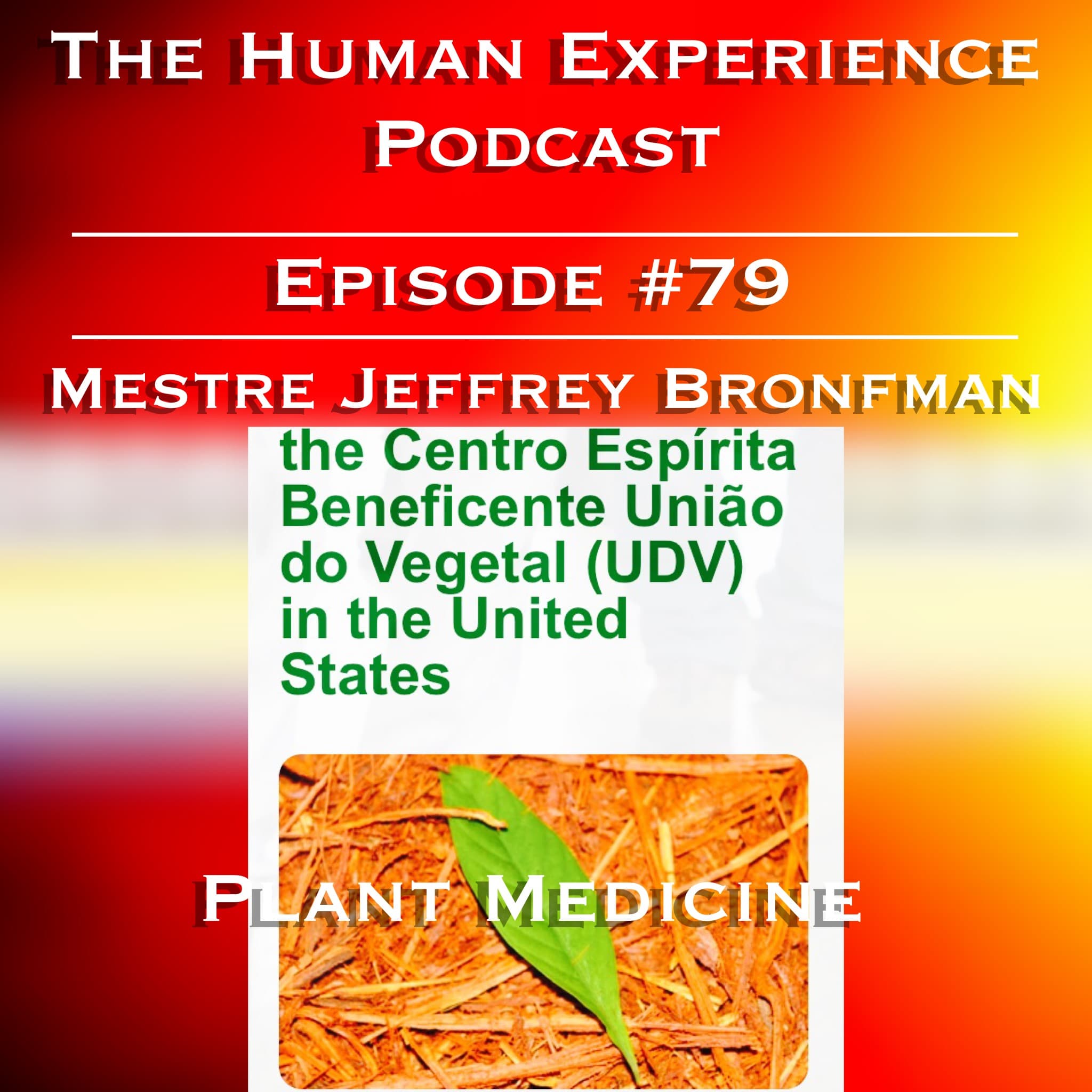
Jeffrey Bronfman served as president of the União do Vegetal Church (UDV) in the United States from 1993 to 2005. In 2000 Jeffrey spearheaded a historic legal action against The Government of United States for the legal right to utilize the church’s sacramental tea known as hoasca.
Stay with the full conversation.
Episode field notes
Show notes
Find the UDV here: udv.org.br (choose english option)
We rely on listener support to keep this show AD FREE – If you value even one of our shows, help us sustain and scale the show up; Become a member for 5$/mo (a cup of coffee) or Donate.
Read the conversation
Transcript
[Laughter] welcome to the human experience podcast the only podcast designed to give your left and right brain hemispheres and speed at the most entertaining and mentally engaging topics on the planet as we approach our thing please make sure your frontal temporal and occipital lobe I mean they’re flawless performance position as you take your theme consciousness relax your senses and allow us to take you on a journey we are the increment
stranger thank you for listening [Music] Xavier katana here with the human experience guys wow what an absolutely profound magical game-changing episode we have here with mastery Geoffrey Rothman Geoffrey was the president of EDD in the United States from the early 1990s to 2005 he was also instrumental in spearheading the legislation in the Supreme Court case granting us the freedom to drink rasca otherwise known as ayahuasca I want to sincerely thank
Geoffrey for not only lending me his time but trusting me with doing this episode and giving hxp the exclusive you will not hear this anywhere else he was asked by time ABC NBC Larry King and other major networks to do an interview and he trusted us for human experience with this recording I must also thank a very good friend of mine who was instrumental in setting this episode up I’m certain he will be listening if you’re interested in communing with the
divine with connecting with divine intelligence realigning with your purpose your bones spiritual evolution and if you’re interested in learning about using these plant medicine from healing us to connecting us back to the source before the modern advent of pharmacology and chemical substances was the plant realm Tamils access this true medicine is one of the greatest gifts we as human beings experiencing life on this planet have so I’m beyond thankful
and grateful to have had the opportunity to speak with Geoffrey one-on-one to really dig into the story of what happens to him during the DEA raid on Jeffrey’s property in this episode we lay out that story in detail this episode was seamless and there’s a very potent wise lucid understanding that comes with Geoffrey’s words which I’m certain that you will pick up on if you enjoy this episode help us cover server costs bandwidth costs which increase
every day you can do this by getting to the human XP donate we put a massive amount of momentum into curating these episodes for you guys so we sincerely appreciate any support you can offer please also get to our Facebook page and to stay up updated on everything we’re doing you can do that by finding us at the human XP guys as always thank you so much for listening this episode makes my job 100% worth it thank you guys the
human experience is in session my guest today is mr. Jeffrey Bronfman Jeffrey my good sir it’s an honor thank you so much for being here thank you for the privilege of communicating with you and through this conversation reaching out to others so Jeffrey we we were talking about the UTV today I before we get to that I would like to do TV in the Supreme Court legislation I would like to I’d like to know a little bit more about
who you are for anyone listening that might not know who who you are can you just tell us briefly about yourself and your background please sure I was born in a Jewish family both of my father of my mother’s side in Canada and I was influenced in my youth from the sense of being part of a people with a long history going back thousands of years and the sense of culture and identity that comes from that and as I grew up I
that there was more of a sense of a universal understanding about myself and my path and my what it means to be human and I began a search that led me to many different cultural traditions really in it began with with teachings from from India’s I think it began for for many people and then I started to appreciate the wisdom traditions from the this hemisphere in in terms of the native populations and Central and South
America and studying within different indigenous and shamanic traditions and appreciating the awareness that they had about the nature of the human experience and the nature of our consciousness and and what the responsibilities of being human were and how to care for our community the land our families and I came aware that within the wisdom traditions of the Americas there were traditions that were based on the use of
sacred plants and plants that could assist us in communing more fully with the natural world and gain a greater inside an understanding of ourselves and so that began a process for me of learning more about that dimension of the human experience and that’s what ultimately brought me over a period of years to where I encountered the the tradition that I follow today which we speak of as the UDV the wing of the bishop tile working with the sacred
plants of the Amazon yeah intriguing so so therefore you you first became interested in the UDV in 1990 when you went into the Amazon to create a conservation preserve that correct that’s correct and but let’s I mean that’s it let’s fast forward a bit and when you embrace the religion 1990 to 1999 a shipment of the tea was seized this was the the foundation for the legal battle that subsequently followed what happened in
1999 and what was what was the trigger event that that led to the tea being seized and and what was your reaction to that well some of these things I think happened within a mystery and and their dimensions are that I’m not sure that we’ll ever really know fully how and why and and the mystery of how it happened I I established the UDV in the United States after my first trips to Brazil in in the early 1990s I established it in
1993 and we had been organized and were realizing ceremonies over a period of years when knowing that eventually there would likely be some questioning on the part of the government of the United States with respect to what we were doing because it was somewhat unusual and and because we were aware of the fact that what the the tea that we were utilizing is a central sacrament of our religious practice of our spiritual work
if chemically analyzed could be found to contain what would be considered a controlled substance there are alkaloids or products of natural origin with enmity that when synthesized can be utilized in ways that the Drug Enforcement Administration in the United States and the laws of the United States could understandably have some questions about and so while we felt that what we were doing was protected constitutionally and was
protected under the principles of basic human rights of freedom of religion we recognized that it was an unusual practice and was not common in in the modern world for people to actively be coming together in a rich setting and and drinking a sacrament that had a psychoactive effect a way of enhancing our consciousness and our awareness so I new freely from the very beginning that there would come a point where there would be some question
possibly that could be raised about this practice and then the way the BET question came was in an unexpectedly strong form where I was as you indicated prepared to receive the shipment of our sacrament that was being shipped to us from Brazil and when I came to the door there were armed federal agents from the FBI and and the Customs Service who were there having accompanied the shipment determined that it contained something
that they were concerned about and allowed me to receive the delivery and then came in and began a process that led to our going to court so that that is is what’s known as a controlled drop correct that’s correct it’s where there is a shipment that they’ve determined has some element to it that they’re concerned about legally they arranged for the shipment to be delivered someone signs and takes responsibility for it
and then the federal authorities that administer that area of the law can come in and take a legal action because someone’s taken responsibility to the shipment and I mean there were although there were no arrests made the UDV had to stop using the tea right well I I we made the conscious decision to stop for a number of different reasons it wasn’t that we were ordered to by indicating that they believed that what we were
doing was not a legal activity we if we continued risk the threat of some kind of legal action or prosecution so although they didn’t prosecute anybody initially there was the threat that a process that a prosecution could happen subsequently and so we made the decision to suspend our works in order to be able to enter into a process of engaging with authorities of the United States to be able to show them the beneficent nature
of our practice and to show that we were people who respected the law and respected the the order within our society an incredibly stressful event right I mean it’s it’s the federal agents come and you’re doing this very you’re practicing this very peaceful event and you’re enhancing your consciousness and was proven that there is no harm to the health with with this with this tea and and yet these federal agents are coming
down knocking down your door and raiding this area so that they can seize the tea from you yeah unquestionably it stirred up a lot of different feelings in me at the time and it’s very different looking back on it now some you know some years later after all the process that we went through of clarifying our position and clarifying our right to the courts but at that moment it was it was stressful and there was a lot of concern I had for
myself for my family for my future for my well-being because in in their eyes the question was was I a criminal importer of a dangerous drug and that was the way that I could see some of them were viewing me and the notion of there being a legitimate religious and spiritual use for these plants was not something that was part of the understanding at that time within the legal system or within the political system and so that was the work that we
had to do was to educate there were conditions there are certain substances that have over the period of of recent history I think was beginning in 1961 came under international control because they had certain properties where there was a concern about them being abused and in 1961 under a convention a treaty that was signed by countries all over the world the cannabis plant the the coca plant and the the poppy straw from
which opium is derived on became subject to international control and that was the beginning of the formation of a body international coordinated body that related to the control of plants and psychoactive substances that previously hadn’t existed before and so there were histories of of use of different kinds of psychoactive materials within cultural traditions all over the world going back for thousands of years but in the modern era there was
more of a sense of ways that these substances these plants could be abused than could be misused and so the system developed that was treating them as if they were dangerous narcotics or toxic substances that needed to be restricted prohibited and controlled and so it was within that paradigm that I was encountering the authorities of the federal government who had been within this paradigm of misunderstanding about the nature of of these very vitally
important elements of our experience of nature they thought of it as something that needed to be criminalized and people prosecuted for it was label to Schedule one substance which is by definition has no currently accepted medical use and high potential for abuse well it’s it’s interesting that you mentioned that actually our position was that the tea itself wasn’t listed as a controlled substance there was a compound that had been found
within the tea called dimethyltryptamine that was listed as a controlled substance as a chemical but the natural occurring element of of this alkaloid of this molecule that is pervasive in many different plants in nature we felt was not specifically controlled and that was one of the the arguments that we made but interestingly the this idea of no known medical use in truth the tea that we use within our religious tradition
has been used for healing purposes and for medicinal purposes among traditional societies and shamanic cultures for four centuries so while the laws were claiming that there was no known medical use and reality there had been medical uses health uses beneficent uses that had gone on for centuries it was just not properly understood yeah and and this is something that comes around later which we will get to I I want to
go through this this timeline may 1999 the tea is seized mm this is 18 months later the UDV is unsuccessful in negotiating a settlement allowing the continuation of the religious practices with the velasca yeah we from the time that they seized the tea there were some lawyers who came forward to a system defend us and we threw them try to have a number of different interfaces with the federal government explaining to them that it
would serve everyone’s best interest if we could reach an agreement around how our practice could be registered and and allowed rather than having to go through a process where we were living in fear of our freedom and and the the whole situation was not clear in relationship to the legal status of the of our practice right so then a beauty we filed a lawsuit in federal court against the DEA the US Customs Service the United
States Department of Justice for violations of the First Amendment to the US Constitution and the Religious Freedom Restoration Act what element of the First Amendment did the UDV used to defend itself the most important element was that the First Amendment Constitution allows for the free exercise of religion it’s considered the most basic of all human rights and in reality the the origin of the the American Society was born of
people who were fleeing a different degree of religious persecution that was going on in in England and created a society here that was open to different forms of freedom of religion you know there’s many countries in the world today still where the freedom of religion is the freedom to follow the religion that is the state-sponsored religion as it was in the Church of England in the 1700s and 1600s when people start to emigrate to the Western
world so in the formation of the American society it was based upon this principle of free exercise of religion that the government should not be involved in the business of religion it shouldn’t be legislating and prohibiting religion nor should it be sponsoring and determining what kind of religions people could follow it was meant to be an area that was reserved in the bill of rights for people to have this most fundamental freedom of of expression of
coming to know their their own spiritual origin and connect to the sacred connect to the divine so that’s the the first freedom that’s enunciated in the Bill of Rights is is this free exercise of religion and prohibiting the government from were restricting the government from prohibiting this free expression in any way so that was the basic principle yeah and is incredibly fascinating so what was it what was the history behind
there were Native American organizations that were using peyote as a sacrament so I mean this was this was key in the Supreme Court case what was the history that you found that you ended up kind of researching and finding other religions other organizations using sacraments within their practice that ended up being a key element in winning this case well there was this important precedent in terms of the existence of an
organization called the Native American church and when the these international treaties that I was speaking of before were implemented in terms of the laws of the United States there was a an accommodation that was made to the existence of this organization called the Native American church that had been founded in the late 1800s where they were you allowed to utilize peyote within their religious rituals and the Native American church is a diverse
organization that has many thousands of practitioners not all of them Indian actually there are many Native American church members who are who have come to the Native American church and found meaning in that spiritual practice who also use peyote in individuals who are not Indian racially but have accepted that is their spiritual practice and way of life so in the controlled substance laws that the government was claiming
applied to our religious practice we were aware of the fact that there was an exemption for the religious use of peyote within the Native American church and this went back to another constitutional principle which is equal justice under the law that where the government has made an accommodation for one kind of activity it can’t restrict it somewhere else without a compelling reason to do so it has to treat people equally under the law
and so because there was a tradition that specifically under the laws had been allowed the right to use plants within a spiritual context for their religious work our claim was that they couldn’t denies that freedom that it would be unconstitutional and just there were there were a process of Appeals and then it eventually led to being a Supreme Court case that was a precedent it allowed us to express the freedom of religion and drink the tea today in the
United States what was what was the timeline how how long did this take for it to move into the Supreme Court so that it could be declared by these these judges now that’s it’s a long story and and there’s many phases along the way you know we we ended up filing the lawsuit in November of nineteen of 2000 and then there was different stages of the litigation first stage was in front of a single district court judge where we were
asking for a preliminary injunction were based upon a case that we were prepared to present that we could be allowed our spiritual practice on the basis of the different arguments that we were making and and the government very strongly tried to repose that and the the judge ended up making a decision in our favor that ended up getting appealed by the government to the Tenth Circuit Court of Appeals and the Tenth Circuit Court of
Appeals is the United States judicial system has is is the appeals come from the states to different regions of or what are called circuits and the legal terminology and so the the district court of New Mexico is in the same circuit as the district court in appeals court for Colorado and Montana and other states in kind of the Central West United States and so the case was appealed to that Court it was first heard by a three-judge panel that
three-judge panel after a year of deliberation ruled in our favor the government then appealed to a full hearing of all the judges of this Tenth Circuit Court they agreed to hear the case there was another period of briefing and rural arguments another period of months that went by and they ruled in our favor again by a majority of eight to five I believe and then the government appealed it to the Supreme Court of the United States from the time
that we first filed the lawsuit in November of 2000 till the time that our case was heard by the Supreme Court of the United States was in November of 2005 so there was five years in active litigation from the time we first filed to the time that the Supreme Court heard our case and then there was another several months after that before they wrote their ruling Wow really such an incredibly long drawn-out process Jeffrey I’d really like to talk about
some of the foundations of the UDV and how this T’s affecting consciousness because for me personally I mean after my first session with the T it it completely changed my life I used to drink alcohol I used to do drugs and after a single session with the tea I have not had a drink since that was approximately two years ago I am a completely reformed completely different human being because of this tea how do you see these types of changes within
the organization that you are part of it’s very personal and and it’s an encounter that we make with our own true self our own higher self our own spirit our own essential nature and I think that as somebody finds greater awareness naturally there are things that perhaps were things that we were unconsciously utilizing to to help us deal with some of the challenges of life or the pain or some sense of dissatisfaction that that
people are subject to feeling as we become more and more and more aware of who we truly are in our nature and connection to something superior something spiritual something sacred something divine more and more these are the way of life changes how we are within our body how we are within our word how we are within our consciousness how we are within our practice starts to change as we gain awareness of who we really are so that’s how I see it
working is that the the tea serves as a way of amplifying consciousness so that we become more aware of our thoughts more aware of our feelings more aware of our tendencies more aware of our habits and more consciously able to see the consequences of our choices in relationship to how we choose to use our word how we what we choose to take into our bodies how we choose to relate to other people we gain more awareness and
our life starts to transform as we become more conscious because we start to see certain things that maybe we did habitually or maybe we did out of a sense of emptiness before we come to a point where we see we no longer need that we no longer want that we have a different way of moving through life from a different sense of a different sensibility different awareness so it’s not uncommon what you describe for people who have had challenges with with
substance abuse to come and drink this tea which is made just from two plants part of the natural world without any fermentation without any form of corruption and take it into yourself and have it invigorate and illuminate and then and and awaken and inspire your your true self your consciousness yeah such a powerful thing to connect back into a person self and go through this process of you know drinking the tea and it seems to be
a very mysterious thing it seems that it is the only true medicine it is one of the only true medicines when in a world of pharmacology where you’re taking a pill to address symptoms here is something that is is so life changing so life altering that after only one session you’re reconnecting with yourself you’re reconnecting with your own body your own spirituality your own consciousness well one thing that’s also true is is that it really is very
individual and very personal not everybody who comes has the same experience not everybody who comes has the same powerful sense of transformation happen right away you know there was somebody I knew for example who came to rituals for a year before they actually experienced what they’d heard other people describing but they could tell that there was something very dynamic going on they just had to work through certain things before they
could receive what was possible for them but in the way that I look at medicine I really believe that there’s a divine intelligence that is responsible for the creation and the sustenance of the world that we live in and that intelligence created this world for a purpose which relates to our spiritual evolution or spiritual development and on this earth the power that intelligence that divine architect put plants that could serve a
variety of different purposes from healing us from nurturing us from providing shelter for us but also certain plants that have the capacity to connect us back to the source and so the the real source of most medicine before this modern advent of pharmacology and and you know pharmaceutical chemical substances was the Platinum was where people would come to look for healing to look for health and so this to be able to I agree with you I think that the the
true medicine the true healing comes from plants and there are many many different kinds of should address many different dimensions of healing what’s unique about these two plants which are united in a ritual way is that they work on our consciousness and they work on our spirit it’s like a medicine for the spirit a medicine for the part of us that has been feeling separate from from life itself and it restores that sense of connection to to
let yeah I make a small joke to my friends I say that instead of a bank on every street corner we should have a UTV Center on history corner I feel it’s so integral to connect with these compounds that do seem to serve as this true medicine if we could just explore what what is happening in a ritual setting within a UTV when when a person comes to the UTV what what is happening there well they would encounter a very simply
designed room where there is a simple altar and a simple photograph of the founder of our religion mesti Gabrielle and a place where the sacrament is held and people come up and receive it one by one we drink all together at the same time we sit in comfortable chairs that support us and people concentrate within themselves we we drink this tea for the purposes of mental concentration to help us have greater facility for inner
reflection for inner contemplation to be able to have greater awareness of our own self and it also animates and elevates our awareness of our own vital energy of our own spirit as I was saying before and so the rituals are contemplatives they’re instructive within the the rituals their teachings that are given orientations given people have the opportunity to to ask questions and to study within the answers that are
given to find greater awareness around the things that perhaps or challenges for them in life and so this that’s what the UDV rituals are for to help instruct to help orient to help guide and to help give people the experience of a greater connection to go and and this is why as you were drinking this tea through the 90s this is why it was so important to you to see that this legislation worked in your favor that the court decided in your favor because
of the mutual benefit for humanity for human beings to have access to something that helped them heal themselves no absolutely I mean it was a very I knew that there was a lot at stake I mean there was my personal freedom that was at stake because if the decision had gone a different way or conceivably could have been found to have violated a law and and you know punished within the the rules of law in our society for
having done that fortunately I was guarded throughout the whole process and no harm came to me at any moment but there was the awareness that I had but this wasn’t just for me that I really was struggling for a possibility for the people in the United States and a possibility really for people around the world to have this way of communing with the divine this way of reconnecting with nature this way of gaining greater
spiritual awareness validated and affirmed and guarded within the law and so I knew that there was more this was more than a personal struggle I really wanted this possibility for humanity to be affirmed and to be confirmed legal Wow yeah in more than a 10-year legal struggle the the UDV did end up securing the right to use rasca as a tea as a religious sacrament in the United States yeah we were able to and it resulted
from a lot of very conscientious work you know one thing that the dudv teaches relates to the importance of our word and literally in the process of arriving at the decision of receiving the word of the Supreme Court confirming that we had the legal right that we were seeking them to affirm we prepared thousands of pages of documents to present telling our story giving testimony having medical experts having legal scholars
having treaty scholars having scientists having doctors having different people come forward to give their testimony about the validation the validity of our religious practice in order to be able to have the cord with full awareness confirm it and the decision was unanimous and that was something that I wasn’t expecting but it was something that it was apparently so clear to the judges from the time we began till the time that we completed
the presentation of our case that we had a unanimous decision from the Supreme Court that is rarely unanimous about anything in this you know current era but it was something that they could see and it was very powerful I remember the day that the oral arguments were were being presented and this was people with a lot of authority legal authority judicial authority political authority a lot of power in relationship to
government authority that we were coming before with the government of the United States as to asking them to deny us rights that we felt were inherent within the Constitution and inherent within the law and so they on the one side had very experienced and powerful powerfully situated government lawyers who were asking the Supreme Court to reverse the decisions that the judges in the courts below had already affirmed and there was
you know 14 different judges that had already reviewed the case and referred it and then they were asking these nine judges to change the decision that these lower court judges had reached and so it was a powerful moment to come before this Tribunal and and in the Supreme Court chambers there these images of different lawgivers images of different people who brought the law and the light through the law to humanity and so these
people were there sitting in consideration of the right of people to unite with the sacred the right of people to know our own origin the right of people to connect and commune and there was you know the authority the political authority was with coming and presenting all the arguments that they could to try to claim why this shouldn’t be allowed unfortunately the Supreme Court found more righteousness and more truth and more justice and the
arguments that we were presenting and that and the testimony that we were giving and they affirm that ret Wow yeah I mean I there’s so much thanks and just the work that you have spearheaded and the team of people that have secured this right for us to drink in the United States and this precedent case I read this this quote that you you said this has been a time of indescribable stress and sadness for me the effect of all
this has produced tremendous strain on my family my personal health and to some degree my religious faith it’s it it’s war you know it really seems like award I mean we won local s so Jeffrey I really want to know for you and in your own personal experience and how long have you been drinking Cetina my first case of the UDV in July of 1990 we’re now October of 2016 so I’ve been at this for over 26 years yeah what is something
that you’ve has been shown to you or that you have realized through drinking the tea for as long as you have been drinking what I noticed at the beginning and I think in some ways that’s a very important time as we come out of one stage of life and into what will be the the next developing stages of our life was an increase of my own intuition and increase of my own sensibility and sensitivity I I believe in the UDV teaches that each one of us have a
conscience and within our conscience is a connection to a higher intelligence a higher sense of order a higher awareness and so I felt my intuition growing as a result of my early experiences drinking the tea and over the 26 years that because that has become something that I aspire to live with is the awareness of my awakened sensitivity to the world around me conversations with people and the work that I choose to do in what I call to do
every day from the moment I opened my eyes in the morning until I go to rest at night and then even in my dreams sometimes to work within this awareness of maintaining my connection to the sacred to this higher consciousness and bringing it into into practice into action in my life so over 26 years it’s it’s hard to distinguish you know one thing or another finger then so so so many things that have happened to me but
the general progression has been one of greater connectivity greater happiness more friends more ease and more peace in my life and more joy so Jeffrey it’s not just about the tea it’s also about this community and these people who actually love and care for you I remember I remember my first session with the tea and I showed up at this church and I have never been greeted with so much kindness and love and affection from
complete strangers I immediately felt more at ease than I ever had in my life it was so life-altering for me to experience that to connect with these people who at the time didn’t know me and yet had their arms wide open and just so much love so much outpouring of support and family soul family I’m so happy that it was that way for you and I really hope it’s that way for anybody who would find their way to come to know
this and I think it’s part of in this process of awakening and coming to greater understanding of what it means to be human and greater understanding of the laws that govern the human experience I believe that the awareness comes that the fundamental principle of life is that we’re here to love we’re here to love we’re here to serve we’re here to care for one another and the more spiritually awakened the person becomes the more that becomes the
fundamental mandate of their life and I was talking about this the other day we were talking about the evolution from Judaism into Christianity which which Jesus as a guide to to take people into the next level of the human awareness and in that era and at that time there were hundreds of laws and regulations that were practiced within the you know the the religion the face of that time and Jesus came in a sense to to clarify to
simplify that and and he said that the the essence of the lies is one you know and I guess it became known as the golden rule to love God above all things and to love the other if you love yourself and that simple practice is something that the more awakened we become the more that imperative to love I think starts to guide us and so you can encounter that with people who are genuinely and sincerely interested in you and caring about you and wanting to
welcome you because they want to extend to you the care and the love that they’ve been treated with in their walk in their practice as well that’s very profound what you’re everything you’re saying and is there something that you know there I noticed with with the show and we do cover whoahhh sky and we do cover this type of topic so I get many messages where people are seeking the tea they’re looking for the tea and there has almost
been a sort of migration that has happened towards an actual medicine outside of the Western medical systems that where people can they feel that this this tea can change their lives and I think every story that I’ve heard about someone traveling to brew and spending you know four or five thousand dollars to go there and drink with a shaman there there there seems to it’s almost becoming sort of a trend for people of my generation that that are
are seeking something more than than just the ordinary and and the same answers that we’ve we’ve always gotten and we’re just searching for more we’re searching for the truth and so my question to anyone listening to this this show and listening to us how can we become more in tune with our consciousness and our own desires and our own needs and what we need to do for ourselves and for Humanity oh that’s a huge question I mean I feel that the
there’s a universal truth that has reflected in in so many of the religions of the world and so many spiritual practices of the world and I think people who find that truth find resonance with people from different faiths or from very different cultures because we live according to the same basic principles when we come to understand the the purpose of life when we come to understand the essence of life and the meaning of life and so I
think that this quest that has been evolving where people have been called to now that the awareness that this possibility exists has been brought to greater awareness I mean I was in a conference in Spain in 2014 that was centered around the use of this key was called the globalization of ayahuasca conference the first international conference on this topic and there were people from over 70 countries there hundreds of people who are interested in
learning more about this tea and I’m going to be in a couple of weeks going down to Rio Branco Brazil where there’s going to be the second conference and people again from all over the world in different cultures coming and because where this conference is occurring it’s actually taking place in the Amazon region there are people from tribal cultures and shamanic healers and people from different ways of working with this
sacred tea who are going to be coming and and presenting at the conference and and I think that the repercussions of that are going to be very powerful and many more people are going to learn about this and as often happens with our tendencies which sometimes are needing to improve and that they’re they’re not everybody who works with the tea does it the same degree of integrity does with the same degree of care does it with the
same degree of consciousness and so it’s not just the tea itself that brings about the transformation and this is a point we we really but I hope people can understand and that I always try to strive to clarify the T itself is a tool but it’s a tool or a key shall we say that could open many different doors and it’s it’s which doors get opened and how a person is directed and conducted within the ritual that really brings
about the change of life so what we teach about in the UDV is it’s the T it’s the teachings to come from the mastery and from the masteries that he taught who have taught other masters who today carry these teachings forward the doctrine which is about the changes that we need to make in our life to have greater equilibrium to have greater health to have greater harmony in our lives and then there’s what you spoke of
before the the friendship the community of love where we live these principles and when we make these practice and all of those elements are vital so it’s not just drinking the tea itself and there been unfortunate incidences where people spend a lot of money and they’ve traveled down to the Amazon and they’ve had an experience that was not positive for them and and I know people who have returned very disoriented from that so
the tea in and of itself is not a cure-all it is something that has the potential to bring great goodness and great benefit but it depends where you receive it and one context you receive it and how you’re instructed to work with it that brings about the real change hmm yeah Wow such a powerful powerful tool such a powerful thing such a powerful organization Geoffrey I think I could sit here all day and and kind of inquire more and more about what’s going
on with you and the tea and and consciousness I feel very honored to I don’t think that you give many of these interviews so I’m very very honored to have you here and to discuss the case and and what the UDV is doing as a community and and for humanity and and for consciousness and I feel that it’s very early in these stages as an organization it is still quite quite young so we have we have a long road ahead and I believe that this
organization can help many many people Jeffrey it’s truly an honor sir I mean is there anything that you would like to give to anyone listening advice and anything that you would like to kind of have a moment to say to anyone that might be listening to thank you you know for the opportunity to to offer something in this way and I just really want to say that for people to recognize that the privilege of being alive is a
sacred gift that has come to each one of us from the divine intelligence and that our life is filled with meaning and that we each have a purpose that we have come on to this earth in order to realize ultimately that purpose being to awaken spiritually and come to understand our relationship to this infinite divine power which is filled with light which is light which is peace which is love and this is our destiny this is our
inheritance and so if people are finding that their experiences is unsatisfying or hard or they’re finding they’re in a time of uncertainty I just want to offer the reassurance that there is great hope and great reason for for for knowing that there’s something awaiting you something that can fulfill you something that will be the answer to your prayers something that will teach you how to live in harmony with the beauty that’s
all around us and that this this is really what awaits each one of us and I just can offer this with certainty and and reassurance that we were on a journey that will take us to a place of more beauty and more happiness than we could ever know ever imagined and that this is what what awaits us in this rising new day of humanity that’s begun Jeffrey there’s there’s such an amazing potency to your words and I I’m I’m at a
loss for them actually I’m so thankful for your presence here for the work that you’ve done and for for fighting this battle for us so that we we do have this opportunity to express religious freedom and take part in this in this sacrament Jeffrey where can where can people find more about the UDV if they’re interested in when listening to this conversation we’ll be interested in finding more about beauty D yeah there’s a website
that’s UDV cambiar and that’s where you could find out more information and then there’s also a UDV usa.com website that explains about some of our work in the United States so there’s that’s where the information I think is for people to come and and find and then if there’s a place in the local community where people live there’s information about that where the communities are where the groups are that they could find on the
website amazing Jeffrey my good sir it’s really been a pleasure and honor I can’t thank you enough for for being here being open with this whole story it’s very remarkable and again thank you for the work you’ve done you continue to do and your presence today it’s my pleasure and and I it’s part of my joy to be able to share this I’ve benefited so much I’ve learned so much and to be able to share this with other people and open
this possibility for others is really my happiness we worked really hard to be able to have this right to secure this right but as I was saying before it wasn’t just for us it’s to make it possible to bring about a change in humanity because we really need this we need reorientation we need to have better understanding about how to live well on this earth and I’m grateful to be part of this movement of awakening that’s happening and honored to be able
to do in some small way to tell people about this practice and and extend shared my experience love it I have a big big smile on my face Jeffrey thank you again this is the human experience guys we will see you guys next week thank you guys so much for listening
Ideas worth returning to
Quotes
Five substantial excerpts from the published transcript, lightly edited for clarity without changing their meaning.
“When the government argued that controlled-substance laws prohibited our religious practice, we knew the Native American Church already had an exemption for sacramental peyote. That precedent mattered because religious identity is not simply racial; people may sincerely adopt a spiritual practice and way of life outside the ancestry with which it originated.”
From the conversation“As people become more aware of their nature and connection to what they consider sacred or divine, their way of living begins to change—their relationship with the body, speech, consciousness, and practice. Within our tradition, the tea is understood as amplifying awareness so a person can see those relationships more clearly.”
From the conversation“The legal case was larger than a personal struggle. It concerned whether people in the United States, and potentially elsewhere, could have a way of communing with the divine, reconnecting with nature, and developing spiritual awareness protected under law. More than a decade of litigation was devoted to affirming that possibility.”
From the conversation“The central principle revealed through spiritual experience is that we are here to love, serve, and care for one another. As awakening deepens, that principle becomes less an inspiring idea and more the governing obligation of a life. Spiritual development should therefore be visible in how a person treats others.”
From the conversation“A universal truth appears in many religions and spiritual traditions. People who genuinely encounter it often recognize one another across differences of faith and culture because their lives begin to organize around similar principles. Understanding the meaning of life matters only if that understanding changes what we desire and what we do for humanity.”
From the conversation
About the guest
Jeffrey Bronfman
A dedicated biography is being prepared from the original episode archive.
View the complete guest profile
Episode 153 – Carlos Tanner – Healing Trauma/PTSD – Plant Medicine, Ayahuasca
December 26, 2019 · 1:08:44
Episode 123 – A Drink With Dr. Dennis Mckenna: Plants, Ecology, Ayahusca
October 23, 2018 · 34:59
Episode 91 – “A Drink With Dr. Dennis Mckenna” (Plant dynamics, Macro-Ecology)
April 3, 2017 · 34:59
Episode 89 – James W. Jesso – Psilocybin, Plant Medicine, Deconstructing the Ego & Surrender
March 13, 2017 · 38:36
Independent conversations
Help make the next one possible.
Membership sustains ambitious, unhurried interviews and keeps the complete archive open to curious listeners everywhere.
Become a member