

The Human Experience · Episode
Episode 58 – Steven Kotler – The Rise of Superman
A conversation with Steven Kotler
STEVEN KOTLER is a New York Times bestselling author, award-winning journalist, and co-founder and director of research for the Flow Genome Project. The Flow Genome Project, is an international organization devoted to putting flow state research on a hard science.
Stay with the full conversation.
Episode field notes
Show notes
STEVEN KOTLER is a New York Times bestselling author, award-winning journalist, and co-founder and director of research for the Flow Genome Project. The Flow Genome Project, is an international organization devoted to putting flow state research on a hard science. He has a BA in English/Creative Writing from the University of Wisconsin, Madison and an MA from the John Hopkins University in Creative Writing. His work has been translated into more than 30 languages. His articles have appeared in over 80 publications, including The New York Times Magazine, The Atlantic Monthly, Wired, GQ, Outside, Popular Science, Discover and the Wall Street Journal. He also writes “Far Frontiers,” a blog about technology and innovation for Forbes.com and is cofounder of the Rancho de Chihuahua dog sanctuary in Northern New Mexico.
Kotler’s books and articles often deal with the intersection of science and culture, and make frequent and extended use of academic work, particularly in the areas of neuroscience, evolutionary theory, ethology,psychopharmacology and psychology. He has written a total of 4 non-fiction books Abundance, A Small Furry Prayer, West of Jesus, and The Rise of Superman, and 1 novel The Angle Quickest for Flight.
A Small Furry Prayer was a Wall Street Journal and SF Chronicle Bestseller. Angle Quickest for Flight was a SF Chronicle Bestseller and won the William L. Crawford IAFA Fantasy Award.
He also writes “Far Frontiers,” a blog about technology and innovation for Forbes and “The Playing Field,” a blog about the science of sport and culture for Psychology Today.
 From Psychology Today: Technically, flow is defined as an “optimal state of consciousness where we feel our best and perform our best.” It’s also a strange state of consciousness. In flow, concentrationbecomes so laser-focused that everything else falls away. Action and awareness merge. Our sense of self and our sense of self consciousness completely disappear. Time dilates—meaning it slows down (like the freeze frame of a car crash) or speeds up (and five hours pass by in five minutes). And throughout, all aspects of performance are incredibly heightened—and that includes creative performance.
How this all works comes down to neurobiology. Flow is the product of profound changes in standard brain function. In the state, our brainwaves move from the fast-moving beta wave of normal waking consciousness down to the far slower borderline between alpha and theta waves. Alpha is associated with day-dreaming mode—when we can slip from thought to thought without much internal resistance. Theta, meanwhile, only shows up during REM or just before we fall asleep, in that hypnogogic gap where ideas combine in truly radical ways. Since creativity is always recombinatory—the product of novel information bumping into old thoughts to create something startling new—being able to slip between thoughts quickly and combine them wildly enhances creativity at a very fundamental level.
Lastly, during flow, the brain releases an enormous cascade of neurochemistry. Large quantities of norepinephrine, dopamine, endorphins, anandamide, and serotonin flood our system. All are pleasure-inducing, performance-enhancing chemicals with considerable impacts on creativity. Both norepinephrine and dopamine amp up focus, boosting imaginative possibilities by helping us gather more information. They also lower signal-to-noise ratios, increasing pattern recognition or our ability to link ideas together in new ways. Anandamide, meanwhile, increases lateral thinking—meaning it expands the size of the database searched by the pattern recognition system.
Abundance

In 2012 Kotler published Abundance: The Future Is Better Than You Think with Peter H. Diamandis. The book revolves around the idea that the world is getting better and in the future most people of the world will have access to clean water, food, energy, health care, education, and everything else that is necessary for a first world standard of living, thanks to technological innovation.[1] The authors argue progress in artificial intelligence, robotics, infinite computing, ubiquitous broadband networks, digital manufacturing, nanomaterials, synthetic biology, and many other growing technologies will enable the human race to make greater gains in the following two decades than in the previous two hundred years. By doing so, the authors suggest humans will have the ability to meet and exceed the basic needs of every man, woman, and child on t
he planet.[10]
Abundance debuted at #1 on both Amazon.com and Barnes & Noble‘s bestseller lists, and at #2 on the New York Times bestseller list.[2][13] It remained on the NYT bestseller list for nine weeks, gathering reviews and profiles from outlets including The New York Times, The Wall Street Journal, TIME, BusinessWeek, Wired, Slate, and others.[14][15][16][17][18] Abundance was voted one of the “Top 5 Must Read Business Books of the Year” by Fortune Magazine.[19]
The Rise of Superman
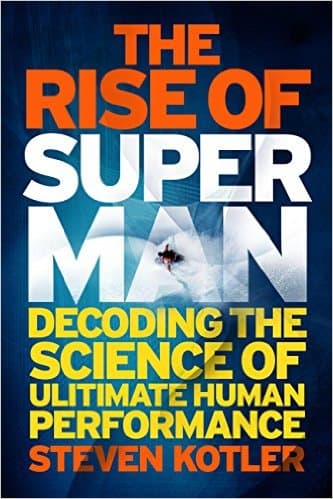
In 2014, Kotler announced his next book, The Rise of Superman: Decoding the Science of Ultimate Human Performance. The book explores the state of consciousness known as “flow”, an optimal state in which humans perform and feel their best.[20] The book includes examples from adventure athletes including big wave surfer Laird Hamilton, skater Danny Way, and big mountain snowboarders Travis Rice and Jeremy Jones.[21] The Rise of Superman explains how extreme athletes are accelerating their flow states to perform better and how people can use the same tactics to accelerate performance in everyday tasks.
Bold
In February 2015, Kotler published Bold: How to Go Big, Create Wealth, and Impact the World, his second book with Peter Diamandis. The book discusses the exponential advancement of technology and teaches entrepreneurs how to thrive in such an environment by being nimble and resilient.[23] Bold debuted on the New York Times bestseller list and remained on the list for six weeks, reaching #6 overall. Since its release,Bold has been reviewed by the New York Times, Wall Street Journal, Washington Post, Financial Times, and others. It was named one of the top 25 books read by corporate America in 2015.
Tomorrowland

In Tommorrowland Steven gathers the best of his best, updated and expanded upon, to guide readers on a mind-bending tour of the far frontier, and how these advances are radically transforming our lives. From the ways science and technology are fundamentally altering our bodies and our world (the world’s first bionic soldier, the future of evolution) to those explosive collisions between science and culture (life extension and bioweapons), we’re crossing moral and ethical lines we’ve never faced before.
Find Steven here: www.flowresearchcollective.com
Help keep HXP ad free! If you value our content help sustain and grow our show. Become a supporter for 5$/mo (the price of a cup of coffee) or DONATE : 
My most humble regards to Steven for being on the show
Read the conversation
Transcript
welcome to the human experience podcast the only podcast designed to fuse your left and right brain hemispheres and feed it the most entertaining and mentally engaging topics on the planet as we approach our scent please make sure your frontal temporal and occipital lobes are in their full upright position as you take your seat of consciousness relax your senses and allow us to take you on a church we are the intimate
strangers thank you for listening the human experience is cutting out the evolutionary middleman as we find our flow with my guest Steven Kotler Steven my good sir it’s a pleasure welcome to hxp thanks for having me fun to be here Steven your book small furry prayer was a Wall Street bestseller SF Chronicle bestseller angle for quickest flight was an SF Chronicle bestseller won the William Crawford fantasy award your book
abundance hit Barnes & Noble bestseller New York time bestseller for seven weeks you’ve written for Forbes you write for Psychology Today where does this come from I mean how did how do you get this talent to write these bestseller after bestseller that’s an interesting question I work really really hard I think is the honest answer that’s a really I don’t actually have any idea I will tell you a funny story though that may put it in
context I when I started out writing I started out as a novelist in my first book the angle whispered by which just referenced was a novel and I think it was a best-seller it was also a fairly mediocre novel I think and along the way you know I started out as a journalist so I wrote for everybody you could possibly imagine I think it’s over a hundred and 150 publications at this point and I discovered I had this innate
talent for communicating really good idea really complicated ideas to people very very easily if you could understand them you have to understand that this was not a superpower I wanted when I started out as a novelist I wanted to be David Foster Wallace or Thomas Pynchon I wanted to be this guy who was really really famous for being able to do super complicated fancy things with language and my superpower was almost the exact opposite of that so
I think at a certain point I gave in and decided that I would be more use to myself under the rest of the world if I if I if I want this route rather than the other route which i think is it’s funny I’m a certain level and I also think it’s um it’s fairly indicative of creative careers and how how sharp right turn show up a fairly frequently and you you just got to go with it when you say that you you work hard I mean what is
that what does that mean exactly you immerse yourself in what you’re doing yeah I mean you have to understand that I get up every day at about 4:00 in the morning and you know I will it’s not unusual for me to write from 4:00 in the morning till five o’clock at night 6 o’clock at night and to do that I can I have the ability to do this over and over and over and over and over and over again um pretty much ad nauseam I you
know I I am lucky enough to get to do exactly what I love for a living and I never forget the fact and I you know I always tell this to other people but you know kind of coming up as a journalist I I always knew every time I pitched a story to a magazine for example and I did a story for time or GQ or something like that when they said yes to me they were saying no to 500 other people yes yes behind me who were almost you know
probably you know some of them are probably more talented than I as I was and I just had a slightly better rolodex but I I was net I was always aware of the fact that like they were there were a lot of people chasing me and I sort of never forgot that and I kind of always de su m– that I wasn’t the most talented guy in the room I and so I just assumed that if I you know wanted to keep doing what I was doing for a living which was really the
only thing I knew how to do I had to I had to outwork everybody so I mean was it important for you to stay on the sort of razor’s edge of your research and writing and keeping up with things you know that’s an interesting question on my friend Andrew Hessel likes to tell me that he thinks I’m five to twenty years ahead of most people and I have to remember that when I’m writing and and what I think what he means is that like
like you know as you can see from Tomorrowland I my interest has always been you know sort of what’s going on on the cutting edge of the cutting edge and I often I don’t actually even know what’s going on any other place is probably a better way of saying that I’m just naturally attracted to those things I have no idea at the time that I’m actually on the cutting edge of stuff I’m just you know following my interest where they lead but one of the things I
will tell you and I learned that’s a very long time ago as a journalist when I was finishing a story you know my stories were always about the person or individuals doing something kind of astounding and amazing and you know very very extreme in the world and the last question I would ever ask people is okay what’s the strangest most interesting thing you know of that’s going on in the world right now and oftentimes that was
where I went next so I wasn’t even driving the bus I was just getting advice from really smart people would you say that you have had a sense of the long term you said that your your friend said that you were you know 5-10 years ahead of everyone but do you do you yourself feel like you see the long game in Tomorrowland you’re I mean there’s so many examples of in here about how much we are evolving as a species and how
quickly that evolution is happening what I’m asking is what is the end goal I mean what is the end goal for you well that’s a tricky question and you know I love my work has been focused around people pushing past the kind of supposedly mmit Sevilla and whether it’s you know kinesthetic physical performance where I’m looking in Rises Superman and action-adventure sports athletes who are literally doing the quote unquote impossible over and over
and over again and trying to figure out where that’s coming from and why that’s happening Tomorrowland which where I you know spend time with you know twenty or so different individuals who all invented the future you know and broadening so I’m I’m interested in what does it take to dream up a world that other people don’t think it’s possible and what does it take to make that possible but I’m interested in making that available to
kind of everybody I that’s the the one thing that I’ve you know learned along the way and I don’t number who first said it to me but way way way back when in my career and it was with one of these I’m inventing the future kind of people they pointed out to me that it takes exactly the same amount of energy as it does to open a local dry cleaning establishment and really succeed with that as it does to change the world the
work required is going to be the same the vision is the only thing that’s different and I have found that to be very very true along the way I don’t hard work as hard work as hard work there’s only 24 hours in a day there’s only so hard people can actually work this size of the vision is is what tends to be different and I think the only reason the size of the vision tends to be different or a lot of the reason has to do with the people around you you
tend to believe what’s possible people around you believe is possible for example when I spent a lot of my nine the 90s in Squaw Valley California where you know action-adventure sport athletes were literally redefining almost on a daily basis or what was possible and from the outside it looked like the most revolutionary thing in the history of the world but from the inside it looked like a bunch of friends who were going
out onto the and pushing each other and having a good time Silicon Valley looked the same way I was in San Francisco at the beginning of kind of the internet and got to work on buzz net which was the very first online magazine and you know it you know on the outside it looked like a revolution and on the inside it looked like a bunch of people you know sharing passion and having fun I don’t think there’s a huge difference other than the
size of the vision feels like it’s so important yes hard work is hard work as well as if you are inventing something that is going to change the world is doesn’t that change your you know everything I mean shouldn’t that change the whole game plan for you I don’t you know it should I’ll give you a give a different example you know my writing partner on bold and abundance is Peter Diamandis and Peters you know one of the
cofounders of singularity University where every summer they get together you know graduate students and they challenge them in ten weeks you know they put them through some coursework and whatnot train people up in exponentially accelerating technologies and how they work and how to harness them but they charge them with founding a business that can impact the lives of a billion people in ten years or yet or less and that’s I mean that’s their
summer program that’s what these people do and more and more I mean maybe it was not always this way maybe I’m giving you a few that is very very colored by the technology of our time I was talking to the venture capital is built high earlier today and he reminded me once again that you know when he started when he got into this business into the business it cost you know five million dollars to start a company and today it
costs about five thousand dollars and you know we are we have an enormous technological advantage and maybe I am just speaking from behind that advantage but at this point today with with the power of technology I really do think it’s just a question of how big is your is your dream that was actually going to be my next question is do you do you think that our generation today because of Technology because of computers too
because of the access that we have to the Internet information do you think that is the reason that more people are kind of striving to change the world I think it’s two things um I think the technology is astounding I also think I think there’s been there’s always been something very subcultural about the urge to change the world that has not that’s not that doesn’t tend to be a mainstream preoccupation so much intends
too much more subcultural but for the very first time in history subculture right now counterculture rather than being punk rockers or misfits or whatever it’s entrepreneurs that’s as far as I could tell the the newest subculture I don’t know how long it’s gonna last but for right now that’s what you see and and it’s blending right you go to Burning Man and you see Silicon Valley and you go to Silicon Valley and you see Burning Man it’s one and sort of
the same thing in a in a weird way today that that hasn’t happened but there’s a lot of you know kind of punk-rock energy in subculture in saying hey I can do what the other person can’t and it just so happens that now because of technology that’s aligned you know that’s aligned people in a way that it hasn’t before I also think the Millennials have a different set of values um the very very very different values and
they more than any other generation in the past measure themselves by the size of the impact they can have in the world and that’s a critical difference I think it’s also a good time for me you know when I came up in you know when I got out of college and you know it was in the 80s and in the 80s if you walked into a boardroom and you started talking about passion or purpose or creativity even or inspiration I mean you would be
laughed out of that boardroom you would have been run out of that boardroom forget about talking about something like flow and altered states of consciousness what I do for a living right just even kind of the entrance points topics into that and let me put it a different way and this is something most people don’t know but it’s shocking so in science until the 1990s emotions internal subjective experience was not even a topic we took seriously it wasn’t
until the 90s when a man named yacht concepts sort of traced the neuron by neuron chain of six primary emotions in all mammals in rats when he felt when he discovered this the scientists went oh wow I think emotions are a real thing and maybe we should study them and that sounds totally absurd but it was really what was going on so you’ve got a world where you know passion and purpose you know are not things that show up in
business and emotions are not real to scientists and yet twenty years later here we are and the most you know go go to eight we are go to our business reviewing search passion or purpose or creativity or inspiration or any of these you know soft topics that science didn’t even say we’re real until the turn of the century and they’re now the center of the conversation so you know and that’s a that’s a because of that by
the way I think entrepreneurs have been you know sort of afford a disability the new subculture I you know these are these are haphazard guesses by the way I’m not by any stretch of the imagination a cultural critic mom but why do you think being an entrepreneur is so I mean don’t you think this the industry is completely saturated with people who are kind of over extending their reach in a way I mean I feel like I feel like if I hear about another guy
that has invented a billion-dollar company I’m going to scream I agree I I work pretty hard and I would like to think I’m having some impact on the world through my work so I mean how do you feel about the state of entrepreneurship and that everyone wants to start their own company now you know I’m less concerned I mean I’m excited by the fact that everybody wants to start their own company I think that’s interesting I um yes I am as you know
sick as you are of hearing about it what what bothers me about some of the Entrepreneurship stuff is the sort of the model it’s being built under I think it’s very I think a lot of it is very short-sighted right now people want three years to you know a billion customers kind of stuff that kind of thinking to me is kind of disastrous I’m much more interested in so-called mid-market companies there’s no there’s a bread and butter backbone
of you know of our economy and second of all it you know I don’t when somebody tells me they want to start a billion dollar company ninety percent of the time I think they want to make the next angry frogs or something like that because that’s the only way you scale up that big that fast most of the time so I think some of it is I you know I wish their visions were bigger I wish the markets supported a kind of a longer-term vision of possibility I wish
at a systems level was more integrated but you know it to me the fact that there’s this much you know if anything is going to save the human race from itself its creativity and this many people saying hey I’ve got an idea and the world is such that I can now go out and try to make that happen do I think that’s a better world than everybody getting out in trying to go get a job on Wall Street or you know that model yeah I like I’m much more
interested than the let’s invent together model in the old model I really I really am so you know yes there are a million things wrong with it but I will also say we’ve never seen anything like this in history and of course there are a million things wrong with it right the fundamental model and Silicon Valley and all this stuff has always been fail fall or fail faster and so of course there’s a lot of things that you could point in
and say yeah this isn’t this this is not working this is not working this is not working and then you got to stop and go okay this entire model didn’t really exist until 2004 or 2005 right so you’re talking about something that is a decade 11 years old this much creativity being thrust into the system I you know it’s amazing to me that the system is supporting it as much as it is I mean with the rise of super the Superman did you find that you were kind
of addressing a lot of entrepreneurs and startup people with this book just because it was talking about how to reach flow state and how to be in the zone or the forever box yeah so it’s it’s a it’s a it’s a great question it’s a funny answer when we when I you know I had been working on flow right the the zone that’s the the state of you knows flow is technically defined as the state of an optimal state of consciousness
where we feel our best and we perform our best and we had been looking at it primarily in artists athletes and academics those were that those are the tribes where we we were seeing we thought the most flow was and that was generally what most people thought and I’ll tell you something really funny so if you go to our website the website for the flow Genome Project you’ll find a on the landing page you’ll find a free flow
diagnostic it’s a flow profile it’s technically a trait ology it says if you’re this kind of person you’re likely to find the most flow in your life by going in these directions sort of a roadmap on where to look for more flow in your life and it’s you know it’s based on the fact that flow has a lot of kind of it’s got 18 different triggers that we know of and different people are more susceptible to different triggers
right this just tells you where to look and what’s interesting is it has now been taken by over 30,000 people so it is I think as far as week as far as we know the largest study ever done in optimal psychology optimal performance right and we went in when when this went up and we were really sure we were gonna see more of what we expected more artists more athletes instead out of our study our study subjects 48% of them
find the most flow in their lives doing knowledge work being creative on the job being an engineer being an entrepreneur being a doctor being a lawyer take your pick so what we we went in really thinking that this was something for really kind of elite high performing teams and we came out going holy crap it’s I mean we knew flow was ubiquitous we know it shows up in anyone anywhere provided at certain initial conditions were met
we’ve known that for a lot of years but to find out that it’s actually showing up most in knowledge work uh you know was shocking to us but it does explain you know interest in Rises Superman interest in the flow Genome Project in the beginning it was high-performing organizations like you would like you would expect of you know athletes or US Special Forces that kind of stuff but now we spend as much time on Wall Street
and main straight street as we do almost any place else yeah yeah and you know you talk about flow as being a sort of spectrum experience there’s a macro and there’s a micro you can enter these small seeds of flow and then you have larger states of flow am I am I on the right track here you’re totally on the right track it’s like well it it’s it’s just think about any emotion right every emotion we have every internal
experience we have is a spectrum anger you can be a little bit irked or you can be homicidally murderous it’s the same you know emotion that’s at the base so you can flow has ten well actually seven defining characteristics wait some of them are very fantasy your sense of self disappears time passed this strangely it’ll slow down or a speed-up but there’s also you know simple ones like uninterrupted concentration a sense of
control over what you’re doing anyway so you can be in a state of micro flow where a couple of these things show up and if you know that that for example you fall into a great conversation at work with your coworker and an hour goes by and you don’t even notice it and you’re so lost and the ideas but your sense itself is sort of turned off you haven’t really been thinking about you know what you have to make for dinner
the work you’re not giving it and you’re so sucked in the conversation or you can have a state of macro flow or I’ll hand show up and until the 1950s we thought that you Mack we talked about macro flow is a mystical experience we didn’t actually you didn’t you it was not even you know it was it was such a profoundly altered state that we had terms like mystical experience it wasn’t until a psychologist named Abraham Maslow
discovered flow in the you study group pact with atheists that a bee went holy crap this isn’t a spiritual experience I guess other people have this as well how important is the creative process and and actually being inside of creatives creating something I mean you said that doctors can do this lawyers can do this is there a certain part of the range of the brain that is specifically engaged while we are entering a flow State
that’s a fantastic question and so when I talk about flow I am literally talking about the three neurobiological processes when somebody isn’t flow they’re great so let me back up and say normally under normal conditions right now for example you and I are in conversation and if I were to look inside your brain what I would see is a lot of activity in your prefrontal cortex the kind of latest newest part of your brain where you do a lot of complex
decision-making and long-term planning and things along those sorts and your brain waves would be high beta range which is where we are when we’re thinking and conversing and whatnot and neural chemically we’d see sort of standard attention and stress hormone so we see cortisol norepinephrine and adrenaline probably that’s sort of 21st century normal when we move into flow everything changes the prefrontal cortex starts to deactivate so it turns off
this area that’s hyperactive right now it starts to shut off your brain waves move from you know agitated beta down towards calmer alpha and meditative theta and the stress hormones get flushed out of your system and they’re replaced by feel-good performance-enhancing neural chemicals like dopamine serotonin and and Emine and endorphins and such so there’s a there’s when I’m speaking about flow I’m talking a lot of very specific shift in
neurobiology that accompany those seven phenomenological characteristics I talked about earlier phenomenological is just a fancy way of saying this is how these things make this is how this experience makes me feel so this takes away the 10% of our brain myth right yeah so the it’s a it’s a funny it’s a funny thing and it’s actually one of the things that kind of steered a lot of this research sideways for a long time but way back at
the turn of the century a psychologist a Harvard psychologist named William James made a speech where he we miss what he said was misinterpreted and it became what you reference the 10% brain with the idea that hey I’m only using 10% my brain at any one time so ultimate performance aka flow must be my full brain on overdrive and it turns out we had it exactly backwards when we achieve states of ultimate performance our brain
doesn’t become hyperactive it becomes hypoactive hy means it’s the opposite it starts to deactivate and you’re back down so you know another way of putting this is you know we’ve we’ve all heard Huxley’s famous phrase you fling open the doors of perception it turns out actually no they’re shutting down and on a certain level it’s we’re going in the opposite direction I mean what’s really happening is you’re trading conscious processing which is
very very potent but it’s also very very slow very very energy expensive and very very limited in terms of its RAM the number of things that the brain can consciously process at once is really small consciously you that you have something called working memory and the maximum it can hold on to it once is about nine items but most of us tap out around four so working memory is really really small very very limited powerful
but small when we can slip over the subconscious you’re much much faster to two to five thousand times faster than conscious thought extremely energy efficient and unlimited RAM we literally don’t have any idea what the carrying capacity the storage capacity of the subconscious actually is at this point so you know researchers refer to it as essentially infinite because we can’t come close to finding a limit this is shocking to me I’m blown away I so
you’re saying that the brain actually is shut down the the regions that make you kind of think of yourself as unable to do something let me give you a let me let let’s put in more concrete terms so when you move into flow you experience transient hypofrontality transient meaning temporary hypo right we just talked about it’s the opposite of hyper means to slow down and frontality refers to the prefrontal cortex that latest
greatest part of your brain so why does your sense of self and self-consciousness and that inner critic that nagging defeatist – always-on voice in your head that won’t go away shut down and flow why does this happen because self is actually calculated by it bunch of different structures in the brain that are all found in the prefrontal cortex so as parts of it start to shut out shut down you can no longer perform this calculation that’s
the same thing why does time pass so strangely and flow we’ve all had the experience of you know getting into that great conversation and an hour goes by and you think it was two minutes why does that happen because when you go into that conversation you’re the focus that is required what you’re really looking at by the way is an efficiency exchange the brain has a fixed energy budget so when you’re putting all your energy into focus and attention and
being right here right now in the present moment the bearing deactivates non-critical structures to save energy and be able to give you more energy for focus and attention speed when that happens the prefrontal cortex starts to shut down that’s where you’re sent to time goes time is calculated all over the prefrontal cortex as parts of it wink out we can’t separate paths from present and future and were plunged into a state that people will talk to Philip
Zimbardo at Stanford calls the elongated now or the deep now so I mean I mean would you relate this back to how how long does this do does the research go back on on this flow state I mean is this a survival mechanism is this something that was sort of programmed into us to defend off against sort of big wild animals or what so it so two questions there it is different you’re taught that the survival mechanism is the fight-or-flight response right that
is diff then flow very very different in fighter flight you get adrenalin norepinephrine a little bit of dopamine and cortisol is a huge it’s a huge huge huge response but it’s a very very limited response when you’re in fight-or-flight you have three options you can flee you can fight or you can freeze that’s all the possibilities when you’re in flow it’s the exact opposite its options wide open almost anything you do you’re going to
be excellent at so you can really do whatever is in front of you it’s the actual opposite end of the spectrum their exact opposite responses that they share similar neurobiology that said the research for flow goes all the way back to the 1870s basically so or 1880s so there’s there’s like a hundred and twenty-five years of flow science and part of it was the discovery of the fight-or-flight response people had started to realize that certain high
risk situations seemed to provoke unbelievable responses and they didn’t you know at the time they didn’t know it was one thing they they would look and then go pupils dilate and blood pressure goes up and you know all these different physiological responses happen and then a man named Walter Bradford cannon came along and discovered they were actually the same thing that was actually one thing was the fight-or-flight response
um so it was that was a very big discovery along along the way it was the that when that was discovered it was the very first time performance enhancement was seen as neurobiological and was a big shift right before that if you wanted a better time in the hundred yard bash you prayed to Hermes you wanted to write a better sonnet you app talked to the muses but after Walter Bradford County came along turned a gift of the
Gods into a byproduct of standard biology and that was cool because biology was hackable right we could do something yeah about it we didn’t just have to have to sacrifice our children to the gods in the hope that we might more created a start up a new company yeah very true thankful for that so I mean you talk about a sort of baseline that comes from a struggle when you’re when you’re reaching when you’re moving through
you a sort of flow cycle that the base that the start of that cycle is a struggle right yeah we we used to believe flow was sort of a binary you know state like you’re either in the zone you’re out of the zone it worked like a light switch and we now believe we now know it’s a four-state cycle and you have to move through the whole cycle before you can re-enter flow so sometimes you’ll hear people talk about hey I can be in a permanent state of
flow they don’t know what they’re talking about it’s not actually possible because of the nature of the cycle and the first stage of that cycle is a struggle phase it’s a loading phase flow is what happens when the brain can start to automate is and automating and but before that can happen you have to feed it a ton of information a ton of data so this is skill acquisition you know if you’re if you’re a baseball player this
is just like literally learning to keep your eye on the ball if you’re a writer this could be you know the research phase where you’re talking to lots of people and having lots of conversations and making notes but you have no idea what you’re doing and the interesting thing about struggle is in flow the prefrontal cortex is turned off in struggle its hyperactive and because it’s hyperactive and because it’s so limited in things that it can actually
hold on to and think about you are going to bypass its processing limits pretty quickly and you’re going to get frustrated and what’s interesting about what we’re learning about ultimate human performance is a lot of your emotions when you’re talking about ultimate human performance don’t mean what you think they mean they almost mean the exact opposite and you sort of have to unlearn really long term kind of emotional
emotional decisions and for example in struggle frustration which is a constant companion and struggle is a sign that you are moving in the right direction you should keep going in every other walk in life struggle is a sign that you’re screwing up you should back off you should stop this isn’t working you’re frustrated right in when when you’re actually in struggle and moving towards flow it’s a sign that you’re moving in the right direction hmm and
then there’s there’s a release right the second stage of this cycle happens as so so we want a trade conscious processing for subconscious processing how do you do that you have to stop thinking about what you’ve been thinking about you have to sort of take you take your hits off of it so the subconscious can take over and there’s a this is removed from struggle into release for this to happen the research shows that you need you
need a distraction essentially and what really works best is low-grade physical activity going for a long walk Albert Eyes died like to roll or rowboat out in the middle of Lake Geneva and stare at the clouds and TV kills this right yeah because of BiBi shifts your brainwaves in a very peculiar way that will actually block you from going into flow holy crap Wow a hummingbird just flew into the middle of my office and hovered over my head
and darted out that was cool the hummingbird was in flow man is just attracted to the conversation we’re having now know about catching and releasing a hummingbird okay so we were we were talking about TV and it blocking the flow cycle state it’s the one thing that we found that really will block release I also think reading can work really really well but reading really kind of like fast-paced popular nonfiction thrillers spy novels that
kind of stuff doesn’t seem to work as well either and it I’m not exactly certain why and certainly more research needs to be done on this but those are the only two things that tend to do not work gardening works really really well building model airplanes works really really rep well there’s a lot of there’s a lot of different different ways to go into it but it will move you you know into release once your brain can stop
taking out the problem can get automatic I and once that’s kind of the solution emerges basically that is what kicks you over into flow which is the third state of the cycle and on the back end as a recovery phase there’s it what go flow is a very very big it’s extremely pleasurable but it’s followed by a deep low and you have to know that’s coming it’s it’s very it’s very distressing for a lot of people they don’t know it’s coming there you
know they no longer feel like Superman they feel very very mortal there’s biological reasons for this that the feel-good neurochemicals are in limited supply and once they burn out they take a little while to replenish they take nutrition and sunlight and vitamins and minerals and it takes a little while and that you know that down is actually a really it’s sort of a built-in you know it’s its built-in it has a built-in
recovery period that if you take advantage of will really really work to your benefit and if you fight against it’s really gonna destroy you because it will lock you out of just emotionally think about it this way if you’re really you know longer and flow you don’t feel like Superman the ideas have stopped glowing it’s depressing it’s whatever you’re supposed to be sleeping and resting and relaxing and that sort of stuff
but if you’re get gripped that you’re no longer and flow if you start freaking out about it which is fairly common you have to move from there into struggle the next phase and the cycle is struggle and if you’re not recovering and instead are you know are gripped in this in this struggle phase it’s or in this it’s being excuse me in the recovery phase it’s gonna be very hard to move into struggle which is what comes next
right you go back into struggle you see that a lot by the way with with with entrepreneurs with high performers high performers don’t like to shut it down yeah in fact I’ll tell you something in Rises Superman where I really look at action and adventure sport athletes who are you know and we and the reason I do is they’ve gotten better at harnessing flow than pretty much any other population on earth one of the reasons is a lot of
those sports are weather dependent so they come with built-in recovery periods Maurice one blows in every videos surfing everybody goes skiing and it lasts for a couple days and then it goes away and there’s a there’s a break before the next storm cycle and so everybody they’ve already been out there they’ve been risking their lives chasing chasing whatever and you know then there’s there’s a dip so they use that they
really take advantage of the recovery phase it comes built in um most you know high performing lives don’t actually come with built-in recovery phases and you know even earlier you know when we started this conversation I talked about you know I work very very hard and I do but I also play very very hard now so recover very very hard hmm hmm yeah that’s important let’s sit how how do you do that how do you play well I for me
I you know I like to hurl myself down mountains at high speeds as a general rule so I don’t care if it’s mountain bikes or skis or whatever take your pick but that’s you know I try to get into big nature and you know do something you know fun at least a couple times a week that so I so I have those kind of you know big big blocks built in every day you know I’ll hike my dogs for the mountains for about an hour in the
morning I’ll take it a break and you know do some kind of workout in the afternoon for another hour you know as part of you know as part of as part of that stuff and you know I take I just spent a preliminary scan and I was writing and skiing and writing and nothing else I mean this sounds like the best thing ever you can work on the thing that you’re most passionate about go through the struggle phase and then go play I
mean this is how this is what we should have been taught in school on how to learn things that’s I mean I’ve said that for a while I don’t know I was not very good at school I own and I was if there are a lot of different reasons for for it but one of them was that I’m a macroscopic learner and school is built for microscopic learners it goes from small ideas to bigger ideas to biggest ideas and I learn exactly backwards I
need the biggest idea first and you know and then then I can sort of get to the smaller idea and when I figured that out it was I mean it was the most greatest thing in the world it was like well what else can’t I learn at that point I figured out how my brain learns and then I could learn anything and god I wish somebody would have taught me that when I was younger I wish somebody would have taught me that frustration is a sign that I’m moving in
the right direction when I was younger you know I wish somebody would have sat me down and said hey learning is invisible and you’re gonna be terrible at it up until the moment that you’re good at it and that’s just how it works and so you all those really basic here’s how your brain works here’s how you learn here’s how you hack the system oh my god it would have been so freaking helpful to me yeah that’s why I loved
your book so much is because it just it helped me understand my own process just because I feel like I kind of pushed myself to that sort of brink of madness of working on something until I write before I go insane and but the hardest the hardest thing that I think is for me is just kind of stepping back stepping away from it yeah I always I when you’re so frustrated you’re punching the floor the hardest thing to remember is that
you should stop yeah by the way I mean that’s there’s a reason for that so if you look at your brain when you’re in that state you’re not gonna look any different than somebody with OCD it’s a very tight cluster of neurons and your thoughts are sort of going in a tight circle and until you relax you’re never gonna break out of that circle so there’s no once you’re at that point you are not your brain your neurobiology is
going to lock you out you cannot work through that spot the brain doesn’t work that way you’ll never find the good idea because you’re there’s too much the more norepinephrine the more anxiety you’re feeling the less wide the database search by the pattern recognition system so the extreme example we talked about earlier is fight-or-flight where your options are limited in three but being really stressed out your options are
limited to 15 and you’ve already exhausted all 15 possibilities and you’re just going in circles mm-hmm you literally like you there’s no you can’t fight that that’s basic underlying neurobiology it’s how the system works you can only work with it and the only thing to do is to walk away now I will tell you I’ll give you a tip that after that has worked for me and as I worked for other people I know went because when you’re
in that state your brain is doing a very tight loop and it’s not looking for new ideas you are not going to remember what to do right your brain can literally not find the idea so I keep a folder on my computer or Word document that says to do when stuff goes wrong and for example like when I’m writing badly for example it’s usually one of three things and so I have a list of when you’re writing badly it’s usually one of these
three things so take a break so your brain can calm down and then try these three things it’ll probably solve your problem feels like that what are the three things you leave you leave clues for yourself because the more stressed out you you are the less creative your brain is able to be and the it’s not gonna find the solutions even the ones that you know work the Greeks have this great word a nemesis which is the forgetting of the
forgetting it’s the it’s not just that you’ve forgotten something is that you’ve forgotten that you’ve forgotten it and so there’s there’s the opposite of it which when you remember what you’ve you know it’s the remembering of what you forgotten to remember and we all know this experience we have this experience you’re like oh crap I do that all on why didn’t I see that all right I what I’ve done is I’ve said okay I’m good I don’t know why I didn’t
see that I maybe I you know I’m not smart enough for the neurobiology works this way but I exported it into an outside list that works really really really well by the way Peter Diamandis in bold we peter has a bunch of laws called some Peter’s laws that he’s lived by his whole life that’s the exact same thing he’s externalized his database of what to do when things are going wrong so if you don’t mind me asking what is
on your three lists what are the three things that you kind of have to remind yourself well so what I look for is is my right end arrogant boring or confusing those are the saw when my writing is one of those things you know I’m that’s the feedback I’m looking for um usually when my writing is arrogant I’m using fantasy language to cover for the fact that I haven’t done enough research and I don’t know enough about what’s going on
that’s what happens when my writing is confusing I don’t know my starts or my endings I haven’t figured out where the story starts and I haven’t figured out where it goes so I’m wandering all over the freaking place and when my writing is boring it usually means I haven’t discovered the right tone for the book the right store the article right the right style my style is wrong so you know those are you know that’s a lot of
years of experience and knowing myself as a writer and and what and by the way I have a feedback is a flow trigger and I said earlier that flow follows focus it can only happen when all of our attention is in the present moment and one of the most common flow triggers is known as immediate feedback and the reason is it’s not for any big fancy way but it allows you to course-correct without breaking state so if I know
where I am and I know where I need to go next I don’t have to stop and think about it I don’t have to wonder I don’t have to pull my attention out of what I’m doing so one of the things that we teach people with the flow Genome Project is to tighten feedback loops and I do this in my own writing because writing by the way you know I can work if I’m working on a book I my editor is gonna see that book if I’m lucky once
every three months that is not the kind of feedback that produces great writing so there’s a guy on my staff whose job it is to read everything I write and tell me first and foremost is it boring arrogant or confusing so you know not only I have I externalized you know the my what to do when goes wrong list I also have added a feedback layer into my life and I tell people that what like the way to do this is I call it the
minimal feedback for flow for me the minimal feedback I need for flow is is it boring arrogant or confusing right everybody in their primary activity knows you know if they’ve been doing it at any eddy langt and if they’re successful they know what errors look like right they know what boring arrogant or confusing is for them and literally if you can’t you know I am lucky enough these days that I can actually pay somebody to do this but
before I could pay somebody I had a buddy he figured out what his minimal feedback for flow was I had mine and we trade it yeah right like anybody can go on the buddy system with this you can do it in an office on your own whatever take your pick but it will massively increase the amount of flow you’re getting in your life yeah I was gonna ask for tip but I think that’s that’s beautiful I think we covered the the tip portion
of my my interview year so okay so Tomorrowland you know I I took took four days I got your books on Monday and today’s Friday so I had four days to absorb two of your books and I mean Tomorrowland you go in and you sort of you start with this amputee you tell this sort of parallel story between this amputee and remind me again who the other person was oh it’s the story of you hair who is the inventor of the world’s first Bionic body part they have
bender the first bionic ankle and major David Rozelle who was the very first person outfitted with one so it’s the it’s and they both are amputees uhare lost both of his legs below the knee on his ankles basically in a mountaineering accident and major David Rozelle was ran over a roadside bomb in Iraq and he lost his leg that way and yeah we tell the stories in parallel also because you know individually each of them are sort
of the most amazing people you’d ever meet on the planet one just alone and together like they were you couldn’t pick couldn’t like as a journalist there was no you hair story the man who invented the world’s first Bionic ankle is really one of the most astounding stories ever and major David Rozelle you know the first guy to return to combat with a bionic limb you know he it’s just as astounding um so I was fortunate enough
to you know get to spend time with both of them but you also you get it you start to talk about how much we are advancing how quickly and how Moore’s Law is kind of being exponentiated and it’s moving faster this part of our civilization our culture is moving faster than Moore’s law so Moore’s law as you pointed out refers to computing power and it basically says hey the you know computing power doubles periodically every 18 months your
computers get twice as fast for the same price this is an exponential growth curve and Moore’s law has held steady for about 60 years it turns out that exponential growth curves when they show up in technology they function more like natural laws than they do like marketing predictions Moore’s law is held steady through world wars and economic depressions and you know take your pick plagues and earthquakes and floods and
fires and it keeps going and what Ray Kurzweil a head of engineering at Google discovered is that once the technology becomes an information technology meaning once you can program it in the ones and zeros a computer code it jumps on the back of Moore’s law so biotechnology which is where Bionic sits is currently accelerating at five times the speed of Moore’s law it’s literally doubling in power every four months and so here’s the craziest part
about Tomorrowland right I you hair when I met him this was about four or five years ago and he had created the very first Bionic human body part today 50% of the human body is replaceable with bionics that’s what that’s what that’s what exponential growth actually looks like in the real world and that is you know is showing up obviously all over the place and it’s what one of the things that is you know really turning
science fiction into science fact and I mean you also get into and E’s and out-of-body experiences and you really I mean it it really looked like you did the research to to cover these why did you decide to go into this sort of quasi mystical I mean it was so okay you what what your that research was I mean what you’re looking at even though the article the it was stuff that I was working on when I was writing my second
book West to Jesus which is about the neurobiology of spiritual experience and it was the very first book remember I told you that up until the 50s most people thought flow was a mystical experience that a lot of people still thought flow was a mystical experience and it turns out if you if this is this is this is peculiar but if you look under the hood of flow States or so-called spiritual or mystical a contemplative state some meditative
States or near-death experiences or things along those lines or even psychedelic states so what happens when you take mescaline or LSD or so the only of that it turns out the neurobiology is very very similar the knobs and Lieber is being tweaked in the brain I think almost exactly the same they’re almost the same experience so early when I first started looking at flow in the late 90s I was look I thought I was looking for spiritual experiences and as
it turns out the first person who gave us any insight into flow dr. Andrew Newberg at the University of Pennsylvania he was actually studying mystical experiences he was looking at what happens in the brains of Tibetan booze and Franciscan nuns when they feel one with everything raises the fundamental definition of a mr. experience you feel one with everything well in flow especially in a macro flow state you also feel one with everything
and by the way why does why do you feel one with everything transient hypofrontality there’s a part of your brain superior right parietal lobe that does a lot it helps you navigate through space so it helps you kind of not bump into the furniture and so people who have a stroke or brain damage this part of the brain they can’t sit down on a couch because they’re not sure where their leg ends and the couch begins mm-hmm so it turns out in states
of extreme concentration like meditation when you really need a lot of energy going into your focus this portion of your brain shuts down it takes away your ability to differentiate self from other so at that moment in time when that happens when this portion of the brain shuts down your brain thinks it’s one with everything because it can’t tell the difference because and by the way we all have that boundary line around the
self you think it’s you could oh my god this has to be drawn by by my skin that’s where I and of course how stupid but no we all have the experience you play tennis and you get good at it and the racket feels like an extension of your hand or your skis feel like an extension your aunt huh or you drive your car and you can feel the road through your pedals right racecar drivers talk about that that is because the boundary we draw around ourselves is
flexible blind people can feel the sidewalk through the tips of their cane right it is a flexible boundary and the reason is is for evolutionary purposes when mothers hold infants infants are heavy and if they were conscious of the fact that oh my god I’m holding this kid all day long it’s on my back I’m in the field of it whatever it would be a burden so we extend the boundary of self and mothers can’t tell the difference
between their own body and the infant’s body it becomes one thing together it serves a good evolutionary function so if this has gets sort of mapped out and there’s other the field of Neurobiology that studies this kind of extension is really flourishing right now we’re learning a lot of neat things but back in the late 90s all I knew is Flo had this experience a nanny Newburgh had sort of decoded it and I got to know
Andy as a result and you know it’s steered my research so in the early days of you know when Flo science really so the psychology of Flo dates back to the 1870s the neurobiology what’s going on under the hood the mechanism is only twenty years old and really I mean there were a couple other earlier experiments that were but Andy Newberg was the first time we got a really good picture of holy crap this is what’s going on this is what’s
causing this incredibly weird sensation and what’s interesting about about that and why like I talked about the science transformation of science fiction into science fact and the impact it’s going to have on culture that’s really what what’s what’s the deep under Tomorrowland down in the 20 years that have sort of passed between Andy Newberg decoding you know oneness with everything and where we are today pretty much every mystical experience
you can think of has been decoded there are mysteries still and this does not answer any of the big questions this does not tell us if there’s a god or not all it tells us is that so-called spiritual experiences or mystical experiences are mediated by biology it just explore exposes the mechanism but at this point we understand what knobs and levers are being tweaked in the brain during these experiences this is going to have a radical impact on
religion this you know that the goal of religion is to get you close to God well we now know what knobs and levers in the brain to tweak to produce that experience so we can judge the effectiveness of your faith structure against the effectiveness of my faith structure by actual measurable data for the first time in history I mean I was almost surprised to see you cover psychedelics in in Tomorrowland why I mean why why did you I mean you touched
on it a second ago again you have to go back to flow which is what I’ve been researching for two decades now at the center of a lot of my research right flow is bracketed neurobiologically by a bunch of things psychedelics are right next door because the same systems that produce psychedelic experiences tend to produce flow states so we talked about transient hypofrontality the self goes away there’s a couple different ways
that’s going to happen one way it can happen is you put all of your attention into the present moment you really focus psychedelics do that like giving you so much information at once they overload the conscious mind with data subconscious has to take over same process underneath and the other thing is with psychedelics the research into psychedelics has been accelerating exponentially again because this is you know this is a biotechnology on a
certain level and what we’re learning about about these substances is fantastic and their you know their healing potential is incredible and you know let’s just take you know a very intractable difficult condition like post-traumatic stress disorder hmm yeah okay and let me let you know and we’ll give you all the reason and we’ll talk about psychedelics and we’ll talk about regular medicine so right now it’s an intractable condition there are only a
couple of drugs approved to treat PTSD and they’re basically SSRIs and the data on their effectiveness is well they’re they’re not effective at all in very very very small percentage of the population can actually you know get relief from PTSD with with that so doctor by the name of Michael Mathare Hoffer down in South Carolina did some research with MDMA ecstasy the street drug ecstasy MDMA which is basically serotonin it’s one of the chemicals that
shows up and flow on PTSD and what they found and they looked at victims of childhood trauma victims of childhood sexual abuse so physical and sexual abuse and they also looked at soldiers Iraq and Afghanistan war veterans all of whom had PTSD what they’re finding is one two three sessions of psychedelic therapy and talk therapy so they’re given MDMA and they’re given a very long kind of eight-hour talk therapy protocol it’s a
very complicated protocol but as little as three sessions as well as little as one but three sessions is what’s average can produce total relief from PTSD systems or a significant decline and the study has been running about four years now and so for four years remission and it literally I talked to several of the soldiers who took part in the study and they literally said it was overnight they had PTSD they took MDMA
they didn’t have PTSD Wow assisting let’s do some comparisons they redid that study with flow with soldiers at Camp Pendleton they took them surfing which is a very high flow activity and they used up therapy and they got exact same results remember regular medicines don’t work at all MDMA could do it in one to three sessions they found that five weeks of surfing and talk therapy produced a total or significant reduction in PTSD
symptoms they then redid that with meditation mindfulness nation I think it was a it was a half hour day they got similar results but you need 12 weeks of meditation but when I said earlier right psychedelics flow and and – annotations the same thing these three studies are a really clear example all those things it’s also a clear example of hey this is an intractable psychological problem and yet you’re getting nearly overnight
massive results from these altered states of consciousness these ecstatic states yeah that’s unbelievable wow that’s so powerful I mean I was so so glad to I mean so refreshing to see you know someone of your caliber covering this it’s because I feel like there’s such a social stigma around these compounds because people use them irresponsibly and I mean you know thankfully we have organizations like Maps and you know we throw we throw our
military veterans kind of under the bus they come back with PTSD the medications we can then give them don’t work the treatments we have don’t work so I mean it’s life-changing but but the flipside is and I you know my next book covers this but we’re really in the middle of what could be called an ecstatic revolution with more and more people altered states of consciousness they not only can they heal trauma but they give
us access to a lot of things that levels of creativity inspiration intuition information that we couldn’t access under normal times and this is flow this is psychedelics this is meditation and you know take your pick however you get into these states there’s lots of different ways in but the results are things were bad at and really need cooperation collaboration creativity and what we’re seeing really is an underground revolution and it’s
not so underground anymore I mean Tim Ferriss for example has basically pulled his money out of venture capital and he’s using it all to fund psychedelic research he just he just crowdfunded along with a number of other very very very very big Silicon Valley notables 91 thousand dollars for a research study into psychedelic mushrooms psilocybin as a cure for depression that’s being run at Johns Hopkins so you right so there’s you know and
there’s I mean when was it was 2015 when Rolling Stone wrote an article about micro dosing with cell psychedelics as the new business tool in Silicon Valley and one thing I will tell you and this is you know might one of the places my new book emerged I kid you not is we started out talking about how business 20 years ago had no interest in passion purpose creativity those kinds of things so you could imagine my surprise when you know in 2013 after
eyes of Superman comes out I’m you know I’ve talking flow with everybody from Google to the Navy SEALs to fortune 100 companies to Wall Street brokers and you know to high tech companies to take your pick it’s all over the place and I’m literally standing on a stage or leading a workshop teaching people how to use an altered state of consciousness and it’s everywhere in the business world and that alone to me was you know so far on
the no longer down little longer and Kansas scale you know what I mean like it was mind-blowing the minutes proof but the funny thing was after these workshops after I got off stage people were coming up to me every one of these places saying yeah but my whole team is micro dosing on a regular basis they’re on weekends we’re going to todrick’s export shops where everybody’s doing skydiving together and we’re all Burning Man and it’s like we were
talking about one altered state of consciousness and we thought this was the most radical thing in the frickin world and everywhere I turned people were coming up to me and saying oh no we’re supplied from the entire ecstatic menu right now because it’s giving us something that we fundamentally need to do our jobs and we can’t get anyplace else and that was that was mind blowing I really I’ve come to you know the the
new book is called stealing fire and the subtitle is the secret revolution in human performance and I really have come to believe it’s revolution it’s a revolutionary level and let me just to kind of put some hard data around this and really blow your mind so we decided so we just said when we talk about these experiences the word we like to use is it is a Greek word called ecstatic it’s the root of the word ecstasy and it
literally means to step outside oneself to get outside one’s normal state of consciousness to get outside your head right and what it normally describes is the very same kind of knobs and levers I talked about earlier right like the things that we talked about it happening in the brain that happens during status that’s how we stand outside ourselves so my partner Jamie Will and myself and a team of researchers spent about six six
months trying to put some numbers around what we call the altered states economy which is how much money people spend trying to get out of the heads trying to get into these spaces and we didn’t mean intentionally sure there’s a lot of intentionality going on but a lot of people are doing it accidentally or haphazardly or they don’t know what they’re doing but with these knobs and levers of the brain underneath you could
actually just say hey we’re looking for these you know these fundamental neurobiological changes and if experience produces it and people are seeking it out we can credibly to keep included in our tally right also we were as unbelievably conservative as possible so let me give you an example you could say that pretty much anytime anybody goes to see live music they’re going for a state shift experience either they want communitas that giant group blow
experience where the they become one with the crowd in the music takes them away or they’re using drugs or you know take your pick we said okay well that’s ridiculous people go to see live music for lots of other reasons beyond state shift so we narrowed it down to only electronic dance music why because well you’re not going to the music to listen to lyrics there aren’t any you’re not going to see the band because the DJ just push play there’s
nothing to look at you’re literally just going to dance your brains out sometimes drugged your brains out and get swept away by the music there’s no other reason to go to the experience so we took very limited numbers right when we added it all together and these are as conservative as we possibly could be we found it was four trillion dollars that is about one seventeenth of the global economy it is more than the GDP of India
it is more than the GDP of Russia it is essentially the GDP of Germany and that is how much money we spend chasing these altered states chasing exchanging the ability to shut off ourselves what’s interesting and what I think Tomorrowland kind of starts to get at and well my new book stealing fire will definitely get at is that because biotechnology is accelerating at five times the speed of Moore’s law and we now have decoded all these experiences
we are getting better and better and better at chasing them and which is a good thing because historically every time we’ve sort of tried to chase down these experiences at a big level things have gone horribly wrong this is like we’ve gotten it wrong almost every time you know we tried Ken Kesey six sneaks LSD out of a Stanford research lab and all kinds of tie-dyed hell breaks loose revolution of the 1970s right we’re
chasing you know it’s an actual experience is a tool for ecstatic liberation and what do we get highest rates of Meral of dissatisfaction and divorce in the history of the universe one rave culture of the 1990s star Sophos peace love unity and technology and ends up with you know spiking emergency room visits in tabloid father it does not go well for us historically when we chase these things down but what we’re seeing now
is sort of a middle path emerging one that’s sort of we can rule out all the previous superstitions of the past gatekeepers right we no longer have to listen to Tim Leary and demagogues like that telling us to go in a certain way we can do the research for ourselves and in fact there are open source lexicons citizens I mean we do it at the flow Genome Project we’re an open source citizen science project into flow into
ultimate human performance but you can DMT there’s the DMT Nexus or arawa these are open source psychedelic lexicons and we’re seeing this that there’s a near-death experience and an out-of-body experience like these are open source lexicons into altered states of consciousness so these are people describing their experiences how do they make me feel think about like you go back a couple thousand years and religion is some guy saying hey I went
up on the mountaintop and I had this mystical experience and I was given these these tablets but I seem to have lost them or broke them so you’re gonna have to take my word for it and that’s really like how it’s gone this is the beginning of time now we’ve got these giant open source lexicons we’re like you go up on the mountain you have your mystical experience you come back down and you have to compare it and validate
it against the reports of hundreds of thousands of other people who have also had this experience so you’re one truth is now you have to take a big data approach to this yeah for the first time in history which is really cool yeah yeah Wow and we’ve covered so much to even I mean it as a sort of wrap up sort of question I usually like to ask you’ve written a bunch of books that have become pretty successful and is there
anything out there that you would kind of tell a budding writer or someone that maybe looks up to you is following your path I mean is there anything that you would kind of a message that you would send out to the that person there’s a bunch of different messages to send out to that person I you know I died though so one thing that I that I think is Israel that has worked for me and I think works for a lot of other people
I’m a big believer in getting small I think if you’re really interested in success you reduce your life to a handful of fundamental things and you do those things I noticed in my own life and I noticed in a lot of other people’s lives that the really successful what people end up figuring out is the things they fail at are usually the things they give up at and it’s because there’s trying to do too many things at once
and that’s a very you know it’s very hard to fight against that tendency but I’m a big believer that you reduce you know your light I reduce my life to six fundamental things and I do those six things and if you don’t fall on that list I don’t do it it’s an instant no I you know I think it’s just a filter I like that that’s good Steven working people find your work to flow Genome Project Steven Kotler calm ste B&K OTL ER and the flow Genome
Project comm which is FL o WG e and ome project comm Steven thank you so much for being here man this was an amazing conversation I’m so glad that I went through everything to get these books and read them and bring you on here and and that got you this thank you for taking the time to you know prepare that well it’s it’s it’s not everybody does that and I appreciate it thanks so much
Ideas worth returning to
Quotes
Five substantial excerpts from the published transcript, lightly edited for clarity without changing their meaning.
“I wish markets supported a longer-term vision and that our systems were more integrated. If anything can save the human race from itself, it is creativity. A world in which many people can say, “I have an idea,” and then try to make it real is better than one in which possibility is reserved for a few.”
From the conversation“Abraham Maslow studied experiences resembling flow and recognized that they were not restricted to religion or mysticism. People in many professions can enter creative absorption. That raises a scientific question: which brain systems change when a doctor, lawyer, athlete, artist, or other person becomes fully immersed in a demanding activity?”
From the conversation“The struggle phase may involve conversations, notes, and effort without a clear sense of direction. During struggle, the prefrontal cortex is highly active, but its working capacity is limited. You quickly exceed those limits and become frustrated. That frustration is not necessarily failure; it can be a predictable stage before the system reorganizes and flow becomes possible.”
From the conversation“After the struggle phase, go play. This is how we should have been taught to learn. School often moves from small ideas to larger ones, which suits microscopic learners. I learn in the opposite direction: I need the large pattern first, then I can work backward into its smaller components.”
From the conversation“Flow was long interpreted as a mystical experience. When researchers examine the neurobiology beneath flow, contemplative states, some meditative and near-death experiences, and psychedelic states, they can compare processes once assigned to entirely separate categories. Similarity in mechanisms does not make the experiences identical, but it gives science a way to investigate them.”
From the conversation
About the guest
Steven Kotler
STEVEN KOTLER is a New York Times bestselling author, award-winning journalist, and co-founder and director of research for the Flow Genome Project. The Flow Genome Project, is an international organization devoted to putting flow state research on a hard science. He has a BA in English/Creative Writing from the University of Wisconsin, Madison and an MA from the John Hopkins University in Creative Writing. His work has been translated into more than 30 languages. His articles have appeared in over 80 publications, including The New York Times Magazine, The Atlantic Monthly, Wired, GQ, Outside, Popular Science, Discover and the Wall Street Journal. He also writes “Far Frontiers,” a blog about technology and innovation for Forbes.com and is cofounder of the Rancho de Chihuahua dog sanctuary in Northern New Mexico.
Episode 133 – Steven Kotler – Artificial Intelligence, Empathy, Emergent Consciousness
June 27, 2019 · 1:10:22
Ep#162 – Willpower, Focus, Attention, Optimizing Your Life & Becoming Indistractable w/ Nir Eyal
February 28, 2020 · 1:06:39
Episode 161 – Dr. Dean Radin – The Science of Spirituality, Yoga and Meditation. Experiments in Quantum Reality
February 22, 2020 · 57:09

Episode 157 – Conquering Fear, Addiction & Alcoholism, w/ Karla Juvonen
January 24, 2020 · 1:11:16
Episode 121 – Mr. Stephen K. Hayes – The First American Ninja
September 17, 2018 · 35:53

Episode 196: Waqas Ahmed — Polymathy, AI & the Future of Human Creativity
September 28, 2026 · 1:04:41
Independent conversations
Help make the next one possible.
Membership sustains ambitious, unhurried interviews and keeps the complete archive open to curious listeners everywhere.
Become a member