

The Human Experience · Episode
Episode 161 – Dr. Dean Radin – The Science of Spirituality, Yoga and Meditation. Experiments in Quantum Reality
A conversation with Dr. Dean Radin
Dr. Dean Radin is one of the most credentialed scientists in the world, studying the connection between spirituality and science. He is the chief scientist at IONS. He has toured worldwide, given over 350 interviews, he has appeared on countless radio and talk shows ranging from Oprah to Larry King.
Stay with the full conversation.
Episode field notes
Show notes

Photo credit: Jim Johnson
Dean Radin, PhD, is Chief Scientist at the INSTITUTE OF NOETIC SCIENCES (IONS) and Volunteer Faculty in the Department of Psychology at Sonoma State University. His original career track as a concert violinist shifted into science after earning a BSEE degree in electrical engineering, magna cum laude with honors in physics, from the University of Massachusetts, Amherst, and then an MS in electrical engineering and a PhD in psychology from the University of Illinois, Urbana-Champaign. For a decade he worked on advanced telecommunications R&D at AT&T Bell Laboratories and GTE Laboratories. For over two decades he has been engaged in frontiers research on the nature of consciousness. Before joining the research staff at IONS in 2001, he held appointments at Princeton University, University of Edinburgh, University of Nevada, Interval Research Corporation, and SRI International.
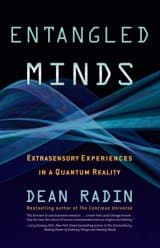
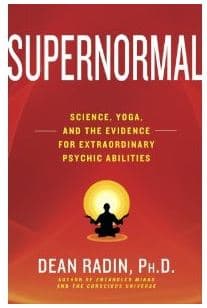
He is author or coauthor of over 250 peer-reviewed scientific and popular articles, three dozen book chapters, and three popular books including the award-winning and bestselling The Conscious Universe (HarperOne, 1997), Entangled Minds(Simon & Schuster, 2006), and a 2014 Silver Nautilus Book Award, SUPERNORMAL (Random House, 2013). These books have been translated into a dozen foreign languages. His technical articles have appeared in journals ranging fromFoundations of Physics and Physics Essays to Psychological Bulletin and Journal of Consciousness Studies; he was featured in a New York Times Magazine ARTICLE; and he has appeared on dozens of television shows ranging from the BBC’sHorizon and PBS’s Closer to Truth to Oprah and Larry King Live. He has given over 350 interviews and talks, including invited presentations at Harvard, Stanford, Cambridge, Princeton, and the Sorbonne, for industries including GOOGLE and Johnson & Johnson, and for US government organizations including the US Navy and DARPA.
In 2010, he spent a month lecturing in India as the National Visiting Professor of the Indian Council of Philosophical Research, a program within the Indian government’s Ministry of Human Resource Development. In 2013 and 2014, he gave invited lectures in Kuala Lumpur at the INTERNATIONAL CENTER FOR LEADERSHIP AND GOVERNANCE, an organization supported by the Central Bank of Malaysia. In 2015 he spoke at the AUSTRALIAN LEADERSHIP RETREAT, a confidential program of briefings and discussions for Australian government, business, education, and military leaders.
In this episode we spoke to Dr. Dean Radin about his life, career and work.


From Dr. Radin’s website:
“Extended Bio: I was born on February 29th. For my 13th birthday celebration I rented a roller skating rink for an evening, invited all my friends, and we ate hot dogs, cup cakes, and shared a Spiderman-themed birthday cake. I am looking forward to my 21st birthday in 2036, when I can finally buy a beer.
My first career interest, at chronological age 4, was to be “jet propelled.” It took many years before I could better articulate what I meant by that, but that’s how I responded when adults asked what I wanted to be when I grew up. My next career interest was the classical violin, which I started at age 5 and continued to play for the next 20 years, the last five as a professional. Then I switched to fiddle and 5-string banjo and played in bluegrass bands for a number of years. Between gigs, I pursued other interests and graduated with a degree in electrical engineering, magna cum laude with senior honors in physics, from the University of Massachusetts (Amherst), a masters in electrical engineering focusing on cybernetics and control systems from the University of Illinois, Urbana-Champaign, and then a PhD in psychology, also from UIUC. For my dissertation I developed and tested what may have been the first computer-based, artificial-intelligence enhanced, touch typing training system.
For a decade after my PhD I worked at AT&T Bell Laboratories and later at GTE Laboratories on advanced telecommunications R&D. Projects included designing the human interfaces to network operations centers in the US and Japan, developing a rapid prototyping system for complex human-computer interfaces (before there were personal computers), and studying ways of enhancing brainstorming and creativity in industry. While at Bell Labs, for fun I wrote a series of humorous articles for the science spoof magazine, JOURNAL OF IRREPRODUCIBLE RESULTS. One of those ARTICLES later almost accidentally started World War III in a way that would have appealed to Stanley Kubrick’s Dr. Strangelove.
Throughout my formative years and first jobs, I never forgot my original interest in being jet propelled. Ultimately I understood that what I was trying to express as a child was an overriding fascination about the outer limits of inner space — the depths and capacities of the human mind. As a pre-teen I read everything I could find on mythology, fairy tales, folklore, eastern philosophy, western psychology, and lots of science fiction. Around age 12, as my interests in science and engineering grew, I started to conduct experiments on hypnosis and psychic (or “psi”) phenomena. In hindsight, I think these interests were probably encouraged by growing up in an artistic family and bolstered by practicing the violin one to two hours a day for many years.
While at Bell Labs I started to publish some of my psi experiments. Then I discovered the PARAPSYCHOLOGICAL ASSOCIATION and the SOCIETY FOR SCIENTIFIC EXPLORATION and I began to present my work at their annual meetings. I was delighted to find groups of scientists who were as interested in these phenomena as I was, and the contacts I made eventually led to my gaining appointments to conduct psi research at Princeton University, University of Edinburgh, University of Nevada, Interval Research Corporation, and SRI International. In 2000 I cofounded the Boundary Institute and in 2001 became Senior Scientist at the INSTITUTE OF NOETIC SCIENCES (IONS). I have also held a volunteer faculty position in the Psychology Department at Sonoma State University starting in 2002 and have served as a member of the Distinguished Consulting Faculty at Saybrook Graduate School.
I am now Chief Scientist at IONS, and I’ve spent the majority of my professional career doing what the 4 year old Dean expressed as being jet propelled — probing the far reaches of human consciousness, principally psi phenomena, using the tools and techniques of science. Very few scientists are actively engaged in research on this perennially interesting topic. This is not because of a lack of interest. Most scientists I’ve spoken to are very interested in psi, but science, like any social enterprise, has strictly enforced rules of acceptable beliefs, so it is not safe for one’s scientific career to publicly pursue controversial topics of any type. The controversy is reflected in the way that Wikipedia covers psi and the biographical entries of scientists who study it. These pages have been hijacked by anonymous vandals who apparently have nothing better to do. (SeeWIKIPEDIOCRACY for a website devoted to exposing the rising tide of nonsense contained in this popular but critically flawed encyclopedia.) Perhaps because of my unusual choice of profession, and the risk that that choice entails, I was featured in a New York Times Magazine ARTICLE in 1996, and I am regularly invited to give interviews and talks for popular, scientific, business and government organizations around the world. Some of those activities are listed on this website.
My interest in psi was originally motivated out of a child’s intuitive sense that the mind is far more mysterious and powerful than we know. Through education and experience I’ve also come to appreciate that these experiences are also responsible for most of the greatest inventions, artistic and scientific achievements, creative insights, and religious epiphanies throughout history. Understanding this realm of human experience thus offers more than mere academic interest — it touches upon the very best that the human intellect and spirit have had to offer. I discovered while working on these topics that I enjoy the challenge of exploring the frontiers of science, and that I am comfortable tolerating the ambiguity of not knowing the “right answer,” which is a constant companion at the frontier.
After studying these phenomena through the lens of science for about 30 years, I’ve concluded that some psychic abilities are genuine, and as such, there are important aspects of the prevailing scientific worldview that are seriously incomplete. I’ve also learned that many people who claim to have unfailingly reliable psychic abilities are delusional or mentally ill, and that there will always be reprehensible con artists who claim to be psychic and charge huge sums for their services. These two classes of so-called psychics are the targets of celebrated prizes offered for demonstrations of psychic abilities. Those prizes are safe because the claimed abilities of the people who apply either do not exist or because the abilities are insufficiently robust to meet challenges that are actually impossible-to-win publicity stunts. There is of course a huge anecdotal literature about psychic abilities, but the evidence that convinced me is the accumulated laboratory performance by qualified scientists who do not claim to possess special abilities, collected under well-controlled conditions, and published in peer-reviewed scientific journals.
There is ample room for scholarly debate about these topics, and I know a number of informed scientists whom I respect who have different opinions. But I’ve also learned that those who loudly assert with great confidence that there isn’t any scientifically valid evidence for psychic abilities don’t know what they’re talking about. In addition, the hysterical rants one finds in various online skeptical forums appear to be motivated solely by fundamentalist beliefs of the scientistic or religious kind. Regarding religion, I was raised in a family with a Jewish heritage but religious beliefs have played no part in my life and I remain agnostic. I maintain a daily meditation practice, primarily because the evidence in favor of meditation’s health benefits are so strong now that it would be foolish to not meditate.
Find Dr. Radin here: http://www.deanradin.com/
Huge thanks to Dr. Radin for his time and Misha from NDERF for helping me co-host this episode.
Help keep HXP ad free! If you value our content help sustain and grow our show. DONATE :
Read the conversation
Transcript
UNEDITED RAW TRANSCRIPT FILE all that what what are you doing well did the answer is he was curious years here something that looks like a spark and may which related to these bolts of lightning and this is the essence of scientific exploration and you don’t need a reason other than curiosity Benjamin Franklin might have been able to imagine that someday we have multi-gigawatt power grids around the world but I doubt it you don’t need even look that that long-ago to people are developing the first computers were thinking that why would anybody need more than a mainframe for anything so they very limited foresight even in a realm were studying precognition it’s very difficult know eventually what this is going to turn into the best we have our stories that we your about from from science-fiction fairytales but even those are pretty well constrained you do occasionally find a science fiction story that correctly anticipates something about future but most of the time it’s future technology and so here were talking about something which is way more fundamental than than simply technological advancement so for example we go back to 1900 when the Lord Kelvin otherwise known is William Thompson gave a talk to the Royal Society about the state of physics and he said more or less that physics is pretty well wrapped up except for two clouds and by the did two clouds that he was talking about where you are saying that thermodynamics looks like it explains everything in the natural world so if you thinking about going in the physics don’t even bother except for these two things the ultraviolet catastrophe in the luminous ether those are the two unsolved mysteries well one turn in relativity any of the turn and quantum mechanics so from 1900 to that the beginning of the 21st century that span of 100 years if you had talked the physicists at the beginning of the 20th century they would have no idea at all about what was about to happen mean they were in the midst of the industrial age where the everything was thought to be totally modern and up-to-date basically finished and the world completely changed because of these two little problems that have not been solved well today we have two little problems that have been solved one is called quality of the Netherlands called quantum quality of first to in our experience the sense of awareness and quantum refers to the quantum measurement problem mainly that somehow the physical world seems to respond to measurement some weird way so a lot of physicists are saying while those are two minor things that will eventually wrap up I don’t think so I think when we begin to understand these two little clouds it will have as big an impact as the two clouds that William Thompson was talking about in 1900 it will totally revolutionize civilization really want to be able to imagine the future in which we are actively using telepathy to communicate is this is something in the realm of of your imagination is as well I mean you you are scientist and in youth kind live this then and this is your career so well if we are lucky enough to survive as a species given the accumulating apocalyptic scenarios that faces now and then eventually science will catch up to a better understanding of psychic and mystical experience as a said just before that that will cause a very radical change in her understanding about who we are a relationship to universe how it all works natural to think if you imagine at this point that we suddenly have the magic pill and make everybody telepathic that would probably destroy the world pretty quickly and you can see this in fiction through stories of her movies like forbidden planet that we simply don’t have the capacity yet to have good control over our our whims and desires and our society and our laws and virtually every piece of the way that we interact with each other assumes privacy and and also assumes responsibility for your actions well if you now are living in a hive mind you know this is portrayed in fiction such the Borg it’s the invasion of the body snatchers it’s every alien invasion where you get absorbed into the into the grand mind this is always presented as horrific and I think the reason is that partially an American thing that we like to imagine were they the rugged independent cowboy but the reality is that were already extremely dependent on each other and the level of dependency would go up to such a higher degree that most of the engine a society would have to change it would change quickly you can’t have you can’t have for example a huge difference there is a huge disparity and people will have an enormous amount person people who don’t have an enormous amount because part of that the issue about becoming telepathic is a you feel other people’s pain of your billionaire in walking past people were starving on the streets that can happen and so it is that go way how does it go away there has to be a gigantic redistribution of wealth there’s begins to spin out pretty great pretty quickly that the way that society is now will collapse very fast and that’s dangerous you don’t want things to collaborate quickly one thunderclap collapse in it in a graceful way and it slowly in ways that it’s under control because otherwise who knows how to build back up and this of course is another storyline and want to science-fiction on the way that post-apocalyptic societies will rebuild themselves in many different ways of doing that so Dr.
sorry so might my hope is that when when we get closer to technologies in pharmaceuticals and other kinds of methods that can enhance psychic experience because I think we’re headed in that direction the all a lot of attention is paid to the unintended consequences of it and so one possibility is that it will create secret cabals of super psychics who it which is in itself is extremely dangerous because they can take over the world pretty quickly and at yet another science-fiction scenario it it might if were very lucky and leaders pay attention to this they could be a way of slowly introducing these kinds of concepts and a case can be made without too much conspiratorial thinking that one of the reasons that their movies about these scenarios is to remind the population that what if we were able to do this that movies like Lucy for example or limitless the kind of pushing in that direction and the reason I like both of those pictures is that although there is a lot of action and and so want their very different than a lot of the previous films all of which devolved very quickly into horror the Lucy didn’t evolve into horror and ordered limitless they had much more positive spin to the story so I’m encouraged to see that in a know that their number people in Hollywood who are interested in the same trend to say now this is actually part of human potential in human evolution and there are positive aspects to it as well Dr.
Rita in in some of the documentaries like DMT the spirit molecule I think it was some Dennis McKenna was talking about how during some of the Shimane experiences they feel of the talk to various intelligences are get get pieces of information and you know you just mentioned the idea of plantar chemical substances enhancing psychic ability and one of the things it’s always always wanted to ask Dr. McKenna or his brother is you know if if if a person were to get a piece of information in an altered state is there any way to that can be verified is it’s a cover comfort you to question but maybe you could just be to that or even to the whole issue of do you feel that any plant substances can enhance psychic ability in any real substance of way that can be measured in the laboratory that sort of thing I’ve spoken to researchers who at medical schools were studying substances like a psilocybin and DMT and they’re very interested in the same question because her subjects involving experiments talk about it all the time that minimum they talk about telepathy is just overwhelmingly strong so we talked about how do you do an experiment with somebody in these in the states where we view have the same level of control as you would if in the laboratory where you know what chances and you get people to do these somewhat artificial tasks and at this point we don’t know how to do it because when the things that happens in an extreme altered states of awareness is that people don’t want to play anymore so I know for my own experience that if if you’re intoxicated enough depending on the substance with somebody present you with the task now I wanted to do this medicine that Matt internal you’re thinking that’s the stupidest thing I’ve ever heard of wine a one what I want to do that on want to do that now I want to enjoy the experience so that the closest we’ve come to thinking about how to do this is to work with participants who have asked the lots and lots of experience example was psilocybin so they know what experiences like they are comfortable with it and they can still do tasks and so there’s the possibility in still in the future of doing experiments like a present an experiment with you at the cognitively do anything were just of monitoring the body and watching what happens there’s the possibility opening for experiments that can be verified that the difficulty with it is that because those the drug experiments are still considered controversial that just like I don’t want to mix UFOs and the SP people doing psychedelic research don’t want to mix it with some I even those probably overlap it simply to to sensitive to do that so weekly keep things separate for the sake of keeping the science we are certainly covering very intriguing material tonight and we are approaching the end here Dr.
Ream but I would like to ask you if you if there if there was anything we’ve been doing this for a while and you have you learned a lot of is there anything that you would tell your younger self be aware of her in that you would go back and could tell yourself yeah I would tell myself and graduate school to take courses in the sociology of science and probably the philosophy of science as well because he knew it was a rude awakening for me after had gotten into this field and was working on it for a while to see that the aspiration of science is a rational enterprise is simply not true academic freedom is in true the idea that scientists will evaluate data rationally is not true all of those stories that we we hear about the way that sciences different from religion is different from politics all that it simply not true science is another human activity and that is the same frailties is every every other kind of activity the only thing that science has going for it is that there’s very strong emphasis on rigorous methods and consensus opinion so those are good unfortunately consensus opinion is also enormously efficient block for things that don’t happen to fit the prevailing view points so for many respects it’s amazing that science is done as well as it has and unfortunately is science becomes more more of a career rather than a matter of expressing your curiosity people find it more and more constraints about what they talk about in what mean by this is I’m kind of a lightning rod for scientists who are interested in this topic so I get a lot of phone calls and emails from professors all over the place who are just anxious to tell me about their interests and psychic phenomenon sometimes are experiences and in the end of every conversation is the same don’t tell me body that I spoke you don’t tell anybody that I do this experiment in heaven published in the not going to publish it even though turned out good because there is a taboo the taboo is you don’t is like fight club first rule is you don’t talk about it is second will never go there all the same rule don’t talk about this because is damaging for your you’re standing in your career so I would warn myself as as it even the fledgling scientist the simply be aware that he carries a certain amount of risk whenever you start pushing against the prevailing viewpoint and I don’t think I would’ve done anything different class I guess I’m enough of an iconoclast that I don’t care very much about what other people think but I have just been astonished really to see firsthand cases of people who and any other condition you consider to be very smart very accommodating very tolerant and completely insane when it comes to topics like this introductory and I can totally understand your frustration is a scientist I don’t want to doing molecular biology experiments in I’m off in a different direction right now I think the curiosity you mentioned is so key I mean you mentioned moving on from wondering if side effects areola now wondering how their work out actually work and I think that is so so true I mean I can’t think of any other question more fascinating at this time in history then how are these effects working you know it’s they cannot be blocked by 30 Keach the I think there was an experiment with are not blocked at the bottom of the ocean you know it’s just totally amazing so I think your work is really it’s really cool and so it but encourages me about all this is that if you fight were to segregate scientists by their age the younger the scientist is the more open they are about their interest in the more willing they are to come out of the closet so to speak that’s a very encouraging sign and this essentially is how sciences progressed that the note science progresses by funerals as Max Planck said in this case the evidence continues to compound the empirical evidence keeps compounding it gets better and better with time eventually with my people find better and better ways of presenting the evidence even with explanations that are not really correct but sound plausible that we all have to deal with the baggage of older scientists because it go away eventually and younger scientist of course that are immediately to be attracted to these topics so the older I get the more important it is site that for when I can offer it at this point is to write papers and books mainly targeting younger scientist and when we can tell for example when we publish a paper on a site like frontiers we get tens of thousands of downloads well you don’t know what ages are doing the downloading but just statistically a lot of more young people are living on the Internet than older people so it’s a it’s a good bet that a lot of the interest is from younger folks that’s that’s for encouraging Dr.
Ream you are one the men who stare at futons apparently and I really do appreciate your time certain should you giving on closing here with our guest you have one small question doctrine used in these experiments were people affect random number generators just real quick years is there an us an effect where if 10 people are first focusing their attention or hundred people are focusing their attention it will be different than one person trying to show some in the laboratory well unfortunately without dealing with the linear effect they live the best metaphor in think of is something like a soap bubble that if you have all one person who is is trying to balance soap bubble they can do certain degree and give to people helping that doesn’t necessarily help because they may not be handling in the same way and he conversed it if you 10 people all trying to do it same time he conversed real fast so the important ingredient that seems to help is coherence among people and it does occur occasionally when it occurs people know it instantly some kind of their in the zone they feel something gel in the crowd but it’s relatively rare it’s very difficult to actually produce on the mail but when that happens experiments like field consciousness experiments do show that randomness begins to respond very quickly ago the basically start to become patterned so that the so it’s not a
it’s a nonlinear effect and in the moment you get into nonlinearity it’s a much more complicated answer than simply 10 is better than one while very powerful absurd here where can people find your work with his was the next step for you well to sites one is noetic.org which is the Institute of noetic sciences website my own website is Dean rate and.com the sites for testing your abilities include got site.work and sire K.com of together they’ve collected a half 1 billion trials from about half 1 million people and burned up in the midst of creating a smart phone version of those test that because thank you which is in by analogy to IQ were attempting to establish population norms for different kinds of psychic ability that people can carry around on their cell phones this is the human experience my name is Xavier swapping my guest and we should think you we are to get out here we will see you guys next week
About the guest
Dr. Dean Radin
Dean Radin, PhD, is Chief Scientist at the INSTITUTE OF NOETIC SCIENCES (IONS) and Volunteer Faculty in the Department of Psychology at Sonoma State University. His original career track as a concert violinist shifted into science after earning a BSEE degree in electrical engineering, magna cum laude with honors in physics, from the University of Massachusetts, Amherst, and then an MS in electrical engineering and a PhD in psychology from the University of Illinois, Urbana-Champaign. For a decade he worked on advanced telecommunications R&D at AT&T Bell Laboratories and GTE Laboratories. For over two decades he has been engaged in frontiers research on the nature of consciousness. Before joining the research staff at IONS in 2001, he held appointments at Princeton University, University of Edinburgh, University of Nevada, Interval Research Corporation, and SRI International.
Ep#162 – Willpower, Focus, Attention, Optimizing Your Life & Becoming Indistractable w/ Nir Eyal
February 28, 2020 · 1:06:39
Episode 169 – Near Death Experiences, Is there an afterlife? What happens when we die? w/ Lynn Russell
April 27, 2020 · 58:20

Episode 156 – Mantak Chia – How to Find Inner Balance, Connecting with your Purpose, Chi, Energy, Prana
January 17, 2020 · 59:08
Episode 196: Waqas Ahmed — Polymathy, AI & the Future of Human Creativity
September 28, 2026 · 1:04:41
Episode 195: Dr. Satchin Panda — Circadian Rhythm, Sleep & Meal Timing
September 21, 2026 · 1:09:04
Independent conversations
Help make the next one possible.
Membership sustains ambitious, unhurried interviews and keeps the complete archive open to curious listeners everywhere.
Become a member