

The Human Experience · Episode
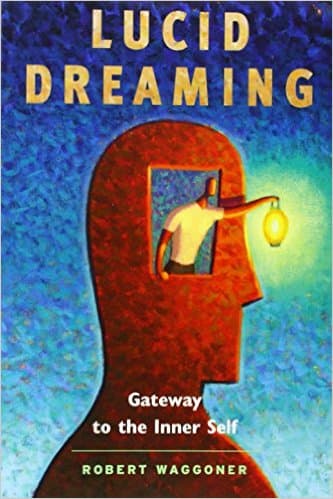
Episode 173 – Lucid Dreaming, Gateways to the inner self w/ Robert Waggoner
A conversation with Robert Waggoner
Robert Waggoner is one of the foremost lucid dreamers on the planet. He is former President of the International Association for the Study of Dreams (IASD). For the past ten years, he has been the co-editor of the online magazine, The Lucid Dreaming Experience, the only ongoing publication devoted specifically to…
Stay with the full conversation.
Episode field notes
Show notes
Robert Waggoner, Author, speaker and Lucid Dreamer, is past President of the International Association for the Study of Dreams (IASD). For the past ten years, he has been the co-editor of the online magazine, The Lucid Dreaming Experience, the only ongoing publication devoted specifically to lucid dreaming. A lucid dreamer since 1975, he has logged more than 1,000 lucid dreams.
Robert frequently speaks on lucid dreaming at national and international dream conferences, workshops and college classrooms, like Sonoma State University, Iowa State University, University of Washington, University of Michigan-Ann Arbor and Evergreen State College.
Robert has been interviewed by CNN, CBS News and ABC News (KABC – Los Angeles) about the practice of lucid dreaming. His comments have appeared in media as diverse as DETAILS ,The Huffington Post, Pittsburgh Post Gazette, Popular Science and Brides magazine. During 2009-2010, he had a regular Iowa Public Radio show,discussing dreams and lucid dreams, and spoke with Utne Reader in 2015.
About Lucid Dreaming: Gateway to the inner-self:
Lucid Dreaming: Gateway to the Inner Self is the account of an extraordinarily talented lucid dreamer who goes beyond the boundaries of both psychology and religion. In the process, he stumbles upon the Inner Self. While lucid (consciously aware) in the dream state and able to act and interact with dream figures, objects, and settings, dream expert Robert Waggoner experienced something transformative and unexpected. He was able to interact consciously with the dream observer — the apparent Inner Self — within the dream. At first, this seemed shocking, even impossible since psychology normally alludes to such theoretical inner aspects as the Subliminal Self, the Center, the Internal Self-Helper in vague and theoretical ways.
Waggoner came to realize, however, that aware interaction with the Inner Self was not only possible but actual and highly inspiring. He concluded that while aware in the dream state, one has both a psychological tool and a platform from which to understand dreaming and the larger picture of man’s psyche as well. Waggoner proposes 5 stages of lucid dreaming and guides readers through them, offering advice for those who have never experienced the lucid dream state and suggestions for how experienced lucid dreamers can advance to a new level. Lucid Dreaming offers exciting insights and vivid illustrations that will intrigue not only avid dream workers but anyone who is interested in consciousness, identity, and the definition of reality.
In this episode we spoke to Robert about the Lucid Dream state – some of its religious and cultural implications, we lead you through the journey of what is involved with becoming lucid within a dream. We get into Robert’s personal journey and how he became one of the foremost lucid-dreamers in the world.
This conversation will inform, entertain and enthrall you.

click to purchase
Editorial Reviews on “Lucid Dreaming”:
In this remarkable book, Robert Waggoner has brought lucid dreaming to a level that is simultaneously higher and deeper than any previous explorer has taken the topic. Both autobiographical and historical, theoretical and practical, psychodynamic and transpersonal, as well as adventurous and cautionary, Lucid Dreaming offers its readers instructions and insights that they will find nowhere else in the literature. They will learn how they can become awake and aware while asleep, and how this talent can change their lives. —Stanley Krippner, Ph.D., Professor of Psychology, Saybrook Graduate School and Research Center, San Francisco, Coauthor of Extraordinary Dreams and How To Work With Them
Lucid Dreaming IS a gateway to the Inner Self. Robert Waggoner s unique storytelling style is compelling reading an impressive exploration of the subject. The work is scholarly, fascinating, and, most of all, practical. —Christine Lemley, Executive Producer, DREAMTIME Series, WFYI/PBS-TV Indianapolis
Robert Waggoner admirably fulfills his aim of bringing lucidity to lucid dreaming. His book is distinguished by its wealth of first-hand experience, and his clear recognition that, instead of seeking to control and manipulate our dreams, we should use the gift of lucidity to navigate a deeper reality and grow into connection with a deeper and wiser self. He offers practical techniques and fascinating travelers tales to encourage us to experiment with interactive and precognitive dreaming and to explore the process of reality creation inside the dream matrix. This is an invitation to high adventure. —Robert Moss, Author of Conscious Dreaming and The Three ONLY Things: Tapping the Power of Dreams, Coincidence, and Imagination
Find Robert and his work Visit lucidadvice.com.
We rely on listener support If you value even one of our shows, help us sustain and scale the show up; Donate.
Read the complete recording
Transcript
Existing transcript, with its original wording and timestamps. Automated transcripts may contain errors.
Hey everyone, welcome back. I'm Michael Sandler, your host on Inspire Nation. If you've ever wanted to wake up in your dreams and use it to change your life, then do we have the lucid dreaming show for you? Today I'll be speaking with Robert Waggoner, the past president of the International Association for the Study of Dreams, co-editor of the online magazine The Lucid Dreaming Experience, and the author of one of my new all-time favorite books, Lucid Dreaming. And that's just what I want to talk with him about today, about understanding the gateway to the inner self for creating a new reality, healing yourself and others, and living the life of your dreams. That plus we'll talk about lucid dreaming with dinosaurs, flying into outer space, the power of Carlos Castaneda, Native American overlays, Jungamon, Huagamon, and Tagamon flying. Got you. And why in the world you do not want to be a conquistador of consciousness. So, welcome to the show, Robert. Are you ready to shine? Let's do it, Michael. Woohoo! So, awesome. I know we're going to have some fun today. Before we dive right into things, when was your first lucid dream? You know, it was when I was a child. Um I was probably 10 or 11 years old, and one night um I found myself in the public library. And as I was looking at the books, all of a sudden I saw this little Tyrannosaurus Rex walk by. So cool. And even as a 10 or 11-year-old, that hit me as strange, and I thought, "Wait a second, dinosaurs are extinct." And then I realized, "Oh, this must be a dream." And for a brief moment I became lucidly aware and knew I was dreaming, but then I just told myself, "Well, I should wake up." And I just woke up immediately. Ah. After that though, if I understand right, you also had some some precognitive pre- precognition precognitive dreaming. Yeah, it was amazing. Um well when I was a young guy, sometimes in a dream a voice would announce that I should pay attention. Or it would explain the dream symbolisms, like this means that 3 years will pass before this occurs. Or sometimes I'd look up in the corner, and it was like the Twilight Zone. There'd be a clock, and the hands would be moving fast forward, and all of a sudden I'd realize, "Oh, this is a precognitive dream." because that was the symbol that I had for precognitive dreams. But occasionally I would dream of stuff, and it was truly profound to see that it happened, you know, either weeks or days or years later. And then from there you had a um if I understand right, a Native American, best way to describe it is an is an overlay on your dream? You know, this was really interesting. Um I think I was probably 12 or 13, and honestly, I don't call it a dream, I call it a vision. Um I it was late one Sunday evening, I was reading a book, and then suddenly I was no longer seeing my room, I was seeing kind of this overlay of a Native American group of people at night in front of a fire by a teepee, the whole thing. And the Robert Waggoner part of me was just totally freaked out because where did this come from? It was like viewing this other life or something. It was as like it was happening in real time, but there's also this little kid Robert Waggoner laying in bed. And so finally, it took me incredible amount of energy to just get my hand up and touch the glass on the window next to the bed, and as soon as I made that touch, uh the visionary scene collapsed. But it was one of those things that prompted me as a small child I'd frequently have dreams of Native Americans. I remember one time a meadowlark landed on my chest, and it sang its song, which I heard in English. And I began to sing the song with it. And when I woke up as a little kid, I was singing the meadowlark song. The it was the wildest experience, but I remember at the time I'd asked my mom, "Are we part Native American?" And my mom would say, "Nope. Nope. Nope. Nope." And and then one time my brother came home from visiting my grandmother and said, "Hey, we're part Native American." And I asked my mom why she said no, and my mom said she grew up in Oklahoma, and in Oklahoma there was such a bias against Native people that to say that you were part Native American could really um uh damage your relationships all across town. And and all But in any case, in any case, having that vision experience was really truly profound, and then later uh some of these other experiences have just simply been amazing. Wow. And you had also at the time you started to hear, just like you heard this voice, you were hearing an inner advisor. Yeah, you know, that was something that I realized as I got into my teenage years. Um that I did have kind of an inner advisor that if I'd ask it serious questions and really meditate on things, that occasionally if I'd listen, this intuitional advisor would come along and respond. And I began to think that all of us have an inner advisor. It's just that we're so busy in this waking world that that we lose touch with it. You know, that it's always there. It's probably behind many of our intuitions. It's probably what Carl Jung called the inner self. But but we're so often so busy, especially as we get older, that we just lose touch. Yeah. So, as you're growing up, one of the books you're introduced to uh Carlos Castaneda, you're introduced to, and and this kind of changes everything, doesn't it? Right. You know, one of my brothers came home from the University of Kansas and and had this book. And I was reading the third book called Journey to Ixtlan. And in this book Carlos Castaneda, who's this UCLA graduate student who's trying to study psychotropic plants like peyote and mescaline and things, he's trying to find a shamanic advisor, and he does, named Don Juan. And in this book Don Juan suggests to him that he find his hands in the dream state and realize he's dreaming. And as I read that, I'm thinking how could you find your hands in the dream state and realize you're dreaming? There really wasn't a technique. And so I I just decided, I was a young disciplined junior in high school, I just thought, "Heck, I'll I'll create my own technique and and find my hands." So, that's what I did. So, let's let's go into this technique because as as I was joking off air, and I'm pretty serious serious about it in that the concept of lucid dreaming, and I know it's real, I have struggled with it. It's something I wanted to get for years, and so this one technique seemed too simple to be true, and I know it's probably one of several of yours I'm going to be trying here uh coming up after this interview. I should take a nap this afternoon and go play. What is it to find your hands? Right. So this is what I did. Every night before I'd go to sleep, I would spend about 5 minutes doing this. And and I know this seems really boring and stupid, but but but stay with me now. So, I'd sit there and I'd look at the palms of my hands while repeating softly in my mind, "Tonight in my dreams I'll see my hands and realize I'm dreaming." "Tonight in my dreams I'll see my hands and realize I'm dreaming." "Tonight in my dreams I'll see my hands and realize I'm dreaming." And I would just say that over and over. You know, my my eyes might cross, you know, thoughts would go through my head, but I would just keep looking and saying, "Tonight in my dreams I'll see my hands and realize I'm dreaming." So, what happened is when I'd wake up in the middle of the night, I'd ask myself, "Did I see my hands? Did I see my hands?" And so this went on for three nights doing this process. On the third night, I'm walking through my high school hallway when all of a sudden, just like they're spring-loaded, my hands popped right in front of my face, and I thought, "Oh, my hands. This is a dream." And it was the most incredible sensation to realize that these football player guys over here, they're dream figures. And this wall that feels so cool and knobby and looks so detailed, it's really composed of dream stuff. And so I I wandered through the hallway a little bit knowing that it's a dream, and then I stepped out by the administration building, and I was looking at the detail of the brick in this lucid dream. And suddenly the dream got shaky, and I remember that Don Juan, the shaman, had told Carlos Castaneda not to focus on anything, not to stare fixedly at things, because that would collapse the dream. So, he said instead, "Look back at your hands to renew the power of dreaming." So, I looked back at my hands, and now something incredible happened. I became a dot of light that was floating in the palm prints of my hands as if they were like the Grand Canyon. And here I am, this dot of light floating through the palm prints of my hands, knowing that this is all occurring in the dream state. After a while, bam, I get back to normal size. I remember, "Oh, I wanted to go flying." I start flying, and I get so excited I wake up. But that was my very first lucid dream. Now Now Now the one thing that I do want to say, if you're going to do this technique of looking at your hands, it's something you have to do every night before you go to sleep. And when you wake up, remind yourself that you're trying to see your hands and realize you're dreaming. And also during the day you might want to look at your hands for 30 seconds when no one's watching and do that kind of stuff. But I remember I I was out in Los Angeles giving a talk, and a woman told me that that she was doing this practice each night before she went to sleep and her husband came to bed and said, "What what are you doing?" And she said, "Oh, I'm looking at my hands and telling myself tonight my dreams will see my hands and realize I'm dreaming." She said the next morning they woke up and in his dream his hands had popped in front of his face and he realized, "Hey, this is a dream." And she was so pissed off cuz she'd been trying for a week and and hadn't had success yet. Then then another guy from Los Angeles told me that that he had a lot of success with this technique and one time his hands popped in front of his face and he didn't get it. And then the hands started hitting him in the face until he realized, "Oh, this is a dream." And so sometimes that that inner property will push you forward. Very very cool. And and in a few minutes I want to go through your story a little bit more. I want to I want to talk about a few other techniques if if that's one's not doing it for us. Um Carlos Castaneda's talking with Don Juan about this about not focusing too much on one particular thing. Was there also some discussion about modulating your emotions? Well, you know, that I think that's something that every lucid dreamer learns quite quickly that if you get too excited Mhm. you'll pop out of the lucid dream. And so one of the things that often happens when you become lucidly aware is you have this kind of uh infusion of energy and you can't get too carried away with it, you know, too dramatic, too wild cuz if you get too excited you'll pop out or if you get too frightened you'll pop out. But anyway, there there's kind of like an inner circuit breaker. If you go too far in either direction of energy you're going to pop out of that lucid dream. So you got to modulate those emotions. It it almost sounds like you need to be in a uh a awakening walking dreaming meditative state. You know, what Stephen LaBerge who was kind of a researcher who pioneered the scientific research on lucid dreaming he he kind of he called it a state of meta-awareness that you were aware of being aware. And it's very true. You you have to stay consistently aware oh, this is a dream. Because I'll tell you the other thing that happens to people is they become lucidly aware, they start exploring the dream and then they get captivated by something they see. You know, they might be watching a guy who's playing a flute and a snake is coming out of a basket or something like that. And if you if you start watching that and forget that it's a dream, then all of a sudden when that snake starts coming towards you, you'll be afraid and run away. You won't realize that it's a dream snake. You'll forgotten that you're lucidly aware. So you've got to stay mindfully aware as soon as you become lucidly aware. And that that makes sense. Found this fascinating something you said about this. You said, "Our senses provide little distinction between physical reality and the real seeming illusion of the lucid dream. Only the mind distinguishes between the two realities." What do you mean by that? So so think of your normal dreams each night every one of us spend about two hours, two and a half hours in the dream state. We have five or six dreams every night. By the time you're 11 years old you've spent one entire year in the dream state. By the time you're 22 you've spent two years in the dream state. So you can see that in most of our dreams we just accept whatever's happening. We just go along with it. We see Godzilla, we run away, we create a story, "Oh, Godzilla's come here because he's trying to get away from that Fukushima disaster." You know, we we just go with it. So so it's on our senses tell us it's all real. Godzilla's real, we've got to run. But it's our mind if we start to begin to train our mind to be more mindful, to be more critically aware, to be more observant, then we'll start to distinguish, "Wait a second, this is a dream. I'm dreaming this." And we'll learn and teach ourselves to become lucidly aware. It's interesting that if you are becoming more mindful and more present in your dream, I'm betting you're actually that awareness back to this reality as well. Exactly. And and you know, that's what some of the Buddhist teachers like Tenzin Wangyal Rinpoche state that if you're more mindful in the waking state you'll be more mindful in the dream state. And so there's there's cross advantages to this practice. Be more mindful during the waking state and you'll definitely increase your likelihood of becoming lucidly aware. What what does it mean? Thank you. What does it mean as you dream so shall you be? You know, what happened to me one time I was asking myself as a teenager, "Who am I? Who am I?" And I went deeper with that and at first my inner advisor told me everything and nothing. And so I thought, "Okay, you know, in one sense I have the potential to be most anything and but on the other hand, you know, 100 years from now I'm sure I'll have passed away and within 1,000 years be totally forgotten. So I so I am kind of nothing." But but as I went deeper with this my larger inner advisor told me tells me that that you are what you let yourself become. And I started to realize that if I'm going to be my totally full self, it's really allowing myself to be. So that means pushing through fears, pushing through limiting beliefs, pushing through narrow ideas. And as you begin to do that you begin to connect with the larger possibility of being your total self. And that's something you have to do in the dream state as well as the waking state because you're faced with a lot of lessons and fears I'm going to assume. Exactly. And and that's that's one of the beautiful things for people who pay attention to their dreams. Often times they realize in the dream state they're being presented with shadow issues, with ignored, denied, repressed aspects of the self. And and when those start to recur then then you begin to get some insight and realize that oh, I have an issue in this area that I'm not paying attention to. What you become more mindful. And and so just the process of paying attention to your dreams is very helpful, but it becomes accelerated when you become lucidly aware. Because when you become lucidly aware then you can begin to interact with dream figures. If you have a shadow image behind you, you can put it in front of you and ask it, "Hey, what do you represent? Or who are you?" And often times these dream figures will tell you exactly what they represent and exactly who they are. And and sometimes it's your your mind melts when you learn what these dream images and dream scenarios are really all about. Can you then go, let's say your shadow figure appears, it tells you of a fear you have, it tells you of a challenge you have. Can you then work in the dream to do some rewiring? It you can exactly. And I'll tell you one profound lucid dream that really helped me in writing my first book Lucid Dreaming Gateway to the Inner Self. So one night I was asleep, I found myself in a um southern farmhouse. And there's a farm wife cooking at the stove and she puts beans on my plate and I look around and I think, "Wait a second, I don't live in the south, I don't live on a farm." And then I realize, "Oh, this is a dream." And at that moment I knew someone was behind me. And Carl Jung often said that the shadow would take the shadow's position behind you. Cuz think of all those dreams where you've been chased by something and you never see what it is, you just know it's behind you. So I turn around and I see and it's it's an attractive young black woman. I pick her up, put her right in front of me and I ask her that open-ended question, "Who are you? Who are you?" And she looks at me and she says, "I am a discarded aspect of yourself." So then as a lucid dreamer I have to figure out what what what do you do? How do you respond to a discarded aspect of yourself? And I began to think if it's discarded it probably just wants to be accepted. Mhm. And so from my heart I began to just send it total complete loving acceptance and then the most incredible thing happened. It began to shrink down and it became colored light. Mhm. And this colored light went right into my torso. And it was so energetic that when I woke up I I knew energetically I was different. And and to make this story short, a week later I realized every day that week I'd been thinking I should try to write that book on lucid dreaming which was that project I discarded two years earlier when I couldn't do it. And suddenly I had re- re-integrated with that energy of that project and I went ahead and wrote this first book Lucid Dreaming Gateway to the Inner Self. Woohoo! What What exactly is the shadow self? Now that's not a simple question, I know. Yeah, you know, it What happens in our life is is that often because of maybe prejudices or beliefs we might have or or just out of a out of a defense mechanism out of a sense of self-preservation what we ignore things, we deny things, we repress things. But that energy goes somewhere. That energy goes somewhere in in the Union ideal. And and he said if that energy became sufficient enough often times it would show up in our dreams as what he called the shadow. And so it might be the thing behind us that's chasing us. And what and we'll never turn around and look at it because we're just afraid of it. And that's how we are in waking life too. Oh, we never want to look at that family issue because you know, let's just put some more dirt on top of it and forget about it. Or we never want to And and people go on for decades having shadow issues that they never look at. It it's truly amazing. You know Michael I I was giving the talk at a university and there was a class on dreams and they didn't invited me to come speak on lucid dreaming. And so a young a young person raised her hand and said well how can you lucid dream if you never recall any dreams at all? And I I told him I go look there's probably three reasons that a person doesn't dream or doesn't recall dreams. Uh first they've just gotten out of the practice as a culture we don't really investigate dreaming we just kind of ignore it. And so so they just have a busy life they just stopped recalling. The second issue might be sometimes people might be taking a medication and if they look in the side effects they'll see that it's it harms dream recall. But the third issue is sometimes we have traumatic incidents in our life and we tell ourselves to stop dreaming. You know might be subconsciously we tell ourselves to to stop dreaming but on some level we shut down our dream recall. And so I told this to that young man I said if you want to have dreams again then just tell your larger awareness before you go to sleep tonight hey larger awareness I'm ready to recall my dreams. The next night he had a dream about a family incident that was so powerful when he was a little kid. He was like 6 years old when this huge family incident occurred. He dreamt it. He called up his mom the next morning and he said mom I dreamt of that incident that occurred when I was 6 years old and the mom freaked out. She said oh my god last night I dreamt about it too. And this young man he wrote me 6 months later and he said after working through that remembrance and talking to his mom he said it was the first time they'd talked about it in 13 years. He he said all of a sudden his dream life came back. And he said it was beautiful he's having lucid dreams he was having amazing dreams he was helping his friends with dream symbolism and stuff. He said he was so amazed that his dream life could come back. But again sometimes because of traumatic life events we just keep ourselves from this incredible fountain of information. Thank you so much for sharing that leads me into a couple personal questions we'll call them me search questions. The first one is I journal all my dreams. I'll get up in the middle of night I'll write down what I can. However what typically happens is I wake from the dream I go wow what an amazing dream. I don't wait in bed I bolt and half three quarters or sometimes all of the dream has vaporized in the few seconds it gets me to get to my keyboard which is it's out of the the bedroom but not far away it's gone. It's amazing. You know what what I always tell people is is the first thing you got to think about when you wake up is what was I just dreaming. And don't move don't anything don't jump out of bed to get it to the keyboard. First commit it to your memory and then jump out of bed because as soon as you get the physical body moving it's like it just evaporates it just disappears. And so for myself I just keep a notepad right by my bed every night and I just reach over really quick with my pen and start to make some notes and then in the morning I can write out the whole dream. Other people tell me that they'll use a voice recorder and and record theirs but that first five or six seconds you got to stop before you do anything and what was that dream? Oh yeah this happened this happened this happened and then you can get up. But I agree with you you got to snag it quick otherwise that fish is gone. So so I've got to do the reverse. I'm aware and so that I'm going to write it down but first anchor it anchor anchor anchor. Exactly. The second we'll dive into my my shadow self which I have a lot more control of we have we have an amazing show and I and I say that not to toot my horn but when we started becoming really successful I had had ever since I married my wife maybe before that screaming dreams where I'd wake up screaming and they jumped to a whole different level with a shadowy thing trying to murder me kill me dismember me the works and and I guess when I started getting successful they really started dancing the Macarena. I I journal a lot now before I go to sleep which helps do some reprogramming for my night sleep but it sounds like from what you're saying in and this year we're starting to get even more successful and they're starting to come back. I have some shadow work to do don't I? You know it sounds like you might I mean that if it's if it's recurring and and all but sometimes you can see the beauty of it. Once you resolve it the great thing is all that energy connected to that issue comes into you and then you can use it for personal fulfillment creativity the works. But the first thing is accepting that it's happening and then starting to dig into it a little. My wife Jessica she says well Michael you just need to turn around and face it. And I guess that's where lucid dreaming comes in. Exactly because the beautiful thing when you realize it's a dream hopefully at that point you can turn around and face things. So hopefully at that point you realize that okay this is a dream symbol I'm probably interacting with some projected aspect of myself and finally I can come to terms with it. Very cool. I want to get into more techniques but I'm going to stay on me for one more question cuz there's a repeated dream that keeps happening or repeated modality. I I have had the flying dreams those are cool but more than the flying dreams I have dreams about water repeatedly and quite frequently being able to breathe and fly underwater. Wow. You know one thing that this reminds me that I should mention is that lucid dreaming has levels. Sometimes we're semi-lucid you know we might be having a dream and Uncle Harry is there and we realize wait a second Uncle Harry passed away 5 years ago. And and it we we know that it's dreamy that Uncle Harry shouldn't be there but we still you know give him some pie and coffee and the whole thing or we might be case I'm underwater going wow I'm able to breathe underwater. This seems interesting. This seems dreamy and sometimes you'll have the people they'll say wow this seems like a lucid dream but they'll never make that final step to to full lucidity. So so so fine dreams swimming underwater breathing underwater all those things kind of point to how close you're getting to that kind of breakthrough moment when it occurs to you wait a second this this has to be a dream. Very cool. So let's talk about a couple other techniques then I want to talk about how we how we meddle in the dream world with without becoming conquistadors. Um So what is the mild technique? You know this is a technique that Stephen LaBerge came up with. He he's a researcher on lucid dreams and he began to see that memory was very important in lucid dreaming and by that he meant the memory to become lucidly aware was very important. So mild stands for mnemonic induction of lucid dreaming and mnemonic are those little memory techniques like in 1492 Columbus sailed the ocean blue. Those little techniques we use to help ourselves become remember something. So his mild technique has four steps and I just remember it by M means wake up and memorize the dream you just had. Now once you've memorized it I insert yourself becoming lucidly aware some place in that remembered dream. Now see yourself lucid changing the dream space and then tell yourself the next time I'm dreaming I'll realize I'm dreaming and become lucidly aware. Okay so memorize the dream that you just had insert yourself becoming lucid see yourself lucidly acting falling back to sleep and then tell yourself as you're falling back to sleep next time I'm dreaming I'll realize I'm dreaming and become lucidly aware. And so by you this by using this mild technique uh it doubled the amount of lucid dreaming lucid dreams I was having. With my hand technique I was having about two to four lucid dreams a month. With this mild technique I began to have about four to eight lucid dreams a month. Wow. And then um and and I'm guessing it's it's a lot less intimidating do it once or twice you'll remember it. Right you know actually the first time I heard about this technique I wrote out on a on a note card that I put by my bedside table what the technique was. Memorize the dream insert myself becoming lucid see myself lucidly acting fall asleep with the suggestion in my next lucid dream I'll realize I'm dreaming and become lucidly aware. And and so I kept it by my bedside to look at before I'd go to sleep so in the middle of the night I could remember what the technique was. You know because when it's 3:30 in the morning and you've just woken up and remembered a dream and you start to think what was that mild technique? Oh you you know you you have to narrow it down really quickly. Very cool. And then what is the nap to lucidity tree technique? You know the nap to lucidity technique is something that lucid dreamers spontaneously discovered that if they woke up about 2 hours before their normal waking time Mhm. stayed awake for maybe 15 or 30 minutes reading about lucid dreaming, thinking about lucid dreaming, and then fall back asleep with the intent to become lucid, that their chances of becoming lucid were now five to 10 times better. And so so nap to lucidity or wake back to bed technique, it's one of those great things you can do, especially on a weekend or a holiday or something when you got some free time and you can play around with the dream state. Very cool. Are there some some things that we can do? I I know you talk about changes in the weather, full moons, visiting sacred sites. What are some ways we can do to increase the odds or or drive our dream power lucid dream power to the max? Well, there's there are some things that you can play around with. For some people, taking a B vitamin before they go to sleep because the B vitamin complex is is connected with memory processes and all that kind of thing. Sometimes just taking a B vitamin helps some people have more vivid dreams and remember their dreams more more accurately. And so sometimes something like that will help. The other thing is that some people might drink an extra glass of water before they go to sleep so they have to wake up at 3:00 or 4:00 in the morning to use the loo. And and when they come back to bed, they remind themselves, "Oh, in my next dream, I want to realize I'm dreaming." But by visualizing it, by seeing a lucid dream successfully written already in your lucid dream journal, you know, if you have that kind of positive expectation, if you can kind of ramp up those emotions a little bit, some of these little things are will be just enough to get you across the finish line. Cool. So let's let's dive into more of where we can go with this. And and you'd say we're in control of our dream to a small extent, but no sailor controls the sea. What do you mean by this? Yeah, so what I'm trying to get across is that is that lucid dreaming does not mean total, complete, utter control. It just doesn't mean that. You can influence things, you can manipulate things, but let's say you become lucidly aware and you fly through the wall. And then on the other side of the wall is a giant castle and a white horse and a damsel in distress waving from the tower. Who created that? You didn't create it, you just flew through the wall and there it was. So you realize that actually in lucid dreaming, you're kind of partnering with your subconscious mind. That you're influencing things, that's true, but really you're in a co-relationship with your subconscious mind. And so it pays to realize that and pay attention to it. So as we're doing that, as we're in this co-creation with the subconscious mind, I guess what is the subconscious mind trying to do for us? You know, sometimes it is trying to do something. So like in that example of the woman behind me, this this resulted in one of my important rules for lucid dreamers. Always go to the area of the most So I became lucid in that farmhouse kitchen, but I felt energy behind me and so that's where I went. I didn't ignore it, didn't run away because when I look around and see this young black woman and ask her, "Who are you?" and I learn she's the discarded aspect of myself and I reintegrate that energy, then you can see that, "Oh, wait a second, that's subconscious, that larger inner self, that larger awareness is trying to help you become more your true self, more your creative and fulfilled self." And so that's why I say, "If there's a lot of energy when you first become lucidly aware, go to the energy. If it's a wedding, go to it. If it's a funeral, go over there, see what's going on." But you've got to follow the energy because you're actually relating to that subconscious mind. Isn't that a rule for life in this waking world as well? Exactly. You know, that what we call that in the lucid dreaming circle, we call that living lucidly. You know, whenever I'm giving a talk, if there's people who have their arms folded and look like, you know, that they want to beat me up after my talk, at the break, those are the first people I go to those are the first people I go to talk to because because I you know, I want to hear, you know, what they're thinking and and a lot of times they just want to tell me their experience and bring up a question or something. And by the end of it, we'll end up being great friends. So so I've I've learned instead of ignoring those people and running away from people who seem to be disagreeing with me or giving me that kind of body language, I go to them. I make it a lucid dream. If that's where the energy is, that's where I'm going. Let's check it out. Let's find out what's going on. I love it. What's another key rule? You know, another key rule in lucid dreams is that you always want to remind yourself that this is a dream. You know, every 30 seconds or so, you got to remind yourself this is a dream. I'm dreaming this. This is a dream, especially as a beginner because you're kind of walking this tightrope of awareness. And if you don't keep reminding yourself that, "Hey, this is a lucid dream," then you'll fall off. You'll return to regular dreaming. And so even in the waking state, oftentimes I'll ask myself, "Why is this being shown to me? Why am I seeing this? Why am I feeling this way about this energy over here?" And when I do that, it begins to make all of this dreamlike because in in dream yoga, in the Buddhist practice of dream yoga, the first lessons they try to teach these young um students in the dream yoga monastery is all this a dream. Mhm. And what they're trying to say is not is that all of this isn't an illusion or all of this isn't fantasy or unimportant. What they're trying to say is all of this is a mental creation. You're connected to what you're experiencing. If you want to think about it in one way, when you walk out of your room today into the outer world and look around, think of it as a giant Rorschach test. Every experience is a giant Rorschach test. You know, you project onto it what it means. And so when you begin to realize that, then you begin to relate to people a little bit differently, a little bit more openly, and you realize that you've got to stop judging, you've got to stop projecting, and you've got to start opening up to what's really happening. I love it. And so much in your book seems to be rules that apply just reading your book and and I guess with the rabbit holes that I've been down in life, I have a hard time in some sense. You don't need to get the straightjacket for me saying that this world is any less real. I'll be here and I'll be going, "Do I want to interview the XYZ guest?" And a bird will fly into the window. I'm like, "Okay, thank you." Exactly. Well, when I give uh workshops, you know, when I go around the world give workshops, one thing that I have people do is I'll have them have a waking lucid dream. And sometimes it'll go on for about 15 minutes and sometimes it's really profound what these people experience during a waking lucid dream. But but I'll tell them that when they leave the room for the next 15 minutes, they'll be involved in a waking lucid dream, which will connect to a question that had bubbled up in their mind. And some of them just have profound experiences. But again, that outer reality will reflect back to us what we need to know, what we need to get, but we have to open up to it. Is is there an easy way to learn that technique to do lucid dreaming while we're awake? You know, it's it's really part of it's about being mindful. Mhm. Just just being mindful. But the technique is basically I ask people to get quiet, to get into a meditative state, and then let bubble up into their consciousness a question that inside of them that wants an answer. And so when that question comes up and they finally grasp it, then I ask them to write it down on a note note card so they don't forget. Mhm. Then in my workshops, I'll have them all line up. I'll stand by the door. I'll hit a gong or a Tibetan bowl as they walk through the door and tell them that they're now entering a lucid dream. And for the next 15 minutes, they'll get symbolic responses to that question. It'll just come to them. It might be a little kid walking by with a T-shirt that says, "The answer is always yes." Or or or they might walk outside and suddenly see something that at first glance seems kind of crazy, like like a tree that a tree trunk that's kind of melting into the earth, but relative to their question, that's a profound moment. And and so I I also will tell them oftentimes to get out their iPhone or what their cell phone and take a photo. And then be led by your heart and just go to wherever your heart is being called to. And when people come back 15 minutes later, the room is noticeably different. People just sit there for a while. I have them journal about what they experienced, but some people get profound responses. But again, dream, lucid dream, waking experience. What exactly is the fundamental difference? We can see that they're different dimensionalities, that they have different rules, but on an experiential level, they're very much the same. Well, it it's something I was talking with you, joking with you, I guess, before the show about the about the Ashuar, some people down in in the Brazilian and and Ecuadorian rainforest who teach their their children what do you they ask them, "What are your dreams?" because they believe the dream world is more real than the waking world. And And it is, at the end of the day, isn't it all perception? It's all in the mind. It's all in the mind. And that's what you learn, that that experience is mind. And And that That's one of the first teachings of wonderful dream yoga master in the Tibetan Buddhist tradition, Dawa Gyaltsen. His His five lessons, the first lesson is vision experience is mind. But you have to realize that it's not just the ego mind. Mhm. What happens in lucid dreaming is you realize that that subconscious, that larger awareness mind, is also helping to co-create the experience. And that's why in my book I try to get people to get in touch with that larger awareness. How do we start to do that? So this happened I taught myself how to lucid dream in 1975. Mhm. In 1985, I was part of a lucid dreaming group where every month we had a goal to achieve, and one month the goal was find out what the dream figures in your dream represent. And so I became lucidly aware, I followed a woman into an office, I went up to a gentleman, and I said, "Excuse me, what do you represent?" And the strange thing was, instead of him responding, a voice boomed out a response from above him. Mhm. And it wasn't a total response, and so I questioned this invisible voice, and then it boomed out the total response, which I understood, and I woke up. But at that moment, I realized, "Wait a second, is there an awareness behind the dream?" You know, we're we're kind of trained as human beings to interact with other humans and animals and all that kind of stuff, other objects. Mhm. But what if there's an awareness behind all of this that's non-visible? So in my lucid dreams, I began to do something. Instead of interacting with dream figures, I would just shout out questions to my larger awareness or my subconscious mind. For example, I might shout out, "Hey dream, show me something important for me to see." And sometimes the entire lucid dream would change, and now I'd be looking at something important. Or sometimes some little thing might appear, and it was something important. But I began to realize that you could interact with this larger awareness, and that was a profound discovery, because you can take that rabbit hole super deep. Any challenge, pretty much any challenge in life, you can get learnings on. You know, so um I I do online workshops. I had an university student from Australia who came to one of my 30-day online workshops. She wanted to become an electron and learn the experience of what it means to be an electron. And And I said, "Really, you want to do this?" And I And And she goes, "Yeah." It took her four or five lucid dreams, because I I kept teaching her, "You have to let go of your assumptions, your preconceptions, your prejudicial mind, your scientific learning. You've got to let that go and let the experience, the conceptual experience, happen." But she would become lucidly aware, she would call out, "Now let me experience what an electron experiences." On the fourth time, it finally happened profoundly. And when she came out of the experience, she wrote it up for the workshop, but she told me the thing that shocked her the most was the joy that an electron feels as it's bouncing off of positive negatives, vectoring here and there. She said She said the joy was utterly amazing. So think of that. If you look around your room now, there's gazillion electrons bouncing around Cardi B. And And it would kind of seem to suggest that literally the entire human experience might float on a vibrating field of joy. But But I'll give I'll give you a better one that that that is probably easier for for listeners to do. Mhm. So So I was giving a talk in London, and I told the group, I go, "Look, you can have conceptual experiences that are utterly powerful, but don't try to find God when you become lucidly aware, because you'll get so excited, you'll wake up. So I said, "Instead, if you want to do something, ask to experience a quality of the divine. For example, become lucidly aware and just shout out, 'Hey dream, let me experience unconditional love.'" And then see what happens. Six months later, I came back to London to give another talk. There was a woman in the audience, and she told everyone that she had heard me talk previously about "Hey, let me experience unconditional love." She did that in a lucid dream. She stopped, shouted it out. She said the resulting experience was utterly so profound that when she woke up, she said she cried tears of joy for 15 minutes. Her roommate even had to knock on the door to see if she was going to work that night. Wow. Because the woman said it was so profound to experience unconditional love, to have a conceptual experience that powerful in a lucid dream. So So again, when you begin to interact with that larger awareness, it just opens up this whole new field of knowledge and and inner knowing. Talking about dream yoga, do you ever go into your dreams and meditate within your dream? Yes, I have. It's uh it's utterly one of the most profound things you can do. What When the first time I did it, just just blew my mind away. What What Within a minute, I was having a totally transcendent, profound experience. And the the interesting thing about this, and and why these techniques are important, that there's in the field of neurophysiology or neuropsychology, there's a term that uh that neurons that fire together wire together. So So as you do practices, your mind becomes more accepting of them, the pathways are tighter or stronger or more fulfilled. But a friend of mine, Clare Johnson, she told me that she began meditating in almost all of her lucid dreams. And she said, "After a while, what used to take her 25 minutes in waking meditation, now after having done it so often in lucid dreams, now within 5 minutes she was able to get to that same level of depth." It was just that by practicing in the lucid dream state, she had achieved it. But also I'd say that myself interacting with the larger awareness by asking it questions, by asking to be shown things, sometimes I'll have profound experiences of intuitional knowledge, and it's just like, "Where did that come from?" But I know it's because I've been doing this in my lucid dreams. And it begets the question, how much of your How much of your books do you write through your lucid dreaming process? You know, it was interesting. When When I was writing this first book, um it I saw I got stuck, you know, I I got in about 80, 90 pages, and I got stuck. And then I had a dream that showed me the end of the book was finished, and but the middle was still a total mess. And so So I woke up and I thought, "What Why am I doing this in sequential order? I I can stop here at chapter five and just go to chapter 13 and start writing it." And so I started writing chapter 13, finished the book, and then I knew what I wanted the middle to be about. But oftentimes my dreaming self would give me some of the most incredible advice uh on how to push through issues, to push forward, because oftentimes it would show me that my sequential thinking was limited. That my creative thinking wasn't thinking like that, and it would show me how to get out of get out of messes. Woohoo. Exactly. From there, a minute ago you said what fires together wires together. I think of people like Rick Hanson when I hear that. Right. And And what Going from there, let's talk about healing for a brief minute, and manipulating our dream body, and what that can mean on this plane. Right. You know, my good friend Ed Kellogg, he has a PhD in biochemistry from Duke University. Back in the mid-'80s, he was a wonderful lucid dreamer, and he began to explore this idea, could you physically heal your body in a lucid dream? Mhm. And so this became very important for him. One time he was eating a shish kebab, and he was so enthusiastic that he actually punctured a tonsil, which became inflamed and and and all. And he said he had red stripes going down the side of his face after a few days. He was in total pain. So one night he went to sleep, either trying to have an OBE or a lucid dream. He became lucidly aware, and he announced he intended for healing experience to occur in the lucid dream. When he woke up, I believe he said 95% of the pain was gone, or within 3 hours 95% of the pain was gone. The red stripes went away from his throat, the whole thing. And after that, he began to encourage other people, when they had issues that were persistent, to become lucidly aware, and in a lucid dream, maybe create a ball of healing light, and put it over the area that needed healing, intended for it to be healing to be healed. And people began to report extraordinary stories of physical healing. Beautiful. Beautiful. What's another key reason we want to explore lucid dreaming? You know, lucid dreaming puts us in touch with our larger awareness. And if we follow it to our its deepest level, it'll show us that the dream experience and the lucid dreaming experience are co-creations of the egoic and inner self working together. And then it'll also, if we allow lucid dreaming, it'll show us that even this waking experience is a co-creation of multiple millions of people and others creating it, but fundamentally is a creation of their ego and inner larger awareness. And if you take it even further, you'll begin to realize that your beliefs, your expectations, your focus, your intent are all involved in the creation. And so if you don't like the nature of your reality, you've got to stop and think, wait a second, I've got to change my beliefs, my expectations, my focus. For example, in waking life, I had hay fever. Mhm. And it would always show up at the end of August, beginning of September, and it would I'd be miserable for 3 or 4 weeks because I just refused to take any drugs. But then I began to think, well, wait a second, if this is a co-created experience, I'm going to stop it. So every time I begin to think that, oh no, August is coming, my hay fever is going to start, I tell myself, nope, I'm pulling out that belief and I'm inserting the belief that I'll breathe easily. I'm not affected by outside agents. I lived for 40 years without any of this trouble. And I can do it easily. But the first year, 70% of the symptoms were gone. The second year, 95% of the symptoms were gone. By changing my mind, I changed my outer experience. People can say, oh no, it's physical, it's caused by this, it's this and this. When you get When you get it down to the level of experience, it goes through that mental filter. The mental filter will filter out what you don't want to experience, but will allow in what you believe and what you expect to happen. So you got to play with that filter. You got to play with your mind and change your beliefs. But it What you fundamentally learn as lucid dreamer is you exist in a mental creation, and that is a profound observation. Woohoo! Exactly. One of the key words you just mentioned there, and then then we'll start diving into a brief wrap-up in and a little meditation is you said intent, belief and intent. And you talk about early in the book flying, I'm Superman, I'm flying. And you talk about how you don't try to think or force your way to A to B, it has to do with intention and already being there. What does that mean? Because I think that's that's a rule set for this reality, too. Right. So so imagine you become lucidly aware and you look off and a mile away, there's a giant castle with with flags fluttering on the top. If you were going to fly there, you know, you might try to swim, but I mean it literally might take you 5 or 10 minutes of swimming through the air to get there. And so what I realized is you could use the power of intent. And so standing there, you see the exact place where you want to be. Oh, I want to be right by that flag, right at that tower right there. You intend yourself there, you imagine yourself there, and then you let go. And suddenly, with incredible ease, you'll fly there just like Superman. So that's how it is in waking life as well. Often times people, they know where they want to get to, but they're thinking of all the obstacles. Oh, this guy's in my way, this guy's in my way. Oh, I got to wait till this happens and that happens before it can all happen. That is wrong thinking. You're killing your intent by focusing on the obstacles. Just focus on the bloody intent. See yourself there. Put your energy there where you want to be, and naturally, in this co-created reality we exist in, naturally it'll occur. Focus on the intent. That's how you get there. That's how you fly there most easily. That is huge. Thank you so much. So was talking earlier briefly about kids or the Ashwar, and Jessica, my wife, she's the producer. She's actually starting up a new show, Inspire Nation Babies, on conscious conception and on conscience parenting. And she always likes me to ask a question for parents and their kids. So what do we want to teach or or or share with parents to either help their kids with dreaming, or they may be phenomenal dreamers, but to help them cultivate this world? Right. So so if you're a mother or a father and it's it's 3:00 in the morning and your little 5-year-old is trying to call climb in climb into your bed saying, Mom, I dreamt of that witch again, and all, you know, here's what you do. In the morning, you say, look, now you saw that mean that that witch again. Is that true? And they go, yeah, it scared me. Say, well, it might just be lonely. It might just want a friend. So the next time you see it, realize that you only see it when you're dreaming, so there's nothing to be afraid of, and ask it, does it want to be a friend? Does it want to play with you? And in that way, maybe you can learn what's bothering it and have it become your friend. And often times when parents do that, suddenly, not only do their kids become lucid dreamers, but they begin to make friends with these inner issues that are floating around in their little minds. Very very very cool. Thank you so much, Robert. I I want to throw on my coach's hat, or actually, I want to give my coach's hat to you now. I don't want people leaving here today just thinking lucid dreaming's cool, yeah, yeah, yeah. What's one homework assignment you would be give people to begin working on today? Okay. If I had a homework assignment, it would be tonight, can you remember three dreams and write them in your dream journal. So tonight, before you go to sleep, get that pen out there, get that dream journal, and your assignment is wake up in the morning or wake up in the middle of the night and write down three dreams. Fantastic. So a question we like to ask before the end is what personally brings you the greatest happiness or what I call the woohoo factor? You know, I Today, and this this is just one of these incredible strange things, today is my 33rd anniversary with my wife, Wendy. And I have to say that every day, I am just so happy that I married my wife. I was one of those guys who was totally against marriage, was totally resistant to it, but you know, with 33 33 years of hindsight, it was my absolute best decision. And when I see my wife, I go, woo, this is great because she just makes it happen. A huge I'm like speechless here that you took the time on this day. A huge congratulations. Thank you for honoring on us on this day. Are you doing something really fun tonight? Yep, yep. We got some special stuff special stuff planned. Excellent. So where can people go to find out more and to find your amazing book, Lucid Dreaming? Yeah, so of course they can find my amazing book, Lucid Dreaming, Gateway to the Inner Self at all the major bookstores, online at Amazon and Barnes & Noble and places like that. And also they can see more about what I'm up to and all that at my website, lucidadvice.com, or they can also check out the magazine that I co-edited called The Lucid Dreaming Experience at dreaminglucid.com. Fantastic. And if you didn't catch dreaminglucid.com, come on over to inspire nationshow.com and we'll get you over to Robert as well. Uh before we dive into a really brief meditation, any last words of wisdom you want to share with people today? You know, I just want them to focus on dreams have value. Dreams help us create the next day experience. When we begin to see that, then we'll begin to value dreaming and put them in their appropriate place. So value dreams, honor your dreams, and see where they take you. Woohoo! Just close your eyes, or if you're driving, just take a few deep breaths to kind of center yourself. Feel yourself in this here and now. And so now I want you just to see yourself on a trail. You're walking along a trail. Look down at your feet. You can see the sand or the dirt. You can see the trail that you're walking along. You come to a gate. And the gate is open. So walk in. And now as you walk further on the trail, you see up at the ridge, there's someone waiting for you. A companion. Someone who cares about you. So walk along. Walk up to your companion. Greet your companion. And know that your companion will take you to some place important where you're going to learn something important for you. So as you begin to go, you might be going deeper into a forest or something like that, but you're with your companion, everything is fine. And then you come to a cave. And in that cave, you know there's something waiting for you. Something good. Something that's going to help you achieve your life purpose. Something that's going to help you bring meaning into your life. And so I want you to take a minute and just step into the cave to find something. It might be an object, it might be a book, it might be a word, but there's going to be something in there that you can find and bring out that'll help you with your creativity, fulfillment, or achievement in life. So, as you come out of the cave, look down at your hands, what you might be holding, or what you might be seeing, or something that might be there. And think about it. Think what meaning this might have for you in your life right now. It might be a symbol. It might be something powerful. But whatever it is, remember it. And now with your companion, I want you to head back on the trail, back through the forest, back through the setting, back to the ridge. Thank your companion. Say goodbye to him or her. And head back to the gate, along the trail, back to the gate. Close the gate behind you. Open your eyes. And whatever it was that you experienced in that cave, whatever you saw or felt or brought forth from it, make some notes in a journal. What did you experience? What meaning does that have for you? See how it connects with your life right now. So, that's a guided meditation for you, just a really quick one. And um I hope you give it a try sometime. Uh the lucid dreaming or the or the my hands are still tingling from carrying the object. Uh the You know, often times the cave of knowledge is a profound a profound place. And sometimes you'll find some of your most incredibly powerful lucid dreams are ones that occur when you step into a cave, because they contain and hold ancient wisdom that uh connects us with our higher self. Robert, I cannot thank you enough. This has been so phenomenal. Um I'm going to dive into this. I'm going to report back to you in the future. We would love to have you back to talk about dream interpretation sometime. Great. I'd love to do it, Michael. It's It's been a lot of fun. And uh and to your listeners, I I send them my lucid wishes, along with my lucid blessings. Woohoo! So, for everyone out there, this is Michael Sandler saying, be well, have fun, get lucid dreaming, and start waking up today. And shine bright. Thank you so much, Robert. That's fun. You're inspiring the nation. So, so you actually had two near-death experiences. Yes. Wow. Wow. You know, I've I've met a lot of people who've had multiple near-death experiences, and almost every one of them is profoundly forever changed. So, I'm glad that you're following your bliss, educating others, and kind of turning people on to the higher awareness outcome. Thanks so much for watching. If you enjoyed it, be sure to like like below. Also, leave your comments. Have some channel, where you're going to get more great videos, more interviews coming up. And check out our website inspire nation show.com. That's where you'll find tips, blogs, information, videos you won't find anywhere else, and useful and helpful resources to really help you kickstart your life and to shine bright. Thanks so much again. Thank you for your support. Like, like, like, comment, subscribe. See the website. Thanks so much, and have fun. Of course, shine bright. Woohoo!
About the guest
Robert Waggoner
Robert Waggoner, Author, speaker and Lucid Dreamer, is past President of the International Association for the Study of Dreams (IASD). For the past ten years, he has been the co-editor of the online magazine, The Lucid Dreaming Experience, the only ongoing publication devoted specifically to lucid dreaming. A lucid dreamer since 1975, he has logged more than 1,000 lucid dreams.
Ep#162 – Willpower, Focus, Attention, Optimizing Your Life & Becoming Indistractable w/ Nir Eyal
February 28, 2020 · 1:06:39

Episode 194 Dr. James Fadiman – You Are Not One Self: Microdosing, Multiplicity and the Mind
September 4, 2026 · 1:14:38
Episode 169 – Near Death Experiences, Is there an afterlife? What happens when we die? w/ Lynn Russell
April 27, 2020 · 58:20

Episode 196: Waqas Ahmed — Polymathy, AI & the Future of Human Creativity
September 28, 2026 · 1:04:41

Episode 170 – Unlock your Superhuman Memory & Learning w/ Mattias Ribbing
June 9, 2020 · 1:08:44

Episode 157 – Conquering Fear, Addiction & Alcoholism, w/ Karla Juvonen
January 24, 2020 · 1:11:16
Independent conversations
Help make the next one possible.
Membership sustains ambitious, unhurried interviews and keeps the complete archive open to curious listeners everywhere.
Become a member