
The Human Experience · Episode
Episode 15 – Shmuel Cohen – Shamanic Judaism
A conversation with Shmuel Cohen
ConsciousTorah is a process to teach and share Torah. The Torah is a guidebook for Jewish souls showing how they can access the divine and bring kodesh/holiness into the world. Judaism is an ancient family tradition; and in order to understand this ancient tradition, we need to both experience, and study the tradition.
Stay with the full conversation.
Episode field notes
Show notes
ConsciousTorah is a process to teach and share Torah. The Torah is a guidebook for Jewish souls showing how they can access the divine and bring kodesh/holiness into the world. Judaism is an ancient family tradition; and in order to understand this ancient tradition, we need to both experience, and study the tradition. While there are many venues for study, there are very few venues for experiencing what we have learned/are learning. We fill this gap with teachings, classes, and workshops using the ConsciousTorah method.
Torah (/ˈtɔːrəˌˈtoʊrə/; Hebrew: תּוֹרָה, “Instruction, Teaching”), or the Pentateuch (/ˈpɛntəˌtuːk, –ˌtjuːk/), is the central concept in the religious Judaic tradition. It has a range of meanings. It can most specifically mean the first five books of the twenty-four books of the Tanakh, it usually includes the rabbinic commentaries, the term Torah means instruction and offers a way of life for those who follow it, it can mean the continued narrative from Genesis to the end of the Tanakh, it can even mean the totality of Jewish teaching, culture and practice.[1][need quotation to verify] Common to all these meanings, Torah consists of the foundational narrative of the Jewish people: their call into being by God, their trials and tribulations, and their covenant with their God, which involves following a way of life embodied in a set of moral and religious obligations and civil laws (halakha).
In rabbinic literature the word “Torah” denotes both the five books, Torah Shebichtav (תורה שבכתב, “Torah that is written”), and an Oral Torah, Torah Shebe’al Peh (תורה שבעל פה, “Torah that is spoken”). The Oral Torah consists of interpretations and amplifications which according to rabbinic tradition have been handed down from generation to generation and are now embodied in the Talmud and Midrash.[2]
According to rabbinic tradition, all of the teachings found in the Torah, both written and oral, were given by God to Moses, some of them at Mount Sinai and others at the Tabernacle, and all the teachings were written down by Moses, which resulted in the Torah we have today. According to a Midrash, the Torah was created prior to the creation of the world, and was used as the blueprint for Creation.[3] The majority of Biblical scholars believe that the written books were a product of the Babylonian exilic period (c. 600 BCE) and that it was completed by the Persian period (c. 400 BCE).[4]
Traditionally, the words of the Torah are written on a scroll by a sofer on parchment in Hebrew. A Torah portion is read publicly at least once every three days, in the halachically prescribed tune, in the presence of a congregation.[5] Reading the Torah publicly is one of the bases for Jewish communal life.
Find Shmuel’s work here: http://conscioustorah.com/
Sign up for his class! http://conscioustorah.com/classes-and-workshops-signup-page/
Read the conversation
Transcript
welcome to the human experience podcast the only podcast designed to fuse your left and right brain hemispheres and feed it the most entertaining and mentally engaging topics on the planet as we approach our scent please make sure your frontal temporal and occipital lobes are in their full upright position as you take your seat of consciousness relax your senses and allow us to take you on a journey we are the intimate
strangers thank you for listening what’s up in space cadets this is just another episode with shmoo L Cohen and we get into some shamanic Judaism’s kind of fun to talk about that for a bit please make sure that you subscribe to our YouTube channel so that you can stay updated whenever we release an episode and also check us out on Twitter at the human XP we are full steam ahead and can’t believe it is februari the middle of
February’s so yeah guys some really great guests lined up and very very excited for how quickly things are moving here at hxp thank you guys so much for listening and keeping us on our toes really appreciate it some really great guests lined up Thanks from the slums of Shaolin it’s the human experience my co-host dr. G’s with us we’ve also got shmoo el cowan and his work on shamanic Judaism welcome to hxp shmoo el thank you very much it’s a
pleasure to be here yeah man it’s uh your work is pretty interesting how did you get into this sort of practice well it’s uh it’s an interesting story of I was a raise of the conservative Jew and had my bar mitzvah walked away from it and after many years of looking at spiritual practices I found myself at a Celtic shamanic tradition called the third road and was studying that and join us practicing it and found myself in a problem when after
a while of doing a particular meditation my teacher said why do you like Shabbat candles the friday night candles beginning in the Sabbath and I said no she goes you need to do that I’m and I said wait a minute we’re doing a pagan practice here not a whisper habits she goes that’s what my guys is saying so I said okay fine and so I list the candles on the friday night and it was amazing it was like the curtain of calm and
peace it just came down over my whole apartment and the next morning I woke up and I did the meditation and it was clear as a bell great later on we were a lot of shamanic traditions this one third road being one of them works with her your ancestors so when I was doing meditations on my ancestors and Jewish ancestors were coming up because I’m Jewish I said this I got to start looking into this and I need to understand my tradition it oughta be
able to work with them so that got me started reading the Torah which is the first five books in the Bible and reading that from a shamanic perspective from a perspective of energy work I was blown away after you know there’s a lot more going on here that coat of many colors and a go to cap and so that’s what started me on the path back into Judaism but looking at it from a shamanic perspective that’s interesting can you can you just go into some of
what you know about the Kabbalah and why I mean on your site you call it a powerful mystical part of the Jewish tradition I don’t know why you call it that it’s the how do you describe it it’s kind of the fuel that runs the system for lack of a better way of describing it I would think from a kabbalistic perspective you have your thoughts and if you like you have an idea and you think about how you want to do it um you know just I’m going to come
up with something I’m hungry I want to eat something well maybe I feel like having a hamburger great but if I don’t have very much emotional involvement in it it I don’t really get I don’t push myself to the action aspect of going out making a hamburger or going out and buying one the Kabbalah is kind of the emotional aspect of this it’s the part that explains you’ve got a bunch of things a digit addition it’s a I don’t fly
calling it a religion I call it a practice a spiritual practice there’s a lot of various meditations and things that are done um but the cat well the Kabbalah what it does that explain the underlying principles of how these practices actually helped one connect to the divine creator so on your site it talks you talk a little bit about how some Jews are afraid to admit their Jewish is that my paraphrasing correctly yeah why do you think that is 2,000 plus
years of persecution um there’s a host of different reasons for it one of them is persecution um if I admit to being Jewish and there’s possibility of being somebody not liking that and um ah dis prejudices of things like that but there’s also the flip side of that which is if I’m Jewish and I don’t know very much about it I am afraid to go and be around other Jews I’m afraid to go to Jewish ritual I’m afraid of messing up
I’m embarrassed then I’m going to make some sort of football somebody’s going to ask me something and sue my know something when i don’t and that’s embarrassing so maybe they just don’t mention it or I know these practices and you know like myself I was taught these things I in the 60s do this do this why I don’t know just do them find it no spirituality I’ve learned another spirituality I’m Jewish but really I’m practicing Buddhism
or in practicing witchcraft now or I’m practicing Hinduism right now and so that’s what my for a mixture of lots of different thing that’s what my path is so I don’t really talk about being Jewish so cool if you could go on my understanding of kabalas at a starting spot in Israel’s that correct in that region much much earlier than that so can you kept killing us a little more about the background of how this concept
kind of ingratiate itself into Judaism you mentioned that there’s your kind of a Buddhist you’re exploring these other realms that there seems to be this Eastern mystical aspect to the Kabbalistic tradition how did it find itself to these you know desert nomads in the it’s get crucified for this under fully intended it started with the Jewish people it actually goes back to to Adam the primordial person um Kabbalah means to receive and if you
receive in there has to be a giver now the ultimate giver is is God in often times people say a Shem which literally means the name instead of using the name God God has no name God has no form God is so much bigger guy creative but is way beyond this so he can’t really describe God in Kabbalah column aim self without end infinity Kabbalah means to receive so the Creator creates this world creates atom the atom and they
have a conversation everything that God speaks to Adam to Adam to Eve to additive to Noah and on through it to the Prophet is things they receive Kabbalah means to receive so anything that’s received from divinity is essentially a form of Kabbalah so who is this God is this the Yahweh there’s just the yes food vaade hey that they speak about in the Kabbalistic tradition there’s just more of the monad the Hashem the Elohim what is the
differentiation here the differentiation between the names of God really are talking about different aspects of that God allows us to perceivable and when I say him i’m also going to say her because God contains the genders but it’s way beyond gender got in the form a Shem has no form the names are just aspects of divinity that we’re allowed to experience so what is what is so why is everyone so fascinated about the pronunciation of God’s name and the
vibrational tone that that encompasses what is the effect that it has why is it so sacred because it so powerful is there is there a resonance to the name or the frequency that gives it power yeah exactly so there’s a there are some like banishing rituals that use these like the lesser banning ritual of the pentagram are you aware of this I’m not that familiar with that no no in shamanic Judaism are do you guys use rituals in vacation stuff like that yeah
so you are so you are using these sort of sacred names to either invoke or vanish they could be youth laf can you give us an example done I would rather not and the reason I would rather not do it is the names are powerful and actually use one of the names would actually be to invoke it and invoke the power of it it’s what i would do say um Wow yes I was looking for a situation of mercy I might use the foil in her name
in a form of prayer um in fact the best the best way to create a ritual is to do it enough in a prayer you know you are you’re asking the question with the difference between I Jewish shamanism say in different other forms of chaumont shamanism or magic right and the way I would if there is kosher magic in non kosher match up the difference between it is and this is where I love to use my more modern metaphors have you ever
played Dungeons and Dragons I can’t say I have okay there there’s a couple of characters and live as a magician and there’s a clerk the magician gets his power from the words from the way he moves his body from the magical items the cleric gets his power from praying to his deity and the deity then ramps the request okay the cleric is kosher magic and Judaism as soon as you start saying that I have the power it’s all
belongs to me or these words are the thing that actually manifests in the particular act or this wan do this sword or this pentacle is where the power lies you now basically acting creating idol worship because you see the powers their powers not with the Creator my Creator divinity ah the universe however you want to describe it in which I’m not something indescribable beyond that um but yeah you have to get credit with a
credit to do in Judaism to be more exact exactly exactly so it’s positive you know the greatest of the well to say the least of the pages of the Jewish chef Sharman’s in two thousand years ago could resurrect the dead how will they do it they would use a name of God and I would just find they’ve used the name of God but what they’re doing is to use that name to make a request of God um and if their desire matches God’s design
matches the universal desire then that person gets resurrected oh so you all right you it’s basically becoming a vessel for the trivet of for the divine flow for the universal will tow of publish with gold so so the Torah says that one should learn the Torah and get a teacher to teach them how to study and then to get a student to teach them how to teach do you agree with this yeah yeah and how long how long have you been
teaching I’ve been teaching for that’s six years now I started while i was in israel i put together a workshop using the the story of the exodus of the Jews out of Egypt as a arm as a container for how to overcome whatever’s keeping you from moving forward to your hopes and dreams when you when you’ve mentioned earlier about the magician and the cleric it sounds a lot like the Arcanum from different tarot decks is is there
something akin to that in the kabob the Kabbalistic tradition that you guys use are you are you playing with divination divination is an interesting thing in Judaism uh I would do do some house astrology the the zodiac signs match up to the twelve tribes um and there’s a story of Abraham who’s having a conversation with God and God says you’re going to have children you’re going to lots of children and Abraham’s like well wait a minute I’ve looked at
the Stars it’s thursday i’m not going to have any children so how can you say god how do you say i’m going to have children and in fact if the at the beginning of my type of creation God says the stars and planets are going to be there to tell you the times I planting seasons and also for me to give you messages so the trick about it is these are used you can there not to be divot used as nation to say this is what I must do
this is what I must do this more of suggestions this is the direction that things are going in UD and change that you can overcome those uh those tendencies but that’s where the tendencies are so you you pretty much would say for a fact that you believe supernatural forces are at work and at least preserving the Jewish people and what is the purpose in that if that’s so I just want to get right to it okay well i miss the joke and not one that gets
down to the question of why we’re the chosen people now doesn’t it just to clarify my co-host happens to be Jewish and now this work is really interesting man and I really just want to know what how shamanic Judaism differs from other aspects of shamanism I mean like the Native Americans have shamans their shamans in the Amazon so how how are the Jews practicing these shamanic traditions poorly to be honest um fundamentally I was and I haven’t spent
a lot of time talking to a Native American shamans of South American shamans by the shaman can I have talked to fundamentally thing the roots of things are pretty much the same oh there’s uh you can go in two different worlds you’re playing with unseen energies I mean trying to heal and improve things the question becomes the process you’re using to do that okay let’s let’s get into that how so how do you use energy and to heal and how are
you becoming aware of these like can you go into some of the practices that you guys use and one of the important thing is a concept of Havana qivana is the Hebrew word that translates to to focus concentration intention the second piece is um the idea of a mitzvah now a mitzvah normally translates into commandment and people think of it as good deeds so helping an old woman across the street in the midst that’s a good deed it also has another meaning
and that is it creates a connection like a pipeline between you and and divinity you and the Creator so if I am doing and if 600 of 13 of these for the Jewish people other people traditions I’m sure have their versions of these oh and what it does as I’m doing one of these things such as keeping that keeping Shabbat is immense about what Shabbat is it’s a time where I’m going to go into a sacred space for a whole day and i’m going to
commune with the feminine aspect of god and when I come out of that I can bring out some of that energy and then I can and whatever revelations I’ve got and then be able to use it and apply things that I’ve gotten from that interaction into the world hmm very interesting me it sounds like you’re describing the crown chakra basically i mean the the concept of opening up that that top portal into the tinting into the consciousness into the great divine but
what is the relationship i was trying to access earlier as far as with the Jews that makes you guys so special with that with that consciousness are you was there some kind of pact made I mean what is the lineage of the what is the relationship the Jews have with the Monad which with the divine um here’s what I believe I believe that Judaism responses we talk about primordial man the original Adam where Adam and Eve come out that is a primordial man it
contains all of humanity and in the form of human being in the sense that there’s different organs each each shine native group Aboriginal people the Jewish people the Native Americans the Australian Aborigines all all of them represent different organs in this body and have a different purpose in a different role so the Jews are chosen for one thing um the other in tradition to chose them for different things the Jewish life purpose I believe is to help
bring down the divine power back the godly energy because we like I into this world so that other people have access to it and then can use it for the things they need to you to do with it and to do it in a safe way hmm so so then have you experienced any form of like demonic exorcism or anything on that level in your practice yeah I have how often does that occur um for me personally not very often oh how often do you find that
there are negative entities or beings that are affecting a person’s life that that you feel that you have to become involved in that situation okay let me back up a second what I what I said because I want to change your question a little bit I don’t necessary say demonic Judaism have two sides or Kabbalah has two sides it has the side of holiness and it has what’s called the Citra which is Aramaic literally meaning the other
side and the other side is I think we could call demonic Judaism doesn’t really believe in a demonic per se because every think ultimately is good God the are you saying mo a door no ad with an N or M with an end ok and no ad is a giver of good everything that comes out of the no ad is by definition good anything work receiving is bad and evil is only view from our limited perspective on how it works and if we have the perspective and
infinite perspective we would see and understand how it’s actually there to UM to strengthen us and make us better but from our inner perspective from our constricted not understanding and perception it looks evil to us so having said that there is this idea of a city opera and it’s the part of us that is it’s always with us and it’s always tempting us to do what is not in our best interest to do that in what is not in the pie in the world best interest
how would the process of initiating a shaman work in your practice I mean if if let’s say that I wanted to practice shamanic Judaism do I have to be Jewish to practice this could do it material yet ok so it’s relegated to the Jewish people I wouldn’t be able to I’m not Jewish so I wouldn’t be able to practice this if the Jewish form correct but you know whatever it is a question of working with what is appropriate for I’m
what is appropriate for your soul what works best well what your system is designed I to work with using genetically or that then choose your peers good spiritually at this point I’m talking about the soul the Judaism really is i’m going to talks about the physical world but it’s also and that’s what cabal is really talking about is not the physical world it’s talking about all the other worlds um and I imagine if you go to any
traditional shaman from a traditional place and you really sat down and talked to them they would probably say their system is for their people and only their people it’s not something that you can take out and use generically in a very in a very effective form because you need to have the cultural background in order to work in order to work it for example if I was let’s say I was a shaman who worked with rattles and um
and used that as part of healing and went into trances and invokes animal spirits so that I would be moving around like an animal um from for the people who that works for that too as part of that tradition it makes sense and it works um to take someone who’s from to take that Charmin and put them into the middle of um trying to think of like Cleveland for example and say this is this guy is going to heal you instead of
going to your doctor someone’s going to come in there and it’s not going to be very effective because that’s not the medallion is that they work with they don’t believe into it they don’t buy if they don’t understand it it’s not part of their spiritual DNA okay so it is genetic so um let me just moving on here um is is it kosher to use psychedelic plants to enter these sort of shamanic states you these vision sort of quests
that you guys go on or how does that work the anointing oil that would use for the high priest and the King included the opinion that hope that includes cannabis do you do you think that um the burning bush I mean there’s a lot of accounts I think that it was an acacia plant which is very high and dimethyltryptamine do you think there’s any truth behind that as far as Moses was out on mounts I know right trippin on occasion plants
every class because it is it makes you wonder you know they’re there is the the there’s botanical psychedelic plants that every I think everyone except for the Inuits for the most part has dabbled with and it stands the reason that the Jews would have their form of it yeah it’s very very possible there’s there’s actually a story in the Talmud I’ll give you a very very short version of it there was a one of the shamans was known
as yoni the circle drawer because he would put himself at the circle in order to do his his chance work and at one point the people asked him to make it rain so we went long again long story short he made it rain and because there’s been a drought and there was enough right now to stop the rain stopped the rain and then the people went out into the into the woods to collect mushrooms I’ll leave it to you to understand what kind of mushrooms
they were probably collecting have you read on the sacred mushroom in the cross the the book the sacred mushroom in the cross no I haven’t there’s i forgot the author’s name but he talks about how the ancient Jewish sect that was the Dead Sea scrolls were basically you know taking silicide and mushrooms and worshipping and venerating the the silicide in these mushrooms and there’s you know drawings in their in their caves and different writings about that
what’s what’s your take on that it points out one of the dangers of using drugs and you see anything else to help you get into the into those altered states and that is you start worshiping them and as soon as you start working from believing that’s where the power lies then you start a new idol worship because you’re starting to forget the fact that really what’s allowed you to get into the spaces is the no addict so you you mentioned power the
thing that I’ve always wanted to try to comprehend I’m sure everyone’s trying to figure out is what what in the hell is going on with the space in Jerusalem where the western wall is what is is there some kind of energetic hotspot coming out of that ground like why does everyone want to be in that zone that is the place where the physical and on physical worlds meet what does that mean when God comes into the world into the
world let me let me back up a second let me kind of the finite world how many is another popular analogy I like Star Trek so many of the Third Circuit algae here for just a moment this world is a funny in the world of matter and one of the things that defines matter is the fact that it’s finite so if I want to talk about something that is antimatter I’m talking about something that’s infinite let’s be on finite the that would
represent the no at so if the no ad wants to come into this world we’ve got a problem because when you have matter and antimatter coming together you’re going to make a very large explosion it needs to be controlled and contained the location where the no ad comes into this world where the finite world gets created from where the universe gets created from that doorway is on the Temple Mount is where the West it is in
the area where the western wall this is the spot underneath the where the golden dome are the mosque of the golden dome is and that’s why such a huge power point and that’s why everybody’s fighting over can you please describe for our listeners the the process so I what is it the co hend I believe is the rabbi that goes in there once a year during yom kippur ordering the High Holy Days what is what are they doing like so
they’re going into the Temple Mount there’s this portal into the heavens you’re telling us is this where they are how is the Ark of the Covenant involved here what would it what is the actual what is going on that’s a really really really good question and it’s the high priest and the high priest is the high shaman of the tradition young people or being the holiest day people are fasting and praying because they’re trying to create
this at this very sensitive very special sacred space and that allows the high priest to go in to the place where the finite of the infinite meet now if you can imagine going into a place where we’re four dimensions maybe some people are aware of 5 or 6 i’ll give credit to that would go into a place where there is an infinite number of dimensions and when you’ve got a physical body but the physical body doesn’t mean anything um
the Holy of Holies is a place where I it’s got a set dimension that you can put the on the ark is actually too big with these with the stays in it is too big to fit in this place and get done if the place that holds more than it should be loud should be able to and why can it do that is because it’s going into all these other dimensions because it has the ability to move into the infinite sourcing gangs stored there if it’s the
doorway it’s the Gateway is the conduit between the infinite place and the finite place if the Kohen Gadol the high priests is going in there and he’s having the ultimate mind expansion he is able to perceive things from a infinite level and understand it anything and everything all at one time past present future and is able to come out of that and be same and in fact the only time that the four-letter name of God actually mentioned is he comes out he
has actually folded at that time it could be pronounced differently all the time because it depends on what how you vow lit and it’s mostly a breath to type sound so he comes out at that moment right after this incredible experience um going into the highest of the highest of the highest worlds and then says that name and that name is so powerful it purifies everybody and everything can you go into the the chanting involved in
the Four Worlds what does that mean what have you think we’re what can you give me have I have some sources that have told me about the Four Worlds I just want to know more about them it is this is this stuff sort of secret is that why you’re you’re being so reluctant to talk about it or is it because I’m not Jewish no I’ve asked any questions partly to see some there’s a lot of things that I know there’s an awful lot of things I
don’t know I mean what I compared to who my teachers are I know I know practically nothing can you give us a human experience exclusively give us some secret esoteric stuff so I mean and there’s i mean i have a class where I spend five out you know it’s a five week class in a five hours where I’m just going over a basic overview of Kabbalah and because there’s a lot of background background material the chant the chance
that you’re referring to I don’t know um there are probably couple different versions of them I would imagine depending on the done different tech of Kabbalists you say yes there are the Kabbalists who weren’t spawn 500 years ago um but you’ve also got I 800 years ago you have the kabbalists who are in Spain and you’ve got before that you’ve got the kabbalists who were in Jerusalem to thousand years ago and there’s cobbles
today and need to each one of those groups different at a different time has different needs and different ways of doing things so um and um there might be book that describes some of those chance now but the chance or not III don’t know I haven’t learned them partly because it’s a very dangerous thing to start moving up into these worlds if you’d really don’t know what you’re doing and you don’t understand the mapping of it
what’s the danger what is it would even my danger okay he there is a there in the story about four changes from two thousand years ago who go into the orchard now the orchard is a is symbolic for the four four worlds there’s the world that we live in the world of the seal the world of action then there is the world of yitzy or the world of formation the world of berea the world of creation and under the world of absolute which is nearness to god so
these four by shamans is for very high shamans go into this meditation one of them dies inside one of them comes out as a heretic whatever comes out crazy and one of them arrived at kiva he goes in at peace and he comes out of people now what’s going on with this is there are when what a person reads the Torah mtor by the way is an instruction manual Torah means instructions come from the same route as Maura which is a teacher
and or which is a parent um there is the there is so when you’re studying this you’re spitting it I deal in at four levels one is I’m looking at the letters and what letters are missing what letters a big and how they’re spaced within on the on the parchment okay then there is another level of what these all the words everything that’s being talked about is symbolic of something else there is another level where I’m looking
at words and I’m starting to play with the meanings of the words what if i change the vowels because the toy doesn’t how about and youth an esoteric meaning of a word or something of that nature and then there the fourth way which is the mystical way it’s the hidden thing I’m going into a meditation and I am receiving something I’m from an inspiration I’ll understand you know what’s going on here so what happens when they went into this meditation of
one of the things the Torah says is that if you if you obey your parents you’ll live a long life and if you and this is going to so crazy I know but I’m going to share it anyway if you want eggs and there’s a mother bird you should weigh my mother bird and you take the eggs you get a long life so what happened this is one of the one who died sheet are to me the one who became a heretic he saw a little boy being told by his parents
sudo touch somatic see client he goes and gets the actions mother bird gets the egg he went up in a tree to do it and he fell from the tree need ID and the guy said wait a minute this doesn’t match with aren’t structure made you upset therefore there’s a problem here I can’t feel that I can’t handle it he’s too involved in the literal meaning of what’s going on in the second one goes in there and he’s the one the one who
goes crazy as the one who’s looking at symbolism so he he’s booked he’s looking at it flick imagine somebody here goes you know it’s 11 it’s 1111 that must mean something Wow and yeah you know februari second 22 that must mean something and she suddenly some birds went flying overhead that must mean something you can go crazy thinking everything is symbolic and omen for something else and so that person went crazy person who I died what he did he
didn’t really die what he did was he went DNA go this is amazing there’s this new insight and there’s this other insect and as he just kept going forever and ever and ever into more and into the infinite realm oh let me just interrupt here for a second I’m sorry if that kind of went off track I’m trying to figure out I mean let’s bring it back into the realm of practical what is it that you do when you’re journeying like as your and what
is something that you can do if if someone feels a sort of negative vibration and they happen to be taking one of your classes what is something that you would instruct them to do first one of the things that i would i might have them do would be to UM invoke the four Archangels ok I’ll a practical around them pardon that’s practical keep going down oh one of the things that I would do myself would probably I mean I would go and try to see what the entity
was and I and do what I could to get rid of it our pacify to understand what was there um there is a prayer for for healing refuah shleimah meaning complete healing oh I would have the UM and out of the person problem well again it depends on what the what cause unit ok fair enough uh yeah I mean there there are a lot of kind of if if you look into like the stuff about like evil eye and people who are sending out like how do
you defend against something like that do you have sacred symbols or things that you write that could sort of defend against that or there you’re talking in the realm of ambulance at this point and I’m not an expert on family let’s have a friend of mine who knows much more um I don’t know if they want their name mentioned so I’m not going to okay oh and there’s a couple of things you could do you could I the Star of David is
actually a shield and a protection device you could put that around you and a couple different ways could be in the center of it you could put a series of six of them around you in the four directions and above and below invoking the name of God is and at that point I see that you can evoke Gabriel who is a defender is as a warrior aspect of God I was doing a healing work I like to use Raphael who’s the healing aspect of God I might take a
shelf over to the ram’s horn and blow it and try to buy scary thing about that way oh there’s a lot of different things that can be done depending on what the what the situation what the cause of it is but then the big thing would be a lot of it would be having to do would be praying to God to take care of it in fact that’s probably the first and probably most powerful thing a person could do because nothing can stand up to
the no ad so you are describing a lot of it sounds like sacred geometry from an esoteric Judaic perspective he tussled more about that and how the Hebrew letters actually have a numerological value to them and what that system what that system exactly is Judaism the none of the Hebrew letters are off of the human numbers so olive is a won a bet is a to again with 30 and you start getting into the realm called kamat Rhea which
is working with the numbers and me if you think of did you have you seen the movie The Matrix sure yeah absolutely okay do you remember the scene in there where they’re looking at the computer screen the guys going you’ve seen a bunch of numbers scrolling down and I’m seeing a brick wall and a beautiful blonde and a dog walking by okay if you substitute the numbers to the Hebrew letters this is what this is what Kabbalah believes we is everything is
made up of Hebrew letters and and way of looking at it is I the Hebrew letter the numbers represent vibrations each letter has its own particular vibration so if I manipulate the letters i can actually recreate things um and if I can take things that have similar numerical values then i can actually I can actually use those and substitute those and create different things with them and understand them better for example let me think aha
bombings love and a HOD is one which if you take the numeric value of both of those words each each equal 13 add them together you get 26 the toilet a name of God equals playing six so one love a nice volley thong is actually a name of God so is this where the Masons get a lot of their concepts from I mean I’m assuming a lot of this numerology is inherent in the temple and the construction of the temple in a lot of the verses I think it was you know
weren’t they same if you look at the tour others like hidden there’s hidden messages every so every couple of letters or they said that you could find 911 or nastradamus like predictions in the Talmud or the Torah is what do you think what you take on that absolutely the Torah codes I actually have a friend of mine in Israel has been working on using computers where they’re going every certain number of letters or going
up and down um and add finding names that way and words and descriptions that way that are matching up with things much more a much lower statistical success rate than you would expect so there’s definitely not going on but I’m but I’m talking about it also i mean the numerix in Judaism you’ve got there’s a lot of different meanings in the 40 is a number of completion seven is a number of you’ve got I of totality in the sense that the physical world has
got six directions and then the center which is seven that’s why make seven so important three is a number of stability um eight become the number transcendent because what do you have when you after you’ve completed this physical world and the only place to go after that is beyond this world so that’s what number eight represents oh so i can take these concepts and then i can and then i can form words using these that add up to
these particular numbers or can take sentences and put them together um and and use those because those add up to various names of God so instead of user name of God I might use a sentence and then there’s various ways of opening up the name of God um you know the fourth order name if I take each loop each letter and spell it out the unit for example the first letter is spelled with three Hebrew letters and the hay is
spelled with roulette three letters and then if I take those as numeric and I add them together I get a particular number and depending on how I spell each letter I come up with a different numeric and those different numerics represent the different worlds I’m going in to do you ever play the lottery using those numbers because I’ve always wanted to try that I have as I haven’t even thought to do that an interesting idea
so mule we we are we’re approaching the end here man is there is there anything any message that you want to get out to the people who are listening specifically the Jewish people are Jewish audience and the people that you kind of are suggest may be afraid of being Jewish do you have anything to say to them I would say yes um i would say have an open mind and be willing to I study and explore the tradition don’t take the thing that you’ve heard about
it and assume that they’re right and accurate actually go in and explore it breathe the sacred books from fountain aww and if you can learn Hebrew and study it from the original sources it’s even more powerful because you wind up with some very interesting ideas and I’m going to give you one if I have a few minutes here yeah absolutely go for it okay there’s a story at the beginning of creation is the of the Adam and Eve by
the way Eve Seaver name is higher which means life um and the 18 is life the numeric value of the hat is 82 you to 10 hide stuff high and it adds up to 18 so 18 is a powerful magical number of Judaism but there in the Garden of Eden and there’s a serpent that comes along and I temps even they eat from the tree and you know everything goes downhill from there so to speak okay a couple of thoughts on that the word for the
Serpent’s are the numeric value for that happens to equal the Hebrew word for the Messiah so the Messiah is somehow involved and that snake in that surface causing and making the salty happen the Messiah that we’re waiting for that’s going to bring this you know the world to its glorious conclusion is involved directly involved in causing I the downfall for of eating from the fruit which is the Antichrist in the Christian
tradition well the Antichrist must have lived so you know hanging out at the in the Garden of Eden okay fine I want to take a slightly different look at that and say what was really going on there now the word for the serpent was not hush now hush also happens to be a type of divination so I’m going to say that the story is not there’s never any serpent rather rather eat hyah was trying to understand trying to divine what uh what a Shem really was
asking when Hashem said donees from this tree what was the real message there and I’m going to speculate now that I’m going into this place if she was doing some sort of divination perhaps or a thinking process went like this God wants proof Hashem want proof that there is free will the only way to prove free wills to go against what god wants so maybe when God said what said this one tree wink wink pointing at it don’t eat
from it well if you ask any human being is you can do anything you want except for one thing what if that’s immediately is going to draw their attention to it and make them want to do it so maybe is really was trying to was coming to using this divination process to divine the underlying message of I want proof of free will go and eat from it disobey me directly in this one instance that was respected that’s what letter to eat from
the tree it’s a question so that they’re so that’s a way of looking at an understanding the story which you can only get if you looking into the Hebrew so you know you said that you mentioned you you follow kind of a Buddhist Eastern mystical path just want to follow follow follow up on this was your look let me correct I I don’t study a Buddhist middle eastern path I never haven’t done a little bit of fit a little bit of Buddhist meditation I’ve
said he had helped it I’ve study the Celtic shamanic tradition be here open to the eastern the Eastern traditions you’re open to it absolutely each tradition is perfectly valid and powerful in its own way so in that in that vein what is your stance on Jesus was he a Jewish mystic who kind of dabbled in this similar Eastern philosophy was he a salad or he’s just this construct that the Roman Empire used as like a mass opiate I believe
that Jesus was a was a Jew who um and study the shamanic true shin and was a lot of I Jews who were not I who we doing think that they should die that were causing a lot of problems trying to correct that um and the Romans fine for political reasons I had him crucified all rights me oh well you know I really appreciate you being here man was was there there’s I know you have a website what’s what is that for us if conscious Torah icom co NS c
io us p 0 r aah Dom um right and and the reason for the name is that I think the purpose of the Torah is to and Judaism is to raise consciousness and raise awareness of who we are what we are and how we interact with each other in with the world and with the end with the unseen worlds as well and I know that now let’s do it you’ve got a workshop coming up right can you tell us a little bit about that the workshop is thank you
for asking I call it Judaism 101 and there’s a you know it’s designed for people who I don’t know very much about you to you some all our want to know more about it are embarrassed because they don’t know anything or maybe and they’ve learned a little bit and they’ve been frustrated with what they’ve learned and they wanna I get something deeper and more more experiential um and understand the underlying things with both of the same a bunch of rules that
they do this and don’t do that so it’s a you know it’s a three-month program will be starting next month online okay and then and then find that on your website it’ll be coming up on the website in probably not and another week I’ll have the details of it there if are interested they can get a hold of me on my website there’s a contact page um and they can ask there and if my phone numbers not up there it will be up there
soon cool well guys this is the human experience me and my co-host dr. G and we are signing out thank you so much for listening thanks to my guest and you can find his work at conscious Torah com thanks for listening guys
Ideas worth returning to
Quotes
Five substantial excerpts from the published transcript, lightly edited for clarity without changing their meaning.
“In my understanding of Judaism, primordial Adam contains all humanity rather than one ethnic group alone. Jewish covenant should therefore not be interpreted as proof that one people is inherently more human or valuable. A lineage has a particular responsibility and relationship to the divine within a story that begins from shared human origin.”
From the conversation“Sacred space is imagined as a meeting point between the physical and nonphysical worlds. Matter is finite, bounded, and particular; divine presence is understood as entering those limits without being exhausted by them. The purpose of the image is to explain how transcendence can become present within ordinary material life.”
From the conversation“Kabbalistic practice should not be approached without a map or preparation. The story of four sages entering the orchard symbolizes movement through four worlds: action, formation, creation, and nearness to the divine. Its warning is that powerful contemplative experiences can confuse, destabilize, or mislead as well as illuminate.”
From the conversation“A traditional story tests simple promises about reward: a child obeys a parent and performs an act the Torah associates with long life, yet dies. The contradiction becomes a crisis of faith. Spiritual maturity must confront cases where inherited moral formulas do not match what happens in the world.”
From the conversation“Hebrew mysticism finds relationships among words through numerical value. Ahavah, love, and echad, one, each equal thirteen; together they equal twenty-six, the value associated with the divine name. The calculation functions as symbolic interpretation, joining unity, love, and God through the structure of language.”
From the conversation
About the guest
Shmuel Cohen
ConsciousTorah is a process to teach and share Torah. The Torah is a guidebook for Jewish souls showing how they can access the divine and bring kodesh/holiness into the world. Judaism is an ancient family tradition; and in order to understand this ancient tradition, we need to both experience, and study the tradition. While there are many venues for study, there are very few venues for experiencing what we have learned/are learning. We fill this gap with teachings, classes, and workshops using the ConsciousTorah method.
EPISODE 199: Dr. David Nichols — Psychedelics, Consciousness & the Chemistry of the Mind
October 20, 2026 · 1:12:11
EPISODE 198: Cindy Gallop — Make Love Not Porn: Rethinking Sex, Consent & Connection
October 13, 2026 · 58:43
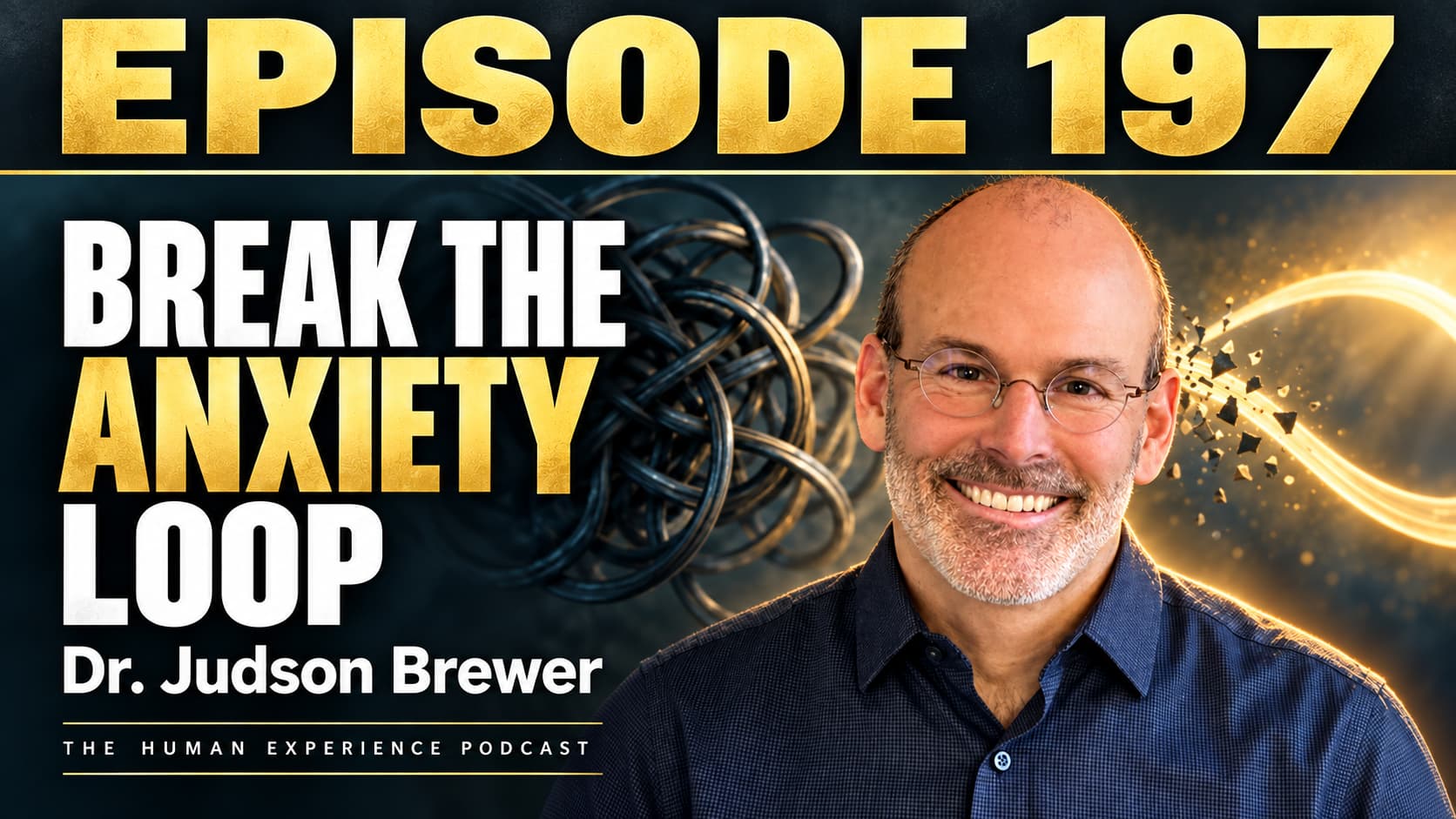
EPISODE 197 – Dr. Judson Brewer: The Anxiety Trap. How to Break the Loop of Worry and Stress
October 6, 2026 · 59:15

Episode 196: Waqas Ahmed — Polymathy, AI & the Future of Human Creativity
September 28, 2026 · 1:04:41
Episode 195: Dr. Satchin Panda — Circadian Rhythm, Sleep & Meal Timing
September 21, 2026 · 1:09:04
HXP SHORTS: #001 – Deconstructing Death: What Happens When We Die?
September 14, 2026 · 11:37
Independent conversations
Help make the next one possible.
Membership sustains ambitious, unhurried interviews and keeps the complete archive open to curious listeners everywhere.
Become a member