

The Human Experience · Episode
Episode 81 – Daniel Pinchbeck – How Soon Is Now?
A conversation with Daniel Pinchbeck
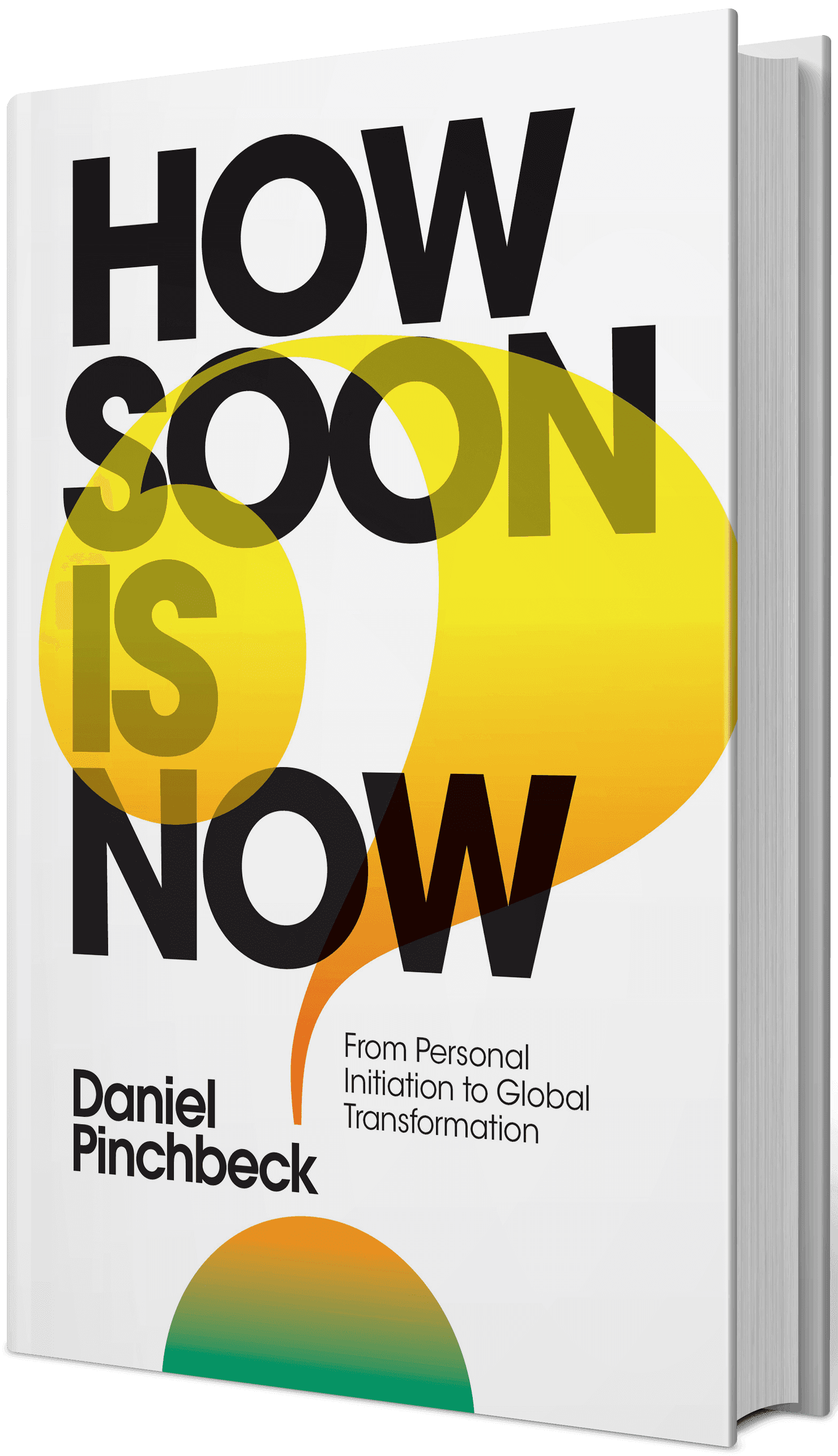
Daniel Pinchbeck, 50, journalist and author of fascinating works on entheogen and shamanism, penned a highly-anticipated, thought-provoking, must-read book due for a February 2017 release: How Soon Is Now?The book is an expansion of a 2013 TedX talk entitled The Planetary Initiation, which draws on extensive research…
Stay with the full conversation.
Episode field notes
Show notes
Daniel Pinchbeck, 50, journalist and author of fascinating works on entheogen and shamanism, penned a highly-anticipated, thought-provoking, must-read book due for a February 2017 release: How Soon Is Now?The book is an expansion of a 2013 TedX talk entitled The Planetary Initiation, which draws on extensive research to present a compelling argument for the need for change on a global basis.

(Photo: Interview Magazine)
How Soon Is Now?
According to Pinchbeck’s WikiPedia page, the book’s thesis is that the ecological crisis is a rite of passage or initiation for humanity collectively, forcing us to reach the next level of our consciousness as a species. The book outlines the changes to our technical infrastructure — agriculture, energy, industry — and our social, political, and economic system that Pinchbeck deems necessary to avoid the worst consequences of global warming, species extinction, and so on. We can look at these current times as the possible storm before the calm. This is encouraging news, folks!
Where The Mind Goes, The Body Follows
Pinchbeck is no stranger to the wanderlust spirit, perhaps passed on through his abstract painter father, Peter Pinchbeck, or his mother, writer Joyce Johnson, who, before he was born, dated “beat” author Jack Kerouac, as his classic On The Road was just being released in 1957. But Pinchbeck’s travels were more of an internal mind journey, studying and living the life of a shaman. Though he’s written countless articles on the subject for various noted publications, Pinchbeck’s books delve deeper into the wormhole of his entheogenic awakening. An entheogen – derived from the Greek word meaning, “becoming divine within” – is a chemical substance, typically of plant origin, that is ingested to produce a nonordinary state of consciousness for religious or spiritual purposes.
In 2002, Pinchbeck’s Breaking Open The Head: A Psychedelic Journey Into The Heart Of Contemporary Shamanism, he explored shamanism with the Bwiti of Gabon, who ate iboga for vision quests, and with the Secoya people in the Ecuadorian Amazon, who drank the psychedelic ayahuasca in their ceremonies.
In Pinchbeck’s followup book, 2012: The Return Of Quetzalcoatl, where, through his search of divine connection, he is introduced to fellow New Age thinkers: Terence McKenna, who champions that humanity is experiencing an accelerated process of global consciousness; Dean Radin, who researched parapsychology and extra sensory perception; and José Argüelles, a visionary for humanity who dedicated much of his life to promoting an alternative calendar based on a cycle of 13 months of 28 days, which he believed would bring about world peace,” according to Argüelles’ WikiPedia page. Pinchbeck’s 2012 book studied the Mayan calendar in the context of New Age beliefs, considering that it was not indicative of the end of the world, but rather the end of world as we know it with all its current limiting beliefs. It was the end of stale thinking and the beginning of a global awakening — an Age of Aquarius, of sorts.
Pinchbeck appears in notable documentaries such as the intriguing 2012: Time For Change (2010), featuring other enlightened seekers like Sting, Barbara Marx Hubbard, John Perry Barlow, Gilberto Gil, David Lynch, Ellen Page, Paul Stamets, Dennis McKenna, Tiokasin Ghosthorse, Michael Dorsey, Shiva Rea, Ganga White and João Amorim (“2012” IMDb page), and Electronic Awakening (2011).

Click to pre-order
In this episode, we discuss the global implications of ecological crisis if we do not act immediately. How Soon Is Now? It’s now!
You will love this Episode!!!
Follow Daniel’s musings about his travels in the caverns of the mind on the WWW …
Pinchbeck’s 411:
Official Website
How Soon Is Now? page
Twitter
Facebook
Reality Sandwich, a social site for conscious thinkers; & RS Twitter
Evolver, a global community of conscious consumers
Amazon
IMDb
Amazon
We rely on listener support!! – If you value even one of our shows, help us sustain and scale the show up; Become a member for 5$/mo (a cup of coffee) or Donate.
Read the conversation
Transcript
welcome to the human experience podcast the only podcast designed to ease your left and right brain hemispheres and feed it the most entertaining and mentally engaging topics on the planet anthony approach our thanks please make sure your frontal temporal and occipital lobes are in there for conforming to vision as you take your fish consciousness relax your family and now us to take you on a journey we are the increment strangers thank you for
listening [Music] what’s up folks Xavier katana here with the human experience this is our episode with mr. Daniel Pinchbeck in which we covered his book how soon is now in this episode we discussed the brink of ecological crisis our planet is facing we talk about how our actions in the next few years will determine the destiny of our children’s children this is an essential episode to hear if you care about where our planet
is headed guys we survive on your support to get to the human expediate to help support our program any donations go directly to making the program better for you our listeners a huge thanks to Daniel for his time please also find us on twitter axe the human XP get to our Facebook page and just a like and thank you so much for listening the human experiences in session my guest today is mr. Daniel Pinchbeck Daniel my good sir
welcome to hxp thanks for having me I really feel it experience so Daniel your new book is called how soon is now and you’re talking about the the global tribe and what’s going on on a global scale I mean why don’t you wanna show us off with what is your background how did you get to writing this book I mean I’m a New Yorker I was from a sort of cultural background my parents were artists went to college dropped out after a couple years started working in
magazines kind of work their way up magazine chain as a writer and freelance sir was also writing fiction and my late 20s I had a kind of spiritual crisis an existential emergency and I realized that I grown up in a kind of secular materialist kind of scientific nihilist framework but I had never really tested that for myself to figure out what I really believed so then I started to make a spiritual exploration involving
visionary plant sacraments and psychedelic substances which at that time were not that so they’ve been sort of like repressed and gone it’s like sort of underground priming so yeah that would be my first book breaking up in the head kind of a you know combination of cultural journalism and spiritual autobiography that led me to a second book 2012 the return of Quetzalcoatl looking at the knowledge systems of the digitus traditional cultures around the
world you know along the way I began to reckon with the fact that we’re facing an ecologic global crisis that is so catastrophic that it could bring an end to you know pretty much the human species or at least crash us down to a much smaller population and I began to make an inquiry into what were the blindnesses and gaps in our world and our knowledge system and understanding that had led to this type of crisis to be unleashed by human activity and also
what we do what could we do where we are now if we wanted to overcome distraction and inertia actually faced the situation like how deep would the changes have to be what would we have to change how would we go about it so that led me to this new book have students now which actually I’ve been working on for quite a long time I maybe eight or nine years in different forms I kept trying and failing to put it together and so now
finally I reach the tipping point where they want to integrate all the information and and put it out there so it’s good big relief for me to get it out into the world a lot of a lot of your work does focus on the state of crisis in which humanity and earth kind of now finds itself in where do we go from here I mean seems like the political system is an utter mess ecologically we’re just raping the planet so I mean how scary is the
situation yes I believe that you are correct the political system is a travesty and ecologically the sitch raishin is worse than most people are even able to reckon with when you factor in things like the fact we’re losing 10 10 percent or more of the Earth’s remaining biodiversity every 10 to 15 years climate change is spiking you know beyond even recent scientific predictions now we’ve learned about deeper threats like the methane that’s
frozen in this you know Siberian permafrost which begins to erupt as a as warming intensifies so the book seeks to look at this systemically one of the data you know main ideas of the book is that we can consider the ecological crisis as a rite of passage or an initiation much like a shamanic initiation and it’s a triggering event on a global scale to shift humanity from its current kind of adolescence immature state to a kind of adult level of
responsibility where individually we step into the role of you know being responsible for the human community and the community of life as a whole now I don’t know how much decimation it’s going to take before there’s a kind of tipping point kind of phenomenon and enough people make that shift that it becomes like the new paradigm you know it may be that there’s going to be a mass reduction in human population I personally don’t think that’s necessary
I mean one of the main Lynch pins of the book is Buckminster Fuller and he just realized that you know we have this incredible technical capacity but we’re not using it efficiently or even truly rationally you know we can see that in the way resources are spread and used and you know that our whole system at the moment is based on you know incessant growth and planned obsolescence and waste so yeah so the book seeks to provide you know a
blueprint for the future in all these different areas putting the technical support systems with social political economic system but also the types of changes this would require to you know consciousness culture values ideology I mean is there is there a point of no return with this I mean is there a point where it’s it’s too late and and we can no longer be conscious to this or I mean it doesn’t hate what about we don’t look at the conscious
with us it doesn’t seem like people are waking up to the idea that we are are killing the planet it just seems like people are more concerned with what the latest iPhone is I’m just I’m just wondering you know where how can we kind of scare straight the people that are living here into harmonizing with their surroundings their environment well I mean obviously that’s that’s kind of the main questions of the book clearly we
can’t go back you know I mean there’s some people who are kind of retrogressive lis primitive maybe like John’s Erza who believes that we can almost even almost need to go back to so you’ll say agrarian so you’ll say hunter-gatherer and I think that it’s more about going forward but it’s kind of approaching our social systems our cultural systems and our technologies or in a new direction with the kind of the plan to build a scalable regenerative
system regenerative society so and we see in every area that’s what the book tries to kind of correlate and put together kind of approaches that make sense so for instance in terms of industry there’s really William McDonough you or the book cradle-to-cradle where he argue that essentially you could you know recreate all of our industries ultimately so they feedback positively and productively into their psycho systems you know in
the way nature does nature is constantly producing useful things for nature you know we can look at an economic system that’s maybe not debt based or a global trading currency that kind of loses value if you try to hoard it so people instead of trying to hoard it are actually the best they can do is get it back into circulation and share it effectively so yeah in every area there there are you know hundreds or even thousands of years of alternatives and
explorations you know what we would have to do is become conscious of the fact that we’ve unleashed this mega crisis and then determined that we’re going to make the shift and in terms of the consciousness of the masses I believe that’s very permeable and very influenceable by media by marketing by programming and one thing I looked at in the book is the Italian political philosopher Antonio Negri talks about how we now live in a time when kind of
the most powerful form of production is no longer like material production as it was in Marx’s time like you know sewing machines and so on you know typewriter is another thing that’s most produced is material production things like narrative social tools and what a material production produces above all is subjectivity so the media and the internet and the social networks kind of act as a factory for producing and programming certain
level of subjectivity a certain level of consciousness if we were able to make use of these incredibly powerful tools to you know bring people into a different state of awareness it could happen very quickly and I think you see that kind of modeled at certain types of events like transformational festivals where it becomes apparent how quickly and readily people will change their ideals and behavior patterns if it makes
their lives more awesome and more fun hmm that’s intriguing in your book breaking open had you traveled experiencing tribal cultures and various psychedelic substances I mean is this what you’re kind of referring back to sorry that’s very what sense I mean using psychedelics to enhance the consciousness of humans well I don’t know for myself and also for many people that I know including a lot of more and more people who are really much part of
the sort of you know 1% the elite the cultural and social influencers psychedelics are turning out to be extremely important tools that are leading people to have a lot of insight a lot of personal healing you know they’re like all tools they could also be misused and overused or whatever but yeah I think ayahuasca which I’ve written a lot about which is a medicine from the Amazonian rainforest often not only gives people a lot of healing
inside into themselves it makes them more aware of their embeddedness in a kind of network of nature and super-super name sure and cosmos and so on so yeah I do think the psychedelics are profound and important tools I don’t necessarily think they’re for everybody or that you know everybody needs to take them you know it’s in some situations and maybe does small group you know get certain insights and then you know uses
narrative and story and ritual to convey those insights you know to the to the larger population yeah I mean um so so yeah so I don’t know that answers your question did your did your exposure to those tribal cultures and be psychedelic compounds change your worldview yeah they had a deep and profound impact on me which I described in breaking up in the head and 2012 and even in the new book how soon is now I talked about
visiting I did I was lucky to host two retreats with the Kogi and Iraq people who live in the Sierra Nevadas in Colombia and there are pre and Kim civilization that’s maintained itself in a fully intact way by kind of escaping the Western colonialism and hiding out higher up in the mountains and I was very profound to be with them and and meet people who are the lineage holders of their like metaphysics and so on that
sounds incredible it seems like ayahuasca is getting more and more popular kids getting it’s getting almost trendy and do you agree yep and where do you see that going I mean do you see that as harmful to the Amazonian rainforest these kind of tourists showing up there or do you see it as a positive thing I think it’s a very positive it’s like I mean it’s a Lydia it’s obviously got all these things are a little complicated as things get
bigger you know they become part of other forces and open for different types of manipulation I mean in a way it’s you know breaking up in the head which came out in 2002 I wrote a lot about ayahuasca and also I wrote about the Burning Man festival and it’s been interesting to see these two phenomena and of blossom you know in the populist popular mind since then but generally I mean the thing about ayahuasca is of course it’s you could say it’s trendy
but it’s still you know when people you know take the substance it’s a deep phenomenological experience where they receive inside they receive healing I think it’s it’s it’s it’s great also I don’t think that the ayahuasca use is having necessarily a negative impact on the rainforest I think actually in many cases it’s creating a new circumstance where which you know kind of first world people are now valuing valuing indigenous cultures on a
deeper level and are trying to support them and working with them and bringing funding to them and so on and also ayahuasca is now growing in other regions and other places you know any place it’s kind of subtropical like Hawaii or Florida or whatever so yes I think it’s you know essentially a positive thing that ayahuasca is kind of binding and binding its way for the world right now in 2006 you published your 2012 book where you looked at the
Mayan calendar and I mean I think you even predicted the the 2008 financial meltdown this was a message that you received while you’re in the Amazon right for that how’d that go what do you eat how did that go how did you get the message how did we how did it how did you come to write the book well I was writing the book already I was deep in the midst of researching the book and you know the book I mean I you know for
me each of my books stems out of like a sense that almost like uncomfortable feeling that there’s like you know we’re missing a piece you know in the jigsaw puzzle with like human knowledge and you would understanding and so for that the first book it was you know here I’m having these incredibly powerful you know visionary psychedelic experiences and yet my culture says they’re garbage that this is nothing your times just to
righted them it’s like boys of the hippie generation so then that that dichotomy you know send me out you know to write the first book on psychedelic shamanism when I explored psychedelics shamanism I discovered that there were huge failures in in the Western knowledge system and that we suppress something of tremendous importance I also frankly had all sorts of different psychic experiences and paranormal experiences synchronicities
ESP manifestations of objects and so on so I also realized that the reject the Western rejection of the realm of the psyche and the paranormal was also a mistake and that actually these indigenous cultures understood a lot more about the nature of reality than we than we knew in certain areas so I then felt that having reached that understanding that it was then necessary to take indigenous knowledge more seriously because they
were able to access forms of knowing and forms of awareness that we had totally dismissed so that led me to then write a book on these kind of prophecies you know the Mayan calendar the Hopi prophecies and so on which all seem to point towards this time as an intense threshold of transformation kind of a yeah dimension a shift from the fourth to the fifth world and I hope you say it’s one so yes I plugged it into the
research for that book you know pretty much as still as a journalist as a skeptic although now one who is more an abortion manic and Jungian worldview than just a skeptical worldview and on the path of researching that book I had a experience when I was down in Brazil working with the Sanford I’m a religion down there where I was drinking the medicine and a won ceremony a voice started to speak in my head and it essentially announced that it was a
Mayan or Mesoamerican deity or archetypal flat form that called itself Quetzalcoatl and began to kind of download a transmission that I was given kind of this sense that it was my message you know my job was to take the message and you know bring it out into this into the world you know it was a very subjectively convincing experience and I wrote about it in the book and for a while I was very like caught up in it in fact my editor rejected the the book
Random House because it was too much for him the kind of mystical overtones that I had to find another publisher for that book but um yeah but but in the end I also recognized that I had become part of an archetypal process that involved the kind of transmission and visionary material and or something that happened to you know Madame Blavatsky and Jose Arguelles and Aleister Crowley and you know who’s the guy who you know the guy
started the Mormons I mean there’s a kind of history where people receive prophetic transmissions and visionary states it doesn’t necessarily mean that the information is true it does it does mean that it’s very archetypal II charged and powerful oh yeah it’s been an interesting experience to have had that transmission and then to kind of figure out how to kind of you know kind of transduce the voltage of it in a sense into normal the normal world
and so on so being told that the world was going to shift in 2012 must have been a very emotive experience actually I wasn’t told the world was going to shift in 2012 I was told that we are in a process of transition or metamorphosis okay and there was an exact timeline in fact I you know if you look at the book or the film that I made 2012 time for change it was you know the film looked at techniques like permaculture and
bioremediation and alternative economic systems and so on you know with the sense that what-what the December 21st 2012 was more like an invitation you know from the cosmos to examine our paradigm and our belief system and maybe integrate you know other ways of knowing and understanding we talked about synchronicity a bit I mean how did how’d that play into writing the book and the message you received and can you do some
example of that breaking up at the head and 2012 hour you know described many of my personal experiences and many different kinds of secretive cities I had and you know it’s not just me most people that I know who go down this kind of Gnostic or shamanic or mystical path by the same thing they find that the world actually becomes it’s kind of really a fascinating interplay between the inner psychic and the outer you know
apparently material or physical to the point where you even wonder you know ultimately if there is you know dualism between them or if they’re just two manifestations of the same kind of consciousness and sense I mean moving back to the kind of ecological disaster that we’re facing is this an ignorance thing with humanity or is it more greed or is a little bit of both or and what can we do what is causing this and and what can we do obviously the
first thing the first thing we have to recognize is that you know for the most part you know nature is fairly flawless and even perfect and it’s processes you know it’s been our assumption that since we’ve developed like culture and technology or actually separate from nature but but actually we could be a natural or cosmic process happening you know on another scale or another level and it may be that what we’re undergoing
is is kind of like a birthing process I got I was in evolutionary biology like the caterpillar you know becoming the butterfly you know as the imaginal cells kind of spread through the the dying caterpillar and reprogram you know then an organism so yes so what seems to us as chaos and ignorance and confusion may actually be kind of like a program like maybe unconsciously we’re bringing about the conditions to force our own
transformation or transmutation because obviously if we just stay in our comfort zone you know we’re not we’re not going to do that that’s not going to happen we’ll just have more pumpkin spice lattes at Starbucks and you know you know and the fact is yeah we’re we you know unfortunately the the system that we’re living in you know is a Dominator system you know it’s based on military control it’s based on corruption you
know it’s it’s it’s had incredibly disastrous effects on you know local cultures and and ecosystems around the earth and so it you know it’s kind of maybe a necessary confrontation with you know with the system that we’ve unleashed hmm that’s an interesting perspective I don’t think I’ve heard that one before there’s something really interesting in your in this book how soon is now you state that cities should be reimagined as the human equivalent of
a coral reef that is sitting in harmony with their surroundings – I find that amazing how can we do that it’s not that’s just not really my idea but there’s from you know people like John Todd and Richard register of exploring this idea of echo cities yeah well you know first of all you know even in the best case scenario you know barring the development of some fabulous x-men like psychic powers you know we’re probably not going to be able
to prevent you know coastal flooding and and the sea level rise of up to 100 feet you know the Pope the ice caps are already you know pretty much you know on the way towards melting so ultimately we’d have to construct a new human settlements further inland now the question is how do we do that I live in York City and I see the buildings that are going up here all the time or London you know there’s no there’s no deep
ecological consciousness to most of them they’re there the profit-driven you know kind of you know constructions if we have to and we are going to have to make this type of shift you know we could look at ways of designing cities that are yet meshed in with the natural environment where more food has grown on site where you know they’re actually you know more ideal centers for a living you know with biking and walking built into
them and I’ve one friend Stanford who’s created a thing called regen villages and his idea is to create this kind of modular you know kind of kind of structures that can be manufactured and distributed and each one comes with the capacity to you know create its own foods or aquaponics compost you know regenerating a renewable energy built into it solar and so on so you know you could actually build put these up and people would instantly be able to live
you know quite self-sufficiently and that type of idea seems to be a very interesting way of approaching you know our artistic pajetta sort of reintegrate it you know in a way with with nature rather than cuts we seeking to dominate or control the processes of nature interesting you know you talk about how technology is consciousness in this book and what did you mean by that we could look at language itself as a technology
maybe the first technology you know or music or something you know we can only become kind of beyond a certain level of self aware of our actions and our you know capacities through through abstract side systems which you know is like a form of technology and then beyond that is you know the technologies that we create that reflect us back on ourselves you know so if we think about the development of the computer and the
internet over the last 40 years you know how that’s given us a whole new set of metaphors and ways of understanding the you know our own consciousness how we function so it essentially the evolution of tool using and tool making is we make a tool you know we have an idea we make the tool the tool exists as a projection of our consciousness that it reflects us back upon ourselves so we iterate we make another tool and then we learn
about ourselves something from from that tool and then we do it again and we just keep doing that that seems to be how humans uh develop consciousness you know as well as technology I really like that I mean – Daniel what to what extent do this technology reflect our current psycho-spiritual state do you think it’s taking us nearer to where we need to be you’re further away I mean I level we are probably where we need to be about
taking more like a truly kind of mystical perspective right like a samsara is Nirvana but uh yeah I think it has both aspects I mean on the one hand our communications technology bashing us together into one global brain kind of one massive planetary super organism on the other hand in this short interim period we’re in right now and it feels that you know the kind of corporate kind of encroachment unconsciousness has kind
of has kind of taken a new more virulent form where people are in a constant state of distraction and you know kind of said of like where we’re sort of we’re sort of being you know overpowered by our technologies at this point you know one thing I do in the book is I critique this whole construct of the singularity [Music] as a very kind of vascular linear construct and also that it kind of ignores the singularity is the idea that
we’re approaching this threshold where our technology is going to exponentially accelerate and ultimately merge with our bodies so that we become kind of cyborgs or able to upload our consciousness to machines or computers Ray Kurzweil who’s one of the Google engineering directors is one of the main proponents of the singularity but it’s become a very popular ideology and I would say it’s almost kind of become a religious faith for Silicon Valley and
for a lot of lot of people you know the problem is that our technologies are what have caused all the ecological damage right so like plastic seemed like an amazing idea but we didn’t realize that they were going to end up polluting every you know endocrine system every animal on the planet and cause these huge lakes of plastic islands of plastic in the oceans and so on so you know we get very excited about our capacities
and we keep extending them but we’re not very good at anticipating the unintended consequences but as we look towards the future the horizon of the next levels of technologies that are extremely invasive or extremely totalizing I think we have a lot to fear that those technologies could go wrong and actually make our situation radically worse so I think actually getting the right angle of how we approach kind of creating technologies
and implementing them is very very critical if we want to survive the species and hopefully hopefully even thrive as a species which is what you know my favorite brilliant thinkers like buckets to Poehler and Oscar Wilde at a point Awards and yeah I mean it seems like I think there’s something like 1% in your book it says that there’s 1% of all solar energies what makes up the total amount of solar energy that we’re putting into this resource why why do
you think this is is there I mean I know that you’re into the occult and esoteric realm so do you think there’s a control structure behind this controlling this with a sort of invisible hand I mean could there be something that is engineering a sort of suicide of this planet yeah it’s sort of complicated and subtle and I it takes me a while like for me language is really important so it’s really important to find the right angle
and questions like that yes I definitely believe that there are you know kind of occult realms hidden powers and principalities that you know we are in contact with consciously or not and yeah there are some some of those realms you know maybe seek to make use of human humanity in certain respects for for for energy or for power and so yeah some of that is happening I mean another very intriguing idea for me is that some of
it has to do with bacteria you know maybe like gut bacteria like you know talk with the toxic plasmosis and which changes the behavior of mice or something I mean I mean you know though the Western diet and lifestyle you know supports kind of you know starch you know wheat gluten sugar you know we’re feeding all this type of bacteria like Candida and so on and maybe it makes us kind of stupid and sluggish and allows us to be more easily manipulated you
know but I imagine most Trump supporters have like horrible diets you know so yeah so it’s like a multi-dimensional scenario I guess I get you know and it’s subtle and I think it’s very easy to get to conspiratorial and kind of and you know that I didn’t really avoided that in the new book to be honest I think it’s more important for us to understand you know what the systemic pass is to bringing about a transformation and then look at
tangible ways we can do that at the time that’s available why did you why did you avoid this topic in the book curious I just find that it becomes like a really it wastes a lot of people’s time and energy like instead of actually thinking about what they can do right they get into there it’s like it’s like it’s like a mine parasite if people start thinking about the reptilians or the you know conspiratorial this or that or the gray
aliens right kind of lock on it I feel in a way that’s almost like how it functions as a mind parasite it’s like a distraction device whereas you know what we have to do is figure out how we you know mobilize people power you know to bring about the types of changes that we need to make if we want to survive the species I don’t know it’s like it’s it becomes very self-indulgent and also a lot of it is just not very good
information or not very clear information like what I looked into something like David Wilcock I feel it’s you know a lot of it is Mike Lee kind of and a lot of these guys like I did up there if it’s intentionally disinformation or they’re just getting told things by people who are that reliable than repeating it verbatim I mean like flat earth kind of thing well you have flat earth as an example or there’s you know 150 stories you know
lower underground beneath the Denver Airport where they’re conducting alien experiments or whatever I mean they a lot of people put the stuff out as literally the case and it creates kind of like a fuzzy it has a negative impact I think on the spiritual Keter culture the way people can’t can’t separate what they actually you know know and have evidence of from stuff that’s just kind of hearsay or kind of murky fable and
this is why this is why I asked if it was too late for us to save the planet at this point because it seems like we need a hard reset for things to go into a place where it’s in balance again again we all will I mean I think would be hubris for us to say that we know that all I know is that if we were to wake up tomorrow and we were to you know sort of break the inertia of our current institutions and you know have an
awakened populace able to you know use resources efficiently you know we wouldn’t have to see a catastrophic you know failure of you know the systems and population crash and so on but obviously the longer we wait to do this the more difficult that likely it will be I mean this is what you know buckets are full of sawdust back in the 60s you know he saw that he said that political system political systems had become irrelevant
and were outmoded the needs of a design revolution I think what mr. what I discussed in the book that actually political systems are also design artifacts and the systems that we have politically were designed in the 18th and early 19th century what information moved a lot slower than it does today and where the speed of change was much slower you know so now I mean you know we have now this interactive communication systems of the internet
and it could potentially allow us to you know grow more intelligence make better decisions you know make our decisions with better context you know it could allow us to do that at a much faster rate how how do we move from competition to cooperation uh well that’s the whole book kind of tries to describe that if I could sum it up in a couple sentences but um I mean you know I think you know several different levels to that one is just a
realization you know that we’re in an artificial construct of competition and domination and that’s built into the structure of the monetary system itself you know I’m very intrigued by the potential abilities of social tools and social networks to provide like a new scaffolding for human communication like I’m friends with one of my friends Casey who created the web platform couchsurfing you know which was your predated Airbnb it was like a non
commercial version of Airbnb but you just travel around the world as a young broke person and you can you know said somebody’s couch because maybe you’re interesting maybe they want to be a new person you know and actually people find those to be really enjoyable you know experiences so I think there are a lot of things that are now commercial transactions which could actually be shared based on sharing relationships and maybe ultimately
everything could if we were to skillfully designed like a phased transition and one of the ideas is in a way like you know at some point maybe 25 years ago or who knows when 20 years ago 15 years ago Steve Jobs was like Steve Jobs was like imagine someday we would have an iPhone and then he had to kind of reverse engineer from that outcome like how do you get the iPhone I need to have these companies producing these things or these mines creating these
metals and so on I think we could do the same thing with our global civilization if it doesn’t what’s got our heads together we could you know envision the best possible outcome you know which would be a humanity that was free of fear you know free of resource constraints you know no longer a meaningless competition then we could figure out how reverse the outcome to get there you’re using technology social media social tools and so on that’s kind
of the idea I’d suggest in the book anyone listening is there a single thing that we can offer to do that they can do in their bare regular lives to kind of affect this global position that we’re in well yeah I mean I mean ultimately I think there is going to have to be a call of a time of shared sacrifice in service to the you know greater community of life and the more that people can begin to make the sacrifices now out of out of a joyful place rather
than a scared place I think out that that’s something you know so for instance no longer eating meat because we know that meat is responsible for you know a large percentage of co2 emissions and deforestation you know taking less vacations you know giving up excess giving up a second house or you know a new car or sharing a sharing a car or not even having a car you know stuff like that you know beyond that would be you know building community networks you
know either joining networks that already exist or creating a group that feels like it fits you know your your viewpoints and I think we’re also going to have to engage in your community actions and and that you know it’s a hard figure you know it’s a little bit hard for you to express without people having the whole context of the book so for instance I believe that decentralization is going to be part of the new paradigm you know kind of we’ve
had these centralized hierarchical control structures and those are going to give way to more participatory Democratic structures that occupy pointed towards and you know there are tools that people can use their social tools like what is called Lu Bo lol IO where you can make democratic decisions in a group following the principles of the Occupy movement you know so there’s a movement in Spain called podemos which is using Libya as its organizing tool so
stuff like that you know but might become interesting you know for people to experiment with okay Daniel working where can people find your work I know that I mean the book that I’m looking at is an uncorrected proof so I don’t know this book comes out in 2017 how soon is now House it is ago is still off a little bit into the future yes as soon as that comes out in February okay obviously it’s amazing if you will pre-order the book on Amazon I’m hoping
that a lot of people will because then it will shoot up the Amazon ranks and where people will see it I have some excerpts from the book online at the website is how soon as now that info so people can follow me on Facebook and my personal page is what I usually use they can buy the website Pinchbeck top io they could send me a message drop me a line yeah I got the other stuff photograph I filled 2012 time for changes up on YouTube that’s almost like
a play loads video book excellent we will definitely direct the people that way that I really appreciate I’m Daniel thank you so much for being here okay enjoy forget that this is a human experience we are going to get out of here we will see you guys next week
Ideas worth returning to
Quotes
Five substantial excerpts from the published transcript, lightly edited for clarity without changing their meaning.
“Powerful tools that shift awareness could accelerate cultural change. Transformational festivals offer a small model: people alter ideals and behavior surprisingly quickly when the alternative makes life feel more joyful, connected, and alive. Lasting change is easier to imagine when it is experienced as an improvement rather than only as sacrifice.”
From the conversation“Experiences I interpreted as psychic or paranormal led me to question the Western rejection of the psyche. I came to believe that some Indigenous cultures preserve useful knowledge about aspects of reality that modern institutions overlook. That does not mean accepting every claim uncritically; it means investigating traditions our framework dismissed too quickly.”
From the conversation“A powerful visionary experience carries an archetypal charge, but translating that voltage into ordinary life is difficult. I was not told that the world would mechanically transform in 2012. The experience concerned a longer process of transition, and the real work was learning how to communicate its meaning without reducing it to a sensational prediction.”
From the conversation“The ecological crisis reflects both ignorance and greed, but it also begins with a mistaken relationship to nature. Natural processes are often extraordinarily coherent, while industrial civilization assumes it can redesign or dominate them without consequence. The first step is recognizing that human systems depend on ecological systems rather than standing above them.”
From the conversation“Spiritual culture often fails to separate direct knowledge and credible evidence from hearsay or myth. That confusion weakens its ability to respond to real crises. It would also be hubris to claim certainty about whether humanity is too late to restore balance. Honest uncertainty should sharpen action, not become an excuse for fantasy or despair.”
From the conversation
About the guest
Daniel Pinchbeck
Daniel Pinchbeck, 50, journalist and author of fascinating works on entheogen and shamanism, penned a highly-anticipated, thought-provoking, must-read book due for a February 2017 release: How Soon Is Now?The book is an expansion of a 2013 TedX talk entitled The Planetary Initiation, which draws on extensive research to present a compelling argument for the need for change on a global basis.
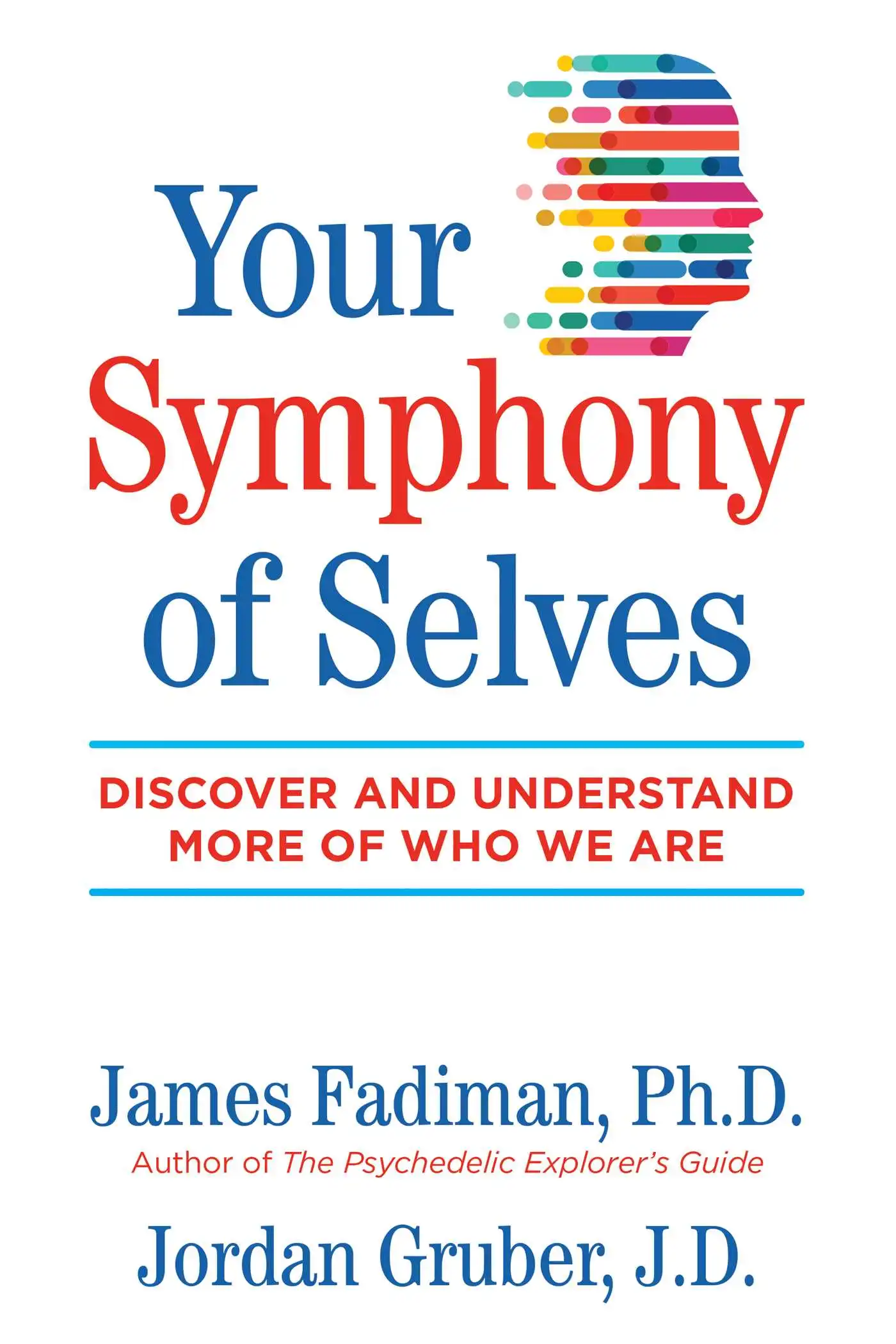
Episode 194 Dr. James Fadiman – You Are Not One Self: Microdosing, Multiplicity and the Mind
September 4, 2026 · 1:14:38
Episode 170 – Unlock your Superhuman Memory & Learning w/ Mattias Ribbing
June 9, 2020 · 1:08:44
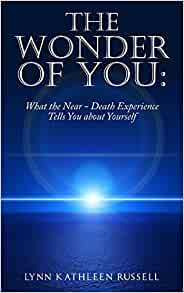
Episode 169 – Near Death Experiences, Is there an afterlife? What happens when we die? w/ Lynn Russell
April 27, 2020 · 58:20
Episode 168 – Ancient Architects, Civilizations and Monolithic structures w/ Hugh Newman
April 20, 2020 · 1:00:07

Episode 157 – Conquering Fear, Addiction & Alcoholism, w/ Karla Juvonen
January 24, 2020 · 1:11:16
Episode 156 – Mantak Chia – How to Find Inner Balance, Connecting with your Purpose, Chi, Energy, Prana
January 17, 2020 · 59:08
Independent conversations
Help make the next one possible.
Membership sustains ambitious, unhurried interviews and keeps the complete archive open to curious listeners everywhere.
Become a member