

The Human Experience · Episode
Episode 55 – Stuart Sovatsky Ph.D.
A conversation with Stuart Sovatsky Ph.D.
Stuart Sovatsky PhD (AB, Ethics/Psychology, Princeton University; PhD, CIIS), was first choice to co-direct Ram Dass’s “prison ashram” and first in the US to bring meditation to the homeless in the 1970s that led to being selected to the 1977 Princeton University Outstanding Alumni Careers Panel.
Stay with the full conversation.
Episode field notes
Show notes
Stuart Sovatsky PhD (AB, Ethics/Psychology, Princeton University; PhD, CIIS), was first choice to co-direct Ram Dass’s “prison ashram” and first in the US to bring meditation to the homeless in the 1970s that led to being selected to the 1977 Princeton University Outstanding Alumni Careers Panel. Copresident of the premiere professional organization for spiritually-oriented psychologists in the US, the Association for Transpersonal Psychology since 1999, he was a board trustee for the California Institute of Integral Studies for 20 years and in 1999, recipient of its Most Outstanding Alumni Award 1978-2008. He has consulted with the Chair of the Association of Unaligned Nations of the World and been in private audience with the current Perfect Master of Meher Baba Sufism in India.
In 2006-08, he was initiating co-convener of the forty country World Congress on Psychology and Spirituality in Delhi, India, supported by the Office of the Dalai Lama and where BKS Iyengar, SS Ravi Shankar, Jack Kornfield and Robert Thurman keynoted. Author of Eros Consciousness & Kundalini (US, India and Russia) Words From the Soul, Your Perfect Lips (US and Russia) and numerous articles on romantic love, ideal marriages and families, the therapeutic use of admiration, spirituality of infancy and Buddhist dissolution of suicidal thoughts. A serious scholar-practitioner of tantra yoga with NUMEROUS academic publications and university presentations throughout the US, India and Europe, he now leads couples retreats and trains therapists in the US and in Russia and is a faculty member at Moscow Psychoanalytic Institute, Lifelong Marriage and Kundalini Yoga.
In this episode we welcome back Dr. Sovatsky to the show further diving into the fundamentals of love, relationships, tantra, kundalini and much much more. This is an incredibly powerful episode STAY TUNED for the end of the episode; Stuart performs a chant for us that will absolutely blow you away!
Editorial Reviews
“I highly recommend this book to any spiritually minded person or couple looking to awaken their creative potential, deepen their life partnership, heal the emotional scars of past relationships, or mature their emotional-sexual being beyond the impulses of adolescence. This book would be a valuable asset for any couples therapist or marriage counselor who wants to offer a yogic spiritual component in their practice.” (Merikah Robertson, Common Ground, September 2014)
“Advanced Spiritual Intimacy is a cultural critique, tantric sex manual, and an astute primer in verbal and nonverbal communication. While most psychologists dismiss romance as infatuation, Sovatsky’s brilliance is to take it seriously as the ground of a highly disciplined but unique Kundalini-inspired approach to erotic intimacy.” (Seth Farber, Ph.D., author of The Spiritual Gift of Madness)
“Stuart Sovatsky’s well-researched and experimentally validated teachings, shared in Advanced Spiritual Intimacy, will surely be a great resource for empowering married couples around the world to find true spiritual happiness, as well as helping contemporary yogis and yoginis actually achieve the exalted goals of yogic adepts of ancient times.” (Robert Thurman, Professor of Indo-Tibetan Buddhist Studies, Columbia University,author of Inner Revo)

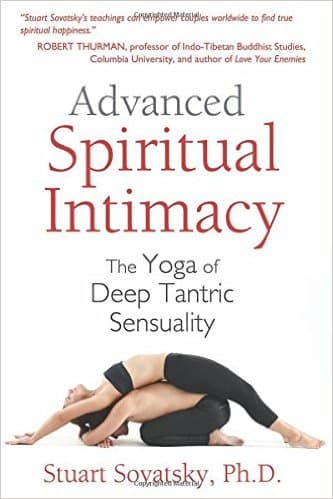
Click this image and purchase the book!
“Stuart Sovatsky’s Advanced Spiritual Intimacy is a tour de force. He takes us beyond the texts to demonstrate how the ancient path of spiritual growth may extend across a whole lifetime. This book expands our Western hermeneutic of tantra toward engendering a paradigm shift in the methodology for all who have been teaching its ways for years or decades. And as years and lifecycles unfold for persons of all walks of life, this study may help to honor the depths of Indian marriage from the depths of SanÄ tana Dharma itself.” (Purushottama Bilimoria, Ph.D.; Chancellor’s Scholar, UC Berkeley; post-doctorate fellow, Oxfor)
“This book reveals tantra’s most central and powerful aspect: converting sexual energy into a higher, consciousness-altering vitality. Stuart Sovatsky’s vast knowledge and four decades of practice of tantra yoga and his lifelong work as a relationship therapist is a perfect combination for his book Advanced Spiritual Intimacy. A must read for all who aspire to a spiritual way of life and are wondering just where sex fits in.” (Georg Feuerstein, Ph.D., author of Sacred Sexuality, and Brenda Feuerstein, author of Traditional Yo)
“Through decades of pioneering service projects, writings, and his kirtans arousing of Kundalini, Stuart has uplifted the academic and spiritual landscape of the West. For those who long to meet a lifelong yogi, master, beloved of Lord Shiva, you will find such a one in the pages of Advanced Spiritual Intimacy.” (Swami Adi Narayan, author of The Beloved: A Song of Eternal Love)
“Advanced Spiritual Intimacy is an excellent book that will help couples and individuals to grow and master themselves.” (Frédéric Luskin, Ph.D., author of Forgive for Good and director of the Stanford Univer)
“Few people are as well positioned as Stuart Sovatsky to contribute to the West’s understanding of yoga and tantra, and he has done so with Advanced Spiritual Intimacy. This book adds a new dimension and another level to the understanding of our ultimate potential.” (Philip Goldberg, author of American Veda)
“Sovatsky’s work brings the depths of India’s spiritual path of marriage and family love to the Western world in keeping with India’s core vision of Vasudhaiva kutumbakam–the world is indeed one Family–and reveals the devotional dimension of yoga in the truest voice of the Indian spiritual soul.” (Sunil Saini, Ph.D., president of Indian Association of Health, Research, and Welfare)
“The extent of Sovatsky’s knowledge is breathtaking. He makes an important and persuasive reframing of Brahmacharya as an ‘inner marriage’ rather than celibacy, with yoga as its own love affair with prana. He completely transforms what is currently understood as ‘practicing yoga’ and provides a fresh way of re-envisioning intimacy for anyone on a spiritual path.” (Ira Israel, marriage and family therapist and yoga teacher/therapist)
“Sovatsky guides us with a master’s hands to open the portals of devotional worship in yoga and in love. His book is a tour de force, beckoning lovers deeper into the seed mysteries of devotion and worship.” (Tina M. Benson, M.A., transpersonal/Jungian-oriented coach and founder/creator of the Soul Speaks Pr)
“The Age of Aquarius begins right now with Stuart Sovatsky’s new sexual (r)evolution. Get out your surfboards and anchor yourself on the crest of the wave with Advanced Spiritual Intimacy. Don’t forget to enjoy the ride!” (Lisa Paul Streitfeld, cultural critic/philosopher, Huffington Post Arts)
“Stuart Sovatsky’s Advanced Spiritual Intimacy bravely walks the cutting edge of tantra and blasts us open into spirit consciousness, while enlivening us to the potentiality of matter and flesh.” (Katie Silcox, author of Healthy Happy Sexy: Ayurveda Wisdom for Modern Women)
“Sovatsky’s forty years of spiritual practice, erudite scholarship, and clinical experience radiates throughout Advanced Spiritual Intimacy. This book shows a way to lifelong love that lives within the hidden depths of tantra and the inner marriage of yogis, saints, and sages.” (Ken Wilber, author of The Fourth Turning: Imagining the Future of an Integral Buddhism)
“Advanced Spiritual Intimacy is like an attic trunk packed with treasure-garments, with gowns and capes that must perhaps be shaken out and worn, gotten accustomed to, before their full value is revealed.” (Craig Comstock, Huffington Post Blog, June 2014)
Find Stuart Here: https://stuartsovatsky.com/
A huge thanks to Stuart for making the time to be on the show.
Read the complete recording
Transcript
Existing transcript, with its original wording and timestamps. Automated transcripts may contain errors.
Find the moment
Search this conversation
Search 629 passages and 9,291 spoken words.
Welcome to the Human Experience Podcast. The only podcast designed to fuse your left and right brain hemispheres and feed it the most entertaining and mentally engaging topics on the planet. As we approach our ascent, please make sure your frontal, temporal and occipital lobes are in their full upright position. As you take your seat of consciousness, relax your senses and allow us to take you on a journey. We are the intimate strangers. Thank you for listening.
The human experience is getting intimate as we traverse the realms of yogic enlightenment,
tantra, yoga, and relationships as we welcome back my guest, Dr. Stuart Sovatsky.
Stuart, my good sir, welcome back to HXP.
Thank you, Xavier. Great to be back.
Stuart, it's been nearly a year since we spoke, and I can't believe the response that we've gotten from our last conversation.
It's actually quite surprising to me that so many people identified the aspects of connecting tantra, yoga, chanting, mudras,
like all of these things that you connect into in this book, sensuality, relationships, gender roles,
I mean, all of these things. Why do you think that people are identifying with this
more and more now? I think that the sexual liberation movement, as it called itself,
that began in the 60s, it didn't know it was over promising the moon. And over since AIDS hit,
which was really tragic. People were shocked. And then as different relationships became
unwieldy rather than more intimate and connecting, no matter how much more sex people were now free
to have without guilt, some good things had been happening in the 60s, 70s, 80s, 90s. But I think
my book had a couple of advantages because of my personal practice of yoga. I was able to see
in the, actually in the seventies, that the sexual liberation movement was limited.
And mainly it's because my gurus were able to initiate me into what I could have called an
intermarriage and which is very poorly translated as celibacy. It's exactly the opposite of what
the word sounds like. And so when I was writing, I could infuse descriptions of yoga in ways that
no one really had been writing about, but it's completely accurate to the 5,000-year-old
tradition. My personal experience, because all of my own erotic energy was going into my yoga
practice my asanas were like an erect penis my my asanas were my headstand was an erection of the
spine and back in the 70s when i would teach classes my students were experiencing their
own version of this and some that did uh take up this uh marrying of yoga they got deeper and deeper
into it. But now it's like 40 some years later. And the third edition really of my book, the first
book, the first edition took probably five years to sell the same number of copies that were sold
in the current edition within about three or four months. Yeah. It's because, you know,
18 million people have been getting into yoga. And likewise, the limits of sexual liberation
got filled in with Tantra. Nobody would have been interested in a male sexual experience that
didn't have an orgasm. And now men have learned that there's a whole new realm when you don't
ejaculate. So the ground was ready for me to take, really, only 5% of the Indo-Tibetan archive
has even been translated into English. So my book was able to have a ready audience to learn more.
It's brilliant. I think it's in the top 100 of the highest selling, highest ranked books on Amazon for sexuality. Isn't that right?
Yeah. Sacred Sexuality. It's been in the top 100. It was number 11 for weeks.
Yeah. I'm able to say things that a lot of the more famous people didn't have the background to talk about.
you know some of my good buddies David Dita you know I've helped him with one of his books I read
one of his manuscripts and you know he he isn't reading the Sanskrit so he's taking people to a
certain point that's quite wonderful and I think I'm able to take them further certainly into Indian
Tantra. So our last conversation felt like for me almost like a therapy session I mean it felt
like I was venting to you and you had all the right answers. And I'm not sure if people identified
with that more or what, but relationships have changed. And in your book, you talk about
these relationships in physical and mental terms, emotions flowing, pastimes shared.
Am I pronouncing this word right? Urdhavetas? Yeah. Urdhavetas. Urdhavetas. Yeah.
Can you define Ordoveta's form, please?
Yeah, it just means human potential.
The human potential phrase was coined in the 60s to try to help Western psychology get more positive than Freud and psychiatry.
And so human potential was looking at what possibilities do we have inside.
In Tantra, things get really shaken up because they're really pointing to a puberty that happens in the heart and in the brain that's at least as powerful as the one that happens when we become fertile during age 12, 13, 14.
So in Freud, all of our psychology really ends at the teenage puberty.
And Freud's thinking for sure.
In fact, he says that the genital personality begins when we're fertile and it creates what
we call the ego that tries to satisfy its desires.
And that's pretty much as far as Western psychology has mapped human potential.
Then when yoga came and we start getting Sanskrit words like kundalini or enlightenment or beyond the ego, the history is worth noting.
In the 60s, 70s, 80s, and even well into the 90s, the mainstream psychology was still rejecting any idea of a post-ego or a non-ego-centered mature state.
the the psychiatry was pathologizing it in their uh diagnostic manual we had to and i was a part of
it had to like change that so there's a lot of paradigm changing uh that has happened to allow
uh what i did is i just took it way beyond what's currently being you know uh looked into
of uh this word veritas but it's well described so the maturation point is really that early i
I mean, through puberty or the verita, sorry, I'm butchering that word, it begins that early in a person's consciousness?
Well, you could say that you have to look at the moment of conception from a more profound way.
And then it quickly gets into the problems of when is the embryo a human being or not?
And then you're quickly into the abortion dilemma politics.
So it's very challenging in a quick conversation to say the whole thing has to be rethought. And the seed of the human at the moment of zygote, when the fertilized egg occurs, there's far more going on in that moment than most liberal minded people think.
because mainly because the abortion question is wanting to keep it available and it not being a
moral problem. But just for starters, the word zygote traces back through Greek to the word
yogi in Sanskrit. It's a profound moment in our existence that has a glow in it that is the
beginning of the soul. So without getting too much into it, we, I think we're able to even use
common sense. Parents do feel connected to their first couple months of their baby. And yet the
baby too is, or the zygote, has far more potential. It's still very vulnerable, miscarriage,
maybe the choice of abortion if need be. But when we change the maturity of the male,
Later in life, where it becomes an easy part of sexual education that all men in heterosexual environment, as well as any other gender relation, the ejaculation is only for conceiving.
Something very profound suddenly happens when that is the criteria of male maturation is every conception happens by choice.
When that happens, there's no more need really for much abortion.
And then that frees us up to allow those first three months to be filled with potential.
And not
only that, we have to come to grips with that Freud pathologized the family. For three generations now, we've been trained to think that our family is the source of all of our problems. And it couldn't be any more the opposite. But the fact is, how we're trained to look at things, that's what we'll see.
Okay, okay. So let me slow you down a little bit. I mean, so just to back up and go back to the stages of this progression, because this affects the mind and the soul, as you said. I mean, what are some of the stages and energies that someone might experience in the times of this maturation as this happens?
let's look at the word kundalini because that's a new word that we don't really have a similar
word in english but fathers and mothers at the moment of conception are given a boost of this
creative energy it's so powerful it can create new life it's not kundalini is not just some kind
of energy up the spine that transforms consciousness sort of like a big hit of lsd
it's the it's the very energy of gestation that makes a lot humans come into uh you know
incarnation so that would mean we're all born we're all being conceived within an environment
that mothers you know pregnant women and their partners they're feeling sensations and they're
letting their bodies move and and that's where yoga asanas originally came from not just at the
moments of pregnancy and just, you know, when parents were having kids. But any time you're
inspired, they call it being moved. The Holy Ghost is the version we see, it's the name in
Western religion. Davening or spinal rocking prayer happens in Judaism. It's exactly the same
as what they call Zikr, Z-I-K-R in Islamic religions. And it's why all the meditation
traditions have people sitting upright. Their spines are upright. Originally, it would be
not by ego, but it would be upright just like a clitoris or nipples or a penis becomes upright
when it's aroused. So we're in a body that we've been blocked off from these kinds of experiences
happening to us. Pregnancy is very limited. People are concerned of whether they want to
keep the pregnancy or not. It's all very kind of nerve wracking instead of predominantly tuning in
and people feel it, you know, there's some profound connection to the source of all life.
And likewise, that family is this amazingly beautiful thing that the sensations that are
happening between lovers will make them move, not just their hips, like in the movements of
intercourse, but their tongues will move in new ways, that their voices may break out into song,
that they start finding that what they want to talk about in ordinary daily life,
50% of the time is how much they love each other. It just feels like you're maybe roomy. I use roomy
because most people have read him and he had beautiful poems that were just all love poems.
We all feel like we've become roomy.
We have permission to live and think and talk to each other this way.
Instead of processing, almost always refers to talking about problems.
And that's a part of the Freudian theory was when you really talk about the truth,
it's always going to be very problematic.
So, so, I mean, I mean, this, this seems like it could be problematic for someone who doesn't know what Kundalini is. For, I mean, an example for me, when, when I was in my early 20s, I experienced a Kundalini awakening. I had no idea what Kundalini was. People weren't talking about it on the internet. And it was the most horrifying and most beautiful experience simultaneously that I'd ever experienced.
I mean, how would you say these people who are on this sort of mission to, quote, awaken their Kundalini, it seems like a very dangerous thing to delve into?
It's hard for me to convey everything I mean when I say everything has to change.
But in a way, that's why this is so challenging to talk about.
But imagine a culture in which where you had your experience and people were coming to receive your blessing.
You have that same experience you had, but people are looking and feeling love from you that you go love.
I'm having this effect on them.
I believe it.
And then this has been going on for many decades and centuries, really.
So it's not odd.
and you're being respected and appreciated, I can't over-evaluate how powerful the social factor is.
You can, if you are looked at as if odd, it's very hard to free yourself that maybe you aren't odd.
And a lot of problematic experience, even talking about God in the wrong environment, people will roll their eyes.
They'll be embarrassed. They'll think we're being sentimental. There's all different ways that talking about spiritual experiences, it's gotten much, much better. But in the 50s, 60s, 70s, 80s, it's a challenge.
Well, what if you replace all of that? And I've done this because I've had the first spiritual emergence therapy practice that goes back to 1977. It's my responsibility since about 19, around 1982, the so-called Kundalini Clinic.
And I will bow down to a client who comes in my door saying I'm having all these strange experiences.
And I'll say, see how it feels differently if I honor you as having something holy going on.
Just like if you had said I'm pregnant, you might not know what it is if you then learn what it was.
People said, wow, this is a beautiful thing.
It's not, you know, are you going to keep the baby or not?
into that question they're saying this is holy and beautiful can i just kind of put my palm of
my hands together and bow to you that has a huge positive effect on my clients and it and i can
easily say like i say it's been since about 1980 81 it's been like 30 some years i have the most
experience in a clinical setting with kundalini awakening of anyone in the world uh just but it
just happened that I fell into this clinic way back in the beginning. It was getting calls from
people and I could see that they landed in a different office of a psychiatrist and they're
talking about all these sensations. The psychiatrist is on edge. Main thing you worry about is do I
hospitalize this person? Exactly. And I'll tell you, if you have that, I've had it in my mind.
I was trained. If I'm looking at somebody, my God, can I handle this? Are they going to sue me?
What am I going to do here? I better hospitalized, better safe than sorry. That vibe in the air is very what they call iatrogenic, means the doctor has a negative effect that makes things worse while trying to heal.
So if my people come in and I'm saying thank you so much for coming, I appreciate that you're trusting me with it.
I'm not looking at them like a problem.
I'm not trying to diagnose it.
My colleagues still do.
They're trying to decide if it's Kundalini or psychosis.
I've been doing this so long and they're still using material that's very psychiatric.
and I wanted to publish on it to get it all that I'm kind of spilling out with you right now into
the public domain for and with Kundalini Awakening yeah the psychiatric profession they're moving
a little tiny bit and the psychological counselors are they know the words but they're not bowing to
their clients they're not doing namaste they're still trying to figure out if a person should go
to a hospital or not. I can say this because I'm also the president for 20 years. I've just retired
from the professional psychologist group that specializes in these kinds of issues. So I've
been, and I've been on the boards of several graduate schools, the California Institute of
Integral Studies, where they're training people. And I know how little they are really progressing.
They're still training people to just, is this guy's client crazy or is it Kundalini?
And that frame of mind is inadequate to helping people.
You have to feel, yeah, it's like you say, it's not that simple.
But the first step is being greeted by someone who is confident, who's personally experienced it.
That's also very rare.
And for it to have gone well themselves.
and then to notice moment to moment when you thank the person, they feel a little bit better.
And then you make eye contact and you're smiling instead of looking suspicious.
They start feeling a little bit better.
And then they smile and then you smile a little bit more.
So being in the here and now as this positive shift happens from, oh, I'm afraid what's going to happen to me
when the client walks in the door first.
little by little
you're watching the little changes, and by the 30th minute, things are very different.
Yeah, I agree with you. And there is such a large paradigm shift happening. And now, you know, as this sort of revolution occurs, you know, we are seeing these people who are discussing Kundalini openly.
and we have people like you who are writing books like this that a person can easily access.
But let's back up a little bit. Let's get into male and female gender roles.
And this sort of, I mean, the way that you have written it in your book couldn't be written any
better. It just, you talk about how gender is the sharing of mystery and there is something
found that we're deeply sharing between the male and female and how, how we, this, this sort of
opposition that, you know, our society has created between male and female, the feminism and
masculinity. And I mean, you connect those. And I, and when I reread the book, I, I just,
you know, I connected with it even more. Can you get into that for us, please?
Yeah, I would say we know that poetry will give us a different experience of watching a sunrise or a sunset than if we're looking at it as astronomers.
If we're trained to measure the light waves and the ultraviolet and the infrared and things like that, yeah, we'll get a certain kind of information.
But if we're looking at it through the eyes of a musician or a poet, I hope that analogy gives us some sense of where I'm headed.
been looking at gender very scientifically for at least 130, 40 years and trying to categorize
people and get and do statistical studies of everything from masculinity and femininity to
all kinds of gender identities. And now we're at a very sophisticated level, but it's all very
scientific of categorizing people into transsexual and all kinds of things that are in the news
today. My opinion, which I wrote about in great detail, and it goes back, I've written about this
for 20 years, is we should have at least part of the time used poetry to look at gender and that
we're sharing something far more profound than science tends to be able to talk about. In fact,
the profundity is missed. In North Carolina, we have this horrific problem about, you know,
what is it about these transgender bathrooms? You know, imagine if we respected gender much
more deeply as a mystery, instead of categorizing people, we would be going, oh my God, there's this
mystery of gender, the body is one way, the identity is this way, and that. We wouldn't
be trying to figure out what bathroom people would be needing to use. There would be so much
respect for the human being and for gender itself that the last place you would take those questions
would be into a legal environment and trying to figure out where people should go to the bathroom
or not. And this traces all the way back because it only gets deeper. We know that in utero,
every one of us has both male and female genitalia. We know this, yet we don't think of
ourselves this way at all. It's as if those first three months of our life didn't exist.
We also have a bit of a tail that evaporates into the body at the base of the spine. That's quirky.
But the fact that we have both male and female genitalia and one will fade away and we'll basically have one gender, that's a profound mystery.
In fact, the fact that we create life is a pretty profound mystery.
Let's get into a little bit of how to.
You know, like for a male and female couple that are kind of suffering from this disconnection through their sexuality and their gender.
I mean, how can we elicit this sort of profoundity, this, I mean, this devotion that you speak of in the book?
And this, I mean, how can we get back to that revering state that we should be in?
Beautiful.
You know, on the one-to-one, it's very easy, I would say.
Now we've been talking in massive numbers like a billion people, everyone in America, the whole state of North Carolina.
It's hard.
It's unwieldy.
But when you have a couple, it's as simple as asking them to tell as a therapist, and you can do this on your own, is I say, well, what do you love about each other?
What have you ever loved about each other?
And people can talk about it.
It's that mirror at hand.
I don't ask couples who obviously have problems.
well, tell me about your problem. I say, tell me about what, when you've ever loved each other
and what you admire and appreciate and respect about each other. And now people will have memories
at the very least. I love that you're generous. I love that you're funny. I love that you care
about your friends. I love the way that you care about food. There's lots of compliments. What I've
learned is it doesn't matter if the compliment is pretty mundane. I like that you're punctual.
People could be the most mundane. It really doesn't matter. That's where spirituality is
such an important word. It's the spirit that we listen to each other. The content could be very
mundane. And what will happen is people will smile when they're given a compliment. I mean,
I sound like this is not rocket science at all, but that's what I wanted to share with you. It is
hand. But very few therapists, I would say less than 1% of therapists begin a marriage session
asking, what do you love about each other? They talk about the problems. They're lucky if they
ever get to it. Now, the problem also is even after they're talking about what they love about
each other, I can tell they could be helped in hearing it and believing what these compliments
more deeply. And they can be helped by a third person saying, take a look at your partner,
because people don't always look at the person that's speaking to them.
And I'll see the tear in their eye when they give a compliment.
Or I remember when we first met, it was so beautiful.
And I'll say to the other one, you should take a look at your wife,
your girlfriend, your boyfriend.
And then they'll say, oh, wow, you're right.
I see that look in their eye.
And guess what happens?
This is tantra.
Tantra is reverberation.
As soon as the one sees it in their partner's eyes,
their eyes start to look different.
Their eyes start to glow.
And then I'll say to the other partner, take a look.
Your boyfriend here just saw a look on your face and look at how they look.
And the woman, the partner will look and go, oh my God, his eyes are filled with feeling.
And it's subtle, but the amazing thing is subtle changes of the moisture in the eye has a huge effect on us.
I mean, what is the divorce rate in America right now?
Well, it's between 40 and 70 percent.
Wow.
Because of, you know, it only gets worse.
The first divorce rates of the first marriage are between 40 and 50 percent, depending on the ethnic group.
But the second marriage divorce rate is up to closer to 60 percent.
And the third marriage rate is closer to 70 percent.
The next time the next time that someone asks me why I'm not married, I think I'm going to scream.
You know, in your book, you talk about this. I mean, you talk about marriage as this sort of mystery and, you know, this profound thing. And I agree, it is this profound, beautiful, you know, happy moment. I just, I mean, I feel like the game has changed. The dating game has changed. Women's roles have changed. Gender roles have changed. So, I mean, marriage is different.
I mean, which is why these statistics that you just mentioned are astronomical.
And I'm not sure.
I mean, as you said earlier, I think it's going to take a paradigm shift for this to get better.
If you can learn to look at someone for about 10 seconds longer while they're complimenting you,
you're going to have a very bonding experience that you wouldn't have otherwise had.
if you're not looking for 10 seconds.
That's how trivial I've seen it over 40 years of a therapist.
And people don't connect.
They're all ready to worry about breaking up.
So to sustain a compliment for five minutes, it's very rare.
And then for the other person to give back a compliment
and for them to have eye contact
and then to be given permission to touch the other person's cheek.
And then the other person is smiling and blushing
and then saying, look at how beautiful you are.
And then being able to tell people, if you talk like this with each other for an hour a day, you're going to be very happy.
And if you can teach you how to talk about problems in slow motion, people, yeah, they're all skittish.
They're looking for someone, something that they now feel doesn't really exist.
So they're prepared for it not to work instead of preparing to want to learn more.
It turns out to be very easy.
Whatever the problem is, how to say thank you.
You know, if someone says, how come you fucking forgot my birthday or something like that?
And the other
person saying, whoa, lay off. Hey, man. Hey, hey, wait. Slow down. The person can say, thank you for telling me. That's empathy instead of defensiveness. That is a huge skill that can make a relationship last years longer than it would otherwise.
So these are simple communication skills that are – once you start getting good at it, you really can.
Somebody complains about you.
Instead of fighting back, the first thing you can say is thank you.
And guess what?
The other person, I train them to say you're welcome.
And I'm troubled to charge people sometimes $250 an hour if I'm seeing a divorce-bound couple because they're paying $600 an hour for their lawyers.
you know i save their marriage you know sometimes it's it can you know it's saving them a lot of
money but but what i'm charging them for is to say thank you and you're welcome and when they
when they believe me i'm an old man i'm 67 i've been doing this for 43 years i've finally given
myself not finally over the years i had to believe my own results and so that confidence fills the
room i'm training people in their 30s and 40s to borrow from my experience that yes saying thank
problem is given to you. And then for the other person to say, you're welcome, it starts shifts
the whole conversation from the bad box to something that is welcome and appreciated,
whatever the problem is. And I, you know, we don't have time to get into the nitty gritty
of all kinds of problems, but whether it's affairs or problems with money or how people
to make decisions and dominate each other. That book, Advanced Intimacy, and also my other book,
Words from the Soul, goes into an infinite detail. So, I mean, the new world of erotica,
I mean, you're ripping each other's clothes off, you're clawing and pounding in bed,
you're spinning into each other in cascades of emotion. And I mean, all of this energy is
exchanged and passion. I mean, I feel like for me, I can't have casual sexual encounters. And
for me, it has to be connected in this way. Do you know what I mean?
I'm glad to hear it, you know, and I'm sure you know, you're saying something that not everyone
shares. And I think it comes out of hopelessness that they'd rather have a one night stand than
no one night stand. And so, yeah, to wait and or to unfold with meaning. Yeah, I think it's
exactly what I'm talking about. But then to have two people from date one,
be open at least to 20 dates, let's say instead of like two or three, there was some common gossip
that if you didn't get laid in the first 10 minutes and go to bed with someone and leave the
bar, you should find a different person to sit next to the bar because 10 minutes is,
you'll know if the person's hot or not.
What a tragedy.
Sorry to interrupt you.
I mean, it's tragic.
It's like, I mean, where did, how did we end up on this planet?
I mean, it both, it's both beautiful and crucifying at the same time because for the masses and
And for most people, like you said, I mean, the hookup is the sort of natural default role way to go.
And so, I mean, I'm sorry to interrupt you there, but I just, I feel really passionate about this just because I experienced this.
And I, you know, relationships for me have, I mean, in the last, in the last, since we last talked, we talked in July.
I have experienced two women who entered my life that told me that I was their soulmate.
Those relationships ended within a couple months.
So I'm not sure the passion was there, everything was there, but it just, I mean, the relationship didn't hold.
It felt like it burnt out.
Yeah, it's, you know, I think it's cultural.
one in particular, in the old days, you know, it was maybe the pendulum was at the other end.
Before you ask somebody out, you know, you talk to their parents, get permission. And then that
was already, well, you're probably going to marry each other, you know, so that's the pendulum is
at the other end. But here, yeah, I think we definitely have to believe kind of me as an elder
saying if you are giving compliments to each other and thanking each other for small things
and big things, you know, 30, 40% of the time, and then carefully talking about any negative
problems and careful.
I gave you an outline is to say, thank you.
And you're welcome after basically after each verbal exchange of, you know, I'm afraid that
it's not working.
And then you say, thank you for telling me.
And the other one says, you're welcome.
I know that was an easy, you know, tell me more about why isn't it working.
Well, you know, I'm not sure about this and this.
And eventually you have to get to a point where you say, well, let's try a number of things.
Let's try spending and it really should be more time together rather than less.
Let's, you know, do some experiments, whether it's taking a massage class together or create a favorite thing.
for new relationships
is make an altar that has all the ticket stubs
from every concert you went to
and maybe napkin from fancy meals that you've had
or stones that you picked up at the beach when you walk
and give yourself a chance to create
a stockpile of memorabilia
that makes you smile about the best things that happened
and then talk about that a lot
oh yeah, I love that we have an altar
things and I put something new on it today and the other one says yeah I know I saw it so you
have to load up the positive in a very creative way you know when people have started a startup
business they don't mess around they plan in advance they don't just let it go willy-nilly
they have a very important game plan how they spend their money and set up their office you
You know, we should borrow that type of creativity in early relationships.
And what it boils down to is, yeah, lots of compliments and gratitude and then gestures.
And you talk about the great gesture, right?
Yeah.
Then there is, you know, I was beginning with the more expansive eroticism, which you can't ignore.
The verbal is great.
That's what I was sharing with you.
But in terms of the sexual interaction, like I said, to have the male be physically relaxed, let's say, so the ejaculation doesn't even have to come once a year.
I mean, that sounds pretty radical.
But even hours of sex, you know, and the ejaculation is just replaced with high states of pleasures.
It's different.
Why does that happen?
Why is not ejaculating so important?
Well, it's at least something that people have heard, so it's not rejected out of hand.
But what does happen is that desire becomes types of play and worship.
And so instead of, like you say, the tearing each other's clothes off and then coming,
it's tearing clothes off and then what rubbing spine the back of each other's spines while you're
having intercourse and then rubbing the throat each other's throats and you start to feel that
you're actually having kind of cum in your throat muscles in your saliva and you start to feel why
why didn't anybody ever teach us this and then you look into the yoga books and that's all they
talk about in Kundalini Yoga is nectar, amrita, madu, ojas, retas, which is this irva retas,
or seed power, the puberty of the throat and the mind and the heart. You start tasting it.
And so it's not just all genital centric. And the kissing becomes more profound, like you kiss
sweeter than wine. We've heard that goes back to the Old Testament, I think, you know, and you
more it's like wow we've been living on a little one inch square of this huge universe and so now
the sexual relationship uh just at the pure expansiveness of it is different then what
people are saying to each other yeah someone will say i'm your soul and i think we're soulmates
and then you look at each other eye to eye and see the effect that that has and talk about that for
a while and when the way the penis is licked if it's a soulmate if we're going to use that kind
language, we should feel more with that person. What does that mean? We feel their fertility.
This is a huge piece of the puzzle, whether for gay people, straight, whatever gender identity,
is we have to re-infuse the human body with the power of fertility. Even if there's no,
and especially that there is no ejaculation in the male, it's deeper than the ejaculation. The
fact that men and women or gay or straight or transgendered, whatever the gender, that's the
word itself, generative. Gender has to do with generativity. And that's the deepest mystery on
the planet. How did
you and I get born? How did we get here? And you start to have to learn from right from like kindergarten level right now. We don't even know what gender means. It's a generativity. It's not. And so when you touch a penis or a pussy, you're feeling this is where life comes from. You could start crying. The woman could start crying. It's not about just pleasuring. It's the meaning of what a penis is or a scrotum or a breast or a pussy.
or you name it. Everything is completely elevated into what it actually obviously is. These are
life-giving things. And so it's not just, oh, it feels good. It traces back to the chicken and the
egg problem. Your mother and father felt like this and then you got conceived. Well, their parents,
your grandparents are great, great, great, great, great. And you start to feel in real terms,
It's not just enough to be present. Being present is the shallowest conception, the shallowest way that I certainly have ever heard enlightenment be defined. The ability to be present. It is the most shallow and obvious thing to say be present. But somehow our new age folk are completely enamored by this word, oh, I'm really just going to be present.
Now, being present is very, very deep.
You start to feel you're looking at the child who may be 35 years old, you know, of a parent who was also the child of a parent, a grandpa.
And you start feeling, and if you think evolutionarily, you know, we trace back to the beginning of time.
But you start feeling what the heck is going on here is a very big present.
It's a very long, long present that has no beginning.
And then you start to be the mystery. You start feeling the power of what it is to be a human being. I mean, when it gets like this, I'll give you one example in political terms. You start, big problems start to crumble. The small problem of, is this guy enough for me? Oh, I said he was my soulmate, but now I'm not so sure. That is a very easy problem to solve.
I mean, you've used this trigger word for me, this soulmate thing. I have many questions about this, and I'm going to try to wrap it into one. I mean, how does a person recognize a soulmate? Where, I mean, how do we kind of identify? Because there are definitely women that I encounter that I feel zero connection to, that there's a very plastic sort of surface attraction, but that's it.
And then there are women that I encounter that I am hopelessly enamored by. Like every movement that they make is just, and I would refer to that as a sort of soulmate thing. And usually it's a recognition that happens for me within the eyes and I see it.
But isn't your soulmate supposed to stay with you for the rest of your life?
I mean, are there different types of soulmates?
Sorry, that's like four or five questions.
Yeah, you know, initial moment of attraction is wonderful.
You know, I would say it's a good part of becoming, you know, of keeping growing as a person that more people, more women make us feel that way rather than less, hopefully.
Just in terms of, I think about my history of America, I'm Jewish and my friend group back in the 50s were Gentile and they were all trained that a Jew could never be your boyfriend.
And that was the 50s and 60s.
That idea is gone.
It doesn't really matter that I'm Jewish or someone is Catholic or whatever different religion.
But there were filters.
We all have our filters that still persist, and we should be able to outgrow them, like weight.
At some point in time, I said, I'm going to break free of this concern about body size.
And I realized I had been prejudiced or trained my whole life to look only at slim women.
And then I found, wow, what a limitation.
It's not only religion and race, mixed marriages.
They were never – mixed dating didn't even exist in my high school in the 50s and 60s.
So we get a generalization that we could all get better at being moved by more people.
Now, after that, if two people are smiling at each other, it's really the ability to – two parts, if I break it up.
It's verbal and the realm of touch or nonverbal.
And the verbal realm is to be able to ask questions about each other, listen and ask more questions, give compliments.
um feel the receive the compliments and then allow the attention to focus on that one person
most people even while they're in a date a dating situation with someone uh whether it's
due to facebook or all kinds of social things that now exist they're still looking
and the mind is uh not focused i think that's why the word present is so powerful at least you're
going to focus on what's right in front of you instead of daydreaming but the fact is we live
at a time a very short attention span that's probably why meditation is so interesting it
helps people because we have a cultural problem with uh attention more than probably more than
one minute. And so the mind is thinking about other people comparing. And so we really have
to help each other and make space, you know, and then the reverse happens. How about polyamory?
How about lots of relations? Very complicated situation, not impossible, not, you know,
can be very beautiful, but just to focus on each other with more and more attention,
compliments going slowly with any kind of fears and concerns. And I would say we almost all need,
including myself, to go to a third person from time to time, whether it's in the family or a
friend or a professional that believes in marriage, or at least in relationship to get some help.
And then you practice, you know, and it could be sexually too, of learning, like I say,
each other. So, I mean, are you, are you talking about, I'm not sure if you answered my question,
are you talking about fostering the connection between someone else and, and creating a soulmate
or are you talking about the recognition that, that comes because we are somehow intrinsically
intertwined with this other part of our own souls that, that is incarnate here?
Yeah. I learned the hard way that it's a creative act that, you know, I would meet clients in,
you know 40 30 and 40 years ago and i would think oh how could they work it out and then i'd see
they would work it out and other couples i thought it should be together they would break up so you
know i really had to see it much more as a creative act and uh when you let it in that somebody's
working on it uh to love you more it's very powerful you know uh you know i think of leo
DeRocher, he was a coach for the Dodgers baseball team. He said, you know, natural athletes only go
so far because they don't know how to create anything better than what God gave them. The
super baseball athletes were not natural athletes. They but they learned how to get them. They had
to do the culturing of themselves. And they never stopped. They all they knew how to culture.
Natural athletes never do it. They just get up there and they have a natural ability.
Same thing that your question is getting at. Yeah. Soulmate is a goal that two people, hopefully they have in the beginning some connection, flirtation, but the differences come up.
Intellectual values, how you want to spend time and money, all the differences start coming up. You have to want something more.
and that more is the deepest name is soul to soul because soul level is uh we're the most we're
trying to say the most profound the most beautiful part of each other and it doesn't it's equal to
all the problems of life you know christ on the cross was thinking of his soul and he could die
up there without getting angry and he could forgive people because he was awake to the soul
Buddha, same thing. He awakens to the soul and all the, you know, enlightenments came to him so that he could die peacefully. You know, the soul identity is kind of that it's equal to the biggest challenges of life. That's what it should mean.
But a little bit of attraction, that's all that I would say, a little bit.
A significant amount of attraction and the two people within a month or two, really within a couple of weeks, they're feeling, you know, in the honeymoon period.
You know, to help them perpetuate the honeymoon period is not that hard.
It's really not that hard.
That's the irony of it.
You know, it feels like a lot of this just takes a lot of gratitude, understanding, patience, and just genuine love.
Like actually wanting to work on the relationship, actually wanting to solve the problems versus running away, which is, I feel like in our current culture, it feels like women are looking to upgrade.
and it's like the next best thing.
Or if there's a problem, it's not, oh, that I love you,
but more that, oh, how does this affect my life?
And is
this going to make things more difficult for me? And can I deal with it? And
do I care about this person enough? And somehow it's rationalized that, you know, divorce is
an easier option and it's heartbreaking. Yeah, it's really tragic. And it can be with people
with a six-month-old new baby. There's just absolutely, in my opinion, a complete shallowization
of eye contact, of what a newborn baby can do for a couple, of what a touch can mean,
of how shoddy our ability to complement each other is. Like right now, I can shift for a moment.
You are such a sincere human being, Xavier. You are asking me questions because you actually
want things to happen in your life. I can tell you directly, very rare am I interviewed
where someone puts their own flesh into the interview. I think I probably had a hundred
interviews with this book and maybe there's five or three or four really where someone was putting
their own relationship into the conversation. And I can just tell you, I very much respect and
admire that you take our time that seriously. I'm touched.
Wow. Well, I really, thank you, man. I really, really appreciate that. And with that, ladies
and gentlemen, we'll see you next. No, I'm just kidding. We've got about eight minutes left here,
Stuart. I'm deeply touched by this book. I think that with my next relationship,
the first thing that I'm going to do is I'm going to hand that woman this book,
this just because it, I mean, it's, it's everything that I've needed to know, wanted to know,
wished that I knew, you know, for years and years. And, and, and yeah, you know, bringing you onto the
show was partially selfish just because I connected with it so much. But I mean, just from the
response of, of the people who heard our first interview and the amount of emails that I got,
I mean, it was just other people are recognizing this as well.
And, you know, Tantra is getting bigger.
Yoga is getting bigger.
Meditation is getting bigger.
Finding your mind, mindfulness.
People are accepting Eastern mythology and starting to practice it.
Yeah.
you know, going further, you know, if we had 100 people gathered together, and the synergy of that
conversation, like what you and I are now having, that is a huge contribution to success of
relationships, is creating a peer group. I found that to be true in my practice, when I would
create a small group of like, right now, I have 20 people, one couple will tell their story,
We've been married 20 years and an affair just about blew them apart and we got them through it.
They're more in love than ever.
And then the other couples are going, well, I never heard of such a thing.
I guess there must be hope for us.
And so the peer group of different degrees of experienced couples, you guys start helping each other.
And then it starts becoming clear it's not my book.
It's not just some point of view.
It's a real thing that people make their way and we help each other.
full of 100 people two to three years in a row into the future. You start having stories go back
and forth until I would say maybe we can work towards a close of our time together. But it
starts to be as far as the eye can see, it sees 90% happy, long-term couples. You've got a
microcosm. And this just happens to be most of the world throughout most of history. It was really
only since freud uh that made shallowized uh human love as a mere biological thing
that it started going downhill and hooking up is the perfect you know example you know final
termination of that thinking but you create a hundred people we can i'm seeing it right now
several couples when they tell their story yeah we were going to break up they've got kids
but we learned to slow it down and thank each other a lot and look at each other eye to eye
and prolong our erotic contact and feel we're connected to our parents and grandparents and great-great-grandparents.
And they start to get this whole new world.
And like I say, in China, they're all like this.
In India, I'm revered because I'm just revering what they do.
They have a 2% divorce rate in India.
And so it's 25, 30 times less than what it is in America.
It's a huge difference.
You know, as far as the eye can see, yeah, if I could do that in my lifetime, the next 10 years, let's say, have 100 people and they're all supporting each other, I think it would be sustaining.
The next generation, that 100, would give rise to 500.
And then further down, it would be just like a negative contagion of fear and doubt and hookups and nothing works.
You would reverse the spiral and it would create, I believe, getting up to 80% lifelong marriage rate.
Yeah.
The stories start coming up.
We believe what we start seeing.
That's the bigger picture.
You know, I really dig your perspective and I believe in it.
You know, I, I, I feel like I will eventually, you know, see that at least in my own life, you know, where the person that I commit myself to, you know, I, it's going to be that type of connection where, you know, it, it is love and, and true love and, and not something that I'm bailing out of, you know, the first sign of an issue.
you've got some events coming up that,
aren't you traveling and you're doing a summit somewhere, right?
Many things.
I just finished something online, but via South Africa, the Soul Summit.
If you go to my Facebook page under my name, you'll see all my events.
This next week, I'll spend a week in Florida.
I'm in California now, leading tantra retreats in central Florida.
Orlando?
A little bit north.
It's called the Amrit Yoga Institute in Salt Springs in the Ocala State Forest.
I'll be there next week for about almost two weeks.
Oh, okay.
AmritYogaInstitute.org.
You can read all about it.
And then in September, I'm going to be in Romania giving the keynote to all European spiritual psychologists.
And my topic is the future of love.
in which I'm mainly going to tell all my friends there how much I love them.
And no keynote has ever been given that way for like a half an hour.
I'm just going to look at all the people and tell them.
And I'm going to say, keep doing this.
And that will be your future.
And then I'll talk about a few things about the spinal puberty.
So that's at the end of September.
Then in October, I'm taking up to 20 people to India
to two incredibly powerful Shiva Tantra temples
where we want to get some of that deep energy.
Wow.
Of course, somebody can email me
and I'm happy to do Skype sessions with people.
I do them all over the world with all kinds of people.
What is your website that people can get to?
If you Google my name, Stuart Savatsky,
you'll quickly get StuartSavatsky.com.
But Facebook is really my most powerful teaching medium.
So if people just look your name up,
on Facebook, they can message you, add you as a friend, message you there.
Exactly.
Perfect. Stuart, I really am, I'm very thankful for your time, sir. Thank you so much for,
for coming back, sharing your perspective, writing this book. Um, yeah, man, I really appreciate it.
Well, you're totally welcome. And like I said, I, I really meant everything I said. And, um,
you're a beautiful guy to open yourself up. You hardly know me. Um, but you, you want the real
thing and I'm touched by that. Thank you, Stuart. This is the human experience. We are going to get
out of here. We will see you guys next week. All right, Stuart. So we're coming back on here
and you mentioned this, you mentioned that you wanted to do some, some chanting.
Yeah. I want to do a direct energy transmission beyond words and it's just totally vibratory. So
for about the next four or five minutes, just to close your eyes and relax and listen.
Oh
Oh
Om Bhagavati
Vasudevaya
Om Namon Bhagavati
Vasudevaya
Om Namah Bhagavati
bye
bye
bye
bye
bye
bye
bye
bye
bye
bye
bye
bye
bye
bye
bye
bye
bye
bye
bye
bye
bye
bye
bye
Om. Om.
Sri Ram, Jai Ram, Jai Jai Ramo.
Sri Ram, Jai Ram, Jai Jai Ramo.
Sri Ram Jaye Ram
Jaye Jaye Ramo
Sitha Ram
Sitha Ram
Sitha Ram
Sitha Ram
Sitha Ram
Sitha Ram
Sitha Ram
Sitha Ram
Sitha Ram
Wow.
So that you can see is a whole other realm of interview.
If we hadn't done it, you wouldn't know it existed.
Wow.
I mean, I'm sure the audience is really going to appreciate that story.
Thank you so much for sharing that, man.
All right, guys.
the little extra chant there at the end. You can find Stuart by getting on Facebook and
searching his name, Stuart Savatsky. Thank you guys so much for listening.
Ideas worth returning to
Quotes
Five substantial excerpts from the published transcript, lightly edited for clarity without changing their meaning.
“The sexual-liberation movement removed important guilt and repression, but it overpromised what freedom alone could provide. More sexual opportunity did not automatically create intimacy or durable connection. My work draws on yoga and tantra to ask how erotic energy can mature into disciplined attention, devotion, and a relationship that deepens over time.”
From the conversation“Western psychology often mapped development only as far as adolescent sexual maturity and the ego that pursues desire. Yogic traditions describe further development—a kind of puberty in the heart and brain, movement beyond an exclusively ego-centered life. Human potential includes what may mature after the body becomes fertile.”
From the conversation“Very few therapists begin a marriage session by asking, ‘What do you love about each other?’ Treatment usually starts with the problems. Yet a sincere compliment changes posture, expression, and attention immediately. Remembering admiration does not deny conflict; it restores the emotional resource a couple needs in order to work with it.”
From the conversation“When a partner describes hurt, the first response can be, ‘Thank you for telling me,’ rather than an argument about whether the complaint is fair. That simple sentence is empathy instead of defensiveness. Learning to receive difficult information without counterattacking can add years to a relationship.”
From the conversation“People plan a business carefully but often expect a new relationship to succeed without design. Couples can be equally creative: spend meaningful time together, learn a practice, preserve shared memories, express gratitude, and make deliberate gestures of care. Intimacy becomes more durable when it is treated as something worth practicing.”
From the conversation
About the guest
Stuart Sovatsky Ph.D.
Stuart Sovatsky PhD (AB, Ethics/Psychology, Princeton University; PhD, CIIS), was first choice to co-direct Ram Dass’s “prison ashram” and first in the US to bring meditation to the homeless in the 1970s that led to being selected to the 1977 Princeton University Outstanding Alumni Careers Panel. Copresident of the premiere professional organization for spiritually-oriented psychologists in the US, the Association for Transpersonal Psychology since 1999, he was a board trustee for the California Institute of Integral Studies for 20 years and in 1999, recipient of its Most Outstanding Alumni Award 1978-2008. He has consulted with the Chair of the Association of Unaligned Nations of the World and been in private audience with the current Perfect Master of Meher Baba Sufism in India.

Episode 196: Waqas Ahmed — Polymathy, AI & the Future of Human Creativity
September 28, 2026 · 1:04:41
Episode 195: Dr. Satchin Panda — Circadian Rhythm, Sleep & Meal Timing
September 21, 2026 · 1:09:04
Episode 194 Dr. James Fadiman – You Are Not One Self: Microdosing, Multiplicity and the Mind
September 4, 2026 · 1:14:38
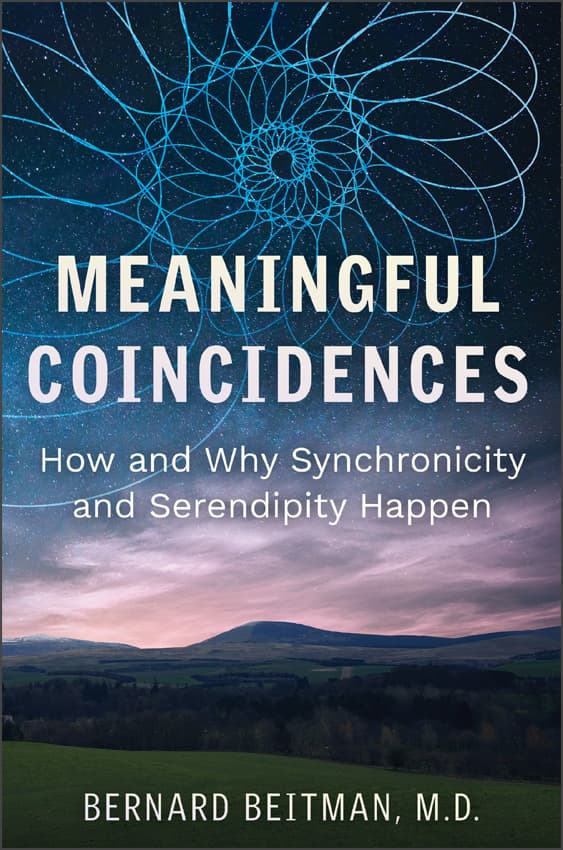
Episode #189 – Dr. Bernard Beitman – The Science of Synchronicity and Meaningful Coincidence
January 6, 2023 · 1:14:27

Episode 171 – Surfing Monster Waves, Mastering Fear & Flow State w/ Laird Hamilton
July 6, 2020 · 46:18
Independent conversations
Help make the next one possible.
Membership sustains ambitious, unhurried interviews and keeps the complete archive open to curious listeners everywhere.
Become a member