

The Human Experience · Episode
Episode 47 – Simon G. Powell
A conversation with Simon G. Powell
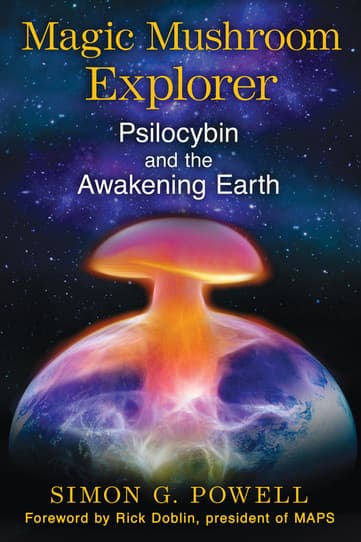
Simon G. Powell is Author of: The Psilocybin Solution (2011), Darwin’s Unfinished Business (2012) and Magic Mushroom Explorer In this episode we briefly touch on the neurological benefits of psilocybin.
Stay with the full conversation.
Episode field notes
Show notes
Simon G. Powell is Author of: The Psilocybin Solution (2011), Darwin’s Unfinished Business (2012) and Magic Mushroom Explorer
In this episode we briefly touch on the neurological benefits of psilocybin. We cover aspects of the global consciousness system, nature; as an intelligence system and its role in our history and culture as a species. We talk about ways to reconnect with this intelligence and how we can further this re-connection by realigning with the “inner” part of ourselves.
Reviews of Simon’s Work:
“Simon G. Powell has crafted a magnificent, multifaceted argument for the reintegration of psychedelics into science, culture, psychotherapy, and religion to inspire our unbalanced species before we ‘push the biosphere into total decline.’ The Psilocybin Solutionpersuasively illuminates the profound social value of large numbers of people experiencing communion with and direct personal perception of Nature as a single system of self-organizing intelligence. A massive accomplishment!” (Rick Doblin, Ph.D., founder and president of the Multidisciplinary Association for Psychedelic Studies)
“This book provides a clear and up-to-date picture of what goes on in the brain during the visionary psilocybin experience. The author’s intrepid speculations, centering on information as the fundamental stuff of the universe, are clearly signposted. The writing is lucid and a joy to behold, an important contribution.” (Jeremy Narby, anthropologist and author of The Cosmic Serpent, Intelligence in Nature, and The Psych)
“The profound experiences unlocked by the visionary psilocybin-containing mushrooms are more than a recreational holiday for the mind. They are, in fact, the key to understanding that consciousness is not an aspect of reality, it is reality itself.” (Dennis McKenna, Ph.D., ethnopharmacologist and coauthor of The Invisible Landscape)
“A worthy successor to Aldous Huxley’s The Doors of Perception, The Psilocybin Solution takes the reader behind the grand curtain of reality with a compelling hypothesis that approaches a unified field theory of human consciousness in an intelligent and interconnected universe.” (Bill Linton, CEO of Promega)
“In this fascinating and provocative book, Simon G. Powell speculates on the nature of reality. He posits that Nature is a deliberate and intelligently behaving system, and he pro


poses that psilocybin, by altering the neurochemistry of the brain in specific ways, enables novel patterns of information to emerge, allowing the psyche to become a sort of conduit to the Other. If in fact that is what actually happens, then entheogens (psychedelics) are much more important to the human species than has been realized.” (David E. Nichols, Ph.D., president and cofounder of the Heffter Research Institute)
“It’s as if these fungi, which grow wild on most of the Earth’s land surface, beckon us to commune with them, Powell hints. And if we do have the chance, we’d do well to heed his advice on the “retuning” process. This communion offers a link with the intelligence of Nature. Opening the doors of perception and returning to entheogenic wisdom could ultimately create a more mystical, meaningful society.” (Nexus Magazine, Vol. 18, No. 6, October 2011)
“Read this book. Follow directions in the last chapter closely. Confirm or deny.” (Diana Reed Slattery, Reality Sandwich, October 2011)
“Overall, another adequate introduction to entheogenic thought but one that, interestingly, broaches questions about neurology more explicitly than others, in attempting to locate entheogenic thought in a wider metaphysics.” (Psychedelic Press, November 2011)
“All in all, this is a stimulating and revolutionary volume, whatever your take on “chemically induced theophany.”” (Mac Graham, Whole Life Times, December 2011)

Excerpt from Mushroom Explorer: “We hype up our own intelligence but deny intelligence, even unconscious intelligence, to the larger system of nature that engineered us. We may even rave over artificial intelligence (AI), yet we do not get excited about the natural intelligence that the AI community often attempts to mimic. Indeed, very few scientists are prepared to state that nature has intelligent characteristics. You could argue that scientists don’t want to risk getting mixed up with intelligent design or creationism or that they are still recoiling from centuries of unquestioned religious dogma and therefore are loathe to embrace metaphysically potent ideas, but I suspect something deeper is at work.
Over the years I have come to the conclusion that the persistent refusal to acknowledge natural intelligence is actually due to a conceptual blind spot. Not a metaphorical blind spot but a real one. Just as there is a blind spot in the visual system–the part of the retina where all the “wiring” goes through–there is also a blind spot in our conceptions of nature. Whereas we will get very excited over the concept of an advanced alien intelligence, we cannot sense that same kind of advanced intelligence in the laws and forces of nature that served to evoke life.”
Find Simon’s Work here: www.simongpowell.com
A big Thanks to Simon for his time. We do not advocate the use of drugs on our program. If you plan to use them do it safely, responsibly and without getting arrested. Music for the intro: Bassnectar & Levitate – Chasing Heaven – INTO THE SUN
About the guest
Simon G. Powell
Simon G. Powell is Author of: The Psilocybin Solution (2011), Darwin’s Unfinished Business (2012) and Magic Mushroom Explorer
The complete conversation
Transcript
374 timestamped passages · 5,423 spoken words · Speaker-labelled from the episode audio
Transcribed from the canonical Episode 47 audio. Speaker names were inferred from verified voice samples and conservatively reviewed; combined turns retain both names. Automated wording may contain occasional errors. Select any timestamp on the left to play from that moment.
- HXP Announcer:
Welcome to the Human Experience Podcast. The only podcast designed to fuse your left and
right brain hemispheres and feed it the most entertaining and mentally engaging topics
on the planet. As we approach our ascent, please make sure your frontal, temporal and occipital
lobes are in their full upright position. As you take your seat of consciousness, relax
- HXP Announcer / Xavier Katana:
your senses and allow us to take you on a journey. We are the Intimate Strangers. Thank
- Xavier Katana:
you just fall off track. Well, this is where Find Mindfulness comes in. They offer a community
that will help you create those powerful lasting habits that keep you training your mind. Whether
you are the CEO of a Fortune 500 company or a college student running a startup,
Find Mindfulness can help you. Find Mindfulness is a 30-day program. How often are you looking
at your cell phone. Just ask yourself how often you look at your cell phone and then tell yourself
that you need to take this course. Mention the human experience. Go and sign up right now at
www.findmindfulness.com.
what's up folks this is our episode with mr simon g powell in it we get into the history
of psilocybin and its influences on history and culture we talk about reconnecting with the
biosphere biomimicry so it's certainly one of those wide-ranging conversations i certainly
recommend you check out Simon's work. I found his book, Darwin's Unfinished Business, especially
interesting. He's also got a couple of books out on psilocybin. You can order copies of those below.
Otherwise, please get to us on social media. I try my best to keep things updated there. We are
in the process of getting, giving the site a cleaner look. So I spent some time this weekend
working on that for you guys yeah find us on facebook twitter at the human xp subscribe to
our youtube channel please spread the podcast out as much as you possibly can word of mouth style
i mean i think that people love this show the only thing that is stopping us is that people
just haven't heard it yet. So if you're sitting on sending me an email, don't hesitate. I do my
best to respond to those. We've got a stack scheduled through March. Some really intriguing
authors. We are full steam ahead, folks. Thank you guys so much for listening.
The human experience is in session. My guest tonight is Mr. Simon G. Powell. His book is
The Mushroom Explorer. Simon, welcome to HXP.
- Simon G. Powell:
Yeah, nice. Thanks for having me on.
- Xavier Katana:
So, Simon, your work surrounds this sort of idea of psilocybin mushrooms and their insights, and you've created a couple books on this.
I mean, what sparked this interest for you, and how did you get into this?
- Simon G. Powell:
That's a good question.
Why would anyone spend their adult life investigating a substance that's classed as Schedule 1 in America, Class A in the UK?
There's always taboo around it.
Yeah, I became interested in psilocybin, as I suppose many people do, because the effects are so interesting.
Anyone who's interested in consciousness and the potential realms of consciousness and what I would argue are authentic spiritual experiences, and I'm spiritual in inverted commas, you're going to eventually be led to plants and substances like psilocybin, to psychedelic substances.
And I think approached in the right way with care and caution, they can lead to very illuminating experiences.
And it's because I had a number of illuminating experiences garnered, deriving from, I should add, from mushrooms that grow in the country in which I live in here in the UK.
You know, no money was ever exchanged.
This is a natural resource that grows every autumn in the UK.
So it was a case of exploring this free natural resource from this generous biosphere within which we live.
It was through those kind of nature-based experiences with a naturally occurring resource that inspired me.
And I've stuck with it for about 25 years because it's interesting.
- Xavier Katana:
So, I mean, what was the conclusion of some of your research?
I read some articles, and this is becoming, I think, more commonplace, that these studies that are coming out that say that psilocybin is able to repair brain tissue, it's helping with PTSD.
I mean, there are these ongoing things that seem to be coming up where psilocybin is helpful.
So what is your take on that?
- Simon G. Powell:
Well, yeah, there's been a resurgence in scientific research with psilocybin, particularly over about the last 5-10 years.
I recently interviewed some of the main researchers in America.
And, yeah, psilocybin is proving to be a very useful therapeutic tool.
Primarily, it's being used to alleviate anxiety in people suffering from terminal cancer.
But it's also being looked at as a therapy to treat, well, in Alabama.
I recently met a guy, a recent scientist from Alabama who's doing research.
He's looking at using psilocybin to treat cocaine addiction.
So you can imagine if they get that's going to get a lot of headlines if they get positive results from that.
So it's been used successfully in various therapeutic settings to cure addictions and to alleviate anxiety and to alleviate obsessive compulsive disorder and this kind of thing.
- Xavier Katana:
that this compound has benefits, why do you think it's illegal?
- Simon G. Powell:
Well, that's probably a leftover from the...
I questioned a lot of the scientists about this, why it is illegal.
There's a whole...
There's a load of reasons for that,
mainly because of what happened in the 60s.
And there's a fear of sort of the losing control of the populace or something.
There's an unfounded fear.
There's an unfounded fear because it's an aspect these psychedelic agents, they cause to emerge an unusual potential within the human psyche, an unusual kind of exotic experiences.
And they're alien to sort of modern culture, although older cultures manage to integrate these substances.
So there's a lot of fear there because we're basically afraid of ourselves.
We think it's like Pandora's box rowing, but I don't think we need to have fear.
But, yeah, it's a slow integration process.
They're accorded a Schedule I or Class A status because they're believed to be extremely harmful, which is not true.
Psilocybin is not addictive.
It's not killed anyone.
And they're considered not to have any medical utility.
Well, that's been proven wrong recently because papers have been published showing the medical utility.
So things are set to change in the next 10 years, I think.
- Xavier Katana:
Right. I mean, you live in England, God save the Queen, but do you find that the perception in England is different as far as the usage of these compounds?
Do you find it's different there versus in the States?
- Simon G. Powell:
Well, the situation until 2005, the situation with psilocybin, it was different than America.
Until 2005, in the UK, it was legal to pick and possess unprocessed psilocybin mushrooms.
And people have been using them for about 30 years.
It was only in 2005 they were, the fresh mushroom was illegalized.
But, yeah, I mean, the situation with the drug situation in the UK is pretty much the same as in the USA.
It's like a zero.
Alcohol is fine.
- Xavier Katana:
Tobacco is fine.
- Simon G. Powell:
But anything else, any other change in consciousness is deemed to be a criminal offense, you know.
So it's just as crass here, the situation with drugs, as it is in America.
Although I was recently in America and I was in Colorado,
actually and they've legalized cannabis there now so I think you're one step ahead.
- Xavier Katana:
And you gotta wonder why something so readily available, alcohol, which turns most people into complete asshats, is legal and these compounds that kind of expand your consciousness make you think about it. You gotta wonder why that exists.
So moving on here, in your book, Magic Mushroom Explorer, you talk about, you mentioned Terrence McKenna, and you talk about how kind of bringing the experience in using the darkness and silence.
How have you found that affects the experience?
- Simon G. Powell:
Well, I talk about in my book that originally I, Terence McKenna always said you should take psilocybin in silent darkness.
And I used to do that in the early 90s.
But from the sort of mid 90s onwards until now, I found it's just as interesting.
My preferred mode of taking psilocybin is out in nature in like a wild oak forest far from the from cities and far from from civilization.
and to take mushrooms that have been picked locally,
to take them around a campfire with a close friend
with eyes open some of the time
and exploring the forest and exploring nature
and bonding with nature.
So I think that methodology is just as rewarding
and just as interesting as taking it in silent darkness.
So I don't think there are any set rules.
You know, the most important thing is set and setting,
to be in the right environment
- Simon G. Powell / Xavier Katana:
of mind and the right intention. Yeah. You, on your website, you describe yourself as having a
- Xavier Katana:
case of chronic biophilia, which is an awareness and love of the instinctive bond between yourself
and other living systems. What does that mean exactly? Well, it's just me joking when I say
- Simon G. Powell:
I suffer from chronic biophilia. I've had people write to me and say, are you okay now? No, it's
It's just a joke. It's British humour. But because of all these adventures I had out in the Lake District and Snowdonia, the last remaining wilderness areas in the UK where the mushroom grows and where I like to trek around and pick them and take them in situ, you really commune with nature.
If you're in a forest, you really feel the kind of wisdom within the forest.
And if the stars are out, it's fantastic.
And the sound of running water and looking at the trees and the insects and hearing birds and all this kind of thing, it really stimulates biophilia.
And you've got to remember, we live in a time where there's what they call nature deficit disorder because we've become so urbanized.
We've lost touch with the biosphere, you know, much to the biosphere's detriment as we're learning, as we're feeling the effects of this nature deficit disorder.
So, I mean, as a tool for addressing nature deficit disorder and catalyzing biophilia, which we need, I think, you know, psilocybin is a great tool for doing that.
So, yeah, chronic biophilia, that's just when your biophilia just gets ramped up to really high levels and, you know, you feel like you're in love with the biosphere, you know.
- Xavier Katana:
So do you feel like you're interacting with the plants and their consciousness in some way, the global consciousness?
- Simon G. Powell:
I've written a lot about what I call the paradigm of natural intelligence.
I think you can interact and feel and sense that there's an intelligence within nature, within living organisms, within biologic.
But I don't tend to see that as a conscious, intentional intelligence as such.
I see it as an unconscious intelligence, but even if I say it's an unconscious intelligence,
it's still replete with wisdom.
And the whole point is that we can learn from life and we can learn from ecosystems and
we can learn about symbiosis and try and incorporate that into human culture.
But there are different interpretations of this intelligence, which is undoubtedly within
the biosphere.
- Xavier Katana:
Hmm.
Okay.
Well, in your book, The Psilocybin Solution, which I think you wrote after Mushroom Explorer, right?
- Simon G. Powell:
No, no. Psilocybin Solution was a long way back.
- Xavier Katana:
Okay. My apologies. So in Psilocybin Solution, you talk about the role of psilocybin and mushrooms and the history of our culture and the connection these creatures and organisms create around us.
I mean, how did you get into that? Can you tell us more about that, please?
- Simon G. Powell:
Well, it's got a long, the history of the mushroom is fascinating because it's been used in Central America,
in and around Mexico for thousands of years.
The Maya used the mushroom we know, the Aztecs used the mushroom we know,
and various other cultures in and around Mexico.
It's just a fascinating story because it was the West, or Europeans in the West,
didn't know about this until Gordon Wasson in the 1950s discovered these secret mushroom ceremonies
going on in Oaxaca in Mexico. So the whole history of the mushroom is fascinating. And
what's even more fascinating is that when it was first, when Wasson wrote his famous
Life magazine article about psilocybin mushrooms in, I think that came out in 1957,
which is still within living memory, people would flock to Mexico to find these mushrooms and people
that they we now know there's there's a about 200 species worldwide um but they were not as far as
we know they weren't they might have been used thousands of years ago in europe there's no hard
evidence of that yet um but they we didn't we didn't know about it it was a new thing and people
in the late 50s and early 60s would go down to mexico to try and secure um to secure to secure
secure samples of this mushroom, not knowing that they grow all over the planet. You know,
they've been documented everywhere now. So the history of the mushroom and where it grows and
- Simon G. Powell / Xavier Katana:
how it's been used is fascinating. What was your connection with the
- Xavier Katana:
Amantia muscaria and Christianity? I found that interesting in your book.
- Simon G. Powell:
Flyogaric mushrooms. Well, I tried, the first mushroom I ever tried was actually the flyogaric
big red and spotted, red, white spots.
I never managed to get an effect from them.
From what I've read, they shouldn't be confused with psilocybin mushrooms
because their psychoactivity is completely different.
They're not even classed as a psychedelic.
I think they're classed as a hypnotic or something like that.
So my main area of focus is the psilocybin mushroom
and not the fly agaric mushroom.
- Xavier Katana:
But you do mention a connection between Christianity and a link between Jesus and this, I'm not sure, I don't remember the name of the person that you mentioned that started this theory, but basically that the Holy Grail was actually this fly agaric mushroom, a mantia muscaria, and Christianity and Jesus is kind of centered around that.
- Simon G. Powell:
area of focus i i steer clear of that i don't there's a lot of uh no comment type question
well no not no comment it's just it's not it i'm not i don't buy into those notions of uh because
that is because of the psychoactivity of the flyagoric if you go on erowid and look on allegro
yeah yeah if you go on uh erowid and look at people's uh experiences with the flyagoric it's
often, you know, it's often unpleasant. It has unpleasant effects on the body, and it's totally
different to the tryptamines. And the tryptamines are psilocybin, things like psilocybin and ayahuasca,
for instance. They're what I would call the true psychedelics. And the flyagaric, the active
ingredient, muscarine, I think it is, is totally different to the tryptamines. So, I've never
- Xavier Katana:
So let's move on here.
So, I mean, where do you see yourself moving towards with this work?
I mean, how do you distinguish yourself versus other people who've done this?
I mean, Terrence McKenna wrote Food of the Gods.
And so you're kind of writing about psilocybin, but where do you see your work going within the next 10 years or so?
- Simon G. Powell:
Well, my main area of focus now, and what I'm interested in the most, is this natural intelligence paradigm.
as I say in the new book, the thing I, the main thing I got from, it's about 25 years of research
now with psilocybin, the main thing or the gift in inverted commas I felt, in inverted commas,
that I think I received as it were, is this natural intelligence paradigm. And I'm very keen
to promote the notion that evolving life is an intelligence. And I think it's important because
learn from that intelligence and we're at a crucial juncture of human history and we need to
if human culture is to sustain itself right you hear a lot about sustainability all the time now
well life life's been around for almost four billion years and it's learned the art of
sustainability so there's a tremendous amount of wisdom within organisms within ecosystems and the
relationship
symbiotic relationships between organisms.
And I used to think about this and feel this a lot during my psilocybin experiences and that's what I want to, I'm concentrating on.
It's the natural intelligence paradigm. And when I talk about natural intelligence I don't even have to talk about psilocybin.
I mean I can talk about psilocybin because it was a creative inspiration behind my current work.
It's a subject unto itself.
So that's the thing.
So let's define that.
- Xavier Katana:
What is natural intelligence?
- Simon G. Powell:
Well, you can contrast it with artificial intelligence if you think of clever robots and that kind of thing, clever computer systems.
Natural intelligence is, I would call it, it's the intelligence of life itself.
That life, particularly the fact that life evolves and it's so flexible and plastic, that it's an intelligence.
And it's not just, I mean, the traditional scientific view would be that life is pretty much mindless and essentially purposeless and that nature is essentially purposeless and that life is just interesting stuff.
But it's not just interesting stuff. It is interesting stuff, but it's interesting stuff that behaves in a specific way. And the specific way in which living things behave and biologic behaves, it's intelligent.
Because remember, the root meaning of intelligence is to, it means intelligere, which means to choose between.
So evolution through natural selection is the persistent selection of sensible choices.
So when Darwin defined evolution as descent with modification, I would say it's more a case of descent by way of sensible modifications.
And as soon as you use the word sensible, that leads into intelligence.
And so what I'm claiming is that evolving life is an intelligence unto itself.
And it shouldn't be confused with creationism because creationists, when they talk about intelligent design, they're inferring an intelligence outside of nature.
I'm saying nature itself is an intelligent system.
- Xavier Katana:
And was there anything in your experience that you would say is that defined, like perhaps defined your thinking?
I mean, was there any one experience that changed the way that you think about the nature of things?
- Simon G. Powell:
Well, it was mainly the natural intelligence thing derived from being in forests under the influence of psilocybin that I'd picked in the vicinity.
so it's just a matter of time spent in a an ecstatic blissful state of mind feeling very very
close with the natural environment feeling in communion with the natural environment and really
sensing that the whole system was there was an intelligence to it so it's yeah it's from my
the inspiration but behind the natural intelligence paradigm that i promote came from my psilocybin
- Simon G. Powell / Xavier Katana:
out in nature. So what can we do? How can we connect back into the sense of nature? And
- Xavier Katana:
we've disconnected from it. We suffer from technology and this urban sort of crisis.
So how do we connect back into nature? How do we move towards this reconnection?
- Simon G. Powell:
Well, I mean, I mentioned a few. You can have arguments and use rhetoric, but
education is very important. At the end of my latest The Magic Mushroom Explorer book, I mean,
I talk about things as simple as seeing the Milky Way. I mean, I think I read somewhere once that
about 50% of people now, because most of us live in cities, never see the Milky Way. So something
as basic as seeing, which our ancestors would have seen it all the time, you know, they would
have been connected to the bigger picture because they would have been perceiving the bigger,
the splendid, the glory of the bigger picture every night. So because of, you know, we need to
do something about light pollution. And I think children need to be taken out to places where they
can, you know, on school trips or whatever in the early evening, in certain times of the year,
so they can go stargaze. So things like that. And we need more parks, we need more roads shut down
and converted into strips.
You know, like I was in Central Park recently in New York.
I love Central Park.
I mean, it's beautiful that you've got this park
with beautiful birds slap bang in the middle of New York City.
But it needs to be extended.
You know, you need like larger roads shut down
and converted into strips of woodland or whatever.
So we need more greenery.
We need more green roofs.
You think of all the roofs of buildings,
that they're just bare.
If you're in an aircraft flying over a city,
it doesn't look very organic.
So we need to make cities more organic.
So I think green roofs, having living walls
and living roofs is a good idea.
Basically, culture needs to become more organic.
If it's to fit in with the rest of the biosphere,
it needs to become more organic.
And you're right, we have an obsession
with human technology at the moment
and we're just buried in our,
looking at our smartphones
stuff and, you know, people tripping over the mess we've created kind of thing, you know. So,
yeah, it's important we get back to nature because we have to, I'm sure one day, all being well,
we will go to the stars and human consciousness will spread out. But we need a firm footing,
you know, the ladder has to be kind of strong. The base that we set off from needs to be solid
and healthy. Only when you've got a solid and healthy, that's the key word, base, can you leap
need to repair our relationship with the biosphere.
And that's why I bang on about this natural intelligence paradigm, because part of the
problem is the way we conceive of life on Earth.
We don't see it in the right way, I don't think.
So there's a lot of things that can be done.
Even just talking about it is a good thing.
- Xavier Katana:
Right, right.
So you wrote, and I found this interesting, you wrote in your book, Darwin's Unfinished
Business, you wrote about how evolution is not just about survival of the fittest, but
clever and sensible behavior what is i mean what does that mean what would be an example of clever
and sensible behavior be well that's that's what i was saying earlier on it's sensible
- Simon G. Powell:
like i said darwin defined evolution as descent with modification but it's really descent
via sensible modifications the genetic changes the changes in the genetic code that are selected
by nature that are nourished by nature and preserved by nature which is a larger environment
that lead to some kind of life-affirming behavior in the art of living and being.
And to improve the art of living and being, behavior has to change in a sensible way.
This is why, and at the moment, human culture is not sensible in the context of the rest of the biosphere.
So this word sensible is very important.
But as a basic example of intelligence, think of a slime mold as this organism.
They found that if you put it, it's like a mushroom, but it's not a, it's like a fungus, but it's not a fungus.
They found you can put it in a maze with food in the middle and it will explore, it will send out tendrils to all parts of the maze.
The tendrils that don't lead to anywhere sensible, there's no food there, they kind of wither.
The tendril that makes it to the center and explores the center where the food is, that becomes preserved
and the slime mold will concentrate its structure into a direct route to the food at the center of
the maze. And when they did these experiments recently, and it was hailed as an example of
intelligence without a nervous system, and it was made headlines in Nature magazine, you know,
intelligence in a really primitive organism. But that's a good example of sensible behavior that
doesn't need to be conscious, but it's sensible behavior. So what nature constantly preserves
is sensible behavior, you know, better metabolism, better vision, better hearing, better running
ability, better ability to find water if you're a plant, better ability to synthesize enzymes.
It's always to do with sensible, life-affirming changes. And when you think about that and you
embrace that idea, that leads into this notion that it's intelligence. And that's what intelligence
is. We're intelligent because we can make sense of our environment. And life is the same. Life
has learned to make sense of gravity, to make sense of the laws of physics, to make sense of the
laws of chemistry. The whole thing is in intelligence. So human intelligence is the latest
offshoot of this. Human consciousness and human intelligence is built on a huge pyramid of
- Simon G. Powell / Xavier Katana:
intelligence which is the biosphere so how much how much would you say that our lack of understanding
- Xavier Katana:
of of this process or or maybe we forgot that we were connected to the biosphere maybe through all
this technology and all this advancement that we've we've disconnected from nature somehow
- Simon G. Powell:
we have it's no it's not like a suggestion we have disconnect disconnected from nature that's
why we're suffering from global warming and all these environmental crises,
you know.
There's no, you know, that's not new.
We're waking up to this more and more that we live in a, that human culture is totally,
the way I think about it, it's like we've cocooned ourselves in these urban environments
that are just full of, you know, the value system that is nourished within these urban environments.
It's all to do with making money and advertising and, you know.
everywhere. We've got basically mankind that has his head up his own ass. You know, we don't,
we've lost this connection with the life support system, because not only is the biosphere naturally
intelligent, it's a life support system. The air that you're breathing now and the air that I'm
breathing now. Well, you know, you know, Apple don't make that air, you know, Sony don't make
These big corporations don't make fresh oxygen.
You know, it comes from the huge forests that are still around that circle the northern hemisphere and you get algae in the ocean.
You know, the biosphere is a life support system.
It sustains itself.
And there are all these very complex cycles that we don't understand yet.
and symbiotic relationships, huge webs of symbiotic natural intelligence that we were
only beginning to acknowledge. And we've just, like I say, we've just cocooned ourselves away
from that. We think we can just do anything we like, build anything we like, burn as much fossil
fuel as we like without realizing where fossil fuel was produced by the naturally intelligent
activity of photosynthesizing plants. We've just used, we're like immature children,
you know, blundering about and, you know, pulling up things and we can do this, we can do that
without any awareness of the larger life support system, which even now is sustaining us
as we destroy that life support system.
So we really need to wake up to the wisdom
that is inherent within the rest of life
and within the rest of the biosphere.
And if you can't grok that,
then take some psilocybin mushrooms
and maybe you can, you know.
- Xavier Katana:
I agree completely that we are kind of trapped
and I think we've laid out the problem
and we've demonstrated that and we've built that.
So what is the solution?
I mean, how do we move towards more green things around us?
I mean, how can we consciously, not just by talking about it, but how can we practically, how can we use action to do these things?
- Simon G. Powell:
Well, I think one of the good signs in the right direction is the biomimicry movement.
Are you aware of the biomimicry movement?
- Xavier Katana:
No.
- Simon G. Powell:
The biomimicry movement, they've got an institute, a biomimicry institute.
you. Biomimicry means their definition of the biomimicry movement is the conscious emulation
of nature's genius, which is natural intelligence in other words, the conscious emulation of nature's
genius. So they're looking at engineering solutions by looking at how nature does things.
So that's a step in the right direction. We need to look to nature to learn how nature does things,
how life does things how life uses energy how life recycles how input become how output becomes
input and this kind of thing so there's a lot there's a lot of people working on this and um
yeah i mean energy we need to check we're still addicted to fossil fuels and in the uk they
recently gave the go-ahead for the first fracking operation and i was thinking man it's like a it's
like a cigarette addict who's dying of lung cancer. And instead of switching to an electronic
cigarette or giving up tobacco altogether, it's ripping up the floorboards to try and find little
bits of tobacco down there. So, fracking is the same. It's a desperate attempt to squeeze as much
fossil fuel out of the biosphere as possible. And that's not the right direction.
So our energy, we really have to switch to green, renewable forms of energy and such.
So yeah, there's all kind of green movements working on this, who are aware of this, and you've got an interest in permaculture now and people getting off the grid.
- Xavier Katana:
Yeah, I quickly looked this up, and I guess Velcro is an example of biomimicry.
Yeah.
- Simon G. Powell:
Well, there's all manner of things.
think how much energy is used in air conditioning in hot countries. You know, there's a tremendous
amount of electricity used and therefore has a high carbon footprint. But, you know, you look
at a termite mound, it remains air conditioned at a relatively low temperature because the termites
would die otherwise. And, you know, it's not plugged into anywhere. It's all done through
water evaporation and, you know, the actual structure and stuff. So, life really is ingenious.
figured out all kinds of wonderful ways of using energy and, you know, and achieving homeostasis and
a healthy constitution. So, you know, we need to be looking to, we can learn. There's wisdom in
the rest of life. We're not the only species, you know, and life has been around for four billion
years, so it must be doing something right, you know. Forest, you get forests that, I've been a
Philippines, I visited forests that were apparently about 60 million years old and they weren't messy.
How did this survive for 60 million years without humans with clipboards overseeing everything?
It works on its own because life, that's what evolution does. It works out how to do things.
So we really, my point is, my point is that our relationship with the biosphere, with the rest of
nature at the moment is wanting and we need to readdress that relationship because it's not
- Simon G. Powell / Xavier Katana:
healthy at the moment. Simon, we're approaching the end here, man. Where can people find your work?
- Simon G. Powell:
Well, you can just, my website, simongpowell.com, all my stuff's on there, books and interviews and
- Simon G. Powell / Xavier Katana:
films I've made and stuff. Is there anything you're currently working on?
- Simon G. Powell:
Yeah, it's been eight years since I made a film. I've just begun filming some people to make a,
I said earlier, natural intelligence is my main thing, but I've got a last film I want to make
about psilocybin, looking at the resurgence in psilocybin research, psilocybin science. I'm
making, I've just begun filming for a new documentary about the mushroom. All right,
- Xavier Katana:
Simon. Well, I really, really appreciate your time, sir. Thank you so much for being here.
This is The Human Experience. We are going to get out of here. We will see you guys next week.
Thank you so much for listening.

Episode 123 – A Drink With Dr. Dennis Mckenna: Plants, Ecology, Ayahusca
October 23, 2018 · 34:59
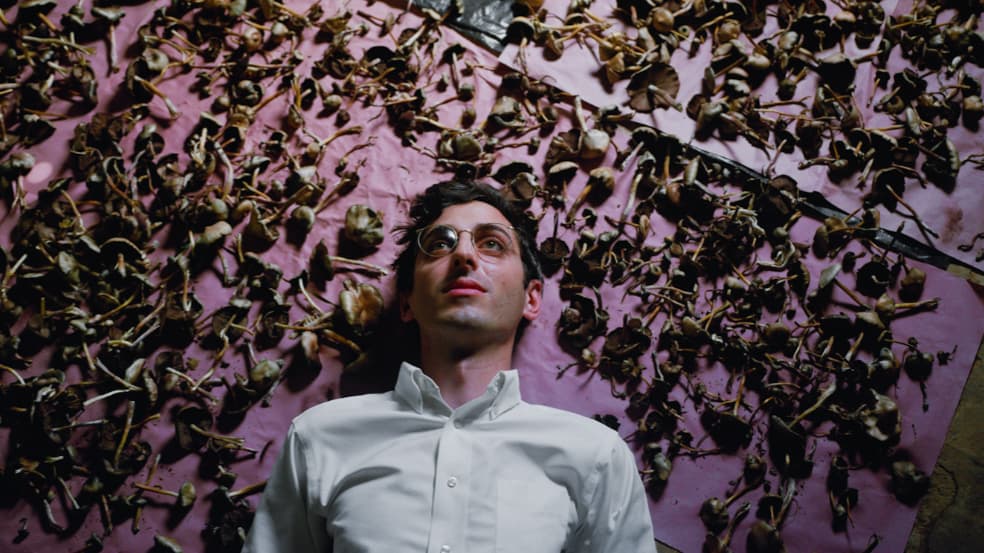
Episode 98 – Hamilton Morris on Chemistry, obscure compounds and working with VICELAND
June 26, 2017 · 31:32
EPISODE 199: Dr. David Nichols — Psychedelics, Consciousness & the Chemistry of the Mind
October 20, 2026 · 1:12:11
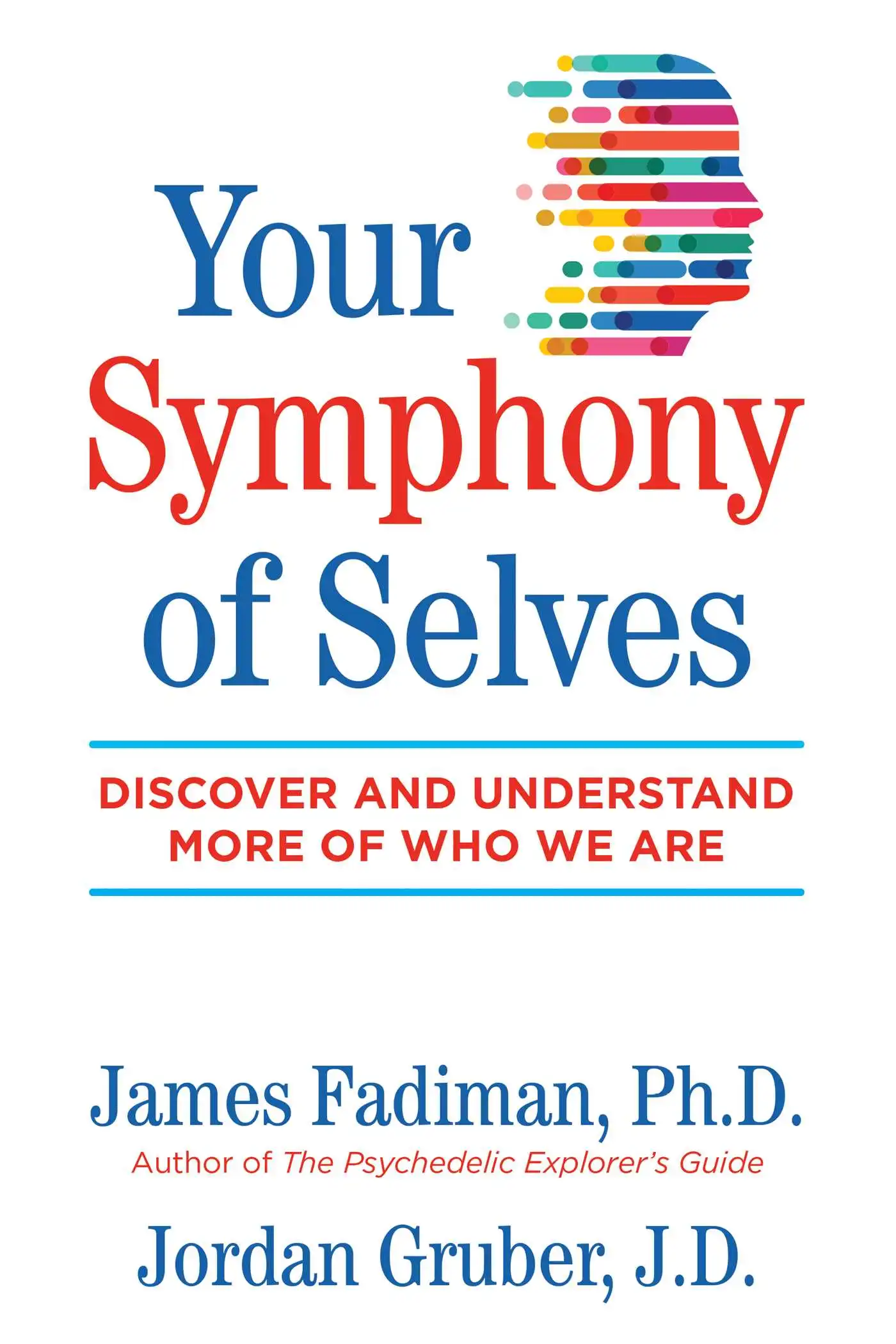
Episode 194 Dr. James Fadiman – You Are Not One Self: Microdosing, Multiplicity and the Mind
September 4, 2026 · 1:14:38
Episode 153 – Carlos Tanner – Healing Trauma/PTSD – Plant Medicine, Ayahuasca
December 26, 2019 · 1:08:44
Episode 147 – Dr. Christopher Bache – Navigating the Mind of The Universe
October 17, 2019 · 1:08:35
Independent conversations
Help make the next one possible.
Membership sustains ambitious, unhurried interviews and keeps the complete archive open to curious listeners everywhere.
Become a member