

The Human Experience · Episode
Episode 26 – Mr. Stephen K. Hayes
A conversation with Mr. Stephen K. Hayes
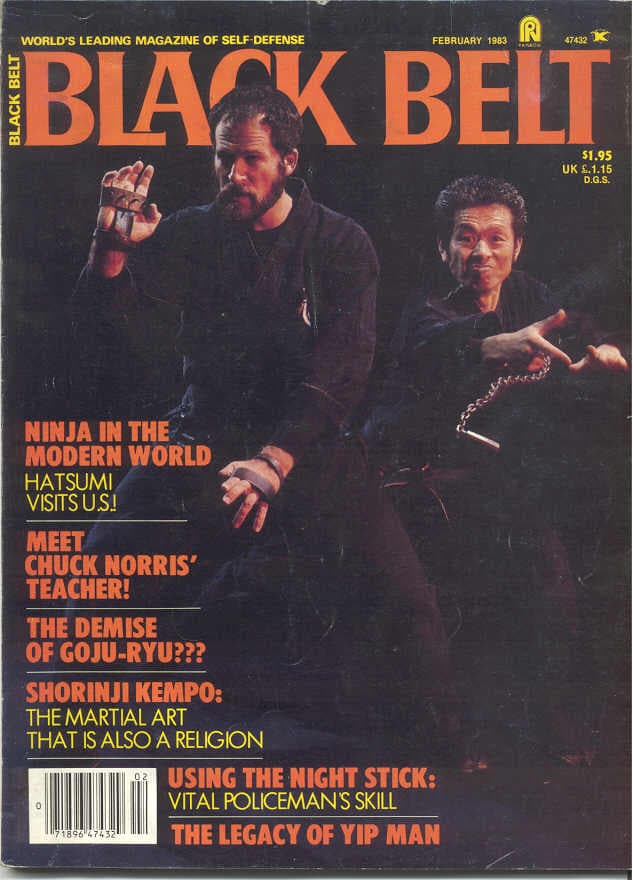
STEPHEN K. HAYES – Ninjutsu In the 1970’s Mr. Stephen Hayes traveled to japan to seek out Dr. Masaaki Hatsumi Sensei, the grandmaster of the ninjutsu fighting art. Without even correspondence from Hatsumi Sensei Mr.
Stay with the full conversation.
Episode field notes
Show notes
In the 1970’s Mr. Stephen Hayes traveled to japan to seek out Dr. Masaaki Hatsumi Sensei, the grandmaster of the ninjutsu fighting art.
Without even correspondence from Hatsumi Sensei Mr. Stephen Hayes accomplished the seemingly impossible for a westerner at the time – he began studying the art of the ninja.
After several decades of training Mr. Stephen Hayes brought back the teachings of Hatsumi Sensei and opened his own schools to spread awareness of one of the most esoteric fighting styles known to man.
Black Belt magazine regards Mr. Stephen Hayes as “A Legend; one of the most infuential martial arts masters alive in the world today” 
In the late 1980’s Mr. Hayes serendipitously began serving as the head of the protection detail to his holiness the Dalai Lama.
In this episode we cover Mr. Hayes’ story, his adventure through Japan and how he has changed the face of martial arts in the west forever.
The Ninja:
A ninja (忍者?) or shinobi (忍び?) was a covert agent or mercenary in feudal Japan. The functions of the ninja included espionage, sabotage, infiltration, and assassination, and open combat in certain situations. Their covert methods of waging war contrasted the ninja with the samurai, who observed strict rules about honor and combat.The shinobi proper, a specially trained group of spies and mercenaries, appeared in the Sengoku or “warring states” period, in the 15th century,but antecedents may have existed in the 14th century, and possibly even in the 12th century (Heian or early Kamakura era).
In the unrest of the Sengoku period (15th–17th centuries), mercenaries and spies for hire became active in the Iga Province and the adjacent area around the village of Kōga, and it is from the area’s clans that much of our knowledge of the ninja is drawn. Following the unification of Japan under the Tokugawa shogunate (17th century), the ninja faded into obscurity. A number of shinobi manuals, often centered on Chinese military philosophy, were written in the 17th and 18th centuries, most notably the Bansenshukai (1676).
The Bujinkan:
The Bujinkan (武神館) is an international martial arts organization based in Japan and headed by Masaaki Hatsumi. The combat system taught by this organization comprises nine separate ryūha, or schools, which are collectively referred to as Bujinkan Budō Taijutsu. The Bujinkan is most commonly associated with ninjutsu. However, Masaaki Hatsumi uses the term Budo (meaning martial way) as he says the ryūha are descended from historical samurai schools that teach samurai martial tactics and ninjutsu schools that teach ninja tactics.
Toshindo:
To-Shin Do is a martial art founded by Black Belt Hall of Fame instructor Stephen K. Hayes in 1997. It is a modernized version of ninjutsu, and differs from the traditional form taught by Masaaki Hatsumi’s Bujinkan organization. Instruction focuses on threats found in contemporary western society. In addition to hand-to-hand combat skills, students are exposed to: methods for survival in hostile environments, security protection for dignitaries, how to instruct classes and run a school, classical Japanese weapons, meditation mind science, and health restoration yoga. The headquarters school (hombu) is located in Dayton, Ohio, USA.
Find Mr. Stephen Hayes and his work here: http://www.stephenkhayes.com/
Stephen Hayes is truly a master, eloquent in his craft – an artist that has changed the game in regards to martial arts and everything ninja; for the world as we know it. Our conversation flowed seamlessly as we navigated Mr. Hayes’ life and his unique perspective. There is something about having a conversation with someone who has done the seemingly impossible and sharing that story with the world. When we look at the canvasing synchronicity involved in all the things that happened to Mr. Hayes on his path, I think it’s healthy to remember that there is a serendipitous creature behind this thin satin veil we call reality. Thank you so much to Mr. Hayes for his presence on HXP
<br />
Read the conversation
Transcript
welcome to the human experience podcast the only podcast designed to fuse your left and right brain hemispheres and feed it the most entertaining and mentally engaging topics on the planet as we approach our scent please make sure your frontal temporal and occipital lobes are in their full upright position as you take your seat of consciousness relax your senses and allow us to take you on a gym we are the intimate strangers thank you for listening what’s
up guys this is such an interesting episode with mr. Steven Hayes and we really just get into the strata of how brought ninjutsu into the West really cool really interesting story quite honored to have mr. Hayes lend us his time please do subscribe to our YouTube human XP we also have a Collin number 58 689 human please use it do us a call leave us a voicemail we would really appreciate it thank you guys so much for listening
the human experience is entering the shadows of ego as we explore ninjutsu with my guest mr. Steven Hayes mr. Hayes thank you so much for being here sir it’s an honor it’s great to be here so mr. Hayes if you could briefly tell our audience who you are and what you do for
those that don’t already know that would help to preface this conversation well in a nutshell in the 1970s I went to Japan to find the last training hall of the ninja this is before there were turtles or anything else like that you know and I was the first American to become actual disciple of the Grand Master there and for several decades I stayed in Japan went back and forth from America it was a very different martial
art from the 1980s the idea of being a protector as opposed to being a champion somebody who fights for his own name a very different and I developed from mid-1990s a modern version of the ninja fighting art I call it talking doll and I’ve been promoting that since the mid-1990s and here we are 20 years later I was inducted into the black belt hall of fame in 1985 I’ll get the martial art industry association Lifetime
Achievement Award this July wrapping up a career here very interesting i’d like to get more into I mean black belt magazine calls you a legend one of the most 10 influential martial arts masters alive in the world today if you could just kind go into more story about how you got to Japan and met Natsume sensei I think that would be interesting well um got to travel back you know almost 40 years to a time when hatsumi sensei was a
relatively young guy in his early 40s his teacher takamatsu sensei had just died takamatsu was the guy from the 1800s um he witnessed a lot of radical change in Japanese culture I went through the war and had found in hatsumi sensei a worthy heir and so he had just finished transmitting all of this ancient cryptic lore and had died in his 80s I arrived on the scene there were 15 people training in the dojo at that time
you know it’s kind of funny to think now when you look at all thousands of thousands of people around the world involved in this but there were 15 people and I was the non-japanese and I was amazed that they allowed me to train they were very welcoming brought me right into the training hall training was brutal very very rough rougher than I was used to later I found out you know I was so honored that they would allow
me to train with them years later my what my japanese wife was talking with one of the Japanese seniors and you know she had expressed that you know I was honored that they had accepted me and he looks at her and he says all he says is that what he thought happened she said what do you mean oh no we thought he was a big guy from America we try all the techniques out on him he’d get sick of us after about a week and want to go back home
and we could continue on where their training he just never went home so I was I guess supposed to be discouraged but you know what i learned there was so different from anything I had encountered in the US and it just steeped my desire no matter how rough or discouraging it was I was determined that i was going to learn this i was going to get this i was gonna be the the ninja martial art yeah yeah very very interesting in your book i’m not sure
which one uh there I think I mean didn’t you write to me sensei and there was kind of no reply and you just showed up in Japan haha yeah this is you know way before the internet or emails or anything like that and I managed to find an address I just sent a letter to masaaki hatsumi in notice city and I sent several letters actually running three didn’t get any reply um but it just you know I was obsessed I had to do it and I got there and they were very
welcoming um for the you know for the reasons I just went into and I said well didn’t you get a letter from me oh yeah yeah we got three letters from you nah Asuma sensei said he knew you were coming over so there was no need to reply Wow ok so i guess i was that obvious in my determination to to get it or he knew psychically that you know this was going to be an important relationship for the ninja martial art I’ll never know I’ll never know yeah
very very intriguing with that story why why do you think ninja 2 has survived for so many thousand years I think it’s a couple thousand years well um that’s a really good question obviously political situations in Japan of the 1500s the 1600s you know no longer exists this isn’t an underground resistance movement but you know modern times there are different very different but equally perplexing difficult times you know
people have so much more than they’ve ever had before and yet it seems that you know people aren’t so happy they have plenty of free time and certainly the Internet has allowed people to be in touch with each other and yet you know there’s there’s a lot of discord and so when we look at what ninjutsu really is it really is not a martial art as such that’s just one aspect of it it really is about how to fit in how to adjust oneself so that we don’t
make a target out of ourselves people don’t notice us as much as say you would notice a MMA champion or somebody like that and so as the ages go by different challenges arise for human beings and there’s something that’s timeless about this ninjutsu that causes it to continue to change its form a little bit and be very be very valid to study in the different different times since world war two what do you think what do you
think it is about ninjutsu that makes it so different than other martial arts well I can say pretty quickly um you know a lot of in the West in the West anyway a lot of martial arts are set up really on a sport model two people go into a ring and you know the better man wins and this guy who comes in second place you know he vows to train harder and he’ll get another chance and ninjutsu is so old that it goes back to
an older time an older age where you either one there was no second place you know you were killed or maimed and and it was used as a way to preserve peace to encourage peace the summer I warlords were you know vying with each other for power and the ninja could subtly persuade these people peace was was was was better and so to this day the reliance on rescuing other people um and escaping just defend and then disappear makes ninjutsu a very
different kind of a martial art than one where a 28 year old champion at the height of his you know physical prowess is temporarily the guy that everybody celebrates yeah um I mean this might be a little bit of a controversial question you can elect to not answer it if you want but what was what happened between the Bujinkan system and the the toe Shindo cyst I mean there was kind of a split where you decided to open the
quest centers and move away from natsume sense his teachings what caused that well what happened over the years the 1970s until the early 2000s I wrote a series of books that are still available to this day and it made Dineen jitsu quite famous so there weren’t 15 people studying for very long uh everybody wanted to everybody wanted to be Steven Hayes you know they all wanted to be the guy and when you can’t be the guy I’m
the guy you have to create a new role but people wanted to have that old days kind of a situation so that was going on there were a lot of people that didn’t particularly like me you know they were tried to criticize the way I handled the early days of publicity and so forth they wanted to be important so that was one aspect another aspect was that hatsumi sensei was changing and he was adjusting the art to fit what Japan was
looking for what Europeans were looking for it wasn’t the same art that I had studied in the 1970s it became kind of like a abstract art strange funny kind of situations how would you defend against guy with 26 foot bows you know things that would never happen in real life they were just fun to explore but I was not ready to go there I really believed in the way we had trained originally so finally there were some individuals that were so obsessed you
know really with me and my role they wanted to all cause a little trouble and so I fine I felt I had gotten my start I had 30 years of training with Hudson me sensei it was time to take the ninja martial art and really make it appropriate for an American base hmm okay fair enough thank you so much for answering that what do you think is the most esoteric thing that you’ve learned about ninjutsu would be in all of your
years of training well the way I use the word esoteric it means something that is not obvious it could even be explained to somebody and there’s is not going to get it it’s a truth that exists but without certain experiences nobody’s going to understand that truth so I would say the most esoteric thing that I’ve learned is the reality behind why ninjutsu exists the the subtle way in which the training effects changes a person and again I’m
going back to my 1970s training that way you can’t stay in this martial art and just get stronger you have to change as a human being as you’re learning these lessons and that changes were not always easy changes were very heartbreaking sometimes but those were necessary in order to develop a kind of warrior wisdom at the end of the path hmm why do you feel like there are I mean you don’t really see any ninjas in combat arena
such as the UFC and other fighting stages why do you think that is well you know the Brazilian jiu-jitsu rulebook is pages after pages of all of these rules and PFC the same thing you can’t attack the groin you can’t attack hinge joints they’re all is so-called no-holds-barred but there’s an extremely small window of applicability and so athletes train how to fit into that window and overcome somebody else and it’s just not what
we’re interested in doing I’m 66 years old you know what if I had to fight some 28 year old who has 50 pounds of muscle on me I still have to win by submitting myself to these rules and attitude MMA is big business now I mean mega big business and so they play two people against each other and you know one steals the other guys belt and they’re about to get into a fight on the stage and you know it’s all planned a big business this is philosophically at
great odds with real ninjutsu where what we’re trying to do is confuse an opponent into not seeing us as an opponent can you can you get into some of the differences between toe Shindo and the Bujinkan systems well one of the things that is different is the way that people attack bujinkan attacking method is kind of a standard from an old age where people had very short limbs and a long body you know genetically the Japanese of 300 years ago 400 years ago
and so a lot of that all of the attacks are initiated with a right foot moving forward and a right hand striking so see if you know the listeners can picture that right foot and right hand going forward at the same time nobody fights like that today nobody fights like that they project the left foot forward and throw a left hand or a right hand and so that was the first thing that we changed we made the attack is more like what an individual is going
to experience in the real world of attacks today the second thing that’s very different is in ancient Japan ninja would get into a fighting situation very rarely and it was almost always an escape how to escape so there were certain kind of spirit training we could say that was just unnecessary in those days everybody knew each day you go out we’ve got the possibility of physical run in today a lot of people don’t really know what violence looks like so
we have to teach them what violence looks like how it sounds there are certain things that people say when they’re trying to confuse a victim and so there’s a heavy reliance on verbal combat as well as the more realistic attacking method so that’s just the beginning that’s the beginning of what of what pushing dolly is how it’s different from the Bujinkan method you know I saw I saw you on the Discovery Channel and your kind of tasked to go in
there and kind of take this guy’s hat off or something and which I found very interesting but how what do you think the best way to defuse violence would be or is oh wow that’s a very broad question are we talking about violence among strangers violence among angry people all violence among people to know each other take quite a long time to answer that so I think the best thing to say you know where we start in is trying
to understand where this other person is coming from you know somebody be they got a bad day bad lifetime you know and they’re just mouthy and saying stuff that they shouldn’t and it’s offensive and we need to put a stop to this well is to the law doesn’t allow us to punish people for saying things no matter what they say if they’re just talking we can’t stop them from talking that’s the way the law is if a black belt in ninja martial art poaching
though were to physically go over and stop somebody from talking oh gee yep you’d be arrested and understanding where a person is coming from so somebody’s you know shooting his mouth off you know I might say something oh man not you’re the third person I’ve hacked off today and I’m getting in everybody’s way let me just get out of here I get in the truck I’m taking on if you get in your truck you go your way I’m apologize to you I’m sorry whoa
that’s kind of a strange way a slightly humorous gives the guy away out his save face my friend knows I just say that guy’s life and you know so that is I would say you know the beginning understanding where this person is coming from and then fitting in allowing ourselves to fit in to that exchange is there is there a personal way that you deal with injuries because I know that with training there’s usually a lot of
kind of wear and tear injuries that come about from that well there’s not really that much um we’re much safer than basketball can we lose a lot more people to basketball leagues and we do martial arts I think because it’s so dangerous that when people are training they’re totally aware of how far to take something you know for themselves for their training partner you know where’s with basketball or skateboarding or something
else you know they might be injury prone a person has another challenge oh I’m going to make this ramp I’m going to dunk this basket things that you distract away from how dangerous the activity is I guess we really don’t have that many injuries in our training so how do you think this this training toe Shindo can improve your everyday life well we start with the most scary possibility known to human being and that is what if I weren’t alive you know
what if this person had their way and I’m gone and there are all kinds of considerations you know maybe this person is just too big how do I fit in there maybe it’s not worth fighting how do i get myself away and out of there without making a target for myself maybe because the talker is not the problem the problem is his cousin over there who’s real quiet who’s just going to sneak up behind you and hit you over the head it demands absolute a complete
attention and I think that in our busy times you know busy lives you know that feels good it feels zen-like you know many is the time will be training along it was they okay well we’re done for the night and people do a double-take they look at the clock they can’t believe that 45 minutes has gone by there that rapidly involved in physical training the mental training trying to get better letting go of bad habit trying to pick up a new good at it I
think that’s really the key to you know how this works why it works why people continue to train for years and years what what can you say I know you’ve been training for many years but what can you say has been the most difficult lesson that you’ve had to learn through your training well physically when I started back in the 1970s you know I was in my 20s I was very used to a kind of aggressive style of movement charging
forward and knocking limbs out of the way and hitting and that’s just totally the opposite of the ninja way of winning we engage the limbs we let the person think they’re winning for a half a second we fit in and that took me a lot of years I would get it and then under a test or whatever I would you know be thrown a loop and go back to the old way just standing there trying to slug my way out and these guys had become
phantoms and that but yes I think that was probably that the toughest thing you know and it was good that i had the teacher that i had asuma-sensei is a very different person for me very different person and that’s good if you’re studying with a person who’s exactly like you it’ll just reinforce your bad habits um so I had to learn new ways of doing things and sometimes I wondered if he was kidding me you know this can’t be real but I’ll just go
along with it and sure enough it turned out you know that’s one of the aspects of growth that I experienced in there okay well I mean you’re you’re credited with being a Buddhist and it seems like serendipity is major famine you you have to be the most lucky person in the universe just because you were a security adviser for the Dali Lama how how did that occur how did that happen well I had visited with the Dalai Lama in 1986 when I was in
India and just as you say very lucky very lucky he had a brother who lived just a few hours away from me back in the US he was the first one to escape Tibet to 1951 and he had worked as a professor at Indiana University so I went over to see his brother and you know find out a few more things from him and that vary so 86 87 the Dalai Lama came to Indiana to see his brother brought all these monks with him and so I got to see him again there and he
remembered me it was a very amazing memory that he has he remembered me and then 88 I got to see him again 89 I was in Los Angeles at a conference where he was and they announced that he had won nobel peace prize and immediately the sleepy little california coastal campus just went wild reporters and people showing up people who didn’t even you know think about the Dalai Lama take him seriously suddenly were pouring in and
by then I had gotten to know the the Dalai Lama’s family and good to know his political staff and so I jumped in and helped them with some security security at this little sleepy California University was you know some old old duffer with a time key walking around you know Leo they had no security at all really and so after that he was coming to ohio and the staff had by then gotten to know who i was and asked if i would help with the ohio visit and then
it just went on and on from there whenever he would visit the US and be in the Midwest I would organize a team that lasted until Oh 1999 that’s when the federal government got involved we just we couldn’t keep doing this with you know volunteer work and finally talked the federal government into supplying State Department dignitary protection team and so like 70 guys would show up and three bomb sniffing dogs and you
know intelligence briefings every morning at that point I can I mean they were only protecting the Dalai Lama and I mean there were a lot of people at the events that you know needed security and so I continued as a liaison officer kind of working with the State Department and even played the role of the MC a couple of times to introduce him to the to the crowd as the years went by yeah I’m too old to be a bodyguard now they have guys
one-third my age you know yeah wow wow very very interesting mr. Hayes I I do really appreciate your time and you have to be one of the most interesting people that I’ve gotten a chance to read about and here out is there is there a place that people can find out more about your work yeah the best place probably is the web Stephen quejes you just write that out like one giant word ste phe my is Stephen quejes dot-com and that gives
them a way to find out about my training school here in Ohio find out about our we have a massive library of techniques that are online now people can subscribe and basic lessons to intermediate lessons to some pretty exotic techniques some of the weapons some of the psychic you could call it psychic type of work that we do all available online so Stephen quejes calm would be the best place to go just to check it out perfect
we will make sure that we link that in the comments section below mr. Hayes thank you so much for being here this is the human experience my name is Xavier we’re going to get out of here thank you so much for listening
Ideas worth returning to
Quotes
Five substantial excerpts from the published transcript, lightly edited for clarity without changing their meaning.
“Ninjutsu is not only a martial art; it concerns adaptation, fitting into an environment, and avoiding becoming a target. Its form changes as human challenges change. That flexibility is what makes an old discipline potentially relevant in different eras rather than preserving every historical technique unchanged.”
From the conversation“For years I remained loyal to the way I had originally trained, even when other approaches were interesting. After three decades with my teacher, conflict within the community forced a decision. I concluded it was time to adapt the art for an American context instead of treating Japanese transmission as a form that could never evolve.”
From the conversation“The most esoteric lesson was not a secret technique but understanding why the art exists and how training changes a person. You cannot remain in the practice and only become physically stronger. The lessons demand changes in judgment, perception, and character, and those changes are not always comfortable.”
From the conversation“Historically, a ninja rarely sought a fight; the priority was escape. Modern students may have little direct understanding of violence and therefore need realistic attacks and psychological preparation. Training must distinguish fantasy combat from the confusion, danger, and legal consequences of an actual confrontation.”
From the conversation“Before escalating conflict, try to understand where the other person is coming from. They may be carrying a bad day or a lifetime of pain and expressing it offensively. The law does not permit punishment merely because words hurt. Effective self-protection includes knowing when empathy, boundaries, distance, or legal help is more appropriate than force.”
From the conversation
About the guest
Mr. Stephen K. Hayes
In the 1970’s Mr. Stephen Hayes traveled to japan to seek out Dr. Masaaki Hatsumi Sensei, the grandmaster of the ninjutsu fighting art.
Episode 2 – Robert Bruce – Out of Body Experiences, Energy, Astral Dynamics
September 18, 2014 · 2:33:23

EPISODE 199: Dr. David Nichols — Psychedelics, Consciousness & the Chemistry of the Mind
October 20, 2026 · 1:12:11

EPISODE 198: Cindy Gallop — Make Love Not Porn: Rethinking Sex, Consent & Connection
October 13, 2026 · 58:43
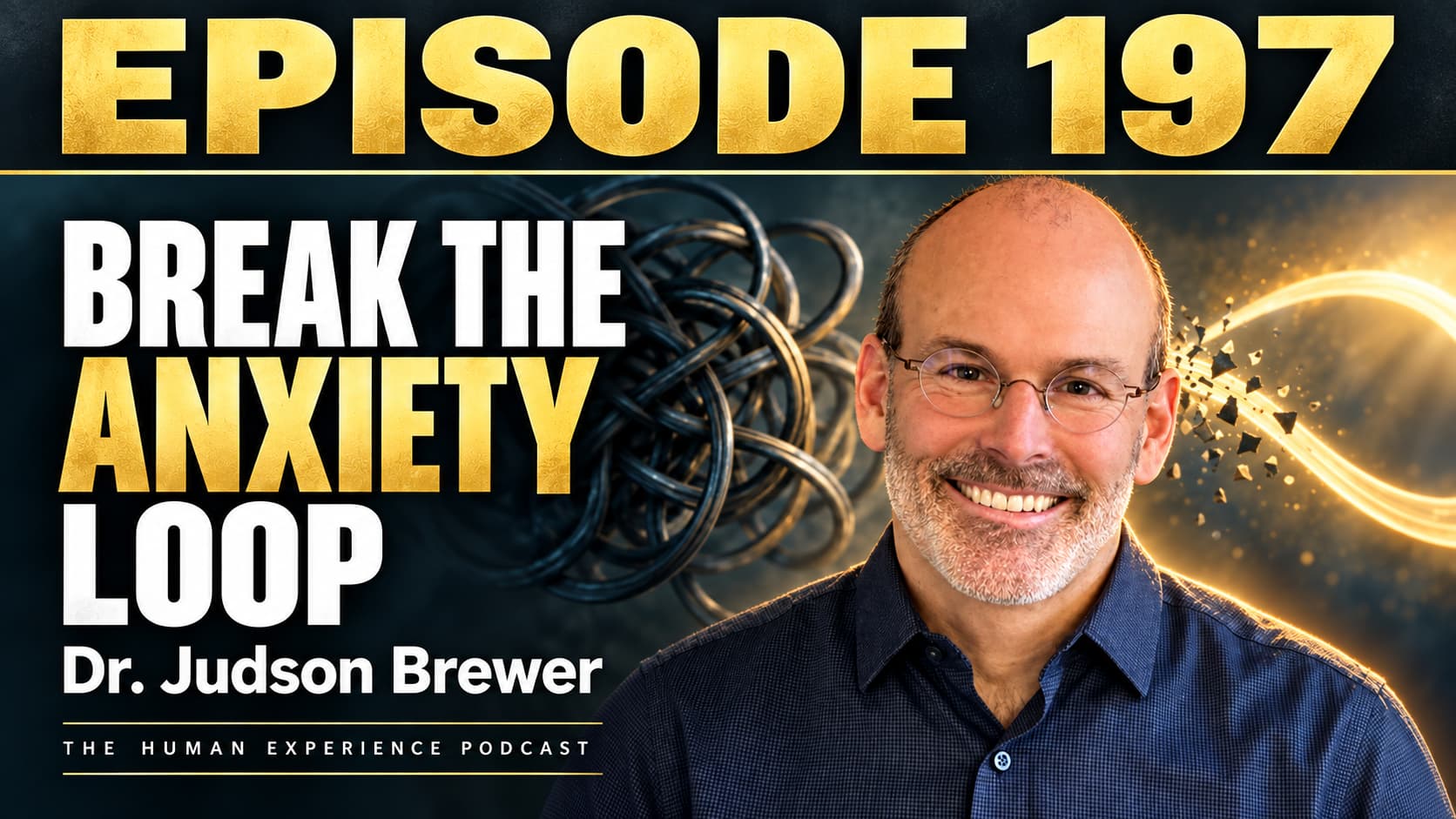
EPISODE 197 – Dr. Judson Brewer: The Anxiety Trap. How to Break the Loop of Worry and Stress
October 6, 2026 · 59:15

Episode 196: Waqas Ahmed — Polymathy, AI & the Future of Human Creativity
September 28, 2026 · 1:04:41

Episode 195: Dr. Satchin Panda — Circadian Rhythm, Sleep & Meal Timing
September 21, 2026 · 1:09:04
Independent conversations
Help make the next one possible.
Membership sustains ambitious, unhurried interviews and keeps the complete archive open to curious listeners everywhere.
Become a member