

The Human Experience · Episode
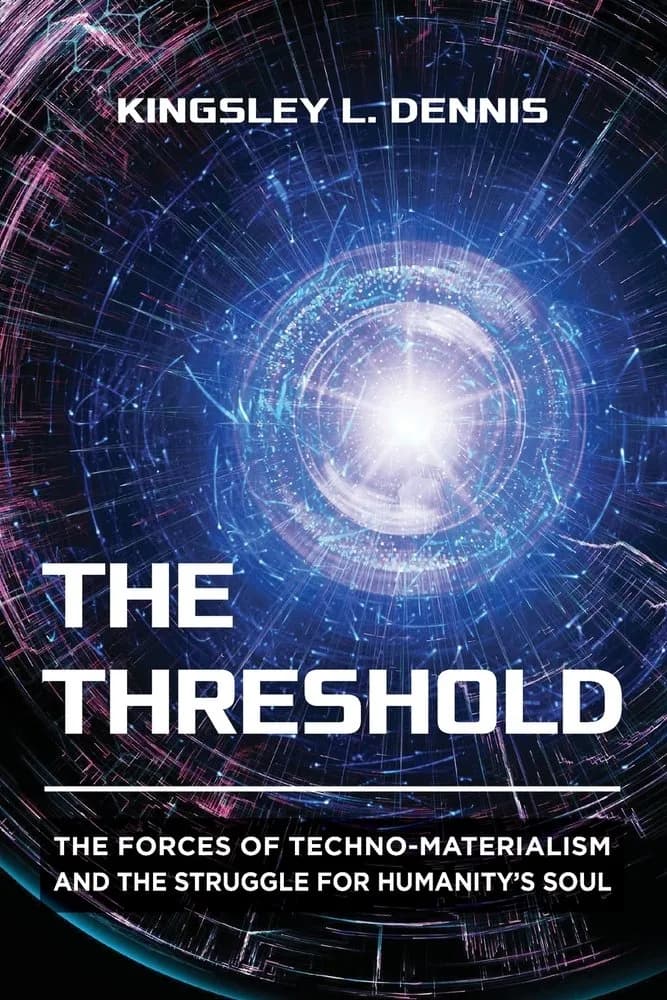
Episode 193 – Kingsley L. Dennis, Ph.D. on AI, The Threshold, and Reclaiming the Human Soul
A conversation with Kingsley L. Dennis, Ph.D.
What happens when the technologies built to serve us begin reshaping what it means to be human? Ten years after his first appearance on The Human Experience, sociologist and author Dr. Kingsley L. Dennis returns to explore the ideas behind The Threshold, and the choice he believes we now face.
Stay with the full conversation.
Episode field notes
Show notes
Episode Summary
Kingsley begins with the book he nearly abandoned. The Threshold: The Forces of Techno-Materialism and the Struggle for Humanity's Soul became both a warning and a personal reckoning—an attempt to name the forces drawing human life toward deeper technological dependence.
He traces techno-materialism through AI companionship, social isolation, the attention economy, and what he calls “smooth captivity”: a condition in which convenience quietly erodes attention, agency, and contact with the living world.
The conversation then turns toward creative imagination and Sage Talks. Kingsley describes setting aside conventional research to enter written dialogues with figures from several traditions, using the process to question where intelligence begins and whether reality is more participatory than materialism allows. His practical challenge is simple: set boundaries around technology and reclaim the attention required for a fully human life.
A private bonus continuation with Kingsley—on creative work, uncertainty, mortality, and the person behind the ideas—is available in the members archive.
Unlock the Bonus SegmentIn This Episode
- Why Kingsley nearly abandoned The Threshold before publication
- How techno-materialism turns convenience into “smooth captivity”
- AI companionship, loneliness, and the trade between connection and dependence
- Attention, agency, and practical boundaries for technology
- Creative imagination and the origins of Sage Talks
- Whether intelligence can operate through machines, symbols, and a participatory universe
Books and Works Mentioned
- The Threshold: The Forces of Techno-Materialism and the Struggle for Humanity's Soul by Kingsley L. Dennis
- Sage Talks by Kingsley L. Dennis
- The Inversion by Kingsley L. Dennis
- Surveillance Capitalism, referenced during the discussion
- Second Life, referenced as an early virtual-world precursor
Chapters
Twelve editorial chapters turn the full conversation into a path you can scan, share, and resume.
A return—and a book nearly abandoned
Kingsley returns after ten years and explains why The Threshold almost remained unpublished.
The threshold as a human choice
A threshold is not only technological; it is a point of choice about what kind of human future we will accept.
Convenience and smooth captivity
Devices and invisible infrastructure make life easier while quietly deepening technological dependence.
Soul, loneliness, and the attention economy
The conversation moves through AI companionship, belonging, sustained focus, and inward disconnection.
The metaphysical background to life
Kingsley describes the unseen assumptions beneath material life and why they matter to human development.
Transhumanism and technological immortality
The promise of extending or uploading life raises a deeper question: what exactly is being preserved?
Practical boundaries for technology
Kingsley shares the personal rules he uses to keep digital tools in service of attention and choice.
Children, screens, and portion control
Peer pressure makes total abstinence unrealistic, so the discussion turns to proportion, modeling, and boundaries.
Sage Talks and creative imagination
Kingsley explains the bridge from The Threshold to written dialogues that tested the edges of imagination and sanity.
Dialogue, validation, and discernment
How the conversations were written, what made certain presences memorable, and why the reader must decide what to trust.
Could intelligence operate through AI?
The pair consider whether machines can mediate intelligence and whether reality is more participatory than it appears.
Nature, materialism, and energetic exchange
The closing movement returns to the living world, the limits of scientific materialism, and where to continue Kingsley’s work.
About the guest
Kingsley L. Dennis, Ph.D.
Dr. Kingsley L. Dennis is a British sociologist, researcher, and author whose work explores consciousness, human evolution, technology, communication, and the future of society. Formerly based in the Sociology Department at Lancaster University, he has spent much of his career examining how technological systems and changing states of awareness are reshaping the human experience. He now shares much of his writing through KingsleyDennis.com and his Substack.
Connect with Kingsley
Selected moments
Watch the ideas unfold.
Three concise passages from the full conversation. Video loads only when you choose a moment.
Technology · Agency
Are we becoming captive to technology?
The line between tools we choose and infrastructure imposed around us.
Transcript at 11:12AI companionship · Belonging
Why people seek belonging through AI
When fewer people feel heard, an always-available artificial companion becomes persuasive.
Transcript at 18:39Artificial intelligence · Reality
Could intelligence operate through AI?
A sharper question than whether a machine is intelligent: what might move through it?
Transcript at 51:24Continue with the private conversation.
Unlock the Bonus Segment
Episode 196: Waqas Ahmed — Polymathy, AI & the Future of Human Creativity
September 28, 2026 · 1:04:41

HXP SHORTS: #001 – Deconstructing Death: What Happens When We Die?
September 14, 2026 · 11:37
Episode 194 Dr. James Fadiman – You Are Not One Self: Microdosing, Multiplicity and the Mind
September 4, 2026 · 1:14:38
Episode 191 – Marjorie Woollacott – Infinite Awareness – Consciousness Beyond Biology
August 28, 2025
Episode 171 – Surfing Monster Waves, Mastering Fear & Flow State w/ Laird Hamilton
July 6, 2020 · 46:18
Independent conversations
Help make the next one possible.
Membership sustains ambitious, unhurried interviews and keeps the complete archive open to curious listeners everywhere.
Become a memberThe complete conversation
Transcript
12 chapters · 269 speaker-labelled passages · 9,130 spoken words
Transcribed from the repaired Episode 193 master and formatted by speaker. Timestamps include the published episode's opening sequence. Automated transcripts may contain occasional errors.
Find the moment
Search this conversation
Search 269 passages and 9,130 spoken words.
A return—and a book nearly abandoned
- Xavier Katana:
The Human Experience is in session. My name is Xavier Katana. Our guest for today is Dr. Kingsley L. Dennis. Dr. Dennis is a British sociologist, researcher, and acclaimed author whose work explores consciousness, human evolution, technology, and the future of society.
He's formerly based in the sociology department at Lancaster University. Kingsley has spent much of his career examining how communication technologies, social systems, and changing states of awareness are reshaping the human experience.
Kingsley, it's a pleasure. It's been 10 years since we spoke last. Welcome back to HXP.
- Kingsley L. Dennis:
Xavier, it's good to be back, of course. And when you've just recently reminded me 10 years, it kind of gave me a bit of shock. Is the world accelerating or are we getting old faster? But anyway, good to be here.
- Xavier Katana:
It's probably both. You know, I read your book, The Threshold, which is one of the books that we're going to talk about. We're going to talk about The Threshold and Sage Talks today.
And I have to say, with The Threshold, it wasn't an easy read.
you say that, you know, it's, it's a bit of a dark philosophical take, I'm paraphrasing. And, and yet there's in the shadow, there is light associated with where there's shadow, where there's shadow cast.
And I found that to be very true. I mean, it was, it was tough to get through this sort of, I mean, we can talk about the book, but what, what about you? Like what inspired you
- Kingsley L. Dennis:
Well, you're right in that description, which is why in the pre-word I gave a bit of a, maybe a kind of reader warning saying this is quite dense, but, you know, it's for a reason to kind of show, shine
a light on some of the darker aspects so we can understand the world we're moving through. But actually, the book, I wasn't going to publish the book. I wasn't going to offer it to be published, in fact, because I was
quite concerned that I felt the book was the most, let's say, the most dense philosophical book I've written thus far. And that worried me because I wanted to start pulling away from the intellect at this stage of my life.
but the book you see was written as a response to a previous book which was called The Inversion and the book came out with the same publisher and I wrote the threshold and then I stopped writing it about I don't
know I think about a third of the way through and I put it aside and then I stopped it which is why I started Sage Talk so and then I came back to the threshold after a few months and I
read what I'd written I thought well actually this is quite good stuff I you know I It was I thought it was quite good writing from my my perspective professionally. So I thought, let's continue with it. And then I wrote
it. And when I finished it, I put it down and said, I'm not going to I don't want to publish this book. I felt like, you know, I was at a stage where I was moving on and I thought maybe
it's a bit too dark.
But the long shot is when I approached my publisher with Sage Talks, they said, like, don't you have a follow up to the inversion? and I said well I do actually but I was thinking of shelving it and when I
sent him some extracts he actually liked and said no we want to publish it so I was persuaded so you see it was a bit of tug of war internally whether I wanted to put this book out so I think
The threshold as a human choice
- Kingsley L. Dennis:
in a symbolic way it was worth putting out because it kind of was my final statement on where I'm going it was my personal threshold.
- Xavier Katana:
Oh, wow. Okay. I mean, that spells out a lot for me because, I mean, to me, the definition of a threshold is, it's not simply a crisis, it's a boundary between one condition and another. And in the book, you talk
about how humanity is on this threshold. So let's define that for our listeners. What is the definition of a threshold in your opinion?
- Kingsley L. Dennis:
Well, for me, a threshold, yes, it's about a moment where certain paths and choices can be divided and be taken. But significantly for me, it's a place of making decisions and making decisions which are important, not just minor decisions.
A threshold can be a point, a frontier, a pivotal moment where you make a decision, you make a choice. And from that step onwards, everything's changed.
It's like you have two train tracks in front of you and you choose which train to get on. And you get on the train. And as you're moving out the station, both trains are parallel because they're still in the station.
As soon as they leave the station, the tracks veer off completely different direction. following the other trains or following the other path. A threshold for me is that kind of important, significant moment where you make a decision and that more
or less carves out where you're going to move from thus onwards.
- Xavier Katana:
So in regards to humanity, what is the threshold that humanity is on or that we're approaching?
- Kingsley L. Dennis:
And yeah, and that is the point of what I was trying to say is that these are times where we make decisions. And in terms of the threshold, it was a decision based around a technological future. And it's not inevitable.
And this is what I was trying to point out. It seems inevitable because we've been told every day by the news, by the tech oligarchs, by commercial interests and by financial interests that, you know, this is the only way forward.
And now what I want to stipulate is technology is going to be with humanity from this onward. You don't go really from the tractor to the plow, but it's the degree of the dependency and the utilization of technology, which I
wanted to say can be a threshold moment. There's a difference between utilizing technology and being completely dependent on it. So the point of the threshold in terms of the book was, in terms of humanity, if you get to a are
completely dependent on it and it's integrated into your very life physically psychologically and spiritually then that's a threshold moment that you may not be able to come back from but of course there's other threshold moments there's a threshold moment where
you make a choice into reinvigorating what feel for you may be the human path the path of the organic future and the human soul, which is why the subtitle was The Battle for the Human Soul, because it is a kind
of threshold between a soulless and a soulful future.
- Xavier Katana:
Yeah. You know, would you call this moment a crisis, an opportunity, or both?
- Kingsley L. Dennis:
Well, it is both. It's definitely a crisis point. and I often use the, utilize the vocabulary or the terminology of the science of complexity. That was my background also at university, is that you get to a crisis point and you
get to a point of increased chaotic energy because the system needs that chaotic energy to push through into a new type of system. It fuels it. So it seems negative initially, but of course it's fuel for the fire, so to
speak. And if you push through to a different order, that chaotic energy then becomes utilized to rearrange the system into new parts. But of course, if that doesn't get rearranged correctly, you can get a complete breakdown or you get a
bit of a mess, really. So, yes, I mean, that's what I was pointing out with because a lot of people are speaking about technology. I was trying to integrate into a human, I use the word spiritual, but let's say an
inner developmental path also.
- Xavier Katana:
Yeah, I mean, would you link this back to, you know, calendar events such as what the Mayans talked about and other civilizations have warned us about? Would you link this to what you're talking about with the threshold?
- Kingsley L. Dennis:
I don't, I wouldn't personally link it to calendars.
I find that you have to be cautious when you link into specific dates, because we know that specific dating is difficult when you're talking about evolutionary moments, because evolutionary moments are so grand and dating is so precise in the human
or calendars on Earth. But I would agree that civilizations in the past have reached crisis points and they've left behind monuments that try to describe certain points, whether it's catastrophe, as in the Younger Dryas events, or whether it's what they
feel to be civilizational turning points. But of course, in the past, no civilization had an inkling of the technological positioning that this civilization would be in.
Because, of course, crisis points can be general, but you have specific elements that are trigger points. And in our case, those trigger points are technological advancement, the bringing in of what is known as AI, artificial intelligence.
That's another question of what degree of intelligence, but also the use and abuse of a power of power around those systems based in a few selected groups. So you have you have a real convergence of trigger points which are quite
specific to our civilization.
And
- Xavier Katana:
I mean, let's keep this as simple as possible for our listeners, just because I found the book to be really hard to read. I mean, just to be completely honest with you.
Convenience and smooth captivity
- Kingsley L. Dennis:
Sure, sure.
- Xavier Katana:
It wasn't easy to get through. And usually I can get through a book in a couple nights. You know, I'll just sit with it. And I found myself having to take breaks. Like, you know, I had to really reflect on
the stuff that you were bringing up. And so I want to ask, do you believe that humans are becoming a cage to their devices or even AI?
- Kingsley L. Dennis:
Well, that's an argument which is validated in lots of areas that we are becoming too much dependence integrated. But also it has been fostered upon us as well.
You have to think that there's a degree of technologies that we willingly consciously use in our everyday life. And we can ask our questions like, am I addicted to my smartphone? Am I scrolling too often per day? How many hours
do I spend on the monitor? These are questions we can ask. But there's impositions which may be to a certain degree out of our control is the automated infrastructural system, which is in operation around us.
There was the book a few years ago called Surveillance Capitalism, saying that, you know,
which is talking about our financial systems and our systems of commerce and everything is nudge orientated. We know that all our most of our systems, financial, political, mobility, transport, energy systems are all tech integrated.
So that's beyond us. What I will say is that I like I said, I wrote this book around 2023.
I submitted it fully finished to the publishers in June 2024. And then I and then I stepped back and I, to be honest, I speak too much on this book. I've done very, very few conversations on this.
I wish just to kind of let it be because I feel myself personally moving on as well. So. So, yes, I think the book was a statement.
because you have to read it at your own point in time to kind of relate to it. And of course, now things have moved on, advanced even beyond the things I was writing about in 2023, of course, 2026 now.
And we have an advancement in the tech systems, the militarization of those systems, the systems incorporating to social cultural life. You can say, you know, the flock surveillance is all a part of that. all these other systems which are vastly
more integrated than they were even three years ago. So, yes, that has been seen. But also, I think the other side of the coin, so to speak, is we're seeing a lot more
awareness and backlash to these systems coming up, which weren't in place so much a few years ago, because these systems was, and I've used this word before, which you picked up on, it's a smooth captivity. it's a smooth captivity when
you don't see these prison bars around you why would you escape if you don't think you're in a prison i do feel that there are certain groups on this planet that have already made the choice and crossed that threshold and
these are what we may we may align with them as as high interest groups and
beings with the people themselves there's an ideology and a mainstream narrative which is being fostered on the populace and we know that that's a highly tech orientated narrative a technocracy narrative but that hasn't been fully swallowed yet so i think
humanity actually has the choice of a still has an open an open threshold of where it wants to make those choices
taking grassroots individuals smaller groups uh smaller networks will be making their choices or slightly breaking away from the mainstream narrative and we're going to see an upswelling that my feeling is but those that let's say the higher up in the
pyramid i feel they've made their choice and and they're going full throttle for it
- Xavier Katana:
what would you make you say that
- Kingsley L. Dennis:
well they're they're investing their whole let's say the whole career the life savings their whole their own well-being ideology they're aiming to uh live longer have more control and and they they see this future as um they they believe
in that kind of future and you can see by the way they speak and for them it's inevitable when you start having this this sense of inevitability in your outlook and your perspective then it's obvious that you've made that choice
whereas a lot of people on the ground the groundswell there's an uncertainty growing not an inevitability so the higher up the pyramid you go in this let's say social cultural power organization, you see a certainty, inevitability being like concreted into
Soul, loneliness, and the attention economy
- Kingsley L. Dennis:
the system, whereas low at the bottom, I'm seeing more uncertainty, more kind of disorder and what you could call chaotic nodes. So that for me is a sign that there's more change happening through the people.
And that's where the opportunities are going to arise. And higher up, I see more definitive crisis points.
- Xavier Katana:
This is more than a technological or political crisis. You call it a struggle for humanity's soul. And you use that word. What does that word mean to you, soul?
- Kingsley L. Dennis:
So when I, when I say soul, for example, if a person wakes up in the morning and looks out the window, they hear the birds or they see an animal or a cat walking by, they look at the sun
waking up. They may look at the moon and feel awe for wondering what is their place in the world. They may meet someone in the morning, a family member, a loved one, and they feel good about that. These are all
things which give nutrients to the human well-being. You could say that things which belong to a natural organic path. And they're not always positive. We have arguments with friends, we have bad days etc but there's there's an there's a
kind of resonance between the world we're moving through there's an energetic interchange whereas when i look at this this overly digitized world for me it's soulless it's based on calculation it's based on only efficient you know efficiency and logistics and
algorithms and and there isn't this this sacredness, which is a part of it. So I'm sensing the sense of sacredness, the sense that we are part of something much larger than ourselves. We are part of a web of life, which
for me, that sense does not come through this digital world, which is apathetic, calculating,
scrutinizing. So, you know, for me, those aspects are important.
- Xavier Katana:
I mean, obviously, AI doesn't have a soul, right? And I mean, I've had discussions with my AI about this. And you can even find on the internet, there are these really strange on Reddit, you can find subreddits like where people
are falling in love with different AI chatbots and stuff like that. So why do you think this is something that's occurring in our current circumstance where we are now?
- Kingsley L. Dennis:
Well, it doesn't overly surprise me. I have this innate feeling of belonging. We are social creatures. That's hardwired into us from our tribal days. We want to belong to a community. We feel, you know, we don't want to be expelled
or sent away. That used to be a punishment. So the world now has become increasingly difficult for some people to connect heart to heart or soul to soul with other people. Fewer people are really listening.
Too many people are talking and fewer people are listening. So when these people feel disconnected from the world around them, and that's another consequence of the digitized technological world, is this disconnection, then they also disconnect from, let's say, a sense
of the sacred within them, disconnect from a sense of the greater cosmic order. So AI is a substitute for that belonging. they act as a friend a friend who will listen to you never really argue or berate you they're they're
available 24 7 and so for some people this is an ideal companion there are people who try i think get married to ai or an avatar um you know so years ago there was that virtual program called second life where
people had their other lives they were marrying in there that was like a precursor to where we are now because these avatars don't have any human persona behind them they're algorithms so it it's a sign of the times of the
human state of longing and belonging that we're seeing in these instances
- Xavier Katana:
yeah and i've noticed there's a sort of attention economy that goes with everything now and it seems like the span of the average human attention span has been lowered more and more and more and more with things like TikTok.
You're scrolling up, you know, you're spending maybe a second on a video. And if that, and you're scrolling to the next thing, next thing, next dopamine hit.
- Kingsley L. Dennis:
That's occurring. And there's a there's obviously a kind of, let's say, dumbing down in general of attention. We see this in social media, people putting it out, putting out clickbait and and let's say shorts, YouTube shorts instead of longer sessions
like we're having now. And I have a friend who is an emeritus professor in department at the University in America. And he told me that the students complained because he had actually prescribed one book to read during the semester.
In the past, he said he would prescribe eight books, but now he has to prescribe one. And when he said to them, why are you complaining that I only gave you one book? The students said, well, you're the only professor
who gives us a book. All the rest just gives us printout of extracts from books. We don't have to read the books. so that really is a sense that people aren't reading i've noticed that from my own network people are
not having the capacity for long sustained attention because of being accustomed and i think also that their cognition being hardwired into shorter as you say dopamine hits or just being given a quick sound bite in all forms.
So it's affected our attention, and that's built into the commercial industry and the media industry also.
- Xavier Katana:
Do you think humans are becoming more connected through technology or is it creating more of a separation because of this technology?
- Kingsley L. Dennis:
It depends how you define the word connection. on a material level we're more connected than ever and and that's it that's uh indisputable i would say you know you can open you can look at news from around the world just
like this morning you look about the floods in nepal and tibet and you can see what's going on all around the world so and you can send a a message or a voicemail to to your friends around the world so
on a material level, we are more connected. But of course, I think a lot of people now have realized that on an internal level, on a soulful level, we have become more disconnected because we are having smaller or quicker connections
with people around the world who we may, in most cases, have never met. We communicate with them online. We call them contacts. contacts um you know some people call them friends but they're they're really contacts because a friend is a
person who you have a a very in-depth bond with and so these social physical in presence bonds again have been substituted by by the the quantity of contacts so you're substituting quality for quantity and in the past that seemed
like a good thing i've got so many contacts I can I can share news and get feedback and feel feel belong to but really I think now it's like having fast food you go to a fast food joint you have
The metaphysical background to life
- Kingsley L. Dennis:
a fast food burger you think you've been satiated and half an hour you feel hungry again because it's not true nutrition and I think that's the same with our contacts there we have fewer real nutritional contacts and more sporadic superficial
contacts.
- Xavier Katana:
How do we connect this to the metaphysical and the spiritual aspect of ourselves? Because that's a big part of this book is connecting to that metaphysical.
- Kingsley L. Dennis:
It is. And it's a big aspect of most of what I've been writing about is, although I write about social, cultural events and events and trends, it's really the metaphysical aspect. Because I say, As I say, we live with a
metaphysical background to life. Life is just not some material accident. There's a metaphysical substrate, which is the basis of all life. And if we lose contact with that, because it's not visible, so we can just forget about it quite quickly.
And so I think we're losing the reminders of it. What we need to do, we need to find reminders for ourselves that we're living in an amazing realm.
We are incarnated into a realm which, although material, we are connected beyond our bodies energetically and also,
I say the word spiritual, but I'm talking about this inner sense, that we are connected to much more beyond ourselves. And we have to remember that. it's like the old myth that you know when we are born we cross the
river of leth say the greek myths and we are we drink from the river and so we're born with forgetfulness i think that's a very powerful myth we're born with forgetfulness of our true heritage which is a sacred heritage in
my perspective i should say and so throughout life although we're bombarded by the material realm actually, and this was the point of the book, actually, that increased materialism can itself act as triggers to remind us to remember that we are
more than material. So the extremity of a path can also serve as an increased trigger to remind ourselves of what is beyond the path.
- Xavier Katana:
Yeah, I love that. That's so well said, because I think, you know, if I use technology, and it diminishes me, then it's harmful to me. But if, if something can make me more self aware, if something can increase myself of
consciousness, my, my own connection to my own metaphysical, then it's helpful, right?
- Kingsley L. Dennis:
on a general level yes and this is a as you said this is like an exercise an exercise of awareness we have to be more vigilant now i think we've we've lost a lot of our vigilance because we've been lulled
into this hypnotic sleep of moving through a digitized environment and that's deliberate of course because when you are lulled to sleep you become a more passive citizen you become a more proficient consumer.
Because of course, when you feel less filled up in a soulful way, you compensate by going on a buying binge. You want to buy things to make you feel better.
So this pacified kind of persona, I think, is really encouraged by modern civilization. But if we can be more vigilant and aware, we realize that actually, yes, we can use materialities as tools to enhance our lives and to enhance our
Transhumanism and technological immortality
- Kingsley L. Dennis:
circumstance of well-being. But really, beyond that comes our responsibility to nurture that well-being from an internal level. And there's no replacement of that. There's no substitute.
You may go out and speak to an AI and may feel better for half an hour, but there's no real substitute for working on one's inner state. And that's what we have to be aware of.
- Xavier Katana:
Let's suppose that AI eventually becomes more intelligent than us and our bodies become technologically augmented and disease becomes optional and people can live indefinitely.
If we achieved all of that, would you say that we would lose the human soul or would you call that the greatest achievement in human history?
- Kingsley L. Dennis:
I would call that the greatest trap in human history. Who wants to live forever? I certainly wouldn't. You know, I can't think of that for me would be a, you know, being in living hell. that yeah and that's why you
see this this is going into transhumanism now is that that view of living forever and immortality it's like a the holy grail of transhumanists but of course they want to so-called live forever because they have a greater grasp of
control systems they they are more in the luxury life path so to speak but you're being in a body forever of course and with technology then but of course what about your life circumstances what if you're living a life of
of of misery or you're really depressed or you're sad or you feel like you've lived all you can and you're so filled up you're ready to move on because again there's two things here one is how do you define intelligence
because you mentioned in ai becoming more intelligent that's another question to go into how do we find intelligence the other question which is monumental is how do you perceive life? Now, if life is just a material construct where when you
die, there's nothing more, it's just a void, there is no afterlife or there is no sacred order, there is no source or origin, then perhaps you're afraid of being blotted out of existence.
And so you may be grasping to live forever. But if your perspective of life is that this is one incarnation of experience and when we're finished we can move on the soul is eternal we can have endless experiences going through
endless realms and dimensions and and just ongoing this this joy of experience and discovery and awe then of course you don't want to out outlive your time on Earth at all. When your time's up, you want to move on.
So again, I think we're being fed a narrative which is an ideological construct which is based in scientific materialism that there's nothing beyond the material and the body, and the body is weak. That's another hypothesis narrative.
We live in weak bodies which are breaking down, therefore we need to build new bodies through technology. now the body is which is another conversation itself the body is a marvelous marvelous
vehicle it's indescribable so I think that is a complete negation of the wonder of our DNA of our nervous system and our biology by this narrative and I say for me that is a trap and a living hell not a
Practical boundaries for technology
- Kingsley L. Dennis:
sign of achievement
- Xavier Katana:
I would agree with you I don't think I want to live forever does seem like hell to me um i um you know i think there's there's a lot of criticizing of technology that you do in the threshold which i
wanted to temper a little bit i just want to see where your opinion of it truly is i mean do you have rules for your own life do you limit your usage of AI and or
- Kingsley L. Dennis:
yes yes I mean now I as I said I'm not against technology I've been a user of technology from the very beginning and I was writing my PhD thesis on blogging and social networks and how they can be used to
to help people in in disaster zones so I've been a supporter of technology. But of course, technology can be a tool or it can be an agent which overarches onto the human life and starts to become a domineering agent.
So there's two different areas there. I rarely use AI. I've started using AI recently to help create images to explain some of my essays in video.
And that's about all. I do not use AI in any of my own personal writing, apart from spellcheck, which has been on the word processor for decades. No, I don't let AI interfere in that because there's a certain tonality to
creative writing and creative imagination, which AI can't pick up. if of course i know people who use ai as for planning their schedule and for helping creating their presentations um and i'm fine with that i think it's a very useful
and efficient tool but i think it's when you start to anthropomorphize ai as an almost uh lifelike agent that can take away human abilities and dumb us down then that that's when i crossed the line and you know i'm over
Children, screens, and portion control
- Kingsley L. Dennis:
the years, less and less technological time. As I mentioned to you previously, I kind of locked, I shut down in the evenings. I don't go on the computer. I have a very strict time limit because the evenings are personal for
me. I love to read a book, listen to music, have a glass of wine. I don't go on the computer past a certain office hour. So I do create office hours with technology in my life now, yes.
- Xavier Katana:
That's good. I mean, if there was a parent listening to this episode have kids what's something that you would say to them as far as limiting the amount of technology they give their kids
- Kingsley L. Dennis:
well this is a very important question and i think it's going to be one of the main core questions for for going forward in in our societies and i know friends and family who who have young children um and what
i hear from them is the greatest thing is peer pressure because if their kid goes to school and all their friends have got phones and they get the latest news every morning about whatever some rock star pop star and whatever
you know how you know how it is they get the latest news and if you don't have the news you feel out of it you feel and you know and they can make fun of you so the parents have to
balance what type of peer pressure with their own children don't get kind of left out or they get any negative consequences from that school environment i think it's important that they do have access to these tools so they they use
them because later in life you need to be let's say computer savvy to a certain degree the question is limitation or let's say portion control you know if you like like a diet a lot of people go on crazy diets
to slim down i would say start off with portion control less food on your plate don't eat so much leave leave the leave the table feeling hungry that's a good diet Same with the food we eat, social media, technology, all
Sage Talks and creative imagination
- Kingsley L. Dennis:
those impacts are food. It's the food we eat. It's just not organic food. It's informational food. So I think portion control. Limit the children to a certain time per day. Let's say two hours per day at home and then a
certain time even switch off and be with the family. Don't have your children under the bed sheets at one o'clock in the morning looking at their phones. So, yes, don't take it away. The extremes in all accounts are no
good. But a moderation, discipline, time control, portion control, I would say.
- Xavier Katana:
So, okay, at this point in the conversation, I'd like to bridge the gap between sage talks and the threshold. Because in the threshold, you talk about a world in which intelligence is moving outside of the human being into this technological
system, machines, platforms, systems. But in sage talks, it seems like you're moving in the opposite direction. It turns inward towards imagination, forms of intelligence.
I think you mentioned at the beginning that you stopped writing Threshold or you didn't publish it and you started writing sage talks in between that?
- Kingsley L. Dennis:
Yes, that's true. I put aside Threshold. I hadn't finished it. As I said, I thought, I don't really am sure if I want to finish this because on a personal level in my own life, I felt this internal nudge to
go further into the imagination. the creative side. And I felt like I've come to my own personal threshold on an intellectual level anymore. And I, you know, I'd probably blow a fuse. I didn't want to be too intellectual.
I felt that it's time to go back to something which has always been around from the dawn of civilization. And that is the creative imagination. You know, our ancestors talked about the muses, being inspired by the muses.
They were Greek goddesses. We had people speaking to oracles. You know, a lot of the Eastern traditions speak about the, like the Persians, the Sufis have talked about the mundus imaginalis.
This world, which is of this very high order of creative imagination, not to be mixed with fantasy. I think fantasy is a watered down, diluted modern version of this. is a way of opening your mind, your whole body, in fact,
to inspiration and intuition, which can guide you. And of course, it's no accident that inspiration, i.e. the muses, was seen as a kind of godlike gift.
So I started veering more towards that. And I put down one book went to the other it was only really when the publisher said let's look at this um follow one to the inversion that i i kind of gave him
the book i was going to publish sage talks first that was what i was thinking they said no no let's let's do the follow one and then sage talks but personally my mind was already in sage talks so i feel
that this may this is only my perspective I feel this may reflect something which is happening through humanity as well. It's a normal reaction to a soulless environment to want to get back to something alive, something which has been around,
which is primeval. Let's say that word primeval. It's beyond pagan. It's been through the human collective soul for aeons. Getting back to that may help us to reorientate our path forward in a soulless material world.
Does that explain something?
- Xavier Katana:
Yeah, I think it touches on it. Let's go deeper. Let's bring up sage talks. And I want to ask you a very direct question. Please don't take it the wrong way. But did you at any point, did you ever question
your sanity when you were having these conversations with these gods?
- Kingsley L. Dennis:
that's a fair question and you can ask anything you wish i i'm happy for that and no i didn't question my sanity i i felt quite alive in fact i had the sense that i was using more of my capacity
with these conversations than i had been done writing these research previously
because when you do research you look at the world you get you get research papers you read books research that's how these books come about i don't just invent things about technology i go out there i listen to videos i
read what people are writing about technology you do your research so you're bringing in external information and then you're processing it and you're putting your stamp on it. That's really what research is. You know, I probably just devalued academic research,
but more or less it's in that area. but when you come to but when you come to a book or any work of created imagination you're you're you stand or you're or you fall by your own two feet you know
because there's no external information it's coming all through the body through the body mind system it's all through you so there's less way to validate it there's no footnotes or references for sure and it's all coming it's all your your
Dialogue, validation, and discernment
- Kingsley L. Dennis:
whole let's say physical mental um psychological investment in the work so um that for me i felt that i was more alive and using more my capacity as a human being doing this work in creative imagination so i didn't question
my sanity quite the reverse i question myself, why hadn't I done this earlier?
- Xavier Katana:
Wow. Okay. I mean, let's take the listener through an average conversation with one of these beings. How did it occur? What kind of state were you in? Did you write about it while it was occurring or did you write about
it after?
- Kingsley L. Dennis:
Well, I want to state straight away that what I feel that I did, anyone can do. It's not unique to me or it's not a I want to stress it's not a form of channeling because I think that's a very
specific genre in itself what I feel is it's an innate human capacity to connect with something of a higher order now this is of course a question you probably have in your mind as well do I do I feel like
I was speaking to the deity itself or was it a part of my own creative imagination or was it i can't i can't answer specifically because i don't know i mean what i sensed was when what i did was i
would choose a deity which represented a certain theme so i chose this theme first whether it's time i.e chronos or chaos or negative forces like ari-man i i chose a theme and said who represents that and i i
you know i looked up who represents that and i i i I kind of honed in on the deity that represented it. And when I felt ready, I would maybe days later or a month later, as long as I knew
who the person represented it was or the deity, I would sit down when I felt ready and I would open my computer and I would open my mind and I would sit there and I'd just start a conversation in my
head. Hello, are you there? And I'd wait. And I'd just be, I'd just really kind of blank my mind.
blank and then some thought would come to my mind, some thought, and I'll start writing. And once I started writing, those thoughts would progress into a conversation. So I was having this conversation and recording it, writing at the same time.
Sometimes I was writing so fast to try and keep up with the thoughts, they were going faster than I could actually type. So it was a sense that, again, some people might say, is that automatic writing? No, I don't think
so, because I didn't It was just like voiceless ideas. But I could sense a voice, but there wasn't any sound to it. Was it a higher part of myself? I don't know.
But it felt like I wasn't just speaking to little me. I was actually communicating with something.
- Xavier Katana:
I mean, it's absolutely fascinating to have an experience in that sense. I'm not ready to share this here, but I've had similar experiences, not exactly like that. But, you know, I've had deities come and visit me.
And, you know, so I could relate a little bit to what you were going through. Were there any conversations that frightened you?
- Kingsley L. Dennis:
None that frightened me. I don't feel the deities were in that mode of being frightened. And I would say humanity has created frightening dieters, I think. And I also sense that this is happening all the time, that there are influences
or nudges or inspirations coming from beyond us that are guiding our lives. But we're not listening. And I think that was said perhaps once or more than once in the conversations I had from the dieters.
And, you know, humanity is just not listening anymore. that's why we stopped talking to you on the most part you weren't listening so I sense this relationship is ongoing all the time there's a material organic world our human realm and
there's a non-physical realm which is always intervening always communicating but we're not aware of it so in that sense I didn't these these conversations were I felt quite supportive there were a few which i felt like i got a
good ticking off they were like you know come on sort yourself up your pants or don't be like that kind of you know let's say almost parented type of um kind of feeling but nothing fearful there was laughter there was
uh mockery um there was sympathy there was a very calm uh let's say cognitive explanations of events as if a greater mind was explaining something. So there's a range of this, but not fear, no.
I felt stronger energy or presence with some dieties, like these were powerful. But powerful did not equate to fearful.
- Xavier Katana:
I mean, was there any way that you could independently verify something that a voice told you or something that there was no way for you to know, but then you found out later and were able to verify?
- Kingsley L. Dennis:
Well, no. I mean, the thing is I haven't investigated these talks. I haven't tried to verify them, to be honest, because I don't feel a need like I have to prove them. I could go out and say, well, I could
take a few of the conversations and say, did what they say have a relation to anything that's going on? And I can verify it. But I haven't done that. And part of that is because I feel trust in creative imagination.
And also part of it is because, and to be honest, I'm a bit tired of having to want to always validate what I write. And I think that's part and parcel of being a social researcher. You have to validate what
you write. And that's perfectly fine because the reader deserves that. You know, they need to know that you've done your research and you can give a reference. I'm fine with that. But I've done that for so long. Creative imagination gave
me freedom where I felt internally I didn't need to validate it. So I passed the ball over to the reader. How does it feel to you reading it? Does it feel, I mean, you have to have an internal sense of
truth. Did it feel right to you? Do you want to go out and see if that makes sense or did it not make sense to you? I think the reader has to discover for themselves how it feels to them, and
they validate it internally in their own level.
- Xavier Katana:
I think that's fair. You know, that's a fair comment. Was there one specific conversation that sticks out to you?
- Kingsley L. Dennis:
there are certain personages or dieties that stick out to me um there was ra which was a very that that deity came through as a very powerful presence um ahura mazda came through as a very kind of uh wise or
intelligent presence a very um i was kind of it felt like i was given some
was not asking for. And I think the conversation, if I remember, went in a different direction than I was thinking of taking it. And I felt kind of thankful after that conversation, I remember.
Now, also, another facet which you may find hard to believe, I don't know, is that I don't remember a great deal of the conversations. I would have to physically go back and read them now to be
when I was having the conversation, it's almost as if I wasn't fully there. And it's only when I had the conversation, I go back and I read it, that I remember it. So when I'm having the conversation, it's a kind
of bodily response. How do I feel? Is it a powerful presence? Are they ticking me off and giving me a, you know, a kind of, you know, a rundown? Are they being polite? that they've been sympathetic i get a kind
of that kind of response let's say a feeling a feeling bodily response and then i afterwards i read it and i i kind of remember it and i i kind of let's say learn my own conversation and i haven't read
Could intelligence operate through AI?
- Kingsley L. Dennis:
those conversations for quite a while now so i can't i can't quote from them but i can remember the the presence the feeling of of diet is and i think um i say ahura mazda and ra definitely stick out for
me and um there there was also um ariman and the one speaking about um the kali yukas um so so yes i mean that's i have a feeling response to them rather than um a mental response to the conversations.
- Xavier Katana:
Did any of the conversations challenge your already existing beliefs? Like, for example, you talk about how R. Iman makes a case for AI not being artificial, but a different kind of intelligence.
Were there any other things that were brought up that you can think of?
- Kingsley L. Dennis:
well that's that's a good case in point is that i did have a uh i came away when i read them thinking well i'm still not sure they i'd like to go back and said excuse me emin are you sure
about that that that was in one case that i i felt like kind of going back and questioning again but i didn't because i think something you know it was in its moment it was what was relayed to me That's
interesting because, again, it's a question of what is intelligence? I never felt that AI is an intelligence, but Ariman gave me the idea that perhaps intelligence could operate through AI as a vehicle, just as it operates through humans.
we are intelligent but perhaps it's not just a byproduct of our brain maybe it's something that we receive through the brain and aaron kind of speculated that could be you know why don't we consider that is that ai could be
receiver of intelligence um through its its um its own internal structure so that made that made me think a lot and um there was um
i mean i can't remember specifically but there were a few like i said i remember coming away from ra again feeling um i i think my my a few conversations i came away thinking it makes my thinking look sloppy and
it made me realize that actually perhaps our human thinking patterns are in error and also a very important point which I felt sometimes is that the responses were almost telling me look man you're not asking the right questions because some
of the responses as I said went in a different direction than I was kind of expecting when I started the conversation I wanted to ask about this and I got, you know, I wanted to ask about A and I got
B.
So that's the kind of thing which makes me think that perhaps on a general human level, we don't know yet how to ask the right questions. And that's part of our problem. And the consequence that we're having in the world
is that we haven't formulated the right questions yet.
- Xavier Katana:
Yeah, that's a fair point. You know, how do you think we should understand the gods in sage talks? beings, symbols, are they parts of ourselves or all three?
- Kingsley L. Dennis:
I would say everything because again I don't want, I don't wish to narrow it down. I'm not here to say the the dieties and the gods and sage talk. I took a range as you know from Roman gods and Greek
and Hindu and Persian and Egyptian
and i don't want to because these again these these pantheons of gods have their own heritage and cultures and traditions and i'm not here to to step on anyone's toes and say no these gods are this and i feel that
if also i don't want to outsource the gods and i think this is the point also that i came that i felt in sage talks we we've we generally outsource the gods feeling out there they're an entity separate from us
and they're like an authority figure as if you're having a conversation with someone over there you know we do that with you know the god is you know some entity out there where i feel my sense is that we are
participating in a larger creative order but we're participating in a kind of mutual flow so the gods or the dietic may represent and intelligence which is beyond us but they are kind of moving through us we're all in a kind
of fluid existence so we can tap into this kind of fluid intelligences so it's a part of us yes but it's also not a part of us just as one rivulet of water which joins another stream has its own origin
and depends but it's also part of the stream so that's why i think we've gone wrong
kind of put them out there thinking that they're separate, where in fact the universe is a participatory intelligence. And that's what I kind of get a greater sense of now, which is why anyone can participate.
Nature, materialism, and energetic exchange
- Kingsley L. Dennis:
It doesn't take any particular talent, just participate by having a conversation in your head, lying down and opening yourself up. You don't have to be at a computer. It can happen during the day. I feel that all life is interpenetrating.
It's just that we have too many material filters which are closing down our listening potentialities.
- Xavier Katana:
Yeah, I would agree with that. I think that a lot of us, we're shutting down to the things like nature, for example. I mean, it seems like we have to make an effort just to go out into nature when it's
all around us, right?
- Kingsley L. Dennis:
It is. This is, again, a consequence of the scientific revolution and scientific materialism is that we tend to categorise and box everything. You know, we have all nature labelled. We have all insects and species labelled.
We have everything in a case, in a box, behind glass. And anything which doesn't fit into those categories, we just push away. And that's been the case for a long time. Any anomaly which doesn't fit into the main, let's say,
main narrative just doesn't get accepted. So anyone who wants to speak about non-material things, metaphysical things, generally you get sneered at and saying, well, you know, can you see it? Can you touch it? If not, it doesn't exist.
That's a very basic primitive kind of response.
So rather, we know that material objects are physically separate from us. We are participating energetically in a world which is free flowing all the time. That's why we get a sense of nature.
We get a sense. We get a vibe from people. We say, oh, this person gave me a good vibe or a bad vibe. You know, we use that vocabulary without being aware that what we're saying is that in the energetic
interchange, I get a sense of this person. I get a sense of being in this room. I get a sense of being in this context. But we've mentalized it into giving a definition where, in fact, our body is trying to
tell us, no, no, we're actually having an interface, exchange with our environment. And I'm trying to tell you how you're feeling, just that your body gives it a mentation.
- Xavier Katana:
Yeah. You know, Kingsley, we've been talking for about an hour. There's a new bonus episode that we're doing a new bonus segment. But before we start that, if you want to just give people where people can find your work, where
they can find more about you. I know you have your website.
Are there any other platforms that you're using?
- Kingsley L. Dennis:
Well, thanks for that. Generally now I'm putting all my work on Substack. So my Substack is under my name, KingsleyDennis.com. And I do have a website, KingsleyDennis.com, but I'm putting most of my material onto Substack.
perhaps best to find me there. Look me up and my Substack is all free. You don't have to pay anything. All material is freely available because I just like people to come in and find it and enjoy it.
So thanks for asking.
- Xavier Katana:
All right, guys. So we're going to move into the bonus episode part of the show now, and you can get to it by going to the human XP.com slash membership and just signing up that'll give you access to all
the bonus episodes um that we do with the guests and the bonus questions where we dive a little bit deeper into the guests work and