

The Human Experience · Episode
Episode 192 – Mark Gober – Unveiling the Spiritual and Mystical Universe
A conversation with Mark Gober
Welcome to the Human Experience Podcast, where we ask the big questions: Are we just meat puppets with WiFi, or is consciousness beaming in from the cosmic cloud?
Stay with the full conversation.
Episode field notes
Show notes
WE ARE BACK.
Welcome to the Human Experience Podcast, where we ask the big questions: Are we just meat puppets with WiFi, or is consciousness beaming in from the cosmic cloud? Host Xavier Katana and guest Mark Gober ditch the nine-to-five matrix, swap stories of psychic kids and near-death plot twists, and wonder if the universe is less ‘random chaos’ and more ‘divine group chat.’ Spoiler: Enlightenment may just mean remembering to chop wood, carry water, and occasionally check for aliens behind the owls.
In this episode of the Human Experience Podcast, host Xavier Katana interviews Mark Gober, author of the ‘Upside Down’ series, on various topics regarding consciousness, reality, and spirituality. Mark discusses his journey from a mainstream career in investment banking and technology advisory to exploring metaphysical questions and spiritual phenomena. He talks about how a gradual accumulation of scientific evidence and personal experiences led him to reevaluate his previous nihilistic worldview. The conversation covers near-death experiences, the role of the brain as a receiver rather than creator of consciousness, synchronicities, spiritual awakening, and the implications of living in what could potentially be a simulation. Mark expresses caution regarding the pursuit of contact with metaphysical entities and emphasizes the importance of understanding our own consciousness. Xavier and Mark touch on the transformative power of these spiritual insights and the broader implications for society. Mark’s work, including his books and podcast, aim to delve deeper into these complex yet fundamental questions about our existence.
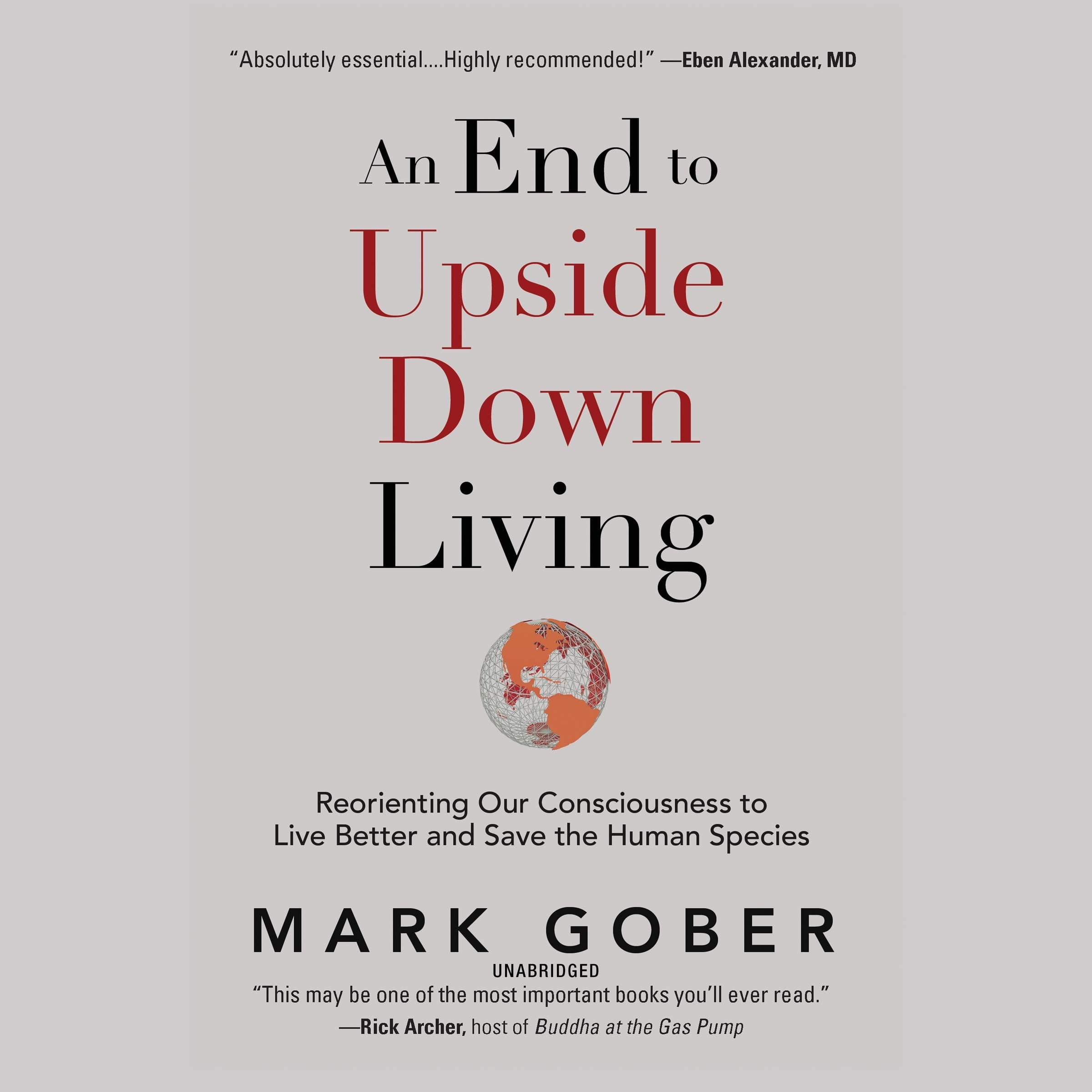
Mark Gober is the author of the Upside Down series, a seven-book exploration of consciousness, politics, economics, UFOs, medicine, cosmology, and more. His first book, An End to Upside Down Thinking (2018), won the IPPY Award for Best Science Book and received endorsements from researchers at Harvard, Princeton, UVA, and UCSF. He followed with An End to Upside Down Living (2020), An End to Upside Down Liberty (2021), An End to Upside Down Contact (2022), An End to the Upside Down Reset (2023), An End to Upside Down Medicine (2023), and An End to the Upside Down Cosmos (2024).
Mark is also the host of the 8-episode podcast Where Is My Mind? (2019), which examines scientific evidence for telepathy, the afterlife, and related phenomena. Since 2019, he has served on the board of the Institute of Noetic Sciences. Previously, he was a partner at Sherpa Technology Group in Silicon Valley and an investment banking analyst at UBS in New York. He has been recognized as one of IAM’s Strategy 300: The World’s Leading Intellectual Property Strategists.
Mark graduated magna cum laude from Princeton University, where he wrote an award-winning thesis on Daniel Kahneman’s Nobel Prize–winning Prospect Theory and was elected captain of Princeton’s Division I tennis team.

Read the complete recording
Transcript
Existing transcript, with its original wording and timestamps. Automated transcripts may contain errors.
Welcome to the Human Experience podcast, the only podcast designed to fuse your left and right brain hemispheres and feed it the most entertaining and mentally engaging topics on the planet. As we approach our ascent, please make sure your frontal, temporal, and occipital lobes are in their full upright position. As you take your seat of consciousness, relax your senses and allow us to take you on a journey. We are the Intimate Strangers. Thank you for listening. >> Ladies and gentlemen, gentlemen, welcome to the show. My name is Xavier Katana. Wow. We've got an amazing show for you today. A guest that challenges most of the stuff that we talk about on this show. So, we're going to get right to it. The Human Experience is in session. My name is Xavier Katana. My guest for today is Mark Gober. Mark is the author of Upside-Down, a series of seven books spanning the topics of consciousness, politics, economics, UFOs, medicine, cosmology, and more. Uh he his first book, An End to Upside-Down Thinking, in 2018 won the IPPY Award for Best Science Book of the Year and was endorsed by researchers affiliations at Harvard, Princeton, among others. Uh he went on to write a whole series about this. Uh Mark is also a host of an eight-episode podcast podcast series called Where Is My Mind, uh which questions consciousness. Mark, you've done so much stuff. Uh welcome welcome to HXP. >> Thank you so much for having me. >> So, you know, how how did you get into all of this? Like it it's it's a curious field to study and, you know, give us the story. >> Recording in progress. >> I have a very mainstream background on the surface. I went to Princeton for undergrad and then didn't really know what I wanted to do. So, like many of my classmates, I just went into investment banking. So, I worked in New York during the financial crisis of 2008 to 2010, which was an interesting time to be there. I was advising financial institutions. So, my clients were many of the companies that were struggling like banks and insurance companies. And then I went to a firm based in Silicon Valley where I spent about 10 years, became a partner advising technology-focused companies on their intellectual property, their patented technologies, and their strategy. And while I was in Silicon Valley, I started listening to podcasts. This was in 2016, which led me to read books and scientific papers. And what I was coming across was information that challenged my worldview in terms of my basic metaphysics. And what I mean by that is I used to believe that we live in a fundamentally random and meaningless universe, and that any meaning we create is something that is just an invention of our own mind and something that we rationalize. But I would have said to you that there isn't anything built into the fabric of reality itself that has any fundamental meaning. In other words, that there is no truth to spiritual or religious traditions, that all that stuff is superstition, and that when we die, that is the end of our consciousness, lights out, and deal with it. It's tough. That's what I would have said to you back then. So, I was coming across a lot of science that challenged all of that, which points toward a much more spiritual reality that we are inherently spiritual beings. There's some kind of interconnectedness between all of us. Psychic phenomena are real, and there is an afterlife. Basically, that's where I was going I was going in that direction. And so, long story short, that's led me to challenge not only that one paradigm but many others like you mentioned. And I've been in on this quest to just try to get to the core of what is this reality, who are we, why are we here, What is this place and how should we be living? >> Yeah, I mean those are all questions I think I fundamentally wanted an answer for when I was sort of so sort of going through this process of internal awakening, I think. But I mean for you to do that kind of 180, there must have been some sort of trigger, something that you you left your cushy finance job, right? >> Mhm. >> What was there a some sort of trigger? I mean, you take some LSD or or what happened? >> It was really a gradual process. It's a good question you ask because as I've studied these awakening journeys, often people have a major event that changes things in an instant, whether it's a psychedelic experience or a near death state or something in meditation. For me, it was largely intellectual in that I was coming across so much scientific evidence and this is from the University of Virginia, the Institute of Noetic Sciences, declassified documents from the CIA, for example. This whole body of science, peer-reviewed papers, and I was combining that with um experiences in my life that were starting to look somewhat mystical. So, synchronicities, where the same thing I would see over and over again, like these random things that it would be hard to talk about because it wouldn't mean much to other people, but when you're going through it yourself, it's like, "Whoa, what are the odds that that's happening?" And then I would talk to various psychics because I was learning that psychic phenomena are real. So, I would engage with them and then some of them knew things about me that I couldn't explain and they would have no way of knowing. And I would work with various heat like Reiki healers or past life regression hypnotherapists. And basically, when I brought all that stuff together, it was pointing me very much away from my old worldview, the more nihilistic perspective, and I was forced intellectually to say there is too much here that we live in a reality that's so different than I thought it would be dishonest of me intellectually to go back to where I was because it's not supported. >> Right. Right. I mean, it it almost seems like science is catching up to this this other phenomena that and and we we don't we haven't termed it yet. Like it it's it would be kind of like if you were speaking to someone from let's say the the early 1800s and you were trying to explain electricity to them. There would I mean, they wouldn't understand what you were talking about. They're like you know, like what you know, what does that mean? You're you're plug you're plugging something in to the wall and there's this invisible energy, you know, running through wires. What is that, right? So um you know, I these synchroni- How long ago would you say that these these synchronicities started happening to you? >> I noticed them happening very shortly after I I started asking these questions in 2019. So 9 years ago basically is when all this stuff started and they just kept happening more and more to the point that I couldn't ignore it. And I'm like, what is this place I'm living in and how did I not know about this? And how are there so many smart people that I've come across in my network in my life who have no idea these things are true. So I was checking myself cuz I thought maybe I was going crazy and I felt like I didn't even know how to live life anymore. It was very disorienting to settle into that. And fortunately just after a lot of research and a lot of talking to people in the space and basically being mentored and then validating that with my research, it's been an integration process over these years. >> Uh 20 2019, so that would be that would be 6 years ago. I'm not I'm not sure. >> 2016. >> Oh, 2016, okay. So okay, so let's get into um you know, these s- Where does consciousness come from? >> I would have said to you before back in 2016 that consciousness arises from chemical and electrical activity inside of our skull through the brain. That the brain is this like this complex computer and when it does things in a very particular way, consciousness pops out. It's an epiphenomenon. That's the technical term. >> Mhm. >> But, the reality is that no one has ever observed consciousness coming out of a brain. And more generally, no one has ever observed consciousness, which makes this whole exercise very difficult. Because consciousness is something we all experience. We all have consciousness right now that's enabling us to have this experience of life at this moment. So, we know it's there, but we can't point to it. We can't even draw it. It's purely subjective. And that makes studying it very difficult. So, what happens in a lot of mainstream science is that scientists observe a correlation between what happens in the brain and what happens in our conscious experience. For example, if a person gets in a car accident and damages a part of the brain responsible for memory, and then has memory loss, they can point to those parts of the brain and say, "Look, we changed this part of the brain, and now your memory changed. There's a correlation between brain activity and conscious experience. Therefore, the brain creates consciousness." >> Mhm. >> And that is actually a logical fallacy. >> Mhm. >> It's It's true based on what I just said. It's that it could be that the brain creates consciousness, but correlation does not necessarily imply causation. >> Causation, right. >> And Yes, so in the same way that if you have lots of firefighters at the scene of a fire, you could say, "Look, Mark, every time there's a larger fire, there are more firefighters. It must be the case that the firefighters are starting the fire." >> Right. Yeah. >> Even though there's another relationship, that the firefighters might be putting out the fire. And this There's a general logical fallacy. I think it's worth mentioning here because it applies to every area of inquiry. It's called uh affirming the consequent. If X, then Y. Y, therefore X. Put more simply, it's true that when it rains, the grass outside will be wet. Second statement's a problem. Here it is. I observe that the grass outside is wet. Therefore, I conclude that it rained. >> Mhm. >> There are many reasons that the grass could be wet other than rain, like dew or sprinklers or children pouring buckets of water, like a million things we could come up with. So, another way of saying this is that just because a model can explain an observation correctly, doesn't mean that the model's correct. So, the model that the brain creates consciousness, well, it is supported by these correlations. If the brain created consciousness, we would see these correlations between brain activity and conscious experience, but observing the correlations, that could tell that could be happening for some other reason. So, I'll give you an example. Imagine that you're watching television and you take a hammer and smash the antenna on your television set. All of the sudden, the TV show that you're watching on the screen appears very scratchy. And it's not because the signal has been damaged at all. The signal that the antenna was receiving is still out there, but the apparatus that was responsible for processing and receiving and filtering the signal, the antenna, that was damaged. So, think about the brain like that. What if the brain's like an antenna receiver filter interface? If you damage the brain, well, the consciousness, the signal hasn't been damaged. All that's been damaged is this interface. >> Huh. Interesting. So, so so it's as if the brain is a type of receiver and and you're tuning in to consciousness? How would you How would you put that? >> Yeah, that's one way of putting it. I would say the real answer is I'm not sure. There's a lot of pieces of data which suggest that the brain might be like this antenna receiver transmitter or even like a blindfold that gets in the way of our conscious experience and limits what we ordinarily perceive. And that sometimes, like in a near-death experience or with psychedelics or some other spiritually transformative state, the brain or parts of the brain get out of the way and it allows you to have more of a conscious experience. So, I view the brain and even the body, it's like some kind of an interface. It's a mechanism through which consciousness is having a very specific experience. And I should also caveat this by saying that of course we we focus on the brain for a number of reasons. Number one, we know in the field of neuroscience there are these correlations in the brain between brain activity and conscious experience. Also, our perceptual organs are in our head. >> Mhm. >> So we we're we're feeling like consciousness is up by our brain. It just feels that way cuz we see there and we hear there. >> Mhm. >> But there are phenomena, I talk about this in bunch of my books, but especially the first one in Into the Upside Down Thinking where people who receive organs from a donor sometimes take on the personality traits or the food preferences or other preferences of the person that they got the organ from. >> Mhm. >> I've always wondered about that. >> Yeah, I mean that's so strange. It it it does seem like what you say about how the brain sort of getting out of the way so that we can experience this this other thing fully. Have you Have you ever seen um an image of like the light spectrum and how much humans can perceive of the light? I mean it's like 0.3% of light and like what what we're actually seeing? >> Right. Exactly. Through our eyes we only see a tiny portion of the electromagnetic spectrum. At least the spectrum that's known. >> Yeah. So I mean there's this whole reality that we're not ex- really experience or tuning into at all because our brain is like you said in the way. And and it does seem like during you know, like psychedelic psychedelic experiences, mushrooms, it it does feel like you're just open you're pushing sort of the veil out of the way, right? >> Right. And then there's actually an article in Scientific American by Bernardo Kastrup, a philosopher in this area. It's called Transcending the Brain. Okay, yeah, so he makes this exact argument that you made that there are these examples where there is an enriched consciousness at a time when the brain is functioning less. And the way I describe it in my books and my podcast series Where Is My Mind is less brain, more consciousness. Some of these examples like a near-death experience where the person has little or no brain activity and yet they have 360° vision. They can see things or perceive life as being realer than real. Sometimes they're hovering over their body in terms of their consciousness and accurately seeing what's below them or hearing things at a time when their brain is barely functional. So, you have this enriched consciousness and less of brain activity. That's weird. Another example is savant syndrome where people have extraordinary mathematical abilities like the movie Rain Man with Dustin Hoffman. That's based off a real person where this he can do incredible math, incredible memory. Sometimes people have incredible musical abilities, but their brain is impaired in certain ways. So, it's less brain, more consciousness. And then there cases of hydrocephalus for example where the the where the brain would be is filled with cerebro-spinal fluid. So, there's basically no brain there and the person has normal IQ. Dr. Bruce Grayson from the University of Virginia was telling me about this when I interviewed him. So, like these are anomalies that don't make sense if the brain is exclusively creating our conscious experience. >> They don't It doesn't make sense. It really doesn't. And it almost feels like they're they're breadcrumbs kind of leading us there and synchronicity could be the language in which we receive them. >> That's a good point. They could be like winks from reality. Synchronicity is one way that we can perceive I don't know what you call it, glitches in the matrix. We see through the veil where we know that something is happening that's beyond just pure chance and we're perceiving it. And then it makes you ask the question, what is this place? How does actual causality work? Because there's this perspective that I used to have that real all causality, meaning why things happen in life, is because of little billiard balls hitting each other. At the smallest level it's these little quarks. And when when when each atom hits the next, hits the next, that leads for things to happen, and it's linear. Whereas, wait a second, what if we live in this much more mystical reality where the reason things are happening in life, it's all due to forces and intelligences that we don't necessarily perceive, and maybe that is a is a big part of life. >> Right. Right. Right. And I mean it could be even non-linear in the way that it occurs. It Maybe it's a singularity. Maybe we are in a a type of simulation where our intention if and will power can affect the the actual nature of reality and our experience it direct you know, directly. >> Yeah. Exactly. And it's almost as if our mind can't compute how that works. Whereas, if we took the billiard ball model, at least it seems like it's linear and something we can understand, but reality might just be more than we can comprehend, and that's a big part of this journey for me, too. Is it's intellectual humility to acknowledge that there aspects of reality, maybe the core aspects of reality, that are beyond what I can comprehend with my linear mind. >> Right. Right. I mean there there's been meditative states that I you know, I've I've gone into where I enter a sort of deep trance, and it feels more real than, you know, here now in front of this microphone, you know, and I mean talking to you, and I I feel like this is the smaller reality, and I'm I'm like more limited here. Uh You know, I I want to I I'm wondering, you know, there's some people that are almost in tune to these types of experiences, these these altered states. They just kind of they naturally sort of gravitate towards them, and then there's there is there are other people that do the exact opposite. I mean, you sort of took that ride. I mean, that it was like that for you. So, why do you think that is? Why do you think some people are drawn to this type of type of phenomena and why do you think other people aren't? >> It's a really deep question because it might get down to the soul readiness. The essence of the person might have a certain journey that wants to go down this road or not and that might even relate to what some call past lives or maybe some other aspect of the soul because I I ask myself the very question you're asking. I come across a lot of people with different levels of let's just say traditional education and some people just have no interest in any of this and others do. And what I've learned is there's no use in forcing people who don't have an interest. Maybe I wouldn't have had an interest 15 years ago for example and then 9 years ago something clicked for me. I needed to be at a level of readiness and that's how I look at it now. I don't know why but when people are ready I want to be there to help them on this journey to shortcut maybe the things that took me a longer time to learn about and if people are not ready it's just not their time. >> Mhm. Yeah. I mean it's I I stopped doing that a long time ago. You know I stopped trying to change anyone's mind, right? Like if if this if it connects with you it connects to you and if it doesn't then you know so be it. I'm not going to bother you about it. You know? >> Exactly. But when I first started and I was learning about this information I wanted to tell everybody because it was so transformational for me. I'm like how how can you not appreciate this but I've shifted a lot in that. >> Yeah I I I mean we must all sort of experience a version of that because it's it's so exciting and you feel like you know you found the secret code to the meaning of life or something you want to share it with everyone and there's just this excitement that's involved and then it doesn't really you know it doesn't really turn out well if if the people don't receive it the right way. >> Yeah and even my own excitement it goes in abs and flows. I'm almost numb to a lot of this stuff now and maybe the more mundane aspects of everyday living and everyday decisions that for some reason is more important to me, like almost closer to where I was 10 years ago, but with a new container. And that's what I find, there ebbs and flows in terms of interest and passion. And if if that I'm seeing that within myself, I have to understand others, too, that they might be on a certain part of their journey that it's really not my business to intrude on. >> Right. I mean, what's what's that old Buddhist uh saying? Um before enlightenment, chop wood, carry water. After enlightenment, chop wood, carry water. >> Right. Yes, I've heard another one that's somewhat similar. It's first you see the mountain, and then the mountain disappears when you have this awakening. And then the mountain returns, but you look at it in a new context. >> Yeah. Yeah. Yeah. I Yeah, I It's it's really fascinating. And and, you know, I think exploring this is quintessential to understanding, you know, the nature of our reality, why we're here, what we're supposed to be doing here. It doesn't It doesn't seem like we have these answers, or even that the nature of the system, you know, like education, school, is geared toward solving this sort of problem of, you know, what where where are we? Like Why are we here? And you know, it's it's it feels like school is meant to turn you into a drone and, you know, make you a good 9-to-5 worker and worker bee and keep you sort of asleep. There's, you know, liquor store on every corner to dull your senses. I mean, it doesn't feel like I'm in a place where it's promoted to be aware of of what's going on in in our reality. Would you agree? >> Totally. I would say the mainstream system, whether it's education or media, technology even, it's not get It's not even encouraging these questions. The fundamental questions of what Why does any of this matter? It just puts us on a track to try to do things that we're told are important but might not actually important without asking why. And then we get so busy with the things we're trying to achieve that there isn't time to ask these questions. And then there are kids involved and there's no time to think about anything but survival. And then before you know it, it's too late. It's it feels like there's some kind of design in the way society is structured to keep us away from the stuff. Because when I find that people enter this realm, myself included, there's a great sense of empowerment and a great sense of individual liberty that comes about, which is probably not advantageous to the powers that be. >> Mhm. >> I mean, if if it was different, if it you know, it was the other way around, what kind of I mean, what would you do to to create like a institution, a school? How do we change the current paradigm to to something different? >> My view on this is I I don't know what the world would look like if people started to appreciate these realities. But it's like each of us is a unique puzzle piece within some kind of cosmic puzzle. And our goal in life is to embody that puzzle piece to the fullest, to know what our strengths are and to do our best with that. To try to serve. And that means doing the internal work and the cleaning up of our trauma and all that so that we can be the best version of this puzzle piece. So it's almost like as each person becomes that authentic puzzle piece, then we can make the contributions that are needed for some kind of divine purpose. We don't even know what that looks like. So to me, the first step always is a shift in consciousness for each individual. Because once the consciousness shifts, then all the priorities and the things people care about, the things they want to do, they all start to shift. And as more and more people do that, I would guess the world would be better and more harmonious, but I don't know exactly what it would look like. >> I mean, sometimes, you know, yeah, I neither do I. It's it's the how the world would be I would, you know, maybe it would be better, right? Like I I don't know. It's hard to say. But maybe people would have more empathy. Maybe there would be less war. Maybe we would care for the Earth more. Um you know, I feel like I feel like this stuff connects me to uh all things good, like nature and you know, I it it produces a sense of empathy and and caring about others, right? >> Totally. I think it's a natural consequence of all this stuff. And near-death experiences are a good example of this, where a person, you know, like I said, their consciousness goes into some kind of expanded state even when their brain is barely functioning or completely off. And while there are some that are very negative and fear-inducing, some would even say hellish, the vast majority are positive and people come back feeling much more empathy. Often they will become less materialistic and leave their jobs or get to a divorce because all of a sudden they look at life in a new way. And that what they care about is trying to make the world a better place and trying to embody something within their own life that they didn't care about before. So when I hear those experiences, and these are kind of the extreme cases where it's an overnight shift, I would imagine a world with more people thinking like that, the way that they would go about their daily life and the things they would prioritize would naturally be very different than what we're taught. >> Yeah. Yeah, fully. And I mean, it it it almost seems like, you know, the illusion or or Maya of this place, we we kind of have to go through this process of actually waking up. And it it you know, because the system is designed to keep you asleep, we we're we're sort of it born asleep, we stay asleep for however long, and then it it's it's seems like, you know, something triggers this sort of evolutionary process in our spiritual understanding of the world, right? At least for me, uh speaking for myself, that's that's kind of the way it occurred for me where you know, I looked around and I was like, "This doesn't make sense. Something isn't right." And, you know, I I suddenly I wanted to know, you know, what is this place? Like, where am I? What happens when I die? Is there a god? You know, like just questions like that I wanted answers to. You know, I started looking and digging and uh rabbit hole after rabbit hole and it I never seemed to be able to answer the question. It always seemed like uh the question begot more questions. >> Mhm. That's been my experience, too. The more I've learned, the more I feel like I know less because now I know more about where the holes are. And thinking about the way you described it, this journey of basically ignorance in life, what I'm starting to wonder is if we actually come into the body when we're born with a lot of this knowledge, and then as we enter in into society and are conditioned, we lose a lot of it. And you're reminding me of work that my friend Dr. Edith Ubuntu Chan is doing. She's a Harvard grad turned Chinese medicine doctor and author. But recently, she's been working with children, including her own, on blindfolded vision. And I saw her demonstrate this live with children from different families at a festival called Confluence in Texas recently, where the children had blindfolds on, they were able to describe pictures that audience members were on the spot. They were able to solve Rubik's Cubes with a blindfold on. They were able to play chess blindfolded. Um she she did a great podcast on the Here for the Truth podcast recently talking about this. It's incredible, and she talks about basically there's an inner knowing that the children have, and if it's just fostered at the right ages, then they can do it very seamlessly. >> Okay, I I got one for you. So, let's try this, okay? So, uh it's a relief I just call it the number game. And so what I'm going to do is you're you're going to think of a of a number from 1 to 10. You're going to think of it and you're just going to sort of highlight it, put it in front of your face or something like that. Just highlight it for me. Um tell me when you have the number. Don't tell me what the number is. >> I've got it. >> You got it? Okay, so is it uh is it a seven or a four? >> Your first answer was right. >> Is seven? >> Mhm. >> Okay. Okay, cool. Okay. Okay, so I I I definitely saw I I definitely saw both of those numbers, okay? So call me crazy. Okay, do you want to try that? I can I can I'll pick I'll Okay, I got a number. >> Okay. >> I'm sending it to you. >> I got three. >> Try one more time. >> Okay. Eight. >> Close. Is it a nine? >> Okay. >> So I mean it So I like this play I like to play this game kind of randomly with people and uh it's fun it's fun. And you know, it's almost like I I'll sense this sort of it it's a very low whisper. You you can't try to guess what the number is. That That doesn't it doesn't work. It kind it kind of like for me at least it just kind of just comes to me. >> Right. Well, what often happens in these studies I mean the children with blindfolds they I I saw it myself. It's like 100% accuracy. But a lot of the studies on telepathy or telepathic abilities or precognition, they are of a level of statistical significance meaning people aren't 100% accurate, but they're more accurate than would be predicted by chance alone. So for example, if they had to choose one out of four things if it were just chance, they would guess correctly one out of four times and they would be right 25% of the time. Whereas what happens is in the classic telepathic studies, the Ganzfeld experiment, people are guess correctly like 30 to 32% of the time, which if you add up all the trials, it's at the level of six sigma statistical results, meaning more than a billion to one odds against chance. So, it's a subtle effect that's not 100% but it's more than chance. >> That's that's kind of incredible, right? I mean So, I mean, what part of the brain do you think these kids are using? Were you able to determine if it's near the the pineal gland? >> I think that is is not well understood because they're not seeing with their visual eyes. They're seeing somehow metaphysically. And then the question is the brain involved in that? Is there a part of the brain that taps into something metaphysical? I really don't understand how it works. >> I can't believe that we don't have answers to this. I mean, how much would it cost to do a study like this, right? Like um why isn't more money put into understanding this? >> Well, this I've spent a lot of time on this question. I'm actually on the board of the Institute of Noetic Sciences which has been studying phenomena along these lines since 1973. And it's a it's a fringe area and I say fringe not because it's unimportant but fringe relative to the mainstream. Because in mainstream academia, if you talk about these phenomena, good luck getting tenure. >> Exactly. >> Good luck. And I I know these scientists personally. I've talked to one. She's told me that she studies precognition, which is knowing or sensing the future before it happens using rigorous scientific methodologies. She was told to take this off of her resume if she wanted to get tenure. So, she had to leave academia. And what you have is this group of very a very small group of brave scientists who have been willing to explore important topics but it's not a good thing career-wise and therefore we don't have as much funding for it as well. Some funders even to them it's too much of a taboo. So, they want to go toward the mainstream ideas. They don't want to be known as funding psychic phenomena. I mean, I think it's shifting but it's still it's it's it's it has a reputation that's not the best. >> We're not there yet. I mean I mean maybe I don't know what it's going to take. It does seem It does seem like there are more people that have been quote unquote red-pilled, uh at least around me. I mean, would you say that more people are awake than kind of when you started doing this? >> Definitely. Great question. Cuz when I my first book came out in 2018, my podcast series Where Is My Mind? in 2019, sure there were some people who were excited about it, but what's happened now, the Telepathy Tapes podcast came out and it was number one on the podcast charts ahead of Joe Rogan. And this is telepathic autistic savant, Dr. Diane Powell. Okay, I interviewed Diane Powell on my podcast in 2019. She's in my book from 2018. And the the it's something has changed and I've heard this from a lot of people. So, I'm very enthusiastic, actually. Even this conversation we're having, Xavier, I bet there will be more enthusiasm for this today than there would have been a few years ago. >> Definitely, definitely, for sure. And I I don't I don't I don't know. Maybe, you know, maybe people are starting to understand that that the the purpose of it all is to go inwards. Like, it it really feels like there's so many distractions, you know, it's like distraction, distraction, and no one really tells you to to turn inwards and maybe meditate for a little while or examine your your yourself. Like, and you know, I think I but I think people are doing that now. You know, there's something about um modern television that is just abhorrent and terrible. I don't think I've seen a good TV series in like 10 years. And it seems like creativity's died on television. I mean, there's there's some stuff out there that's okay, I guess, but I just I can't even watch anymore. I can't watch it. And, you know, it it it actually feels like our reality, you know, is is more of a of a TV series than TV itself. >> Mhm. Yeah, exactly. Once What Once you get into this domain of metaphysics, life becomes its own form of entertainment and the curiosity of what's going to happen next and how does reality actually work. It's hard to beat that kind of mystery even with Netflix. >> Yeah. I mean, or you know, just uh you know, scrolling on your phone all day and I just I something about that just turns me off. I I you know, I I don't necessarily feel like I want to do that because it it it seems more and more as as technology seems to advance, we're we're being sucked in to losing attention span, losing our ability to really just think. I mean, most people are absent of all thought. It it it's mind-boggling. I mean, do you know what I mean? >> Yeah, totally. Well, we're in a world where it seems to be more about conformity and following orders and following what we're told and believing the authorities, the so-called authorities, rather than engaging in critical thinking and questioning. And we're not encouraged to ask the question why how do we know this thing is true that we're told is true? That that is somehow branded as conspiracy theorist if you just ask a question. It's unbelievable. >> Yeah. I mean, we have to change this. I think, you know, I I think conversations like this should happen more. And you know, I I encourage people I know, I you know, I'll plant seeds. Um you know, for people that I think are a little bit more resistant to stuff like this. I'll you know, and usually even if it takes, you know, four or five, 10 years, they'll turn around and and you know, I'll hear something about it later, you know? And it's weird how that happens. >> Yeah, the other thing I find So, I I agree with you that that with time sometimes people are open. Like, they might hear Someone might hear this episode in 10 years and it could affect them then. And I'm sure it's happened with some of your past episodes. Um but uh I forgot what exactly what I was going to say, actually. But it's it's about like we can't control where the world is going to go, like you were saying before. It's the inner work of controlling our own internal state. And whatever happens around us, being less concerned with that. That's what I found. >> Right. Like I I mean the like I said, the the distractions everywhere and and it it it feels like, you know, we're being pulled outwards to think about this and have this sort of emotional electric charge about everything that's going on when maybe, you know, let's turn that focus inwards, meditate for a little bit, go outside, sit in the sun, you know, and maybe connect with nature. Uh there's there's something about, you know, when I travel, if it's if it's if it's a road trip, when I start to get out of the city, the the noise, the pollution, the light pollution goes away and then I start to clear, my mind, my my inner spirit becomes more clear. Do you get that, too? >> Definitely. You're reminding me of something I did right when I left my job and in 2019, early 20, I went on two silent meditation retreats that were very much in nature. And phones were obviously off during that period, so no communication with anyone and it was I'd never done anything like that before, but I felt way more connected to my own internal dialogue and when I came back to the world and turned my phone on, I also just felt like I wasn't as connected to it. I didn't care as much about that stuff. And our world pulls us away from what's perhaps more of a natural state, which is one that's in harmony with the world around us and isn't as focused on this these basically dopamine hits that we're used to of what is our phone showing us and the highs and lows that come from that physiologically. >> Yeah. Yeah, it does. And that's a powerful thing. And I think it directly challenges the status quo and the system itself. And that's not something the system wants. I think the system wants you engaged, wants you playing that video game. It wants you sucked into whatever they're feeding you until your mind is just uh you know, like asleep or in stasis or in a coma or something. >> The analogy that comes to mind it comes from Dr. David Hawkins, a spiritual teacher. It's as if consciousness is always shining like the sun. So, the rays are always shining, but then there are these clouds that get in the way. They keep us disconnected. And modern society has so many clouds that are blocking or obscuring the sun, the rays of consciousness that are always there. It's layers and layers that we are slowly trying to peel away. But, if this awareness doesn't exist, the clouds can just sit there, and as much as the sun rays want to shine, the clouds are getting in the way. >> Mhm. Yeah, that's really powerful. You know, I I was thinking about um you know, simulation theory. And I I was wondering um you know, what if there were certain sort of fingerprints or little things that we would notice if we might be in a simulation. And then I thought about like the number uh like phi and pi like the Fibonacci sequence and how it it kind of mirrors, right? Like there's there's a sort of it's everywhere. You know, it's it's in everything. And if there was a an architect of this matrix, maybe they would use that as a type a type of code. And uh you know, maybe maybe it would that would be the sort of you know, the hallmark or or something that was left there, you know, that they nothing is perfect, right? >> Yeah, I'm not sure what to make of it. I think the term simulation has so many different definitions and math does seem to play a part in this reality. Certain patterns that we see in fractals, um like the Mandelbrot set. So, there are repeating things that we do see a lot of. With regard to a simulation though, it really depends on the the nature of reality fundamentally. So, Dr. Bernardo Kastrup uses this analogy that all reality could be likened to a stream of water where water's like consciousness. So, all of reality is this infinite stream of consciousness and each of us is a whirlpool within that stream. Meaning, it feels like we're separate individuals, but we're fundamentally interconnected at some level and because of the body that we're in, we feel like we're only the whirlpool. And if this is in any way true, let's think about what that means in terms of a simulation. If all of reality is just some kind of a universal consciousness, some might call that God, which is also part of us at some level even though we're only a little sliver of it as a whirlpool, it's part of us. It would mean that there that the it's that we live in God's simulation if you want to use that word, which is partially our own simulation. So, that means we're both a simulator and a simulatee. I don't know what's what the truth is, but that's just something I think about a lot. >> Yeah, I mean I did I don't expect anyone to kind of hand it to me ever, you know, it's it's not going to be honest on on a platter and it it'll probably happen and after some really hard work and um you know, I I I think I think it's important to do that work. You know, you mentioned God. Uh what's your what's your what's your uh you know, feeling about that? How how do you feel about, you know, God? Uh do you believe in God? >> I think it depends on how God is defined. If it's defined as something that is 100% external to us as a separate entity fully, I don't know if I am there. I to me that if if there is God that we are part of it and therefore not fully separate from it even though it feels like we're separate from it. So going back to Bernardo Kastrup's analogy, which it's an analogy that probably oversimplifies, that analogy that we're whirlpools within a stream, it suggests that we are aspects of God and that God is the full stream of consciousness, the higher intelligence that we're all a part of and maybe the stream itself is multi-dimensional. And so whatever that fundamental substrate of reality is that we're a part of, that could be considered God in terms of the way I see it. >> Yeah, so you know, it it's it's sort of divine in that sense because if if if God is an expression of that full divinity that we access when we take the hardware sort of away, right? Like the programming drops off and we experience the fullness of of the divine nature of God, if you want to call it that. And then we come back and we realize wow, you know, there's there's something inside of us shifts. And uh it it's almost like you know, like there's a sort of divine spark that we each carry in us. And maybe that spark it turns on. Maybe it you know, it's maybe it's a type of inertia that occurs at a certain point. Who who knows? How could I even define this, right? I mean >> Yeah, I mean I see it as I like that analogy from Hawkins, the the sun rays and the clouds. Once we come to an awareness that the sun rays are always shining, then we have an ability to tap into that. Meaning our own consciousness automatically shifts once we have this realization. And we might acknowledge that there are clouds there that we have because of our conditioning and our trauma that we can work on, but once we have that North Star that we're moving toward, we know we're tapping into this stream of consciousness. We're tapping into the sun rays, so to speak. Then, it's almost like we know the destination even though we don't know where how we're going to get there. We're our compass has been reoriented. And to me, that is the fundamental step. >> That's what it's all about. Like that compass that internal compass and kind of sharpening it and tuning it and getting it to point, you know, the direction that you're supposed to be going. Um I wanted to ask you if you knew about um Robert Monroe. Uh did you did you ever get into uh Monroe's work, uh Journeys Out of the Body, and his institute that he he founded, I think it's in Virginia? >> Yeah, I'm very much familiar with it and familiar with the phenomenon of remote viewing, for example, or astral projection. It to me, it's all it all fits into the bigger metaphysical framework that we can send our consciousness out or perhaps better put, we can access parts of our consciousness that are far away in space and or time. Like that's that's what remote viewing is. And even the US government, I mentioned earlier, like declassified CIA documents that there are documents saying remote viewing is a real phenomenon and that the implications are revolutionary. This is a real thing. And my on my podcast, Where Is My Mind, I interviewed Russell Targ, who was one of the leaders of the program. So, I think all that stuff is possible once we learn how to harness our own consciousness. And I also think that we just need to be wary of it because who knows what those other realms of consciousness are like and whether there are dark and light forces that we need to be aware of. I personally just don't feel qualified enough to just play with this stuff. I think it's it's potentially playing with fire. So, when it's being done, it likely needs to be done with the right people who know how to navigate those realms. >> Yeah. Yeah. Yeah, I think that's important. It it could lead to states of potential psychosis I think if if you it was done in the wrong way or you know, with with the not maybe not the right intention. Do you agree? >> That and also I just wonder if there are other intelligences out there, some of which are benevolent and others that are more if you want to call them demonic that don't have our best interests at heart. I I wrote a book on that topic and into upside down contact evaluating allegations of contact with non-human intelligence both in the physical realm but also metaphysically and it seems to come up in the modern era and also throughout human history that there are forces some are are very angelic and others are not. So when we play with consciousness whether it's the realm of psychedelics or astral projection all of these things could potentially take us into worlds where we're more susceptible to these energies. And all I'm saying is as someone who's a novice, I don't feel qualified to make recommendations on this stuff because who knows what you can encounter when sending your consciousness out. Are there other entities that we're not equipped to handle or we could be deceived and we think it's a benevolent entity but it's actually a shapeshifter that's manipulating us. I just don't know. >> Okay. Have you That's a that's a good I think cautionary note to give people. That's a solid I think I think that that would be necessary but let's let's get into this a little bit more. I mean, have you experienced con- I mean, I think we are in a state of of spiritual warfare. I think it it's I think that more and more people are sort of leaning towards this almost dark side and I think there we are in this sort of battle of light and good. Um so my question to you is have you ever experienced a a form of contact with an entity that you couldn't describe or or something else? >> Well, first I want to say I agree with you. I I've used the term spiritual war. That's where my mind is now in terms of all the research I've done. I think we are in some kind of a spiritual war. We are active participants, whether we realize it or not. In terms of my direct involvement, I have worked with people who are are psychic and are able to channel beings from other dimensions. And this is a phenomenon that's been studied scientifically, not to say that every channeler is always legit, but there are certainly instances where I don't think it's just some kind of a psychiatric condition. And um in those cases, the person will very often speak differently than usual, the cadence or even the words used, the language, the word syntax. It all all that all the So things are changing in the person. So I've had contact in that regard, but I've never had an alien come to me, for example. I've never had some major psychedelic experience where I encounter a being that guided me or a near-death state. So for me, it's all been way more indirect, where I might feel energies and feel things that are better or worse, but I have not had that direct contact. And I'm actually not seeking it out. David Hawkins, um he he made this suggestion. He said, "Beware of the allure of glamorous seductions." Where basically people do things because it sounds cool and it's glamorous. The problem is, that's not really the spiritual journey. The spiritual journey is to elevate our consciousness. And if we take these things as distractions, it can take us off the path. >> 100% Totally agree fully with you. I was I took a I don't know, 20 something years ago, I took a backpacking trip through the Himalayas. And uh I'm like 14,000 ft up on this balcony by myself, looking at, you know, the galaxy. It was so beautiful, you know, in complete awe. And I sent this sort of haphazard signal out that I wanted to make contact. And I did I didn't set specifications and I had no idea what I was about to get into and you know, maybe we'll cover that on a different episode, but um it was a wild ride. Really truly uh you know, uh things that changed the direction of my life, I would say, forever. And um you know, it it it also but it also put a state of of caution, you know, where I I I'm very cautious with that stuff now and I wouldn't I wouldn't do anything that haphazard ever again. Um do you know what I mean? >> Totally. And and I've heard of this sort of attempted contact in a more like systematic way. Like Steven Greer, for example, has a protocol. I believe it's called like CE5 contact where you get together and you have basically a meditative state and you try to bring in these beings. And I I believe that it's certainly possible that you could invoke beings with the right intention if you're tuning to their frequency or however it works. My question is whether it's or not it's safe to do so. Because how do we know what's going on with these beings? I'll give a few examples that I go through this in my book in Into Upside Down Contact. Um John Mack, who was the head of psychiatry at Harvard and a Pulitzer Prize winner, late in his career he studied allegations of alien abduction and he concluded that something was actually going on as a psychiatrist. He said, "Something's happening here." And he wrote in one of his books that the alien beings appear to be consummate shapeshifters. That this was a theme that they could actually change their form. And there's something called screen memories where an alien being can basically uh change the our memory of them. Uh one example has to do with animals like owls or deer or raccoons. Mhm. The classic example, uh Mike Clelland has written books on this, where a person goes over on the side of the road driving on the side of the road at night and sees an owl and then all of a sudden a few hours have passed and the person says, "I don't know what just happened, but it's like a different time now. It's called missing time. And then the But the person doesn't know what happened during those hours. So, they'll maybe seek out a hypnotherapist to try to recover these lost memories, and the hypnotherapist will say, I want you to go back to the time in your mind when you were seeing that owl on the side of the road, and just describe it for me. And the person will say, wait a second, I'm seeing it, and it's actually a gray alien. It's not an owl. >> Mhm. >> It's known as a screen memory. The implication here is that maybe we we remember an owl, but it wasn't an owl. So then, how do we know what to trust with what what we're perceiving? And that's why I caution these things with like CE5 and elsewhere, just because I don't want to be someone to advocate for something that could lead to a potential danger that I'm not aware of. >> Wow. Wow. Yeah, that that's scary, right? I mean >> Yeah. >> Um so, you know, you you really want to have a handle on your your own inner intuition and and your own sort of willpower if you're going down that road. I mean, I you know, I don't I don't know if you uh do Have you ever heard of um a guy named Father Malachi Martin? >> Yeah. >> He was a He was He was a He was a priest uh out of the Vatican, and he would conduct exorcisms. And he uh He was a He was a big uh He He appeared on on Art Bell's show a lot. I don't know if you heard Art Bell or not, but Art was >> Mhm. >> He was a legend, um but but um Malachi Martin, Father Malachi, he suggested that perhaps uh this sort of spiritual war is increasing, and that more and more people like this this sort of dimension is merging with ours, where these quote unquote demons can inhabit the the bodies of people who you know who who sort of allow this this thing in you know and it can be it can be as simple as alcohol you know like spirits right like so so your your defensives drop a little bit and it it just lures you in you know one thing at a time and the next thing you know you've got an energetic attachment. >> Right. Yeah I think it's it's just important to be aware of this stuff. I don't think all of reality is evil. I think there are benevolent entities and we know from our own lives that we experience benevolence on a daily basis or we've experienced love. So all that's important to acknowledge too. What I'm saying is that if if we're going to just try to seek out external beings we should have a reason as to why we're trying to contact them beyond oh it's cool. You know that and that's David Hawkins again that the allure of glamorous seductions doing things just because it sounds glamorous and that is a seductive thing versus asking why am I doing this and how does it relate to my soul's evolution? >> Yeah yeah those are fundamental questions and you know Mark we're we're approaching the end here. I mean let's wrap this up for the people listening. I think this was a really great episode. We we covered a lot but you know I I think the main thing here that we can say is that we're not just these meat puppet bodies that there is something else. I I personally I don't really think death is the end of this at all. I think you know that we take this suit off and become something else. I um What's your what's you know what's your take on it? >> I don't know for sure of course and I there's no direct proof but there's a lot of evidence to me suggesting that consciousness is not something that just pops out of the brain and that consciousness seems to be able to function even when the brain is not on which points to the idea of a potential afterlife. So, I've talked about near-death experiences a bunch. There's also something called a shared death experience. A near-death experience the person is resuscitated and comes back so it's near death. A shared death experience is when there's a healthy person who has no damage to the brain, just a normal person. Sometimes a family member, sometimes just a bystander who will co-live in the dying process with someone who's actually dying. Somehow, I don't know what it is, the dimensions open up. I don't get it, but it's a known phenomenon and a guy named Peters has has published a peer-reviewed paper on this. Raymond Moody has written about it. And so, what does that tell us potentially? It's validating that the near-death experience, what people are describing, seems to be the early parts of the dying process when the soul is is moving to some other dimension of reality because here you have an innocent and healthy bystander who has no damage to the brain and is perceiving something that sounds just like the early parts of the dying process with which we see in a near-death experience. Mhm. >> Wow. >> So, that's fascinating. Another example I give is children who have memories of what appears to be a past life or someone else's life. And these are University of Virginia studied over 2,500 of these cases. Sometimes the children have birthmarks or physical defects in their body today that correspond to the death in the previous life where the researchers find historical or medical records. And in a number of cases the children also have memories of a time between lives known as an intermission memory, even choosing their parents for example. So, when you bring all these cases together, it's not all direct proof, but to me it points us in this direction that there's way more to life than just this body. >> It's it's so wild, man. And you know, because we're told so much that, you know, it's not real. Ghosts It there's no such thing as ghost. It doesn't exist. Uh Uh it was just a dream, you know, just in your head, you know, and it it almost we're you know, it's almost like we're we're being programmed to to to just be aware of of this meat puppet idea which is horrible. You know, I I kind of want to be in a place where I can experience, you know, what there is to experience. I I want to be able to remember you know, it's almost like we have amnesia when we get here or when we're reborn there there does seem to be this reincarnation phenomena and it and it goes on and on and on, you know, so you know, it there's so much that we could talk about and we could talk about this for hours, but um you know, I it's it's fundamentally like it I think I respect that you say you just don't know. I mean and I think that's where it leads to because there is no final answer or solution because it's shifting it's alive and and words fail and words don't seem to carry what's going on here or the phenomena of it and you know, it can be either so beautiful that you're in complete deep awe of something that you've experienced and it can it can go the other way as well, you know, so I you know, Mark, I really appreciate your work. I I I went through all of it. I purchased the books and read, you know, and and to Upside Down Medicine which was great. I highly recommend the whole series and then I heard your podcast which I I loved. Um you know, what's in it for you next? I What are you up to these days? Where can people find your work? Um you know, you know, just give us that. >> My website is a good place to start. It's my name, Mark Gober, m a r k g o b e r.com. I have seven books out there, all on Amazon in hard copy, Kindle, and Audible formats. I narrate all the Audibles myself, and like you said, my podcast series is called Where Is My Mind? It's eight episodes. Uh came out in 2019, but it's still available on Apple Podcast and Spotify, and it goes through telepathy and children with past life memories and near-death experiences, all that stuff. In terms of what's next, I don't actually know. I left my firm, like I I said before, right before everything happened with COVID, and I've been on this journey of just flowing with whatever comes into my field next, and so far it's been writing a lot of books. I'm not working on another book now, and it's been a number of months since the last book came out, Into the Upside Down Cosmos in the fall of 2024. So, I am I'm doing a a bunch of podcast interviews and speaking. I love talking about this stuff, but I don't know what's next. >> That's good. That's okay. It's It's okay to not know what you're doing next. You know, I think we should encourage that a little bit more. It You know, it it it feels like people push us to know exactly what we're going to do, and and sometimes we just don't, you know, and then that's okay, too. >> Yeah. That That That's the place I'm trying to stay in, but it goes against my conditioning, which is always wanting to have things planned out, but I'm trying to stay stay in a state of surrender, and I find that life brings things to me that I don't seem to directly cause. >> There you go. And it can change, you know, on a dime. And and, you know, you feel like you're going one way for a little bit, and a month later, you're you're, you know, you're doing something that you never thought you would ever do. >> Right? >> I mean, I guess that's the mystery and beauty of it all. And um you know, wow. I I think I think for me, I'm I have a lot of gratitude and I I practice that as much as I can. Even even if I'm experiencing a radically difficult experience, I I try to ask "What's the message here? What am I supposed to learn from this?" >> Same. And that that was was a new exercise for me as of 9 years ago. Once I understood that life seems to have innate purpose and a lot of what's happening here is we are evolving and growing and learning how to discern truth from falsehood and understand the wolf in sheep's clothing and understand that sometimes life is steering us in a direction in ways that we don't understand and that can manifest as pain or discomfort. And if we understand or just ask the question, "Wait, why is this happening? Do I need to make an adjustment in my life? Did I perhaps go down a path that's not optimal for me and in that process I'm learning?" It helps to recontextualize things that might otherwise be painful. >> Yeah, man, you said it. What a great way to wrap this up. I really appreciate your time, Mark, and thank you for being flexible. It's a little bit late today and uh hey, man, I I hope to see more from you. I I think conversations like this are so important and when you know, when I saw your podcast and and the way that it was laid out and um the questions that you were asking, I was I was like, "Wow, if finally, you know, someone's asking this." And uh I was really happy to see it out there. So, I hope you keep doing what you're doing and I I really thank you for sharing your time here and and your knowledge with us today. >> Well, thank you so much for having me and I appreciate all the work you do as well. >> Guys, that's the show. We are We're going to get out of here. You know, I know um it's been it's been a little while and I you know, I've talked a lot about never putting the mic down and all those things and I think uh I think I just you know I I needed some time to really understand what we do here and I I want to thank everyone who sent emails and just wondered what was going on. Thank you so much. Um really everyone on my team. I I couldn't do it without you guys. Um thanks to our guest to tonight Mark Gobert. Definitely get to his website, pick up a copy of his book, support his work, go listen to his podcast. Um guys, thank you so much. We're out of here. Goodnight.
Ideas worth returning to
Quotes
Five substantial excerpts from the published transcript, lightly edited for clarity without changing their meaning.
“I’ve been on this quest to get to the core of what this reality is: Who are we? Why are we here? What is this place? And how should we be living? For me, it was largely an intellectual process of encountering scientific evidence alongside experiences in my own life that began to look mystical.”
Mark Gober“The reality is that no one has ever observed consciousness coming out of a brain. Consciousness is something we all experience, so we know it is there, but we cannot point to it or draw it; it is purely subjective. That makes studying it very difficult.”
Mark Gober“Synchronicities could be like winks from reality—moments when we perceive that something is happening beyond pure chance. They make you ask what this place is, how causality actually works, and whether forces we do not ordinarily perceive may be shaping parts of our lives.”
Mark Gober“The spiritual journey is to elevate our consciousness. We should beware of glamorous seductions—doing things simply because they sound exciting or impressive—because if we treat those experiences as the goal, they can become distractions that take us off the path.”
Mark Gober“Even when I’m going through a radically difficult experience, I try to ask: What is the message here? What am I supposed to learn from this? Do I need to make an adjustment in my life? Asking those questions can reframe experiences that might otherwise feel only painful.”
Mark Gober
About the guest
Mark Gober
Welcome to the Human Experience Podcast, where we ask the big questions: Are we just meat puppets with WiFi, or is consciousness beaming in from the cosmic cloud? Host Xavier Katana and guest Mark Gober ditch the nine-to-five matrix, swap stories of psychic kids and near-death plot twists, and wonder if the universe is less ‘random chaos’ and more ‘divine group chat.’ Spoiler: Enlightenment may just mean remembering to chop wood, carry water, and occasionally check for aliens behind the owls.
Episode 191 – Marjorie Woollacott – Infinite Awareness – Consciousness Beyond Biology
August 28, 2025

Episode 171 – Surfing Monster Waves, Mastering Fear & Flow State w/ Laird Hamilton
July 6, 2020 · 46:18
EPISODE 199: Dr. David Nichols — Psychedelics, Consciousness & the Chemistry of the Mind
October 20, 2026 · 1:12:11

HXP SHORTS: #001 – Deconstructing Death: What Happens When We Die?
September 14, 2026 · 11:37
Episode 194 Dr. James Fadiman – You Are Not One Self: Microdosing, Multiplicity and the Mind
September 4, 2026 · 1:14:38
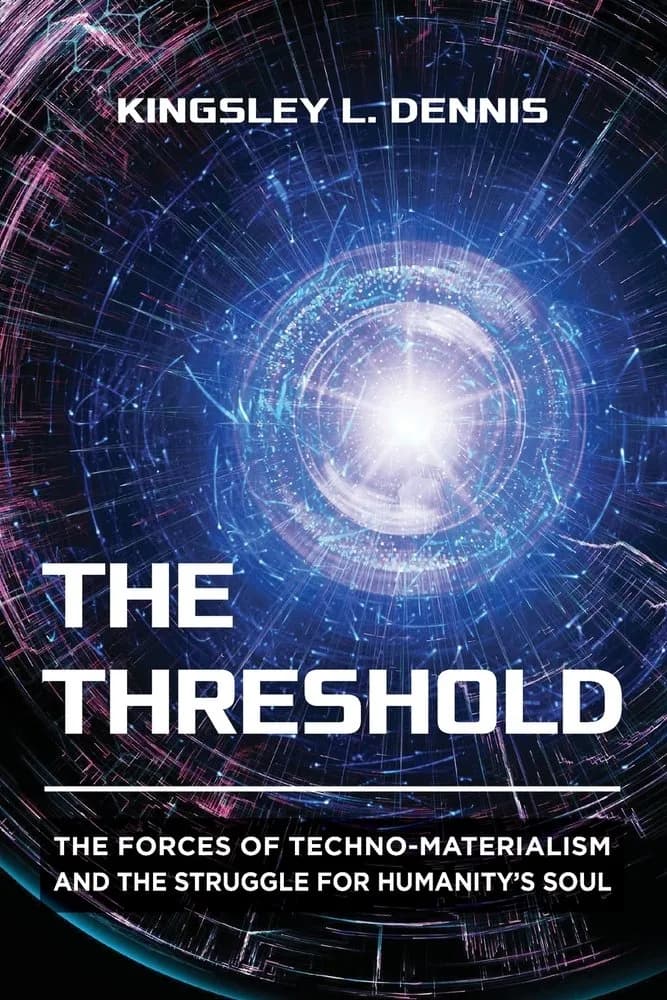
Episode 193 – Kingsley L. Dennis, Ph.D. on AI, The Threshold, and Reclaiming the Human Soul
August 30, 2026 · 58:59
Independent conversations
Help make the next one possible.
Membership sustains ambitious, unhurried interviews and keeps the complete archive open to curious listeners everywhere.
Become a member