

The Human Experience · Episode
Episode 191 – Marjorie Woollacott – Infinite Awareness – Consciousness Beyond Biology
A conversation with Marjorie Woollacott
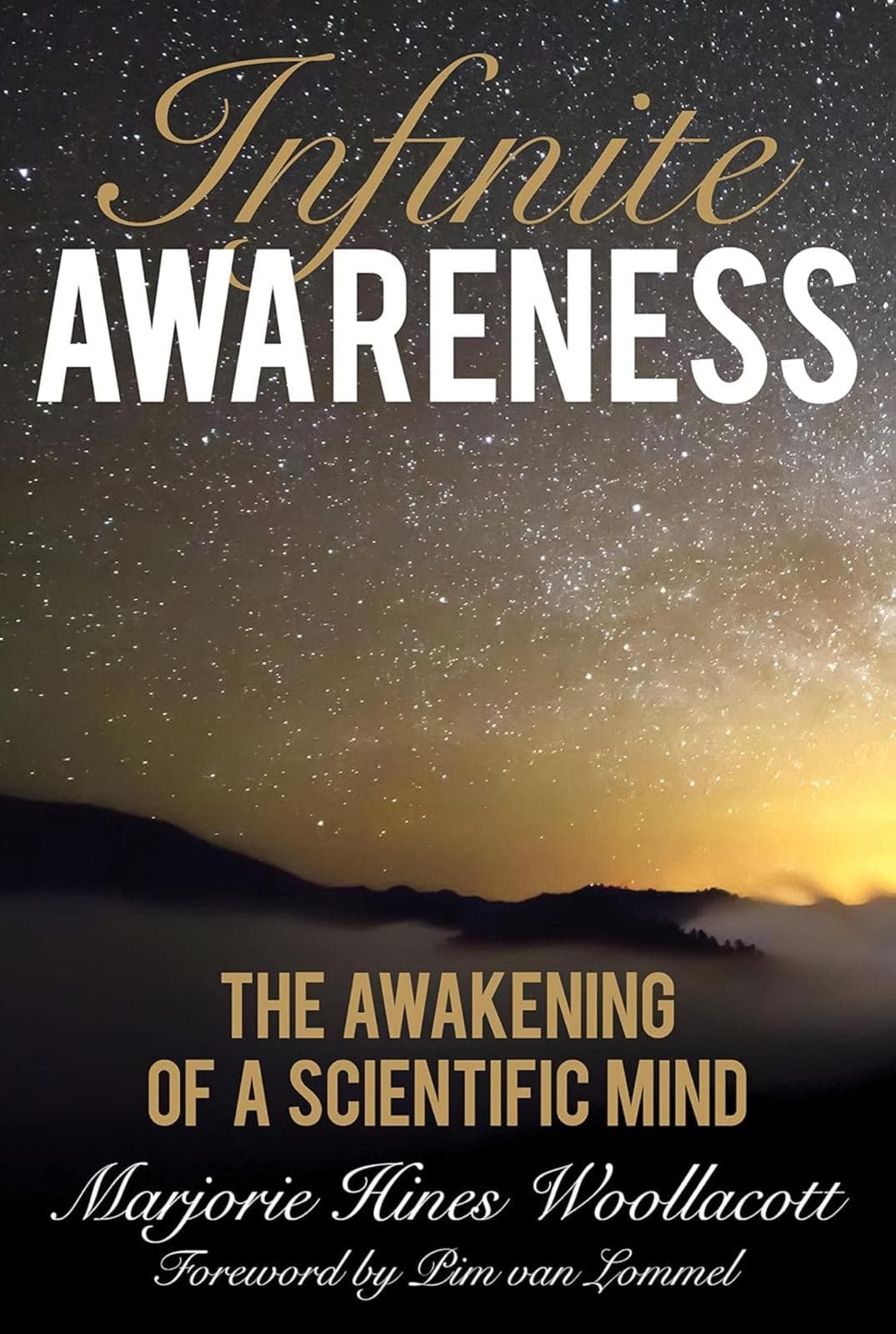
Join Xavier Katana as he delves into the mysteries of consciousness with Dr. Marjorie Woolcott, a neuroscientist, professor, and author of ‘Infinite Awareness.’ In this episode of the Human Experience Podcast, Dr.
Stay with the full conversation.
Episode field notes
Show notes
WE ARE BACK.
What if everything neuroscience taught us about consciousness is wrong?
In this mind-expanding conversation, Dr. Marjorie Woollacott—a neuroscientist turned mystic—explains why the brain may not be the source of consciousness, but simply a receiver.
We talk meditation, NDEs, reincarnation, and what it means to be awareness itself.
Xavier Katana of the Human Experience Podcast interviews Dr. Marjorie Woolcott, a neuroscientist and author of ‘Infinite Awareness.’ Dr. Woolcott discusses her journey from a skeptical materialist neuroscientist to embracing a broader understanding of consciousness after a meditation retreat. They explore the idea that consciousness is fundamental and not solely a product of the brain, drawing on concepts from quantum physics and personal experiences of near-death and out-of-body phenomena. The conversation also touches on non-locality, the limitations of traditional neuroscience, the spiritual significance of experiences, and the cultural resistance to these ideas within academia. They conclude with reflections on the interconnected nature of consciousness and Dr. Woolcott’s contributions to the field through her various roles and publications.

Read the complete recording
Transcript
Existing transcript, with its original wording and timestamps. Automated transcripts may contain errors.
Welcome to the Human Experience podcast. The only podcast designed to fuse your left and right brain hemispheres and feed it the most entertaining and mentally engaging topics on the planet. As we approach our ascent, please make sure your frontal, temporal, and occipital loes are in their full upright position. As you take your seat of consciousness, relax your senses and allow us to take you on a journey. We are the intimate strangers. Thank you for listening. My name is Xavier Katana and you are listening to the human experience podcast. I'm your host for this evening and we are honored to speak with a true pioneer in the exploration of consciousness. Her name is Dr. Marjgerie Wulcott, a neuroscientist, professor and author of infinite awareness. Dr. Wulikott bridges the world of science and spirituality in a way that very few people can. So, I really think you guys are going to enjoy this. She's got decades of experience and research into the brain. Her her her books have won multiple awards. Um, let's get right to it. I'm going to bring her on. Marjgerie, welcome to the show. I It's truly a a pleasure. Um, you know, I went I read the book last night. I know this is a book that you wrote, did you say over a decade ago? Yes. >> So, I mean, surely you've you've added to this research since then. Um, I don't want to jump too far ahead cuz I'm really excited to get into what's in the book, but why don't you why don't you just give us a short introduction on, you know, who you are, how you did this, like how how did you decide to get into this field? >> Sure. I will simply start by saying that my background is that I was trained as a graduate student getting my PhD as a materialist neuroscientist like we all were back when we were young neuroscientists in um graduate school. And therefore I believe that consciousness was solely the product of the activity of neurons in my brain. And I should say that at that point in my life as a young neuroscientist, I looked at anyone that didn't believe that we were only the product of our neurons of our brain as being a weak-minded person if they really believed that something could actually survive after death. But then I had an awakening and a meditation retreat when I was about 30 years old that shifted my whole awareness of what was actually inside of me. And I saw that I was much more than just the product of the activity of neurons in my brain and my body. And then I began to shift the way I approached my research. And gradually, little by little, I began to do more research on consciousness compared to what I was originally doing, which was rehabilitation medicine related to helping people with strokes and Parkinson's disease and children with cerebral palsy improve their balance, which is really wonderful. But it's like I now had this incredible compulsion to understand consciousness and that's what I've been doing ever since. >> I would say I h share that compulsion of wanting to understand we what this is what we term consciousness and and and I really think that science is in many ways catching up to what it actually is. And I I don't think we've we've landed there quite yet. I mean um we've done tons of episodes on this. So, you know, I've I've really I think I think I have a a decent I mean I mean I I I I know what I know. But uh what I want to ask first is it seems that the the brain and you cover this you cover this in your book. The brain is not what generates consciousness, right? It consciousness seems to be its own phenomena that that scientists don't really understand what generates it. Is that that correct? Absolutely. Because in fact the problem is that they're looking for something to generate consciousness and in fact consciousness is fundamental according to in fact some of the most venerable physicists um the quantum physicists um from the past like Mox plunk and they say that consciousness is fundamental and the material world is derivative of consciousness and so if you're trying to look for the source of it you're never going to be able to do that >> right so what's happened is they've even had patients that have quite little minimal neural activity, but they do exhibit signs of of they're they're conscious. They have consciousness. And so we've determined that it's it's not from the brain. So if it's not from the brain, where does it come from? Well, I think if we really think of it as fundamental, it is consciousness that's always been here before there was a physical reality. And if you look at people like for example modern physicists like Federico Fine is a name that I I'm really um appreciate knowing um he's a physicist from Italy but also the inventor of the microprocessor in Silicon Valley and a very very well-known um physicist has basically said that when he started to try to work on a computer that could become conscious as so many people have been doing in the last decades he realized it was absolutely impossible to do that. He also had his own awakening in the middle of the night one night when he and his family were at Lake Tahoe where he had an experience of becoming one with like the energy of the universe and feeling this like like blazing out of his chest, feeling this love blazing out of him and he suddenly realized, "Oh my goodness, I am both matter and consciousness all at once in the same time." Like we talk about a wave being both a particle of light and a wave of light. He felt he was one and everything. And he said with that experience he began to see that it was really fruitless to try to find consciousness within a computer. He was not going to be able to do that. And he now shifted toward a whole different way of looking at the world. Really seeing that consciousness is fundamental. Now your question though is then how is it that we in this embodied state with a brain are able to think and communicate and experience the world? And I think the point is that we do not yet understand exactly what that transducing mechanism is. That's the best word I would use for it. Between my consciousness when I'm not in this body, for example, when someone with a near-death experience has awareness of everything going on in the room around them and in rooms near them, we don't understand how when their brain is flatlined, they have that ability, but they do. And that's what we often call the transduction problem. But we know it's real. And it seems like somehow when the body is not active, the brain is not active, we have a consciousness that is much more expansive than when it is. And when um it comes back to activity somehow then we are back again looking at consciousness from the inside of our five senses out where before we were looking at consciousness from a point of space that could be anywhere and move anywhere. >> Yeah, I like that. I I really like that. So So you know, okay, a little bit of backstory about me. I I I used to be a heavy meditator. I would meditate three four hours a day like solid uh into my practice and um I would have you know out of body experiences. So I I became very used to this sort of space and I you know it didn't make me uncomfortable. Uh, fast forward a few years later, I suffered a a meniscus tear and I had to go into surgery and so they put me to sleep and I I remember just going into this blackness and I didn't really remember after after the surgery was over. I just kind of woke up and I remember talking to my sister. I'm like, "Oh my god, I I wonder if that's what happens when you die. You just you just go into this blackness and there's just nothing there, right? and and it's just oblivion, right? And and uh a few days passed after the surgery and I started to have flashbacks of myself floating in the room there next to the doctor and the nurses. I could hear everything that they were saying. I could smell that the smell the food that they had for lunch. I could see what they were doing. It was incredible. Um it changed you know it solidified my view that when the physical body is a sort of just a container um you know we consciousness I I it it's it certainly seems as if it it moves somewhere else when when we we dream when we pass from this life to wherever we go next. Um, what's your what's your what's your thought on this? >> Well, first of all, as soon as you mentioned that story of the flashbacks after the operation, letting you really see what was going on, it reminded me of a case study that in fact I recently published related to a woman named Stephanie Arnold, who had a near-death experience during the birth of her second child. and she remembered nothing of it after the experience immediately. But then she had all of these feelings of concern about and anxiety and she wanted to see if she might be able to know more about what was happening. And she went to a hypnotherapist and that hypnotherapist took her back to those moments of her um basically having the cesareian section and then basically having her heart stop because she had an embolism go into her lungs. etc. And then she remembered every single detail of that particular cacaian section, the resuscitation afterwards, every person that was in the room, her husband who was flying home from a trip to get back as quickly as he could, getting on the plane, getting off the plane. And the point that that reminds me about is all of this is embedded in our consciousness, but just because we don't experience it immediately like after an NDE or during an NDE, doesn't mean it's not there. And often when we say, well, only like 12% of the people or 20% of the people might have a near-death experience they remember. Well, maybe everybody would if we could find a way of getting them back into that context and then be able to actually experience what was going on. >> Do you think do you think it's an everybody thing? Do you think everyone has consciousness or do you think some people do and some people don't? >> I think that's a good question. I here is part of the answer to that question. That is if our brain is totally focused on our egoic narrative from what I would call this default mode network which is always talking about the roles I'm playing, who I am, how I'm relating to others. If that is dominating my current awareness, it's going to be hard to have an awareness of something else going on at the same time. So during the day the people who I think are really good um for example psychics that can actually have telepathy with others are ones that have a very quiet brain so that these this information can come in from the universe from this expanded awareness around them. People that are very much involved in their narratives won't have the ability to be aware and therefore I wonder if they wouldn't then also not have the ability to remember because they weren't focused on it. They weren't attending to it. Did you answer my question though? So, so do you think that there are some people maybe that simply exist like you said in in a in a very complicated way? Maybe they just exist in that default mode network. They don't have this extra sort of awareness at all. um on the internet. I guess you could refer to to them as NPCs or non-player characters where they're simply uh you know going through their D. Not that they can't be sort of u reduled into awareness. it it that I think that can occur. So, you know, I don't I really didn't want to make this more complicated of a question, but it if you could answer simply, I mean, >> well, so first of all, you're asking me sort of the question about the muggles versus the non-muggles. >> That's what I'm asking you. >> Exactly. And so, I would say that yes, there are muggles in the world and they don't have that ability to get beyond their egoic framework of this default mode network and their narrative. And however in a moment like a near-death experience when in fact their brain goes off a line because the heart has stopped beating they can in that moment then move into that other realm. The issue is this which I think is very very important. When they come back if they decide that experience was an illusion and it was not real they will then quickly forget it and say that it never happened. And I think there are many stories about people that had an NDE and in fact they were often MDs who had an NDE. They wake up from the MDE and they said, "Oh, that was an interesting hallucination." And they never integrated it into their lives. >> They threw it away. >> They threw it away except for one man when he was like 80 years old and he was beginning to die of cancer. He told his best friend, a fisherman, on a fishing trip they had about his experience and the fact that now he was wondering after, you know, 60 more years whether that might have been real. >> Wow. I mean, >> so to me that Yeah. And just one more thing. >> The important thing is perhaps not just whether you have an experience or not, but how your world view interprets that experience and whether it even lets it into your memory as a reality. And let me give you one more example of that because a good friend Gary Schwarz at the University of Arizona told me that he had an amazing experience when he was a young scientist in the middle of the night. He had gotten up and he was looking out at the night sky and he saw this incredible sense of expansive stars etc. and he felt oneness with the universe >> and after the experience was over with, he said, "Oh, well that was an interesting hallucination." and he never thought about it again until like 20 or 30 years later as he began getting more interested in consciousness and its survival. He remembered and thought, "Oh my goodness, I blew that off because I thought it wasn't real cuz I was a reductionist materialist neuroscientist and now with a new worldview, there's a crack that's opened and now I can see what that was really about." >> Yeah. Yeah. It's it's it's quite profound to me how the universe can play a hand in how we experience this part of ourselves um i.e. consciousness and and and it's almost like a finger the fingerprint of God to me because uh you know it's almost like the architecture is so complex that it's impossible for us to be aware of but we sometimes get this brief eureka moment of enlightenment a taste of enlightenment that allows us to see this sort of tapestry of infinity really reality and and when we do at least for me I'll speak for myself uh when when I have these moments um I I am beyond words it's it's it's a a wow you know like a and I mean to and to go back to the science part of it if you just look at the visible uh spectrum of light the what we can see of uh you what we denote reality just using you know the retina of the eyes it's so tiny I mean uh uh have you seen this Marjorie the this graph of you know this this tiny little sliver of light that we're able to perceive uh and what we term reality and you know you talk about paradigms you know like in your book and then you have to you have to add in that the the brain also your beliefs and the things that you've been told since you were 5 years old and you know all of that also filters what you see and what you don't see and i.e what you perceive as reality or not, right? And so I guess my question is um what are what are some of the most powerful uh anomalies that that neuroscience in your opinion has refused to to to to absorb or to confront? Are there any? >> Well, there are. And before we even get to the anomalies, I just wanted to address what you said about filters because what has happened in the last 10 years is I've been like trying to understand as a neuroscientist these anomalous experiences is that I've been looking at the brain and how it does filter out that wider awareness that you just mentioned. And so I just want to briefly remind you that the for the first filters are exactly what you said. They're like our five receptors. the the visual system, the auditory system, what we hear, what we smell, what we taste, what we feel in our bodies. And that is a tiny tiny portion of the vibratory wavelengths that you're talking about that are out there in the universe. So right there in the very first part of sensing, we have a tiny tiny bit of what we could possibly sense beyond those receptors. But then it goes further um in that when we just have all the information ascending into our brain stem and our midbrain, we have more filtering systems. One is called the ascending um reticular system and then another one is the phalamus in the midbrain. And then as you said, we have this default mode narrative network and we have our language and conceptual networks. They're all reducing more and more what's coming in from the environment. So with that all intact and my brain doing all of the activity it normally does in fact to help me survive as a human being in this environment, I have very little access to that more expansive reality. And so now we get to the anomalous experience. So I'll give you a first example which I'm just working on right now that a lot of the people that are listening may know about and that is the work with children that are non-speaking and part of this autism spectrum disorder where they have difficulty coordinating their body. They have difficulty sensing. They have difficulty speaking. And what's interesting about these children from work by Diane Hennessy Powell and others is that they have amazing ability at telepathy, meaning that for someone they're emotionally connected to like their mother, they mind readad whatever she is doing. And Diane Hennessy Powell and others are really exploring this right now. And I'm writing up a paper with Diane and another friend um another colleague Marina Wiler at the University of Virginia on exactly what is going on in these cases. And what appears to be happening is that when you are a human being, an individual that doesn't have the normal access to all of those um filters in the brain and conceptual activity, learning language, all of these sorts of things, you have a quieter brain and somehow that quieter brain is more open to information from non-locality. So you now can go beyond time and space and what you're perceiving. And I think the other interesting thing from talking with Kai Dickens and Diane Hennessy Powell about these children and others is that they also have a sense of integrity that other people don't have because in their framework being in a non-local awareness there's no reason you would want to lie. You simply know what people are thinking and you know they will know what you're thinking. And so there's this sense of total like interconnection and integrity and love that comes from these children. And I'm thinking that's a fascinating anomalous experience which my neurositist friends would simply say cannot be possible because nobody according to my neuroscitist reductionist friends would say you can actually communicate beyond the five senses. So how could you possibly know what your mother was thinking? >> Well, it's that you're right. That is absolutely fundamentally fascinating. I have had a chance to check that out and um some some other documentaries that involve children and you know I would agree with you in that there is a sense of innocence that they occupy. They don't know what lying is. So you know it's or they just don't practice it like adults do. And I think maybe somewhere in the brain it hasn't solidified because we're often told this isn't real. It's just a dream. You know, you were you were told to block it off. We're told to turn it off. Well, we're told that it was nonsense. And in fact, um I I don't there's an a very old interview from the 70s and um the the host was asking this research. got to remember his uh his name uh Istak Bentoff. I'm sure you've heard the name. Um and he and he the the host asked uh Istach he said where would you find the most enlightened person on the planet and is laughed and he said probably at a mental hospital because because it's very accurate that if you start to talk about the experiences of I don't know this type of stuff to people usually usually it's met with a very deep lack of understanding and maybe even a trip to the mental hospital depending on what you experienced. >> Mhm. >> Do you agree? >> Oh, I totally agree. And in fact, I think people have talked about the fact that even with spiritual awakening, so it just I step back. So I wrote a paper um relatively recently a few years ago on awakening experiences in scientists and academics. So here you have a conundrum. the person has an experience that is beyond what the reductionist model would say is possible and they don't know how to deal with it and whether they should actually share it with friends. And one um story was of a nurse who had had an experience like this and she was sharing it with her husband and her husband who was an MD thought she was basically mentally ill for having such an experience and >> he encouraged her to go into a mental hospital and she went ahead and did it because she knew that if she just what she did is she just went along with the people and told them oh yes everything is fine and they let her out within a few days but it's like she knew she had to play the game that this wasn't real >> and there is the problem with that's why so many people are in mental hospitals. They refuse to actually um say this wasn't real. And here's just one interesting story about another friend who had a near-death experience. >> And she comes awake in the hospital and wants to share her near-death experience where she was out of her body in other realms, etc. with her family and with the MD. And she was so excited she just kept over and over again say, "But you won't believe this." And finally the family got upset with her and told the MD to keep her quiet, that she shouldn't be telling people these illusions. And then the MD said this to her when she next mentioned it to him. He said, "If you mention that one more time, I'm going to put you across the street in the mental wing and they're going to give you pharmaceuticals until you stop talking." >> Oh my gosh, that's so scary. >> Exactly. So that's the issue. That's why people are in mental institutions. They refuse to stop talking that way because it's their reality. and she learned to shut up and then she later wrote a book about it and that experience with the medical profession. >> I'm glad that she later wrote a book about it. That's uh that's great. I mean so the system is fundamentally broken. Would you agree? >> I mean absolutely. >> I think I think without even other cultures thousands of years ago, I mean they were more in tune with this stuff than than we are now. And uh I I I just, you know, I'm I'm I'm lost at at the the sort of conundrum at, you know, like these doctors that seem to think they know exactly what's going on when they have absolutely no idea and the the poor people that are sort of victim to the the lack of of understanding that we have in in the medical field. Um, you know, I want to move forward a little bit because here's a word that we haven't focused on yet and that that word is awareness. Um, you know, the this it's the it's a the title of your book, Infinite Awareness, right? So, why don't you tell us what awareness is and how it molds uh itself into consciousness? That's a very good question and I think it's something that I first want to mention that has been obviously an object of exploration for thousands of years um with each one of our cultural like levels of understanding from 2,000 or more years ago. And I want to mention that one of the things I have begun to do since my first awakening was in a meditation retreat. I was intrigued with some of these ancient traditions and as I have been studying ancient traditions for example texts from Kashmere from around the 9th or the 10th centuries as well as modern physicists I find there's a lot of similarities between the two approaches and I want to mention for example the model that now feels comfortable to me and it may change over time but for now it feels comfortable and it's one that Federico Fine who I mentioned earlier um is now putting forth in a book that he calls irreducible. Um he has another very interesting biography called silicon where he talks about his own understanding of consciousness and the way he phrases it which is very much like ancient texts from whether it's India or Buddhist um texts from Tibet or something like that he he says this he says there is one creative principle and you would call it the one consciousness and the way he defines that is as a unified quantum field or a probability field. So, I like that we're putting it into a frame beyond materiality and even beyond energy because a probability field isn't even in existence yet. It's simply this unified quantum probability field. And he says that this one consciousness is basically um has free will. It has dynamism and it wants to know itself. It wants to really enjoy and love itself. So I like that as and he says that that oneness then in wanting to know itself divides itself into individual units of consciousness which is all of us and everything in the world because that's how it is going to know itself. So from its own substance, this probability field, it then creates the other consciousness units and then it then moves into a time space continuum to actually experience this. >> And there's another man I want to mention that I highly recommend to anyone who's listening and that is Bernardo Castro. He wrote a book. >> Yes. Oh, wonderful. So maybe he mentioned more than allegory is his book that he wrote a few years ago which is to me my favorite book of his because he said all of the ancient traditions of the world have somewhat similar myths we call them and that is that a a great conscious being a god or whatever we want to call it um has a wonderful dream and then the god decides he wants to step into that dream and experience it and that's when reality happens. We step into the illusion of our dream and that's where we are right now consciousness beings and we forget. Exactly. And here we are. >> Yeah. Yeah. I I think that's a that's a solid, you know, uh take on kind of how it goes because a lot of this is beyond words. I mean, you've been there. I think I think you get it. And um let's rewind a little bit about what you talked about non-local. That's I think that's the third or fourth time you've mentioned that word. Can you define that word for us because it might be something that that some people are a little bit questionable about non-locality, non-local. >> When I love that term because to me that's what consciousness is. And the neuroscientist would say that's impossible. When we say non-local, we mean it is beyond space and time. meaning that consciousness before we dropped into this quote unquote dream or reality of this physicalness when we decided to experience that we were able to communicate um basically across the universe in a certain sense without any um space without any time and so because we're all interconnected I think that's the point when you're beyond space you can be interconnected and that's what we know about of course um these quantum effects now that we talk about non-locality with one photon being able to which its particular spin when its partner that it was originally connected with which is its spin because they are connected beyond the laws of time and space. So we're saying that that still exists and we have access to it. But when we are down in our what I would call our dream of physical reality, we are bound by these laws of temporality of spatialess of um all of the laws of gravity etc. And I think what that's one of the things Bernardo Castrop says in this book more than allegory is that when the decision was made by what we could say non-local consciousness, this probability field of consciousness to actually instantiate an experience reality, everything within it, which would mean the earth, the plants, the animals, the air, everything took on a belief system of the basics of reality, which would be there is time, there is space, there is gravity. And that's a underlying belief system that everything has. And then as one became for example a plant, a insect, um an animal, a human, we took on other belief systems about how we are that allow us to structure our bodies and move in space and things like that. But his point is that they're all beliefs. It doesn't mean that they're not real. We've instantiated them and so they feel very real, but it's like we also can change the beliefs. What Bernardo Castro says in that book is if you can get underneath the belief, you can change it. And I know that one of the questions we might ask is is that maybe how we can explain energy healing. And I would say perhaps yes. But we go under the belief that I have to have this particular disease because I have the right genes from my father. They gave me Alzheimer's and therefore I'm going to get Alzheimer's. And he says no, no, no. You can go under that belief system if you can get under it and root it out and then you can experience something other than that reality that your belief system has created. >> Absolutely. So, so the Okay. So my version is would be that okay like uh in quantum mechanics it would be known as quantum entanglement where particles are linked in a way where um when when one moves the other also copies that state uh wherever it may be. Uh so in in this non-local uh non-locality it suggests a similar thing that you know we are not linked to the brain and we can go to places where we can gather information and even affect reality in a way where we're we're not connected to the body not connected to the brain not connected to the to the the ordinary I would say five senses and and and create something that is measurable. Would you agree with that? >> Absolutely. What would you say is one of those things that you've witnessed, seen, heard about where a person has has affected reality or experienced something that was something profound to you? Well, I'll give you one example from again a research study that I did with Chris Ro and others um from England and that is related to after- deathath communication. And so we have a recent paper out on a huge um sample of um surveys that um they collected I think it's like 994 something like that people that contributed to it. And I want to give you one example from that survey because to me it answers exactly your question and that is a man who wrote about an experience he had um when he was awakened in the morning like at 6:00 a.m. he was lying in bed with his wife and he said he saw somebody walking on his front porch through his own bedroom window and so he thought that's unusual and he got dressed. He opened up the door and he saw this woman with her back to him um crying and she turned around then and he saw it was his grandmother and she was long dead. She asked him for forgiveness and she apologized for not talking to him after his father had passed away a number of years earlier >> and she told him um basically um she was so sorry and he said it's okay and he forgave her and then she walked towards him and she hugged him and he said I felt her frail body hug me I hugged her back and he said I felt her clothes I felt her smell she thanked me as we hugged and he said it was this most intense feeling of love and heed started to cry and he then said she turned into this bright white light. He closed his eyes cuz it was almost too bright to stand and then he could feel the light fading behind his eyelids. He opened his eyes then and she was gone and he was still standing there with his arms around nothing now in front of him. And he said he went back into his house, laid back on his bed, his wife woke up and he told her what had happened. And he said his grandmother had died seven years earlier. And so my understanding is that for some reason his grandmother on the other side without a body was able to recreate that physical condition of being there with him so that she he felt every aspect of her, heard her, saw her, interacted with her so that she could resolve something she felt very bad about that happened during their lives together. >> Yeah. Um, you know, it's it's uh interesting that you bring this up. Um my my personal experience has been the same. Um whenever I've had anyone close to me pass, I have had a distinct experience of them afterwards in you know my local time space continuum. Um where it's beyond explanation and beyond doubt. uh in in fact I think when it occurs there's a sort of program in my in the brain which says that wasn't real that wasn't real just ignore it just ignore it you know just ignore it um I've also it is interesting that there there seems to be a phenomena with dreams specifically I remember uh my my my dad's mother had passed and I was very uh deep in the trenches of of learning out of body experiences and um I had an intuition to tell him to pay attention to his dreams and uh you know as anyone would be my my dad's mother like she he was very distraught and you know I just told him I said dad pay attention to your dreams and um let's talk in the morning and he went to bed and uh you know his he uh he woke up in the morning and I said dad uh what did you dream. Did you have any dreams last night? And was was grandma in them? And uh he said, you know, he he he kind of like his eyes lit up as the memory kind of you came back to him. And he said, "Oh yeah, she came to me. She was young and we were at our house where we grew up and she was happy and she told me she was at peace." And you know, it was it was that little moment of of interaction that that that kind of, you know, gave him that closure that he needed. And it's it's really incredible to me. I I'll let you respond to that, but I I want to talk about um this this this aspect of of memory and people who are able to remember and not, but I'll let you respond to the what I just said. Well, I think that it it's really important and you're right that that happens to a lot of people and what we typically do in our society is if it's a dream, we say, "Well, it was only a dream." But what we forget is that it's usually in the dream state that we are open enough that someone can come to us and actually communicate with us because we don't have our narrative going on. And so, so many after death communications from other people on the other side that we have loved come in the form of dreams. So I think that's the first thing that's most important to remember. >> Repeat that for me. I mean in a different way. Good. >> Well, well, so I I think the point is that I I'll just take the example of this big study that we did on after- deathath communication. We asked people in what ways did you actually perceive that person from the other side. So a certain percentage was just in dreams. Now others were I actually smelled the coffee that he used to drink and others were I heard his footsteps in the house. And others were like this man that I just told you about. He saw the woman and hugged her. He felt her with his physical sensation of his hands and his arms. >> But often when we say it happened in a dream, we tend to think it's not real compared to if it happened in my awaking state. >> Sure, >> that's what I'm meaning. And so I but the point is that I'm saying that in fact dreams are equally valid because it's the time that for most of us we have a quiet enough mind that the person can actually enter our awareness in that dream state and communicate with us. >> Um so in my own personal sort of theory I I've I've called it a type of etheric crystalline structure. So, so I think I think the way it works is that we we sort of the cons consciousness kind of floats above the body just a little bit about 3 ft. And this is why we have that falling sensation when we we wake up suddenly. It's like, oh, we fell, right? But it's it's the integration that's happening quickly because your b you're startled, right? So, um I think I think there's about a fraction of a second where this etheric crystalline structure which has its own independent memory can it it integrates it align it it it forms this sort of memory in the the human brain. And if if that process is interrupted, if there's an alarm that goes off, if you're startled when you wake up, it it can break that connection and the memory isn't stored and then it's it's just kind of gone forever. I mean, your your human brain just, you know, it does it doesn't really have this to keep up with this non-local space that seems to be um infinite. And it it seems to have um you know a a many things that that we simply can't define at all. Would you agree? >> I would agree. But I want to add one more thing that >> there's a paradox. Okay. >> Um when you were saying that for example before you wake up you may feel like you're three or four feet above your body etc. And I know that when I talked to Betatina Payton, who was a woman that is an MD who near-death experience, I wrote up after the um experience was over and we were talking about it, she said, "I thought that I was actually outside of my body and I thought I went to another realm filled with light, sparkling, wonderful light, etc." And was speaking with this amazing, intelligent, powerful being. But she said, "Now I look back on it and I think that it was not a change in location. It was a change in state. And I and that's what I'm meaning about a both end. It seems that people have the experience that they're moving through um locations because in fact we hear about with out of body um experiences like perhaps your own that it's like you're going to somebody else's place across town or someplace else in the universe. And yet what she was saying is that it's really this place beyond time and space. We have the illusion of doing that but in fact all she did was change her state. I don't understand that. That's a paradox. But I just want to mention that it >> that doesn't seem like a paradox to me at all. That seems like it makes a lot of sense. Um so you know if if if you can change your vibration, if you can if you can change um the state in which you are in, I I think you can be as non-local as you want to be, you know what I mean? Like so um wow. Okay. So you kind of spun me out a little bit with that one. Um, let me let's get back to Okay, so here's a question I wanted to ask you. Um, have you have you had any >> uh have, but what was probably the most significant type of encounter that you've had with deities um non-local entities? If if you would like to share, you don't have to, but if if you want to, is there anything? Well, you know, it's an interesting question that you ask because I tend to have not an experience with an entity per se, but it's more an experience with this profound deep love that I think of as like perhaps maybe even either the essence of what is our own true nature on the other side. I connect with that and I also connect with human beings who are also connected with that love. And to me, that's why so many of us love to be around someone who is truly what we would call enlightened, that they really have that non-local awareness, whether they're um saints from one tradition or another, but we feel in our own heart the connection with their heart, and it pulls us into this non-locality. So, that's more my awareness of it rather than being somebody that I could actually experience in a dream. Like some people say, "Well, I saw this particular um saint from the other side." Or someone say, "I saw um God or Jesus or something like that." For me, it's more the experiential form of the love and the bliss and the joy that comes from being with people that are also in that state. >> Do you believe in God? >> Absolutely. When I say God, I do not believe in the God. That is the um version that I learned when I was like in Sunday school as a little kid which was like this um individual entity that is up there pulling the strings on everybody. I believe in this >> like a source type of energy >> the source of everything. It's sort of like what Fed is talking about. It's this this wonderful probability field of intelligence and love and creativity that wants to know itself and I'm part of that. So it's like I'm not different than God. I'm just that is my essence and I'm helping myself as God to know myself by doing what I'm doing. >> Absolutely. Absolutely. You know, like a divine sort of spark or you know it it's kind of like like we have a a small piece of that, you know, part and parcel. And perhaps, you know, if God wanted to understand himself better, maybe um I'm using he, but maybe God would insert himself into a matrix like this and and then forget, completely forget that he did it because in if if he remembered, it would change the game. It would, you know, it wouldn't be the same. the the the the the structure of of the experience, the quality of it wouldn't be the same. Um reincarnation, what's your what's your take on reincarnation? >> But before you go on, I like what you just said, but I want to say and then I'll go to reincarnation. Um, you remind me that a very good friend of mine um has talked about his own experiences um throughout his um young adult now to middle adult life with entities sort of like you were asking me about and his first encounter was with a woman at the end of a yoga class that he was taking. was lying like I think in the corpse pose and this woman came to him like in his awareness and um she was this beautiful woman filled with energy and love and he wanted to know who she was and finally she told him her name was Shakti and they had this funny interaction where he didn't understand what that word meant and um he said oh that's a silly name and then she left she was very unhappy with him and then gradually they had this continuing relationship that became more and more loving in different meditations and interacting And he learned so much from her and he began to realize more recently that in fact he was experiencing with the shocki in this in case it's the feminine energy of the universe this continuing cycle of not knowing each other having forgotten coming together beginning to relation have a relationship with each other finding incredible love and unity and joy. And then in that place of union, you begin to get static. And then you let go, you forget, and you start all over again because it's this joy of discovery of who you really are. And it's always dynamic. So there's my answer too to what this might always be about is, as you say, we come into this three-dimensional reality, immediately forget, and then the whole journey is remembering who we are. And it can be very painful because we're in a place of polar opposites of um life and death of pain and pleasure. And when we decided to drop into this reality system, we have to learn that they are part of a three-dimensional reality. And we have to learn that there is a bigger perspective which I call from my own tradition the Shiva dishi perspective which simply means the outlook of consciousness. And if I can shift to that perspective of seeing it as a whole from above, I don't take all of the pains and the pleasures so seriously as if their life and death matters. >> Similar in in that way in which um you know I when a person passes to me it's a celebration. I regard it as, you know, yes, yeah, I I I go through the motions of sadness and and grief, but but I I let that go because I I I tried to realize that, you know, we we're here for a limited amount of time, you know, and Marjorie, we're approaching the end here. We've got about 12 minutes left. So, if we could wrap this up for our our listeners, but to continue what I was saying, um, you know, I think we're here for a a a short time, um, relatively, and and and and I think I think that there's a there's a lesson or experience in which we we gather, we need to learn. And for some reason, this place is is that school of learning where we come, we we learn uh we we forget what it's about and and then we're gone, you know, and and the meat suit kind of lets it gets left behind and and perhaps even Marjorie perhaps even when we get to this non-local place, perhaps uh this this linear one two three time place, maybe it's just an instant, maybe it's just a moment, you know, and and So for for us in that non-local area, it it it's like, oh, it was just it was just a quick game. Let me try it again, right? And um and there then then comes this sort of cycle of Samsara where we're kind of trapped in in the this matrix. Um I So I want to I want to I want to jump into another little quick question, but I'll let you answer um what I just said. U but go ahead. Well, I mean, I think you're right. And I think the point though is that when we are in our individual point of awareness, sometimes it's hard to remember that and we have to have compassion for ourselves when we're dealing with, for example, the loss of a loved one or um some illness in our life or the tragedies of like our current political environment. And I keep remembering that that I can feel the separation when I'm feeling that and say, "Okay, can I just pause for a moment, have compassion for myself, all those people around me because we're doing the best we can from our own level of awareness in this moment." To me, that's my biggest lesson. And I can say that about the people in this world that seem to be doing terrible, awful things. They are doing the best they can from their level of awareness. And I have to understand that this is an evolving reality. As you say, we jumped in here to learn. And now they're all learning. We're all at different levels of awareness. And can I just relax into a little bit as I try to spread the sense that we are all interconnected with everyone around me so that we will all feel more fulfilled, more happy, more loving. >> Yeah. I love your compassion. I That's really great. I probably would have forgot that, you know. Um that happens sometimes. Uh but um I wanted to talk a little bit about um simulation theory and and we'll be brief on this but um yeah I had a guest on and I was talking to a friend uh we we were taking a walk and um they we we were talking about um well you know if we were in a simulation how would we determine how would we know that we were and my answer was that there would the artifacts that like like fingerprints of of God that were everywhere. And you know, if you look at the Fibonacci spiral, it's everywhere from the microcosmic to the macrocosmic, it's almost like a base code to this reality. And um it it makes so much sense to me that, you know, whatever coded this it would need, you know, it would be too complex to create everything, you know, on its own. So, so everything would match this sort of base code and even Leonardo da Vinci with um you know the the the Venusian man he he knew it too. He drew it you know in that painting. So what's your take on this on simulation theory and and if we could be in a computer pro computer for lack of a better word program reality? You know, it's an interesting question for you because I should say that at taking a step back with all this interest right now in um basically artificial intelligence um and whether computers can take over the world, things like that, it seems somewhat like we're going in the wrong direction. I understand that um we are doing amazing things right now with computers. We can see it just getting on the internet and asking a question and having all of these answers come to us from this information that's been stored in programs. But to me, the point is that a computer can never be conscious. And in some ways, in terms of a simulation reality, I I I can't get my head around it, and I apologize for that, but it's like I'm so into the um feeling that I've had from an awakening and my interconnection with others and the love that I'm feeling, etc. Um I um tend to go there always with my awareness. I tend to go to my feeling of interconnection with the animals, the plants, the um planet around me rather than worrying about what might be um a simulation reality and whether I'm in it. The the Matrix was never a movie that super excited me because I I whatever the reasons, it seemed a little bit artificial. That's all. So >> you do you. the if the grass is green and and the sun is shining, the birds, you know, and that's that's your thing and and you know, and that's all you want to think about. Hey, uh I love that, >> you know. I wish I could do that. I wish I could just turn off my brain, tell it to shut up and go outside once in a while and get some sun, you know. And um it it, you know, we could talk about this all day because it it's such a deep and intriguing mystery, right? like that we're still we're still uncovering. We're still learning about. What I hate I loathe is that you there seems to be a lot of push back from academia and there's there's many many guests that I've had on that are threatened with their tenure. They they're told that, you know, they're they're they're no longer going to have a job that if they publish this that their their name will be dragged and often it is. Why do you think why do you think that there is this sort of blind like a crafted blind spot where these people just don't want us to be moving forward in in this regard of to of science I mean it's the opposite of science right the science should be to explore and understand and learn wherever that may take us so why >> well so first of all I want to say that when I was that young researcher that was a materialist and had no spiritual experience I felt the same way about others. Thought they were weak-minded. And I I would never look for research related to a more expanded awareness and non-dual thinking etc. And then however I had that experience and I shifted now the people that are out there with the incredible push back and maligning anybody that has these um beliefs and these and doing experiments in the area. What I realize is it's mainly about incredible fear. And if you think about it in this world, we are afraid of being ridiculed and thrown out of the herd. And it's happened for centuries in the past where we would basically put people under house arrest if the church said that you're saying something that's not true or we would burn people at the stake. And so there's the fear. Now it's not burning people at the stake, but it's basically losing our jobs, losing our research grants. And I'll give you just one interesting example for me. I had a good friend who was a scientist and we were talking to each other and I was telling him a little bit about meditation and he seemed somewhat interested and um I then invited him to go with me to a meditation program and as soon as I said that I immediately saw this veil go down over his eyes of almost fear like he might catch my virus and become crazy too and of course he said no and so I think that that's what we see there's this incredible that people belong to an academy and they don't want to lose their connection with that academy. It is based on the five senses being the only way we communicate and therefore it's almost impossible for them to change. And interestingly we do remember which I appreciate that one person who seems to have changed somewhat at least is Kristoff Ko the neuroscientist who used to say that in fact we were definitely going to find how the brain created consciousness. And now after losing a bet on whether that would happen in the next 25 years, he's modified his view. But he's also taken psilocybin and had the equivalent of a near-death experience. And now he's beginning to say that he believes that consciousness being fundamental is the way he leans right now as his view of the world. So things can change, but often it takes an experience to get them to change. >> Yeah. I I mean I think in a the most respectful way um I think I think what we can do is we can plant seeds and and I often find whether it takes a year or 10 years I find that the person that I've talked to in this regard that is has rejected it fundamentally and you know it even it's affected our relationship they will turn around later and I'll hear from them and they'll say, you know, hey Xavier, um, dude, you were right. You know, there was there was something there. And, uh, I don't know what I was thinking. You know, it's some it's a it goes something like that. And it it seems to be a song that that occurs. And I I don't think we can deny whatever this may be. And I and I think you know huge amount of gratitude to researchers such as yourself and and others um for you know pioneering the way for um you know people like me and and others that that are asking questions that want answers that you know are are asking big questions like you know like um what happens when we die? Is there a god? You know why are we here? Why are we here? Right. I mean I mean can can we answer that one? Marjorie. >> Well, see I I love that because for me the answer is is because I am that consciousness and I want to know myself and I'm doing it with all these other points of consciousness interacting with ourselves to learn who we really are through this wonderful creative process. We are in an experiment in the expansion of creative consciousness. >> Marjorie, you're so special. I love it. Shout out to Athena for putting that together. She's just wonderful. Um Margie, where can people find your work? Where can people find the book? Uh it's called Infinite Aware Awareness, the Awakening of a Scientific Mind. Um Alice, where where people can go to find your website, the book? >> Sure. Yes. So the website is simply my name, marjeriewulcott.com, all one word. And um also they can get the book of course on Amazon both in an audible form in which I'm actually giving the book myself speaking the book in the recording and people like to hear my own voice because it's real when you're hearing the author's own voice and I also should mention that there are places like the um international association for near death studies where I am the research director the academy for the advancement of postmaterialist sciences where I'm the president and people can join that and have wonderful discussions with us every week and also the Galileo Commission that um David Lurmer is also a co-director of that we do interesting seminars and webinars and things like that. >> How how do you manage to do all of this stuff? I mean, you must be a busy bee. >> Well, and in fact, it's so enjoyable as you can imagine. It's like playing in a sandbox with your fellow researchers who love to learn these things together. So, it's a great joy. >> I'm I'm really glad that you made time for for this show. Thank you so much, Marjorie. With that, guys, we're going to get out of here. I mean, wow, what a fundamentally amazing episode. And and Marjorie has her her own way about her and and it's really special. So, I hope you guys enjoyed this one. We'll be back next week for the next episode and uh have a great night.
Ideas worth returning to
Quotes
Five substantial excerpts from the published transcript, lightly edited for clarity without changing their meaning.
“I was trained as a materialist neuroscientist and believed consciousness was solely the product of neurons in the brain. Then, at about thirty, an awakening during a meditation retreat shifted my awareness. I saw that I was much more than the activity of neurons in my brain and body, and that changed the direction of my research.”
Dr. Marjorie Woollacott“The problem is that researchers are looking for something that generates consciousness. My view, shared by physicists such as Max Planck, is that consciousness is fundamental and the material world is derivative of consciousness. If consciousness is fundamental, searching for a separate physical source will not find it.”
Dr. Marjorie Woollacott“We do not yet understand the mechanism that connects consciousness with the embodied brain. I think of it as a transduction problem: how does a person move between an expansive state of awareness and the ordinary experience of looking outward through the five senses? We have observations, but we do not yet understand how that transition works.”
Dr. Marjorie Woollacott“When we are dealing with the loss of a loved one, illness, or tragedy, we have to pause and have compassion for ourselves and the people around us. We are all doing the best we can from our present level of awareness, and remembering our interconnectedness can help us become more loving and fulfilled.”
Dr. Marjorie Woollacott“For me, the answer to why we are here begins with recognizing that I am consciousness and want to know myself. We do that with all these other points of consciousness, interacting and learning who we really are through a creative process. We are participating in an experiment in the expansion of creative consciousness.”
Dr. Marjorie Woollacott
About the guest
Marjorie Woollacott
WE ARE BACK.
What if everything neuroscience taught us about consciousness is wrong?
In this mind-expanding conversation, Dr. Marjorie Woollacott—a neuroscientist turned mystic—explains why the brain may not be the source of consciousness, but simply a receiver.
We talk meditation, NDEs, reincarnation, and what it means to be awareness itself.

Episode 171 – Surfing Monster Waves, Mastering Fear & Flow State w/ Laird Hamilton
July 6, 2020 · 46:18
EPISODE 199: Dr. David Nichols — Psychedelics, Consciousness & the Chemistry of the Mind
October 20, 2026 · 1:12:11

HXP SHORTS: #001 – Deconstructing Death: What Happens When We Die?
September 14, 2026 · 11:37
Episode 194 Dr. James Fadiman – You Are Not One Self: Microdosing, Multiplicity and the Mind
September 4, 2026 · 1:14:38
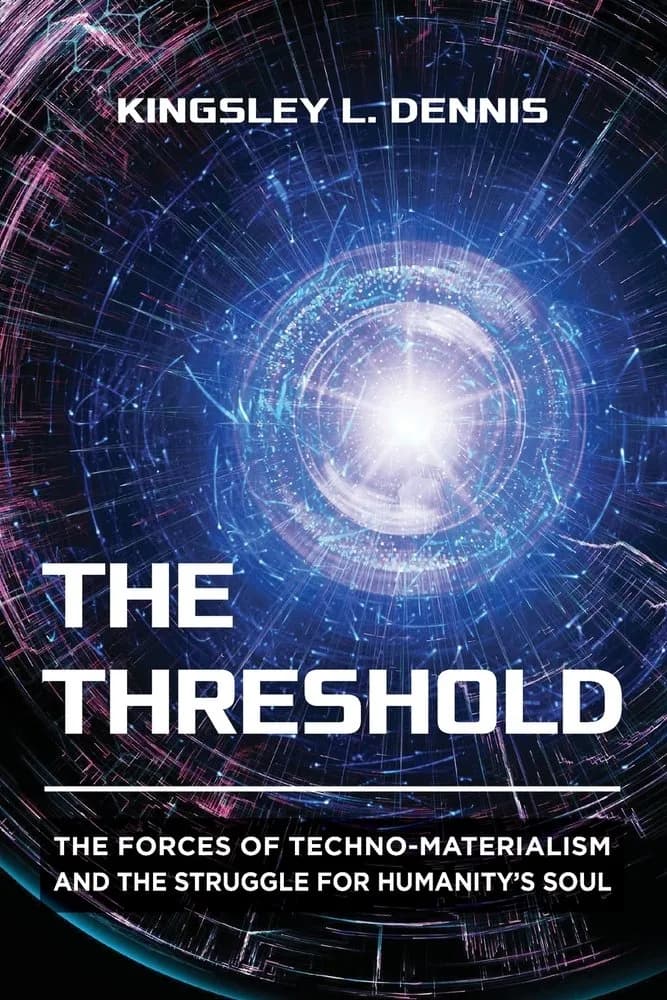
Episode 193 – Kingsley L. Dennis, Ph.D. on AI, The Threshold, and Reclaiming the Human Soul
August 30, 2026 · 58:59
Independent conversations
Help make the next one possible.
Membership sustains ambitious, unhurried interviews and keeps the complete archive open to curious listeners everywhere.
Become a member