

The Human Experience · Episode
Episode 177 – Waqās Ahmed – Human Potential Unlocked, Creative Genius Explained, The Polymath
A conversation with Waqās Ahmed
Waqās Ahmed is a world-authority on multi-disciplinary thinking. He is an author, artist, scientist, and journalist. Waqās has degrees in the History of International Relations and Economics. He was appointed as Chair of the Commonwealth’s Global Citizenship Education Panel.
Stay with the full conversation.
Episode field notes
Show notes
Waqās Ahmed is a world-authority on multi-disciplinary thinking. He is an author, artist, scientist, and journalist, among many other areas of expertise.
Waqās is completing his post graduate studies in Neuroscience at Kings College London and has degrees in the History of International Relations and Economics. He is a qualified fitness professional and educator, and was appointed as Chair of the Commonwealth’s Global Citizenship Education Panel.
Waqās founded the DaVinci Network, a global movement that wants to achieve the many-sided potential of humans worldwide. He is the Artistic Director at The Khalili Collections, a diverse and important private art collection, and his own artwork has been commissioned and purchased by a variety of institutions around the world. His journalism work has seen him occupy the position of Global Correspondent at FIRST Magazine, one that saw him gain exclusive interviews with various prime ministers and presidents.
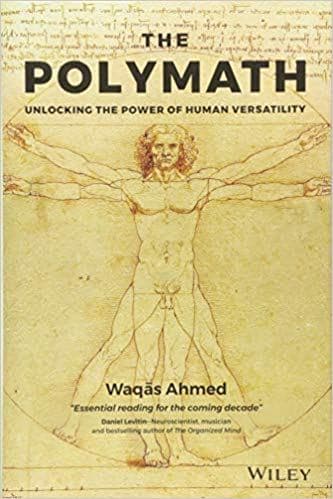
Waqās is author of The Polymath, a book in which he looks at polymaths, those people with multidimensional minds, those that reject specialisation in one area and pursue multiple objectives in different fields. He looks at the roles these people have played in history and why this approach to life could be important to us in the future.
VISUAL ART
Waqās is Artistic Director at The Khalili Collections – one of the most comprehensive and diverse private art collections in the world. His work includes partnering with the likes of Google and Wikipedia to democratize art through digital curation, visual optimization and cutting-edge technologies. He was also the curator and host of the 2019 Official Opening of the Leonardo da Vinci 500th Anniversary Celebrations at the National Gallery in London. As an artist, his own paintings have been commissioned and acquired by major institutions worldwide.
Waqās is completing his postgraduate studies in Neuroscience at Kings College London, where he is investigating multidisciplinary approaches to the treatment of chronic pain. Another strand of his research focuses on cognitive flexibility, and his research interviews with world-leading brain scientists include Daniel Levitin, Ray Kurzweil, Noam Chomsky, Rand Spiro, Douglas Hofstadter and Iain McGilchrist. INTERNATIONAL AFFAIRS
Born and raised in Britain, Waqās has since lived in several countries across Europe, Africa, the Middle East and South Asia. For five years he was a diplomatic journalist and publisher, namely as Global Correspondent at FIRST Magazine, where his exclusive interviews included the Presidents of Egypt, Sudan, Liberia, Sri Lanka and Guyana and the Prime Ministers of Ethiopia, Malta, Romania and Mauritius. He was also editor of the Official Reports for the Commonwealth Heads of Government Meetings (2011-2015) and has advised numerous clients on international communications campaigns.
Waqās holds a Masters degree in the History of International Relations from the London School of Economics (LSE) and was previously a visiting lecturer in International History at the University of the West of England. His paper on the Post World War Two movement for a World Government was published in the Federalist Debate. He was editor of Holy Makkah (FIRST 2017) – the first holistic exploration of the sacred city in the English language – which received praise from UNESCO, the Commonwealth and the Vatican.

Order the book, click the image.
ACCLAIM FOR THE BOOK:
Waqas has written a wonderful book that is a mix of history, philosophy, science, self-help and manifesto. We need more polymaths. We need more thinkers whose curiosity wanders across disciplines. This book is a good step in that direction.
-A.J. Jacobs, four-time bestselling author and Editor-at-large, Esquire
Masses of good stuff, and I don’t know anyone else who is saying it with any- thing like the range and thoughtfulness with which [Waqas is] saying it . . . with any luck, it will set the world on fire!
-Iain McGilchrist, author, The Master and his Emissary
This revolutionary book has filled one of the great voids in the history of knowledge . . . Waqas is fast emerging as a young Leonardo da Vinci’.
-Nasser D. Khalili, scholar and Founder, The Khalili Collections
Himself exceptionally well-read, well-travelled and multi-talented, [Waqas] is well placed to tackle the subject in a way that is not only vastly educational but also refreshingly inspirational.
-Edward de Bono, originator of ‘lateral thinking’ and bestselling author, Six Thinking Hats
I am too stunned to comment on this book . . . I am transformed and tran- scended; I will never be the same again.
-F. Story Musgrave, astronaut, NASA scientist and ‘World’s top ranked Renaissance Man’ (AskMen)
To Find Waqās Ahmed Visit the-polymath.com.
This episode will completely change the way you think about learning and human cognition.
Read the conversation
Transcript
welcome to the human experience podcast the only podcast designed to fuse your left and right brain hemispheres and feed it the most entertaining and mentally engaging topics on the planet as we approach our ascent please make sure your frontal temporal and occipital loads are in their full upright position as you take your seat of consciousness relax your senses and allow us to take you on a journey we are the intimate
strangers thank you for listening [Music] ladies and gentlemen welcome thank you so much for your presence this evening we’ve got an outstanding show planned for you guys this is our first episode of 2020 the year is 2020 one more revolution around the Sun another attack a new decade of human civilization incredible we made it who would have ever thought we made it but we are multi casting this evening on a variety of different platforms so if
you have not heard the show before right now then you’re in for a treat if you want to join the community that we have set up a bunch of people have asked me how to get to the community just go to all my links calm slash the humanik speak like at the top where it says community invites that will let you all into the server we are in the live discussion channel we are gonna be diving into the realm of the polymath tonight unlocking hidden
human potential I mean it’s gonna be phenomenal so whether you’re here with us live right now or if you’re listening to the podcast version of this thank you so much for your presence it sincerely appreciated either way sit back grab a drink enjoy this conversation the human experience is in session my name is Xavier katana my guest for today is mr. raucous ahmed’s he is a world authority on multidisciplinary thinking he is an
author scientist and journalist ruckus has degrees in the history of international relations and economics he was appointed as chair of the Commonwealth global citizenship educational education panel walk us is the founder of the da vinci network a global movement that wants to achieve the many cited potentials of humans worldwide he’s the artistic director at the khalili collections a diverse and important private art collection he his
journal journalism work has seen him occupy the position of global correspondent at first magazine one that saw him gain exclusive access and interviews with various prime ministers and presidents all across the world what a resume Wakko’s is author of the polymath a book in which he looks at polymath people who have multi-dimensional minds those that were reject specialization in one area and pursue multiple objectives in different
fields he looks at the rules these people have played in history the roles these people have played in history and why this approach to life could be important to us in the future what causes work has been featured in Forbes the Financial Times The Lancet he was selected as Graham Hancock’s featured author of the month wow what an amazing resume will cost it’s such a pleasure I’m so excited for this conversation welcome to hxp Xavier thank you so much
for having me today I’m especially at the beginning of the new decade where we ought to be thinking a lot more about human potential in general but our own human potential in particular and that human potential we’ve historically been told ought to be one-dimensional but today hopefully we’ll get into a bit more about how and why human potential every individual has a many-sided potential a one that can be untapped through a very particular system very
particular approach to life a very particular mindset so thank you very much for having me on this prestigious show yes sir I mean I I really appreciate your presence I know it’s a bit late for you where you are in in London I believe in the UK and you know I let’s let’s dig in let’s this is your first book correct yeah absolutely it’s my first book it took about five years ten thousand hours of research and a lot of interviewing a lot of traveling
around the world it didn’t begin as a book it began as a series of notes actually personal notes a personal intellectual journey which came as a result of a lot of a lot of hours at 35,000 feet up high traveling the world through my work some of which you’ve described earlier on in your kind introduction but but as a result of that I started questioning a variety of things related to the individual what our potential might be what the role of
the human is in the modern world but also systems why are certain systems and institutions the way they currently are and whether they ought to be that way so that kind of intellectual exploration that everyone I’m sure you and all of your listeners are going on or have been on it’s the same thing with me it’s just in my case it my notes down wrote my thoughts down and thankfully it came together ultimately in the form of a book and was published
by Wiley earlier this year yeah I mean congratulations and yes that is the essence of everything that we do on the show is explore that that untapped human potential I think that is you know I have the tenant of everything we do here so you know I almost think I made a joke about this before in the in the pre conversation before we started and I I said you know are you up are you a polymath you know but let’s what what is
a polymath well a polymath um is has is a concept and a word that’s been thrown around rather loosely over the past decades and even centuries and it’s means different things to different people but in general it’s always meant somebody who has had a lot and are diverse kinds of knowledge and has often used that knowledge for some creative outcome so it could mean an individual who’s excelled in many different fields
it could mean an individual who’s rather encyclopedic in their knowledge and doesn’t just know a lot about one thing but a lot about many things the way I describe it however is is through its core competency that every polymath has and more to have and that is through the competency of versatility the ability to to move seamlessly between different fields and disciplines and the way that usually manifests is that individual as
a result excelling at various seemingly unrelated fields and I say seemingly because if you speak to a polymath they will often see connections between those fields and I’m sure we’ll talk about that in due course but but to to the onlooker and to the so called specialist or to the modern thinker who’s trained to think about accomplishment in a one-dimensional way that you ought to be a specialist at the expense of every
other field it was these fields might seem sprut or different but to the polymath they are very much connected so yeah that’s the way I describe it is a versatile and exceptionally versatile individual who as a result excels in multiple seemingly unrelated fields hmm okay I mean the cover of the book which people can see now you know it’s it’s it features da Vinci and da Vinci seems to be the core sort of tenant of tenant of
what you know you sort of surround your your research by you’ve mounted the da Vinci network so you know why da Vinci well the Vinci’s is the given what I’ve explained by way of definition of a polymath just now Leonardo da Vinci is the archetype of the polymath at least in the Western mind and because we know we’ve taught since school and most at least European and American educational establishments that Leonardo da Vinci
was not only an exceptional visual artist painter but he was also an exceptional engineer who would invent various things he was a mechanical engineer he was an architect to some extent he was a scientist an anatomist to some extent but there are many other sighs – Leonardo da Vinci that if you go deeper you go into the man he’s one of the few men or humans in in history I think that actually are very much live up to the hype that they’re given at at
conventional schools and universities because he he was he made significant contributions he didn’t just explore for the sake of exploring but at least from the benefit of hindsight now we know that many of his explorations were groundbreaking and whether or not they they came to fruition during his lifetime is another matter but we know that his thinking was about beyond anything else during his lifetime at least and the result I argue throughout
the book the result is the fact that he had a multi-dimensional mind he was able to look at each concept phenomenon field individual as as part of a system so it’s a part of a system meaning that he was somewhat of a systems thinker which again we’ll go into in a bit more detail but he was he was now systems thinking has become quite popular in various fields and various spheres of life but he was probably the original systems thinker at
least in Western history because if you look at his notebooks for example of which there are many and they’re scattered through various collections around the world if you look at his notebooks they cover a variety of things written and as well and drawn as well and those things range from botanical studies to anatomical studies to zoological studies to mechanical engineering designs to architectural designs and and and so on and so forth
many of these sketches did inform his paintings of which there weren’t many actually but but the fact is that when an any individual today were to look at this vast corpus of of work in its entirety they would look at it and they would look they would see a seemingly sporadic approach to exploration where on one page for instance he will he will talk about or he will either write about or he will draw the motion of waves and
the movement of water and he would explore that and you’d look at things like thermodynamics on the next page and then he’d look at actually how hair falls on Iran a woman as opposed to a man on the next page and so on and so forth so one one thing if you look at it from a systemic approach one thing or one phenomenon often draws him to the attention of another and so on and so forth so he actually thought in a very systematic manner as opposed to a
sporadic manner this is why he’s highly interesting study as he’s a highly interesting case study as a polymath and which is why he inspired me from a very young age because as growing up at least in in in the UK education system and I know it’s it’s very similar in the US and indeed in many parts of the world where you have a specialization system where you you start off rather broad and then you narrow in as you get older and so if you
have multiple passions which most children do it’s natural because as human beings were multifaceted individuals we really have we’re debt we are bound to have multiple passions we then are taught or encouraged or even forced and compelled to to narrow this down and to compromise our many interests and talents and ideas at the expense of ultimately one which is what we’re applying to university for right we apply for one degree and in the u.s.
at least you have a liberal arts degree which is rather broad but here in the UK and in many other parts of the world it’s often a highly specialized degree so you’re supposed to know your specialized vocation when you’re 16 or 17 years old which is rather absurd so that is that that is the kind of education educational background I came from so when I saw historical figures like Leonardo da Vinci excelling in so many other fields in addition to the
artwork that we know him for now that I found that highly inspiring and ever since then it’s the concept of the polymath has been rather intriguing for me so now when you look at the book over these five years I’ve explored examples of such individuals male and female from different type of different parts of the world as well as from different periods in human history and I realized that actually there are many Leonardo’s
scattered around history scattered around the world the deeply look the more you find them and Leonardo is definitely still up there as one of the greats but as you may have seen with the book there are many many other examples yeah it’s amazing I mean I I’ve never told anyone this but you know I think about Leonardo da Vinci quite a lot you know I’ll be it’s really random and it’s it’s it’s weird I guess but you know I
think about the way he connected to the discoveries that he made and I think about his relationship to our society today and how he would probably in clinical regards be diagnosed as ADHD and you know prescribed some medication and we would you know be erased from you know humans and so you touched on my next question you know how common is this how you know how spread out are I mean are there polymaths in the world that don’t really realize
that they’re there polymaths in there you know because of the mainstream because of the way our system is set up that yeah you know we’re forced into you must study this you must pick this as a career you must do this you know and maybe they’re misdiagnosed yep and my premise of the book actually is that everyone originally was and therefore has the potential to be a polymath so what I mean by that is that as I mentioned earlier on originally
everybody is a multi-faceted human being we all have different dimensions to us whether neurologically biologically psychologically emotionally I mean we have an intellectual side a physical side a spiritual side and all the rest so how then so if we’re born into this world and we’re on this adventure which is called life why then should we constrain ourselves for the majority of our lives doing one particular highly
specialized thing at the expense of everything else that there is to discover and I’m sure use it relates to this given how the diversity of Spira of of interviewees you’ve had on your program I mean look at the world that’s out there look at the ideas that there are to explore to to develop further to assimilate in one’s own life look that’s just in terms of ideas look at places there are look at the cultures there are
look at the languages there are and so on and so forth so when you’ve got this individual that’s inherently multifaceted entering into a world that is inherently diverse then enforcing specialization and especially long life long specialization on that individual is not counterintuitive but it’s also counterproductive for the individual and for society and so that said there are polymaths there are individuals that stay true to that parameter amor
yourself and continue continue on that multi-dimensional journey even if it’s going against the grain that is the modern educational system and the modern workplace and I’ve I’ve been trying to dig them out through my research and it’s been difficult because actually there are many latent polymaths who who kind of lived this life or have this approach but are often not afraid but reluctant to kind of wear that on their
sleeve so to speak because it’s not seen favorably by many people right so you have um let’s just say you had a you had a job as I don’t know a banker or a taxi driver or as a janitor or whatever it might be whatever your job might be and that job then actually serves to ultimately define you as an individual it’s an unfair an unfortunate reality of human social affairs once you have once you go through that system of of kind of
finding your place your profession becomes your identity and then you psychologically it seems that you ought not to play with that identity you walk to roll with it so to speak and so when you when you try something different or you do something or you engage in a different project or or change your line of work that is often seen reluctantly skeptically sometimes cynically by your peers by those around you because they’re not used to doing that it’s not
the norm for them so that when they look at you doing that they’ll look sometimes deriving Lee at you for kind of spreading yourself too thin or doing something you don’t know much about and and so on so this this kind of exploration of another field or of multiple fields is not something that is encouraged so with that in mind going back to your question when individuals attend my talks or have read my book I’ve had a lot of people
get in touch with me and say oh come and speak to me after a talk and say hey man thank you so much finally I can come out and I say okay nothing out really and he said and they say yeah I mean we never knew what we were we always lived this kind of life or had this approach or had this desire to live life in a particular way we were always inclined a particular way but we’d never had the validation we’ve always had been been met with cynicism
or skepticism and so so for me I’m glad to have after having written a book and spoken at various places I’m glad that actually people are coming forward and saying you know what this is not only something to be you know something to keep on the side just to fulfill your own personal fantasy no this is something that actually has a tremendous value to society and so we ought to wear this pride proudly and so one of the
that’s reason that one of the main thesis of the book actually you you you may have noticed that the actually about a third of the book focuses on history and the reason that’s the case is that it is to show and giving various examples from different points in history and different cultures is to show that actually polymaths have been the most influential individuals in human history question-it apologized to pause you I
mean you’re like a segue artist as well you know so okay okay so let’s let’s talk about that let’s talk about how Homo sapiens in history because this is as you said this is a big part of of the book and what you cover and you know you talk about you talk about how polymaths were quite essential in regards to the survival of the human species and I find this absolutely fascinating so please please continue yeah this is this is um
this is one of them this is the the big bold thesis of the book if there was one and that is that if we knew if today in this special highly hyper specialized world if we knew that polymaths were the most influential actors in human history would we foster the production or the encouragement of polymaths in our education system and through our workplaces or would we continue to sort it as we currently do right so this is
why it’s very important to understand that throughout human history those that we would now call polymaths have had the greatest influence in different spheres of life so let’s take for example in the sciences so insight in the history of science or even in the history of philosophy if you look at the main thinkers that you would conventionally regard as those that have made major contributions I have transformed our
understanding of that particular science or of science and philosophy in general you would if you dig deeper into their lives you will realize that they had tremendously diverse backgrounds intellectually professionally culturally and so on and many of them you might say if it was an exceptional case you might think it’s an exception but from my research it seems to be the rule that those people like for example Nicholas
Copernicus we now all know about his transformational heliocentric theory in astronomy now if we’re if we are to look at it from the perspective of a 21st century scientific or academic perspective then we would assume that Copernicus would have spent a tremendous amount of time in the lab focusing on mathematics perhaps physics astrophysics or cosmology and would have focused on that for the majority of his life before
ultimately coming to his big grand breakthrough the the reality is almost the exact opposite the reality is that he actually had an incredibly diverse background prior to to making that breakthrough in astronomy he many people don’t know this but he had a background in economics he was also an artist he had a background in the law as well he had a background in poetry as well and actually a variety of other things before he went on to focus his efforts
on understanding cosmology and therefore making his grand breakthrough that’s just one example but there are many many others and actually going it’s a good idea to lead on from that here’s a more recent study done I say recent but it was kind of Jura it was a study done of Nobel prize-winning scientists okay that was done over the over the past covering the past century of the 20th century and looking at actually again looking at
this assumption as to whether Nobel prize-winning scientists those those whom we would assume to be ultra specialists in their field and assumed to be eating sleeping drinking their micro specialism were actually the opposite the vast majority of them in fact I think nearly all of them are known to have at least one unrelated hobby a variety of them most of them had that hobby in the in the arts as opposed to the sciences some of them had those
hobbies in or a vacations in the humanities the majority of them were much more likely to so for example they were 25 times as likely as the average scientist to sing dance or act 17 times as likely to be a visual artist 12 times more likely to write poetry and literature eight times more likely to do a woodworking or some other craft four times more likely to be a musician and twice as likely to be a so imagine imagine that a company
completely throws the assumptions on their head that that specialists that were those that we consider to be specialists the most influential scientists in human history or at least in recent human history are actually more Polymathic than than ultra specialists so it’s this these examples that I find fascinating and the this is just within the sciences if you look in the history of leadership for example whether the leadership be in business or
in politics we’ll look at some of the great leaders or at least those I mean it’s great is a rather subjective thing isn’t it but at least those that are considered in conventional terms to be great leaders in in in in the likes of business or politics I mean Winston Churchill is universally acclaimed at least here and I shouldn’t say universally acclaimed but widely acclaimed here at least in the UK and also worldwide to be one of the great
leaders of the 20th century he he actually started off as a journalist as a soldier and then went on to be a historian and then when he was even put even when he became prime minister of the United Kingdom he had a hobby of watercolour painting and became highly accomplished and actually a lot of critics really lauded his his work as a painter and so interesting thing is that he he was constantly in pursuit of diverse interests whether it be crafts
skills or knowledge his mantra was always diversity that’s one example from British history there are many from all over the world you have Akbar the Great in in Mughal India and you have Suleiman the Magnificent in Ottoman Turkey you have and and so on and so forth and that’s leadership in politics and you have leadership in business Mormont like let’s look at I think this would be of great interest species especially so
that graphic of listeners here today is actually if you look at leadership in business today and you look at some of the greatest entrepreneurs and business leaders that we all are inspired by or that many at least those in in in the world of business are inspired by the most accomplished ie those at the top those that are moving and shaking the likes of the Branson’s or the Elon Musk’s or previously Steve Jobs and and
so on if you look at Jeff Bezos all of these individual Bill Gates let’s let’s think about what what is their mindset number one number two what is the history of their professional career if we look at if we look at these two things what we will find with all of the examples I’ve given and Beyond is will find that many of these actually had diversity as their approach because they they realize that diversity was the
optimal path to creativity and so they I mean like for example you know Bill Gates Bill Gates now he always had very diverse interest but now his reading Club as you know his book club is is is very very popular he likes to read far and wide he always he always promotes the need for lifelong learning at all times Richard Branson very diverse not only his business interests I think he has about 200 business interests who
which are incredibly diverse in different sectors some of which he plays less overall some of which he plays more rural but he has an individual is also very a serial hobbyist as we know he’s even broken records in in in golf and in air ballooning and so many other things and then you have you know Steve Jobs previously who-who we know attributed his breakthrough in business to his combined interests in InDesign in calligraphy in in in promotion and
marketing in science so he combined many of these different facets of his interests into creating a break and there are many many other examples Elon Musk we know he had his in business interests well most of which been successful have all been in markedly different fields and again if you speak to him I mean you should watch interviews with these with these individuals they they are I mean we’ll give another example of a wealthy
entrepreneur Oprah Winfrey she has credibly I’m we must give female examples because it’s incredibly important she has an incredibly diverse background in in acting and directing in in various forms of business in social entrepreneurship and so on and so forth so what I’m trying to say I guess is that the real movers and shakers in science and our we haven’t touched on art but we can do but in science in art in leadership business politics
humanitarianism or all spheres of life if you look at the real top the 1% the 2% and this is something even Tim Ferriss when I spoke with him affirmed as you know he’s interviewed some of the leaders in all kinds of fields true and he affirms exactly the same thing that actually if you look at the one or two percent whatever field it might be as we said those one or two percent have incredibly diverse backgrounds and they
have a multi-dimensional approach to their so-called specialism which is allowed for that breakthrough so that this is something that’s kind of this is a thread that that goes through the entire book Wow Wow you know I’m I’m feeding off of this I love this so much because you know I I study these individuals you know I’ve bought their biographies and I mean I want to sort of dissect you know how they’re doing what they’re doing I want to learn as much as
I can from them I connect with that and you know that that old maxim that we hear we heard growing up at least in America you know jack of all trades master of none you know stuff like that it just it just sort of it makes me uncomfortable you know and but there’s you there’s someone that in your book that you you mentioned and I mean I find the story incredibly intriguing it’s Imhotep and apparently Imhotep was just a
commoner right and he he gained he gained he somehow gained the the Kings attention how did how did this happen that’s right that’s right I mean it motive is a fantastic example to be sharing here on this platform because he is the what you might regard as the earliest known polymath or earliest recorded polymath I’m just because we know a lot or relatively quite a lot about him given the fact that he was from 20 27th century BC which is a long
time ago and we have limited records then but um but he’s a great example of a polymath because he’s actually excelled in multiple fields during his time as you as you correctly said he rose from being a commoner which is very highly uncommon during that time in veronik Egypt where you had a highly elitist class or even caste which held on to power in many regards but there were there was some form of a very limited meritocracy in and and this
allowed someone like Imhotep who started off really as a kind of an architect and a physician to really excel and gave him the platform to do so so when he he started off as a physician and he many many say before that he was a kind of Aristotelian sort of learn a lifelong learner rigorous learner who just wanted to learn about absolutely everything and he ultimately became a physician a highly acclaimed and renowned physician at the
time caught the attention of King Djoser at the time there is some dispute about the history of this so I don’t want to go into too much detail about that but the long and short of it is that after gaining that attention this gave him access to a lot of resource material a lot of knowledge at the time which he then he didn’t use that knowledge to think okay what can I now specialize in he use that knowledge to say all right
so maybe I can contribute to this that and that so what he did was he was interested in in in spirituality so he became a high priest he he went we are he underwent the training and and then went under went and led various ritualistic ceremonies at the time he was interested in philosophy so he learnt a lot about the philosophy of his forefathers and then developed a kind of thinking of his own he was also very interested in cosmology and architecture
and back then as you may know speaking with Graham and the likes architecture and cosmology was pretty much seen as one field because you had two celestial guidance guidance was incredibly important for the geometry when it came to when it came to architectural design so if you we know a lot about the pyramids the grand the grand pyramids arm or the grand pyramid of giza for instance but not far from there you have the pyramids the Step Pyramid at Saqqara
and those step pyramids are known to have been designed by Imhotep himself Wow and so so and then he also wrote a lot of poetry he became and because of this kind of multifarious accomplishment at that time by a commoner he always almost considered a sort of demigod at the time how could somebody of human form accomplish so much coming from his background so he is not only the first recorded polymath that we know of he’s also and we must remember this he
was from the African continent and that should inspire many and I should provoke a lot of thought in a world today where we we live where I’m we often derived the accomplishments or the history of of Africa in general so the first recorded polymath was actually an African Wow I mean there’s so much to unpack there I don’t even know where to start there’s so much that I want to ask you that I have to reduce down into one question
right so I mean you know it’s it’s amazing that it seems like you know history could have bypassed so many people and in current times even you know we could be bypassing so many people by you know this this sort of regard that we have towards learning and understanding things and the way Big Pharma is you know for example you mentioned this a bit earlier and I do want to bring this back up do you I mean do you see it as a genetic thing
I mean is there you know maybe a chromosome or something I mean do you see it split between men and and women equally how does that work good question I think I think they’re owed just like any other attribute cognitive attribute a personality attribute and an ability it there’s got to be a genetic component to it so the idea of exceptional versatility there is a genetic component to it so for example there is there are
genetic factors involved in personality and personalities along a big driver of of Palama the– right so for example we know from from cognitive science and psychology that you have the big five sort of personality traits one of them or at least one of them it seems to be highly correlated with the idea of the polymath or the personality of the polymath that one is openness now openness is a kind of personality trait that that means that you’re open to new
ideas new phenomena new new experiences new people and new concepts and so on and so forth so there are people that are genetically predisposed I suppose to be more open but we also know that with as with almost all personality traits there’s probably a 0.4 variance so our 40% influence of genetic factors which means that there’s a 60% influence of environmental this and that is a general rule when it comes to a certain general rule when it
comes to personality and that sort of genetic versus environmental influence proportion or ratio is is is different for different abilities as well and different cognitive abilities but by and large by and large we must accept that there is a genetic component however the most in most cases the environmental factors play the predominant role so nurturing a particular personality trait or a particular ability is highly
possible in each case so going back to the idea of the polymath as I said before everyone everyone I believe everyone is predisposed to be Polymathic now whether or not you Altima be or display yourself as a polymath or demonstrate yourself as a polymer is determined by whether the environment around you allows that so whether the schooling system the economic system and the the work system the employment system encourages that or whether it
suppresses that and the suppressing of that might be systemic and inadvertent or it might be very highly purposeful so for example in in the past we know that we know the that power distribution in society has been unequal for most if not all of human history and that unequal nurse was more at some times than others but it’s always been there so when you have an unequal when you have power that’s been monopolized or centralized amongst
a certain class or group of people what’s often been the case is that knowledge itself has often been confined as opposed to shared and that knowledge is often not been used to nurture the masses so we know that there are various reasons for this but basically going back to your question as to whether whether there is whether it’s an eight or whether it can be I think to a large large degree this is something that can definitely be
nurtured everyone has the potential to be a polymer I mean think about it you the definition I give or the criteria I give is that you need to excel in at least three seemingly unrelated fields now I’m sure if you ask any child going back to primary school if you ask every child what things they’re interested in what you know what intrigues them what interests them or even if you look at the things that they’re good at if you expose them to
various things they’re bound to be good at multiple things it’s just that we don’t expose them to multiple things neither do we encourage them to pursue multiple things going forward so I think there’s a huge amount of untapped potential here which which if if allowed to to flourish could really lead to tremendous results that are just completely inconceivable for the modern mind yeah I mean you know there’s there’s so much to think about when we
think about you know where society could be you know with figures such as Nikola Tesla I’m sure many people that are listening to the show understand know his significance in history and Wow how much you know what we understand as the modern world would have changed if he was allowed to continue continue doing what he was doing but yeah which leads me into sort of my next question which is you call financially doomed polymath
I love this so you know okay so how what it’s it seems like there is an aspect of cultural baggage you know there is a judgment that is happening when you know someone is demonstrates this you know versatility in injuries across you know different spectrums and so you know why why do you think that you know a polymath would be financially doomed as as you put it well the idea is that the polymath that that is the assumption there’s a
societal assumption that the polymath is or is bound to be financially doomed I of course throughout the book challenge that that assumption because going back to what you said earlier on this this very well-known phrase of jack of all trades master of none which actually has many other variations in different languages across the world it’s that I mean that this idea of hey you’re if you’re um if you’re doing many things
your frivolous your um you’re kind of diluting your interest you’re not paying attention you’re not focusing right and therefore you’re not being productive this idea and if you’re not productive then you’re not going to be financially secure so this this whole idea is very common in different societies and it’s become common because of the rise of specialization as a culture at least over the past century and a half to two
centuries at least in Western history and that’s because it’s a myth ultimately that’s been propagated by by industrial capitalism as a system because if you think about industrial capitalism as a system at least initially what happened was it relied on a particular mode of productivity which which treated human beings as cogs in a machine as we know we often use that term now but that literally used to be the case at least in factories and in
many cases is still the case in many modern corporations but the human beings are treated as cogs that oats who just focus on doing one thing and that one thing is their financial security that one thing is their identity that one thing is something that should should should should should not encourage them to look beyond so when we’re looking when when we look at that kind of system of division of labor which is the way it
was phrased if we look at that system by its very nature it’s limiting human potential because it’s already placing a stigma on every individual and telling them that actually this is your function and this is your role in society and once you’re told that and what you’re gaining your financial income from it the more you progress or the more you move forward in your career as time goes on the more you put you’ve kept that egg all your eggs
in that one basket and the more difficult it is for you to diversify and to to break out of that box so that system has been in place for a very long time and the education system the modern education system is also based on a system that serves that industrial capitalist model so initially the reason why mass education actually came into being at least in the West is because a variety of individuals were needed human
beings were needed to operate like machines and they were needed to operate machines but also operate like machines and the only thing they needed to learn was how to read instruction manuals so they were taught language and they were taught what to do in that particular field and they were taught nothing else and as time went on the education system then took on the guys or took on the model of the factory so you have
subjects or fields as we today know them maths English history physics and so on and so forth art and so on they’re all split from one another as if there are chunks of productive output and they they are split from one another and taught to students in isolation from one another and when they’re taught an isolation from one another that student is not going to understand what the purpose of that nugget of information is to their
lives but more importantly what the what is the importance of that nugget of knowledge to the next nugget of knowledge that seems completely unrelated to me so what you have is when you have as so you have children still going through that system of Jadhav knowledge disparate knowledge kind of thrown into different segments and chunks and then thrown at them with no context no perspective how do we expect them to internalize this so that’s the
education system but it doesn’t that doesn’t relate as much to your question with your question it’s about financial security right so with financial security where as a result of the education and the employment model we are then sold this myth that hey guys stick in your lane and don’t and yeah otherwise you’d be a jack of all trades master of none meanwhile you have the most influential actors in society the leader the entrepreneurs that are
running that Factory and the entrepreneurs that are running factories in multiple sectors and business leaders that are engaged that are contributing to many fields and scientists that understood that this is a myth and therefore diversified their interests those are the individuals that 1% 2% are the ones that are making the grand breakthroughs where while the rest of our rest of us are left to believe the grand myth of the jack of all trades
master of none right so I think that’s that’s the the grand lie that we need to dispel yeah I mean I think I think we’re doing that I think you know your book is is really you know cutting the edge on on this and you know opening this up so that people can see you know it’s it’s not so bad to really explore the multi dimensions of your creativity you know who you are and your interests you know what inspires you what what are you you know
really inspired by I mean there’s there’s so many people that I encounter all the time that tell me you know they’re they’re stuck in their nine-to-five jobs and their apps they’re they have money but they’re miserable they hate it well you know it’s oh so you know I kind of want to I want to get into I know that you are do it you’re completing your graduate studies as a neurologist in your eulogy and so you know the I mean this is a big interest
for me the human brain so it’s something that I’ve been thinking about when encountering your work is you know is it a left brain thing is it a right brain thing is there some sort of crosstalk happening are the left and right hemisphere I was working together what’s what’s going on there in the brain with of a polymath that is a fantastic question actually before before I address that and even related to that actually is is just a point you
mentioned just before which was about how people are feeling unfulfilled and and that’s an important point because up until now we’ve talked about the importance of the polymath to society that they’re that they’re making the big contributions and able to do so because of their diverse backgrounds but what we must also be how very mindful of is the importance of being a polymath or pursuing polymath II to the individual
and that’s highly important because it speaks to the idea of self-actualization and self-actualization is something that people that you’re speaking of when you say that these people are making money but they’re not feeling fulfilled it’s because it’s because they haven’t reached that self-actualization in the way that Maslow actually described which many people forget actually the way that it wasn’t originally described is that
self-actualization is the point at which the individual pursues and is able to be all they can be right so not one particular thing not one specialism no just because you made a fantastic contribution in the sciences or the arts or in film or and whatever it might be no you’re still going to remain unfulfilled because there are many sides to you and they all need to be expressed in one way or another or at least many
of them need to be expressed in one way or another so true self-actualization is when you staying true to your prime mode yourself which is diverse right so that that that talks to the the initial point you made and then going moving forward to the neurological underpinnings of polymath II now this is highly interesting because there’s still a lot of work being done in this area for example I’ll mention just very briefly some of the research that’s
being done I’m not sure if you had have you had dr. Ian McGilchrist on your program the health show before I highly recommend it because he he wrote this internationally acclaimed book called the divided brain in the master and his a misery okay and it was a few years ago published but it’s just a phenomenal book because he looks at how how actually the human brain and the focus on a particular hemisphere of the human
brain shaped society or civilization and vice versa and how this this how this has how this has actually caused or led to the trajectory of hume of of at least Western history as we know it and so this is very interesting because he himself is a psychiatrist and he’s looking at it from that perspective but he’s also he’s also highly accomplished in the field of English literature and other fields too so it’s not surprising
that a Polymathic mind like his would identify such an issue and what he identifies really is that firstly for optimal brain performance where you can unleash the polymath within you for optimal brain performance you need an effective synchronicity between the right and left hemispheres and and that is something we’d need to we need to work more on trying to discover how to attain that because it’s it’s at times and and and and today what he argues is
that and justice justice justice summarize and paraphrase today we we live in a world that is has a high focus or individuals or humans have a high focus on left brain thinking and left brain thinking has resulted in phenomenal feats of technological advance and and many other things but what that does also is that it left brain thinking also corresponds with the kind of philosophical worldview that we promote in society and therefore
what kind of systems and structures we build in societies and right now they seem to be highly segmented highly reductive and with lacking real perspective and holistic analysis and so the the the mark of the right hemisphere is actually exactly the opposite which is to have a more bigger picture view of any given situation not just the world at large any given situation and also to be more open-minded to be to seek connections between different things so
if your systems thinker you’re more likely to be more than a right hemisphere think thinker and so on and so forth well there is work being done around the whole area of versatility adaptability and interdisciplinarity which all of which is related to the idea of the polymath but we’re still in very very early stages so we can’t I’m very reluctant as somebody who has studied neuroscience I’m very reluctant to to make any such connections with any
great authority at this stage it’s really truly fascinating you know it’s been a puzzle for me as well I have been thinking about this for a long time I’m curious to know if you’ve if you’ve discovered Robert Monroe’s work and hemispheric synchronization binaural audio binaural beats yet you know yeah hemispheric synchronization Robert Monroe you have so so I mean I mean here’s here’s a guy I mean for the people that are listening that don’t
know who he is and he he wrote a series of books called journeys his first book was called journeys out of the body he discovered that he you know had this ability I guess to project his mind outside of his body and he goes through this this whole series of it’s truly remarkable because he was able to describe this journey in the most objective way whereas people I think tend to color things he did he purposefully very in a very calculated
way he did his best to remain objective and through these journeys near the end of the series he is given this tool like he is contacted by this higher intelligence and he’s given what he patented as hemi-sync hemispheric synchronization so i mean why don’t you tell us what that is and and how it works please yeah okay if you don’t mind can you can you repeat the first part of your first part of your question I didn’t get that I
okay so so okay so hemi-sync is just this this process of playing your brain is is picking up on these tonal vibrations in the air that that vibrate your eardrums and it’s pulling a frequency out of that and it turns out if if you play you know a frequency in one year like seven Hertz in one ear and and another frequency like 11 Hertz your brain will automatically take the average of those two numbers and when it does that
you’re the left and right brain hemispheres in your in your head start to communicate they start to talk to each other so yep I mean is there any I mean it could we harness this tool could we could we somehow you know use this to engineer polymaths yes and and actually many polymaths that are engaging in different fields so for example if there is a one one person who’s who’s who’s engaging in a scientific pursuit as well
as an artistic pursuit simultaneously they will actually be able to feel these the synchronicity that results from these vibrations or the different Bible admitted through different experiences and when that when that happens it affects the conscious as well as the subconscious and and and something ferments within the brain and again the neuroscience of creativity is something that’s being explored a lot these days we still are very very in the infant
stages of that journey but but one thing is for sure that when you have when you have diversity of input and whether that input B or frequency that results from a particular activity or something else a different mode of thinking a different kind of hemispheric focus whatever that might be that diversity will will inevitably create something new when you have two separate ideas phenomenas inputs whatever all factors whatever
they might be when they when they converge they synthesize to make something new and that’s something new is an act of creativity so we know that that happens anyway how we can engineer that how we can manufacture that is something that that educational institutions and research organizations need to spend more time on Wow I mean because we are absolutely crushing this man everyone in the audience today is is just loving this conversation and saying
hear me too so you know I have to bring this up let’s talk about drugs because you know psychedelics are experiencing this in re-emergence I mean there’s this you know it seems like Silicon Valley is picking up on micro dosing this year more and more common you know in it’s it seems like people are you know harnessing the tool of that yep what happens in those states as a way to invent new things I mean as you know in Albert Crick he visualizing DNA
it’s talked about you know it’s theorized that he does micro sing or under the influence with Steve Jobs so it goes on and so the list goes on absolutely so how I mean let’s talk about that I mean what’s your position on psychedelics and and their you know impact on society and and then also polymaths yeah this actually this question is inevitable when we talk about polymaths because when you’re talking about polymath
you’re talking about different modes of thinking knowing and being right when you’re when you’re when you’re coming when you take off your lab coat and then you pick up the guitar you are entering a different mode of being and it requires different cognitive skills it requires a different emotional connection it requires a different kind of thinking in general it also the output itself is also very different so with this in mind we have to look at
psychedelics as as we all know it’s indisputable that you’d enter alternate modes of consciousness with different into different levels and in different ways depending on what it is you’re experiencing but but we know that actually an alternative mode of consciousness actually comes about and that that alternate mode is actually something that is either familiar or unfamiliar it’s something that’s that’s kind of something that’s completely new
or something that’s semi new we don’t know but the sheer fact I think and without knowing – or having too much experience of my of my own what I will say is that the fact that there is a lot of scientific information available about the benefits attached or or at least the effects of psychedelic experience on the human mind and it’s altering impact number one and number two the amounts of anecdotal knowledge we have about certain individuals some
of whom you’ve named there many many others that have attributed their creative breakthroughs in music arts sciences and so on to some form of psychedelic experience the fact that those Anik so many of those anecdotes exist amongst the most creative people in the world together with the emerging science of psychedelics means that we must take this seriously when it comes to cognitive enhancement and cognitive exploration we must take it seriously
and its relation to the polymath again the idea of the polymath is something relatively new in people’s minds now people are starting to think think about it but its relation to to the polymath I think we’re already by being a polymath you’re already kind of altering your mode of consciousness in a more subtler or in a more different way and we know the benefits of that so of course using psychedelics is taking it to a completely different
level and something that we must continue to research absolutely absolutely because I know that it’s getting late for you there and we’re already over time is you know is there a question that I should have asked you that that I didn’t or something that you know I should have brought up that that we didn’t we didn’t bring up tonight um no I think you’ve you’ve managed to cover a lot of the important facets of this highly fascinating phenomena I
think one thing that we must reiterate is that is that many people might look at this idea today skeptically but if we understand the history on evolution of that skepticism as we’ve touched on briefly today and which is which I go into in much more depth in the book will understand that we have been conditioned to think about the polymath in this way so it’s very natural for us to have this initial skepticism surrounding the
concept but I believe many people including the listeners of this some of the show will connect to this idea in some way shape or form and if any of them if it if it inspires any of them to kind of explore or actually pursue something they’ve always wanted to pursue or explore something in new it’s as you said it’s a new decade let’s try something new it doesn’t have to come they come at the expense of the old in fact you you we talk about the
journey the journey is all about evolution our own journeys through life is an evolutionary journey so when we’ve when we think that we’re secure and that we’ve accomplished in one field we can always bring new insights to that field through external stimuli and this is a very very important point yeah I conclude my book with a very important point which is that actually the true specialist is indeed a polymath the true
specialist is indeed a polymath and the reason for that is because now in in an age of automation super intelligence and all the many other futuristic scenarios I’m sure you’ve covered through through other episodes too with this age looming we cannot afford to try to confine ourselves and stay comfortable in one field and one job alone we can’t do that this is not an effective survival strategy because that job or that field
will either be automated computerized at some stage in the near future after which you will have to reinvent yourself so reinvention should be seen as an opportunity but we also pre-and preempt that that time and that scenario and we should cultivate the competency of versatility and adaptability and we should cultivate the personality trait that we all have within us which is openness so we can explore new things or
at least have the propensity and potential to explore new things as and when the time comes so that when a new opportunity arises we have some knowledge we have some skill in it or at least we have the enthusiasm and dry to acquire that knowledge and skill and and I think we’re talking about sapiens and Yuval Harare who wrote the book sapiens and he also wrote as you know the homo Deus and the twenty first twenty one lessons for the 21st century
now this is interesting because when he’s often asked in interviews and you may have acknowledged this when he when he’s asked interviews what is the big core skill what what do we need to know how do we need to equip ourselves from all your lessons that year that you’d learned from reading and writing about history in the future his his his common answer is reinvention reinvention is the most important skill to nurture it is
the most inevitable thing that we need to undergo in the future and that is directly correlated with the idea of the polymath because whether you’re doing things simultaneously there are in different fields or whether you’re having a serial career changes in different fields that doesn’t matter the idea is that on that journey you have diversity that diversity can come at once or it can come in due course it doesn’t matter but that is something
that is a mindset that allows you to be more open to be more flexible and to be more indispensable in the age of the machine this poetry will cost I mean what a what an absolutely classic instant classic episode I know many many people are gonna hear this this show and I think it’s I think the work that you’re doing is remarkable I mean it’s it’s so so important because you know as we you know as we move into parental
roles and you know we have children and we’re teaching them and we’re we’re nurturing them I think it’s so important to recognize that you know having this this level of interest and you know wanting to explore different avenues of thought and expression that’s okay it’s okay to do that absolutely you don’t have to try to fit you know a circle and a square together it just doesn’t worked out like that so you know I’m
just I’m just elated at this episode so I highly highly recommend the book to anyone where can people you know get in in your the book a copy of the book or your website where would you like to direct them yeah so so the the website is the – polymath com the book is available on all major online outlets of course Amazon Amazon in different countries and also the forthcoming I should mention this that there is a growth coming ideas festival
focused on the idea of the polymath and interdisciplinarity which is forthcoming in London in spring 2020 this is something that’s really gonna take the book to them to the next level ie take Leah the the thought of the polymath or the thinking behind the polymath to action and to foster cross-disciplinary collaborations and more information on that will be available through social media social medium namely Twitter the
polymath book and Twitter at the DaVinci network okay okay what’s the what’s the exact URL for the website that that you have its WWWE – and that’s the – polymath com perfect guys you heard it here I mean what an amazing episode absolutely remarkable the work that what cos is doing is just it’s truly remarkable so I highly highly recommend you support his work go pick up a copy of the polymath you will love it if you enjoyed this
episode you will love the book so you can hear how hyped up I am about this love this I’m so passionate about these types of things because it’s important that we know train the the people coming after us are our children and their children you know how to think in how to look at the world right I think you would agree with that so it’s a new decade it’s 2020 welcome to it thank you guys so much for listening if you enjoyed
iTunes thank you guys so much be back next week really appreciate the presence of every single one of you that are listening happy new decade [Music] [Music]
Ideas worth returning to
Quotes
Five substantial excerpts from the published transcript, lightly edited for clarity without changing their meaning.
“The subject of the book had a multidimensional mind. He could see each concept, phenomenon, field, and individual as part of a larger system. Systems thinking has become popular in many fields and areas of life, but he may have been one of its earliest practitioners.”
From the conversation“Everyone has the potential to be a polymath because every person is multifaceted. We have neurological, biological, psychological, emotional, intellectual, physical, and spiritual dimensions. If we enter the world with all of these dimensions and embark on the adventure called life, why should we confine ourselves to only one of them?”
From the conversation“The book’s bold thesis is this: if we knew that polymaths had been among the most influential people in human history, would we encourage their development through our education systems and workplaces? Or would we continue organizing society around the extreme specialization that dominates the modern world?”
From the conversation“He pursued watercolor painting as a hobby and became highly accomplished; critics praised his work. He continually pursued diverse interests across crafts, skills, and knowledge. His guiding principle was always diversity. History offers many such examples across cultures, including Akbar the Great in Mughal India and Suleiman the Magnificent in the Ottoman Empire.”
From the conversation“We have evidence about the effects of psychedelic experience on the human mind, as well as many accounts from people who attribute creative breakthroughs in music, art, and science to those experiences. The number of such accounts among highly creative people becomes especially interesting when considered alongside the emerging scientific research.”
From the conversation
About the guest
Waqās Ahmed
Waqās Ahmed is a world-authority on multi-disciplinary thinking. He is an author, artist, scientist, and journalist, among many other areas of expertise.
Episode 154 – Waqās Ahmed – Unlocking Human Potential, Awakening Creativity, The Polymath
January 2, 2020 · 1:13:53

Episode 155 – Stuart Lichtman – Mastering Emotions, Achieving the Impossible, The Art of Success
January 9, 2020 · 1:28:29
Episode 196: Waqas Ahmed — Polymathy, AI & the Future of Human Creativity
September 28, 2026 · 1:04:41
Episode 195: Dr. Satchin Panda — Circadian Rhythm, Sleep & Meal Timing
September 21, 2026 · 1:09:04
Episode 194 Dr. James Fadiman – You Are Not One Self: Microdosing, Multiplicity and the Mind
September 4, 2026 · 1:14:38
Episode #189 – Dr. Bernard Beitman – The Science of Synchronicity and Meaningful Coincidence
January 6, 2023 · 1:14:27
Independent conversations
Help make the next one possible.
Membership sustains ambitious, unhurried interviews and keeps the complete archive open to curious listeners everywhere.
Become a member