

The Human Experience · Episode
Episode 136 – Dr. Bernardo Kastrup – Philosophy, The Nature of Reality
A conversation with Dr. Bernardo Kastrup
Dr. Bernardo Kastrup is a scientist, philosopher and author who enjoys questioning the elements that make up our reality. He has Ph.Ds in both philosophy and computer engineering, and has worked in such prestigious places as the European Organization for Nuclear Research (CERN) and the Philips Research Laboratories.
Stay with the full conversation.
Episode field notes
Show notes

Go buy the book and find Bernardo just click Visit bernardokastrup.com:
In this episode we spoke to Bernardo on the nature of reality, metaphysics, consciousness, psychedelics and how we can create a better understanding of the nature of reality using philosophical models.
You will love this episode!
We rely on listener support to keep this show AD FREE – If you value even one of our shows, help us sustain and scale the show up; Become a member for 5$/mo (a cup of coffee) or Donate.
Read the conversation
Transcript
Welcome to the human experience podcast the only podcast designed to fuse your left and right brain hemispheres and feed it the most entertaining and mentally engaging topics on the planet as we approach our ascent please make sure your frontal-temporal and occipital lobes are in their full upright position as you take your seat of consciousness relax your senses and allow us to take you on a journey we are the intimate
strangers thank you for listening to the human experience is in session my name is Xavier katana we’ve got an amazing program planned for you guys today so sit back have a drink and enjoy this conversation my guest for today is dr. Bernardo Kastrup Bernardo Castro is a scientist philosopher and author whose work looks at the nature of our reality he has PhDs in both philosophy and computer engineering and has worked in
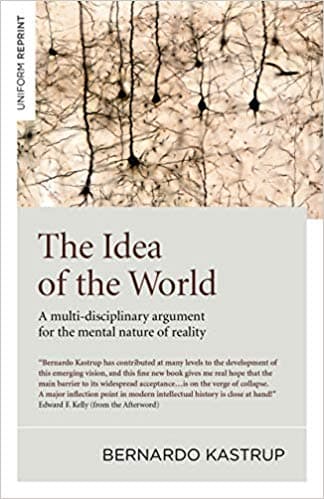
such prestigious places as the European Organization for Nuclear Research and Phillips Research Laboratories Bernardo has authored a number of books including the idea of the world a multiple multidisciplinary argument for the mental nature of reality his work has also been published in Scientific American magazine he has penned a number of academic papers on topics ranging from self transcendence to brain function impairment Bernardo it’s a
pleasure welcome to hxp thanks for having me pleasures mine we’re know thank you so much for being here I know that we had a little bit of a miscommunication on the times it’s very late for you where you are but I’m really glad that you’re here with us today a lot of really interesting material that you’re you’re talking about but please give us a small introduction to how you got to this to studying this information and you know
how you got to this point well my whole life since the very early times has been influenced by science worked at CERN in my youth as you mentioned my early 20s I have been in those early days a sort of materialist by default because I was just in that environment my whole life and I never really questioned that that view of the world that there is only matter in mind is so much sort of a phenomenon of certain arrangements of matter a
secondary thing and then at some point it was in early 21st century very early like I don’t know 1919 years ago I read a paper by David Chalmers in which he talks about the hard problem of consciousness and basically what he says is you know there is nothing about the properties of matter in terms of which we could deduce how it feels to see a color how it feels to have a bellyache how it feels to fall in love there is
this arbitrary base between the domain of matter in the domain of mind he called it the hard problem of consciousness and death sunk in I really got that and I realized that our mainstream view of the nature of reality is untenable and I started looking for a more reasonable alternative so I mean it was a question of science I mean how do you how do you determine the nature of reality it seems like such a big task yeah it’s it’s much more difficult in
science science is about the behavior of nature when you do an experiment you are basically asking nature how it behaves under certain conditions and nature replies by manifesting that behavior so by doing these experiments and and creating predictive models about how nature behaves you can develop technology and you don’t need to know anything about how things really are in and of themselves apart from their behavior so science doesn’t need to
philosophy and it has this this way of answering questions in a definite way you know if you say that the behavior of nature will be a instead of B and you do an experiment and it turns out to be B then the question is settled now the nature of reality is something that you cannot ask directly to it’s an inferential process you try to guide your guesses about what nature really is based on internal logical consistency in other words you can’t
contradict yourself in your argument based on parsimony it don’t wants to postulate all kinds of entities and things that can’t be proven so you want a parsimonious theory of nature and it has to be empirically adequate you cannot have a theory about the essence of nature that contradicts nature’s behavior as verified through science so it’s so much more difficult enterprise so with science you’re using numbers in math and if doing experiments based on
the scientific method and with philosophy what are you doing exactly simplify it for me philosophy is a way to think carefully about the hypothesis you put forward make sure that you’re not contradicting yourself in your argument making sure that your argument is clean and ultimately what decides what the best philosophical hypothesis is are those three criteria destination you have to be logical logically consistent parsimonious and empirically
adequate okay so and one of the main points that you mentioned in your work is what you call the defense of what in the West is called the philosophy of idealism what is the philosophy of idealism and how how does it relate to reality the vibrations of a membrane of pure consciousness to help you understand what idealism is yeah idealism is is the idea is the notion that all there is is mind that all nature is mental that doesn’t mean that
all there is is your personal mind alone that’s not what is being said according to my favorite formulation of idealism they want to have been articulating for a while there is a world outside beyond ourselves but that world is mental it is of the same nature of the same essence as our conscious in their lives and it is the interaction of that mental world outside the transpersonal processes and our personal processes when we observe the world that
that create the images on the screen of perception that we call the physical world with colors with shapes with particular behaviors that can be modeled and predicted by science and so on and the advantage of this this way of regarding the world is that unlike mainstream physical is more materialism let’s call it materialism you don’t have this fundamental transition between non mind in other words matter and mind this
transition is arbitrary and that’s the whole difficulty of explaining consciousness my deal isn’t suffer from that problem because it says well there is really a world out there but it’s mental and it interacts with my personal mentality upon observation and creates this new mental qualities like color shape melody flavours and so on and so forth and there is no fundamental problem in that because you know that certain mental processes impact and
influence other types of mental processes is trivial our thoughts influence our emotions all the time they may even create emotions and our emotions in turn influence our thoughts as well they may even lead us to down certain paths of thinking so for idealism this is what creates perception is an interaction between my personal mental processes and transpersonal mental processes out there that interaction creates the qualities of
perception in other words the physical world itself hmm okay okay so I mean Bernardo do you do you think it’s possible to over philosophize things in and their relationship to your life I mean is it possible to sort of talk in circles in a sort of armchair philosopher way totally I mean there there have been many instances of Dave’s in history and I think you don’t need to look around very hard to find instances of that I personally think that
materialism is sort of over philosophizing phenomenon because it postulates this this this this kind of substance that’s supposed to be non mental even though our entire lives or entire reality is purely mental we don’t have access to anything beyond the mental but you can overflow suffice in terms of ethics you can over philosophize in terms of metaphysics you can go down certain rabbit holes that if you are not careful
you get lost in and you never emerge back yeah so you know in 2015 you wrote a blog post about how your ideas are sometimes conflated with the notion of pens psychism let’s let’s define pans like ism for our audience what is the meaning of pen psychism i oversimplify it because there are many versions of paint psychism and i know it to take half an hour to go through them so if there are philosophers listening to this forgive me for not being
extremely accurate and precise but in general terms pen psychism is the idea that all matter is conscious that even strictly speaking this is called micro pen psychism or never mind the idea is that everything that is material has consciousness at the fundamental level in other words consciousness is not magically created by certain arrangements of matter in your brain consciousness is always there as an intrinsic fundamental property of all
matter so pencil case would say consciousness is in all matter I would describe idealism as stating all matter is in consciousness in other words the other way around I think matter what what will refer to when we use the word matter is a particular category of experience in other words perceptual experience there are other categories like thoughts imagination feelings emotions and so forth intuitions one particular category of
conscious processes is what we call versa so matter is in consciousness as in my view although not in your personal consciousness alone a kind of universal transpersonal consciousness fen cyclists instead they would say that the structure of matter you know subatomic particles atoms molecules tissues and so forth that structure we see in matter is the structure of consciousness itself so for pants I cast my mind emerges through
the combination of all kinds of tiny little minds in the subatomic particles atoms and molecules that constitute my brain personally I think this is as bad philosophy as as materialism because you have another very hard problem or impossible problem which is to explain how independent minds of different little independent subatomic particles combine to constitute this unitary conscious point of view that I call myself I think that problem is insoluble
and idealism does not suffer from that problem okay let’s define materialism as well since we brought that up a couple times now please materialism is the idea that everything that truly exists at a fundamental level is matter matter is not conscious in and of itself only certain arrangements of matter in the form of nervous systems biological nervous systems are conscious and that consciousness itself emerges from this
certain arrangements of matter that is materialism ok ok so now let’s get into the realm of consciousness how do we define what’s something that has consciousness is because I mean certainly something in the animal kingdom and that self-actualization of awareness makes does that make me more conscious than say a monkey or a whale or a zebra yeah depends on what you mean there are several definitions of consciousness when I use the word
consciousness I I mean what philosophers call phenomenal consciousness and that’s the very the most simple the simplest type or the simple definition you are phenomenally conscious if there is some it is like to be you if being new feels like something anything then you are phenomenally conscious in other words in this definition consciousness is equated with experience if you experience something then you are conscious but it
doesn’t require higher level mental functions like cognition or conscious metacognition and all those other things that there are other definitions one that’s very popular still in psychology today one definition of consciousness requires that not only you must have experience in addition to that you must know that you have experiences in other words you must be able to reflect on your own experiences upon introspection
and they define it that way because you need this ability to reflect in order to report to someone else or even to yourself that you are having an experience otherwise you’re like my cat you’re experiencing but you’re not telling yourself or when I’m experiencing this now I’m experiencing this now of this food I’m experiencing the Sun on my fur it animals will probably not have that but I use consciousness as a synonym of simple raw
experience so for example if I go and touch a hot stove and get burned then I have have this awareness that you know because I went and touch this the stove now I’ve been burned that actualization of that experience and being able to be aware of that makes me conscious more than something else that would make you meta conscious so not only do you have the experience of the pain of the burn you also know that you have the
experience of the burn and that brings conscious to another consciousness to another level in this case consciousness is kind of a turning in upon itself in order to examine its own experiential contents and then you might say well that makes me more conscious than an animal that gets burned feels the pain but doesn’t think about that in terms of a subject that’s that is undergoing that experience the animal doesn’t think of
itself in that in that way and then you might say well it’s less conscious it’s it’s it’s up to for choice what one means by more or less conscious okay so you know when we’re when we’re establishing different narratives of you know these sort of fundamental questions of reality like you know what am i what are we what is the nature of things you know is there a god I mean these these big questions how do we start to look at
those questions in a rational way I think this is very personal I think every person has a different motivation a sort of different angle of attack to approach these questions for me these questions have been very fundamental since since an early age what is the nature of life it’s a very strange condition isn’t it I mean we are temporary organisms that are constantly fighting the second law of thermodynamics which says that there
should be always increasing disorder and we construct order through metabolism it’s a very strange condition and what happens after we die or whether what guides our ethics what are the values that guide our ethics and are they arbitrary or not is there a metaphysical basis for all that I think different people will be interested in different ones amongst these questions and approach it in a different way for me the very meaning of life is to ask
myself these questions and attempts answers so if if consciousness is something that is independent of the brain then then is it I mean what happens at the moment of death does consciousness move forward or you know I guess no one can really say right yeah well I am NOT a dualist I don’t think there is consciousness and then there is this material brain that interacts with consciousness in some way I think that’s not parsimonious I think what the brain
is is the image the outer appearance of a certain configuration of consciousness of certain conscious they seize on they are observed from the outside they look like a brain or a body if you look at me you see a body but from the inside it’s my conscious in their life I think my conscious in their life presents itself to you in the form that we call a living biological body and I think this process that my body is an image of is a sort of a split of
complex or a split of personality if you will an outer is the technical term of universal consciousness I think life is the image of a kind of universal dissociation in consciousness in which consciousness seemingly splits itself off in different Co conscious centers of experience so to say I think that’s what life life is it’s the appearance of that process and if that is correct then death is the end of the dissociation it’s the
reintegration of your inner life with the inner life of the universe as a whole I think my best guess is that this is what happens hmm okay I mean you mentioned dreams a bit in your work and you know I I find it interesting that we live this this life and dreams and you know we we wake up and it feels so real right so I mean what’s to say that this isn’t just a dream we’re in this sort of dream reality that feels very real and
when we die we just sort of wake up yeah I think that’s a great analogy I mean dreams compellingly demonstrates two things one it demonstrates that mind alone is perfectly capable of creating this entire scenario that we find ourselves in it can alone create everything sense of touch sense of vision everything and I have had a few lucid dreams in my life in which I ask myself I knew I was dreaming and I asked myself is there any way I can tell
simply by looking at this dream world around me that that it is a dream is the resolution worse is the concreteness not as high and and every time the answer was no it’s perfectly calm convince’ belitz very compelling I couldn’t tell a difference I only knew that I was dreaming because of continuity I knew that I had gone to bed and I knew that the world I was in was not part of the world where I normally live so that’s
the first thing that dreams compellingly demonstrates the other thing that dreams demonstrate is that mind can dissociate itself in two parts an experiencer in the world that is experience it because when you’re dreaming it’s your mind that’s generating the entire scenario of the dream you know the mountains the Sun the streets there are the people the buildings everything is generated by your mind but you are dissociated from
it in the sense that you don’t recognize that part of your mind as your own you think it’s something external that is creating that environment or even a physical world out there so mind is perfectly capable of not only creating this entire scenario but also of convincing itself that it is not doing it it’s something outside and of course it immediately raises the question might this be what’s happening right now I think as an analogy yes this is what’s
happening right now I certainly don’t think it is literally what’s happening right now if this is a dream then it’s it’s like a dream of the kind we have at night but it’s a whole other order of dreaming okay I mean yeah because you know people have are having their own interpretations of their experiences and it all kind of coagulates together right I mean it it’s moving in this this weaving thread of collective experience
so you know how how do we individuate those those experiences and the the consciousness of someone else and mine I mean how could all of that be connected yeah because this dream is not yours as Xavier Xavier is in my view dissociated complex of a broader consciousness and it’s that broader consciousness that is synchronizing the dream as an idealist I’m not saying that there isn’t anything out there that we all seem to inhabit
something beyond ourselves that we cannot control with our evolution just by imagining it to be different and creating this environment where we are all inside but I think that this thing out there is mental as well it’s fundamentally experiential and we are immersed in this common ocean of experience if you will all interacting with the same common environment of experiences around us which presents itself to us as the physical world and
because we are all inserted in this experiential milieu this experiential environment that surrounds all of us that’s the reason why we think we share the same world and I think we do share the same world but it’s a mental world physicality is just the appearance of that world upon observation and if you allow me to pursue this a little further there has been very interested there is a one paper from 1994 a study of the
dream life of patients with dissociative identity disorder used to be called multiple personality disorder in which the psyche or the mind of a person splits off into this multiple disjoint identities which claim to have different ages sometimes different sexes in our different histories and so on and the the researcher wanted to investigate whether these people dreamed differently and it turns out that for about a quarter that’s what they could
demonstrate for about a quarter of the subjects of the study they would have a dream in which different alters of that person different personalities would experience the same dream from a different point of view so if in the dream you were talking to somebody else waking I would say well I dreamed about talking to a girl this age and then when the other alter assumes control of the person in waking life the other outer
would relate the same dream but but from the other perspective from the perspective of the girl that the the previous one was talking to there is an example in which six alters were involved each one of them experiencing the same dream the same environment very consistent from different point of view and what this shows again sort of compelling me if you believe this is that one mind can dissociate into mode or concurrently conscious centers of
experience that share the same dream and yeah I don’t need to pursue this further for you to see where I’m going with this yeah I mean it’s such a puzzle because it seems like we have such little information about how the mind works I mean the human visual spectrum is in our ability to see in the visual spectrum is like seven percent so if we’re not we’re not perceiving everything that’s there how can we how can we determine what the
larger picture is is there a place where we will ever be able to do that so I’m trying to say no I don’t think so no I think the best we can hope for is to have a theory of nature that is closer to the truth can we really get to the truth probably not because we see we are rearing certain within the environment that we want to make sense of we are not contemplating it from the outside we are living beings in this universe it’s very difficult to explain
the universe from an internal perspective for the same reason that it’s very difficult to explain anything and as you can step out of it and contemplate it objectively so I don’t think we will ever get to the ultimate truth at least not in life but I do think we know enough today to have a much better theory of nature of much better metaphysics if you will than the metaphysics of materialism I think the metaphysics of materialism is glaringly
untenable inelegant don’t parsimonious and we certainly can do a lot better than that already now and I think that’s all we can hope for but it’s already an enormous step because the implications of ideal is contrasted with materialism can lead us to live life in a very very different way than we do today okay okay so let’s get into that let’s get into how this can change or affect the way that we live our lives I mean
what are some of the practical ways in which we could apply some of these philosophies and our understanding of the nature of reality to our everyday life well you know when when if you are a neuroscientist and you are doing a brain scan of a subject and the subject is having experiences and you’re scanning the brain of that person so the the neuroscientist will see just patterns of brain activity but the subject itself is leaving an inner
experience which can be very significant and the correspondence of that from the neuroscientists perspective is just some patterns of brain activity if idealism is correct then the physical world around us the entire inanimate universe is like that brain scan it is also the outer appearance of the entire universes in their life and if that is true then everything we see around us has a meaning it’s not the end it’s not
the way it simply is and you stop there now it’s it’s pointing to something in the same way that the patterns of brain activity of a person correspond to the persons in their emotions feelings imagination intuition and so on it’s an indication it’s pointing to that in their life that brain scan and my contention is would be then that the entire inanimate universe in the exact same way is pointing at something beyond itself and in that sense it’s symbolic
and it’s it’s it can be interpreted and life gains a whole new meaning if you start looking upon this this way that life is a story too be interpreted for meaning to be derived from it it’s very different than materialism which basically says well matter is just what it appears to be that’s the end of the story it’s not symbolizing anything it’s not pointing at anything it’s just who it is and therefore the only possible meaning of
life is to accumulate material goods because matter is all there is right sure it’s really fascinating to me I mean I I I wonder about you know the brain being this pattern connecting machine and I wonder a lot about you know how much meaning I’m giving to the events around me and I’m looking at those interpretations and yeah I tried to identify what life is telling me but most of the time I just don’t get it you know I mean I just I I mean sometimes
I’ll get a clue of it and then only to realize it later you know like okay this was what it was pointing at so I mean surely you’ve heard of Carl Jung synchronicity certainly I’m writing a book about him now I was just writing it to half an hour ago okay perfect that’s a synchronicity right so I mean so I mean how do you classify something like that into the larger picture like what is controlling these synchronicities what is creating this
these events around me am i doing that or is it something higher is it a different part of me like a super consciousness or you know what is that depending on what you call you right what what your self-image is what your sense of identity is if we identify just with these personal egos then it’s not you it’s there is something out there transpersonal that is coordinating the events of the world and it may not be doing this in a deliberate or
premeditated way it may be doing it and I’m in an instinctive way in the same way that according to Jung the unconscious works the unconscious for Jung is not a rational planning agency or an hour an agent it’s just unfolding according to certain patterns that are a priority that are primitives they are there before anything else and he called it the archetype so archetypes are the instincts of the collective unconscious so to say and if
idealism is correct if what I just explained before is correct I think it’s fair to equate mind at large this transpersonal mind beyond ourselves to equate that with Jung’s collective unconscious and in that sense it would operate the same way you can you can see it manifesting itself from two different points of view one when you’re dreaming and you have a deep archetypal dream what you’re seeing is the manifestation
of the these archaic archetypes and they they sort of coordinate the imagery of your dream and then you can go ahead and say well then waking life is sort of that as well because according to Jung’s synchronicity idea it is the archetypes that are sort of organizing the events in the physical world as well at a non-local at a non-local level so to say and the way he positions it to say is to say that we know from quantum physics and I have
been very careful about using this word as it has been so abused but I’ll be precise and rigorous according to quantum physics at the most fundamental level of nature nature is not deterministic individual quantum events do not follow necessarily from certain causes they’re random and the laws of physics begin to apply only at a statistical level so if you if you have many events then at that level statistically patterns begin to emerge
which we call the laws of nature but at an individual event at that level it’s apparently random and what Jung and Wolfgang Pauli postulated was that well those apparently random events are not really random they are being determined by this non-local agency that will unfold according to certain archaic patterns that he called the archetypes and it’s the same archetypes that are coordinating your dream life and even some of your impulsive
behave your state we mean visions and so forth so in your book the idea of the world’s you you get into new your death experiences right so can you talk a little bit about some of the commonalities of what these people are experiencing at the moment of death for them and it you know can we create a pattern with what they see after they die I’ve never had a near-death experience I have seen many reports I think it’s undeniable that there are
common themes the basic themes of a near-death experience are shared are common but the imagery through which these things are presented varies widely an Indian might see Krishna my Catholic might see Jesus an atheist might see his dead grandfather you know in the imagery that symbolizes the can the core of the experience vary but I think the core those basic themes are the same I think one thing to keep in mind is that if we
entertain the possibility that people who have an NDE are actually in some kind of realm in some kind of mental realm I would say we have to keep in mind that that alternative realm does not necessarily comply with the regularities of ordinary life in other words that realm does not need to be so seemingly objective as the physical world seems to be completely disconnected from our inner feelings or our expectations or beliefs and so forth
maybe an NDE realm is not like that maybe it does adjust itself to to some extent conform to the expectations of the experiencer in other words the experience is as much a function of whatever is out there as it is of what the experience brings to it and different people bring different expectations reliefs and so forth to the experience changing it I think that’s basically what’s going on but for me the most interesting thing is
not the end E’s themselves it is that there is a consistent pattern correlating events in which you have impaired brain activity or brain function with an experience of an expansion of consciousness it just happens with NDEs you know we have a cardiac arrest blood is not circulating in your brain metabolism you stop in seconds but you also have psychedelics which reduce pre activity and leads to a major expansion of consciousness you
have certain breathing techniques that cause you to sort of pass out because you get hyper oxygenation in your blood and your blood vessels in your brain constrict and you don’t have enough oxygen in the brain you pass out but then you have fantastic experiences of transcendence people with brain damage suffered during surgery or brain damage suffered in in war they are much more they tend to have this transpersonal experience is much more than ordinary
people who have not been heard you have these acquired savant syndrome the list goes on every must I wrote an article for Scientific American listening the whole gamut and to me that’s the most interesting thing that this widely different phenomena which have only one thing in common which is that they impair ordinary brain function that they all can be associated with an experience of awareness expansion yeah I love it
man it’s almost like you know you’re reading my mind just because that was the next thing I was gonna bring up was you know your paper self-transcendence and correlates with brain function impairment and I wanted to talk about mystical experiences and and how they relate to you know and you you just said it i but also with psychedelics something that i’ve heard is that you know it’s as if psychedelics are just moving an aspect of the veil that we’ve
put up ourselves you know so it’s not as if they’re adding something it’s it’s as if they’re lifting a filter that we’ve ourselves created in our beliefs and our paradigms you know however we see the the nature of reality so you know how do you think psychedelics are affecting our philosophical perspective on the nature of reality can answer these are two levels one is pretty vanilla I think psychologists who study this
would not disagree with what I’m about to say we don’t leave reality as it as it is as it is out there presenting itself to us what we live is a projected in their narrative we tell ourselves a story about reality which we project out onto the world and that’s actually what our experience of life becomes that narrative is reflected back to us so we see what we expect to see what we tell ourselves we are seeing we live a story
not what’s really out there so it’s it’s so fulfilling and clearly psychedelics will disrupt that that mental process that no before mode Network which is a tan area but also a process in your brain which has this internal narrative making thing going on psychedelics disrupt that by by drastically reducing brain activity in the default mode Network but if you you can even go beyond that because I think in a psychedelic trance what your experience
goes far beyond seeing the world for what it really is we see other worlds other realms things that cannot be described in words because there are just no references in our culture that we could rely on in order to communicate that in their experience people have to experience it themselves and this second level I think is more interesting and I think what’s happening there is that there is a reduction of the disassociative mechanism that
characterizes life I mean I said a while ago to you that I think life is the image of a dissociative process that sort of splits us off from universal consciousness at least apparently and if that’s the case then you know normal ordinary brain activity is also part of that image so if you reduce running fair brain activity you are impairing the dissociative mechanism means in some instances and what does it mean for dissociation to reduce or to be impaired
it means that there is an expansion of awareness awareness is being it’s being constricted by that dissociative process and if you weaken that process awareness expands not in an evolutionarily useful way because you know it doesn’t help you to see a tiger on the other side of the world if you’re going to get killed by an elephant where you’re in standing consciousness better be very focused very constrained very dissociated
forests survive as a not as an organism in in this ecosystem but we’ve transcended that as a species we’re not in the African South African savanna anymore and psychedelic experiences can be at the cultural layer I think very enlightening yeah I mean how do you think materialism relates to this it seems like you know if you just sort of dosed someone with a psychedelic that they would see past this idea that everything is just material things but
you know it but at the same time it’s as if you know this this self-fulfilling aspect of our brains our psychology that we see what we want to see right so yes would would a psychedelic experience change I mean it can we even can we even hypothesize about this idea would it change the perspective of someone that had a bias towards a certain way of looking at the the nature of reality I think it can but it’s certainly not
necessarily the case in other words it can but it doesn’t every time our in their narrative reasserts itself very quickly after a psychedelic experience say after a strong one your inner narrative making the story you tell yourself reassert itself within 48 hours after that time you will look back at the fact psychedelic experience and tell yourself if that’s your disposition you tell yourself oh you know it’s just my
brain going nuts and you will not remember anymore the key insights they and you cannot hold them in memory because you can’t tell yourself what you’re experiencing and if you can’t tell yourself what it is that you’re experiencing you don’t form memories memories require this sort of metacognitive link in order to for you to be able to it’s the key with which you sort of go back to that drawer and recover the experience so and it is a
very noisy channel psychedelic experiences have a lot of nonsense as well before you get to a point where you can say well that was really gnosis I’ve learned something about the essential nature of reality before you get there if you ever get there there is all kinds of nonsense there are all these skeletons in your in your cupboard that come out it is not something that you know you do want and then it to change everybody into an idealist certainly not
know that’s not likely it’s interesting I mean there there seems to be this reimagines it’s it’s almost like a psychedelic Renaissance of people who are talking more about these mystical states that are generated by these these compounds so you know it’s interesting to see where the world is in regards to that and where it will be because of those mystical experiences would you would you say the evolution of the way we look at the world has changed because
of any specific things I mean look at the way technology affects the way we communicate and interact certainly there you know there there has to be something that has affected our paradigm or worldview as a culture as a species I think the mainstream world view that our civilization holds at any one point in time is not really a function of reasoning it it’s not the output of a for reasoning process based on evidence
logic and parsimony that’s not how it works it works more like a fashion there is a certain ethos a certain site-geist in the culture at different points in history and that is the key determining factor at some point that zeitgeist was you know a man is the center of the universe humans are the center of the universe and God is beyond and the Stars and you know we had this idea that human life had intrinsic meaning because we
were created in the image of God that was fashion then late in the 19th century the fashion was the opposite was to put down human life as insignificant something on the corner of the universe we are nothing and and even derive some kind of morbid pleasure from that in the 20th century this this dis fashions changed a lot and it started with positivism in the early 20th century and then at some point constructivism get or
and the constructivism came up so these are fashions and they are not based on young reason and the fashions change based on factors that I don’t well I certainly do not understand and I so I can’t keep track of it I wonder if anybody does understand that it may be influences from what Jung called the unconscious it may be something to do with our collective consciousness as determined by social media model means of communication I don’t know what I can
tell for sure is that we today are not mostly at least at academia materialists because it is materialism is the best hypothesis is the best worldview that’s certainly not the reason between academia today many of them feel that to not be a materialist is a reason to be ashamed which is sort of ridiculous because one can articulate very soundly very reasonably reasons for not being a materialist and being something instead
and you said ok psychedelics they’re changing things now there seems to be a new openness to it clearly there is a new openings opening to it since the turn of the century but let’s not forget there was a lot of opportunity for this back in 60s as well and it was much more pronounced than it is now and we thought you know the world will never be the same again you know after the psychedelic explosion of the 60s and guess what by the end of the 70s the
pendulum already swung all the way to the other side and in the 80s it was all about business and egotism you know so I don’t know how it’s going to go forward I’m I’m glad that there is this renaissance or psychedelic psychedelics but I I’m not very optimistic for the long term so to say I really appreciate it that answer really got a lot from that in your book idea for the of the world you included a paper about the
physical physicalist world view being a neurotic ego defense and how does that work how is this a defense for the ego well you have to look at history materialism has been strong in our culture well I’d say since the 18th century with the the Enlightenment but it has become dominating towards the end of the 19th century and then you have to put yourself in the in the mindset of that time your scientist and you had the
religious background when you were young because that was in the early part of the 19th century and that was the ground for your perception of meaning let’s take Nietzsche as an example son of a pastor when he was a kid he was even called the little pastor because he could quote the Bible without even opening the Bible to quote from it so religion dominated his life and at some point when he became an adult a more critical and could examine the hidden
assumptions behind out that hip he turned into an atheist and and he had a lot of difficulty finding or constructing new meaning for his life a new source of meaning ultimately he got to the uberman Superman and if at the meaning of life is to transcend your own limitations yeah okay he found that story but everybody around that time was faced with this idea that your previous source of meaning religious transcendence was no longer applicable
and people had to find new sources of meaning and we know from psychology that if your existing source of many meaning breaks down or you don’t believe in it anymore you would transfer oh that that term how to say that longing for meaning to other potential sources and I think materialism or physicalism offers abundant potential alternative sources of meaning for instance we know that if you have a very good opinion of yourself
that plays the role of a source of meaning this this is positive view of yourself and scientists have that source of meaning available to them through the scientific conquests and that they participate in or it’s also a source of meaning to have the idea that you participate you’re an integral part of something bigger than yourself which will survive your presence in this planet so even though you will die and there will be nothing left of you
your presence here will survive in the form of the work you left behind science offers that possibility as well so the psychological phenomena here is called fluid compensation you sort of unconsciously move your longings for meaning to other sources and I think materialism played that role big time from the end of the 19th century onwards we’re on the same page that was literally my next question I’m looking at it right now um in the in the same
paper you talk about the meaning maintenance model and then you get into the expression of fluid compensation and you talk about the intellectual elites and it makes a lot of sense of creating this lifelong sort of legacy that you know lives on after their death but what is the meaning maintenance model and in fluid compensation it might touch it on upon it you have sources of meaning in your life if you don’t have any then you are depressed maybe
clinically depressed so we all have even if you’re not directly or explicitly aware of it we all have certain sources of meaning and what the meaning maintenance model tells you is that if one of your sources of meaning is threatened because you believe in something else your view of the world has changed whatever you will automatically meaning you’re not explicitly aware of it it’s something that happens in the background in your
subconscious so to say you will automatically shift your attention towards other potential sources of meaning make no mistake you know a while in the maybe the sixteenth century people would derive meaning from the notion that we are the center of the universe and that everything turns around us in the 21st century you can derive meaning from exactly the opposite by saying you know what we are nothing we are completely irrelevant we don’t
count for anything there is no meaning any of this and because I know and I’m courageous enough to admit this I am better than you because you are not courageous to face the facts in the face and that is the source of meaning for them they just differentiated themselves from the others and acquired a positive self-image by telling themselves you know I face facts that others don’t face that’s fluid compensation in in action
right there as fascinating I love your explanations Bernardo I really appreciated this time we’ve got a little bit of time left I want to get into a paper that you wrote a piece that you wrote on Scientific American about relational quantum mechanics and their suggestion that or your suggestion that physics may be a science of perceptions can you get into this forest yeah relational quantum make was proposed by an Italian physicist
called Carlo Rovelli back in 94 if I remember it correctly and basically what it says it it bites the bullet of quantum mechanics it acknowledges the necessary implications of quantum mechanics that everybody else is trying to tell themselves a story that oh no there is something else at work here that’s not captured by quantum mechanics well rovelli said ok I will soon that quantum mechanics is a complete description of the physical
universe what are the implications then and a direct implication which has been confirmed by the way this year a paper that was published this year experimentally confirmed back in 94 reveille just looked at the theory the implication is that the physical world is always relative to the observer now let’s not get into the discussion of what counts as an observer the raisa to get too complex let’s just pretend that observers are people like you and me
looking at the world around us so what he is saying is what he wanted mechanics is saying actually is that the physical world is always relative to the observer in other words each of each one of us inhabits strictly speaking a different physical world because each one of us has a different quantum mechanical description of the world around us and this has been experimentally confirmed this year now it opens up all kinds of
difficulties in terms of philosophy because if you say that everything is relative then relative to what you know motion is relative yes but its relative to a material observer and the material object that’s moving if you say that the entire physical world is relative then there is nothing physical to ground the meaning of these relational properties if you know any the way around it is to just say you know what we are all
inhabiting the same environment but that common environment is not the physical world that common environment is an environment of experiences of meditation and the physical world emerges when we look at that mental environment interact with it and the result of that interaction is what we call the physical world and then of course I have my physical world you have yours because we all have different interactions with this common
environment of meditation so to say so the physical world is relative to each other but that does not imply solid decision because the real world out there is not physical its mental that’s how I would do about it Bernardo what a fascinating conversation time flew by really enjoyed this a lot I mean yeah we talked we touched on everything that I could think of to bring up is there anything that you want to mention them that you feel that we
didn’t cover yet oh I’m certain I’m searching we didn’t cover a lot of things but okay it’s almost doing the morning I’m not sure I can okay I know it’s very very late for you you mentioned that you’re working on a new book can you tell us a little bit about that sure I used to publish a book every year the latest book the idea of the world which came out in April this year took me three years because I thought you know I’m going to preempt this line of
attack that I was often subjected to which is well you know what you didn’t submit your work to be a review and you don’t have degree in philosophy so I took 3 years 15 papers in good peer-reviewed journals including a couple of them very respected journals got myself a second PhD and wrote a book based on that and in the book I sort of explained things more to the to the average educated reader so it’s not so technical but the result was that
instead of one book per year I went to one book in three years because it took a while to do all that so now I’m trying to catch up I I have one book in production right now it will come out next year it’s about the metaphysics of Arthur Schopenhauer okay which I think has been tremendously misunderstood and misrepresented in academia so I am arrogantly trying to correct that situation and when I’m writing right now I mean
the book of Chopin about Schopenhauer is in production I finished it a couple of months ago and I’m writing a book right now about the metaphysic metaphysics of Carl Jung the the psychiatrist I think although he disclaimed being a philosopher very strongly I think his ideas have metaphysical implications that we can derive from being appointed with his work indeed I agree or not oh where can people find your work is there a website that they
can get to yes bernardo castro calm gasp trapeze with a k’ if you go there there is a top menu bar there is everything there there links to all my books videos my academic papers one of my PhD theses are there links to all the Scientific American essays I’ve been publishing over the past two years or so little more videos and I have several videos I have a channel on YouTube but if you go to Bernardo cast opcom you can from
there you can go everywhere and of course I have a blog on that same address as well very good ladies and gentlemen the book is called the idea of the world my guest dr. Bernardo Kastrup that’s gonna do it for us here at HSN AV back for another live broadcast for you net next week if you’re not subscribed to us on YouTube and you’re listening to this on the podcast version please get over to youtube search for the human
experience podcast make sure you just subscribe to us click the bell so you get notified if you’re listening to this on the podcast version as well get over or negative it really helps us stay relevant one of the common themes that I get from people who listen to the show is that they they hadn’t discovered our show before so we’d like to welcome them into the family one of the biggest compliments you can give us is by
sharing this with your friends so thank you so much for listening and we will see you next week [Music] [Music] [Music] [Music]
About the guest
Dr. Bernardo Kastrup
In this episode we spoke to Bernardo on the nature of reality, metaphysics, consciousness, psychedelics and how we can create a better understanding of the nature of reality using philosophical models.

Episode #186- Positively Angela – The 7 Hermetic Principles & Living a Better Life
December 20, 2022 · 1:26:56

Episode #185 – Brad Klausen & Chance Gardner – Esoteric Egypt, Pineal Gland Activation, Kundalini, and more
December 14, 2022 · 1:50:21

Episode 129 – Dr. Rupert Sheldrake, Science and Spiritual Practices
May 23, 2019 · 1:14:01
Episode 126 – Massimo Pigliucci – Stoicism, Virtue & thriving in a world out of control
May 3, 2019 · 1:23:16
Episode 96 – Daniele Bolelli – on Discipline, Surviving Challenges & Martial Arts
June 5, 2017 · 23:07

Episode 196: Waqas Ahmed — Polymathy, AI & the Future of Human Creativity
September 28, 2026 · 1:04:41
Independent conversations
Help make the next one possible.
Membership sustains ambitious, unhurried interviews and keeps the complete archive open to curious listeners everywhere.
Become a member