

The Human Experience · Episode
Episode 103 – Dean Karnazes on Running Marathons, Mindset, Endurance and more
A conversation with Dean Karnazes
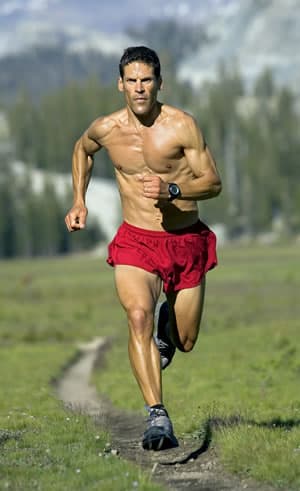
Dean Karnazes is a Speaker, Bestselling Author, Athlete, and Entrepreneur. TIME magazine named Dean Karnazes as one of the “Top 100 Most Influential People in the World.” Men’s Fitness hailed him as one of the fittest men on the planet.
Stay with the full conversation.
Episode field notes
Show notes
Dean Karnazes is a Speaker, Bestselling Author, Athlete, and Entrepreneur. TIME magazine named Dean Karnazes as one of the “Top 100 Most Influential People in the World.” Men’s Fitness hailed him as one of the fittest men on the planet. An internationally recognized endurance athlete and NY Times bestselling author, Dean has pushed his body and mind to inconceivable limits. Among his many accomplishments, he has run 350 continuous miles, foregoing sleep for three nights. He’s run across Death Valley in 120-degree temperatures, and he’s run a marathon to the South Pole in negative 40 degrees. On ten different occasions, he’s run a 200-mile relay race solo, racing alongside teams of twelve.
His most recent endeavor was running 50 marathons, in all 50 US states, in 50 consecutive days, finishing with the NYC Marathon, which he ran in three hours flat.
Dean and his incredible adventures have been featured on 60 Minutes, The Late Show with David Letterman, CBS News, CNN, ESPN, The Howard Stern Show, NPR’s Morning Edition, the BBC, and many others. He has appeared on the cover of Runner’s World and Outside, and been featured in TIME, Newsweek, People, GQ, The New York Times, USA TODAY, The Washington Post, Men’s Journal, Forbes, The Chicago Tribune, The Los Angeles Times, and the London Telegraph, to mention a few. He is a monthly columnist for Men’s Health, the largest Men’s publication in the world.
Unlike many sports, running is a physical activity that greatly varies. Some of us prefer to run at a fast pace for several minutes, while others among us are more adapted to run for longer distances and endure lengthier running times. Running is an activity that is characterized by many terms: from jogging to sprinting, and can last a various amount of time, depending on the individual and their planned activity. It can be a solitary activity or one used for social engagement and interaction. My point here is that running is an activity that can be tailored to the individual and their abilities, preferences, and needs, and is not regimented with rules and regulations- anyone can do it, at any given time. Usually, however, after several hours of running most people will stop for a break, due to muscle fatigue, cramp and the physical and mental tiredness that comes with undertaking any means of exercise. However, some individuals have taken the sport to the extremes and can push to the body to their limit, resulting in endeavors that would surprise even the most sporty of people among us. One such individual is Dean Karnazes, a Californian- based runner who is also known as ‘Ultra Marathon Man.’ Karnazes has a remarkable running ability which allows him to run for great distances, over long periods of time without needing to pause to catch a breath. Also a published author, Karnazes has written a book entitled Ultramarathon Man: Confessions of an All-Night Runner which documents his extraordinary experience as an athlete; one of which was his recent achievement of running 50 marathons in 50 US states in 50 days.
Named by Men’s Fitness and other sports publications as one of the fittest people alive today, Karnazes is also one of the Time’s top 100 influential people. His ability developed from a range of diverse assets: his determination, ongoing practice and his natural running ability which he developed in infancy. Karnazes began to test his mental and physical limits as a child dabbling in not only long distance running but also cycling. Since then Karnazes has developed a ‘hard work, no excuses’ attitude which has resulted in his capability to run very long distances with little sleep and muscular rest. Because of this, some of his accomplishments include running for 350 miles and managing 80 hours and 44 minutes without any sleep. What’s more, not only can Karnazes endure lengthy running times, but he also can persist running in high-risk environments with extreme climates and terrains. He’s managed Death Valley at scorching 120-degree temperatures and even the South Pole at a chilling -40 degrees.
But what is it about Karnazes that allows him to do this? After a certain amount of time exercising most individuals have to stop due to the buildup of lactic acid in their limbs, resulting from the conversion of glucose to energy. The lactic acid causes them to tire, resulting in muscle cramps and fatigue. However, unlike most of the world’s population, Karnazes has a rare genetic condition, that prevents the buildup of lactic acid in his muscle tissue. This allows Karnazes to push his body to the limit, and no matter how far he stretches himself, his muscles never tire or develop a cramp. However, as well as his genetic predisposition to running, Karnazes has a grit determination, and believes that there are no shortcuts to achievements, only hard work. As he quotes on his website: “There are no shortcuts to excellence, at least any that I’ve discovered. Dedication, commitment, passion, and sacrifice are essential components for high achievement. The biggest lesson I haven’t learned is fear and trepidation. I still view myself as invincible, which is clearly not the case.”
Find Dean here: www.ultramarathonman.com
We need your support to keep this show ad free!
If you value even one of our shows, become a member get exclusive early access to our recordings, extra bonus content for each of our episodes a chance to request guests you want us to bring on and so much more.
Read the conversation
Transcript
welcome to the human experience podcast the only podcast designed to fuse your left and right brain hemispheres and feed it the most entertaining and mentally engaging topics on the planet as we approach our ascent please make sure your frontal temporal and occipital lobes are in their full upright position as you take your seat of consciousness relax your senses and allow us to take you on a journey we are the intimate
strangers thank you for listening I reached my hand out to touch him on the shoulder and my hand went right through him and I thought that was a hallucination not only that it was a hallucination that talked to me so I literally walked out of the bar and Binkley I had these you know these silk boxer shorts on they were kind of comfortable exciting the own running gear and I took off my pants and just started running most people you know I
think in modern society don’t even know what it’s like to be in the wilderness but I’m more comfortable off running in the wilderness by myself than I am in groups of people he had said to me you know before I started doing this hey you know one day you’re gonna run a hundred miles non-stop I would have laughed I mean never said I have anything like driving 100 miles non-stop no oh my god that’s funny I’m great joke he’s like no
no you’re you’re number 29 you’re ahead of Oprah and you’re one behind George Clooney kidding [Music] what’s up guys Xavier katana here and wow what an interesting episode with Dean Karnazes who was listed by Time magazine as one of the most influential people in the world I mean he’s been featured on all of these different media outlets covering what he does he’s an ultra marathon runner you get into every aspect of running in this episode it’s a
really interesting episode on how running compares to existence in light mint now the challenges that we face in our everyday lives and how we can carry Bena weight into our everyday existence so I hope you guys enjoy this conversation thank you so much for us [Music] the human experience is in session my guest for today is mr. Dean Karnazes Dean my good sir welcome to hxp thanks for having me on very interesting background that you have why don’t you
spell that out for our listeners thanks so I run long distances I guess how it is best framed an ultramarathon is anything beyond a marathons so typically the runs I do are you know 50 miles 100 miles sometimes 200 miles and these are all non-stop so you know people sometimes wonder when they hear about a guy running a hundred miles how does this work well you know that the starting gun goes off and you start running and when you reach the finish
line you finish and hopefully within 24 hours though that’s what an ultra-marathoner does it’s such a fascinating thing to sort of create a livelihood around how did running become your passion I had easy well you know it is it’s been a lifelong passion in fact I I used to run home from kindergarten when I was six years old love to run ran competitively as a freshman in high school on the cross-country team and then literally
stopped running I hung up my running shoes that you know put the cliche I didn’t run for 15 years and then I was in a bar on my 30th birthday in San Francisco you know doing what everyone does on their 30th birthday I was in there drinking with my friends and you know rad midnight I said I was leaving and they said well you know why you leaving the night’s young let’s let’s have another round of tequila and I said no I’m gonna run 30 miles right now to
celebrate my 30th birthday and they laughed at me yeah like you are you’re not what are you drunk and I said yeah I am drunk but I’m still gonna do it so I literally walked out of the bar and thankfully I had these you know these silk boxer shorts on they were kind of comfortable exciting own running gear and I took off my pants and just started running and ran straight through the night 30 miles later became a runner
again you know there’s nothing interesting about running I used to run not competitively or anything just in college I used to run a lot and something that I noticed personally was there’s almost like this sort of wall pain threshold if you’re running for long enough and you just you know everything in your body just aches and hurts and you just you don’t want to run anymore but if you just push through that wall it’s like you just start to
glide have you notice something similar very much so and you know you’re talking to a guy that’s run probably 100,000 miles collectively over the course of my lifetime and that same phenomena still happens to me running is profound in that regard I mean it’s such a simple act right I mean you’re just kind of locomoting a little bit faster than a walk but there’s found power in it because it’s not only the physical activity of running but it’s mastering
your mind as well like you said so much of running is overcoming the resistance to stop okay which is constantly in your mind right I mean it hurts and you’re you know you’re – thing stop stop stop and you know you’re having to kind of override that with discipline and fortitude and then there’s great reward if you can do so yeah yeah I mean you have quite the resume just I mean Time magazine named you one of the top 100
most influential people in the world your work has been featured on 60 minutes The Late Show the list goes on on CNN Howard Stern and PR when did this ultramarathon aspect of yourself when did that start becoming this sort of sensation or this would you frame it as success when you’re featured on Time magazine yeah well you know battery on that mean it literally I got a call from my buddy and he’s like oh you’re not gonna
believe this you’re one of Time Magazine’s 100 most influential people in the world oh my god that’s funny I’m great though he’s like no no you’re your number 29 you’re ahead of Oprah and you’re one behind George Clooney kidding and he’s like no go look look look at the list and I got the magazine and looked at the list I thought you know they don’t even inform me do you for being evaluated you know they don’t want anyone to influence the voting so
literally that’s how I ended up on the list and even when I hear you say that I think you’re talking about some other guy I mean people say you know you were invited to run through the White House you met with the first lady you’re the first person in history to run through the White House literally and I’m like oh yeah that’s right that was me people say you you know you you’ve won all these awards these accolades you know
you’ve been featured on 60 minutes know you’ve got an ESPN espy award you know what else is there and I’m thinking hold that I haven’t done anything in my life I’ve you know it’s just it doesn’t sound like you’re talking about me cuz I’m just a runner you know that’s it I can respect that connection to just being an athlete really you dedicating yourself to that you’re also an author how did writing come into play with this
for you so I had always wanted to write a book I had aspired to writing a book sometime in my life as many people do right I mean many people stay you know at some point I want to try writing a book so I finally said now is the time to do it but I wrote a book and I thought ok if I can convince five of my buddies to buy this book I’m gonna be really lucky and the next thing I know it’s on the New York Times bestseller list it was called
ultra marathon man confessions of an all-night runner and that book has sold over quarter million copies it’s been printed in 18 languages and I thought who wants to read some obscure you know manuscript about a guy running you know hundreds of miles in the wilderness by himself but I thought you know there’s something in the message here that that transcends running and and people read and that resonates with people so I got another
book deal I wrote another book and it sold well you know same sort of thing and now you know I’ve written my fourth book and all of them have done really really well but I think you can’t just write about running as you know if you’ve ever watched a marathon for instance on television I think you know it’s a guy running you know there’s maybe ten seconds of excitement toward the finish but it’s hard just to write about running because running is is
boring let’s face it but the the messages around persistence and you know overcoming adversity and and dealing with obstacles those are universal themes that transcendence running it’s amazing how much you know we had Laird Hamilton on the big wave surfer and it’s it’s amazing how much there is this sort of cross-section of you know life advice and how just maintaining you know the healthy living you know in your mind let’s say but it’s
so funny you consider you know what layer does is healthy I’m thinking my god that guy ride your mountains of water or and you know me doing what I’m doing is I don’t know if that’s necessarily you know healthy running hundreds of miles but it’s a bit extreme but you’re right it’s almost like this life lesson or this so much of it translates into what we can use to live a healthy life and gain perspective on life in some way you mentioned you know
these messages transcend running what have you found for yourself has been a major obstacle for you the biggest obstacle for me is the guy I see every morning in the mirror and I think that’s the same with anyone I think my preconceived you know ideas of what is and what is impossible or what holds me back and the only way I can break through those limitations is by crossing the line and pushing myself to do things that I once would have thought
was entirely impossible to do I mean you had said to me you know before I started doing this hey you know one day you’re gonna run a hundred miles non-stop I would have laughed I’m I never said I don’t even like driving 100 miles non-stop myself and I would have said that’s impossible a human being you know I know what it feels like to run one mile non-stop it hurts it burns it’s painful there’s no way I could you know
run a hundred miles and then go do it you just you prove to yourself that you’re more capable than you think you are and you can go further than you think you ever could there’s such a large basis on what we think we can do and what we we think we can’t do it what we regard as impossible in it and I really liked what you said about the the opponent being you know just you the person you’ve seen the mirror every day how do you connect what you deemed to be
impossible and what’s your reference to running a race running a hundred miles or setting yourself up to run this hundred miles how much of your mentality predicts or you know puts you in this sort of position to you know succeed in running this long-distance or bail well well you know you hit on a good point and you know running is is very symbolic I mean most people can relate to running it’s identifiable you know riding a big
wave like layer does it’s admirable but it’s hard for the layperson to really identify with that unless you’re a surfer I mean I’m a surfer so I have great respect for what he does but unless you serve you can’t really identify what it means to ride a 30-foot wave we’re running people know because they’ve done it almost every human has run and you know it’s very symbolic in that regard because if you’ve run a mile you can say okay well I’ve run a mile
non-stop let me see if I can run two miles non-stop well maybe three miles and to me oh yeah I just ran 50 miles non-stop let me see if I can run a hundred and then I ran a hundred miles non-stop and then I said I heard learned of this 135 mile footrace and I said let me see if I can run 135 miles non-stop did that and then I heard of this 200 mile 12-person relay race and I thought I wonder if I could do that by myself as a team of one and I
ran 200 miles non-stop and I kept pushing the envelope further and further until I failed and you brought up a very good point until you fail you really don’t know how far you can go so I push myself over the edge and that failed and I’ll tell you what I learned a lot more and I always do from my failures that I do for my success I mean when you succeed you know you high-five at the finish line you got the medal around
your neck I did it I pulled it off when you fail you can look inward you get very introspective and you dissect where did things go wrong what could I do better in the future and those are the best learnings to me are failures not successes absolutely is there one specific moment that you can think of as a failure where you learned the most from well there’s a race I just alluded to it of the Badwater ultramarathon so it’s better no yeah
it’s 135 mile continuous foot race across Death Valley we’re in the middle of summer and you know Death Valley is the most inhospitable the hottest place on earth and you know temperatures can get up over 130 degrees during this race which you know running a hundred and thirty-five miles in 130 plus degree temperatures is it’s inhumane I mean you you it’s it’s torture and you just think it’s impossible well I set out to do it
and the first year I emptied it at Mile about mile 78 it was the middle of the night and I was on this you know two-lane highway on the middle of the desert I hadn’t seen anyone for hours no cars it passed me pitchblack RIA a.m. and I see an old miner forty-niner walking across the road toward me yeah he had a big grey beard overalls and he comes walking across the road he holds out a gold pan and he says water water I need water
Hey oh my god so I was carrying this tan held water bottle and I started I turned it upside down and started to aspirate it in his old pan and I heard the water sizzling on the asphalt and actually I reached my hand out to touch him on the shoulder and my hand went right through him and I thought that was a hallucination not only that it was a hallucination that talked to me yeah and then I saw big dinosaurs off in the distance in the
desert of the night and next thing I know I wake up in an air-conditioned hotel room looking up at my crew saying you know where am i I’m supposed to be running across Death Valley and they said you know we were driving around in the middle of night looking all over for you we found we saw your shoes on the side of the road we found you passed out on the roadside you literally ran yourself into exhaustion just collapsed on the
roadside we picked you up we drove you into this hotel the closest hotel and you’ve been asleep for six hours with air conditioning on so that was a pretty spectacular failure or something that you learned from that from being in those conditions and it’s not completing the race you know one thing I learned is that you really have to heat acclimate so my body just wasn’t accustomed you know I would run when it was warm but never when it
was that close to you know 130 degrees so what I what I started to do is I start to run in the middle of summer with all my North Face you know ski wear on put on my big puffy you know parka and I’d run in you know ninety degree heat wearing big D clothing which you know increased the heat incredibly inside internally and I’d also go into the vasana at the gym and do set the push-ups and sit up to get more custom to the heat those are
you know some of the things that I did so let’s take our audience into the mentality of what’s happening in your mind as you’re running so you start this race and as you mentioned it’s gonna bring the Badwater ultramarathon up it’s a 135 miles it’s 130 degrees out and you know so it’s sweltering heat as you start you know mile one what’s going on in your brain well you know the one thing that really attracts me to ultramarathon is that
there’s a solidarity of focus I mean there’s one thing in your mind and that is reaching the finish line there’s a single goal and it might be a daunting goal but at least you know what’s expected there’s a rules of engagement are very simple the gun goes off and start running to succeed you reach the finish line if you don’t you fail and let’s face it life is ambiguous you know the the finish line moves around a lot
right you’re never really sure if you’re going in the right direction as well as you’re typically bombarded with noise right in the course of any given day I mean you’ve got wheats coming in tact you know there’s ads you know there’s just lots of stuff coming your way when you’re running an ultra marathon all of that disappears and there’s just one single goal in your mind for a very long amount of time and that is reaching the
finish line and to me it’s almost like a zen-like state that you put yourself in and it’s very rejuvenating it’s very cleansing just to have one thing on your mind for so long because it’s not something that typically we do in this modern era ever and but but it’s a very human thing to do but just something we don’t do in this modern world hearing you describe it so simple the lack of this sort of complexity in the way that
we are just inundated with information all the time all the time and so the way you put it is just so beautifully put can you describe that sort of flow state aspect of you’re just cruising and you know that there’s no hesitation or doubt in your mind that you’re going to cross that finish line you know when you’re in that zen-like state you’re not thinking about the finish line I’ve tried his best to focus on exactly where my mind
goes when I entered this place and what you’re focused on is the present moment of time is the now I mean we’re always we’re thinking about the finish line we’re thinking about something in the future or reflecting on the past or were preoccupied with something we’re doing but when you get into the zen-like state you don’t think about anything except you know putting one foot in front of the other to the best of your ability so you’re
really that granular with your thoughts I’m just thinking take your next step as best you can if your next step as best you can I’m not thinking about wow the finish line is you know 60 miles ahead I’ve got a long way to go well I’m not thinking about you know the finish line’s right around the corner I’m almost done I’m just being in the present moment of time to here and now and not reflecting on the past not cluttering our line and
with any other thought other than what’s right there in front of me at that moment so I mean just to put our audience kind of more in this sort of perspective of doing this ultramarathon there’s no emergency team sort of following you there’s nothing like that right it’s just you in the road correct it really depends on the various races I mean some sometimes it’s exactly as you described it and even you know more removed there is no road a lot of times
you know you’re running through the wilderness on single track trail where there’s basically nothing out there there’s no people there’s there’s nothing except you and that and the trail and nature that’s probably one of the most beautiful things I’ve heard like just just being in that situation of just you know being left to your own devices and just running and and knowing that you know there’s no one behind you to sort of back you up and and you’re
left to your own sort of wits what do you think has been your biggest insight from that our biggest fear is the unknown and if you can just blank out your fears somehow and just go with the flow if you’ve well it’s very liberating to be running out in the middle of nowhere by yourself and not be fearful not being a fearful state but it being a comfortable and relaxed state so that’s something I’ve learned the other thing that I’ve learned is is something
that not many people today can really relate to and that is I have a relationship with nature I mean I have a love affair with the wilderness most people you know I think in modern society don’t even know what it’s like to be in the wilderness but I’m more comfortable off running in the wilderness by myself than I am in groups of people so that that’s a reality that I think is very human it’s very primordial if you will but something
that’s been entirely lost in our modern society I think a lot of people fear the wilderness or just don’t spend time or might even think it’s boring being out there by themselves to me it’s it’s it’s it’s a love affair I enjoy that it makes me feel whole it makes me feel complete it makes me really feel alive when I’m just out by myself in the middle of nowhere running on a trail in your book road to Sparta there is something that you mentioned called uni
hemisphere slow-wave sleep which is the ability to put one half of the brain to sleep while the other half stays awake and you can actually run in the state as that is that right well you can but it’s not like I studied this state and thought okay put yourself in here while you’re running I mean I basically was so exhausted while I was running I mean you know are you listeners I mean these some of these runs are you know 36 48 hours non-stop
so you’re going through a night or two nights without sleep and you’re running continuously I found myself you know running down the middle of the road in the middle of the night I’m you know and wondering why am i running in the middle of the road and kind of meandering over back to the shoulder and then you know it happened again I woke up running down the middle of the road I realized I was sleep running I was literally just
falling asleep but willing my body to keep going and so after that episode of that kind of catatonic run thing if you will I researched it and and that’s how I came up with a scientific term for what was happening now I really want to get into the nutrition aspect of this and you know what has changed in last you know 20 years or so of this technology kind of explosion information how is that affected running the technology is affected running in a lot
of ways I mean you alluded to nutrition and we can we can rift on that you know in a bit but I mean just in brief it’s gone from this idea of you know carbo-loading which you know many non runners and some even recreational runners still believe it’s involved to carbo-load you know we eat a lot of pasta and rice and so forth but it’s gone full circle you know we realize now especially the elite athletes the carbo-loading is the worst thing to do
because it just leaves you kind of bloated and overly stuffed at the starting lines though we’ve gone from cart you know the idea of taking a lot of carbs you’re taking it almost no carbs this ketogenic day where you’re using fat as fuel right and that’s one thing that changed with nutrition and that’s this is pretty progressive not every run or even its familiar with the idea of running in the state of ketosis but a
lot of elite athletes are of course the rise of smartwatches and devices has completely changed the landscape for me when I first started running you know you would you would estimate how far you thought you ran or you try to triangulate on a map but it cooked a lot of trails you know it’s hard to even tell on a trail map how far it was you ran you know now with a GPS watch you know you can pretty much monitor everything you’re doing you can look at
your elevation your game you know your descent your ACT ascend your heart rate I mean you can monitor everything with your vitals in a way that was impossible when I first started running so going back to nutrition how do you think that has changed and are there secrets or tricks that you use to endure this pace that you’re keeping well you know when we talk about nutrition I always preface it by saying listen to everyone follow no one so I know it
works for me and I encourage other athletes to experiment to find what works best for them because a lot of the guys I trained with and race with we have different regimes when it comes to nutrition but I’ve kind of gone back to nature so I’ve gone full circle from Haile you know processed refined foods to more natural sources of calories these days things like nut butters for instance so you know ground cashew nut butter was one of my favorite some very
simple foods coconut water for hydration versus like a sports beverage and those kind of things to me just sit better in my stomach and they just leave me feeling better than if I was eating you know highly processed and refined foods like I used to have you noticed a sort of attrition that happens with the body I mean I know that for me personally that contact with the pavement just it affects my joints kind of adversely have you noticed that
at all with your body well I you know I’ve I would say a typical in that regard in that I’ve never had a running related injury so I’ve never had an overuse injury I’m a hundred percent Greek and you know I have very good biomechanic so my alignment is really as a runner should be and that’s nothing you know that I’ve trained for I mean you you inherit your biomechanics that’s comes from mom and dad I mean they say the best thing you can do as a
long-distance runners to choose your parents well and so I guess I I started by using my parents well but the other thing that I do a lot of is cross training I don’t just run and I think a lot of runners that just run especially the elite runners suffer all the time and that’s because they’re not doing anything besides running so I do a lot of cross training and I’m perhaps more bulky than than most runners I mean if
you look at me compared to say an elite you know marathon or like a you know one of the Kenyans for instance gentlemen the same height as me I probably outweigh them by thirty or forty pounds then all of it is muscle so you know we might have the same percentage of body fat which is you know around four and a half percent body fat but I just carry a lot more Bowl and that’s from cross-training and I really think that
helps with injury prevention and it helps with soreness you know joint soreness because your muscles are supporting a lot of the impact that your joints take when you run I’m curious to know what motivates you to do this is it just your passion for it or is it to do something that you know other people aren’t necessarily doing or is it that Zen that you get from that moment of just being by yourself in nature and what is it that pushes you to keep doing
this you know I think it’s just the pure joy of the freedom running brings certainly I like to compete do I like to race and there’s a thrill in racing that’s not my main motivation my motivation is just the the joy and simplicity of running and the internal reward it brings to me a lot of runners that understand what I’m saying um some people might be listening this morning I don’t I don’t get this guy at all but it
just Who I am so you know I’m Greek again I’ll get back to you know know thyself and be thyself I’m really trying to kind of dig out as much as I can of life teachings that you can get from running we talked about it a little bit before you know there’s this aspect of perseverance and that no mind state of just putting one foot in front of the other and that’s that’s all you have in your mind how do you translate this to your regular life when
you’re in a stressful situation I mean has there been an aspect of this that carries over for you in your real life I think absolutely I mean I think that there’s so many topics that running reinforces I mean you know one that’s very clearly we haven’t discussed is discipline I mean people say you know how do you motivate to go running every day well I got to be honest as much as I love running there’s a lot of days when
running just sucks I don’t want to run if I’m training for a race I especially don’t want to go do a hard training session on certain days when I don’t feel like running and that comes down to discipline so this kind of relationship between you know paying your dues and getting the reward is very clear and running and there’s just no shortcuts I mean you know if you’re gonna run a marathon and I I really encourage everyone at least once in their life to
run a marathon because it teaches you very quickly that there’s no path of least resistance to high achievement that you have to pay your dues you just can’t fake your way through a marathon and it teaches you very clearly that if you try to fake your way through a marathon you’ll fail so that you know that’s one element running is about me you know the other thing that it’s really taught me is to know myself better and how do you get to learn about
yourself well you’ve put yourself in uncomfortable situations correct and you know a lot of times when you’re in an uncomfortable situation like you’re in front of an audience and you don’t like public speaking you’re so nervous you’re not really digesting much of the message right but when you’re running for 26.2 miles and you’re spending you know three and a half four and a half hours on your feed you’ve got a lot of time to process
you know how you’re responding to this pain and to this challenge that internal dialogue going on in your head is very clear and you can hear it and you can respond to it you’re either gonna tell yourself I can’t do it I’m gonna drop out but you can’t pull yourself you know if you tell yourself that that you you failed and you’ve allowed yourself to fail and you may be not as tough as you think you are but more likely what
you’re gonna do is you’re gonna say this really hurts it’s really stuck I want to stop but I’m going to keep going when you do that you you get the message to yourself that hey I’m more resilient than I believe I really was I can get through situations that I never thought I could get through and you know running especially trying to run something like a marathon teaches you these things very concretely yeah that’s that’s a great
analogy I love that I feel like in a very similar regard when there’s a negative thought you know that happens to you during your date it sort of starts us like a small seed the more that you focus on it the more that it grows and then it just it completely takes over your mind do you find that when you’re in this state how much are you fighting off these thoughts oh absolutely in fact um you know when the going gets
tough any marathon or any runner even who’s stuck to it and got to the finish line of a difficult race they’ll tell you and I’ll tell you the same thing that at some point the pain owns you and that’s all you can think about is overcoming the pain it just takes complete control of you and when that happens it’s really powerful but push through it because you teach yourself that you can have these negative thoughts you can process them and you
can move beyond them and that’s not something a lot of people can do I mean a lot of times we get stuck in this negativity and it sticks with us the whole day or maybe stick with us a whole lifetime and that and again that’s why I just advocate so much running a marathon you just learned so much I think it’s a really healthy idea to to challenge yourself to push the envelope to an extent and you know really find out what you’re made of and really kind
of test your own limitations and your perceived limitations you know I just got this Fitbit thing at work a lot I’m in my office a lot so I got it just to hold myself a little bit more accountable when I find myself sitting in my chair too much and it buzzes it gives me that notification that you’ve been sitting for too long I will get up and I’ll move around and I’ll go outside and take a walk in just getting out of this sort of
realm of of constantly being you know immersed in information and immersed in you know what’s going on on Twitter or my email or when you speak about this sort of Zen state and pushing your mind to this pain threshold I really identify with that I really connect with that you know it takes discipline to do what you just said and even though you know your Fitbit is saying hey you haven’t taken your you know 250 steps this hour
you need to have the the self-discipline to get up and walk outside you know I work out constantly throughout the day so I have this program what they call hit training or high-intensity interval training and it’s like a 12 to 14 minute routine of you know push-ups pull-ups sit-ups burpees dip and it’s very exhausting your heart rate is really elevated for those 12 to 14 minutes but I’ll tell you what if you can just get
away from a screen and force yourself to do it and when you emerge over 14 minutes later you just feel like you’re reborn I mean you feel refreshed you feel rejuvenated that noise has just dissipated so you know good for you for having the discipline to listen to that tracker on your wrist you have been listening to the human experience podcast to listen to the rest of this episode with Dean where he gets into some of his personal habits and how he
mixed being an entrepreneur with ultramarathon owning and using that as a career using that as a source to make a life around get to the human XP comm slash members become a member today it helps us sustain what we’re doing if you value even one of our episodes go to the human exposures get access to all of our bonus content help keep this show sustained thank you guys so much for listening [Music] you
Ideas worth returning to
Quotes
Five substantial excerpts from the published transcript, lightly edited for clarity without changing their meaning.
“Extreme endurance may not look healthy in the ordinary sense, but it teaches lessons that translate into everyday life. Running hundreds of miles offers perspective on discomfort, commitment, and the limits we assume are fixed. The activity is extreme; the insights about how to live with discipline and awareness are widely applicable.”
From the conversation“During an ultramarathon, the flood of ordinary concerns disappears and one goal remains: reaching the finish line. Holding that single intention for a very long time creates something like a Zen state. It can feel cleansing and rejuvenating because sustained, undivided attention is both deeply human and increasingly rare in modern life.”
From the conversation“Our greatest fear is often the unknown. Learning to release that fear and move with changing conditions can be liberating. When I run alone in remote places, I try to inhabit a relaxed rather than fearful state. That practice has also given me a genuine relationship with nature—a love of wilderness rather than merely an appreciation from a distance.”
From the conversation“Genetics matter in long-distance running, but training intelligently matters too. I cross-train instead of only running because athletes who repeat one movement exclusively often suffer. Strength and variety have made me bulkier than an elite marathoner, but they also help me withstand the demands of extreme distance.”
From the conversation“On difficult training days, the reward depends on discipline rather than motivation. Running makes the relationship between paying your dues and earning the result unusually clear: there are no shortcuts to a marathon. That is why I encourage people to attempt one at least once—the preparation teaches what commitment feels like in the body.”
From the conversation
About the guest
Dean Karnazes
Dean Karnazes is a Speaker, Bestselling Author, Athlete, and Entrepreneur. TIME magazine named Dean Karnazes as one of the “Top 100 Most Influential People in the World.” Men’s Fitness hailed him as one of the fittest men on the planet. An internationally recognized endurance athlete and NY Times bestselling author, Dean has pushed his body and mind to inconceivable limits. Among his many accomplishments, he has run 350 continuous miles, foregoing sleep for three nights. He’s run across Death Valley in 120-degree temperatures, and he’s run a marathon to the South Pole in negative 40 degrees. On ten different occasions, he’s run a 200-mile relay race solo, racing alongside teams of twelve.

Episode 114 – Wim Hof on Breathing Techniques, Human Performance & Breaking World Records
May 28, 2018 · 42:15

Episode 170 – Unlock your Superhuman Memory & Learning w/ Mattias Ribbing
June 9, 2020 · 1:08:44
Ep#162 – Willpower, Focus, Attention, Optimizing Your Life & Becoming Indistractable w/ Nir Eyal
February 28, 2020 · 1:06:39
Episode 124 – Richard Turner on Stage Presence, Wonder and Performance Art
November 26, 2018 · 1:02:17
Episode #186- Positively Angela – The 7 Hermetic Principles & Living a Better Life
December 20, 2022 · 1:26:56

Episode #185 – Brad Klausen & Chance Gardner – Esoteric Egypt, Pineal Gland Activation, Kundalini, and more
December 14, 2022 · 1:50:21
Independent conversations
Help make the next one possible.
Membership sustains ambitious, unhurried interviews and keeps the complete archive open to curious listeners everywhere.
Become a member