

The Human Experience · Episode
Episode 174 – Dr. Avi Loeb – Theoretical Physics, Extraterrestrial Intelligence, Oumuamua
A conversation with Dr. Avi Loeb
Avi Loeb is a theoretical physicist He is the Director of the Institute for Theory and Computation at the Harvard-Smithsonian Center for Astrophysics. He received a PhD in Physics from the Hebrew University of Jerusalem in Israel, and was a long-term member of the Institute for Advanced Study at Princeton.
Stay with the full conversation.
Episode field notes
Show notes
Avi Loeb is a theoretical physicist and the Frank B. Baird Jr. Professor of Science at Harvard University. He is the Director of the Institute for Theory and Computation at the Harvard-Smithsonian Center for Astrophysics. He received a PhD in Physics from the Hebrew University of Jerusalem in Israel, and was a long-term member of the Institute for Advanced Study at Princeton.

Loeb was the Founding Director of Harvard’s Black Hole Initiative, and served as Chair of the Department of Astronomy from 2011 to 2020. He led the first international project supported by the Strategic Defense Initiative, and is the Head of Harvard’s Galileo Project. He is a former member of the President’s Council of Advisors on Space and Technology at the White House. Loeb is also a former chair of the Board on Physics and Astronomy of the National Academies from 2018 to 2021. In 2012, TIME magazine selected Loeb as one of the 25 most influential people in space. In 2020, From The Grapevine selected Loeb among the 14 most inspiring Israelies of the last decade.

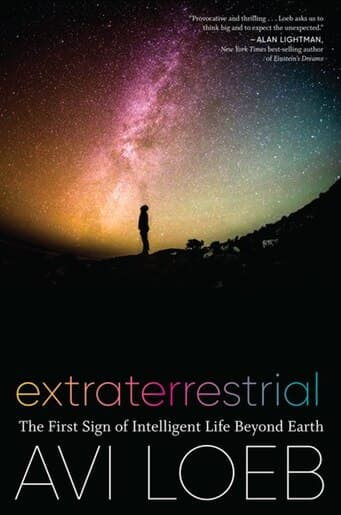
Loeb is the bestselling author of Extraterrestrial: The First Sign of Intelligent Life Beyond Earth, along with 7 other books and 800 papers. He explores topics such as black holes, the future of the Universe, and the search for extraterrestrial life.
Read the complete recording
Transcript
Existing transcript, with its original wording and timestamps. Automated transcripts may contain errors.
the following is a conversation with avi loeb an astrophysicist astronomer and cosmologist at harvard he has authored over 800 papers and written eight books including his latest called extraterrestrial the first sign of intelligent life beyond earth it'll be released in a couple of weeks so go pre-order it now to show support for what i think is truly an important book in that it serves as a strong example of a scientist being both rigorous and open-minded about the question of intelligent alien civilizations in our universe quick mention of our sponsors zero fasting app for intermittent fasting element electrolyte drink sun basket meal delivery service and pessimist archive history podcast so the choice is a fasting app fasting fuel fast breaking delicious meals and a history podcast that has very little to do with fasting choose wisely my friends and if you wish discount and to support this podcast as a side note let me say a bit more about why avi's work is so exciting to me and i think to a lot of people in 2017 a strange interstellar object now named amuamoa it's fun to say was detected traveling through our solar system based on the evidence we have it has strange characteristics which made it not like any asteroid or comet that we've seen before avi was one of the only world-class scientists who fearlessly suggested that we should be open-minded about whether it is naturally made or in fact is an artifact of an intelligent alien civilization in fact he suggested that the more likely explanation given the evidence is the latter hypothesis but we also talk about a lot of fascinating mysteries in our universe including black holes dark matter the big bang and close the speed of light space travel the theme throughout is that in scientific pursuits the weird things the anomalies the ideas that right now are considered taboo should not be ignored if we're to have a chance at finding the next big breakthrough the next big paradigm shift and also if we are to inspire the world with the power and beauty of science if you enjoy this thing subscribe on youtube review on apple podcast follow on spotify support on patreon or connect with me on twitter and lex friedman and now here's my conversation with avi loeb in the introduction to your new book extraterrestrial you write this book confronts one of the universe's most profound questions are we alone over time this question has been framed in different ways is life here on earth the only life in the universe are humans the only sentient intelligence in the vastness of space and time a better more precise framing of this question would be this throughout the expanse of space and over the lifetime of the universe are there now or have ever been other sentient civilizations that like ours explored the stars and left evidence of their efforts so let me ask are we alone that's an excellent question uh for me the answer is sort of clear because i start from the principle of modesty you know if we believe that we are alone and special and unique that shows organs my daughters when they were infants they tended to think that they are special unique and then they went out to the street and realized that other kids are very much like them and then they developed a sense of a better perspective about themselves and i think the only reason that we are still thinking that we are special is because we haven't searched well enough to find others that might even be better than us and you know i say that because i look at the newspaper every morning and i see that we do foolish things we are not necessarily the most intelligent ones and if you think about it if you open a recipe book you see that out of the same ingredients you can make very different cakes depending on how you put them together and how you heat them up and what is the chance that by taking the soup of chemicals that existed on earth and cooking it one way to get our life that you got the best cake possible i mean we are probably not the sharpest cookie in the jar and the my question is i mean it's pretty obvious to me that we're probably not alone because half of all the sun-like stars we know now as astronomers half of the sunlight stars from the kepler satellite data have a planet the size of the earth roughly at the same distance that the earth is from the sun and that means that they can have liquid water on their surface and the chemistry of life as we know it so if you roll the dice billions of times just within the milky way galaxy and then you have tens of billions of galaxies like it within the observable volume of the universe it would be extremely arrogant to think that we're special i would think that we're sort of middle of the road typical forms of life and that's why nobody pays attention to us you know if you go down the street on a sidewalk and you see an ant you don't pay attention or a special respect to that ant you just continue to walk and so i think that we are sort of average not very interesting not exciting so nobody cares about us we tend to think that we're special but that's a sign of immaturity and we're very early on in our development yes that's another thing that we have our technology only for 100 years and it's evolving exponentially right now on a three-year time scale so imagine what would happen in a hundred years in a thousand years in a million years or in a billion years now the sun is actually relatively late in the star formation history of the universe most of the sun-like stars formed earlier and some of them already died you know became white dwarfs and so if you imagine that a civilization like ours existed around a typical sun-like star by now if they survived they could be a billion years old and then imagine a billionaire technology it would look like magic to us it you know an approximation to god we wouldn't be able to understand it uh and so to in my view we should be humble and by the way we should probably just listen and not speak because there is a risk right if if you are inferior there is a risk if you speak too loudly uh something bad may happen to you you mentioned uh we should be humble also in the sense with the analogy to ants that uh they might be better than us so there's a kind of scale that we're talking about and in the question you mentioned the word sentient so sentience or maybe the more basic formulation of that is consciousness do you think um do you think that this thing within us humans in terms of the typical life form of consciousness is the essential element that permeates other if if there's other alien civilizations out there that they have something like consciousness as well or is this i guess i'm asking can you try to untangle the word sentient yeah so that's that's a good question uh i think what is most abundant depending on how long it survives so if you look at us as an example we are now we do have conscious and we do have technology but the technologies that we are developing are also means for our own destruction yes we can tell you know we can change the climate if we are not careful enough we can go into nuclear wars so we are developing means for our own destruction through self-inflicted wounds and it might well be that creatures like us are not long-lived that the crocodiles on other planets live for billions of years they don't destroy themselves they live naturally and so if you look around the most common thing would be dumb animals that live for long times you know not those that have conscious but in terms of changing the environment i think since i mean humans develop tools they've developed the ability to construct technologies that would lift us from this planet that we were born in and that's something animals without a conscious consciousness cannot really do and and so i you know in terms of uh looking for things that are new that went beyond the circumstances they were born into i would think that even if they are short-lived these are the creatures that made the biggest difference to their environment and we can search for them you know even if they're short-lived and most of the civilizations are dead by now yeah even if that's the case that's sad to think about by the way well but if you look on earth that you know there's lots of cultures that exist throughout time and they're dead by now the mayan culture was very sophisticated died but we can find evidence for it and learn about it just by archaeology digging into the ground looking and so we can do the same thing in space look for dead civilizations and perhaps we can learn a lesson why they died and behave better so that we will not share the same fate so i think you know there is a lesson to be learned from the sky and by the way i should also say if we find a technology that we have not dreamed of that we can import to earth that may be a better strategy for making a fortune than going to silicon valley or going to wall street because you learn you make a jump start into something of the future so that's one way to do the leap is actually to find to literally discover versus come up with the idea in our own limited human capacity like a cognitive capacity it would look like it would feel like cheating in an exam where you look over the shoulder of a student next to you yeah but it's not good on an exam but it is good when you're coming up with technology that could change the the fabric of human civilization but there is uh you know in my neck of the woods of artificial intelligence there's a lot of trajectories one can imagine of creating very powerful beings uh the technology that's essentially you know you can call super intelligence that could achieve space exploration all those kinds of things without consciousness right without something that to us humans looks like consciousness and there you know there is a sad feeling i have that consciousness too in terms of us being humble is a thing we humans take too seriously that it's we think it's special just because we have it but it could be a thing that's actually holding us back in some kind of way may well be it will be uh i should say something about ai because i do think it offers a very important step into the future if you look at the old testament the bible there is this story about noah's ark that you might know about noah knew about a great flood that is about to endanger all life on earth so he decided to build an ark and the bible actually talks about specifically what the the size of this ark was what the dimensions were turns out it was quite similar to um that we will discuss in a few minutes but at any event he built this ark and he put animals on it so that they were saved from the great flood now you can think about doing the same on earth because there are risks for future catastrophes you know we could have the self-inflicted wounds that we were talking about like nuclear war changing the climate or there could be an asteroid impacting us just like the dinosaurs died you know they the dinosaurs didn't have science astronomy they couldn't have a warning system but there was this big stone big rock that approached there it must have been a beautiful sight yeah just when it was approaching got very big and then smashed them okay and killed them so um you could have a catastrophe like that or in a billion years the sun will basically boil off all the oceans on earth and currently all our eggs are in one basket but we can spread them it's sort of like the printing press if you think about it the revolution that gutenberg brought is there were very few copies of the bible at the time and each of them was precious because it was handwritten but once the printing press produced multiple copies you know if something bad happened to one of the copies it wasn't a catastrophe you know it wasn't disaster because you had many more copies that and so if we have copies of life here on earth elsewhere then we avoid the risk of it being eliminated by a single point breakdown catastrophe so the question is can we build nox spaceship that will carry life as we know now you might think we have to put elephants and whales and birds on a big spaceship but that's not true because all you need to know is the dna making the genetic making of these animals put it on a computer system that has ai plus a 3d printer so that this cubesat which is rather small can go with this information to another planet and use the raw materials there to produce synthetic life and that would be a way of producing copies just like the gutenberg printing press yeah and it doesn't have to be exact copies of the humans it could just contain some basic elements of life and then have enough life on board that it could uh reproduce the process of evolution on another place right so i mean that also makes you sad of course because it uh you confront the mortality of your own little precious consciousness and all your own memories and knowledge and all that stuff right but who cares i mean we don't know i care about mine right and you care about yours no no i actually don't you know if you look at the big if you're an astronomer one thing that you learn from the universe is to be modest because you are not so significant i mean think about it all these emperors and kings that conquered a piece of land on earth and were extremely proud you know you see these images of kings and emperors that you know usually are alpha males and they stand you know strong and um they're very proud of themselves but if you think about it there are 10 to the power 20 planets like the earth in the observable volume of the universe and this view of conquering a piece of land and even conquering all of earth is just like an ant hugging a single grain of sand on the landscape of a huge beach that's not very impressive so you can't be arrogant if you see the big picture you have to be humble you know also we are short-lived you know we within a hundred years that's it right so what does it teach you first to be humble modest you never have significant powers relative to the big scheme of things and second you should appreciate every day that you live yes and and learn about the world humble and still grateful yes exactly well let's uh talk about the probably the most interesting object i've heard about and also the most fun to pronounce can you tell me the story of this object and why it may be an important event in human history and is it possibly a piece of alien technology right so this is the first object that was spotted close to earth from outside the solar system and it was found in on october 19 2017 and at that time it was receding away from us and at first astronomers thought it must be a piece of rock you know just like all the asteroids and comets that we have seen from within the solar system and it just came from another star i should say that the actual discovery of this object was surprising to me because a decade earlier i wrote the first paper together with ed turner and mauro martin that tried to predict whether the same telescope that was serving the sky pan stars from hawaii would find anything from interstellar space given what we know about the solar system so if you assume that other planetary systems have similar abundance of rocks and you just calculate how many should be ejected into interstellar space the conclusion is no it we shouldn't find anything with pan stars to me i apologize it's probably revealing my stupidity but it was surprising to me that so few interstellar objects from outside this whole system have ever been detected or not none has been you you do well maybe talk about it that there has been uh uh one or two rocks since then well since then there was one uh called the borisov it was discovered by an amateur russian astronomer yeah uh gennady borisov and that one looked like a comet yeah and just like a comet from within the solar system but this is a really important point sorry to interrupt it you showed that it's unlikely that a rock from another solar system would arrive to ours right and so the actual detection of this one was surprising by itself to me yes and but then so at first they thought maybe it's a comet or an asteroid but then it look it didn't look like anything we've seen before borisov did look like a comet so people asked me afterwards and said you know doesn't it convince you if borisov looks like a comet doesn't he convince you that um is also natural yeah and i said you know when i went on the first date with my wife uh she looked special to me yes and since then i met many women yes that didn't change my opinion of my life so you know that's not an argument anyway so why did why did the muah look weird let me explain so first of all astronomers monitored the amount of light sunlight that it reflects and it was tumbling spinning every eight hours and as it was spinning the brightness that we saw from that direction we couldn't resolve it because it's tiny it's about 100 meters a few hundred feet size of a football field and we cannot from earth with existing telescopes we cannot resolve it the only way to actually get a photograph of it is to send the camera close to it and that was not possible at the time that umua was discovered because it was already moving away from us faster than any rocket we can send it's sort of like a guest that appeared for dinner and then by the time we realized that it's weird the guest is already out the front door into the dark street yeah what we would like to find is an object like it approaching us because then you can send the camera irrespective of how fast it moves and if we were to find it in july 2017 that would have been possible because it was approaching us at that time actually i was visiting mount haleakala in maui hawaii with my family for vacation at that time in july 2017 but nobody knew uh at the observatory that the um is very close that's sad to think about that we had the opportunity at that time yes to send up a camera but don't worry i mean there will be more there will be more because you know i i operate by the copernican principle which says we don't live at a special place and we don't live at a special time and that means you know if we surveyed the sky for a few years and we had sensitivity to this region between us and the sun and we found this object with pan stars you know there should be many more that we will find in the future with surveys that might be even better yes uh and actually in a in three years time scale there would be uh the so-called lsst that's a survey of the vera rubin observatory that would be much more sensitive and could potentially find an umumua-like object every month okay so wow i'm just waiting for that and the main reason for me to alert everyone uh to the unusual properties of umumua is with the hope that next time around when we see something as unusual we would take a photograph or we would get as much evidence as possible because science is based on evidence not on prejudice and we will get back to that theme so anyway let me let me point out some of the properties actually yeah the elongated nature all right other things so the light curve the amount of light sunlight that was reflected from it was changing over eight hours by a factor of ten meaning that the area of this object even though we can't resolve it the area on the sky that reflects sunlight was bigger by a factor of 10 in some phases as it was tumbling around than in other phases so even if you take a piece of paper that is razor thin you know it's there is a very small likelihood that it's exactly edge-on uh and getting a factor of 10 change in the area that you see on the sky is huge it's much more than any it means that the object has an unusual geometry it's at least a factor of a few more than any of the comets or asteroids that we have seen before you mentioned reflectivity so it's not just the geometry but the the properties of the surface of that thing well uh or no if you assume the reflectivity is the same okay then it's just geometry if you assume the reflectivity may change yes then it could be a combination of the area that you see and the reflectivity because different directions may reflect differently but the point is that it's very extreme yes and it actually the best fit to the light curve that we saw was of a flat object unlike all the cartoons that you have seen of a cigar shape a flat object at the 90 percent confidence gives a better model for the way that the light varied and it's like flat meaning like a pancake like a pancake exactly uh and then so that's the you know the very first unusual property but to me it was not unusual enough to think that it might be artificial it was not significant enough then um there was no commentary tale you know no dust no gas around this object and the spitzer space telescope really searched very deeply for carbon-based molecules there was nothing so it's definitely not a comet the way people expected it to be can you maybe briefly mention what uh properties a comet that you're referring to usually has right so a comet is a rock that has some water ice on the surface so you can think of it as an icy rock actually comets were discovered a long time ago but uh the first model uh that was developed for them was by fred the whipple who was at harvard and i think the legend goes that he got the idea from walking through harvard square and seeing uh during a winter day and seeing these icy rocks you know and so a comet is icy and this is uh it's just a rock it's just a wrap yeah so when you have ice on the surface when the rock gets close to the sun the sunlight warms it up and the the ice sublimates it evaporates because the one thing about ice water ice is it doesn't become liquid if you warm it up in vacuum you know without an external pressure it just goes straight into gas and that's what you see as the tail of a comet the only way to get liquid water is to have an atmosphere like on earth that has an external pressure only then you get liquid and that's why it's essential to have an atmosphere to a planet in order to have liquid water and the chemistry of life so if you look at mars lost its atmosphere and therefore no liquid water on the surface anymore i mean there may have been early and that's what the perseverance uh survey you know the perseverance mission we will try to find out whether it had liquid water whether there was life perhaps on it at the time but at some point it lost its atmosphere and then the liquid water was gone so the only reason that we can live on earth is because of the atmosphere but a comet is in vacuum pretty much and then when it gets warmed up on the surface the water becomes the water ice becomes gas and then you see this cometary tail behind it in addition to water there is that there are all kinds of carbon-based molecules of dust that comes off the surface and those are detectable yeah it's easy to detect it's very prominent you see these cometary tails that look very prominent because they reflect sunlight and you can see them in fact it's sometimes difficult to see the nucleus of the comet because it's surrounded and shrouded with and in this case there was no trace of anything that's fast now you might say okay it's not a com so that's what the community said okay it's not a no problem it's still a rock you know it's not a comet but it's just a rock bare rock you know okay no problem then and that's the thing that convinced me to write about it and then in june 2018 you know significantly later there was a report that in fact the object exhibited an excess push in addition to the force of gravity so the sun acts on it by gravity but then there was an extra push on this object that was figured out from the orbit that you can trace and the the question was what is this excess push so for comets you get the rocket effect when you evaporate gas you know just like a jet engine on an airplane you throw a jet engine is very simple you throw the gas back and it pushes the airplane forward that's all that's how it get so in a case of a comet you throw gas in the direction of the sun because it and then you get a push okay so in the case of comets you can get a push but there was no commentary tale so then people said oh wait a second is it an asteroid no but it behaves like a comet but it doesn't look like a comet so what it well forget about it business as usual so that's what i mean by a non-gravitational acceleration so that's interesting so like the primary force acting on something like just a rock like an asteroid would be like you can predict the trajectory based on the based on gravity and also here there's detected movement that's not cannot be accounted purely by the gravity so if it was a comet you would need about a tenth of the mass of this comet the weight of this government to be evaporated in order to give it and there's no sign of that no sign ten percent of the mass evaporating it's huge think about it a hundred meter size object losing ten percent of its mass you can't miss that and uh so that's super weird it's super weird what is there a good explanation in your mind and possible explanations for this you know so i operated just like sherlock holmes in a way i said okay what are the possibilities and the only thing i could think so i ruled out everything else and i i said it must be the sunlight reflected off it okay so the sunlight reflects off the surface and gives it a push just like you get a push on a sail on a boat you know from the wind reflecting off it now in order for this to be effective it turns out the object needs to be extremely thin uh it turns out it needs to be less than a millimeter thick nature does not produce such things so but we produce it because it's called the technology of a light sail so we are for space exploration we are exploring this technology because it it has the benefit of not needing to carry the fuel with the spacecraft so you don't have the fuel you just have a uh you just have a sail and it's being pushed either by sunlight or by a laser beam or whatever uh so perhaps this is the light sail so this is actually the same technology with the starshop project yes so yeah that's fascinating okay people afterwards say okay you work on this project you imagine you know no that's a pretty good explanation right obviously my imagination is limited by what i know so i you know i would not deny that you know working on light sales expanded my ability to imagine this possibility yes but let me offer another interesting anecdote in september this year 2020 i mean yes uh 2020. yes um there was another object found and it was given the name 2020 so by the minor planet center you know this is an organization actually in cambridge massachusetts that gives names to objects astronomical objects found in the solar system and they gave it that name 2020 so because you know it looked like uh an object in the solar system and it moved in an orbit that is similar to the orbit of the earth but not the same exactly and therefore it was bound to the sun but it also exhibited a deviation from what you expect based on gravity so the astronomers that found it extrapolated back in time and found that in 1966 it intercepted the earth and then they realized they went to the history books and they realized oh there was a mission called gruner surveyor lunar lander surveyor 2 that had a rocket booster it was a failed mission but there was a rocket booster that was kicked into space and presumably this is the rocket booster that we are seeing now this rocket booster was sufficiently hollow and thin for us to recognize that it's pushed by sunlight so here is my point we can tell from the orbit of an object obviously this object didn't have any cometary tail it was artificially made we know that it was made by us and it did deviate from an orbit of a rock so just by seeing something that doesn't have cometary tail and deviates from an orbit shaped by gravity we can tell that it's artificial in the case of umuamua it couldn't have been sent by humans because it just passed near us for a few months we know exactly what we were doing in those at that time and also it was moving faster than any object that we can launch and so obviously it came from outside the solar system and the question is who produced it now i should say that you know when i walk on vacation on a beach i often see natural objects like seashells that are beautiful and i look at them and um and every now and then i stumble on a plastic bottle and that was artificially produced and my point is that maybe omua mua was a message in a bottle and we should see this is simply another window into searching for artifacts from other civilizations where do you think it could have come from and if it's so okay from a scientific perspective the narrow-minded view as we'll probably talk about throughout is you know you kind of want to stick to the things that uh to naturally originating objects like asteroids and comets okay that's the space of possible hypotheses and then if we expand beyond that you start to think okay these are artificially constructed like you just said it could be by humans it could be by uh by whatever that means by some kind of extraterrestrial alien civilizations if if it's the alien civilization variety what is this object then that will look at that an excellent question and let me lay out i mean we don't have enough evidence to tell if we had a photograph perhaps we would have more information but the possib there is one other peculiar fact about umuamua uh well other than it was very shiny i that i didn't mention you know we didn't detect any heat from it and that implies that it's rather small and shiny uh but the other peculiar fact is that it was it came from a very special frame of reference so it's sort of like finding a car in a parking lot in a public parking lot that you know you can't really tell where it came from so there is this frame of reference where you average over the motions of all the stars in the neighborhood of the sun so you find the so-called local standard of rest of the galaxy and that's uh a frame of reference that is obtained by averaging the random motions of all the stars and the sun is moving relative to that frame at some speed but this object was at rest in that frame and only one in 500 stars is so much at rest in that frame and that's why i was saying it's like a parking lot it was parked there and we bumped into it so the relative speed between the solar system and this object is just because we are moving it was sitting still now you ask yourself why is it so unusual in that context you know why because if it was expelled from another planetary system most likely it will carry the speed of the host star that it came from because it was you know the most loosely bound objects are in the periphery of the planetary system and they move very slowly relative to the star and so they carry the when they are ripped apart from the planetary system most of the objects will have the residual motion of the star roughly relative to the local stuff but this one was at rest in the locals now one thing i can think of if if there is a grid of uh road posts you know like for navigation system so that you can find your way in the local frame yeah then that would be one position these are like little sensors of that's fascinating to think about so there could be i mean not necessarily literally a grid but just uh evenly in some definition of evenly spread out set of objects like these right that are just out there a lot of them another possibility is that these are relay stations you know that for communication you might think in order to communicate you need a huge beacon yeah a very powerful beacon but it's not true because even on earth you know we have these relay stations so you have a not so powerful beacon so it can be heard only out to a limited distance but then you relay the message yes and it could be one of those now after it collided with this the solar system of course it got a kick so it's just like a billiard ball you know we gave it a a kick by colliding with but most of them are not colliding with stars and so that's one possibility okay and there should be numer lots of them if that's the case um the other possibility is that it's a probe you know that was sent uh in the direction of the um habitable region around the sun to find out if there is life now it takes tens of thousands of years for such a probe to traverse the solar system from the outer edge of the oort cloud all the way to where we are and you know it's a long journey so when it started the journey from the edge of the solar system to get to us now you know we were rather primitive back then you know we still didn't have any technology there was no reason to visit you know there was grass around and so forth but you know maybe it is a problem uh so you said ten thousand years as fast so it takes that long tens of thousands yes tens of thousands a year yeah yeah and uh the other thing i should say is you know it could be just a a an outer layer of something else like you know something that was ripped apart like a surface of an instrument that was and and you can have lots of these pieces you know if something breaks lots of these pieces spread out like space junk and you know that it could be just space junk from an extra from an alien civilization yes so it's i'm going to tell you about space junk let me yes what do you mean by space junk so um i think you know you might ask why aren't they looking for us one possibility is that we are not interesting like we were talking about another possibility you know if there are millions of or billions of years uh into their technological development they created their own habitat their own cocoon where they feel comfortable they have everything they need and it it's risky for them to establish communication with other so they have their own cocoon and they close off they don't care about anything else now in that case you might say oh so how can we find about them if they are closed off the answer is they still have to deposit trash right that's that is something from the law of thermodynamics there must be some production of trash and you know we can still find about them just like investigative journalists going through the trash cans of celebrities in hollywood you know you can learn about the private lives of those celebrities by looking at the front it's fascinating to think you know if we are the ants in this picture if we if this thing is a water bottle or if it's like a smartphone like where on the spectrum of possible objects of space because there's a lot of interesting trash like how interesting is this trash but imagine a caveman seeing a cellphone the caveman would think since the caveman played with rocks all of his life he would say it's a rock just like my fellow astronomers said yes right exactly that's brilliantly put actually as a scientist do you hope it's a water bottle or a smartphone because a smart i hope it's even more than a smartphone i hope that it's something that is really sophisticated and funny yeah see i'm the opposite i i feel like i hope it's a water bottle because at least we have a hope with our current set of skills to understand it yeah caveman has no way of understanding the smartphone it's like it will be like i feel like a caveman has more to learn from the plastic water bottle than they do from the smartphone but suppose we figure it out if we if we for example come close to it and and learn what it's made of and i guess the smartphone is full of like thousands of different technologies that we could probably pick at do you have a sense of where a hypothesis of where is the cocoon that it might have come from no because uh okay so first of all you know the solar system the outermost edge of the solar system is called the oort cloud it's a cloud of icy rocks um of different sizes that were left over from the formation of the solar system yes and it it's thought to be roughly a ball or a sphere and it's halfway the extent of it is roughly halfway to the nearest star okay so you can imagine each planetary system basically touching uh the oort clouds of those stars that are near us are touching each other space is full of these billiard balls that are very densely packed yes and what that means is any object that you see irrespective whether it came from the local standard so we said that this object is special because it came from a local standard of rest but even if it didn't you would never be able to trace where it came from because all these old clouds overlap so if you take some direction in the sky you will cross as many stars as you have in that direction like there is no way to tell which old cloud it came from so yes i i didn't realize how densely packed everything was uh yeah from the perspective of the work cloud and that's really interesting so yeah it could be it could be nearby it could be very far away yeah we have no clue you said cocoon that and you kind of uh paint uh i think in the book i've read a lot of your articles too on scientific american which are brilliant so i'm kind of mixing things up in my head a little bit but there's uh what does that cocoon look like what is the civilization that's able to harness the power of multiple suns for example um look like they give when you imagine possible civilizations that are a million years more advanced than us what do you think that actually like looks like i think it's very different than we can imagine uh by the way i should start from the point that even biological life you know just without technology getting into the game uh could look like something we have never seen before take for example the nearest star which is proxima centauri it's four and a quarter light years away so they will know about the results of the 2016 elections only next month in february 2021 yes it's very far away um but if you think about it um you know this uh star is a is a dwarf star and it's much cooler than it's uh twice as cold as the sun okay and it emits mostly infrared radiation so if there are any creatures on the planet close to it that is habitable which is called proxima b there is a planet in the habitable zone in the zone just at the right distance where in principle liquid water can be on the surface if there are any animals there they have infrared eyes because our eyes was designed to be sensitive to where most of the sunlight is in the visible range but proxima centaurium is mostly infrared so you're not the nearest to see each other in the nearest star system these animals would be quite strange they would have eyes that are detectors of infrared very different from ours moreover this planet proxima b faces the star always with the same side so it has a permanent dayside and a permanent night side and obviously the creatures that would evolve on the permanent dayside which is much warmer would be quite different than those on the permanent night side between them there would be a permanent sunset strip and my daughters said that that's the best opportunity for high value real estate because you will see the sunset throughout your life right now the sun never sets on this on this trip so you know these worlds are out of our imagination just even the individual creatures this the sensor suite that they're operating with might be very different very different so i think when we see something like that we would be shocked not to speak about seeing technology now so i i don't even dare to imagine you know uh and i think you know obviously we can bury our head in the sand and say it's never aliens like many of my colleagues say and it's a self-fulfilling prophecy if you if you never look you will never find if you are not ready to find wonderful things you will never discover them and the other thing i would like to say is reality doesn't care whether you ignore it or not you can ignore reality but it's still there yes so we can all agree based on twitter that aliens don't exist that um was a rock we can all agree and you will get a lot of likes they will have a big crowd of supporters and everyone will be happy and give each other awards and honors and so forth but um might still be an alien artifact who cares what humans agree on yeah there is a reality out there and we have to be modest enough to recognize that we should make our statements based on evidence science is not about ourself it's not about glorifying our image it's not about getting honors prizes you know a lot of the scientific a lot of the academic activity is geared towards creating your echo chamber where you have students postdocs repeating your mantras so that your voice is heard loudly so that you can get more honors prizes recognition that's not the purpose of science the purpose is to figure out what nature is right and in the process of doing that it's a learning experience you make mistakes you know einstein made three mistakes at the end of his career he argued that in the 1930s he argued that black holes don't exist gravitational waves don't exist and quantum mechanics doesn't have spooky action at a distance and all three turned out to be wrong okay so the point is that if you work at the frontier of then you make mistakes it's inevitable because you can't tell what is true or not and avoiding making mistakes in order to preserve your image makes you extremely boring okay you will get a prize but you will be a boring scientist because you will keep repeating things we already know if you want to make progress if you want to innovate you have to take risks and you have to look at the evidence it's a dialogue with nature you don't know the the truth in advance you let nature tell you educate you and then you you realize that what you thought before is incorrect and a lot of my colleagues prefer to be in a state where they have a monologue you know if you look at these people that work on string theory yes uh they have a monologue they know what and in fact their monologue is centered on anti-deceiter space which we don't live in now you know it's to me it's just like the olympics you know you you define a hundred meters and you say whoever runs this hundred meters is the best athlete the fastest you know and uh it's completely arbitrary you could have decided it would be 50 meters or 20 meters who cares you just measure the ability of people this way so you define antidecital space as a space where you do your mathematical gymnastics and then you find who can do it the best and you give jobs based on that you give prizes best but as we said before you know nature doesn't care about you know the prizes that you give to each other it cares you know it has its own reality and we should figure it out and it's not about us the scientific activity is about figuring out nature and sometimes we may be wrong our image will not be preserved but it's that's the fun you know kids explore the world out of curiosity and i always want to maintain my childhood curiosity and i don't care about the labels that i have in fact having tenure is is exactly the opportunity to behave like a child because you can make mistakes yeah and i was asked by the harvard gazette you know the the new the pravda of harvard uh what what is the one thing that you would like to change about the world yes and i said i would like my colleagues to behave more like kids yeah that's the one thing i would like them to do because something bad happens to these kids when they become tenured professors they start to worry about their ego yeah and about themselves more than about the purpose of science which is you know curiosity driven figuring out from evidence evidence is the key so when an object shows anomalies like what's the problem discussing you know whether it's artificial or not you know so there was i should tell you there was a mainstream paper in nature published saying it must be natural that's it it's unusual but it must be natural period and then at the same time that those main some other mainstream scientists tried to explain the properties yes and they came up with interpretations like it's a dust bunny you know the kind that you find in a household a collection of dust particles pushed by sunlight something we have never seen before or it's a hydrogen iceberg it actually evaporates like a comet but hydrogen is transparent you don't see it and that's why we don't see the commentary again we have never seen something like that in both cases the objects would not survive the long journey we discussed it in a paper that i wrote afterwards but my point is those that try to explain the unusual properties went into great length at discussing things that we have never seen before okay so even when you think about a natural origin you have to come up with scenarios that of things that were never seen before and by the way they look less plausible to me personally but my point is if we discuss things that were never seen before right why not discuss why not contemplate an artificial origin what's the problem why do people have this pushback you know i worked on on dark matter and we don't know what most of the matter in the universe is it's called dark metal it's just an acronym because we have no clue we simply don't know so it could be all kinds of particles and over the years people suggested weakly interacting massive particles axions all kinds of particles and experiments were made they cost hundreds of millions of dollars they put upper limits constraints that ruled out many of the possibilities that were proposed as natural initially the mainstream community regarded it as a mainstream activity to search the nature of the dark matter and they nobody complained that it's speculative to consider weakly interacting massive particles now i asked you why is it speculative to consider extraterrestrial technologies we have a proof that it exists here on earth yes we also know that the conditions of of of earth are reproduced in billions of systems throughout the milky way galaxy so what's more conservative than to say if you arrange for similar conditions you get the same outcome how can you imagine this to be specula it's not speculative at all and nevertheless it's regarded the periphery and at the same time you have physicists theoretical physics working on extra dimensions super symmetry uh super string theory the multiverse maybe we live in a simulation all of these ideas that have no grounding in reality some of which sound to me like you know just like what someone would say uh science fiction basically because you have no way to test it uh you know through experiments and experiments really are key it's not just the nuance you say okay forget about experiment and some philosophers try to say you know if there is a consensus what's the problem the point is it's key then that's what galileo it's key to have feedback from reality you know you can think that you have a billion dollars or that you are more rich than you know uh elon musk that's fine you can feel very happy about it you can talk about it with your friends and all of you will be happy and think about what you can do with the money then you go to an atm machine and you make an experiment you check how much money you have in in your checking account and if it turns out that you know you don't have much you can't materialize your dreams okay so you realize you have a reality check yes and my point is without experiments giving you a reality check without the atm machine showing you whether your ideas are bankrupt or not without putting skin in the game and by skinning the game i mean don't just talk about theoretical ideas make them testable if you don't make them testable they're worthless they're just like theology that is not testable by the way theology has some tests let me give you that's interesting three examples yes um it turns out that my book already inspired a phd student at harvard in the english department to pursue a phd in that direction and she invited me to the phd exam a couple of months ago and in the exam one of the examiners a professor asked her do you know why jordano bruno was burnt at the stake and she said no i think it's because he was an obnoxious guy and irritated a lot of people yes which is true but the professor said no it's because giordano bruno said that other stars are just like the sun and they could have a planet like the earth around them that could host life and that was offensive to the church why was it offensive because there is the possibility that this life sinned okay and if that life sinned on planets around other stars it should have been saved by christ and then you need multiple copies of christ and that's unacceptable how can you have duplicates of christ right and so they burned the guy it was about that's okay i'm just like loading this all in because that's kind of brilliant so he he was actually already into it's not just about the stars it's anticipating that there could be other life forms yeah like why if this star if there's other stars why would it be special why would our star be special he was making the right argument and he would just follow that all along to say like there should be other earth like places there should be other life and then there's different copies of christ yes so that was offensive so i said i said to that um i said to that professor i said great you know i wanted to introduce some scientific tone to the discussion and i said this is great because now you basically laid the foundation for an experimental test of this theology what is the test we now know that other stars are like the sun and we know they have planets like the earth around them so suppose we find life there and we figure out that they sinned then we ask them did you witness christ and if they say no it means that this theology is ruled out so there is an experimental test so this is experimental test number one another experimental test you know in the bible you know in the old testament abraham uh was heard the voice of god to sacrifice his son right only son and that's what the story says now suppose abraham my name by the way had a voice memo up on his cell phone yes he could have pressed this up and recorded the voice of god and that would have been experimental evidence that god exists right fortunately he didn't but it's an experimental test right there is a third example i should tell and that is elie wiesel attributed this story to martin buber but it's not clear whether it's true or not at any event the story goes that martin buber you know he was a philosopher and he said you know the christians argue that jesus you know the messiah arrived already and will come back again in the future the jews argue the messiah never came and will arrive in the future so he said why argue both sides agree that the messiah will arrive in the future when the messiah arrives we can ask whether he or she came before you know like visited us and then figure it out and one side so again experimental test of a theology yes so even theology if it puts a skin in the game you know if it makes a prediction could be tested right so why can't string theories test themselves or why can't you know even cosmic inflation that's another model that you know one of the inventors from mit alan guth argues that it's not falsifiable my point is a theory that cannot be falsified is not helpful because it means that you can't make progress you cannot improve your understanding of nature the only way for us to learn about nature is by making hypotheses that are testable doing the experiments and learning whether we are correct or not so b and coupled that with a curiosity and open-mindedness that allows us to explore all kinds of possible hypotheses but always the pursuit of those the the scientific rigor around those hypotheses is ultimately get evidence knowledge is of of what nature is should be a dialogue with nature yes rather than a monologue beautifully put can we talk a little bit about the drake equation another framework from which to have this kind of discussion about uh possible civilizations out there so let me ask within the context of the drake equation or maybe bigger how many alien civilizations do you think are out there well it's hard to tell because the drake equation is again quantifying our ignorance it's just a set of factors the only one that we know are actually two that we know quite well is the rate of star formation in the milky way galaxy which we measured by now and the frequency of planets like the earth around stars yes and at the right distance to have life but other than that there are lots of implicit assumptions about all the other factors that will enable us to detect a signal now i should say the drake equation has a very limited validity just for signals from civilizations that are transmitting at the time that you're observing them however we can do much better than that we can look for artifacts that they left behind even if they are dead you can look for industrial pollution in the atmosphere supply why do i bring this up again to show you the conservatism of the mainstream in astronomy and by the way i shouldn't you know i have leadership positions i was chair of the astronomy department for nine years the longest serving chair at harvard and i'm the chair of the board on physics and astronomy of the national academies you know it's the primary board uh and um you know i'm director of two centers at harvard and so forth so i i do represent the community in in various ways but at the same time you know i'm a little bit disappointed by the conservatism that people have and so let me give you an illustration of that so the astronomy community actually is going right now through the process of defining its goals for the next decade and there are proposals for telescopes that would cost billions of dollars and whose goal is to find evidence for oxygen in the atmosphere of planets around other stars with the idea that this would be a marker a signature of life now the problem with that is earth didn't have much oxygen in its atmosphere for the first two billion years roughly half you know half of its life it didn't have much oxygen but it had life it had microbial life it's not an it's not clear yet as of yet what the origin is for the rise in the oxygen level after two billion years about 2.4 billion years ago but we know that a planet can have life without oxygen in the atmosphere because earth did it the second problem with this approach is that you can have oxygen from natural processes you can break water molecules and make oxygen right so even if you find it will never tell you that for sure life exists there and so even with these billions of dollars the mainstream community will never be confident but uh whether there is life there now how can it be confident there is actually a way if instead of looking with the same instruments if you look for molecules that indicate industrial pollution for example cfcs you know that are produced by refrigerating systems or industries here on earth that they do the ozone layer you know you can search for that and i wrote a paper five years ago suggesting that now what's the problem you can just tell nasa i want to build this telescope to search for oxygen but also for industrial pollution nobody would say that because it sounds like you know on the periphery of the field and i asked you why hilarious because that's exactly i mean that's what you're saying is quite brilliant i mean uh because it's a really strong signal and if life if there's alien civilizations out there then they're probably going to be many of them and they're probably going to be more advanced than us and they're probably going to have something like industrial pollution which would be a much stronger signal than some basic gas which could have a lot of different explanations so like somebody like oxygen or i mean i don't you know uh i mean we could talk about signs of life on venus and so on but like if you want a strong signal it would be pollution i love how garbage is no but the pollution you have to understand we think of pollution as a problem but on a planet that was too cold for example to have a comfortable life on it you can imagine terraforming it and putting a blanket of polluting gases such that it will be warmer and that would be a positive change so if an industrial or a technological civilization wants to terraform a planet that otherwise is too cold for them they would do it so what's the problem of defining it as a search goal using the same technologies the problem is that there is a taboo we are not supposed to discuss extraterrestrial intelligence there is no funding for this subject not much very little and young people because of the bullying on twitter you know all the social media and elsewhere young people with talent that are curious about this these questions do not enter this field of study and obviously if you step on the grass it will never grow right so if you don't give funding obviously you know the mainstream community says look nothing was discovered so far obviously nothing would be discovered if talented people go to other disciplines never you never search for it well enough you will never find anything i mean look at gravitational wave astrophysics it's a completely new window into the universe pioneered by ray weiss at mit and at first it was ridiculed and thanks to some administrators at the national science foundation it received funding despite the fact that the mainstream of the astronomy community was very resistant yes to it and now it's considered a frontier so all these people that i remember as a postdoc a young postdoc these people that bash this field said bad things about people you know said nothing will come out of it now they say oh yeah of course you know the nobel prize was given to the you know to the ligo collaboration of course now they're they're supportive of it but my point is if if if you suppress innovation early on there are lots of missed opportunities the discovery of exoplanets is one example you know in 1952 there was an astronomer called the named otto struve and he wrote the paper saying why don't we search for jupiter like planets close to their host star because if they're close enough they would move the star back and forth and we can detect the signal yes okay and so astronomers on time allocation committees of telescopes for 40 years argued this is not possible because we know why jupiter resides so far from the sun you cannot have jupiter so close because there is this region where ice forms far from the sun and beyond that region is where jupiter-like planets can form there was a theory behind it which ended up being wrong by now by today's standards but yes anyway they did not give time on telescopes to search for such systems until the first system was discovered four decades after otto struve's paper and the nobel prize was awarded to that just a couple of years ago yeah and you ask yourself okay so you know science still made progress what's the problem is that this baby came out barely you know and and there was a delay of four decades so the progress was delayed and i wonder how many babies were not born because of this resistance so there must be ideas that are as good as this one that were suppressed because they were bullied because uh people ridiculed them that were actually good ideas and we these are missed opportunities babies that were never born yes and you know i'm willing to push this frontier of the search for technologies or technological signatures of other civilizations because you know when i was young i was in the military in israel it's obligatory to serve and there was this saying that you know one of the soldiers sometimes has to put his body on the barbed wire so that others can go through and i'm willing to suffer the pain so that you know younger people in the future will be able to speak freely about the possibility that some of the anomalies we find in the sky yes are due to technological signatures and it's quite obvious this is why i like like folks in the artificial intelligence space elon musk and a few others speak about this and they look at the long arc they say like what you know this kind of you know you can call it like first principles thinking or you can call anything really is like if we just zoom off from our current bickering and our current like discussions in the what science is doing and look at the long arc of the trajectory we're headed at which questions are obviously fundamental to science and it should be asked and which is the space of hypotheses we should be exploring and like exoplanets is a really good example of one that was like an obvious one i recently talked to sarah seeger and it was very taboo when she was starting out to work on an exoplanet and that was even in the 90s yeah and uh like it's obvious should not be a taboo subject and to me i mean i'm probably ignorant but to me exoplanets seems like it's ridiculous that that would ever be a taboo subject right to not fund to not explore that's very but even for her it's now taboo to say like what you know to to look for industrial pollution right right it's like i find that ridiculous i'll tell you why you take the next step it's ridiculous for another reason yes not because of just the scientific benefits that we might have by exploring it but because the public cares about these questions yes and the public funds science so how dare the scientists yes shy away from addressing these questions if they have the technology to do it it's like saying i don't want to look through galileo's telescope it's exactly the same you have the technology to explore this question to find evidence and you shy away from it you might ask why do people shy away from it yes and perhaps it's because of the fact that there is science fiction i i'm not a fan of science fiction because it has an element to it that violates the laws of physics in many of the books and the films and i cannot enjoy the these things when i see the laws of physics violated but who cares that the you know the fact that there is science fiction i mean if you have the scientific methodology to address the same subject i don't care that other people uh you know spoke nonsense about this subject or said things that make no sense who cares you do your scientific work just like you explore the dark matter you explore the possibility that umuamua is an artifact you just look for evidence and try to deduce uh what what it means and i have no problem with doing that to me it sounds like any other scientific question that we have and given the public's interest we have an obligation to do that by the way science to me is not an occupation of the elite it doesn't allow me to feel superior to other humans that are unable to understand the math to me it's a it's a way of life you know if there is a problem in the faucet or in the pipe at home i try to figure out what the problem is and with a plumber we figure it out and you know we look at the clues and the same thing in science you know you look at the evidence you try to figure out what it means it's it's common sense in a way and it shouldn't be regarded as something removed from the public it should be a reflection of the public's interest and i think it's actually a crime to resist the public if the public says i care about this and you say no no that's not sophisticated enough for me i want to do intellectual gymnastics on auntie the sitter space to me that's a crime yes i'd uh 100 agree so it's it's hilarious that the very not hilarious it's sad that people who are trained in the scientific community to have the tools to explore this world to be children to be the most effective at being children uh are the ones that resist being children the most but there is a large number of people that embrace the childlike wonder about the world and may not necessarily have the tools to do it that's the more general public and so you know i wonder if i could ask you and talk to you a little bit about you know ufo sightings that there's people you know quote-unquote believers you know there's hundreds of thousands of ufo sightings and you know i've you know consumed some of the things that people have said about it and uh one one thing i really like about it is how excited they are by the possibility uh by it's it's almost like this childlike wonder about the world out there they're not it's not a fear it's an excitement do you think because we're talking about uh this extra possibly extraterrestrial object that visited that flew by earth do you think it's possible that out of those hundreds of thousands of ufo sightings one is an actual one or some number is an actual sighting of a non-human some alien technology and that we're not um we did not we're too close-minded to uh to look and to see i think to answer this question we need better evidence my starting point as i said out of modesty is that we are not particularly interesting and therefore i would agree i would be hard-pressed to imagine that someone wants to really spy on us uh so i would think you know as a starting point that we don't deserve attention and we shouldn't expect someone but who knows now the problem that i have with ufo citing reports is that you know 50 years ago there were some reports of fuzzy images you know sorcerer-like things uh by now our technologies are much better our cameras are much more sensitive these fuzzy images should have turned into crisp clear images of things that we are confident about and they haven't turned that way it's always on the borderline of believability and because of that i believe that it might be most likely artifacts of our instruments or some natural phenomena that we are unable to understand now of course the reason you should you need you must examine those if for example pilots report about them or uh the military finds evidence for them is because it may pose a national security threat if another country has technologies that we don't know about and they're spying on us we need to know about it and therefore we should examine everything that looks unusual but to associate it with an alien life is a little too far for me until we have evidence that stands up to the level of scientific credence you know that that we are a hundred percent sure that you know from multiple detectors and you know through a scientific process now again if the scientific community shies away from these reports we will never have that it's like saying i don't want to take photographs of something because i know what it is then you will never know what it is but i think if some scientist if grants let's put it this way if funding will be given to scientists to follow on some of these reports and use scientific instruments that are capable of detecting those sightings with much better resolution with much better information that would be great because it will clarify the matter you know these are not as you said you know hundreds of thousands these are not once-in-a-lifetime events so it's possible to take scientific instrumentation and explore go to the ocean where the you know someone reported that there are frequent events that are unusual and check it out yeah do a scientific experiment what's the problem why not why only do experiments deep into the ocean and look at the oceanography or do other things you know we can do scientific investigation of these sightings and figure out what what they mean uh i'm very much in favor of that uh but until we have the evidence i would be doubtful as to what they actually mean yeah we have to be humble and uh and acknowledge that we're not that interesting it's kind of you're making me realize that because it's so taboo that the people that have the equipment uh meaning and when i was just talking everybody has cameras now but to have a large-scale like uh sensor right network that collects data regularly collects just like we look at the weather we're collecting information and then we can then x that information when there is reports and like have it not be a taboo thing where there's like millions or billions of dollars funding this effort that by the way inspires millions of people this is exactly what you're talking about it's like it's uh the scientific community is afraid of a topic that inspires millions of people exactly it's absurd but if you put blinders on your eyes you don't see it yeah right i should say that we do have meteors that we see these are rocks that by chance happen to collide with the earth and they if they're small they burn up in the atmosphere but if they're big enough uh tens of meters or more hundreds of meters the outer layer burns up but then the core of the object makes it through and this is our chance of putting our hands around an object if this meteor came from interstellar space so one path of discovery is to search for interstellar meteors and with the student of mine we actually looked through the record and we thought that we found one example of a meteor that was reported that might have come from interstellar space and another approach is for example to look at the moon is different from the earth in the sense that it doesn't have an atmosphere so objects do not burn up on their way to it it's sort of like a museum it collects everything that kind of rocks from out there deep space yeah and there is no geological activity on the moon so on earth every 100 million years you know we could have had computer terminals on earth that could have been a civilization like ours with electronic equipment yes more than 100 million years ago and it's completely lost you cannot excavate and find the evidence for it because in archaeological digs because the earth is being mixed on these time scales and everything that was on the surface more than 100 million years ago is buried deep inside the earth right now because of geological activity fascinating you think about by the way yeah but on the moon this doesn't happen the only thing that happens on the moon is you have objects impacting the moon and they go 10 meters deep so they produce some dust but the moon keeps everything it's like a museum it keeps everything on the surface so if we go to the moon i would highly recommend regarding it as an archaeological site yes and looking for objects that are strange maybe it collected some trash you know from interstellar space if we could just linger on the on the drake equation for a little bit we kind of talked about there's a lot of uncertainty in the parameters and and our and in the drake equation itself is very limited but i think the parameters are interesting in themselves even if it's limited because i think each one is within the reach of science right right did you get the evidence for uh i mean one a few i find really interesting could be interesting to get your comment on uh so the one with the most variance i i would say from my perspective is the length that civilizations last however you define it and the drake equation is the length of how long you're communicating yeah just like transmitting just like you said that might that's a wrong way to think about it because we can be detecting some other outputs of the civilizations etc but just if we just define broadly how long those civilizations last do you have a sense of uh how long that might last like what what are the great filters that might destroy civilizations that we should be thinking about what uh yeah is in and what it how can science give us more hints on this topic so i as i mentioned before operate by the copernican principle meaning that you know we are not special we don't live in a special place and not in a special time and by the way it's just modesty encapsulated in scientific terms yes right you're saying i'm not special you know i find conditions here they exist everywhere so if you adapt the copernican principle you basically say our civilization transmitted radio signals for 100 years roughly so probably it would last another hundred or few hundred and that's it because we don't live at a special time so that's you know well of course if we get our act together and we somehow start to cooperate rather than fighting each other killing each other you know wasting a lot of resources on things that would destroy our planet maybe we can lengthen that period if we get smarter but the the most natural assumption is to say that we would live into the future as much as we lived from the time that we start to develop the means for our own destruction the technologies we have which is quite pessimistic i must say so several centuries that's what i would give not unless we get our act unless we become more intelligent than the newspapers report every day okay point number one second and and by the way this is relevant i should say because there was a report about uh perhaps a radio signal detected from proxima centauri what do you make of that signal oh i think it's some australian guy with a cell phone next to the observatory or something like that because it was the parks telescope in australia okay i was like yeah okay so it's no human created noise yeah which is always the worry because actually the same observatory the parks observatory uh detected a couple of years ago some signal and then they realized that it comes back at lunch lunch time yes and they said okay what could it be and then they figured out that it must be the microwave oven in the observatory because someone was opening it before it finished and it was creating this radio signal that they detected with the telescope every lunch time uh so just a cautionary remark but the reason i think it's human-made without getting to the technical details is because of this very short window by which we were transmitting radio signals out of the lifetime of the earth you know as i said 100 years out of four and a half billion years that the earth existed so what's the chance that another civilization a twin civilization of ours is transmitting radio signals exactly at the time that we are looking with our radio telescopes yeah ten to the minus seven you know so and the other the other argument i have that is uh is that they detected it in a very narrow band of frequencies and that makes it i'm not you know it cannot be through natural processes a very narrow band just like some radio transmissions that we produce but if it were to come from the habitable zone from a transmitter on the surface of proxima b this is the planet that orbits proxima centauri then i calculated that the frequency would drift through the doppler effect you know just like when you hear a siren uh on the street you know when the car approaches you it has a different pitch than when it goes recedes away from you that's the doppler effect and when the planet orbits the star proxima centauri you would see or detect a different frequency when the planet approaches us as compared to when it recedes so there should be a frequency drift just because of the motion of the planet and i calculated that it it it must be much bigger than then observed so it cannot just be a transmitter sitting on the planet and sending another direction a radio signal unless they want to cancel the doppler effect but then they need to know about us because in a different direction it will not be canceled only in our direction they can cancel it perfectly so there is this direction of proxima centauri but i have a problem imagining a transmitter on the surface of a planet in the habitable zone emitting it but my main issue is really with the likelihood given what we know about ourselves right in terms of the durations the civilization the copernican principle so nevertheless this particular signal is likely to be uh human interference perhaps but um yeah do you find the proxima be interesting or the the more general question is do you think we humans will venture out into outside our solar system and potentially colonize other habitable planets actually i am involved in a project whose goal is to develop the technology that would allow us to leave the solar system and visit the nearest stars and that is called the star shot in 2015 in may 2015 an entrepreneur from silicon valley yuri milner came to my office at harvard and said would you be interested in leading a project that would do that in our lifetime because as we discussed before to traverse those distances you know with existing rockets would take tens of thousands of years and you know that's too long you know you for example to get to proxima centauri with the kind of spacecrafts that we already sent like new horizons or voyager 1 voyager 2 you you need you you needed to send them when the first humans left africa so so that they would arrive there now yes and you know that that's a long time to wait so yuri wanted to do it within our lifetime yes 10 20 years meaning it has to move at a fraction of the speed of light so can we send a spacecraft that would be moving at the fraction of the speed of light and i said let me look into that for six months and with my students and postdocs we arrived to the conclusion that the only technology that can do that is the light sale technology where can you explain it uh you basically produce a very powerful laser beam on earth so you can collect sunlight with photovoltaic cells or whatever and then convert it into stored energy and then produce a very powerful laser beam that is 100 gigawatts and focus it on a sail in space that is roughly the size of a person a couple of meters or a few meters that weighs only a gram or a few grams very thin and through the math you can show that you can propel such a cell if you shine on it for a few minutes it will traverse the distance that is five times the distance to the moon and it will get to a fifth of the speed of light sounds crazy but i've talked to a bunch of people and they're like i know it sounds crazy but it's actually it will work this is one of those i it's just beautiful i mean this is this is science and the point is people didn't get excited about space since the apollo yes uh era and it's about time you know for us to go into space a couple of months ago i was asked to participate in a debate organized by ibm and bloomberg news and the discussion centered on the question is the space race between the us and china good for humanity oh interesting and all the other debaters were worried about the military threats yeah and i just couldn't understand what they're talking about because military threats come from hovering above the surface of the earth right and we live on a two-dimensional surface we live on the surface of the earth but space is all about the third dimension getting far from error so if you go to mars or you go to a star another star there is no military threat what are we talking about space is all about you know feeling that you know we are one civilization in fact not fighting each other just going far and having aspirations for something that goes beyond military threats yeah so why would we be worried that the space race will lead that's actually brilliant i didn't you know there's some it does in our discourse about it the space race is sometimes made synonymous with like the cold war or something like that right or with wars but really yeah there was a lot of ego tied up in that i remember i mean it's still to this day there's a lot of pride that russians the soviet union was the first of space and there's a lot of pride in the american side that was the first on the moon but yeah you're exactly right like there's no aggression there's no wars and and beyond that if you think about the global economy right now there is a commercial interest that's why jeff bezos and elon musk are interested about you know mars and so forth there is a commercial interest which is international it's not it's driven by money yes not by name by pride and you know nations can sign treaties first of all there are lots of trees that were signed even before the first world war and the second world war and the world war took place so who cares you know like humans treaties do not safeguard anything you know but beyond that even if nations sign treaties about space exploration you might still find commercial entities that will find a way to get their launches and you know so i think we should rethink space it has nothing to do with national pride once again nothing to do with our egos it's about exploration and the biggest problem i think to human in human history is that is is that humans tend to think about egos and about their own personal uh image rather than look at the big picture you know we will not be around for long we are just occupying a small space right now let's move out of this you know the way that oscar wilde said i think is the best he said all of us are in the gutters but some of us are looking at the stars yeah and the more of us are looking at the stars the likelier we are to uh to this for this thing for this little experiment we have going on to last a while as opposed to end too quickly i mean it's not just about science of being humble it's it's about the survival of the human species as being is being humble to me it's incredibly inspiring the starshop project of i mean there's something magical about being able to go to another habitable planet and take a picture even i mean within our lifetime i mean that that uh with crazy technology too which is it's i should tell you how it was conceived so um i was at the time um so after six months passed after the visit of yura miller uh i was usually i go in december during the winter break i go to israel um i i used to go to see my family and i get a phone call just before the weekend started they get a phone call yuri would like you to present your concept in two weeks at his home and i said well uh thank you for letting me know because i'm uh actually out of the door of the hotel to go to a goat farm in in the negev in the southern part of israel with because my wife wanted to have sort of um to go to a place that is removed from civilization so to speak so we went to that goat farm and you know i need to make the presentation and there was no internet connectivity except in the office of the goat farm so the following morning at the 6 a.m i sit with my back to the office of that goat farm looking at goats that were newly born and typing into my laptop the presentation you know the powerpoints presentation about you know our ambitions for visiting the nearest star and that was very surreal to me that oh like our origins in many ways this very primitive origins and uh our dreams exactly of looking out that is brilliant so that is incredibly inspiring to me but it's also inspiring of putting humans onto other um moons or planets i still find going to the moon really exciting i don't know maybe i'm just a sucker for it but it it's really exciting and mars which is a new place a new planet another planet that might have life i mean there's something magical to that or some traces of previous life you might think that humans cannot really survive and and there are risks by going there but my point is you know we started from africa and we got to apartment buildings in manhattan yes right it's a very different environment from the jungles to live in an apartment building in you know a small cubicle um and you know it took tens of thousands of years but humans adapted right so why couldn't humans also make the leap and adapt to a habitat in space you know that now you can build a platform that would look like an apartment building in the bronx or somewhere but have inside of it everything that humans need yes and it just like the space station but bigger and it will be a platform in space and the advantage of that is if something bad happens on earth you have that complex where humans live and you can also move it back and forth depending on how bright the sun gets because you know within within a billion years within a billion years the sun would be too hot and it will boil off all the oceans on earth so we cannot stay here for more than a billion years that's for sure yes so that's a billion years from now uh i prefer like shorter term deadlines and so and that's i mean there's a lot of threats that we're facing currently do you find it exciting the possibility of uh you know uh landing on mars and starting little like uh building a manhattan style apartment building on mars and humans occupying it do you think from a scientific from an engineering perspective that's uh that's a worthy pursuit i think it's worthy but the real issue that is often uh underplayed is the risk to the human body from cosmic rays these are energetic particles and we are protected from them by the magnetic field around the earth that blocks them but if you go to mars where there is no such magnetic field to block them then you know a significant fraction of the brain cells in your head will be damaged within a year and the consequences of that are not clear i mean it's quite possible that humans cannot really survive on the surface now it may mean that we need to dig tunnels uh go underground or create some protection this is something that can be engineered yes uh and you know we can start from the moon and then move to mars that would be a natural progression but it's a big uh issue that needs to be dealt with i don't think you know each showstopper i think we can overcome it but you know just like anything in science and technology you have to work on it for a while figure out solutions and but it's not as rosy as elon musk talks about i mean elon musk can obviously be optimistic i think eventually it will boil down to figuring out um how to cope with this risk the health risk yeah i mean uh in defense of optimism i i find that there's a at least a correlation if not their best friends is optimism and open-mindedness is uh it's a necessary it's preconditioned to do to try crazy things and in that sense there the sense i have about going to mars if we use today's logic of what kind of benefits we'll get from that we're never going to go and make most decisions we make in life most decisions we've made as a human species are irrational if you just if you look at just today but if you look at the long arc and the possibilities that it might bring just like humans left europe and yeah europe and yeah and by the way it was destroyed everybody and but it was a commercial interest that drove that for trade and you know it might happen again in this context you have people like jeff bezos and elon musk that are commercially driven to go to space yes but it doesn't mean that what we will ultimately find is not new worlds you know that have nothing you know much have much more to offer than just commercial interests and uh as a side effect almost right yeah and then that's why i think you know we should be open-minded and explore and however at the same time because of the reasons you pointed out uh i'm not optimistic that we will survive more than a few centuries into the future because people do not think long term and that means that we will only survive for the short term i don't know if you have thoughts about this but what are the things that worry the most about uh from the great perspective of the universe which is the great filters that destroys intelligent civilizations but for our own species here uh like what are the things that worry the most yeah the thing that worries me the most is that people pay attention to how many likes they have on twitter and rather than you know basketball coaches tell the team players keep your eyes on the ball not on the audience the problem is we keep our eyes on the audience most of the time yes let's keep our eyes on the ball and what does that mean first of all in context of science it means pay attention to the evidence when the evidence looks strange then we should figure it out you know i went to a seminar about umuamua at harvard and a colleague of mine that is mainstream conservative would never say anything that would deviate from what everyone else is thinking said to me after the seminar i wish this object never existed now to me i mean i just couldn't hear that what do you mean nature is whatever it is you have to pay attention to it you cannot say i you know you cannot bury your head in this i mean you should bless nature for giving you clues about things that you haven't expected yes and i think that's the biggest fault that we are looking for confirmations of things we already know so that we can maintain our pride that we already knew it and maintain our image not make mistakes because we already knew it therefore we expected the right thing yes but science is a learning experience and sometimes you're wrong and let's learn from those mistakes and what's the problem about that why is why do we have to get you know prizes and why do we get to be honored and maintain our image when the actual objective of science is learning about nature and like you you've talked about anomalies in this case are actually are not things that are unfortunate and to be ignored are in fact gifts and should be the focus of science exactly because that's the way for us to improve our understanding if you look at quantum mechanics nobody dreamed about it and it was revolutionary and we still don't fully understand it it's a pain for us to figure out so why do you so i understand from the science from the perspective that's holding our science back why do you have a sense that that's also something that might be uh a problem for us in terms of the survival of human civilization because when you look at society it operates by the same principles there is uh people look for affirmation by groups and they you know people segregate into herds that think like them especially these days when social media is so strong you can find your support group and you if you don't look for evidence for what you're saying you can say crazy things as long as there are enough people supporting what you say you can even have your newspapers you can have everything to support your view and then you know bad things will happen to society because we're detaching ourselves from reality and uh if we detach ourselves from reality all the destructive things that naturally can occur in the real world whether from nuclear weapons all the kinds of threats that we're facing uh even we're living through a pandemic the uh suppose you know a much much worse pandemic could happen right and then we could sadly like we did this one politicize it in some kind of way and have bickering in the space of twitter and politics as opposed to there's an actual thing that could destroy the human species so the only way for us to maintain to to stay modest yes and learn about what really happens is by looking for evidence again i'm i'm saying it's not about ourself you know it's about figuring out what's around us and if you close yourself by surrounding yourself with people that are like-minded that refuse to look at the evidence you can do bad things uh and throughout human history that's the origin of all the bad things that happen yes and i think it's a key it's a key to be modest and to look at evidence and it's not a nuance now you might say oh okay the uneducated person might operate no it's the scientific community operates this way my problem is not with people that don't have an academic pedigree it's included everywhere in society on the topic of uh like discovery of evidence surveillance civilizations which is something you touch on in your book what that idea would do to societies to the human psyche and in general do you think and you talk about the uh i still have trouble pronouncing but wager right what do you think is uh can you explain it and what do you think in general is the effect that such knowledge might have on human civilization right so pascal had this wager about god and by the way there are interesting connections between theology and the search for extraterrestrial life you know it's possible that you know we were planted on this planet by another civilization that's you know we attribute to god powers that are that belong really to technological civilization uh but putting that aside uh pascal basically said you know let's there are two possibilities either god exists or not right and if god exists you know the consequences are quite significant and therefore you know we should we should consider that possibility differently than equal weight to both possibilities and uh i suggest that we do the same with omua mua or other technological signatures that we uh keep in mind the consequences and therefore pay more attention to that possibility now some people say extraordinary claims require extraordinary evidence my point is that the term extraordinary is really subjective you know for one person a black hole is extraordinary for another you know it's just a consequence of einstein's theory of gravity yeah it's nothing extraordinary yeah the same about the type of dark matter anything so we should leave the extraordinary part of that sentence just keep evidence okay so let's be guided by evidence and even even if we have extraordinary claims you know let's not dismiss them because the evidence is not extraordinary enough because if we have an image of something and it looks really strange and we say oh the image is not sufficiently sharp therefore we should not even pay attention to this image or not even consider i think that's a mistake yes what we should do is say look there is some evidence for something unusual let's try and build instruments that will give us a better image and if you just dismiss extraordinary claims because the you consider them extraordinary you avoid discovering things that you haven't expected and so i believe that along the history of astronomy there are many missed opportunities and i speak about astronomy but i'm sure in other fields it's also true i mean this is my expertise for example you know the astrophysical journal which is the main primary publication in astrophysics uh if you go you go beyond before the 1980s there are images that were posted in the astrophysical journal of giant arcs you know arcs of light surrounding clusters of galaxies and you know you can find it in printed versions of the astrophysical journal people just ignore they put the image they see the arc they say who knows what it is and just ignore it and then in the 1980s the subject of gravitational lensing became popular and the idea is that you can deflect light by the force of gravity and then you can put the source behind the cluster of galaxies and then you will get these arcs and actually einstein predicted it uh in 1940 and you know so these things were expected but people just had them in the images didn't pay attention so i'm sure there are lost opportunities sometimes you even in existing data you have things that are unusual and exceptional and are not being addressed yeah you actually i think you have the article uh the data is not enough from from quite a few years ago will you talk let's do you know we can go back to the 70s and 80s but we can go also to the mayan civilization right the mayan civilization basically believed in astrology that you can forecast the outcome of a war based on the position of the planets yes and and they had you know astronomers in their culture had the highest social status they were priests yes they were elevated and the reason was that they helped politicians decide when to go to war because they would tell the politicians you know the planets would be in this configuration it's a better chance for you to win the war yes go to war and in retrospect they you know they collected wonderful data but misinterpreted it because we now know that the position of venus or jupiter or whatever has nothing to do with the outcome of world war one which you know it has nothing to do and uh so we can have a prejudice and collect data without actually doing the right thing with it that's such a pisces thing to say i looked up what your astrological sign is well so you mentioned einstein predicted that black holes don't exist or just or exist in nature when einstein came up with his theory of gravity in 1915 november 1915 a few months later another physicist carl schwarzschild he was the director of the potsdam observatory but he was a patriot a german patriot so he went into the first world war fighting for germany but while he was at the front he sent a postcard to einstein saying you know a few months after the theory was developed saying actually i found a solution to your equations and that was a black hole solution and then he died a few months later and einstein was a pacifist and he survived so the the lesson from this story is that if you want to work out the consequences of a theory you better wear pacifist but the point is that this solution was known shortly after einstein came up with his theory but in 1939 einstein wrote a paper in the analysis of mathematics saying even though the solution exists i don't think it's realized in nature and his argument was if you imagine a star collapsing stars often spin and the spin will prevent them from making a black hole collapsing to a point so i mean can you maybe one of the many things you uh you have work on you're an expert in as black holes can you first say what are black holes and second how do we know that they exist right so black holes are the ultimate prison you know you can check in but an aromatic even light cannot escape from them so there are extreme structures of space and time and there is this so-called schwarzschild radius or or the event horizon of a black hole once you enter into it with a spaceship you would never be able to tweet back to your friends and tell them by the way i asked the students in my class freshman seminar at harvard i said let me give you two possible journeys that you can take i said suppose aliens come to earth and suggest that you would border spaceship would you do it and the second is suppose you could board a spaceship that will take you into a black hole would you do it so all of them said to the first question yes under one condition that i'll be able to maintain my social media contacts and report back share the experience with them i couldn't but personally i have no footprint on social media yeah which is as a matter of principle yeah my wife asked me when we got married and i uh honor that and i told you offline i need to get married just like she's such a woman she truly is a special agent well she was wise enough to recognize the risk but um it saves me time and it also keeps me away from crowds you know i don't have the uh notion of what a lot of other people think so i can think independently think exactly yeah exactly but uh putting so i was surprised to hear that for students it's extremely important to share experiences even if they go on a spaceship with aliens they still want to brag about it rather than look around and see what's going on this is not an option when you go to the black hole is exactly the point so for the black hole they said no because there obviously you can find your death after uh you get into it and you can crash into singularity there is this singularity in the center so inside the event horizon we know that all the matter collects at a point now we can't really predict what happens at the singularity because einstein's theory breaks down and we know why it breaks down because it doesn't have quantum mechanics that talks about small distances we don't have a theory that unifies quantum mechanics and gravity so that it will predict what happens in near a singularity and in fact you know i once a couple of years ago i had a flood in my basement i mean and i i invited the plumber to come over and figure out and and we found that the sewer was clogged because of three roots that got into it and we solved the problem but then i i thought to myself well isn't that what happens to the singularity of a black hole because the question is where does the matter go you know if you know in the case of a home i never thought about it but the water all the water that we use goes in you know through the sewer to some reservoir somewhere and the question is what happens inside a black hole and one possibility is that there is an object in the middle just like a star you know and everything collects there and the object has the maximum density that we can imagine like planck densities it's the ultimate density that you can have where gravity is as strong as all the other forces um so you can imagine this object very dense object at the center that collects all the matter another possibility is that there is some tunnel just like the sewer it takes the matter into another place and we don't know the answer where but i wrote a scientific american essay about it and uh admitting my our ignorance it's a fascinating question what happens to the method that goes into black hole i actually recommend it to some of my colleagues that work on string theory i uh at the closing of a conference i'm the founding director of the black hole initiative at harvard which brings together astronomers physicists philosophers and mathematicians and we have a conference once a year and at the end of one of them since i'm the director i had to summarize and i said that i wish we could go on a field trip to a black hole nearby and i highly recommend to my colleagues that work on string theory to enter into that black hole because then they can test their theory when they get inside but one of the string theorists in the audience nimar khan hamad immediately raised his voice and said you have an ulterior motive for sending us into a black hole uh which i didn't deny but at any event yes that's true that's true can you say why we know that black holes exist right so um it's an interesting question because black holes were considered a theoretical construct and einstein even denied their existence in 1939 uh but then um in the 19 in the mid 1960s uh quasars were discovered these are very bright sources of flight a hundred times brighter than their host galaxy which are point-like at this at the center of galaxies and it was immediately suggested uh by ed salpiter in the west and by yakov zeldovich in the east that these are black holes that accrete gas collect gas from their host galaxy that are being fed with gas and they shine very brightly because as the gas uh falls towards the black holes uh just like water um you know running down the the sink uh the gas swirls and then rubs against itself and heats up and shines very brightly because it's very hot close to the black hole by viscous by viscosity it it it heats up uh and in in the case of black holes it's the turbulence the turbulent viscosity that causes it to heat up so um we get these very bright sources of light just from black holes that are supposed to be dark you know nothing escapes from them but they create a violent environment where gas moves close to the speed of light and therefore shines very brightly much more than any other source in the sky and we can see these quasars all the way to the edge of the universe so we have evidence now that when the universe was you know about seven percent of its present age you know infant uh already back then you had black holes of a billion times the mass of the sun which is quite remarkable you know it's like finding giant babies in a nursery you know like how can these black holes grow so fast you know less than a billion years after the big bang you already have a billion times the mass of the sun in these black holes and the answer is presumably there are very quick processes that build them up they they build quickly very quickly and so we see those black holes and that was found in the mid 1960s but in 19 in sorry in 2015 exactly 100 years after einstein came up with his theory of gravity the ligo observatory detected gravitational waves and these are just ripples in space and time so according to einstein's theory the innovation the ingenuity of einstein's theory of gravity that was formulated in november 1915 was to say that space and time are not rigid you know they are they respond to matter so for example if you have two black holes and they collide it's just like a stone being thrown into this on a surface of a pond they generate waves disturbances in space and time that propagate out at the speed of light these are gravitational waves they create a space-time storm around them and then the waves go all the way through the universe and reach us and if you have a sensitive enough detector like ligo you can detect these waves and so it was not just the message that we received for the first time gravitational waves but it was the messenger so there are two aspects to it one is the messenger which is gravitational wave for the first time were detected directly and the second was the message which was a collision of two black holes because we could see the pattern of the ripples in space and time and it was fully consistent with the prediction that schwarz had made for how a black the space time around the black hole is because when two black holes collide you can sort of map from the message that you get you can reconstruct what what really happened and it's fully consistent and in 2017 and 2020 there's two nobel prizes that's right uh uh that had uh to do with the black holes can you maybe describe in the same masterful way that you already been doing uh what those nobel prizes were given for yeah so the 2017 was given for the ligo collaboration for discovering gravitation waves from collisions of black holes and the 2020 nobel prize in physics was given for uh two things one was theoretical work that was done by roger penrose in the 1960s demonstrating that black holes are inevitable when stars collapse and it was mostly mathematical work and actually stephen hawking uh also contributed significantly to that frontier and unfortunately he is not alive so he could not be honored so penrose received it on his own and then two other astronomers received it as well andrea guez and reinhard genzel and they provided conclusive evidence that there is a black hole at the center of the milky way galaxy that weighs about 4 million times the mass of the sun and they found the evidence from the motion of stars very close to the black hole just like we see the planets moving around the sun there are stars close to the center of the galaxy and they are orbiting at very high speeds of order thousands of kilometers per second or thousands of miles per second per second uh think about it yeah which uh can only be induced at those distances if there is a four million solar mass object that is extremely compact and the only thing that is compatible with the constraints is a black hole and they actually made a movie of the motion of these stars around the center one of them moves around the center over a decade you know six over time scales that we can monitor and um it was a breakthrough in a way um so combining ligo with uh the detection of a black hole at the center of the milky way and and in many other galaxies like quasars uh you know now i would say black hole research is vogue you know it's it's very much in fashion you know we saw it back in 2016 when we established the black hole initiative yes you kind of saw that there is this excitement about in breakthroughs and discoveries around black holes which are probably one of the most fascinating objects in the universe i mean it's up there uh they're both terrifying and beautiful right just and they capture the entirety of the physics that we know about this universe i should say the re you know the question is where is the nearest black hole can we visit it and you know i wrote a paper with my undergraduate student amir siraj suggesting that perhaps you know there could be if there is one in the solar system we can detect it because um i don't know if you heard but there is a claim that maybe there is a planet nine in the solar system uh because we see some anomalies at the outer parts of the solar system so some people suggested maybe there is a planet out there that was not yet detected so people searched for it didn't find it weighs roughly five times the mass of the earth and we said okay maybe you can't find it because it's a black hole that was formed early in the universe is that part so where do you stand up it could be that the dark matter is made of black holes of this mass you know we don't know what the dark matter is made of you could it could be the black holes so we said but there is an experimental way to test it and the way to do it is because uh is there is the oort cloud of icy rocks in the outer solar system and if you imagine a black hole there every now and then a rock will pass close enough to the black hole to be disrupted by the very strong gravity close to the black hole and that would produce a flare that you can observe and we calculated how frequently these flares should occur and with lsst on the vera rubin observatory we found that you can actually test this hypothesis that's brilliant and if you don't see flares then you can put limits on the existence of a black hole in the solar system it would be extremely exciting if there was a black hole if planet nine was a black hole because we could visit it you know and we can examine it and it will not be a matter of you know an object that is very removed from us another thing i should say is it's possible that the black hole affected life on earth uh the black hole at the center of the milky way how you know that black hole right now is dormant it's very faint but we know that it flares when a star like the sun comes close to it the star will be spaghettified basically becomes a stream of gas like a spaghetti and then the gas would fall into the black hole and there would be a flare and this process happens once every 10 000 years or so so we expect that you know these flares to occur every 10 000 years but we also see evidence for the possibility that gas clouds were disrupted by the black hole because the the stars that are close to the black hole are residing in a single or two planes and the only way you can get that is if they formed out of a disk of gas just like the planets in the solar system formed so there is evidence that gas fell into the black hole and powered possibly a flare and these flares produce x-rays and ultraviolet radiation that could damage life if if the earth was close enough to the center of the galaxy where we are right now it's not very risky for us but there is a theoretical argument that says the solar system the sun was closer to the galactic center early on and then it migrated outwards so maybe maybe in the early stage of the solar system the conditions you know were affected shaped by these flares of the black hole at the center of the galaxy and that's why for the first two billion years there wasn't any oxygen in the atmosphere you know who knows but um it's just interesting to think that you know from a theoretical concept that einstein resisted in 1939 it may well be that you know black holes have influence on our life and that you know it's just like discovering that some uh stranger affected your family and in a way your life and um you know if that happens to be the case a second nobel prize should be given not for just the discovery of this black hole at the center of the galaxy but perhaps for the nobel prize in chemistry for the effect that it had for the fact for the for the interplay that resulted in some kind of uh yeah so yeah the chemical effect bio biology i mean all those kinds of things in in terms of uh the emergence of uh life and the creation of a habitable environment that's so fascinating and of course like you said dark matter like black holes have some so they could be the dark matter in principle yes uh we don't know uh what the dark matter is at the moment does it make you sad so you've had an interaction and perhaps a bit of a friendship with stephen hawking uh does it make you sad that he didn't win the nobel well all together i don't assign great importance to prizes because as you said you know jean-paul starter who i admired as a teenager because i was interested in philosophy when i grew up on a farm in israel you know i used to collect eggs every afternoon and i would drive the tractor to the hills of our village and just think about philosophy read philosophy books and jean paul sata was one of my favorite and he was honored with the nobel prize in literature he was a philosopher primarily existentialist and he said the hell with it you know why should i give um special attention to this committee of people that get their self-importance from awarding me the price like what what's uh you know why does that merit my attention yes so he he gave up on the nobel prize and you know that two benefits to that one that you don't you're not working your entire life in the direction that would satisfy the will of other people you know you work independently you're not after these honors just for the same reason that you're if you're not living your life for making a profit or money you can live a more fulfilling life because you're not being swayed by the wind you know of how to make money and so forth the second aspect of it is you know that very often um you know these prizes um they um they distort the way we do science because instead of people willing to take risks and instead of having announcements only after a group of people converges with a definite result you know uh the natural progression of science is based on trial and error you know it's reporting some results and perhaps they're wrong but then other people find perhaps better evidence and then you figure out what's going on and that's the natural way that science is you know it's a learning experience so if you give the public an image by which scientists are always right you know and you know some of my colleagues say we must do that because otherwise the public will never believe us that global warming is really taking place right but that's not true because the public would really believe you if you show the evidence yes so the point is you should be sincere when the evidence is not absolutely clear or where there are disputes about the interpretation of the evidence we should show us you know the king is naked okay there is no point in pretending that the king is dressed yes saying that scientists are always right scientists are wrong frequently and the only way to make progress is by evidence giving us the support that we need to make airtight arguments so when you say global warming is taking place if the evidence is fully supportive if there are no holes in the argument then people will be convinced because you're not trying to fool them when the evidence was not complete you also show them that the evidence is not complete and when there's holes you show that there's holes and here's the methodology we're using to try to close those holes exactly let's be sincere why pretend so if there were no in a world where there would there were no prizes no honors we would act like kids as i said before we would really be focusing on the ball and not on the audience yeah the prizes get in the way and it's it's so powerful it do you think in some sense the few people have turned down the prize made a much more powerful statement i i don't know if you're familiar with in the in the space of mathematics with the fields metal and uh google pearlman yes turned down the prize it's uh so he i've committed one of the reasons i started this podcast is i i'm going to definitely talk to putin i'm go definitely talking to pearl and people keep telling me it's impossible i i i love hearing that because i'll talk to both anyway but do you have us do you have a sense of um why he turned down the prize and is that a powerful statement to you well what i read is that um you're talking about the mathematician what i read is that he was disappointed by the response of the community the mainstream community the mathematicians to his earlier work where they dismissed it they didn't attend to the details and and didn't treat him with proper respect because he was not considered one of them yes and i think that speaks uh volumes about the current scientific culture which is uh based on group think and on social interaction rather than on the merit of the argument and on the evidence in the context of physics so in mathematics there is no empirical basis you're exploring ideas that are logically consistent uh but nevertheless there is this uh group thing and i think he was so frustrated with his past experience that he didn't even bother to publish his papers he just posted them on the archive and um in a way saying you know i know what what the answer is go look at it and then again in the long arc of history uh his work on archive will be remembered and all the prizes most of the prizes will be forgotten that's what people don't kind of think about is when you look at roger penrose for example is another fascinating figure uh you know it's possible and i forgive me if it's i'm sure of my ignorance but he's also did some work on consciousness he's been one of the only people who spoke about consciousness which for a longest time and is still arguably outside of the realm of the sciences right it's still seen as a taboo subject and and he was brave enough to explore it uh from a physics perspective from a just a philosophical perspective but like with the rigor like proposing different kind of hypotheses of how consciousness might be able to emerge in the brain and it's possible that that is the thing he's remembered for if you look hundred years from now right as opposed to the the work in the black holes which fits into the kind of asp like the fits into what the current scientific community uh uh allows to be the the space of what is and isn't science yeah it's really interesting to look at people that are innovators where in some phases of their career their ideas fit into the uh social structure that is around them but in other phases it doesn't and when you look at them they just operated the same way throughout and it's it says more about their environment than about them well yeah i i don't know if you know who max tag mark is yeah just recently talked to him i just recently talked to him again and he uh i mean he was a little bit more explicit about saying you know being aware which is something i also recommend it's like being aware where the scientific community stands and doing enough to get like move along into your career in your career and yeah it's the necessary evil i suppose if if you are one of those out of the box thinkers that just naturally have this childlike curiosity which max definitely is one of them is sometimes you have to do some stuff that fits in you publish and you get tenure and all those things but the tenure is a great privilege because it allows you to in principle explore things that are not accepted by others and unfortunately it's not being taken advantage of by most people and it's a waste of a very precious resource yeah absolutely this space that you kind of touched on that's full of theories and is perhaps detached from appreciation of empirical evidence or longing for empirical evidence or grounding in empirical evidence is uh the theoretical physics community and the interest in uh unifying the laws of physics and with the theory of everything it's i'm not sure from which direction to approach this question but how far away are we from arriving at a theory of everything do you think and uh how would we how important is it to try to arrive at it uh at this kind of goal of this beautiful simple theory that unlocks the very you know fundamental basis of our nature as we know it and you know uh and how what are the kinds of approaches we need to take to get there yeah so in physics the biggest challenge is to unify quantum mechanics with gravity and i believe that once we have experimental evidence for how this happens in nature in systems that have quantum mechanical effects but also gravity is important then the theory will fall into our lap okay but the mistake that is made by the community right now is to come up uh with the right theory from scratch and you know einstein gave the illusion that you can just sit in your office and and understand nature you know when he came up with his general theory of relativity but you know first of all perhaps he was lucky but it's not a rule the rule is that you need evidence to guide you especially when dealing with quantum mechanics which is really not intuitive and so there are two places where the two theories meet one is black holes and there is a puzzle there it's called the information paradox in principle you can throw the encyclopedia britannica into a black hole it's a lot of information and then it will be gone because a black hole carries only three uh properties or qualities the mass the charge and the spin according to einstein but then when hawking tried to bring in quantum mechanics to the game he realized that black holes have a temperature and they radiate this is called hawking radiation and it was sort of anticipated by jacob beckenstein before him and hawking wanted to prove beckenstein wrong and then figure this out and so what it means is black holes eventually evaporate and they evaporate into radiation that doesn't carry this information according to hawking's calculation and then the question is according to quantum mechanics information must be preserved so where did the information go if uh a black hole is gone and where is the information that was encoded in the encyclopedia when it went into the black hole and to that question we don't have an answer yet it's one of those puzzles about black holes and it touches on the interplay between quantum mechanics and gravity another important question is what happened at the beginning of the universe what happened before the big bang and by the way on that i should say you know there are some conjectures uh it's all in principle if we figure it out if we have a theory of quantum gravity it's possible to imagine that we will figure out how to create a universe in the laboratory by irritating the vacuum you might create a baby universe and if we do that it will offer a solution to what happened before the big bang perhaps the big bang emerged from the laboratory of another civilization so it's like baby universes are being born out of laboratories and inside the baby universe you have a civilization that brings to existence a new baby universe just like humans right we have babies and they make babies so in principle that would solve the problem of why there was a big bang and also what happened before the big bang yes so we came our umbilical cord is connected to a laboratory of a civilization that produced our universe once it figured out quantum gravity you know it's uh it's baby big bang's all the way down it's just big bangs all the way up so if we collect data about how the universe started we could potentially test theories of or it can educate us about how to unify quantum mechanics and gravity if we if we get any information about what happens near the singularity of a black hole you know if we yeah if we get a sense of you know somehow we learn what happens in this thing that would educate so there are places where we can search for evidence but it's very challenging i should say and my point is you know the string theories they decided that they know how to approach the problem that they don't have a single theory there is a multitude of theories and it's not tightly constrained and they cannot make predictions about black holes or about the beginning of the universe so so at the moment i say we're at a loss and the the way i feel about this concept of the theory of everything we should wait until we get enough evidence to guide us and until then you know there are many important problems that we can address you know why why bang our head against the wall on a problem for which we have no guidance right we don't have a good dance partner in terms of evidence there's not exactly i mean it'd be interesting just like you said i mean the lab is one place to create universes or black holes but it'd be fascinating if there's indeed a black hole in our solar system that you can interact with so the problem with the origin of the universe is all you can do is collect data about it right you can't interact with it well you can for example detect gravitational waves that emerged from that and you know there is an effort to do that and that could potentially tell us something but um yeah uh it's a challenge and that's why we're stuck so i should say despite what physicists portray that you know we live through an ex exceptional growth in our understanding of the universe we're actually pretty much stuck i would say because we don't know the nature of the dark matter most of the matter in the universe we don't know what it is and we don't know how the universe started we don't know what happens in this in the interior of a black hole because you've thought quite a bit about dark matter as well is do you have any kind of hypothesis interesting hypothesis we already mentioned a few about what is dark matter and what are the uh possible paths that we could take to unlock the mystery of dark what is dark matter yeah so what we need is some anomalies that would hint what the nature of the dark matter is or to detect it in the laboratory there are lots of laboratory experiments searching but it's like searching for a needle in a haystack because there's so many possibilities for the type of particle that it may be um but maybe at some point you know we'll find either a particle or black holes as the dark matter or something else but you also may be sorry to interrupt to comment about what is dark matter like what it's just the name we're assigned to what so most of the community believes that it's a particle that we haven't yet detected it doesn't interact with light so it's dark but the question is what does it interact with and how can we find it and for many years physicists were guided by the idea that it's some extension of the standard model of particle physics but then they said oh we will find some clues from the large hadron collider about its nature or maybe it's related to supersymmetry which is a new symmetry that we haven't found any evidence for in both cases the large hadron collider did not give us any clues and other people searched for specific types of particles in the laboratory and didn't find any a couple of years ago actually around the time that i worked on umuamua i also worked on the possibility that the dark matter particles may have a small electric charge which is a speculation but nobody complained about it and you know it was published and i regard it more as of speculation than the artificial origin of umuah and to me i apply you know as far as i'm concerned i applied the same scientific tools in both cases there is an anomaly that led me to that discussion which has to do with the hydrogen being called in the early universe more than we expected so we suggested maybe the dark matter particles have some small charge but you deal with anomalies by exploring possibilities that's the only way to do it and then collecting more data to check those and searching for technological signatures is the same as any other part of our scientific endeavor we make hypotheses and we collect data and i don't see any reason for having a taboo on this subject in your child-like open-minded excitement and approach to science you're i think to anyone listening to this are truly inspiring i mean the question i think is useful to ask is by way of advice for young people a lot of young people listen to this whether from all over the world and teenagers undergraduate students even graduate students even p like even young faculty even older faculty they're all young at heart like there's many hearts you have advice for bullets focus on the traditionally defined sort of young folks that kind of graduate you have advice to give to young people like that today about life maybe in general maybe a life of curiosity in the sciences definitely um well first i should confess that i enjoy working with young people much more than with senor and the reason is they don't carry a baggage of prejudice yes they're not so self-centered they're open to exploration uh my advice i mean one of the lessons that took me a while to learn and i should say i i lost important opportunities as a result of that so that i would regard it as a mistake on my behalf was to believe experts so quote unquote so on a number of occasions i would come up with an original idea and then suggest it to an expert someone that works in the same field for a while and the expert would dismiss it most of the time because it's new and was not explored not because of the merit and then what happened to me several times is that someone else would listen to the conversation or would hear me suggesting it and i would give up because the expert said no and then that someone else you know would develop it so that it becomes the hottest thing in this field and it have you know once it happened to me multiple times i then realized the hell with the experts you know like they don't know what they're talking about they're just repeating them yes they don't think creatively they are being threatened by innovation okay and um it's the natural reaction of someone that cares about their ego more than about the matter uh that we are discussing and so i said i would not i don't care how many likes i have on twitter i don't care whether the experts say one thing or another i will basically exercise my judgment yes and do the best i can you know turns out that i'm wrong i made a mistake you know that's part of the of the scientific endeavor you know and um it took me a while to recognize that and it was a lot of wasted opportunities so to the young people i would recommend don't listen to experts carve your own path now of course you will be wrong you should learn from experience just like kids do but do it yourself your father died in 2017 your mother died in 2019. do you miss them very much so is there a memory uh that fond memory that stands out or maybe what have you learned from them from my mother i mean she was very much my inspiration for pursuing intellectual work because she studied at the university and then because of the second world war after the second world war she was born in bulgaria they they immigrated to israel and and she left university to work on a farm and later in life when all the kids left home she went back to the university and finished the phd but she planted in me the intellectual curiosity and valuing uh learning as or acquiring knowledge as a very important element in life and my love with philosophy came from attending classes that she took at the university uh when i was a teenager i was fortunate to go to some of these and they inspired me later on and i'm very different than my colleagues as you can tell because my upbringing was quite different and the only reason i'm doing physics or astrophysics is because of circumstances i uh at age 18 i was asked to serve in the military and the only way for me to pursue intellectual work was to work on physics because that was the closest to philosophy and i was good at physics so they admitted me to an elite program called alpiot that allowed me to finish my phd at age 24 and to actually propose the first uh international project that was funded by the star wars initiative from ronald reagan and that brought me to the us to visit washington dc where we were funded from and then on one of the visits i went to the institute for advanced study at princeton and met john bakal that later offered me a five-year fellowship there under the condition that i'll switch to astrophysics at which point you know i said okay i cannot give up on this opportunity i'll do it switch to astrophysics it felt like a forced uh marriage kind of arranged mary yes and then i was offered the position at harvard because nobody wanted that uh they first selected someone else and that someone said i don't want to become a junior faculty at the harvard astronomy department because the chance for being promoted are very small so he took another job and then i was taken in line they gave it to me i didn't care much because i could go back to the farm any day you know and uh after three years i was tenured yes and the eventually a decade later became the chair of this department and served for nine years as the chair of the astronomy department at harvard but at that point it became clear to me that i'm actually married to the love of my life even though it was an arranged marriage there are many philosophical questions in astrophysics that we can address but i'm still very different than my colleagues you know that we're focusing on technical skills in getting to this job uh so my mother was really uh extremely instrumental in in planting the seeds of stuff thinking about the big picture in me then my father he was you know he was working in the farm and we didn't speak much because we sort of understood each other without speaking uh but what he uh gave me is a sense of uh you know that it's more important to do things than to talk about them i love the the the i mean my apologies but mit mind and hand i love that there's uh that the root of philosophy that you gain from your mom and uh the the hand that action is all that ultimately in the end matters from your dad that's that's it's really powerful i if we could take a small detour into uh philosophy is there by chance any books authors whether philosophical or not you mentioned sacha that stand out to you that were formative and some small or big way that perhaps you would recommend to others maybe when you were very young or maybe later on in life well actually yeah i you know i read the number of existentialists that appealed to me because they were authentic you know satur you know he declined the nobel prizes we discussed but he also uh was mocking people that pretend to be something better than they are you know he was living an authentic life that is sincere and that's what appealed to me and then albert camille was another french philosopher that they advocated existentialism um you know that really appealed to me that's probably my favorite extensious camo yeah yeah and he died at a young age in an accident unfortunately um and then you know people like nietzsche that uh you know broke conventions and i noticed that nietzsche is still extremely popular you know that's quite surprising uh it he appeals to the young people of today and the people that it's the children it's the childlike wonder about the world and he was unapologetic you know it's like most philosophers have a very strict adherence to terminology into the practices academic philosophers and nietzsche was full of contradictions and he just i mean he it was just this big kid with opinions and thought deeply about this world and people are really attracted that and surprisingly there's not enough people like that throughout history of philosophy and that that's why i think this is still drawn to him yeah to me what uh stands out is his statement that the best way to corrupt the mind of young people is to tell them that they should agree with the common view you know and uh you know it goes back to the threat that went through our discussion yes you've you you've kind of suggested that we ought to be humble about our very own existence and that our existence lasts only a short time uh we talked about um you losing your father and your mother uh do you think about your own mortality are you oh yeah afraid of death i'm not afraid you know what epicorus actually because was a very wise person uh uh according to lucretius of course didn't leave anything in writing but uh he said that he's never afraid of death because as long as he is around death is not around and when death will be around he will not be around so he will never meet death so why should you be worried about something you will never meet uh you know and it's an interesting philosophy of life you know you shouldn't be afraid of something that you will never encounter right but there's a finiteness to this experience we live every day i mean i think if we're being honest with you every day as if it's going to last forever we often kind of don't contemplate the fact that it ends you kind of have plans and goals and you have these possibilities uh you have a kind of lingering thought especially as you get older and older that this is like especially when you lose friends right and then you start to realize um you know it it doesn't but i don't know if you really are cognizant of that i mean because so but you have to be careful not to be depressed by it because otherwise you lose the vitality right so i think the most important thing to draw from knowing that you are short-lived is a sense of appreciation that you're alive that's the first thing but more importantly a sense of modesty because how can anyone be arrogant if they kept at the same time this notion that they are short-lived i mean you cannot be arrogant because anything that you advocate for you know you will not be around to do that in a hundred years so people will just forget and move on you know and uh if you keep that in mind you know the scissors in ancient rome they had a person next to them telling them don't forget that you're a mortal you know there was a person with that duty because the caesars thought that they are all powerful you know uh and they had for a good reason someone they hired to whisper in their ear don't forget that you're mortal yeah well you're somebody one of the most uh respected uh famous scientist in the world sitting on the farm gazing up at the stars so you seem like an appropriate person to ask the completely inappropriate question of what do you think is the meaning of it all what's the meaning of life that's an excellent question and if we ever find an alien that we can converse with i would like to answer this i would like to ask for an answer to this question because um would they have a different opinion you think well they might be wiser because they looked around for a while but i'm afraid they will be silent i'm afraid they will not have a good answer and i think uh it's it's the process that you should get uh satisfied by the process of learning you should enjoy okay so it's not so much that there is a meaning i in fact there is as far as i can tell things just exist you know and it's um i think it's inappropriate for us to assign meaning for our existence because you know we as a civilization we will eventually perish you know and nothing will be you know just another planet on which life died you know and if you look at the big scheme of things who cares like who cares and how can we assign significance to what we are doing you know so if you say the meaning of life is this well it will not be around in a billion years so what you know it cannot be the meaning of life because life you know nothing will be wrong so i think we should just enjoy the process and you know it's like many other things in life you enjoy good food okay and you can enjoy learning why because it makes you uh appreciate better where you know the environment that you live in and sometimes people think religion for example is in conflict with science spirituality con in conflict that's not true uh if you see a watch and you look at it from the outside you know you might say oh that's interesting but then if you start to open it up and learn about how it works you appreciate it more so science is the way to learn about how the world works and it's not in conflict to this the meaning that you assigned to all of this but it helps you appreciate the world better so in fact i would think that a religious person should promote science because it gives you a better appreciation of what's around you know it's like you know if you buy uh in a grocery buy something you know a bunch of fruits that are packed together and you can't see from the outside exactly what kind of fruits are inside but if you open it up and study you appreciate better the merchandise that you get right so you pay the same amount of money but at least you know what's inside so why don't we figure out what the world is about you know what the universe contains what is the dark matter it will help us appreciate you know the bigger picture and then you can assign your own flavor to what it means you know i i think i'm truly grateful that a person like you exists at the center of the scientific community gives me faith and hope about this uh this big journey that we call science so uh thank you for writing the book you wrote recently you have many other books and articles that i think people should definitely read and thank you for wasting all this time with me this is truly an honor thank you so much not a waste at all and thank you for having me i learned a lot from your questions and your remarks thank you thank you thanks for listening to this conversation with avi loeb and thank you to our sponsors zero fasting app for intermittent fasting element electrolyte drink sun basket meal delivery service and pessimist archive history podcast so the choice is a fasting app fasting fuel fast breaking delicious meals and a history podcast that has very little as far as i know to do with fasting choose wisely my friends and if you wish discount and to support this podcast and now let me leave you some words from albert einstein the important thing is not to stop questioning curiosity has its own reason for existence one cannot help but be in awe when he contemplates the mysteries of eternity of life of the marvelous structure of reality it is enough if one tries merely to comprehend a little of this mystery every day thank you for listening and hope to see you next time you
About the guest
Dr. Avi Loeb
Avi Loeb is a theoretical physicist and the Frank B. Baird Jr. Professor of Science at Harvard University. He is the Director of the Institute for Theory and Computation at the Harvard-Smithsonian Center for Astrophysics. He received a PhD in Physics from the Hebrew University of Jerusalem in Israel, and was a long-term member of the Institute for Advanced Study at Princeton.

EPISODE 199: Dr. David Nichols — Psychedelics, Consciousness & the Chemistry of the Mind
October 20, 2026 · 1:12:11

Episode 196: Waqas Ahmed — Polymathy, AI & the Future of Human Creativity
September 28, 2026 · 1:04:41

Episode 195: Dr. Satchin Panda — Circadian Rhythm, Sleep & Meal Timing
September 21, 2026 · 1:09:04

HXP SHORTS: #001 – Deconstructing Death: What Happens When We Die?
September 14, 2026 · 11:37

Episode 194 Dr. James Fadiman – You Are Not One Self: Microdosing, Multiplicity and the Mind
September 4, 2026 · 1:14:38

Episode #186- Positively Angela – The 7 Hermetic Principles & Living a Better Life
December 20, 2022 · 1:26:56
Independent conversations
Help make the next one possible.
Membership sustains ambitious, unhurried interviews and keeps the complete archive open to curious listeners everywhere.
Become a member