

The Human Experience · Episode
Episode 85 – Caveh Zahedi – Actor/Director/Film Maker
A conversation with Caveh Zahedi
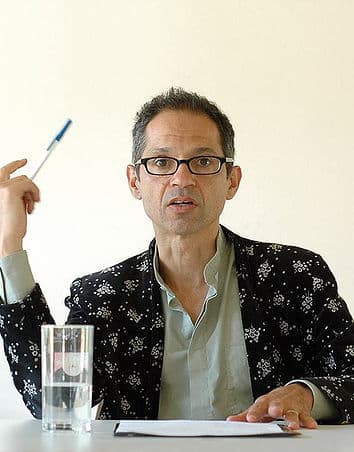
Caveh Zahedi, 56, is an American film director and actor of Iranian descent. His obcure, whimsical films have earned him a devoted underground following. He began making films while earning his BA in philosophy at Yale University.
Stay with the full conversation.
Episode field notes
Show notes

Caveh Zahedi, 56, is an American film director and actor of Iranian descent. His obcure, whimsical films have earned him a devoted underground following. He began making films while earning his BA in philosophy at Yale University. After graduating, he traveled to Switzerland to try to meet and work with famous French-Swiss director, screenwriter and film critic, Jean-Luc Godard, whose career began in 1960. Godard refused to work with him after Zahedi called the film icon at 3 a.m. offering his filmmaking services. After a number of other failed film projects — on subjects like French poets Arthur Rimbaud and Stéphane Mallarmé, and photography pioneer Edward Muybridge — and moving between France and the US a number of times, Zahedi finally settled in Los Angeles and was accepted into UCLA’s film school, where he earned an MFA in film and TV production. Zahedi is currently the assistant professor of screen studies at the Eugene Lange College of Liberal Arts in New York City, at The New School annex. He’s also a frequent guest lecturer at the School of Visual Arts, MFA Social Documentary Film.
Art Imitates Life
Zahedi has at least 30 films and shorts to his credit, according to the IMDb. His most notable films include:
• A Little Stiff (1991): A film he co-directed with cinematographer/ director Greg Watkins, in which Zahedi re-enacted his unrequited love for a UCLA art student, using the real-life participants. The film received mild critical acclaim, premiering at the Sundance Film Festival, where it was nominated for the Grand Jury Prize. It aired on both German TV and the Sundance Channel.
• I Don’t Hate Las Vegas Anymore (1995): An attempt to prove the existence of God by way of a road trip to Las Vegas with his Iranian-born father and teenage half-brother. Zahedi surmised that if God existed, he would provide the events needed to make the film interesting. When that didn’t work, he persuaded his father and half-brother to take Ecstasy with him on film instead. It won the Critics’ Award at the Rotterdam International Film Festival and developed a small cult following. However, most critics were less than impressed.
• I Was Possessed By God (1998): Dateless on Valentine’s Day, Zahedi decided to eat 5 grams of hallucinogenic mushrooms. He claims to have had a “divine possession” experience, in which a divine being possessed his body and spoke through him.
Life Imitates Art
Entering the 21st Century, Zahedi’s work continued to deliver his candid — if not sometimes gasp-inducing — snapshots in the life of a creative.
• In The Bathtub Of The World (2001): Zahedi began a 1-year video diary, filming one minute each day for the entire year and then editing it down to 90 minutes. What made the cut are scenes of fights with his girlfriend, taking mushrooms on his birthday and his attempt to evict a flock of pigeons from his apartment.
In 2003, he received the Dahlonega International Film Festival Lifetime Achievement Award.
• I Am A Sex Addict (2005): An honest confessional 15 years in the making about Zahedi’s addiction to prostitutes, which he reveals by way of re-enactments, documentary footage, and home movies. He tells the story of his addiction, how it began, the effect it had on his life, and how he overcame it.
Though the documentary was rejected by the Sundance Film Festival and Zahedi tried distributing it himself, I Am A Sex Addict finally received the recognition it needed — via the Gotham Independent Film Award in 2005, under the Best Film Not Playing at a Theater Near You category. The film was subsequently picked up by IFC. It also won another Critical Selection award at the Rotterdam International Film Festival, and a jury award nomination at the Tribeca Film Festival. (He made a follow-up, The Unmaking Of I Am A Sex Addict in 2008, available on his new box set. See below.)
In 2005, Zahedi also received a Guggenheim Fellowship, a prestigious grant given to those who have demonstrated exceptional creative ability in the arts. And he was also awarded the Rome Prize in 2008, given to emerging artists in all fields of the arts.
• The Sheik & I (2012): In 2011 Zahedi was commissioned by the Middle Eastern Sharjah Biennial to make a film on the theme of “art as a subversive act”. He was given free-reign on his film, with one caveat: that he not make fun of the ruler of the country and the financier of the Biennial, the Sheik himself. So what did he do? He defied the request. His irreverent sense of humor didn’t amuse the powers that be in Iran. The film was banned in Iran for blasphemy and he was threatened with arrest and a fatwa.
The Sheik & I was, however, widely received in other venues and caused a buzz. The film was nominated for the SXSW Grand Jury Award for documentary feature at the 2012 SXSW Film Festival.
• The Show About The Show (2015 to present): The Show About The Show is a show about making a show and currently airs on BRIC TV. It is a “self-reflexive TV show about its own making (which was its original title), according to Peter Rinaldi of http://filmmakermagazine.com/98212-act-naturally-2/#.WFs975KYXW4″>Filmmaker Magazine. All episodes can be viewed on BRIC TV’s Youtube channel. More on The Show About The Show Visit thetalkhouse.com.
• Bob Dylan Hates Me (2016): This 6-minute animated short documentary recalls the story of when Zahedi met his childhood idol. It received a 2016 Sundance Film Festival Short Film Grand Jury Prize nomination. It is a film version taken from one of his hilarious Awkward Celebrity Encounters podcasts.
With a brilliant mind that meanders through the rabbit hole and turns it inside out, it’s anyone’s guess where Zahedi’s will pop up next — and in what condition.
In this episode we dive into the inverse universe filmmaker Caveh Zahedi.
You won’t want to miss this!

Own your own copy of Digging My Own Grave: The Films Of Caveh Zahedi, the most comprehensive collection of his works, including 36 films, writings by him and his collaborators, 7” vinyl record with songs by Will Oldham and Don Lennon.
~The 411~:
Contact, but not at 3 a.m., or …?
Vimeo, featuring the Getting Stoned With … interviews, as well as other short films.
An article of interest.
Dazed & Confused Magazine.
Digging My Own Grave box set page.
We rely on listener support!! – If you value even one of our shows, help us sustain and scale the show up. Please Donate.
Email us and win a free prize.
Read the conversation
Transcript
welcome to the human experience podcast the only podcast designed to give your left and right brain hemispheres and speed it the most entertaining and mentally engaging topics on the planet as we approach our theme please make sure your frontal temporal and occipital lobes are in their full conforming position as you take your seat of consciousness relax your senses and allow us to take you on a church we are the intimate
strangers thank you for listening [Music] so folks Xavier Catania with the human experience and what a amazing profound deep episode such a real honest conversation with cavae and it’s probably one of the most real conversations we’ve had on the show honestly and I just thoroughly enjoyed my time with him and I think you guys really enjoy his material his movies he talked about all the aspects of the human condition and what it feels like to fail and fail
constantly and cavae has the sense of freely being honest about that and I think you guys will really enjoy that so I highly recommend copies work there is something new that we’re doing with these episodes we are starting the members only section content section of the site so a part of this interview is only going to be available for members so we will link you to the member side where you guys can sign up to get access
to the rest of this interview and that’s where we get into the real deep deep hitting content otherwise guys find us on Facebook YouTube Twitter all at the human XP thank you guys so much for listening [Music] the human experience is in session that my guest today is mr. calving it’s a heady and we are discussing existential ism and life and his work have a welcome to the human experience thank you I have admired your work ever since you had the
cameo on waking life always the scene of the holy moment mm-hmm and I think that’s where I kind of found your work and I saw that it was like a who who is this guy and I started looking I went through all the work that you had done I saw in the bathtub of the world where you recorded each day of your life and I found that fascinating so you know how did you get into this process I mean where did this begin for you um well I
used to be kind of when I was young like in a 17 or whatever I was torn between like art and politics and it seemed like you know part of me wanted to like you know change the world and make it better and part of me just wanted to like express myself and I think I was kind of torn and I wouldn’t you know felt like I to go to politics I had to go to art and I couldn’t really figure out a way to integrate those two desires and one day
I think I was a freshman in college I just thought oh film actually is a way that you can do both art and politics at the same time and that was a very liberating realization and I just started making films yeah and there is a lot of that in your fill in your work there is a sort of challenging of the status quo and I mean you were challenging it early I mean with your with your first movies I was obsessed by God to talk about the existence of God
and I mean let’s get into that I mean where where does this come from where does passion about finding out these sort of answers these big questions where does or is that originated from I mean mostly comes from you know genetic experiences I mean I think rugs were a huge you know transformative influence on my life and all of my god stuff comes from that I was an atheist before I tried you know LSD and stuff um so you know my work is very I think
psychedelic inflected although not always completely overtly although usually every film has like a drug scene in it but I think the the autobiographical stuff started the relative analogy trip and it was um I was writing a script of the film school about vivisection which I was against and I was having a hard time writing it and I was trying to sort of make like a Hollywood movie against intersection and I took some LSD just because I got into
Terence Mckenna recently and I would sort of sort of exploring that realm and I had the division uh and there was like a vision of the Buddha and I’m not a Buddhist at all so I came out of nowhere and he had his hand open and in attending was a flower and that’s all I would but with that image was a was a was an insight which was that anybody was saying to me you know true this symbol was that beauty is everywhere it’s right in front of your face and the
flower was like beauty that’s right in front of your eyes you’ll see and the kind of the classical Hollywood model that we were being taught how to do with you know taking the stakes really high and a certain amount of conflict and drama and I kind of just realized you know the thing that’s missing is that we don’t see what’s in front of us and this is the experience and the lesson of drugs as well it’s like you know we just
don’t see what’s right in front of it then what your pelvis is astonishingly beautiful and astonishingly moving and yet we’re not we’re not always astonishingly move or astonishingly stunned by how beautiful you know I’m sitting in a basement and you know it’s by anyone else’s description quite ugly and but if I was on drugs it would it would be like the most beautiful thing I’d ever seen in my life and it is I just can’t see it so it just became like
I think that the trick is to learn to see the world as it really it yeah and so I started making cells about my life just like really ordinary thing not dramatic things and I sort of moved away from fiction and just towards like how can I see what is right in front of me and how can I represent it or show it in a way that people see the beauty of it and also the depth of it and I think also because some thing about honesty
like I’m not religious or I have no like agenda or platform and I don’t know why anything is but I do believe that if you’re honest about what you’re feeling and who you are what’s really going on with you that is the path towards towards something better like that’s that’s God’s path the world is just the truth so everything just tries to be honest and to see what is right there that is sort of unseen yeah that’s such a beautiful way to put
it um you know I think there was in in the bathtub of the world I think you were video blogging before it was even you know a thing and there was a scene that I remember that stuck with me where you took I think it was four grams of dried mushrooms and from what I remember was a long time ago when I saw it but you’re you’re kind of on the floor and you’re just like we are one we are one not two we are one because it made the
movie or made it made the film it I just you know there’s there was such a strong relationship between your self-discovery and your your willingness to put yourself in front of a camera every day and record it that I found I mean it was just a very vulnerable place and I don’t think I could even do that actually yeah thank you you know it’s vulnerable but like if I don’t do that I feel dead so it’s like vulnerable or dead it’s too often yeah
but you you started I mean you graduated with a philosophy degree from Yale and then you went to Switzerland in an attempt to work with jean-luc Godard and Godard and I mean what what happened there well I mean what was what led you to that well you know when I started making films I had a very simplistic notion of politics you know and I made like a very like a preachy social issue kind of films I made a film about you know
apartheid and how bad it was and you know just like the usual tropes and and I really just do really understand film except in the way that I’d seen them and sort of was very derivative what I was doing so when I was in college I took a class called film and politics and it was mostly about guitars contribution to cinema and which was you know for me that there was this fundamental insight that he had which I think was really
important which was that the formal properties of a film are not only as important as the film’s content but they actually did an ideology that’s implicit in the form and that unless we can change the formal property of cinema that has its ideology implicit in them we’re not going to change the ideology of our culture which is obviously a big problem the problem with our costumes bedi ology is in backwards you know it’s
wrongheaded so it just became a search for form and for like what is the right form to speak not only the truth about the present which is constantly in flux and changing it needs to constantly evolve and change but also what is the implicit ecological assumption in the current form and so my work really came out of that search for a different form that would somehow be able to to look at to deconstruct you know the the
implications of the ideology that we’re all sort of stuck it and so that’s the other kind of part of it I understand the political aspect of it and your desire to kind of reach this sort of activism part of yourself but was there also a sort of idea that you might get famous through what you were doing and that your work would become so big that you know everyone would know about it you did you sort of have that playful
fantasy yeah I still do I would love that and you know aside from the ego aspect of it which is obviously you know always there there’s also just like in film especially like if you don’t reach us or a number of people you can’t make enough money to continue it’s like kind of goes with the art form itself and also you know I made a bunch of films and I would spend years on them and you know I have a screening and like
you know five people with common most of them would be homeless you know and it was just like you know what am i doing you know like if your films aren’t being seen you know you’re not having much of an effect on the world so there is a there’s both a desire you know an ego desire for fame and glory which I have as much as the next guy but also a political desire for for making a difference and those two desire is you
know cohabit uncomfortably sometimes but they’re both there always yeah completely agree with that I definitely think that those two things might clash in some ways and prevent you from sort of being famous because if you were making a movie about you know just the mainstream and something accessible to just I mean people people are kind of designed to accept you know reality television and the Kardashians and if you if you kind of lowbrow it that way
it you know that’s an easy way to kind of you know just just operate all right yeah I mean I suppose anybody can really lowbrow it successfully unless they already you know lowbrow like I think there’s some kind of have to be who you are even if you’re trying not to be you still comes through so I think you know there are people who are just more in sync with the zeitgeist or with the culture at large that others a certain
vote you know more in the vanguard or more in some other just marginal place so I’m always trying to make my films more accessible you know but I can’t I can’t quite pull it off because you know I’m just I cannot be me on some level and it’s just not satisfying to make something that isn’t me and you know the hope is that you know you’ll still hit a zeitgeist vibrational frequency that works and you know you do the best you
can and you don’t know what the culture is going to do but you just sort of try to find a balance between who you are and what the culture requires so I think you have a 15 director credit and I mean that’s that’s quite a few directions that you’ve you know had an involvement in and and I mean where those scripts you wrote as well well I have written scripts and some of the films are scripted a lot of them are you know are
more like a bit nonfiction or they’re improvised you know like a script writing is not the main thing I do go on well you know each film is different like the TV show I’m doing right now and if you’ve seen it called the show about the show and the way I do that is I just tell a story about what’s been happening since the last episode and then I you can do a few different takes of the story and then I said edit together the best bits and then i
reenact things that i’m talking about when it seems appropriate to dramatize something and then I use documentary footage if I have documentary footage of the things I’m talking about and it’s just kind of the hodgepodge of different formal strategies but it’s basically you know storytelling but without any kind of pre-existing script it’s just like you know whatever comes out of my mouth in the present moment is is usually the
best way to say it and and then I sort of do some you know adjusting afterwards and sometimes all right could you not write new lines yeah right new lines I got say oh I should have said it this way that would be a more you know compelling or more communicative so it’s a very you know organic process yeah yeah indeed you know is do you see one of your films as more I kind of want us to be successful but I mean that that’s I feel like
that’s such a bloated word do you connect with one of your films more than the others I don’t I mean the most successful one in terms of just money and viewers was probably I am a sex addict and I usually like the most recent thing I’ve done the most just because it’s fresh to me and it sort of you know it just speaks to Who I am right now but I love them all I’m going to really I really do yeah and you know it really seems like
when you’re doing your movies it really seems as if you’re exposing your entire life and doesn’t that make you feel very naked in front of the camera and I mean to kind of show every aspect of yourself to the world it must be very very vulnerable thing to do uh it is and some things more than others um you know I’m a sex addict was about my addiction to prostitutes and that was a very you know shameful a feeling for me I had a lot of
shame around it so that was you know very uncomfortable but doesn’t something incredibly liberating about about being vulnerable or naked and cents and being seen and you know I think like like everyone I want to be I want to be loved and you know you can’t be loved unless you’re known and it doesn’t really count for me if it’s like a false perception of you that is loved so there’s also something incredibly gratifying about
about just being vulnerable and and putting it out there and having the people who do appreciate it I love that appreciate I love that yeah and and you you’ve been making films servers for so long and I feel like when when we kind of when we fall on our face and make mistakes I think that’s when we learn the most it is there any one point one mistake or one thing or a few things that that you learned the most from well
I think um all of my films I mean I used to have a film project that I started that never finished that was called a portrait and coffees a heading as a complete failure and the idea for that film with you know my main experience of filmmaking is a failure you know like the film didn’t do as well as I had hoped or you know people they liked as much I thought they would or you know and and you know I liked all the films
but you know they always feel like a failure it’s a level and I think this would be very spiritualizing about failure much more so than about success I think and so I think all of my films sort of have this isn’t certain kind of like a hidden theme you know like that failure is good and that failure is real and that this is kind of the thing it’s kind of like the shadow side of us is sort of you know the part that needs expression most
and so can’t affirm you know my sex addiction or my my character defects or my failures all of that seems like empowering for me and also hopefully for others and so I think the whole trajectory of my filmmaking has been one incredible lesson of failure and humiliation and the humility that comes from humiliation in a good sense wow I I it’s such a reverse way to kind of perceive and and can’t imagine like operating in that way I just in my own
experience I mean I’m not I’ve I’ve always been kind of a film nerd and I love movies and just diving into film and I’ve always had this sort of secret desire to write a screenplay one day but just just with this podcast I mean if it was continuously failing I’m not not sure what I would do with that so I mean but you see you’ve stuck with this and you know where do you see people having the most problems with filmmaking and
with what they’re doing with their work I mean I think the big problem of the world of humankind is ego you know like we’re all you know in our egos and it’s very hard to to you can’t can’t kill your ego your ego is going to be with you your whole life I mean it’s part of life so I think the ego part is often the part that motivates us you know to get up in the morning and try to make a film and to work hard at it and it’s
also the part that you know gets get the most bruised when the world doesn’t embrace it the way you would hoped so I think the hardest part of it is with the constant rejection I mean you know you can’t put yourself out there publicly and not experience rejection you know it’s like you can’t you can’t love and not experience the possibility of loss you know like those things go together so you have to really you know it sound
like I’m very telling I I has a lot of self-esteem where I can just say I could take it like it hurt you know but it’s it’s so grateful I don’t know it’s like um no it’s a real real gift I mean there’s this thing uh in Hinduism I don’t know much about Hinduism but I’ve heard it does something called the left hand of God where you sort of like the fastest way to God is your skin you know like just do all the bad thing you know
that you want to do and you get this much faster you know and it’s kind of like that I think I think failure is the fastest way to like overcome ego and yeah and you know it’s slow and it’s kind of kind of a twisted way of doing it but I think you know I’m able to let go increasingly not because I’m trying to be spiritual because I’m really not but because I just just just you know you can’t keep getting hit against the
wall and not eventually like turn around and go in a different direction you know you said something along the lines of artists tend to grow in self-importance until they’re no longer a humble servant of creation what does that mean you went on to say that this means that they lose their connection to the source of creation and that all art is channeled and I mean going back to the ego and your struggle with that in filmmaking do
you ever feel like you’re you are losing your connection to the source of creation I mean I I lose it every day I mean every day is every moment is like it oh whoops I just lost it again you know you know settings like meditation you know you’re trying to focus and you keep distracted you know it’s the same thing your ego is constantly like tripping you up and yet that process of being tripped up constantly is also the way you know and
it’s also the way you get to a meta place where you can just sort of see it all and have a different perspective on it and it just happens that’s incredibly wise I mean I find what you’re saying incredibly in tune with you know what people should be saying so I mean when we were when we were setting up this interview you were talking about you know film school a bit but are you are you still studying how to be a better filmmaker or are you in a
teaching role now or I mean what are you doing nowadays I mean I do teach so I teach filmmaking but I’m also obviously studying how to do it I mean I I don’t feel like I know how to do it or anything I mean I I feel you know I feel like a fraud at the filmmaker I mean like you know there’s a billion things I can’t do like I can’t even you know I can’t even like operate a camera properly you know like what is this button do I have no idea I’m going to
panic you know and you know I get by just by hook or by crook and by cheating and by begging and you know just you know by avoiding I have a sense of what I don’t like you know I’m a big fan of the poet Wallace Stevens and he has this expression of this idea that you know poetry is a phone call of modern poetry at the finding of a satisfaction and I think that’s what I’m always looking for I’m looking for some kind of deep
satisfaction and I know it when I feel it that’s all I’ve got all I’ve got is that I know when I feel that is right and I’m like ah yes that that that is good that that I’m excited by that I can get behind that and most the time it’s like no I don’t think that good I can’t get behind that and when I find that I find it and then that’s what I put out there and and I hope other people you know find it satisfying too but I think
there’s no there’s nothing else just encompass of satisfaction and then there’s also this kind of other compass which is kind of like a a dowsing rod I was like where are the fault line you know where is where the compliment where is the discomfort whereas the embarrassing bits and I’m like oh there’s something I’m seeing some some tension here something unconscious and unresolved and this is where I need to go either myself when someone else you
know like why are you getting uptight right now like what is this about and that’s interesting you know that’s where that’s where the growth is that could be edge of the envelope yeah we’re talking a lot about your work but how has this affected your connection to other people in relationships and love relationships and friendships and working relationships how I mean how does that how does it how does it relate to those those things
well I don’t feel like I’m very good at friendships or the social realm I mean I’ve never been great at the social realm in general you know fairly well adjusted to guests and socially a a fearful ringing I’m just afraid of people and usually uncomfortable but I’m such a such a workaholic you know I’m so obsessed with filmmaking that I don’t really put the amount of energy into friendships that I think would be healthier and really my films are kind
of like my my you know my debutante outing you know it’s like this is how I sort of engage with the world and I don’t have a lot of other engagements besides it and the people I work with on the films are really my my community and the main way interact with people you know I also are married and have two little children so between the filmmaking and the parenting you know there wasn’t a lot of time for that but I told thee until they for that I think
it’s wonderful and important I think on your deathbed we think about is your relationships not you know your movies that you made right so I think it’s a failing of mine it’s not something I’m quoting I haven’t quite mastered that part of it yeah yeah I mean I think I think for all of us I don’t think anyone has truly mastered you know the art of relationships I mean I think I think some people are better at it than others
and or some people pretend to be better at it than others but I think we all kind of I mean speaking for myself I definitely struggle with that as well but you at some point you did eventually choose to get married and you did choose to have kids which from the viewpoint of I am a sex addict in 2006 and I mean that was a nap 11 years ago and there’s a lot of change and growth and change happening there but I what led you to move to this new
progression of your life where you felt like you could commit to one person that accepted you and and saw you for who you were and you wanted to kind of procreate with I mean two things one was you know again the left hand of God by indulge in the sex addiction you know I hit bottom and I was like okay this is not working this is not making me happy this is not where it is and I had to really go there to really understand that the Mirage was
a mirage so you know the whole sex addiction thing you know I was I got that a while ago in terms of like getting married having kids you know I kind of had this thing like oh cinema like my religion and I’m sort of married to the art of cinema and there’s no room for anything else in there and on the purist and I’m a priest or whatever he had some kind of image of self that was was like that and I actually was in a DMT group like would meet once a month
tonight we started experimenting with sort of combinations of drugs and at one point some would say you should try LSD and ecstasy together it’s really interesting I was like I never would have thought of that okay and I think that’s very kind of an intense trip that was also kind of a very difficult trip and I started kind of questioning my my life and myself you know like I think a really hard question to ask oneself that
I think is really an important question as oneself is like am I wrong about everything you know like it’s or something just wrong with me like is all my all my assumptions kind of based on some fantasy and like planteth got to that place and I was like well I’m not happy something’s not working you know what is it and it is it me and what am I doing wrong and I really asked it because I honestly to myself you know cause usually I’m busy sort of
justifying my decisions to myself um and I realized you know the art thing isn’t doing it for me anymore like I can’t you know it’s harder to get out of bed and keep doing it like is something missing and I realized I really need some kind of grounding in in the humanity like in the world and in the end the ancestors and in the future like I needed something to I’m a to this earth and that I was going to die if I didn’t
probably from illness but that you know my will to live what sort of diminishing I could feel my will to live shrinking you know shriveling up and I realized I needed something else and I and I thought you know I think I need I need to need a family I need a wife and children and and then I said it was you know in that mindset and I met Mandy and then you know we had kids but it came out of this feeling this drug inside
there was something wrong with my life and it wasn’t sustainable anymore yeah I mean it’s so powerfully human because you have such a strong and this is what I admire about your work and and you and just knowing you now to this conversation which is I feel like a pretty deep conversation you’re such an honest person and I think that you use that as your advantage and whereas most people don’t you know they will kind of
placate things and they will tell you what what they think you want to hear and and it’s almost as if the detectors for you know all of us have changed like we can tell now when when someone is is bullshitting us and it just doesn’t fly anymore doesn’t work anymore and so when you when you encounter someone who is being honest and in a raw sense of truth it’s refreshing I mean I mean what is your what are your thoughts
on life after death or I mean have you had any experiences that have have shown you the non-physical world I mean there has to do you believe that there’s a sense of more than just here yeah I mean I totally have many times usually you know through drugs but it seems clear to me that this is not the end and that this is a very partial view of reality and a very partial sliver of it and there seems clear it seems clear to me
that there’s a God that we are God that God is moving through us and that there’s something you know that we are we are the leaves of a tree and the tree is immortal and our bodies are not obviously and you know we fall from the tree and I don’t know what happens in terms of our consciousness like if if the personality continues after death or not or if it just the energy of the self of the conscious that behind us just
continues in another form I don’t know but I know that there’s something beyond me that will continue to endure beyond me and that’s obvious to me so then if you have the choice I mean would you reincarnate here would you do it again would you like experience this earth plane again I mean I think I mean I don’t know I don’t know anything and it’s kind of all I got and that’s you know that’s like that’s a good sum total of my of my knowledge but
you know I’m in the kind of A Course in Miracles I really like resonate with that book and you know when I doubt I sort of kind of trust the course of saying and so I think that we’re we’re not here to reincarnate I mean we do in contact possibly I don’t know but I think we’re here to like become one with God which i think is not about reincarnating but just being the bee you know the eternal spirit that we already are and just realizing it or waking up
to it you know so I’m not thinking in terms of like coming back I’m just in terms of like moving forward to the next level of evolution whatever that is I mean I think you said it I think we we know we are God and there is something else higher or something else I I’m not sure how much I believe in this sort of old man figure and I feel I feel as if religion has you know divided and conquered us and so I’m not huge on
organized systems of being a belief in paradigms and ways of thinking but you know there there is a distinct sense of connection when I’m in an ayahuasca journey and there is absolutely no question in my mind that we we are just these very small expects of light and there’s this massive framework that is beyond our conception beyond our ability to understand and conceive and we are just here kind of living through you
know life and living through our everyday and some people access that some people get to access that and other people have absolutely no idea about it and you know some people when you mentioned the when you say the word drug and the propaganda runs so deep that people turn off and they just stop listening and it’s it’s quite sad that they will never get a chance to experience you know firsthand what it feels like to be in the midst of and LSD
journey or an MDMA experience or an ayahuasca just I mean it it’s it’s an interesting state of affairs here in the world and I just appreciate your ability to be so open with your connection with the drug use and film on to my next question here with with the the larger scope of Hollywood and your connection to you know just actors directors and how do you feel about that how do you feel about the industry I’m a very mixed
feelings you know you know I love the art form and I and I really and I love a lot of Hollywood movies and I think a lot of them are brilliant and wonderful and I’m not against you know Hollywood or anything I you know there are things in it that you know don’t interest me or that I find dollar you know they don’t make me feel lives but there’s so much good stuff and I’m always trying to sort of move towards it I’m you know I’m
trying to trying to film for five years with you know actors name actors attached and I’ve got some matrix attached and some money but not enough money and and you know it’s a very very bibbling thing I mean I think recently I’ve been feeling like you know I really been trying to like become the person that could get into that Club and I’ve never quite gotten into the club you know I feel and I’ve tried really hard and and I think maybe I just will never
get in that Club and maybe I don’t really belong to that Club and maybe they may understand that you know they’re like you know you know we don’t buy it you don’t think we don’t think you fit in here you would not be a good member of our club and and you know they might be right you know I’m still trying to sort of figure out way to like tame I build and feed my family and also make work that I find you know true and alive and vital and
you kind of can’t avoid Hollywood’s completely if you’re doing that I think um there’s some interaction that has to happen but you know I’m just trying to find my way and I I trip up a lot you know and I think part of my way how to do with tripping so it’s it’s all good is just a fraught very fraud and and and I haven’t given up but on some level I give up you know it’s like I guess you have to do both at the same time
very interesting so coffee we’re doing something a little bit new now with the show with 2017 I want you to just give us for the listening audience now we’re going to move into the bonus content for members only here so I just want you to while we’re still in the public realm here can you give us your your website and where people can find you please sure my website is just my first and last name comma VA is a heady calm and
the CA veh veh EDI it’s a hard thing to style okay we’ll definitely make that available for anyone listening guys if you want to hear the rest of this episode which we’re about to conduct you can get into the member side and that will lead you there guys you’ve been listening to the human experience my guest has been cavae hee hee kava is a headache I’ve been mispronouncing his name this whole time but you can find him at the link that we will provide
below I highly suggest that you check out his his work his movies very very phenomenal stuff cavae once again thank you so much for being here guys you will hear from us next week thank you so much for listening you you
Ideas worth returning to
Quotes
Five substantial excerpts from the published transcript, lightly edited for clarity without changing their meaning.
“I have no religious platform and do not claim to know why anything exists, but I believe honesty about what you feel, who you are, and what is actually happening within you is a path toward something better. Truth has its own beauty and depth when the work stops trying to protect an image.”
From the conversation“A form that responds honestly to the present must keep changing because the present is always in flux. I also ask what ecological and ideological assumptions are hidden inside a form. My work grew from searching for a different kind of filmmaking that could expose and deconstruct the worldview we normally inhabit without noticing.”
From the conversation“Showing intimate parts of life on camera is vulnerable, and some revelations carry more shame than others. Making a film about my addiction to prostitutes was deeply uncomfortable because I had hidden so much shame around it. Yet speaking honestly about what had been concealed also created an extraordinary sense of liberation.”
From the conversation“Ego often supplies the motivation to get up, work hard, and make a film. It is also the part most bruised when the world does not embrace the result. Public work inevitably brings rejection, just as loving someone brings the possibility of loss. Creativity requires accepting that vulnerability rather than waiting to become immune to it.”
From the conversation“Recovery and commitment did not arrive as a clean rejection of my former life. Indulging the addiction eventually brought me to a bottom I could no longer ignore. Change emerged through consequences, growth, and meeting a person who could see and accept me while I learned to choose a different way of relating.”
From the conversation
About the guest
Caveh Zahedi
Caveh Zahedi, 56, is an American film director and actor of Iranian descent. His obcure, whimsical films have earned him a devoted underground following. He began making films while earning his BA in philosophy at Yale University. After graduating, he traveled to Switzerland to try to meet and work with famous French-Swiss director, screenwriter and film critic, Jean-Luc Godard, whose career began in 1960. Godard refused to work with him after Zahedi called the film icon at 3 a.m. offering his filmmaking services. After a number of other failed film projects — on subjects like French poets Arthur Rimbaud and Stéphane Mallarmé, and photography pioneer Edward Muybridge — and moving between France and the US a number of times, Zahedi finally settled in Los Angeles and was accepted into UCLA’s film school, where he earned an MFA in film and TV production. Zahedi is currently the assistant professor of screen studies at the Eugene Lange College of Liberal Arts in New York City, at The New School annex. He’s also a frequent guest lecturer at the School of Visual Arts, MFA Social Documentary Film.
Episode 100 – Brian Brushwood on the Art of Deception, his career in Magic, and Scam School
July 25, 2017 · 33:10

Episode 196: Waqas Ahmed — Polymathy, AI & the Future of Human Creativity
September 28, 2026 · 1:04:41
EPISODE 199: Dr. David Nichols — Psychedelics, Consciousness & the Chemistry of the Mind
October 20, 2026 · 1:12:11
Episode 194 Dr. James Fadiman – You Are Not One Self: Microdosing, Multiplicity and the Mind
September 4, 2026 · 1:14:38

Independent conversations
Help make the next one possible.
Membership sustains ambitious, unhurried interviews and keeps the complete archive open to curious listeners everywhere.
Become a member