

The Human Experience · Episode
Episode 69 – Robert Waggoner – Lucid Dreaming: Gateway to the Inner Self
A conversation with Robert Waggoner
Robert Waggoner, Author, speaker and Lucid Dreamer, is past President of the International Association for the Study of Dreams (IASD). For the past ten years, he has been the co-editor of the online magazine, The Lucid Dreaming Experience, the only ongoing publication devoted specifically to lucid dreaming.
Stay with the full conversation.
Episode field notes
Show notes
Robert Waggoner, Author, speaker and Lucid Dreamer, is past President of the International Association for the Study of Dreams (IASD). For the past ten years, he has been the co-editor of the online magazine, The Lucid Dreaming Experience, the only ongoing publication devoted specifically to lucid dreaming. A lucid dreamer since 1975, he has logged more than 1,000 lucid dreams.
Robert frequently speaks on lucid dreaming at national and international dream conferences, workshops and college classrooms, like Sonoma State University, Iowa State University, University of Washington, University of Michigan-Ann Arbor and Evergreen State College.
Robert has been interviewed by CNN, CBS News and ABC News (KABC – Los Angeles) about the practice of lucid dreaming. His comments have appeared in media as diverse as DETAILS ,The Huffington Post, Pittsburgh Post Gazette, Popular Science and Brides magazine. During 2009-2010, he had a regular Iowa Public Radio show,discussing dreams and lucid dreams, and spoke with Utne Reader in 2015.
About Lucid Dreaming: Gateway to the inner-self:
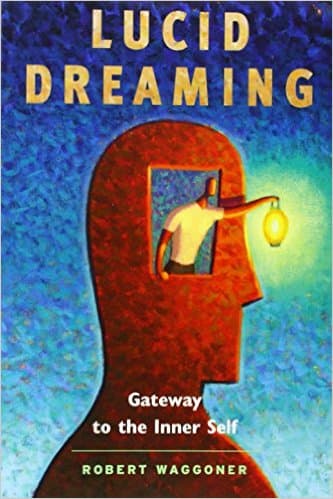
Lucid Dreaming: Gateway to the Inner Self is the account of an extraordinarily talented lucid dreamer who goes beyond the boundaries of both psychology and religion. In the process, he stumbles upon the Inner Self. While lucid (consciously aware) in the dream state and able to act and interact with dream figures, objects, and settings, dream expert Robert Waggoner experienced something transformative and unexpected. He was able to interact consciously with the dream observer — the apparent Inner Self — within the dream. At first this seemed shocking, even impossible, since psychology normally alludes to such theoretical inner aspects as the Subliminal Self, the Center, the Internal Self-Helper in vague and theoretical ways.
Waggoner came to realize, however, that aware interaction with the Inner Self was not only possible, but actual and highly inspiring. He concluded that while aware in the dream state, one has both a psychological tool and a platform from which to understand dreaming and the larger picture of man’s psyche as well. Waggoner proposes 5 stages of lucid dreaming and guides readers through them, offering advice for those who have never experienced the lucid dream state and suggestions for how experienced lucid dreamers can advance to a new level. Lucid Dreaming offers exciting insights and vivid illustrations that will intrigue not only avid dreamworkers but anyone who is interested in consciousness, identity, and the definition of reality.
In this episode we spoke to Robert about the Lucid Dream state – some of its religious and cultural implications, we lead you through the journey of what is involved with becoming lucid within a dream. We get into Robert’s personal journey and how he became one of the foremost lucid-dreamers in the world.
This conversation will inform, entertain and enthrall you.

click to purchase
Editorial Reviews on “Lucid Dreaming”:
In this remarkable book, Robert Waggoner has brought lucid dreaming to a level that is simultaneously higher and deeper than any previous explorer has taken the topic. Both autobiographical and historical, theoretical and practical, psychodynamic and transpersonal, as well as adventurous and cautionary, Lucid Dreaming offers its readers instructions and insights that they will find nowhere else in the literature. They will learn how they can become awake and aware while asleep, and how this talent can change their lives. —Stanley Krippner, Ph.D., Professor of Psychology, Saybrook Graduate School and Research Center, San Francisco, Coauthor of Extraordinary Dreams and How To Work With Them
Lucid Dreaming IS a gateway to the Inner Self. Robert Waggoner s unique storytelling style is compelling reading an impressive exploration of the subject. The work is scholarly, fascinating, and, most of all, practical. —Christine Lemley, Executive Producer, DREAMTIME Series, WFYI/PBS-TV Indianapolis
Robert Waggoner admirably fulfills his aim of bringing lucidity to lucid dreaming. His book is distinguished by its wealth of first-hand experience, and his clear recognition that, instead of seeking to control and manipulate our dreams, we should use the gift of lucidity to navigate a deeper reality and grow into connection with a deeper and wiser self. He offers practical techniques and fascinating travelers tales to encourage us to experiment with interactive and precognitive dreaming and to explore the process of reality creation inside the dream matrix. This is an invitation to high adventure. —Robert Moss, Author of Conscious Dreaming and The Three ONLY Things: Tapping the Power of Dreams, Coincidence, and Imagination
Find Robert and his work Visit lucidadvice.com.
We rely on listener support to keep this show AD FREE – If you value even one of our shows, help us sustain and scale the show up; Become a member for 5$/mo (a cup of coffee) or Donate.
Read the complete recording
Transcript
Existing transcript, with its original wording and timestamps. Automated transcripts may contain errors.
Find the moment
Search this conversation
Search 1302 passages and 9,262 spoken words.
welcome to the human experience podcast
the only podcast designed to fuse your
left and right brain hemispheres and
feed it the most entertaining and
mentally engaging topics on the planet
as we approach our Center please make
sure your frontal temporal and occipital
lobes are in their full upright position
as you take your seats consciousness
relax your senses and allow us to take
you on a turn we are the intimate
strangers thank you for listening what's
up folks
my name is Xavier katana you are
listening to with the human experience
in this episode we brought on mr. Robert
Wagoner he is considered one of the
worldwide authorities on lucid dreaming
he's appeared on CNN CBS ABC and a wide
range of other media outlets this
episode covers some of the main points
of lucid dream experience but I highly
recommend you pick up a copy of Roberts
book simply titled lucid dreaming
Robert was actually requested by many of
you guys so we brought him on very happy
with the outcome of this episode it's a
very fun light-hearted episode that I
hope you guys truly enjoy guys we do
this for our passion and we because
because we love helping you servers and
bandwidth costs are seriously getting
outrageous I'm covering all of this out
of my own pocket myself so for right now
we rely on your support get to our main
page the human expedient by us lunch
dinner coffee whatever amount you're
comfortable with the littlest amount can
and will help find us on Facebook
Twitter YouTube all at the human XP
without much further ado ladies and
gentlemen this is mr. Robert Wagoner
where we discuss his book lucid dreams
enjoy
the human experience is accessing the
Gateway to the inner self with my guest
mr. Robert Wagoner Robert my good sir
welcome to matrix B hey thanks for
having me Robert you're we're talking
about your book today lucid dreaming
let's let's start at the beginning for
you I mean how did you get to the point
where you decided to write this book
you know I taught myself how to lucid
dream or become consciously aware of
dreaming while in the dream state back
in 1975 when I was a junior or in high
school and so after about 30 years of
lucid dreaming I thought there really
wasn't a good book on the lucid dreaming
experience and some of the incredible
things that a person could do when they
become consciously aware within the
dream and so around 2005 or so I made my
first attempt at writing a book and got
about 50 pages and stopped there but but
then in 2007 I went ahead and and wrote
this first book lucid dreaming gateway
to the inner self and that's been
followed up by a second book lucid
dreaming plain and simple which is all
about the tips and techniques but it was
just out of my desire to kind of share
with people the extraordinary depth of
lucid dreaming okay
so I mean most people I would say most
people don't even remember their dreams
at all right exactly and so and and I
find that there's this sort of period
for me anyway there's this sort of
window where I when I'm regaining
consciousness where dreams kind of
absorb back in and I have that chance
and if I missed that chance I just I
lose all track or memory of what if I
whatever I was dreaming you know that's
that's how many people experience it if
they if they don't make some notes in
the middle of the night or they don't
make some dream notes immediately upon
waking within two or three or four
minutes the memory of the dream is
totally gone and
so to give into lucid dreaming or to
dream recall you just really have to
focus upon waking up what was I just
dreaming and write down some notes and
make that the most important thing that
you do when you wake up every morning
okay so I mean lucid dreaming was coined
by Frederick than Ian that's right that
that's what most people would say
historically there's this gentleman and
the Netherlands he was kind of as a
scientist he also coined the term
psychotherapists
but but Frederick van Eden he was a
scientist but also a little bit of a
mystic and background the turn of the
century at 1900 he began to realize he
was having lucid dreams and he came up
with this term I think when he gave a
presentation to the Society for
psychical research in London you know
like 1913 or something but yeah a lucid
dream is any dream in which you realize
within the dream that you're dreaming
and so often times you'll have that
moment when you say in the dream oh this
is a dream I mean that's the only
explanation for how you can see a cow
flying you know across the sky right or
something like that and so so it's a
it's a wonderful moment because at that
moment everything shifts you realize
that you're surrounded by dream stuff
and dream figures and and the dream
setting and and it just totally changes
the entire dream experience it
fascinates me that that we sleep I mean
that week that all humans need sleeping
most species on the planet sleep at some
point or another I mean I think it was
Terence Mckenna who said something quite
profound that because the the way that
the earth is moving there's there's
always a section of the human population
that is asleep and a section that is
kind of awake I mean just a kind of kind
of side note there but I mean within
within lucid dreaming and and dreaming
itself I mean how did you get to a point
where you were you were so proficient at
this
because it seems like such a hard thing
to do to to realize you're dreaming
first to to even remember your dreams
but then to to actually realize you're
dreaming and then take control of of the
dream yeah you know what just to carry
on with that line of thinking for a
second if you sit down and think that
probably every night we spend about two
two-and-a-half hours in the dream sight
state every one of us two and two and a
half hours in the dream state I mean by
the time you're 11 years old you will
have spent one entire year's worth of
time in dreaming in this state of
dreaming and it's incredible that you
know scientifically we know a little bit
about it but but there's a lot that
hasn't been figured out and and that's
one of the beautiful aspects about lucid
dreaming when you're consciously aware
within the dream state you have the
ability to explore to experiment and to
do all that kind of thing to kind of get
a new understanding of dreaming but but
for me how I became proficient was that
so back in 1975 I was reading this book
by Carlos Castaneda called journey to
excellent and in this book is shamanic
teacher Don Juan she suggests to him
that he finds his hands in the dream
state and become consciously aware and
that was a totally radically new idea
for me and I wondered if that could
actually happen but there wasn't a
technique and so because I knew a little
bit about self suggestion and hypnosis
this is what I did as a young guy each
night before I go to sleep I just look
at my hands while telling myself over
and over in my head tonight my dreams
I'll see my hands and realize I'm
dreaming tonight my dreams I'll see my
hands and realize I'm dreaming and I
would say that for about five minutes
until I became naturally sleepy and and
went to bed and I did this for three
nights and then on the third night I was
walking through my high school hallway
and suddenly just like they were spring
loaded my hands popped right in front of
my face
and I thought oh my hands this is a
dream
and so that was my first consciousness
consciously intended or induced lucid
dream experience and so I continued with
that and because it was so much fun the
it's so powerful and almost transcendent
when you have this kind of peak
experience of realizing within a dream
that you're dreaming and so I seem to
have a kind of a natural facility for it
and I just continued going deeper and
deeper into lucid dreaming but what
really made me the happiest was when in
1980-81 when finally the scientific
evidence for it came out because up
until that time I would tell my friends
about it and they told me oh you can't
become conscious in the unconscious and
dreaming no one can do that I told them
you know it's easy yeah here's here's
how you do it and some of my friends
even did it back then but it wasn't
until 81 the evidence came out
interesting case so so you you became
proficient just by kind of programming
psychologically that you were gonna see
your hands and then through that trigger
you you you realize you were in a dream
and then you started controlling it
right right so it's kind of like Ivan
Pavlov the Russian physiologist he would
ring a bell right every time he
presented food to dogs and after he did
this 10 or 20 times he could ring a bell
and suddenly the dogs would salivate so
in psychology that's what you call a
conditioned response and so basically I
conditioned myself that whenever I saw
my hands the first idea that would come
to my head is this is a dream and so so
for example I might in a dream be
climbing up a ladder and see my hands
and think wait a second oh this is a
dream I remember talking to one person
who had read my book and he said that he
was very successful with this technique
and but one time his hands popped in
front of his face and he didn't get it
and then all of a sudden the hands
started slapping him in the face until
he realized oh that this is a dream and
and so so you realize you know that you
can just use simple self suggestion and
kind of this behavioral conditioning to
to achieve it but but that's how I did
it back in 1975 before the scientific
evidence emerging so I mean we're we're
diving into the psyche here I mean a lot
of this because I I feel like I mean I I
have been meditating and I've been
solidly meditating for the last I don't
know 10 or 15 years and at the beginning
stages of that I think I was I was
purposely attempting to go out of body
and I was I was intrigued by the
out-of-body State I mean how would you
compare lucid dreaming to out-of-body
experiences right right so normally when
I give workshops I tell people that a
lucid dream in an out-of-body is
basically like a house cat and a
mountain lion they share some
similarities but there are two different
animals and so again lucid dream the
definition is realizing within a dream
that you're dreaming so you see
something impossible or something
happens and you can think wait a second
oh this is a dream but to think about
how the body experiences those kind of
reports someone has a car accident and
they're thrown out the windshield and
they're laying and the in the middle of
the highway and suddenly they're seeing
everything from from 20 feet above the
accident site I mean that's an
out-of-body experience that's an
experience that didn't begin with
realizing you're in a dream and so so by
definition you know these are definitely
two different experiences but where it
gets complicated is this around the same
time I taught myself how to lucid dream
I would have these other experiences
which I later came to realize we're out
of bodies but basically what would
happen I'd be lying in bed getting ready
to fall asleep and then I start to hear
this kind of humming buzzing noise and
you know it sounds like a thousand
bumblebees around my head or someone
playing and Digger ado or something like
that and and I'd feel this strange
energy and then I'd realize well wait a
second I'm I'm viewing my bedroom or
what appears to be my bedroom from you
know five or six feet above the bed yeah
how did I do this and so so I started
having these kind of strange experiences
like this and one day I just happen to
ask one of my older brothers had ever
had an experience like that and and he
told me you're having out-of-body
experiences and there's this new book by
Robert Monroe you can read it out and
and and see what this is all about but
you begin to realize that
phenomenologically they're different so
so so that kind of experience you know
there's buzzing there's energy sometimes
you're rolled out sometimes you shoot
out sometimes you see these wispy kind
of silver colored arms of light or
whatever you know your your kind of
astral arms if you want to think of it
that way and you realize that that's a
totally different experience than lucid
dreaming the beautiful thing about lucid
dreaming though is is that it is simply
almost always joyful fun well when you
have out-of-body experiences especially
when it begins to happen if you're a
teenager sometimes because these can be
utterly frightful events there's all
this energy and humming and you don't
know what what's going on I mean no
one's prepared you for it and so so the
sad thing though is now these two
experiences are being intermixed and
there's some people like Stephen Laberge
who say that that out of bodies are
actually probably a variant lucid and
type of lucid dream right but but again
if you get shot out of your windshield
windshield on the highway and you're
laying there and seen everything from 30
feet above you your physical body you
know that that's obviously not realizing
within a dream that you're dreaming so
there are two definitely different
experiences and and there's a lot of
phenomenological differences too yeah it
seems like they're completely different
experiences Robert Monroe hugely
recommend any of his material he was a
big hero of mine so let's I mean let's
talk about some tools that I mean
because we can use this state as a form
of learning right exactly exactly
a wonderful way first to kind of realize
that dreaming itself is not random like
some scientists say it is that actually
in a lucid dream you begin to realize
that there's certain principles and
rules and so just to give your listeners
a kind of a rough idea there would be
some rules that you learn very quickly
and lucid dreaming one rule is don't get
too excited because if you get too
excited normally what happens and I mean
really excited if you get too excited
then normally you pop out of the lucid
dream and so around the world
universally it seems lucid dreamers
report that if they get too excited you
know upon becoming lucid they'll
immediately pop out of the lucid dream
so that's kind of one of the basic rules
another rule was one that Costin ADA
brought up in that book journey to
excellence him onic teacher told him
don't stare at things when you become
consciously aware in a lucid dream and
and I remember the in my very first
intended lucid dream I did that I I
stepped outside of the whole high school
and I was looking at the bricks on the
administration building and I began to
notice the detail and then it was like
the dream started shaking like this
lucid dream started shaking and I
realized oh it's gonna collapse and I
remember that Don Juan told Carlos to
look back at his hands to renew the
power of dreaming if that ever occurred
and and so I did that and managed to
prolong the lucid dream but but that's
just another aspect of it in regular
dreams we have rapid eye movement you
know our eyes are moving all over the
place but in lucid dreams your eyes
should still continue to move a little
bit if you stare fixedly at something
there's something about that that within
four or five seconds will make the lucid
dream want to collapse it's so
interesting I feel like eventually
technology will get to a point where we
will be able to induce this state using
just gear like that we hook up to our
brains I mean I know that
have different tools like like glasses
that you can wear that kind of flash red
light to end and that way it kind of
reminds you that you're dreaming you can
wear those I mean so you mentioned
around the world I mean do you notice
that that people different people have
different proclivities to to lucid
dreaming around the world well they've
done some research surveys of college
students and asked them have you ever
become consciously aware of dreaming
while in the dream state and when they
surveyed students in the US about 72
percent said that yes they'd had that
experience at least once and about 25
percent say they have that experience at
least once a month and and the results
were roughly the same and the
Netherlands and Germany and in Western
Europe in Japan though the response was
42% so only 42 percent of the Japanese
students said that had that experience
and so it makes you wonder if the
interpretation or the way it was
translated didn't get across very
thoughtfully so that students understood
but but altogether when you look at the
total population a little over half the
population is as having had or has had
the lucid dream experience now there are
some people though who lucid dream
virtually every night and and and at
first I began to explore this a little
bit because I co edit a magazine called
the lucid dreaming experience and and I
wanted to find out you know what what's
behind this becoming lucid every night
and and my theory was that these people
had had childhood nightmares and so they
taught themselves how to differentiate
waking from dreaming because if you're
gonna have a childhood nightmare every
night you want to be ready and vigilant
and know when you're in the dream state
so you're prepared for the witches or
the monsters or the zombies or whatever
and and so when I begin to
talk to people who said they had lucid
dreams every night the majority that was
their situation they had childhood
nightmares that were really severe and
to kind of deal with that they taught
themselves how to become lucid Lee aware
because when you realize it's a dream
then you can fly away from the witches
or you can make some accommodation but
then I began to meet people who that
wasn't their case and one woman told me
that she had a neurotic habit and I
asked her what that was and she said she
had a neurotic habit of 20 or 30 times
throughout the day asking herself what
was I just doing what was I just doing
and so if she is folding the clothes in
the laundry room you know what was I
just doing oh yeah I was making tea for
myself and so she would do that in her
dreams she had asked herself what was I
just doing and then she would remember
that she was putting on her pajamas and
then she realized how this must must be
a dream and so so I began to see that
people could develop a lucid mindset so
this is kind of a state of examining
their perceived environment very closely
or have some recurring habit like
examining what you were just doing
something that made you more mindful
about your space and in that way you
could develop a lucid mindset but but to
write around the world basically half
the people report lucid dreaming and
about 25% of the people seem to have
kind of a natural talent to lucid dream
interesting so it seems that a human is
a human and we all basically can't have
the ability to Lucy drink I really think
so and a lot of it like we began talking
about is dreaming has a basic experience
is devalued in society people don't pay
attention to their dreams anymore but
you can think back 2,000 years before
Netflix and before TV and before all
that I mean dreams probably were the
most exciting things that were happening
in people's lives if they were living in
some you know small village along the
I mean you know in your dreams you could
interact with the disease you can fly
you can do all sorts of amazing things
and have all kinds of interesting
experiences so but in this current
culture dreaming is really devalued
people don't talk about it or they just
think about it in kind of
psychologically therapeutic terms and
that and that that's all the more they
think about it I mean I would say that
television probably sucks the ability to
lucid dream out of you all the flashing
images your brain just can't handle it
that's so so I really there's a chapter
in your book called the varieties of
dream figures I find this fascinating
and you say that these can be anywhere
from symbols to different archetypes
I mean how so I mean what what generates
this like is it just the psyche that's
kind of generating this dream figure
that comes to you or how does that work
yeah you know it's interesting so when
you become consciously aware in a dream
I mean we're just kind of as social
beings were kind of socialized to
interact with other figures in the dream
and what's interesting is that
oftentimes lucid dreamers would go up to
a dream figure and they would say hey do
you know this is a dream and and almost
again universally the dream figures
would frown at them or just look upset
and there's been a number of examples of
lucid dreamers going up to a dream
figure saying hey do you know I do you
know that I'm dreaming you and then the
dream figure responding how do you know
I'm not dreaming you Wow
and then the lucid dreamer would say
well look I can fly and then the dream
figure would say well look I can fly too
and they would keep trying to one-up
each other to see who had the most
abilities there in the dream state but
but what it shows you is this dream
figures very sometimes you'll ask a
dream figure a question and you'll get
gobbledygook for an answer or sometimes
it'll just turn away but other times
you'll
interact with dream figures who seem
very aware and conscious and alert and
sometimes they'll give you incredible
explanations like for example I remember
one of my first experiments as a early
lucid dreamer back in the early 80s was
asking a dream figure that happened to
be a friend of mine to explain a dream
symbol to me and so within the lucid
dream I picked up a dream symbol and I
said hey Andrea what does this represent
so I was holding a jewel gym in my hand
and she says hope and consciousness and
I woke up thinking wow a dream figure
analyzed a symbol within a lucid dream
and I did a pretty good job of it but
but what happens then as a lucid dreamer
should go deeper into this you think
we'll wait a second is it just telling
me what I already know or is it just
giving me an acceptable answer you know
something that's subconsciously in the
back of my mind and and so to play
around with that if you want to you can
you can take this much deeper for
example
various people on becoming lucidly aware
often life people become lucidly aware
when they see a deceased relative
because they say wait a second uncle
Uncle John he's been dead for ten years
oh this must be a dream and then they
become lucidly aware and I remember one
time and one of my workshops a woman
reported that her uncle appeared in a
dream she became lucidly aware and then
he came up to her and said if you want
to understand the family secret because
this woman reported there was a family
secret in her family he goes to
understand the family secret you have to
go to the County Courthouse go up to
this particular room on the second floor
and then ask for this specific file and
he gave her the number for the file from
the clerk and and so the woman you know
she's a good lucid dreamer she paid
attention to you know the exact
instructions she woke up and wrote it
down
a few days later she went to the County
Courthouse and she asked for that
specific file in that specific room and
then it came to her this filed that was
of the family battle about the sale of
some land you know ten years before she
was born and and so so when that happens
that that kind of takes it to a
different level because now a dream
figure has given you information outside
of your knowing right and and so so then
that's why I try to get across this idea
of dream figures varying and normally
you can see it in their eyes just like
if you're talking to a human if they
don't seem to be very alert or if
they're not looking you in the eye or
whatever I would just ignore them
altogether but some dream figures seem
very conscious in their life and in fact
I've had a number of lucid dreams where
it's obvious that the dream figure was
trying to get me to be lucidly aware
because when I become elusively aware
suddenly it congratulate Smee on
becoming lucidly aware and then then
I'll realize oh the same dream figure
tried to get me to become lucidly aware
the night before and I failed and so you
begin to see that there truly is
varieties of dream figures all dream
figures are not created equal this is
very very intriguing because we're
bouncing into this sort of esoteric and
the metaphysical and like precognition
determining kind of things and defining
information that we wouldn't otherwise
have I find it I find it interesting
that that the only real difference that
we have the only difference that that we
have between knowing that we're dreaming
or sleep is that every night I lay down
to go to sleep I close my eyes and and
that process of waking up but if that
process was erased I mean how would I
know the difference between this being
the the quote real world and that being
the dream world exactly it's one thing
that I would say about lucid dreaming is
if you're good at lucid dreaming you're
cool
to question many basic assumptions that
that you've just collected over the
course of your life you know what
constitutes reality is it just a matter
of consensus you know what what is the
minimal definition of reality well what
would that be
because when you become consciously
aware in a lucid dream and you realize
that it's a principled environment
it's a has certain rules you begin to
think that oh I'm learning here in my
subconscious or unconscious level of my
mind and then when you take it even
further and begin to interact with these
dream figures who seem more aware than
you do or have information outside of
your knowing that then it really is like
an alternate reality but it's an
alternate reality that occurs in the
lucid dream space yeah it's fascinating
really intriguing have you seen a movie
called waking life yes I have you know I
think that's so one of the better movies
that have to do with with lucid dreaming
because it brings up so many
philosophical questions and and also has
that kind of dreamy spirit to it
and the way the figures change
throughout the throughout the movie
yeah that's Richard Linklater is the
director of that phenomenal movie highly
recommend it I mean let's let's move
into some of your own personal
experiences with lucid dreaming and what
would what would be one of your top
lucid dreams Wow
you know what happened to me so I taught
myself in 1975 how to lucid dream and I
continued on with the practice and all
but but one of the first things that
happened to me was 1985 I was part of a
three-year lucid dreaming group
exploration group founded by woman Linda
Lane
Maggie own and each month we had a goal
to achieve and and one month the goal
was become lucidly aware and find out
what the dream figures in your lucid
dream represent
and so I thought that's pretty easy I've
done that before but what happened it
was really interesting no I think it was
March of 85 I was on a business trip out
to Chicago I remember I had to submit my
lucid dream for that month and so that
night it became lucidly aware and
followed a woman into an office and so
now I'm inside this office I know it's a
lucid dream there's a receptionist two
women sitting there and a man in a
three-piece suit an older man was kind
of a gold chain in his pocket and all
that so in my very nice Midwestern way I
just walked up to him and I said excuse
me
what do you represent and the most
incredible thing happened at that moment
instead of the dream figure replying all
of a sudden a voice boomed out a partial
response from high above him yet this
voice just boomed out this response and
the response didn't make complete sense
and and so I looked up into the sky and
and just asked you know like now now
what and then it boomed out a full
response that this this gentleman
represented the acquired characteristics
of the happy giver and and so I thought
okay I've done the assignment I figured
out what this guy represents and so I'm
gonna wake up and write this down before
I forget and so I woke up and wrote it
down and and as I was writing it down I
remembered the day before I'd been in
Chicago and met a woman who was the head
of a non-profit and she told me oh the
only reason people give to my
organization is to get their name in the
annual report and I thought oh boy she
is such a unhappy receiver and as I
walked away from her I thought in my
head oh the Lord loves a happy Giver
but because she was such an unhappy
receiver and so I realized this was a
little bit of day residue but but the
important element of this was after that
I began to wonder because his voice had
boomed out the response and not the
dream figure was there an awareness
behind the dream so so could you and a
lucid dream stopped relating to the
dream figures and the
environment and just shout out questions
to your subconscious mind or this
non-visible awareness behind the dream
and so starting in 1985 I began to do
that I would become consciously aware
and I would shout out questions ike a
dream show me something important for me
to see and then the incredible thing is
the entire lucid dream would change and
I'd be looking at something incredible
and so suddenly I felt like I found the
most creative aspect of the lucid dream
you know in in political shows sometimes
they'll say follow the money or you know
they'll have kind of a basic premise you
know - if you want to understand the
truth of something follow the money
but in lucid dreaming and in the
subconscious or unconscious mind if you
if you want to understand something I
say follow the creativity if you follow
the creativity and find the most
creative thing you know then then you're
really onto something and it was
interesting that year 1985 Stephen
Laberge his first book on lucid dreaming
came out and he did something very
similar but not exactly the same in that
first book of his he suggests that lucid
dreamers become aware and then announced
that they surrender to the highest and
see what happens and so you become
lucidly aware you ignore the dream
figures and you announce now I surrender
to the highest and normally he said some
of his most profound lucid dreams
occurred when he surrendered but when I
read that I thought okay who are used to
rendering - and it's interesting in that
book he he just refused to say he said I
was not important to think about what or
who were were surrendering to but that's
why I called my first book lucid
dreaming gateway to the inner self as
you begin to interact with this
awareness behind the dream it it seems
to have the qualities and
characteristics of what a person would
call and in herself and what would even
Carl Jung kind of gave as a
characteristics of a second psychic
system within our
unconscious mind yeah Wow quite
intriguing you know I really really want
to bring up the the aspect of drugs and
and dreaming I mean it it seems like
just DMT tMT's produced naturally in the
joint in the brain so I mean if DMT is
producing these dream states then could
could we say that either
ingesting DMT taking the MTA osku are
those forms I mean could we relate this
to lucid dreaming well it's interesting
I don't have any first-hand experience
with DMT or ayahuasca I have read
ayahuasca experiences though in an
anthropological reports and firsthand
personal anecdotal reports and and they
do seem very similar to a lucid dream
because the person is consciously aware
within the experience they they know
they're having the experience but but
the one thing about it in the ayahuasca
experience you can tell that it's kind
of being chemically mediated because the
person is kind of following the flow of
chemicals
and then once the chemicals you know
finally degrade within them you know
then they pop out on the other side I
mean but but during the experience they
seem very lucid sometimes they have
conversations with the figures that they
meet also it's interesting that in some
of these i wasin experiences people
report the same thing you know of
serpents or this that and the other
nature aspects it that come to meet them
or talk to them and all now when it
comes to DMT I've had some people kind
of tell me about their experiences and
all they seem a little bit more like
what I would call what a experienced
lucid dreamer might have as you go
deeper and deeper into lucid dreaming
sometimes you have some very abstract
experiences for example
instead of meeting a dream figure you
meet a ball of light or you meet a
geometric form of light that
communicates something to you and so
that that's you know especially for
someone like myself when you're not
expecting to meet a geometric form of
light it's kind of a wild thing you're
consciously aware you interact with it
but but sometimes when you hear about
the DMT experiences so sometimes it
makes you feel like they've gotten to
that level but but what what I would do
want to say though about lucid dreaming
is lucid dreaming is kind of a natural
progression through one's self you know
through your belief system through your
fears because you realize that your
fears kind of inhibit your exploration
within the lucid dream state so until
you resolve those fears you can't go any
deeper but but in some of these in some
of these chemically induced states a lot
of times that people are just you know
the chemicals are pushing them into some
really heavy-duty stuff and and how much
they're really learning from the
experience or how much they're really
growing from the experience is a little
bit hard to tell but in lucid dreaming
where it's kind of a natural progression
you realize that you know you naturally
have to conquer your fears you naturally
have to work through limiting beliefs in
order to grow this experience and go
deeper and deeper and deeper yeah I
definitely get we were saying a friend
of mine made an interesting analogy he
said that that using drugs to reach this
type of state is kind of like being a
tourist or getting getting a ticket to
an amusement park and and kind of
getting on the ride and you take the
ride but when it's over your memory of
it is is not the same and and and you're
just you're simply a tourist in these in
these states whereas when you're when
you're actually meditating and doing the
work to reach the state because I do
believe that reaching a state of lucid
dreaming and dreaming conscious
it does it does take this sort of mental
exercise does take this this mental work
so I mean what are your thoughts on that
it's exactly it's exactly the case in a
lucid dreaming you realize that it's not
really so it's not really about control
because how can you say you control the
lucid dream when you ask a dream figure
oh do you know I'm dreaming you and then
there gives you an unexpected response
like how do you know I'm not dreaming
you so after a while you realize a lucid
dream isn't about control
sure the lucid dreamer influences things
but fundamentally what lucid dreaming is
about is aware relating you begin to
relate to the contents of your
subconscious or unconscious mind with
greater awareness this aware of relating
begins to show you limiting beliefs you
have fears that you have issues about
focus fixations that you might have and
as you work through them you begin to
grow and grow and grow and you can you
realize you're growing because you go
more deeply into lucid dreaming I
remember I was going so deeply into
lucid dreaming that at one point I began
to see in the sky above me a banner fine
saying trust nothing to fear and
sometimes I'd hear a voice behind me say
trust nothing to fear because as you go
deeper and deeper and deeper and this is
something that Tenzin Wangyal Rinpoche
who wrote the Tibetan yoga's of dream
and sleep said he said really the the
dream Yoga path the lucid dreaming path
is of increasing fearlessness you know
you you you face your fears and you
resolve them you work through them but
but so lucid dreaming is a very natural
process it's one of a we're relating
it's one where you begin to see yourself
and just not this ego waking self but
there's a larger awareness you're part
and parcel
interesting I mean you know when we get
into the science of dreaming and rapid
eye movement and we're talking about
different neurotransmitters that are
that are happening inside the brain I
mean do you think that perhaps in the
future that there could be a sort of
pill that I mean I know that when I take
melatonin I tend to have deeper and more
clear and even sometimes lucid dreams
and do you think that there it's I mean
do you think it's possible that we could
invent something that that would allow
us to lucid dream right right you know I
definitely think you know there's
there's basically three gateways into
lucid dreaming of versus this kind of
mental gateway of learning practices of
being more aware of suggesting before
you sleep that you'll be aware in the
dream state become lucid but but there's
also this biochemical path and you know
for some people you know melatonin might
help some people take one of the B
vitamins that helps to enhance their
memory right before they go to sleep but
but there has been some work but by
Stephen Laberge on a specific active
ingredient in galantamine which is a
drug used for people with Alzheimer's to
make them more aware and alert in waking
physical reality but but he realized
that this galanthamine also seemed to
help people become lucidly aware now I
do want to say that this is a herb that
in the u.s. is legal that people can
purchase but it is a it's a really a
heavy duty substance and so I don't want
people to take it just thinking that
it's like you know b6 or something like
that it's really heavy duty thing and
it's also something that you take after
you've been asleep for five hours or so
you don't take it when you fall asleep
you take it after you wake up after
about five hours and then you take it
but for some people it appears to help
them become lucid Leah we're
now what one thing I do want to say
though is I had a good friend at Kellogg
who has a PhD in biochemistry from Duke
and so he decided you know to
investigate whether the placebo aspect
plays a role here and so what he did he
got 20 capsules and in half of them he
put the this active ingredient
galantamine and in half of them he put
something corn starch or sugar or
something I can't remember what but he
numbered them all and gave him to a
friend and then on particular days he'd
asked his friend for one of the pills
but telling his friend to keep the
number so he'd know whether it's you
know one of the Granta mean pills or one
of the placebo pills and and Edie said
that after he went through his study he
said that he actually had more lucid
dreams on the night that he took the
placebo and he said he couldn't believe
it because on some of those nights he
had all the side effects of galantamine
induced lucid dreams you know they're
they're much longer they're more stable
sometimes they're a little bit more
fantastical but sometimes you have
bought at bodily feelings of kind of
feeling very hot and and in the morning
you're kind of drugged out like you you
know had too much to drink too much to
drink exactly and so so what's
interesting about this is that even
though there might be a biochemical
doorway and even though someday we might
have the perfect thing that gets us all
into lucid dreaming just by pumping a
pill that still there's this placebo
aspect that that can't be avoided it's
really fascinating because I mean the
placebo trick is really interesting it
just shows you how powerful the mind is
and how powerful our brains are that
we're somehow able to produce this state
by just taking like a pill you know when
my first book came out a fan of the book
sent me his device is kind of a dream
mass that you'd put on your eyes before
you go to sleep and it would flash
lights in your eyes when it realized you
were dreaming
and so he sent me this thing he had
created and and it had all these strange
instructions and the first night I set
it up and that I woke up in the middle
of night I realized this the silly thing
wasn't working and so then the next
night I set it up again and got it all
configured and it's not okay this time
it's really gonna work and that night
I'm driving down 13th Street all of a
sudden I see there's a car in the ditch
and it's lights are flashing red red red
and I think Oh red lights this is a
dream and I became lucidly aware and had
a wonderful lucid dream but but you know
what when I woke up and looked at this
little machine device I realized once
again it hadn't worked and that my mind
just by expecting red lights flashing
had created red lights flashing so you
write this this placebo aspect the
incredible creativity of belief and
expectation in our mind often results in
experience yeah yeah it's it's
intriguing to me I find this whole
aspect of you know just that we go to
sleep and that you know dreams represent
these different structures were either
resolving conflict some conflict or just
kind of dumping information out that we
experience through the day and then
eventually getting to a point where
we're able to control these these states
to find new information to reach sort of
these esoteric States or gaining I don't
know just information there's there's no
way for us to know and perhaps even
getting to a point where we are reaching
states of encountering God like like
images or or archetypes exactly when you
get into lucid dreaming you know it
first hurts the kind of fun and play
aspect that can be very distracting but
but after you've been a lucid dreamer
for a few years you realize you want to
go further and one of the first things
that people do is they begin to access
creativity so like an artist might ask
show me a painting the most incredible
painting that I can create
when I turn around and when they turn
around here's an incredible painting or
I remember a novelist told me that
whenever he got stuck writing the novel
he would call out in a lucid dream
hey novel figures come here and tell me
what's wrong with our novel and all of a
sudden the novel characters would appear
and they would tell him you know how to
improve the novel or how to resolve it
and so you can access creativity but
then you realize well wait a second you
can take this even further you can begin
to resolve emotional problems like
phobias and anxiety and recurring
nightmares that then there's a lot of
people who have had experiences with
improving their health
apparently in lucid dreams you know they
become lucidly aware and they focus on
healing something and in the morning
they wake up and you know their back is
better or their knees better or the the
fever has gone away and so it seems you
know when you're at this really deep
state you can really influence things
and then beyond that there's just
learning about the nature of the
unconscious mind and and finally it's
like you say you can also do spiritual
practices in a lucid dream and and
oftentimes you realize that they're very
powerful in fact Buddhists would often
say that an action performed at the
level of a lucid dream is seven times
more powerful than one performed at the
waking state and I think they say that
because you're at this deep level of the
unconscious mind already here you know
when you're meditating during the day
you know there's still maybe a part of
you that's thinking oh yeah I got to
pick up my son at 4 o'clock and oh yeah
tomorrow I'm getting a haircut and you
got all these little distractions
occurring and you know your back hurts
or whatever your need this that or the
other but when you're consciously aware
in a lucid dream oftentimes you have an
enormous clarity of thought I mean it's
you're very focused you're the the
clarity is much more and so then when
you intend to do something like meditate
in a lucid dream the first time I
meditated in a lucid dream it it just
totally blew my mind yeah I couldn't
believe that you could achieve such a
profound state or within a minute or so
and that was spending one minute
meditating with in a lucid dream there's
a friend of mine Claire Johnson who says
that she's repeatedly meditated within a
lucid dream and she says now in her
waking practice what used to take her 20
minutes to get to a certain level now
she says because of these lucid dreams
where she's meditated she says it's like
within five or six minutes she's at this
incredible level that they used to take
her 20 minutes to get to so so you see
that lucid dreaming is really a
revolutionary psychological tool because
it can be used for anything for
creativity for healing for a spiritual
growth for inner transformation but of
course you have to know how to go about
it and and kind of what the rules are
definitely and Robert I mean we're
approaching the end here but I mean when
I was when I was doing the research for
the show I was I I tried to find kind of
the origins of you know dream analysis
like what which cultures were kind of
studying the dreams the most and and I
found I found the Egyptians were really
big on dreaming they thought that it was
a technological force and that there are
these these old hieroglyphs of this sort
of winged bird with a human head coming
to the person sleeping and kind of
relaying this this information so I mean
they're you know it spans through human
history that that dreams are highly
valued and I mean it in the work that
you're doing and and you know kind of
making people aware of you know the
power of their own minds and how to
lucid dream is is intriguing the depth
of it is what's fascinating native wind
when you become consciously aware within
the unconscious I mean if you know how
to go about it you've opened up a whole
new vast field
oftentimes in those intro to psychology
courses you know they'll show the
conscious mind is kind of an iceberg and
everything above the water you know is
consciousness and then immediately below
the water well that's the subconscious
and then the bulk of things is the
unconscious and when you get into lucid
dreaming you're consciously aware and
able to explore the unconscious and for
the other experience lucid dreamers out
there that they know like I do that it's
utterly profound and also totally
underappreciated by psychology and
science but hopefully we're in the early
innings and someday people will really
see the revolutionary psychological tool
that lucid dreaming is what helps I'm
truly hope so I mean um it's so okay so
to kind of finish up here I mean
what-what would be one kind of tactic
and I know you mentioned looking at your
hands is that the primary way of kind of
reminding yourself that you're in within
a lucid dream you know I think for
beginners that's a good way to start
just every night before you go to sleep
look at your hands tell yourself tonight
my dreams when I see my hands will
realize I'm dreaming and just focus on
your hands let your eyes cross or do
whatever but just keep focused on them
but you have to do it every night just
like Ivan Pavlov rang the bell every
time he fed fed the dogs but eventually
your hands are gonna pop up in front of
you also you can do it during the day
just look at your hands briefly tonight
my dreams you see my hands are realized
I'm dreaming you know just as a reminder
but what you do during the day
oftentimes through what they call
continuity Theory continues in the dream
state and so if you do this enough this
kind of reality checking during the day
it'll appear in your lucid dreams and
also there's just the power of
suggestion tonight my dreams I'll be
more critically aware and when I see
something odd I'll realize I'm dreaming
just some suggestion like that also kind
of Prime's a pump and creates the proper
atmosphere for lucid dreaming yeah and
like you said I mean we spend a third of
our lives dreaming so it's it's a big
part of it I mean Robert working people
you know get your book find you and what
do you I mean what are you up to are you
teaching any workshops same time soon
yeah yeah all the Halloween weekend
I'll be in Ireland doing a dream yoga
lucid dreaming workshop and so you can
find out about what I'm up to at lucid
advice.com or you can of course find my
books at major bookstores independent
bookstores or at amazon.com but the
magazine that I co-edit is that lucid
dream magazine calm and so all those
places are ways that you can find out
what I'm up to and and kind of see
what's happening in the lucid dream
space very cool and I found I found your
book to be a huge resource I mean it was
it covers all the aspects of lucid
dreaming it was a good read oh thanks
thanks it's really something that I'm
totally passionate about and also I
would just want to remind people you
know that by now a bit and lucid
dreaming for 40 years and so my books
are written with a lot of experience
it's not something that I picked up
three years ago and written a book about
it is something I've spent decades of
working on but but I want to thank you
so much for having me this has been a
lot of fun yeah absolutely thank you so
much for your presence here this is the
human experience we will see you guys
next week or within a lucid dream if
you're having one thank you guys so much
for listening
you
About the guest
Robert Waggoner
Robert Waggoner, Author, speaker and Lucid Dreamer, is past President of the International Association for the Study of Dreams (IASD). For the past ten years, he has been the co-editor of the online magazine, The Lucid Dreaming Experience, the only ongoing publication devoted specifically to lucid dreaming. A lucid dreamer since 1975, he has logged more than 1,000 lucid dreams.

Episode 191 – Marjorie Woollacott – Infinite Awareness – Consciousness Beyond Biology
August 28, 2025

EPISODE 199: Dr. David Nichols — Psychedelics, Consciousness & the Chemistry of the Mind
October 20, 2026 · 1:12:11

HXP SHORTS: #001 – Deconstructing Death: What Happens When We Die?
September 14, 2026 · 11:37

Episode 194 Dr. James Fadiman – You Are Not One Self: Microdosing, Multiplicity and the Mind
September 4, 2026 · 1:14:38

Episode 193 – Kingsley L. Dennis, Ph.D. on AI, The Threshold, and Reclaiming the Human Soul
August 30, 2026 · 58:59
Independent conversations
Help make the next one possible.
Membership sustains ambitious, unhurried interviews and keeps the complete archive open to curious listeners everywhere.
Become a member