

The Human Experience · Episode
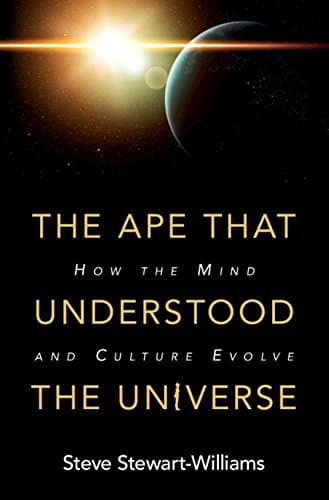
Episode 130 – Dr. Steve Stewart-Williams, The Ape That Understood The Universe
A conversation with Dr. Steve Stewart-Williams
Steve Stewart-Williams is an author and researcher who delves into how the theories gleaned from evolutionary biology might help us to understand our human behavior and culture. Steve attained his Ph.D.
Stay with the full conversation.
Episode field notes
Show notes

In this episode we spoke to Dr. Steve about evolutionary biology, how culture, natural selection, sexual relationships play their role in evolution.
You will love this episode!
Find Steve here: www.stevestewartwilliams.com
We rely on listener support to keep this show AD FREE – If you value even one of our shows, help us sustain and scale the show up; Become a member for 5$/mo (a cup of coffee) or Donate.
Read the conversation
Transcript
welcome to the human experience podcast the only podcast designed to fuse your left and right brain hemispheres and feed it the most entertaining and mentally engaging topics on the planet as we approach our ascent please make sure your frontal temporal and occipital lobes are in their full upright position as you take your seat consciousness relax your senses and allow us to take you on a journey we are the intimate
strangers thank you for listening [Music] welcome to yet another episode of the human experience live show thank you guys so much for being here we have a really great episode planned for you guys today if you’re listening to this on youtube please feel free to interact join our discord and you can ask questions live to our guests they’re my guest for you today huiling interesting content his name is dr. Steve Stewart Williams Steve Stewart
Williams is an author and researcher who delves into how the theories from evolutionary biology might help us understand our human behavior and culture he attained his PhD in psychology and philosophy at Macy University in New Zealand and is an associate professor of psychology at Nottingham University at the Malaysia campus Steve has written a number of books looking at evolutionary topics and conundrums his latest book is called the
ape that understood the universe and how the mind and culture evolved dr. Steve it’s a pleasure to have you on the show sir welcome to hxp thanks very much pleasure to be here so wow you know I’ve got the book in my hand the ape that understood the universe it’s a really interesting perspective that you start with you know why don’t you start why don’t you kick us off by giving us a little bit of your background how how
did you get into this work well so I’m originally a Kiwis let me just say that first I’m a Kiwi I’m from New Zealand originally that’s where my accents from if you’re trying to place the accent so how did I get into it well it was actually I’ve always been interested in the kind of the big issues in science and philosophy where we came from why we are the way we are the real turning point though was a pair of books one of them was a book called the moral
animal by Robert Wright which is about evolutionary psychology and then a second one was a book by Steven Pinker called how the mind works and those two books they really got me into evolutionary psychology the thing that really struck me is that the theories and evolutionary psychology that there is from evolutionary biology I just very very powerful they have a lot of explanatory a loving spirit or power in terms of explaining human beings human
nature and why we behave the way that we do and they’re just really into intellectually satisfying explanations ok ok so then you know it seems like you took a very macro cosmic view on what it would look like to another civilization if they came to visit our planet and studied it right that’s that’s how you begin the book yeah that’s right so I basically the main gimmick of the book is that it starts with the perspective
an alien scientist I have a sort of hypothetical scientific article written by an alien scientist from the planet Betelgeuse 3 who comes from a thread of weird species that doesn’t have males and females they don’t fall in love they don’t have families they don’t have music or art or reality TV or anything else like that and I start by asking so how would a being like that completely different from us how would it view our species and the
short answer is that it would just be very very puzzled by our species and it would just have a ton of questions about us we want to know why don’t they come in two main forms and males and females and why do the males and females differ from each other but but don’t differ as much from each other as for instance male gorillas or male peacocks male male and female gorillas peacocks deer etc why do they fall in love why this blue
I’m not always go smoothly why do they get jealous if the person they’re in love with decides to get involved with somebody else why do they tend to look after their own children rather than the next-door neighbor’s children why do they kind of hypnotize themselves with these rhythmical sounds of with different pitches sure it’s etem yeah and I use that so the point of that basically is to to look at our species and to get the reader to look at our
species anew as if for the first time and say look at all the stuff you take for granted and it’s come so naturally to you you might not even think that it requires an explanation all the stuff is kind of strange it didn’t have to be this way why is it this way so okay so let’s define evolution how do you define evolution well evolution and in the biological sense it refers to a change in the frequency of genes within the gene pool
and that’s all it is really so it’s it’s change over time a key ingredient of evolution is natural selection so you get natural selection of genes with an evolutionary biology you can actually also extend that into the cultural realm and you get that the natural selection of different kinds of cultural variants some do better than others and and that’s why cultural evolutionary theory looks in I can tell you sorry go ahead
no no go ahead god please finish my best thinking I find one of the most useful ways to to introduce evolutionary theory and how you can apply to the mind and behavior is to think about how you apply evolutionary principles to explain into anatomical features and other animals so so one question might be why don’t–why de Lyonne have those big sharp fangs okay so why do those evolve why they useful if the lion and the answer of
course is that they’re they’re useful for catching prey and then for once the prey is caught they useful for devouring the brain why do gazelles have really fast legs well that’s so they can run away from the Lions run run away from other predators now whatever we share psychology does is it takes that explanatory framework and it applies it to the human mind and human behavior so you might ask for instance why is it
that if we haven’t eaten for a while we feel the sensation there’s motivation called hunger so why is that and that’s pretty clear right we have this motivation because it pushes us and prompts us to go and get some food that we need to fuel our bodies and build our bodies now the question might be why do we have sexual desire and the idea there of course is that it motivates certain kinds of behavior that throughout the
bulk of our evolutionary history in other words before we have better birth control reliably resulted in offspring and we pass on our genes that way parental care is another one why do we have this love for our offspring and that’s because it motivates us to care for our offspring so that one day they can start this whole cycle all over again hmm okay so so it’s a matter of genes and they’re editing and you know reproduction that’s is that the basis of
what I’m looking at reproduction is about 95 percent of it for human beings it does also apply though natural selection can favor traits that allow us to help relatives other than our offspring as well so so what is about 100 percent of what it’s about is is passing on our genes so a selection favors traits that lead us typically to pass on our genes and the rationale for that is that if you mention any gene that came along that caused its owner to
pass on its genes less reliably that is next-door-neighbor well that gene is soon going to evaporate from the gene pool and we’re just going to have left those genes that cause their owners to pass on their genes reliably ok so so the the alien anthropologist that came from the planet Betelgeuse I mean tell us a little bit more about what he would encounter or he or she or it would encounter when when it encountered our species in this
male/female regard I mean there’s so much of a difference in culture with us because it evolves through time I mean this is what isolate humans from other creatures on the planet right it really is yes the really big difference between ourselves and basically every other animal on the planet I think is culture there are those some sort of biological consistencies that you do find across very very different cultures and in sex differences are one
of those if you like maybe we could pick one out a random shall we we could maybe talk about sex differences and aggression talk about how sir biology and culture interacts then because that’s quite an interesting case study and it would I think answer quite a few of the alien’s questions about ourselves and why we like other animals in some ways and why we’re different in others and I guess the first thing to say there would be
that is there’s no doubt at all that culture and socialization and learning do affect the propensity to aggression and they can magnify or minimize the size of the sex difference and aggression probably the best evidence that culture is very very important here is the evidence documented by Steven Pinker and is both the better angels of our nature and also an is more recent one lisent now and he documents very convincingly
that the levels of violence have come down pretty steadily so it’s some ups and downs but they come down pretty steadily over the last few decades over the last centuries over the last millennia as well and that’s not because of Eylau it’s all having to fast to be due to biological evolution there has to be an example of a cultural change we’ve managed to tame our aggressive instincts but there are reasons to think that
there are aggressive instincts in the first place that we have to tame various reasons and one of those is just simply that we have brain mechanisms that that cause us to get angry and certain circumstances give us a desire to lash out in certain circumstances but they don’t force it right they may give us a motivation to do that but we can we can import into our heads cultural software that allows us to control them
things like counter to 10:00 when you’re angry is a very simple idea legal systems that incentivize not being viciously aggressive a random and things like them do you want me to say a little bit about sex differences in aggression how we know that those are not just purely a product of culture yeah let’s go for it okay so several lines of evidence I guess one place to start with that would be the fact that you find the
sex difference and basically every culture for which we’ve got good data so if you look for instance at homicide records most homicides are recorded so we do is some pretty accurate evidence in that respect you find in every single country without fail homicide is overwhelmingly perpetrated by males tez around 90% as the global average 90% of homicides I do to men rather than women now you might say what that’s just because men on average is stronger and
men larger maybe maybe that’s the reason and it could be part of it right but actually where you also find is that in most cultures the culture actually tries to clamp down on male aggression and through and therefore that in effect reduce the size of the sex difference and then do a lot more clamping down on male aggression than on female aggression just simply because males are more aggressive what you find those that
despite the culture pushing against male aggression males are more aggressive anyway okay so we have an example here of a sex difference that persists despite culture rather than the cause of culture now you’ll say prenatal hormonal correlates of aggression so greater testosterone in the womb seems to be associated with higher levels of aggression what else you know and another I guess a very important one is that you find very very similar things
and in other species you don’t find it in all other species but importantly you find in other species that are evolutionarily comparable to our own they’ve faced similar selection pressures to our own and and one little heuristic is that in mammals basically the sex that is larger which is you see the male but a sex that is larger is also usually the more aggressive sex and the larger the gap between the males and females the larger the sex difference
and aggression and embarrass other behaviors as well wow that’s fascinating so you’re saying that like among whales it’s different the aggression level is based on how much larger the other the the sex of the male would or female would be yeah yeah yeah so the size of the sex difference so what a good example might be gorillas another example would be there and both of those species the male’s I shall tell you what a very best example I think is
actually elephant seals so so if your listeners are interested in googling this Google elephant seals they’re a really fascinating animal and one thing that’s really fascinating about them is that the males are about 3 or 4 times larger than the females and then goes hand-in-hand with it just a massive difference in terms of aggression the Meza vastly more aggressive then the females are now you can tell the difference is a lot smaller in our
species that the size difference is a lot smaller and along with the size difference a lot of the psychological sex differences now species are a lot smaller as well where we’re somewhat dimorphic like we have moderate sex differences but there that that they just moderate rather than massive sex differences hmm okay I mean I’m intrigued by all of this information so I mean I want to understand I mean why why did humans evolve faster
than other animals is that the correct term that we evolved faster I think that I probably wouldn’t put it that way actually I think the way that biologists would usually say that is that every species on the planet is equally evolved because we’ve all been evolving for the same length of time which is nearly 4 billion years we’re all nearly 4 billion years of evolutionary history now we are certainly we have certain traits that
outstrip other animals so we’re more intelligent we have a greater cultural capacity we can do things like Skype each other from opposite sides of the planet like we’re doing right now and and other animals couldn’t possibly do that we can go to the moon etc etc the list is very long but although we outstrip them in those ways that doesn’t doesn’t mean we’re more evolved it just means that we’ve our evolution has gone
in a different direction so evolution so so like I mentioned right at favours traits that allow us to pass on our genes but they were just so many many many different ways of doing that and different species evolve in different directions to do that in different ways so how how do emotions come into play when we’re talking about the evolution of us species on the planet well the main function of emotions is to motivate behavior so if you had an
emotion that doesn’t actually cause any kind of behavioural effect it couldn’t have any evolutionary effect it couldn’t cause you to survive better or have more offspring or help your relatives to have more offspring and it would therefore be invisible to natural selection so emotions motivate behavior so just like hunger motivates the desire to eat anger motivates certain kind of behavior motivates self-protective behavior of him disgust
motivates us to stay away from things that might like like food that’s gone off and would make us sick or bacteria that might harm us what other emotions with some more complex ones as well actually coming to the mix so jealousy is one existence yeah yeah I was just about to go there I apologize so much jealousy yeah bring up jealousy quite a bit so like Mia Guardian how does that work yeah well some mate guarding is the
kind of behavior that jealousy motivates right so so jealousy both sexes now species are prone to jealousy and at a very general level it has the same function in both so humans are a pair bonding species we fall in love we form pair bonds and if children Cameron aren’t seen we often engage in by parental care now pair bonds are adaptive for both sexes that’s why both sexes fall in love it’s not just one or other sex if falls
in love that indicates that they’re adaptive for both of us what jealousy does is it basically motivates behavior that leads us to protect the pair bond so and that’s called may curling so we guard our mates if we try to retain our mates and we keep them happy we try to keep them away from potential you know individuals that might try to poach them away from us so that’s that’s the main function now there are actually there
are some sex differences and when you look more specifically at the function of of jealousy and mate guarding for men it’s mainly about paternity so in species like our own that have internal fertilization there’s always a difference in that the females are more likely to end up investing in their own offspring than the male’s own so in humans for instance there’s been no case and the entire history of the planet where a woman has given birth to a baby
and then thought hang on a minute how do I know that this is my baby and not some other woman’s baby but there’s never happened remain on the other hand if if their wife or their partner gives birth to a kid that’s probably their kid but there’s always some chance that actually some other guys some other glascott and if some other guys kid they’re going to end up investing in the jeans that are not their own and that trade is going to be
selected against basically in that context any trait that comes along that means that the guy is more likely to to look after his his own kids than the kids with a good-looking next-door neighbor any trader does that has a good chance of being selected and jealousy is one such trade right so there’s the kind of jealousy that makes men keep an eye on their partners or their wives keep an eye on the good-looking next-door
neighbor and try to do what he can to keep them apart at any trait like jealousy that any gene that comes along it creates that kind of trading just automatically going to be copied into more new bodies than a gene that inclines a guy to think well you know in a cow I mean I’m an enlightened guy I don’t care my wife sleeps with other dudes so there’s the male side of the equation know that for women it’s a bit different so for women the main purpose
of jealousy relates to paternal care so care from the father and basically throughout much of our evolutionary history having sex reliably led the kids and kids were a lot of work and woman women couldn’t really do it alone and in that context women who had an investing partner a guy who is willing and able to look at help and look after the kid especially in the early years well they would do better and have more surviving
offspring than that woman who doesn’t have that and so just as jealousy is useful for men it becomes useful for women as well to protect the pair bond to try to get a good-looking next-door neighbor if it’s a woman from from poaching away her mate because you want the couple to stay committed to the baby that they’re at the offspring that they’re raising exactly at least in the short term and you know pea bonds and our species they sometimes last for life
often they don’t bother so so most people fall in love more than once in their lifetime so I mean how would you pay tribute to the stereotype that men are more fate in favour of casual sex because it does happen yeah yeah yeah well that is that’s a very widespread stereotype and I think the reasons for it was what spread is that’s true it is actually the case there there are average differences between men and in terms of how interested they are in
casual sex now it should probably preface this by saying that so that doesn’t mean that there are differences necessarily in terms of how interested they are long-term relationships and men and women tend to be pretty pretty much similar in terms of how interested they are in long-term relationships the differences rarely come when it comes to short-term relationships and the evolutionary logic behind this that people are pretty familiar whether –
it’s quite well known these days I guess it’s fair to say though that actually people sometimes get a bit muddled up and people think it’s because sperm less costly than eggs and and men have produced many many more sperm their women can produce eggs it’s actually not not quite about that it’s actually about parental investment more generally and basically women like mammals in general women have a higher what’s called a
blicket or a physiological investment and the young so in other words women the ones that get pregnant and that’s non-negotiable where were the ones that had to give birth to the kid again Don the Vote negotiable and until recently that they also would have had to breastfeed the kid now that’s optional but until very recently that was obligatory as well and on top of that women and all cultures invest more in the offspring and terms of direct
hands-on child care then men go even today actually you know that one of the big things that makes our species different from most mammals is that the men do invest as well quite a lot of other time but still there is a there is a sex difference there and the overall sex difference is that women are this more in a spring band do men now as a result of that it creates very different selection pressures on men and women so
if you imagine a guy if he was to have say three sexual partners in a year potentially he could have three offspring at the end of that year sure a woman on the other hand if she would have three sexual partners in the course of a year more than likely she’s going to have no more offspring than she would if she only had one and obviously other things come into it but this would have created a selection pressure on ancestral males throughout the course of
our evolution for a stronger desire to seek out multiple partners and for a stronger desire for no-strings-attached sex casual sex in other words and we do indeed see that and every culture where we have good evidence you do find that difference so so wait let me get this right so whew if you had an island and you had 99 women and one male on that island the one male could spread his seed to those 99 women and have potentially 99
offspring but if you exact 99 men and one woman on that I let the same I that a different Island then I mean the the likely there’s there’s there’s all this competition now right yeah exactly and she’d only be able to have one kid at the end of that time and there’s a really good example a she because that really makes the point very very clear so so basically the maximum number of offspring that a man can have is much
much higher than the maximum that a woman can have as fast it’s really fascinating to look at the the psychology aspect of this because it does work in and I mean you when you were studying for this you you I think we talked about in the pre-show that you did you move to Malaysia to do the research for the show or the for the book yeah yeah yeah so so started in New Zealand and we then went to Canada and I work with to the big names in
evolutionary psychology Martin daily and Martha Wilson then we lived in way I was for about six years and then moved out here to Malaysia originally that was just to be I was on sabbatical to start work on the book and the ape that understood the universe actually turned out that we really love living here the food is great the weather is great the people are great and so we decided we wanted the same so that’s how I got
this job at University of Nottingham okay okay so would you would you say that you are a hardcore scientist I’d like to think I am yeah I mean what I mean to say by that is I mean how does religion play into this because it mean that there should be the God quotient right what’s that what’s the goal question I mean do you believe in God III don’t know okay so you’re anything and sorry and I’m an atheist yeah and that’s I don’t comma n oh rather than I
don’t kN I’m guessing you do you do you I would say I’m an agnostic you know I’m somewhere in the middle somewhere but you know religion does seem to play a really large role in the evolution of culture and our species so how do you define that in the book well in the book I look at for instance how the concept of God might have evolved and how religious morality is as well might have evolved there are a few ideas there
one is that a lot of ideas that you get in religion including the notion of what are called big gods so so guys like the judeo-christian God that there are moralistic gods that watch everything we do and that reward us for good behavior punish us for bad behavior so so one idea is that that was selected culturally not not genetically but culturally because any group that had those kind of ideas those kind of memes did better because people behaved better
now in in small groups like the groups who spend most of our evolutionary history you don’t really need those kind of incentives to behave well because everybody knows everybody else and we kind of keep each other on line with just everyday you know approval of other people’s behavior disapproval of their bad behavior but when groups get too big you need other kind of things to keep us in line and the idea here is that big
God’s evolved culturally for that purpose they cause people to behave well even when actually they probably could get away with it and large anonymous societies they could get away with bad behavior but they have in the back of the mind there are these big guys watching them and so they do less of that that’s one idea and another idea is the idea that God is is kind of like a catchy meme so you know the air one’s right the concept of their worms no okay
so so those are like you might know the word they definitely know what they are they’re basically annoyingly catchy tunes right there Oh obviously an amateurish and they the system the culture not because they’re good for us not because they’re good for the core as a whole but just because they’re catchy they catch amines and another idea about the evolution of the Gaia concept is that it’s evolved culturally over the
ages just to be very very appealing to us and to be to be an affair too catchy meme and sometimes it’s good for us sometimes it’s not and that that’s true of religious ideas in general but they stick around not necessarily because they’re good for us or for our groups but just because they’re good for themselves and that they stick in our minds and they stick around in the culture so so humans invented God not the other way around
yeah and not that says that somebody sat down and made it up but just in the sense that it kind of just just evolved culturally and our species so do you think do you think that this was just to determine for groups larger than a hundred people that were they didn’t know each other it was a better way to determine morality like how to keep people yeah control yeah yeah exactly and you do say that like it’s not the only way to do it and you can have moral
systems that are secular and they seem to work quite well as well you can have you know CCTV cameras and you know policing of society and where that kind of thing comes along sometimes religious belief seems to decline maybe because it’s no longer needed as much okay okay so I mean when you were when you were doing the research for the book and when you were putting it together were you looking at the scope of where we’ve been
and where we are now like how did you how did you assign the role of Technology and where the future is right now yes so no social media I mean things change our culture recently well I’ll tell you we’re in a stage at the moment where things are changing very very fast right and I didn’t actually said too much about that I’d be at the end of the book I touched briefly on where we are now and where we’re headed and actually
I collect I was planning to say quite a bit on their topic Claire did a whole bunch of notes and in the end I just saw a man but this is just it’s just so hard to predict where we’re going and I don’t actually know where we go and so I in the end decided that the wise move would be not to say too much about where we’re going in the future except say just a few things one is that we are certainly gaining more and more
power over the planet and over ourselves and over the future of the earth so whatever happens it’s probably to be a big deal we need to be you know hopefully we’re not going to destroy ourselves I tend to be optimistic I think probably we’re going to probably we’re going to do all right but either way we are more and more getting into the driver’s seat of the planet as a whole okay one other thing that sorry go ahead
I was gonna say one other thing is that social media I think is really going to accelerate the process of cultural evolution because it makes it so much easier for ideas to fly around the place very very quickly the bad ideas spread but also for bad ideas to be debunked so for better or worse it’s all accelerating going much faster I mean it sounds like a very optimistic view of where the world is headed I mean it’s considering the environment
crisis I mean it yep so so you’re presuming that you know the species is going to continue evolving continue expanding culture is going to continue changing and we’re going to survive and that’s the assumption once this assumption if I had to guess one way or the other that’s best the way I would guess but I certainly like I’m not like hyper optimistic I certainly think that it’s possible they kind of mess everything up mess up the planet
okay a little bit off-track here I’m gonna get back on track now you talk about altruism quite a bit your alien scientists he’s trying to understand the concept of being altruistic let’s let’s define altruism first sure well Ultra ISM the weather biologists look at it is it’s any act that helps another individual and a cost to the optimist and it’s usually defined in terms of helping other individual terms of survival reproductive success and the
cost of the survival and reproductive success of the person engaged in the altruistic behavior and the reason this is such a focus it’s really I think one of the most fascinating areas within evolutionary biology and the reason is that at first glance when you first hear about evolutionary theory you might not expect us to evolve to be altruistic at all you might think okay well what I’ve heard is that evolutionary theory it’s
all about the survival of fittest presumably that means that you’re going to get selection for individuals that just look out for and couldn’t care less about anybody else and they try to elbow everybody else out of the way so you get selection for the sharpest elbows and just the meanest people a you know you said we do get some that there’s plenty of selfishness and human beings plain of human selfishness right throughout the
animal kingdom but the funny thing was strange thing and this is something that I think would pass allow our alien scientists is that as well as that you do also get a surprising amount of kindness and altruism and and caring for other individuals it’s especially common among among relatives well please continue I mean um you know when when you’re looking at altruism are you are you suggesting that you know there’s I
think you said this I mean there’s there’s a price do you think that serving yourself would go further genetically in some circumstances it does but in some circumstances it doesn’t it actually is better for the the genes of the individual altruist to be out to a second certain circumstances so you’re the main one and the one that you can see just right throughout the living world is altruism toward genetic relatives and the basic idea is that
organisms share more genes with their relatives than they do with anybody else on the planet and as a result of that any gene that comes along that helps lead to the development of a tendency to help one’s genetic relatives well that gene can spread just because that gene is more likely than chance to be found in those very relatives in other words in the recipients of the hell so that’s called kin selection and it’s very very powerful force in nature
you find it not only in humans so you do find it in humans and you find it right across cultures etc but you also find many other species as well and birds you find that in paddy bees and ants in fact it’s not even just limited to animals you find it in plants as well you find a bacterial viruses even it’s just this very very deep trend right throughout the the natural world wow that’s totally fascist so it’s ok so you’re saying that
altruism is just a gene and it’s edited in or out based on how you know well it does like how natural selection yeah so it’s probably not one gene but like many many genes so most complex traits are product of thousands or tens of thousands of separate genes all interacting but yeah altruism in some cases can be a product of I guess what you call genetic self-interest so the individual organism is behaving non selfishly and that they’re helping
another individual but the genes giving rise to their trade they’re actually keeping themselves afloat in the gene pool because of the effects that they have on individual basically on copies of themselves and other individuals okay so I mean clearly the human is more nuanced culturally than say a whale or a turtle even you know like we we see we seem to have these trends and music and fashion how did you equate those two the
relationship to natural selection does it relate at all to the advancement of evolution yeah I think it does in two ways fiscally so I completely agree that culturally we’re just a completely differently than any other species completely different than whales and chimpanzees and you know all these other species they do actually had some degree of culture so they can make up different ways to make a living or to extract food
whales have different whale songs and they spread among the group culturally but we’ve taken it to a whole new league we just completely out of this world compared to other species now natural selection I think ties them were there in two ways one is that natural selection gave us the capacity of the culture in the first place so I think what must have happened is that somewhere along the line we were we were less intelligent we have less of a
cultural capacity but we started we maybe had the level of culture you find a chimpanzees and so we started making up these clever little tricks for how to get food at a processed food and so on shelter clothe and that kind of thing once we had a stockpile of those kind of cultural items the bear became useful they were so useful that individuals we could pick them up more quickly they did better so you would have selection for
greater intelligence a greater ability to copy other individuals and pick the culture and because they they do better they had more offspring and that tendency increased we became more and more of a smart cultural animal we then invented even more clever culture which increased the level of selection for being a smart cultural animal and so on and so on so that’s how the cultural capacity evolved but then once it did evolve it’s it’s like a
really open-ended kind of system so if you can learn one thing you can learn hundreds of other things and because it’s open-ended that meant that it to some degree it came off the genetic leash and culture started evolving in its own right by itself independently of our biology and at that point natural selection zooms in and start selecting from among different means different cultural elements so you have a whole bunch of different Tunes for instance
they’re bunch of different songs the ones that are going to stick in people’s minds better they’re the ones that people are going to remember more they’re going to they’re going to hum them they got to sing them the song is got to spread better and so you get a cultural selection pressure for the catchiest songs the most pleasant song so there wasn’t people like the most or at least in the case of ear worms the ones that they can go out of their heads
even if they don’t like them and the same applies to art the same applies to stories you would get selection for more and more riveting stories more and more riveting movies and TV partly because people are trying to make up riveting movies or riveting TV shows and trying to make up good songs but it’s also metal selection gets in there as well and has an independent effect just because you know I might want to write
the greatest song or make the greatest piece of art but I can’t just do that just because I want to and so you had to have selection among the many many different variants that people come out with and that guy’s the the evolution of culture as well so you you call this the memes I view of cultural evolution is that the way you call it or that the Isleta fits right okay so and that traces back to an idea from Richard
Dawkins basically so the genes I view of evolution let’s the idea we were talking about earlier basic idea there is that the genes that get selected genes that have effects on their owners their cause those jeans to stay in the gene pool so it so making sharper teeth faster legs a motivation to eat when you’re hungry etc that the memes I view on the other hand that’s the idea at the memes that are selected are the ones
that have effects or the people who encounter them that cause them to act in ways that keep those memes in the culture so you know better stories catchy tunes all those kind of things ideas and motivate people to they want to talk about these talk about certain ideas they want to pass them on they want to impose them on other people those are the memes that are going to do better memes that have less of those effect they gonna disappear out of the
culture so natural selection on memes hmmm so like the tide challenge I mean that’s a form of natural selection yeah yeah the tide pot challenge right so there was a year or so ago made a couple years ago a bunch of teenagers in particular were they had this challenge where they were eat at iPod not a good idea right and and then actually that raises a quite a big question it’s not something else that the alien would be
very very mystified by is that we do often engage in this really weird behavior that doesn’t seem to be adaptive it actually looks things like that it they actually look like they’re really maladaptive and the question that for an evolutionist is okay so we do this stuff how could it be adaptive and I think the answer is that it’s not adaptive at all it is actually as maladaptive as a looks and I think so then the question so why do we do this
maladaptive stuff that would really puzzle the alien I think the reason is that although those particular behaviors and where challenges or load those are maladaptive the psychological processes that make them possible those are very adaptive in general so those processes are the ones we talk about in terms of our intelligence our ability to learn from each other our cultural capacity and maybe most importantly just how
simply our ability to copy each other now I think this good case to be made that those are part of human nature it pilots of evolution and they would only have evolved if they were very very useful for us in the past on average but for Trey to be selected it doesn’t have to be useful 100% of the time it only has to be useful on average and because cultural cultural capacity is so open-ended when it evolved it just made
us vulnerable to learning maladaptive means as well as learning adaptive ones it’s truly fascinating it’s really interesting how it all works I mean what you talked a little bit about like prestige bias and conformity bias but can we define those two things please yeah sure so the prestige buzz so so I guess first thing to say would be that we were a really good at learning but we don’t just learn anything at all we’re
really really good at copying each other but we don’t just copy anything or anyone we have certain kind of biases that generally lead us to acquire adaptive means one of those is the prestige bias and that is the fact that we tend to copy and learn from individuals who are high in status and prestige more than we do people who are low and status and prestige and it makes sense right if you’re going to be copying means you’re more likely to get
a useful one if you copy a successful person then if you copy an unsuccessful person we could formally bias on the other hand that refers to the fact that we tend to copy memes and cultural you know ideas that are common in the culture rather than those that are rare and again that makes good a depth of sense because memes that have become common and more likely to be useful than rare ones and so it’s better to copy those memes than to go it alone or to
copy means that very very few people hold now both those cases they tend to lead us toward adaptive ideas and memes and waster to make a living they don’t always though so the prestige bias for instance if we’re copying high status people that’s a good rule of thumb but thing is that we don’t just copy the things that made that person higher status we copy lots of stuff and we often we will copy irrelevant things as well so
one example would be like say it’s a teenager copying a favorite rock star copies not only the things that made that rock star a success but also you know the boss lifestyle and the drug habit and and whatever else copying those things too so yeah prestige buyers usually useful but not always it’s really interesting it makes a lot of sense I mean it seems like then culture itself could edit out you know the behavior that it wants us to I mean we
so if we’re copying smarter people it would lead to longer lifespan if we’re copying Dumber people then you die exactly and when you die you take those memes to the grave with you and they’re less available for other people to copy so you just sort of you get it’s automatic editing out of maladaptive memes to some degree and the worst the means that the the more maladaptive they are the more likely they are to edit themselves out of the culture so what is
this what the term cumulative culture would be yes yes so that relates very closely to that so cumulative culture refers to the fact that I think it’s probably the real success the real secret of our success as a species and it refers to the fact that not only did we have culture but we have the ability to stockpile culture and to add to the common pool of ideas and discoveries and technologies add to those to the pool
over time and then we can tinker with them and improve them a little bit and then improve them a little more in the next generation and what that means is that we we have science and we have technology that no individual though the greatest genius in history could never have invented these things by himself or herself just because they have they come about through a very very slow retching up a progression where we’re passing
these ideas down through the generations and improving them slowly but surely over the course of the generations and that means that we can well tell you my favorite example so if you think about Plato and Aristotle so Plato and Aristotle among the greatest thinkers of the ancient world they were probably vastly more intelligent than most people living today right but most people living today have a vastly more accurate
view of the universe than the greatest of these these ancient thinkers that even most preschool children have a better understanding of the universe because most preschool children know that we live on a spinning rock when a great big ball of fire they know that they understand that even even before they go to school often Plato and Aristotle didn’t know that so in a certain sense preschool children today have a more accurate view of the
universe than did then the greatest of the ancient thinkers but that has nothing at all to do it biological evolution we are basically the same animal that we were back then it’s got everything to do instead with cumulative cultural evolution and our capacity to improve our knowledge over time wow this is really incredible to understand that I don’t think I’ve thought about that exactly in that way that a preschool child would have a
better understanding of the universe just because of the cultural evolution and the knowledge that we gain as a species as times time moves on yeah yeah as I clean I think that is the right like I say the real secret of a success it’s quite amazing so I mean what about the idea that technology has made people less intelligent technology because you know you’re looking at your phone all day and you never have to remember a
number your phone does all the thinking for you yeah what happens there well they’re very mixed arguments about that it is true that that does take some of the pressure to remember certain things office and we no longer had to but I know that Socrates for instance he worried about reading for exactly the same reason he thought that if literacy became widespread that would be a really really bad thing and it would make people less
clever and corrupt them they wouldn’t have to remember things so much you know I think that obviously it’s actually gone in the reverse direction and literacy has made us a lot more clever I think people worried about the same thing right throughout history and it’s possibly just not actually such a problem today as people are reclined to think I mean I’m not sure I’m not sure so I’m not saying as a hundred percent but I think one line of evidence that I
heard of that I found very very interesting a few years ago is that you know people used to worry that if you had calculators in the classroom kids were getting useless at maths because they just wouldn’t have to they wouldn’t have the same demands on the internet that they used to have but there’s at least some evidence suggesting that it actually goes the other way that if kids had the calculator to the basic operations they kind of frees up time
freeze-up cognitive power for them to think in more depth about more abstract aspects of mathematics and to understand that it actually a deeper level but just because this little tool is taking some of the pressure off us for the basic stuff you know maybe maybe the internet and social media and all its kind of things things like that maybe they’ll have the same kind of a state you know yeah I’m I’m truly fascinated by this
work I mean it seems you’ve really done the research you’ve really looked at all these things that determine behavior culture the evolution of our species um you know for you was there something that challenged you the most when you were writing the book anything that that you found I don’t know specifically a hurdle that you had to get past maybe a gap in information or something like that I probably probably mentioned the
biggest one already which is trying to figure out what’s going to happen in the future and I think by the time I came to write the book with that exception I had I basically had most of the material in a rough form already just from having taught it for about ten years before that I think for me probably the the biggest intellectual challenge became earlier actually it was when I first encountered these ideas and when I first
went to university and discovered evolutionary theory got into philosophy and that kind of thing so so I did like I used to be really religious I used to believe in God and studying philosophy in particular slowly but surely sort of changed it for me okay I mean it seems like I mean I’m just reading our chat and it seems like it could go in either direction as far as how much people connect or disconnect to your work so you know how do you do
you find that your ideas are controversial in any way do you find that people attack you for the book yeah yeah well there’s several controversial I think so one area that’s quite controversial is the area of sex differences a lot of folks are not big fans of the idea that we have evolved sex differences I think that evidence is very strong that we do I think I think I do understand where it comes from to some degree so I know
other past right that there have been lots of various sexist claims made supposedly by scientists you know and the garb of science in the 1800s for instance there was this guy Gustav Lebon he basically came out and said well you know you do actually find some women who has intellectually accomplished as men but a very very rare they’re as rare in fact as a two-headed gorilla or any other kind of monstrosity something
really really sexist obviously all so needless to say not true but you can sort of understand when we have skeletons like that in our closet that that actually you can see why people are about wary about going down this path of looking at sex differences I don’t think actually that it’s a problem though I think that most of the six differences a relatively modest I think that a lot of them are in areas where you know it did the kind of
neutral rather than very very important things important things like intelligence there are no sex differences in that respect and another thing a lot of them actually what sort of things we talk about an evolutionary psychology if anything they put men in the worst light then they put women so when we’re talking about things like sex differences in an aggression and violence and things like that you know there’s a bad trait so they’re actually
putting men in the worst light than women and one other thing I say about that is that um I think that people be worried that these looking at sex differences is going to set back the women’s liberation movement I think that’s a mistake I think that we can we can treat both sexes fairly and respectfully even if men and women differ on average and certain respects okay Steve I’ve got one question for you I really appreciate you
yeah I’m tonight with us you know something that I noticed about your work is you ultimately ended up with what might be called a gloomy conclusion about what life may or may not mean here which is that life has no meaning no purpose and I mean how do we connect with this it seems like such a depressing idea – yeah relate to it is a bit of a drag so that’s from my first book Darwin Garden the meaning of life and what let’s say there I think
probably the way I want to put it is not that life has no meaning but rather there’s no ultimate meaning to life so there’s no meaning to life that’s imposed on us from outside of ourselves there’s no meaning opposed by a god or gods there’s no meaning imprinted into the basic fabric fabric of the universe and that can certainly be a depressing conclusion for people who have been brought up to think that that is the case that actually there is
an ultimate meaning of life over and above our own personal meanings but I think people pretty quickly get used to the idea I certainly did so this is what I was referring to another saying one of the big challenges for me so certainly when I came to that view I did think it was a bit of a drag but I did because it is but a you know very quickly we can recalibrate our standards and I think that actually we do have personal
meanings and our lives that we create for ourselves and I think that as soon as you get used to the fact that there’s no god-given or universal kind of meaning in life you can’t get used to the fact that the meanings that you have in your life are created by yourself and there is actually there’s a silver lining in that cloud and that’s that it actually gives us a whole bunch more freedom to choose the kind of meanings
that we adopt for our lives we become much more free than we would be if there’s some kind of meaning imposed on us from outside and you know it’s it sounds like a going to conclusion but actually I think that life is good and it can be great and we’re trying to make it better and I think we’re succeeding in that respect and I think that’s enough yeah I think that’s an app to answer it you know I I really appreciate your work it it got me to kind of
question my own ideas and really challenged those which I appreciate it and usually we go in a different direction on this show so you know like I said in the pre-show I really wanted to look at the other side of the coin of you know how how does how would an evolutionary scientist look at the way that culture and humans have evolved you know I I think we covered pretty much everything that we could in about an hour was there was there
anything I want to give you a chance it was there anything that you wanted to touch on that that we haven’t touched on yet I let me think I actually think we did quite a good job of covering some of the main things and I see I gotta say I really really enjoyed that yeah me too so where can people where can people go and get the book where can people find your work yeah I think that the best way to get hold of the book is probably
Amazon globally if you’re in the UK go to the Cambridge website or or Amazon but better fill up in the UK Amazon is your best bet just Google eight that understood the universe or Google my name if I’m on Twitter is probably the best place to find me and social media and my twitter handle is at Steve’s too well so at ste ve s T u WI Double L it sounds good doctor Steve thank you so much for your time guys you heard it
here thank you the the book is called the ape that understood the universe my guest his name is dr. Steve Stuart Williams if you really want to challenge your thinking and take a different look at some of the stuff that we cover here on hxp it I would recommend the read I really do so we’re gonna get out of here we’ll see you guys next week thank you so much for listening and we are out [Music] [Music]
About the guest
Dr. Steve Stewart-Williams
In this episode we spoke to Dr. Steve about evolutionary biology, how culture, natural selection, sexual relationships play their role in evolution.
Episode 142 – Dr. Daniel Amen – Diet, Nutrition, Brain Imaging, Defeating Depression
September 5, 2019 · 1:04:49
EPISODE 199: Dr. David Nichols — Psychedelics, Consciousness & the Chemistry of the Mind
October 20, 2026 · 1:12:11

HXP SHORTS: #001 – Deconstructing Death: What Happens When We Die?
September 14, 2026 · 11:37
Episode 194 Dr. James Fadiman – You Are Not One Self: Microdosing, Multiplicity and the Mind
September 4, 2026 · 1:14:38

Episode #186- Positively Angela – The 7 Hermetic Principles & Living a Better Life
December 20, 2022 · 1:26:56
Episode #185 – Brad Klausen & Chance Gardner – Esoteric Egypt, Pineal Gland Activation, Kundalini, and more
December 14, 2022 · 1:50:21
Independent conversations
Help make the next one possible.
Membership sustains ambitious, unhurried interviews and keeps the complete archive open to curious listeners everywhere.
Become a member