

The Human Experience · Episode
Episode 135 – Dr. Peter Sjöstedt-H – Metaphysics, Science, Consciousness and Psychedelics
A conversation with Dr. Peter Sjöstedt-H
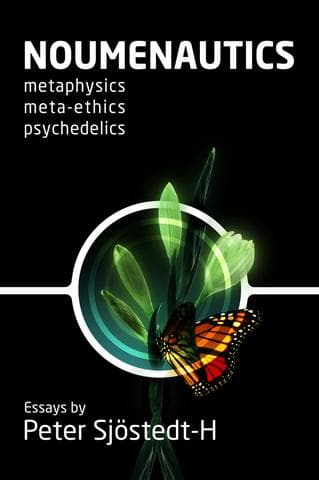
Dr. Peter Sjöstedt-H is a philosopher and author of Noumenautics, a book in which he looks at the interplay of psychedelics, philosophy, consciousness and metaphysics. Peter completed his degree in…
The full conversation continues here.
Episode field notes
Show notes
Dr. Peter Sjöstedt-H is a philosopher and author of Noumenautics, a book in which he looks at the interplay of psychedelics, philosophy, consciousness and metaphysics.

Go buy the book and find Peter just click Visit philosopher.eu:
In this episode we spoke to Peter regarding the connection of metaphysics, consciousness and the hidden history of their influence on philosophy and thinking.
You will love this episode!
We rely on listener support to keep this show AD FREE – If you value even one of our shows, help us sustain and scale the show up; Become a member for 5$/mo (a cup of coffee) or Donate.
Ideas worth returning to
Quotes
Five substantial excerpts from the published transcript, lightly edited for clarity without changing their meaning.
“We infer that colors, tastes, and other sensations are caused by external objects. But the qualities of conscious experience—the qualia—are not inferred; they are known directly by us. That distinction between what we infer about the external world and what we know through immediate experience is extremely useful.”
From the conversation“The phrase “the hard problem of consciousness” was coined by the Australian philosopher David Chalmers in 1995, but the problem itself is ancient. It is also called the mind–matter problem or mystery. Fundamentally, it asks about the relationship between matter—the physical world—and mind, consciousness, or sentience.”
From the conversation“There is much more to say about time when consciousness is included than mathematics and physics alone can currently express. I believe that philosophy of mind and psychology will eventually be joined with physics to create a broader cosmology—one capable of explaining more of the anomalies and phenomena we encounter.”
From the conversation“Our ordinary intuition about space and time may be profoundly wrong—a distinctly human vision rather than reality itself. Psychedelics might, in some cases but not all, disrupt this shared perceptual construction and offer more direct insight into the nature of reality. That possibility should not be treated as guaranteed in every experience.”
From the conversation“Human beings may not yet be equipped to judge these questions one way or another. We can speculate and hope that we will evolve into beings with greater powers of cognition. Transhumanism and posthumanism include that hope: that future minds may become capable of understanding more of the universe.”
From the conversation
About the guest
Dr. Peter Sjöstedt-H
Dr. Peter Sjöstedt-H is a philosopher and author of Noumenautics, a book in which he looks at the interplay of psychedelics, philosophy, consciousness and metaphysics.
Beyond the conversation
Selected work
Official sites, books, research, and institutional pages verified for this guest.
The complete conversation
Transcript
Archival transcript · Published on the canonical episode page
This archival source does not include reliable passage timestamps or consistent speaker attribution. The wording and any labels below are preserved from the original transcript page; no speakers or timing have been inferred.
welcome to the human experience podcast the only podcast designed to fuse your left and right brain hemispheres and feed it the most entertaining and mentally engaging topics on the planet as we approach our ascent please make sure your frontal temporal and occipital lobes are in their full upright position as you take your seat of consciousness relax your senses and allow us to take you on a journey we are the intimate strangers thank you for listening
[Music]welcome to another episode of the human experience live show my guest for today is dr. Peter sure stead age Peter is the author of Naaman knotek’s a book in which he looks at the interplay of psychedelic psychedelics philosophy consciousness and metaphysics Peter completed his degree in continental philosophy at the University of Warwick and achieved his PhD at the University of Exeter where he teaches both philosophy and skills on writing he’s
been featured on platforms such as TEDx discussing the re-emergence and hidden history of the usage of psychedelics and their connection to philosophy science and consciousness Peter it’s a pleasure to have you on the show thank you for making the time welcome to hxp thank you very much saviors pleasure to be here so I’m looking forward to the chat so Peter let’s let’s kick this off by credentialing the conversation a little bit
tell us about your education and you know how you got into this work okay well well I thought as a child I was always known as a sort of little philosopher so I suppose that’s always been part of my character but I guess well when I was about 17 I wanted to do Eastern philosophy because my father had a book on nanny yoga but at the time in Britain that was didn’t exist as a degree so I did there Western philosophy instead and got into especially got
heavily into a certain German philosophers like Kant and Nietzsche and and then later on in London I started teaching philosophy any college there in South Kensington in London and the college roped me into teaching the philosophy of religion and theology and that’s that wasn’t ready my thing at the time but I I thought ok why not and part of that included William James and his book his great book of 1902 called the varieties of religious
experience wherein he talks about mystical States induced by chemicals such as nitrous oxide and ether and and so I thought ok this is interesting stuff and I you know wasn’t quite alien to me but then concurrent to that I am walking along these fields in Cornwall and and my brother he was a sort of amateur mycologist said let Peter I think these are matching mushrooms there so and that there were you know quite a few I mean like you know hundred never
found it that many again in one place but anyway I picked them dried them sort of checked out that they were not poisonous whatever and tried them and it sort of changed my world it just sort of made me realise the power of the human mind and then when I went to see the philosophic literature especially philosophy of mind on it there just wasn’t that much so I thought relatively speaking so I thought I’d you know have a have a stab at it myself and that’s
why I wrote Newman or take sort of you know it’s just just sort of combining philosophy and psychedelics in a way and I’m still I’m still less sort of involved with that whole project what is Newman Eric’s mean what does that mean exactly well as word I made up so but what it means to me it’s a combination of the word Newman ER and the word psychonaut so the word Newman ax comes from the German philosopher Immanuel Kant he divided the reality into phenomena which
is the world we see around us in terms of time and space and causality and so on and Newman ah which means the world in itself the world as it really exists without human filter as it were and says a combination of that because you know it’s intimating in the book that you’re getting a glimpse of Numa now you get you perhaps as you’re not merely hallucinating you sort of getting a glimpse of the reality in itself at the same time it’s based on the word
psychonaut which comes from another german philosopher called Anju Yuna here coined that in 1970 you know was a friend of Alba Hoffman who invented or discovered LSD sure in fact in fact in them Alba Hoffman’s book LSD my problem child he he devotes a whole chapter to Ernst jr. but anyway so it’s a you know comes up with this term psycho node which basically means an explorer of the mind fire chemicals so the book is a combination really of that
exploration but also with the touch well more than a touch of their philosophy okay so let’s break this down a little bit when we’re defining when we’re looking at consciousness how how do we define what consciousness is well that’s you know there’s a huge question as you know and I am in the PhD I completed quite recently I’ve got a chapter devoted to that question really I prefer the word sentience which is an umbrella term which includes consciousness but is
more than consciousness so for me consciousness is opposed to sub consciousness but both of those are forms of sentience and within that we can distinguish many different modes for example we can distinguish reason and knowledge the power of reason knowledge we can we can have another category of perception which includes the traditional five senses you know sight hearing and so on but also perhaps more than that like perhaps another sense
that Whitehead calls a causal efficacy which is a kind of primal sensing of emotion the emotion within the world we can also talk about other forms such as the speed of consciousness the duration of the present the species present as it’s known we can talk about memory imagination and then we can subdivide that into dreams and hypnagogia sure mystical States I mean it’s yeah it’s there are many many elements that make up what what we can call sentience but I
think you can at least list it and numerate it one way that I like to think about it as well more generally is from Bertrand Russell and he says them the mind is that which we know without inference right say well that really means is we we know the physical objects around us by inference you know we see the colors and whatever and we infer that those colors and tastes whatever were caused by external objects but our consciousness itself you know the colors
we have the qualia as it’s known the experience that we don’t infer that’s directly known by us so that’s that’s a quite quite useful distinction I find it so I mean I mean surely this aspect of sentience puts us you know at the top of the species in versus pre hominid apes or something like that sort of rummaging around for these hallucinogenic mushrooms you know they this these shrooms affects us differently than these other species
I mean would you assume that it’s I would assume that yeah but at the same time it’s hard to know what it’s like to be in other species I mean they did this really interesting experiment last year where they gave MDMA to an octopus and we don’t know what it was like to be knocked person ecstasy however you know ecstasy used to be known as empathy and the behavior of the octopods was quite strange because they started getting very cuddly and you know sort of
seemingly empathetic so it seemed to affect them in the same way even though that you know the octopus brain is very very distinct from our human brains so um but you know these things I mean here human neuroscience is still in its infancy and the neuroscience of other creatures even more so it means my personal belief that sentience is not you don’t necessarily need a brain to have sentience and again this was what my doctorate was on something called Pan
psychism which is the view that sentience exists throughout nature but in different degrees just like the complexity of matter exists throughout nature but in different degrees of complexity so I’d say there’s basic form of sentience perhaps not consciousness but something more like it kin to sub consciousness even in plants but going down all the way down mm-hmm you talk about you talk about something that you termed a hard problem of consciousness
and then you get into qualia what are these things what is the hard problem of consciousness ok well the hard problem of consciousness was coined by an Australian philosopher called David Chalmers in 1995 and but it’s an old problem it’s also known as the mind matter problem the mind matter mystery and it goes back hundreds of years if not thousands but it’s it’s basically this what is the relationship between matter or the physical and mind or
consciousness or sentience it’s it’s it’s it’s a real mystery to philosophers psychologists scientists everybody because essentially it boils down to this how can something that moves in other words like impulses within the brain or the passing of chemicals how can something that moves be the same as or cause something that seemingly does not move such as an emotion of happiness or sadness or something like this how does emotion cause emotion is it is
it that the movements within the brain or whatever it may be are identical to a mental state that seems very hard to believe it was believed in the mid 20th century in a theory called psycho neural identity theory it’s difficult to believe because for example neurons have certain spatial properties like you know the general pattern nation over time and they’re correlated imagery let’s say a purple triangle has different spatial
properties therefore you know you’d have to say that the same thing has two sets of spatial properties which seems absurd so so when people sort of dismissed that identity theory that mind and brain were identical in the mid 20th century there what emerged was really something called emergentism functionalism first but emergentism which generally the idea that the brain causes the mind to exist but the problem with that is there are no known laws of
nature that that exhibit that causation you know there’s a it’s called in in philosophic terms it’s called a trans ordinal mammalogy or bridge laws they’re the these are not laws of nature as we understand it secondly it’s problematic because if you want to believe in free will in mental causation which most philosophers do today it’s very hard to say how some something that emerges the mind can feed back and you know make your legs move and so on
so forth as a problem of mental causation so so yeah that in a nutshell is the hard problem of consciousness how mind and matter relate and no although a number of people think they know the answer to that nobody agrees and there are several theories out there so this is the main sort of concern that philosophers are looking at it’s a main concern the main concern for I should say philosophers of mind such as myself but other philosophers you know they
look at ethics and that they’re not concerned with us at all you know might look at polity in a political philosophy or or a pistol mala G which is the theory of knowledge or so and so forth but I think that this is a fundamental mystery to not only philosophers this harem of consciousness but but to scientists as well I was just reading em a book by Carlo Rovelli called the order of time physicist and he brings in lot philosophers actually
but he his understanding of sentience of consciousness is quite limited and and I’m reading him I’m thinking listen as there’s so much more that could be said about time the nature of time when you involve consciousness then can be said in by simply you know mathematics and physics per se as we have it too so it’s my belief that in the future the philosophy mind and psychology will be fused with physics you know basically will to create a greater Cosmo logy that
that explains more of the sort of anomalies and phenomena that we’re working on today okay it’s interesting we’re building the story here I mean you you talk you talk about how the brain filters subjectively consciousness right so I mean how does how does that work how does how is the brain filtering what we experience in and see well I suppose that due to evolution we have senses for certain parts of reality the sort of basic example would be the
electromagnetic scale so we humans can see you know the colors that we see but that’s only a fraction of the electromagnetic scale other animals like bees or deer can see ultraviolet they see when a bee sees what we see as a plain white flower they might see a beautiful pattern whatever right and and that’s just electromagnetism there are you know we can only also hear a fraction of auditory waves like sound waves we cannot we are blind to
gravitational waves you know except on the macro scale we’re blind to micro scales as well you know the master nations within atoms and so on we are also blind to the sentience mostly blind – I should say the sentience of other organisms this is another problem in like philosophy of mind called the problem of other minds how do i how do I know that you have consciousness you know I know that I have consciousness it seems that I infer that you have
consciousness they can never be sure and if I can’t be sure about humans how about other animals I mean des cartes this founder of modern mathematics of modern philosophy rented a car he said he thought famously that only humans have you know minds and not even his dog had had of mind you know they were just more like automata robots he did make an exception for Maggie strangely but generally there’s this this problem that we we are yeah we’re
blind to the sentience of others were blind to most of the physical forces of which our science tells us is out there so we are very very and why are we because well for example Anne Marie Burks and French philosopher he said you know we’ve only evolved to to perceive that which is a practical utility to us practical use to us and we just in evolutionary past we just have not had the need to see you know x-rays and infrared and whatever today of course
we’ve got technology which can translate those waves into audible waves for us you know with extra x-ray clip x-rays and infrared glasses and so on that that it’s quite clear that we are yet filtering the world according to our needs and perhaps it’s the case that we are simply not equipped to understand reality as it really is but at the same time we seem to be making some headway in them understanding more and more about what’s out there yeah and this is
where psychedelics kind of come in right because they change those filters they allow us to see this this other realm whether we’re entering it or something else or whether it’s you know sort of removing this filter that we’ve got sort of set up in our our paradigms or belief systems and you talk about how you know psychedelics are reimbursing into mainstream culture but but also you talk about how much it’s influenced the philosophy of our past so so let’s get
into modern modern philosophy now where it is but also how we got to the place where it– now because you talk about Plato drinking forgot which is the precursor to LSD and there are it seems that there are more and more of these experiences that are denoting this sort of I don’t know this press presence of psychedelics throughout human history yeah and I was quite a quite quite a fascinating M line of inquiry really so albert hofmann
whom i mentioned who discovered LSD he wrote a text saying that he believed that well let me go back so in ancient Greece two and a half thousand years ago so there was this religious festival known as the Eleusinian mysteries and these were held there was a greater in a lesser mystery but these were held once a year and everyone who could speak Greek was allowed to partake of this and ultimately it involved taking a potion of a specific dose after one has fasted
and then going into this darkened temple and but one was forbidden to speak about it and however it’s clear that the great philosophers like all the other Greeks were initiates in these mysteries and Plato one of the you know the greatest really of the ancient Greek philosophers although he didn’t explicitly write about it he intimates it quite a lot like characters walk along the river atlases which is the the location of the
lesser mysteries and so on and he talks about he says that he wants to be counted as a mystic as amongst the Mystics and then he talks about this great vision in the in in in in a few books well one but two books particularly the Phaedo especially and the features and he talks about his soul living his body and so on in this vision and then thereafter he tries to come up with logical reasons as to why mind a matter are not identical in fact are two
separate substances and this is what we call in philosophy substance dualism so it seems that these these visions inspired his dualism which was extremely influential in modern Western thought I mean a lot of people like Nietzsche says Christianity is platonism for the people right and and so hoffman and thought that within these mysteries there was the potion was psychoactive and contained got why because well there were these barley
planes adjacent to the illusion in mysteries and got is a fungal parasite that grows on wheat barley and so on so there’s other theories as to what it was as well but it seems quite likely that it was some kind of psychoactive substance I mean I should say at the time wine in ancient Greece wasn’t like wine today it was highly psychoactive substance in itself so was the rosin not unknown these substances anyway so it’s if if white white head the philosopher
white head is someone I deeply admire he wrote that um he famously wrote that all European philosophy is but a series of footnotes to Plato and if it’s the case that Plato’s philosophy was inspired by psychedelic intake it means the whole legacy of Western philosophy really is in one sense one can sort of conjecture triggered by psyche psychedelic intake and of course philosophy was the same as science until a couple of hundred years
ago really so the whole of Western intellectual development one could argue has a debt to the role that psychedelics played in ancient Greece and it seems like there is this reemergence happening now I mean people are talking about this it’s been in legislation they’re they’re talking about decriminalizing magic mushrooms and and peyote and these other compounds that are just seemingly just part of nature I mean this is this is something
that’s available to do everyone and it should be right so yeah it back in ancient times did you have you noticed in your research that these psychedelic compounds were available to a certain class and not other people well there was some restrictions placed on them like I said for example then the kikiyaon which was the potion in the Eleusinian mysteries that was only to be taken at the temple and by administered by priests however there were other sort of
concurrent Dionysian festivals going on as well where it’s likely there were other chemicals taken but it was always in a ritual setting there were there’s one case actually in ancient Greece of a aristocratic youth who who plays out performs a sort of mystery right in his own home in other words he he probably took the Chi kyon in his own home and he is severely reprimanded by the state when that happens I suppose because these you see out that the illusion the
Eleusinian mysteries were the function was to stop one fearing death so there were you know very sacred activities and certainly not nothing to be taken trivially of recreationally but what happened historically was that those mysteries festivals or the allusion Ian ones were closed down by the Christians or the Romans who had just converted to Christianity so for fourth century AD M Emperor Theodosius who was a Christian he closed it down and after that it
seems that Christianity then as you know became you know very dominant to say the least in Western culture and it seems that it monopolized all mystical States and and thus psychoactive compounds were sort of generally emitted from that with some exceptions maybe but but I think now you know with the Enlightenment a few hundred years ago then we move away from Christianity to a certain extent the church suddenly hasn’t got the power
it once had here in Europe at least and in in sort of middle South America it still has more power but certainly in Europe Western Europe it has very little power now ostensibly at least and so we can return to more pagan or more secular versions of spirituality that don’t involved sort of an intermediary priest and I think part of that is the taking of psychedelics as well it’s sort of like a and a kind of direct mystical experience
some people say that this is a Western way of thinking about psychedelics but you know I think it’s a legitimate way of thinking about it and and so I think the prohibition on psychedelics that we’ve seen in the last sort of 50 years is a bit like the prohibition on alcohol in the u.s. in the 1920s you know lasted what 10 years their prohibition Ellis T’s probably going to last you know about 60 years or so but we see it closing down now I think the
science is beginning to show that these compounds are relatively harmless remember Imperial College – this chart of the harms of drugs and right at the bottom was psilocybin you know the magic mushroom sure a compound and so when the science is there and when you realize that these these psychedelic drugs at least don’t cause harm I mean they don’t relative to like alcohol or cigarettes or whatever or heroin perhaps I think it’s very hard and moreover when the
science is showing that they have therapeutic potential as well again it’s you know Imperial but also Johns Hopkins many universities now are showing this it’s it’s very hard to maintain a line that psychedelics are somehow immoral or should be you know kept criminal law or or even taken lightly I mean them list it the science and reason in history is just not on the side of these prohibitionists so it says it’s nice to see these drugs been
decriminalized now but yeah it’s it’s really fascinating to me I mean you talk about these main figures in philosophy likes are taking mescaline you talk about Carl Jung Einstein I mean and then you connect it to you know some of the greatest thinking that that’s ever Kirt into psychedelics I mean is this something that should surprise us should we be surprised that psychedelics are kind of removing this filter reality filter so that we can access this sort
of mystical higher knowledge I think it’s prizes many how some of the greatest thinkers were experimenting with these drugs I mean the first scientific psychonaut as I call him was the local local man Sir Humphrey Davy he was chemical philosopher with corn McKenna’s today but in 1799 he was experimenting heavily with nitrous oxide laughing gas and he was taking he was taking in a lot of it in 1799 to the to the extent where he on Boxing Day 1799
he stepped into a an airtight box like a TARDIS and inhaled 160 pints of the gas and as he stepped out he took another 40 pints just to be sure you know and then he said and then he you know the fascinating thing is and this is is all reported in the spoke of 1800 and his notebooks all the time he said you know everything all that exists his thoughts right so and and by which he meant idealism which is a philosophical stance from Kant again you know related the
word Newman ah which is the view that the matter and the space and the time we see around us is actually a projection of our minds projection of thoughts as it were so these at the start of the scientific investigation into psychedelics we see an immediate link to kind of metaphysics you know like the fundamental study of reality which often in view involves the mind and so we have this ideal of ideal is immediately coming through with the first studies of
psychedelics and and that was linked to the Germans German philosophers of the time so Humphrey Davy was known as a great chemist you know he was the second a scientists to be knighted after Newton and he discovered barium and number of other elements he invent – the miners safety helmet and safety lamps are in and and so on but um he he was friends with Cola rage with the poet Coleridge Wordsworth the Quincy to an extent Robert Southey the poet laureate
and many of these were most of these in fact all of these were very much interested in the German idealism current at the time you know especially can’ts transcendental idealism so we see that but academic philosophy in England at least doesn’t become idealist for another 70 years in the 1870s with people at McTaggart and green and and Bradley and people on that so it seems that the psychedelic is sort of can offer a direct experience of what can
intellect lighter intellectually be understood but I think there’s a good case to bring them bring them back together again so it’s I think I think psychedelics are a great tool to augment metaphysics and the philosophy of mind I mean how can you really study the philosophy of mind without exploring you know the great vast realms of the mind it just seems like you know being a traveler but staying in one state you know something like this yeah I mean but
don’t you think you know haven’t we all had those experiences that seemed to make sense under some sort of compound but later you know in sobriety it’s like what was I thinking when I was out of my mind I was out of my head how could I know well for sure psychedelics also induce hallucinations I mean I’ve I’ve seen an octopus turn into a town for example and I’m not saying that has any vertical value but that’s not to say that it’s all hallucinations so I think
the first thing one should keep in mind is that as we were saying before you know the might the mind is a filter or perception as a filter of reality which means that the world we see around us all the time and our prosaic common consciousness a consensus world that is in a way a hallucination itself and when we take I mean psychedelic experiences there’s not one there’s not one thing you know that it’s so vast in itself there are so many varieties of
psychedelic experience to be mapped but certain varieties then I think might yield a more objective perception upon the world for example the distortion of time there’s no reason why the our present like the species present should be the duration is there’s no reason that we should perceive time at the same speed or the rhythm that we always do in fact again again this guy at this fizzes reveille I was reading his book because
he said that it was his experience of LSD and the distortions of time that it produced that made him wonder well what is time you knows our ordinary understanding of time correct and in his book he says no is actually are not common intuition of space and times completely wrong it’s just a very human all too human vision so could it be that psychedelics actually break this Halleck consensus hallucination and give us greater direct insights into the nature
of reality I think in certain cases but not all cases this can happen yeah I mean wasn’t it Einstein who said reality is merely an illusion albeit a persistent one yeah I believe so yeah so so I mean what’s happening in this state where you know let’s say you’re drinking ayahuasca and you’re you’re moving through this I don’t know the solution hallucinogenic reality space where you’re you’re sort of collecting information that wouldn’t be available
to you unless you were on this compound on this drug well the active ingredient in ayahuasca is DMT dimethyltryptamine and I was I recently read and reviewed a book called alien information theory which concerns how DMT in its relationship to space so one thing that numerous DMT reports show is this this this vision of hyperspace and by hyperspace is meant more than three dimensions of space so could this again be not a mere hallucination but a
veridical perception why do I say that surely space is only 3-dimensional right and time might be the fourth dimension as Minkowski an Einstein saying well if you go back into the history of you know dimensional space you’ll see that Kant again first in 1747 his very first publication said you know that fact that space has three dimensions seems completely arbitrary and it’s investigation is one of the greatest things that that mankind can do in 1854
a mathematician corey minh bernhard riemann he showed that assuming that there are more than three dimensions of space does not lead to contradiction and paradox as people has assumed but can create very coherent geometries and Euclid was wrong about you know the fifth fifth postulate that parallel lines never meet and and then this continued and their iron stein adopted Riemann’s mathematics to understand space and time or space-time as it
became known a guy called colludes he wrote a paper showing wrote paper and sent it to Einstein showing that and if we assume an extra a fourth dimension of space the Einstein theory of relativity go here with the theories of electromagnetism Maxwell’s and Einstein accepted this and and quantum physics came along people didn’t think about these extra special dimensions directly for a while but then in the 80s you had string theory which
said okay if we accept that there are ten dimensions then we can bring together Einstein’s relativity with quantum physics which famously don’t go here and then M theory in the 90s said that actually it’s eleven dimensions and and people are still working on this so it’s a sort of a hypothesis that hasn’t yet been proved but if it were right it would explain the coherence so many mathematicians and physicists really believed in these extra dimensions but
of course we can’t see them because again we’ve evolved you know we project the three dimensions of space some people might be able to see more than three dimensions this is an interesting question Charles Hinton wrote books on how to develop that visualization but here’s the interesting thing so with DMT them and and other and other psychedelics but DMT especially seems it seems to be that people can suddenly visualize more than three dimensions of
space in other words hyperspace could this be then the interesting question is could this be a vertical perception rather than a hallucination considering the fact that physicists generally believe that there are far more than three dimensions in reality anyway so you know that’s just one way in which one can see psychedelics as offering more of an insight into direct reality rather than hallucination Peter I I really enjoy your work because it
sort of connects these parallels I mean I never would think that these ancient philosophers were using mescaline or any of these things that you’ve detailed but you know I what I want to ask is do you feel or believe that there could be a type of war on consciousness because of how hidden this is in our society mm-hmm that’s an interesting question I mean first of all let’s say this that there was there was a sort of war on consciousness in the 20th century
because a lot of people just didn’t like it because it did not fit in with established theories so you had them theory you know like crazy theories in retrospect like eliminative ism which said that consciousness didn’t even exist or behaviorism which said consciousness didn’t really exist it was simply you know like a word like happiness simply refer to smiling or laughing or something like this all of these theories led to horrible
paradoxes though and and of course a very contrary to common sense so that war unconsciousness was fought and it seems that consciousness one with the hard problem of consciousness coined as such in than in 1995 as I mentioned could there be a war on consciousness with regard to the psychedelics quite possibly yeah because I think that psychedelics stop sort of impede certain conservative ways of thinking you know that there must be an order and things
must be structured in a traditional way and so on they sort of allow for very creative thinking and they also allow for a real objective viewpoint of the ideology in which one lives the Nobel laureate Octavio Paz wrote about this actually in terms of moral ideologies and with regard to Nietzsche said psychedelics destroy this moral ideology then they make it a fast they make it seem completely absurd now their what morality is is it is it is a completely
different question but if we take in that sense then of course there will be many people who want to maintain a certain ideology or certain morality or certain political way of thinking who would see a mass kind of intake of psychedelics as you know very threatening and you know this also of course the church like I said if the church had a monopoly on spiritualism or metaphysics and then suddenly people said you know what we don’t need we don’t need you we can go
directly to the source as it were that would be a threat as well then you see a sort of a sort of coalition between conservativism and the church which is basically Catholicism is that already you know but I could certainly see a big attack against psychedelic consciousness where it to become too prevalent as has happened in the sixties I think another factor though today is that we are unlike the sixth well no that’s not true
another factor today is people are pushing the therapeutic medicinal value of psychedelics and so it’s very hard to maintain morality and be against therapy so it’s really hard to predict which way this will go that other moment it’s becoming liberalized obviously yeah I’m really glad that you mentioned that therapeutic aspect of this because something that I bump into a lot is a person that is in a situation where Western medicine has you know all but
failed them they they just you know they there’s no direction for them to go they’ve tried every antipsychotic medication that there is and nothing seems to connect or work for them and so you know a story that that I encounter quite often now it’s it’s it’s no longer surprising is someone who is making a push towards going down to Peru and drinking having a session with ayahuasca and then you know and then someone who actually goes and and goes there has
this session with a shaman the shaman seems to lead them through this healing process and finally it seems like their lives you know turn a corner yeah yeah no I doesn’t surprise me at all I mean even if there’s no physiological tracing of that change it’s it’s like him it’s the mere experience itself which can be correlated of course but psychologically speaking it’s the experience itself it’s just so refreshing in a way I mean again
like I said their variety a psychedelic experience but just to know that the vision of a leaf for example can be so extraordinary beautiful sublime and you know for many people even such a simple thing can be a you know life-changing to see to see how powerful aesthetics can be you know how much the beautiful can be appreciated is a life-changing thing I remember when I first took psilocybin from Liberty Capps I just thought wow you know I’m really
gonna have to get into history and theology and arson and look at the Philosopher’s mind and in respect to this more details incredibly inspiring and anything inspiring of course is going to help your mental health I should say there’s one danger though to only focus on the medicinal value of psychedelics you sort of that is certainly a very positive aspect of them but it’s only one aspect there there are and this is of course what I’m looking
into like him other useful aspects to it as well valuable aspects like him it’s its application to metaphysics like I say and philosophy of mind and art and and so on and so forth so I understand what people are pushing this medicinal point of view to make them more acceptable but we have to remember that this is not the this is not that only purpose you know they are much more I often say psychedelics are much more than medicine
yeah I mean it’s it’s interesting that you have that frame of mind you know to come at it in more than just a perspective of medicinal because it seems like that is where everyone else is you know everyone is talking about how they can they has like a dellux can help you in some sort of mental way but you’re saying that there there is also a perceptive quality that can change based on our uses usage of these compounds yeah there’s there is um I mean like I
say yeah they have very very strong philosophical value that is to be still to be mined and you know now that I’m getting of course I’m not against the medicinal use of it but I should just stress that you know we need a balance and we need to realize that there’s there’s much more and also I should add as well you know in in limited cases psychedelics can actually cause psychological damage not physically not physiologically but
mentally I mean I have met some people who have been scarred by their sort of hell like gothic experiences which I have also had but they didn’t affect me I thought they were just kind of cool you know but some people especially if you’ve been inculcated into like a religious family and you believe that there’s there really is a Hell or demons and think you know this this kind of a dark stuff if you really if you’ve been brought up that way and then you
actually see it and you have what William James cause a noetic experience where you think it’s real as it were this of course can cause a lot of psychological damage but I should stress that is rare and of course alcohol can cause that as well I mean okay not not as in such a dark way but it’s much more harmful on average overall psychedelics are very beneficial but one has to one has to be a bit careful to balance it so a person should be aware of their own
sort of mental agency and and know you know what their limits are and and I mean experimentation and you you took you talked about how you know even in ancient times the state regarded doing it outside of a ritual context as you know a breach of some sort of agreement that that was you know necessary you know so go ahead yeah no I mean they are very powerful tools you know they and they should be handled with respect and not fear but I should say respect
they’re not party they’re not party drugs you know like cocaine psychedelics are you know imagine if I mean I sometimes I say like this imagine if someone offered you a pill and said listen if you take this pill you’ll have a mystical experience like the great mystics of eight of past ages you know you wouldn’t take that when you were you know shouldn’t take that really at least when you’re going to a party or traveling on a bus or something like this you know
you should I think one should treat it with a lot of respect and because of their power and and their unexpected the unexpected phenomena that can occur when taking them so um so I always caution respect not fear but respect for these for these compounds yeah no doubt I mean it it seems like it would be necessary to have a ritualized context to using these compounds and reverence yeah I mean think I certainly think of ritualized
contact content to context is is advisable for probably most people however there’s also I mean to balance that even there’s a lot of people say that you know taken in darkness by oneself after you know not the first time obviously but you know one one one has accustomed to them that is the greatest experience you need complete kind of stoppage of all external perception so you can focus you know on the inner workings as it were I mean I
always think that psychedelics with eyes closed is much more sublime and epic than psychedelics with eyes open you know with eyes open you can see plants you know sort of waving about and walls fluctuating and and so and so forth but eyes closed I mean wow the thing the things that can come to you with eyes closed alone in other words without interference from the outside as it were it’s just so can be so phenomenal I mean I I’ve experienced sort of traveling
through galaxies seeing the most amazing crystalline sort of giant spaceships which somehow seemed sentient traveling through these strange glass escalators in an alien world and and seeing multi-coloured vortexes I mean it’s just a lot of peace because number people who’ve never tried psychedelics think it’s just sort of pretty kaleidoscopic colors you know as you see in a certain 60s films but it’s so much more than that you know it’s vet it can
be it’s sometimes I see I remember one phase as it were a session where I just saw every now and again I suddenly sort of like a pang of the most beautiful form you know object that one of them was even a robot strangely you know but it was just the most perfect shape and and just they also I mean the the emotions and feelings that can accompany that you know you can have feelings that you’ve never had before that you can’t really describe as
feelings you get this fusion of a perception and a conception at the same time like I said possibly seeing space angled to a right angle to the three dimensions rear we already know communicate is seemingly communicating with other beings that are not of this world I mean all of these things happen but I think happened much more easily with eyes closed so so so there’s a little kind of an advert for doing it alone as it were I mean Peter I wanted to ask you
what your concept of God was I mean when we talk about these connotations of these unperceivable realities like that can only be accessed through these compounds and what is what is your perception of of God and how has that changed after after the usage of these compounds hmm yeah well I’m still in conflict about about that guy actually because so I was braum half Swedish half British and both those countries are very secular really even though we’ve
got the Church of England here very secular countries and I was sort of de facto brought up as an atheist I was never told a theism was true it’s just that you know obviously the church is wrong and then and then to add to that I started reading Nietzsche as teenager and Nietzsche famously said you know God is dead and he caves beyond atheism and says actually not only is absurd is actually a real danger to the human race Christianity and its morality and I’ve
got that sort of embedded within my psyche now this sort of Nietzsche nism at the same time I you know like I said I’m I’m a big reader of Alfred North Whitehead 1947 and he had a sort of new conception of God which instigated something known as process theology his basting started off in California really Claremont where I was a few months ago and his form of God is not really the Christian form although process theology sort of made
it Christian again it’s a kind of a pantheistic God in a way and I’m more sympathetic to that or I’m all sympathetic to spur notes has got you know Spinoza said nature is God so if you’re going to call it if you’re going to call God nature fair enough but the real question is I think is there could there be an overall sort of overarching sentience which is the universe which transcends the universe I I mean certainly certain psychedelic
experiences tend to push one in that that direction you can call it the Godhead you can call it the absolute as many names for it and I’ve had I haven’t quite had a full-on experience of that but so quite close but the problem with the word God is has got all these connotations doesn’t it – you know the religions and whatever all of which I think are quite quite wrong although I’m not sure about that of course but you know my experience at least they haven’t
shown any real strong reasons for believing in them so we’re yeah I’m just gonna stay agnostic on that okay understood I mean it’s it’s interesting to me this idea and pursuing it I mean it’s almost as if you know that there’s the Pursuit you’re pushing the edge of madness to you know get this idea glimpse of divinity taste the divine – you know I don’t know to have this direct mystical experience of of God or what you think maybe God um you know I
want to get into we’re about to close up here but I want to talk about synchronicity and Carl Jung and his cos and he coined the word what what is your understanding of synchronicity and what did–what called mean with when he talked about that well I must admit I’m not a young scholar and I don’t really know that much about it I mean I was considered a young more of a psychologist than a philosopher so it’s not really something am i can talk about
but as I understand it it’s a sort of it means I’m not merely coincidence but that there is a higher purpose to what we experience as coincidences I again I’m gonna stay agnostic on that I haven’t I can’t claim that I know much about you know enough about you in at least to be able to pronounce anything on that I think that something related to it is true though I think there could be purposes or tell I tell us is tell away of which which we act upon which
which our overarching as it were but which we’re not consciously aware of I mean a common examples simply the urge to mate you know so although we see that from our perspective as just mere pleasure there seems to be a species wide Telos directing us that way and then the question is could there be even higher purposes that directors which we try to understand just in an individualistic sense but actually which exist in the higher level I mean we’re
going up to levels of God again now I think there’s possibilities for that but at the same time I’m Kantian to the extent that I think that we are like insects trying to work out a game of chess you know we can see the pieces and we can see them move but we’ve got no idea that they are a game but no idea about the moves the rules and the techniques that can be had and the glory of victory and things of this so I think I think such things like
synchronicity and higher teleology and so on so forth we humans as of yet we’re just not yet equipped to judge one way or the other of course we can’t speculate and of course we can hope that we will evolve you know into into greater greater beings in the future which perhaps then have greater cognitions this is part of one philosophy we called transhumanism sure and post humanism the hope for greater creative minds to understand you
know the greater universe yeah you know I way that I’ve looked at it as is that you know there’s this sort of people of consciousness in this door of perception and psychedelics seem to you know lift that that veil as it were just for a brief enough period where you’re seeing behind the door for a little while and but but then you know coming back to sort of quote-unquote reality coming back to the state it’s it’s hard to retain that information it’s hard to
bring it back it’s hard to believe some of it as well but you have to remember that you know again William James said that under the one one of the four main marks of the mystical state was what he calls the noetic quality which is the belief that what you are experiencing at the time is reals veridical it relates to an objective existence which is not mine dependent not dependent on your own mind and when you get out of that state
you lose that noetic quality and then you judge things according to your own your own epistemology theory of knowledge right so so then you start thinking well well that can’t be true because you know God is not real or something like this in other words you’re using your cultures beliefs and your own personal limited understanding and perhaps also your character you know like your your pessimistic or optimistic character to judge things and seems that there’s no
real pure there’s no real pure neutral state by which one can judge things really I think one thing one should always be aware of though is how our human knowledge in science is continuously changing continuously getting getting closer and closer it seems although there could be paradigm shifts of course blah blah but you know to think that our present state of knowledge is complete as final is absurd of course and this is in philosophy this
is known as a pessimistic induction you know the fact that in the past we’ve always been wrong sort of should give us a warning that today what we think is right is actually probably completely wrong as well and when you look at the latest findings in in science you know I mean much of this is appears as more magical than any magic of the 19th century but it turns out to be quite valid and all a lot of this sort of you know hard core beliefs of the past are
just today shadows of ignorance so so that’s why I like Whitehead in a way he’s a speculative method physician and he says we can explain these things if we assume this that and the other although that’s quite radical but we have to understand that and whatever the truth is it’s going to be very very radical I mean how a problem of consciousness whatever the solution to that is it’s going to be extreme it’s going to be something that no one today
would probably believe or very few people will believe and so you know with that in mind one can I think one can start taking the experiences of psychedelics a little more seriously at least in their creative aspects you know the fact that they can lead to creative thought and further speculations and in the fact that they can make one connect concepts that are usually completely distinct so in that in that creative aspect alone they are valuable tools
for the progress of mankind absolutely I love that I love that to wrap this up with Peter thank you so much for your time in working where can people find your work well I’ve got a website called philosophy you my twitter handle is peter just @h i’ve got a big philosophy facebook group called ontology sticks that’s also a YouTube channel if you want to find me in real life I’m a research fellow at Exeter University and at Exeter University you might be
interested to hear I’m actually me and some others are organizing a philosophy of psychedelics conference in April 2020 it should be I think it’s the first ever conference on the philosophy of psychedelics and it’s gonna be it’s going to be epic it’s going to be great and we’re planning it now so spread the word it sounds great and the book is called Naaman knotek’s my guest dr.
Peter sureste @h that’s the trouble listen name finally got it Peter thank you so much for your time guys we’re gonna get out of here we will be back next week for another live broadcast for you guys if you’re not subscribed to us on YouTube please search for the human experience podcast make sure you subscribe to us click the bell so you get notified when we go live if you’re listening to this on the podcast version go over to iTunes leave
us a review positive or negative whatever you think about the show it helps us stay relevant one of the common themes that I’m getting for many of you that find the show is that you wonder where we’ve been and how you didn’t discover us earlier so we would really appreciate that thank you guys so much for listening we’re gonna see you next week
[Music]
Dr. Bernardo Kastrup – Philosophy, The Nature of Reality
Dr. Bernardo Kastrup is a scientist, philosopher and author who enjoys questioning the elements that make up our reality. He has Ph.Ds in both philosophy and computer engineering, and has worked in such prestigious places as the European Organization for Nuclear Research (CERN) and the Philips Research Laboratories.

Tom Campbell – General Relativity, Consciousness, Metaphysics
Tom Campbell is a NASA physicist, researcher, consciousness explorer and author; in this episode we cover his book "My Big TOE" Tom Campbell began researching altered states of consciousness with Bob Monroe (Journeys Out Of The Body, Far Journeys, and The Ultimate Journey) at Monroe Laboratories in the early 1970s where he and a few […]

Consciousness, Science and Metaphysics – w/ Dr. Rupert Sheldrake
Dr. Rupert Sheldrake is one of the highest regarded scientists of our time. He is a biologist and author of more than 85 scientific papers and 9 books, many of his books have gone bestseller worldwide. He was voted among the top 100 Global Thought Leaders in the world for 2013. It took us 7 years to book him to be on HXP. We hope you enjoy this interview as

Christian De Quincey Ph.D
Christian de Quincey, Ph.D., is a philosopher and author who teaches consciousness, spirituality and cosmology at universities and colleges in the United States and Europe. He is also an international speaker on consciousness Christian De Quincey is a professor of Philosophy and Consciousness Studies at John F. Kennedy University, Dean of Consciousness Studi
Dr. James Fadiman – You Are Not One Self: Microdosing, Multiplicity and the Mind
What if the voice in your head is not one person? Psychedelic-research pioneer Dr. James Fadiman returns after 11 years to challenge the single-self assumption and connect our many selves with psychedelic experience, microdosing reports, depression, relationships, nature, and the limits of what science can yet claim.

Dr. Moran Cerf – Neuroscience, Philosophy, Physics
Moran Cerf Ph.D. is a professor of neuroscience and business at the Kellogg School of Management and the neuroscience program at Northwestern university. He studies patients undergoing brain surgery to examine behavior, emotion, decision making and dreams. This is done by directly recording the activity of individual nerve cells using electrodes implanted in
Independent conversations
Help make the next one possible.
Membership sustains ambitious, unhurried interviews and keeps the complete archive open to curious listeners everywhere.
Become a member